Have we ever found ourselves halfway through a project, wishing our air compressor was just a bit stronger, quieter, and easier to move around?

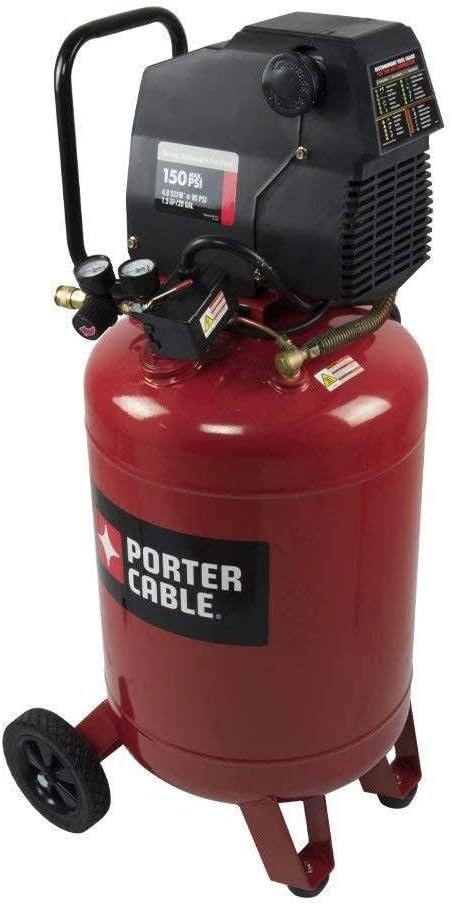
What Is the PORTER CABLE PXCMF220VW 20-Gallon Portable Air Compressor?
This product is a 20-gallon, oil-free, vertical portable air compressor designed for home users, DIYers, and light-to-medium-duty shop tasks. We get a combination of decent power, good capacity, and convenient mobility without stepping all the way into professional, heavy-duty territory.
The PORTER CABLE PXCMF220VW targets those of us who want more than a tiny pancake compressor but don’t need a giant stationary unit. It tries to hit that sweet spot between performance, portability, and price.
Key Specifications at a Glance
Before we talk about real-world performance, it helps to see the main numbers in one place. These specs tell us what the compressor is capable of and what kinds of tools it can comfortably support.
| Feature | Specification |
|---|---|
| Tank Capacity | 20 gallons (vertical steel tank) |
| Max Pressure | 150 PSI |
| CFM @ 40 PSI | 5.0 CFM |
| CFM @ 90 PSI | 4.0 CFM |
| Running Horsepower | 1.5 HP |
| Pump Type | Twin-V cast iron pump |
| Lubrication | Oil-free |
| Certifications | UL and CSA certified |
| Wheels | 7″ semi-pneumatic wheels |
| Stabilization | Rubber feet |
| Included Components | Regulator, gauges, quick-connect fitting |
| Tank Material | Steel |
| Noise Rating (Outdoor) | 84 dBA |
These numbers tell us we’re dealing with a mid-range, home-shop-friendly compressor that’s strong enough for many air tools, yet still manageable in size and weight.
Overall Build Quality and Design
The first impression of the PORTER CABLE PXCMF220VW is that it’s built to feel sturdy rather than flimsy. The steel tank, cast-iron Twin-V pump design, and overall structure give us confidence that it can handle regular use around a garage or workshop.
The vertical configuration saves floor space and makes it easier to tuck this unit against a wall. The controls, gauges, and quick-connect fitting are grouped in a way that’s easy to reach when we’re standing beside it, which feels thoughtfully laid out for everyday use.
Tank and Frame Construction
The 20-gallon steel tank is the heart of this unit, and its construction matters both for safety and durability. Steel tanks are pretty much the standard at this size, and here we get a solid, well-welded body that should hold up over time when properly maintained.
The frame supports the vertical tank and provides attachment points for the wheels and rubber feet. We find that this design helps keep the compressor stable, especially when it cycles on. The stability is especially noticeable when we’re working on uneven garage floors or older concrete.
Twin-V Cast Iron Pump
The Twin-V cast iron pump is a notable feature because cast iron pumps are associated with better longevity and heat resistance. While the motor itself is oil-free, the pump body material suggests that PORTER CABLE is aiming for durability.
We appreciate that the Twin-V configuration typically helps with smoother operation. It tends to distribute the workload more evenly, which can contribute to reliability over long periods of use.
Power, Pressure, and Performance
Now we come to the part that matters most: what this compressor can actually do when we hook up tools and start working. The combination of 1.5 running horsepower, 150 PSI maximum pressure, and the CFM ratings give us a clear picture of how it performs.
At 40 PSI, the compressor delivers 5.0 CFM; at 90 PSI, it delivers 4.0 CFM. That means it can comfortably operate many common air tools, but it’s not meant for nonstop, industrial-grade use all day long.
Understanding the CFM and PSI Ratings
PSI (pounds per square inch) is about pressure, while CFM (cubic feet per minute) is about airflow. Air tools often specify a required CFM at a given PSI, usually 90 PSI. With 4.0 CFM at 90 PSI, we know this unit falls into a category that suits:
- Impact wrenches (especially 3/8″ and many 1/2″ models) for intermittent use
- Air ratchets
- Finish and brad nailers
- Framing nailers
- Staplers
- Blow guns
- Some HVLP paint guns (with attention to their CFM requirements)
We can run tools that need more air, but we should expect the compressor to cycle often or require us to pause occasionally.
What 1.5 Running Horsepower Means for Us
The 1.5 HP rating gives us a reasonable amount of power to compress air efficiently into the 20-gallon tank. It’s not a monster-motor unit, but it’s more than enough for typical home workshop and garage applications.
In practice, 1.5 HP helps the compressor recover from pressure drop quickly enough that we’re not constantly waiting. We’re not at professional shop-level recovery, but for us as DIY users or weekend mechanics, it strikes a nice balance between power, cost, and electrical demands.
150 PSI Maximum Pressure
The 150 PSI maximum gives us some headroom above many tool requirements, which often sit around 90 PSI. That higher max pressure means the tank stores more usable air, which helps with:
- Running tools a bit longer before the compressor cycles back on
- Supporting tools that want slightly higher pressures
- Reducing how often the motor has to work during shorter tasks
We like this extra cushion, especially when we’re doing tasks that alternate between short bursts and brief pauses, like running an impact wrench on lug nuts.

Oil-Free Motor: Convenience and Maintenance
One major convenience feature is the oil-free motor. That means we don’t need to worry about checking oil levels, changing compressor oil, or dealing with oil carryover into our air lines.
For many of us, this reduces maintenance tasks and makes the compressor friendlier for occasional users. We just plug it in, run it, and focus more on the job and less on upkeep.
Pros and Cons of Oil-Free Operation
Oil-free compressors come with clear advantages but also some tradeoffs. With this model, we enjoy:
- No oil changes
- No risk of accidentally running the pump low on oil
- Cleaner air, which is helpful for painting and finishing (though we still want filters and dryers)
On the flip side, oil-lubricated units often have a slight edge in terms of pump longevity and noise characteristics. However, for the typical home and light shop tasks we’re discussing, oil-free makes a lot of sense because of the low maintenance and straightforward ownership experience.
Maintenance Tasks We Still Need to Handle
Even with an oil-free design, we still have some important maintenance steps to keep things running well:
- Draining the tank regularly to remove moisture
- Checking hoses and fittings for leaks
- Ensuring the air filter (if present) is clean
- Keeping the unit in a dry, sheltered environment
We find that when we build a quick routine around these tasks, the compressor remains reliable and safer over the long haul.
Tank Size and Air Capacity: Why 20 Gallons Matters
A 20-gallon tank represents a big step up from small 3–6 gallon portable units, but still far from large stationary shop tanks. This capacity gives us more stored air, which directly influences how long we can run tools before pressure drops enough to trigger a refill.
For tasks like airing up tires, running nailers, or doing brief impact wrench jobs, 20 gallons is very comfortable. We notice fewer cycles and less up-and-down pressure swings than we do with tiny pancake or hot-dog compressors.
Comparing 20 Gallons to Smaller Compressors
If we’re upgrading from something small, the difference is significant:
- Less waiting for pressure recovery
- Better suited to tools that need higher, continuous airflow
- More stable pressure performance under intermittent loads
We feel this size is an excellent “sweet spot” for serious DIY work. It’s big enough to handle more demanding tools but not so large that it becomes difficult to move or needs a dedicated spot in the shop forever.
How the 20-Gallon Tank Feels in Real Use
In real-world use, we can usually:
- Run finish nailers almost nonstop without the compressor constantly kicking on
- Work around vehicles with impact and ratchet tools for a series of bolts before needing to pause for full recovery
- Inflate multiple tires, sports equipment, or air mattresses in a row without big delays
The experience feels efficient and practical, especially for a home garage or shared workshop space.
Portability and Mobility
Even though the PXCMF220VW has a 20-gallon steel tank, it’s designed to be moved. We’re not stuck in one corner of the shop; we can roll it to the driveway, out to the garage, or alongside a car lift.
Portability is a major benefit for those of us who don’t have a dedicated permanent spot for every tool. This compressor tries to be large enough to be useful but still portable enough to stay flexible.
7″ Semi-Pneumatic Wheels
The 7″ semi-pneumatic wheels are a noticeable help when we’re rolling the compressor around. Semi-pneumatic means they’re partially air-filled or built to imitate pneumatic cushioning without being prone to flats as easily as full pneumatic tires.
We can push the unit over slightly rough surfaces, expansion joints, and garage clutter with less jarring. This also protects the compressor’s frame from harsh impacts when we’re moving it around a lot.
Rubber Feet for Stability
At the front, rubber feet work with the wheels to prevent the compressor from wandering when it’s running. This might sound minor, but when a compressor vibrates and “walks” across the floor, it’s frustrating and potentially dangerous.
We appreciate that, once it’s parked, the compressor stays put. The rubber feet also help reduce transmitted vibration into the floor, which can make the noise feel slightly less harsh in an enclosed space.
Noise Level: How Loud Is 84 dBA?
The listed outdoor noise rating is 84 dBA. That’s not whisper-quiet, but it’s also not the loudest compressor in its class. It falls into the “we should still protect our hearing for long sessions” category.
In an open or outdoor area, the sound is noticeable but manageable. Indoors, it can feel more intense due to echo and reverberation, so good hearing protection is still a smart idea when we’re nearby while it’s running for extended periods.
Working Around the Noise
We can make the noise level less of an issue with a few simple strategies:
- Positioning the compressor a bit farther from where we’re working
- Running longer hoses to keep the sound away from our ears
- Placing it near open doors or in more open areas to reduce echo
We find that, with some planning, we can comfortably use this compressor without feeling overwhelmed by noise, especially for typical garage tasks.
Noise vs. Performance Tradeoff
It’s worth remembering that higher power and airflow usually bring some noise with them. While there are ultra-quiet compressors out there, they often trade off tank size, CFM, or price.
With this model, we’re getting a good blend of usable power, tank capacity, and acceptable noise. We wouldn’t call it quiet, but for a 20-gallon unit with 4.0 CFM at 90 PSI, the sound level is very typical.
Controls, Gauges, and Usability
The PXCMF220VW comes equipped with a regulator, pressure gauges, and a quick-connect fitting. These are the primary points of interaction when we’re actually using the compressor, so it matters that they’re intuitive.
We like that everything is grouped together and visible when we walk up to the unit. It’s easy to see tank pressure, set tool pressure, and connect hoses without bending down awkwardly.
Regulator and Gauges
The regulator lets us adjust the outgoing air pressure to match our tool’s requirements. This is important because many tools are designed to run at or around 90 PSI, and overpressure can cause extra wear or damage.
The gauges typically show:
- Tank pressure (how much is stored)
- Regulated outlet pressure (what we’re sending to the tool)
This dual-gauge setup makes it easy to manage our workflow. We can see when the tank is getting low and when the compressor is about to kick on, and we can fine-tune the output to match our task.
Quick-Connect Fitting
The quick-connect fitting lets us snap air hoses on and off without hassle. If we use multiple hoses or have different tool stations, this convenience becomes noticeable.
We can also swap out the fitting if we prefer a different style (for example, if we standardize on a particular quick-connect type in our shop). The included fitting gets us started right away.
Safety and Certifications
Safety is a critical factor when dealing with pressurized air and electric motors. The UL and CSA certifications on this unit give us reassurance that it meets recognized safety standards.
We also have built-in safety mechanisms such as pressure relief valves and properly rated wiring and components. Still, our use habits play a big role in safe operation.
UL and CSA Certifications
UL (Underwriters Laboratories) and CSA (Canadian Standards Association) are widely known safety organizations. Their certifications indicate the product has been tested for electrical safety, pressure safety, and general compliance with key standards.
For us as users, that means:
- Reduced risk of electrical hazards
- Properly designed safety relief devices
- Compliance with common North American requirements
We still need to operate the compressor according to its manual, but having these certifications is a solid baseline level of reassurance.
Safe Operating Practices
We want to combine the unit’s built-in safety with smart practices of our own, including:
- Regularly draining tank condensation to prevent corrosion
- Not exceeding the rated pressures of tools or accessories
- Keeping the compressor in a well-ventilated area
- Storing and using it away from open flames or combustible materials
- Using appropriate hearing and eye protection
These habits help us enjoy the compressor’s capabilities while minimizing risks.
What We Can Do with the PORTER CABLE PXCMF220VW
In practical terms, it helps to think about specific tasks we might use this compressor for. The CFM and PSI ratings, plus the 20-gallon tank, open the door to a wide range of home and garage projects.
We may not be running a professional body shop with this unit, but we can handle many serious DIY and maintenance tasks comfortably.
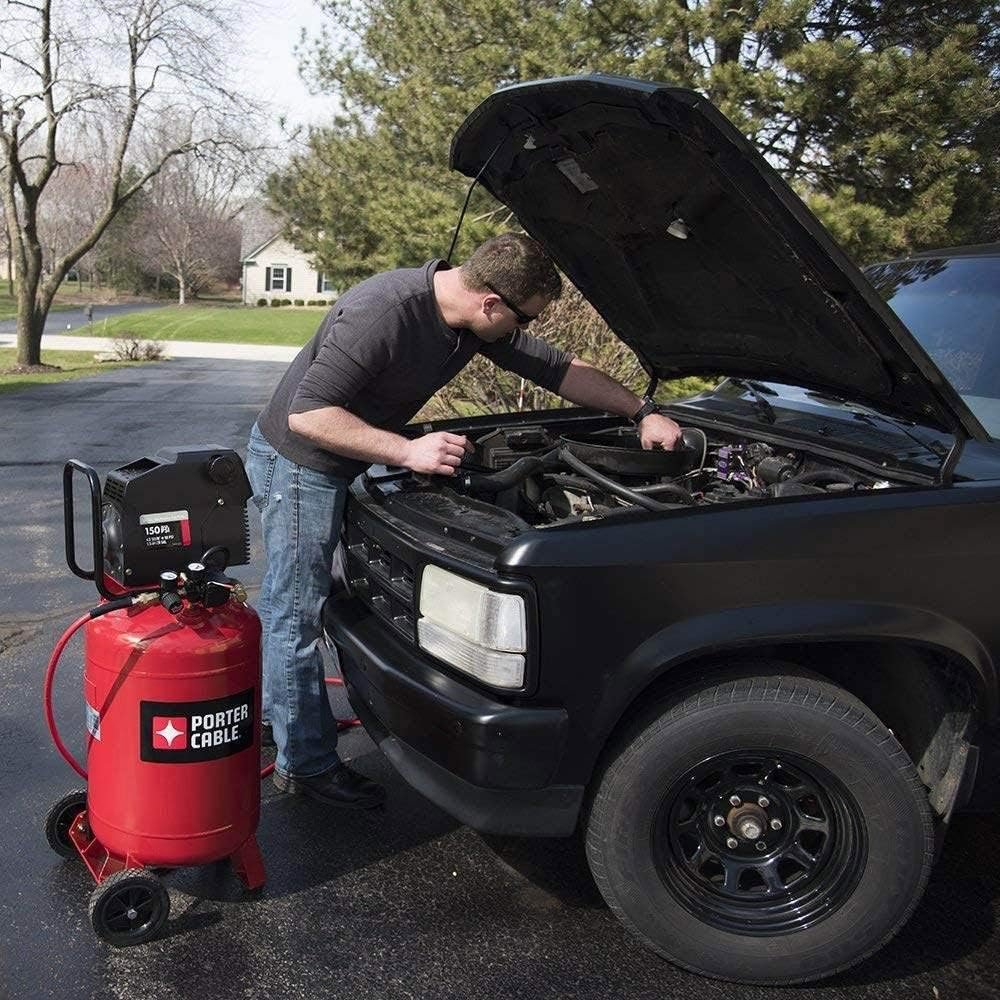
Automotive and Garage Work
For vehicle-related work, this compressor is especially appealing. Typical uses include:
- Removing and installing lug nuts with a 1/2″ impact wrench (intermittent use)
- Using an air ratchet on engine components
- Blowing out filters, radiators, and engine bays
- Inflating tires on cars, trucks, bikes, and trailers
With 4.0 CFM at 90 PSI, we can run most common automotive air tools for bursts of work, letting the compressor catch up between tasks when needed.
Carpentry, Finishing, and Construction Tasks
For woodworkers and carpenters, this compressor feels right at home. It can:
- Power brad nailers and finish nailers with ease
- Run a framing nailer on framing and decking jobs
- Handle staplers for upholstery and trim work
- Support air blow-off tools for clearing dust and debris from workpieces
The 20-gallon tank gives us enough reserve that nail gun use rarely feels limited by the compressor, unless we’re doing extremely rapid production work.
Light Painting and Spraying
With the proper filters and moisture control, this compressor can support some HVLP spray guns and small painting jobs. However, we need to check the spray gun’s CFM requirements carefully and accept that continuous, large-scale spraying might be too demanding.
We see this compressor as suitable for:
- Touch-up painting
- Small panels or parts
- Light finish work on furniture with appropriately matched spray guns
We just need to be prepared for the compressor to cycle frequently during longer spray sessions.
Pros and Cons: Our Balanced Take
No product is perfect, and this compressor is no exception. It occupies a solid middle ground that will be ideal for many users but not necessarily for everyone.
We find it helpful to summarize where it shines and where we might want something different.
Advantages We Appreciate
We see several strong pluses with the PORTER CABLE PXCMF220VW:
- Good CFM for its class: 4.0 CFM at 90 PSI supports a wide range of tools.
- 20-gallon tank: Offers comfortable air capacity without being overly bulky.
- Oil-free motor: Lower maintenance and cleaner air for many applications.
- Twin-V cast iron pump: Suggests solid durability and smoother operation.
- Portability features: 7″ wheels and rubber feet make moving and parking easier.
- 150 PSI max pressure: Extra headroom for better stored air capacity.
- UL and CSA certifications: Added reassurance on safety and construction quality.
For a home garage or small workshop, these strengths add up to very practical value.
Limitations to Keep in Mind
There are also some limitations we should consider:
- Noise level: 84 dBA is not quiet; hearing protection is a good idea.
- Not industrial-grade: Continuous heavy-duty use or high-CFM tools may push it beyond its comfort zone.
- Size and weight: While portable, it’s still substantial; not something we casually pick up and carry upstairs.
- Limited capacity for large-scale painting: Long, continuous spray jobs may require a bigger, higher-CFM compressor.
We would recommend this compressor strongly for serious DIYers and home mechanics, but full-time professionals with high-demand tools might want a more powerful, larger unit.
Who Is This Compressor Best For?
Given its balance of specs, features, and portability, we see the PXCMF220VW fitting best with certain types of users. Thinking about how we work and what we expect from a compressor helps clarify if this model is right for our needs.
We can consider how often we use air tools, which tools we rely on, and whether portability is important.
Ideal Users and Use Cases
We think this compressor is an excellent match for:
-
Home mechanics and car enthusiasts
- Working on brakes, suspension, wheels, and engine components
- Using ratchets, impact wrenches, and blow guns
-
DIYers with a dedicated garage or workshop
- Running nailers, staplers, and small spray projects
- General-purpose compressed air needs around the house
-
Light commercial or side-gig users
- Handyman work that involves occasional air tool use
- Small-scale construction or finishing tasks
For these groups, the performance and capacity feel very well-matched to everyday tasks.
Who Might Want Something Else
On the other hand, some users may want to look for a different type of compressor:
-
Professional shops with multiple users
- Continuous use of grinders, sanders, and high-CFM spray guns
- Simultaneous use of multiple air tools on the same system
-
Users in very noise-sensitive environments
- Indoor spaces where compressor noise is a major problem
- People who prioritize ultra-quiet operation above all else
-
Those with tiny storage spaces
- Users who genuinely can’t accommodate a 20-gallon vertical tank
For these users, either a larger, more powerful unit or a smaller, ultra-quiet one might serve better.
Practical Tips for Getting the Most from This Compressor
Owning a compressor is one thing; using it efficiently and keeping it healthy is another. With the PXCMF220VW, a few simple habits can dramatically improve our day-to-day experience and extend its working life.
We can treat it as a central piece of shop infrastructure, not just another tool.
Setup and First Use
When we first set it up, it helps to:
- Place it on a reasonably level surface so the rubber feet and wheels do their job
- Check all factory-installed fittings for tightness (without over-torquing)
- Run the compressor through a test cycle to confirm it reaches pressure and shuts off properly
- Drain any condensation after the first use to start our maintenance routine right away
Spending a little extra time on careful setup pays off with fewer surprises later.
Daily and Weekly Habits
Some small, regular actions can keep the compressor performing smoothly:
- Drain the tank after each day of use to reduce corrosion risk
- Check hoses and fittings for leaks—even small leaks waste air and force more cycling
- Store hoses properly to avoid kinks and damage that lead to unexpected failures
- Keep the area around the compressor clear for ventilation and easy access
These habits help us save energy, improve tool performance, and protect the compressor investment.
Matching Tools to the Compressor
We also get better results when we match tools realistically to the compressor’s output:
- Use tools whose CFM requirements are close to or below 4.0 CFM at 90 PSI for comfortable operation
- Accept that higher-demand tools may require more pauses or shorter duty cycles
- Use appropriate hoses (diameter and length) so we don’t choke the airflow unnecessarily
We find that when we pair this compressor with compatible tools, the workflow feels efficient and not frustrating.
Longevity and Reliability Expectations
With its cast iron pump, steel tank, and oil-free motor, this compressor is built for long-term use in a home or light shop setting. Reliability still depends on how we use and care for it, but the fundamental construction is promising.
We wouldn’t treat it like a heavy industrial unit running nonstop, but for intermittent and moderate use, the design suggests a long usable life.
What Affects Lifespan Most
The biggest factors in how long our compressor lasts tend to be:
- Duty cycle: How long we run it at a time versus how long we let it rest
- Moisture management: Draining the tank to prevent rust and internal damage
- Environment: Avoiding overly dusty, damp, or corrosive spaces
- Electrical supply: Using proper voltage and avoiding undersized extension cords
By paying attention to these factors, we can put this compressor in a position to serve us for many years.
Signs It’s Time for Service or Attention
We should keep an eye (and ear) out for changes in:
- Unusual noises from the pump or motor
- Slower pressure build-up than usual
- Persistent air leaks around fittings or valves
- Frequent tripping of breakers or thermal overloads
Noticing these signs early can often mean a simple fix rather than a serious problem.
Final Thoughts: Is the PORTER CABLE PXCMF220VW Right for Us?
After looking closely at the PORTER CABLE PXCMF220VW 20-Gallon Portable Air Compressor, we see a unit that’s thoughtfully aimed at serious DIYers, home mechanics, and light shop users. It brings together:
- A 20-gallon steel tank for solid air capacity
- 5.0 CFM at 40 PSI and 4.0 CFM at 90 PSI for a wide range of tools
- An oil-free, 1.5 HP motor with a Twin-V cast iron pump for convenience and durability
- 150 PSI maximum pressure for more stored air and flexible tool support
- UL and CSA certifications for safety confidence
We accept that it’s not whisper-quiet and not built for nonstop industrial workloads, but within its target segment, it offers a compelling blend of performance, portability, and reliability.
If we’re looking for a compressor that can handle automotive work, carpentry projects, light spraying, and general shop tasks without constant waiting or fussy maintenance, the PXCMF220VW is a strong candidate. It feels like a compressor that can grow with our skills and projects while staying manageable in size, cost, and care.
For many of us with a garage, workshop, or busy DIY schedule, this compressor fits that role of “workhorse we can actually live with,” making it a very practical addition to our tool lineup.

Disclosure: As an Amazon Associate, I earn from qualifying purchases.