Have we ever wished our compact air compressor felt a bit more like real industrial equipment without taking over all our storage space?
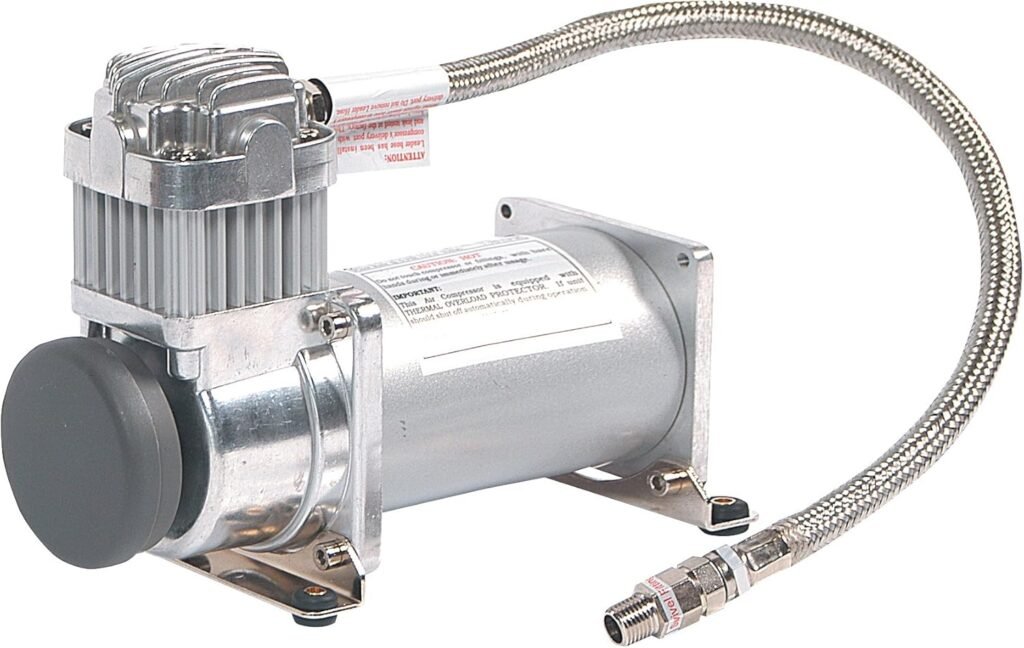

What Is the VIAIR 350C and Who Is It For?
When we look at the VIAIR 350C, we are looking at a small industrial-grade air compressor designed for serious users who need reliable, continuous air power from a 12V source. It is built for those of us who want something tougher than a hobby compressor, but still compact enough to fit in vehicles, small workshops, or mobile setups.
This particular model runs on 12 volts, reaches up to 150 PSI, and is rated for a 100% duty cycle at 100 PSI and 72°F. That means we can run it continuously under those conditions without worrying about overheating, as long as the installation and ventilation are correct.
Key Specifications at a Glance
When we compare air compressors, the numbers can feel confusing. To make it easier, we can start by understanding the basics of what this unit offers and how that might fit our needs.
Here is a quick breakdown of the major specs and features of the VIAIR 350C:
| Feature | VIAIR 350C Specification |
|---|---|
| Power Source | 12V DC (vehicle electrical system or 12V battery) |
| Max Working Pressure | 150 PSI |
| Duty Cycle | 100% at 100 PSI and 72°F ambient temperature |
| Air Flow (Free Flow) | 1.17 CFM at 0 PSI |
| Recommended Use | Drilling, air brushing, spraying, nailing, helper bags, 32″ tires, air horns |
| Mounting Style | Hardmount with mounting feet (four screw positions) |
| Vibration Control | Includes vibration isolators and mounting hardware |
| Application Category | Small industrial / continuous-duty 12V compressor |
| Color / Finish | Silver |
| Cooling/Operation Condition | Engine should be running during operation |
These numbers tell us that this compressor is meant to be mounted permanently or semi-permanently, draw power from a 12V system, and handle work that requires consistent airflow instead of occasional short bursts.
Build Quality and Design
When we pick up or even just look at the VIAIR 350C, we can tell it is meant for rugged use rather than casual hobby projects. The unit is substantial, with a solid metal body and durable fittings that feel like they will hold up to repeated cycles in real working environments.
The silver finish gives it a clean, industrial look that is more functional than flashy. We also notice that the compressor is designed as a hardmount unit, which means we are expected to bolt it down securely rather than use it as a loose, portable compressor we toss in and out of the trunk.
Hardmount Construction and Mounting Feet
The hardmount design is one of the key traits that define the VIAIR 350C. This is not a plug-and-play stand‑alone compressor in a plastic housing; rather, it is a component meant to become part of a system—like an onboard air system in a truck, RV, off-road rig, or mobile workshop.
The integrated mounting feet, with four screw positions, give us flexibility for where and how we install it. We can secure it to a frame rail, under a seat, in a trunk compartment, or on a custom bracket. Having defined mounting points also helps with alignment and minimizes stress on the compressor body over time.
Vibration Isolators and Hardware
We all know how irritating and damaging vibration can be, especially when we bolt metal equipment directly to a vehicle or workbench. VIAIR includes vibration isolators and mounting hardware, which helps reduce noise, protects the compressor components, and keeps resonance from transferring into the vehicle body or mounting surface.
With the isolators correctly installed, we can expect less rattling, fewer annoying sounds, and a smoother experience when the compressor is running. Over the long term, this also tends to reduce wear on both the compressor and any nearby components.
Performance: Pressure, Air Flow, and Duty Cycle
We often judge compressors by their maximum PSI, but pressure is only part of the story. What really matters in day-to-day work is how long we can run the unit and how quickly it can move air. The VIAIR 350C is geared toward reliability under continuous use.
150 PSI Max Working Pressure
This compressor is rated for a maximum working pressure of 150 PSI. For most vehicle, shop, and light industrial tasks, 150 PSI is more than enough. It supports typical applications such as inflating tires, running small pneumatic tools, and operating air springs or helper bags.
We should remember that “max working pressure” is not the same as “recommended pressure for everything.” We usually pair the compressor with an air tank, regulator, and pressure switch to keep things within safe, useful limits for our tools or accessories. Still, having that 150 PSI ceiling gives us room for a wide range of tasks.
1.17 CFM Free Flow at 0 PSI
The VIAIR 350C provides 1.17 CFM of free-flow air at 0 PSI. In practical terms, this means that at no back-pressure, the compressor moves 1.17 cubic feet of air per minute. As pressure increases, the CFM decreases—as with any compressor—but this figure gives us a basic benchmark.
For small-scale tasks such as air brushing, nailing, and light spraying, as well as inflating tires and airbags, this flow rate is enough when combined with proper system components like an air tank. For constant heavy pneumatic tools (like big impact wrenches used continuously), we might find this flow rate limiting, but that is not really the intended use case.
100% Duty Cycle at 100 PSI and 72°F
This is one of the standout features. At 100 PSI and 72°F ambient temperature, this compressor is rated for a 100% duty cycle. Duty cycle tells us how long we can safely run a compressor within a given time frame without overheating. A 100% duty cycle at a specified pressure and temperature means we can run the VIAIR 350C continuously in those conditions.
In practice, real-world conditions might be hotter than 72°F, and our system pressure may fluctuate. But even with those variables, having a compressor designed to handle continuous operation gives us peace of mind. We are not constantly waiting for a cooldown period in the middle of our project.
Power Requirements and Electrical Considerations
Because this compressor is 12V and capable of continuous duty, power supply becomes a critical factor. We cannot treat it like a tiny cigarette-lighter gadget; it draws a substantial current and has to be powered and wired properly.
12V Operation and Vehicle Integration
The VIAIR 350C is designed to run off a 12V DC system, typically a vehicle battery. The manufacturer notes that the engine should be running during use. That matters because the compressor can draw enough current to drain a battery quickly if we use it without the alternator replenishing power.
In a vehicle, we usually wire it using appropriately sized cables, an inline fuse, and a relay, then trigger it via a switch or pressure switch system. In a stationary setup, we might pair it with a high-quality 12V power supply that can handle its current draw, but for most of us, vehicle-based use is its main home.
Why the Engine Should Be Running
Running the compressor with the engine off is tempting for quick jobs, but that can significantly strain the battery. Continuous-duty compressors pull current for extended periods, and repeated use without the alternator charging can shorten battery life or leave us unable to start the vehicle.
By running the engine, we keep voltage more stable, protect the battery, and ensure the compressor performs at its rated capability. Proper wiring, grounding, and fuse protection are essential to fully benefit from this compressor safely.

Practical Applications and Use Cases
The product description hints at several practical uses that give us a clear picture of where the VIAIR 350C shines. When we look at those scenarios together, we can see that this compressor aims at serious, regular-use tasks more than one‑off emergencies.
Inflating Helper Bags for Load Leveling
For those of us with trucks, vans, or RVs that use air helper bags to level heavy loads, a dependable onboard air source is essential. The VIAIR 350C is well suited for this role, giving us the continuous-duty capacity to adjust pressures whenever we load up gear, tow a trailer, or shift cargo.
Instead of hunting for a gas station or plugging into a small portable compressor that overheats, we can manage our air suspension right from the vehicle. The 100% duty cycle is especially helpful if we are adjusting multiple bags or making frequent changes.
Inflating Tires up to 32 Inches
If our vehicle runs tires up to about 32 inches in diameter, this compressor is capable of handling them. That makes it a solid choice for many pickup trucks, SUVs, and off‑road crossovers that do not use extremely oversized tires.
We can air down for off-road traction and then air back up for highway driving. While it is not the fastest inflator on the market, the continuous-duty capability means we can work steadily through all four tires without stopping to let the compressor cool.
Powering Heavy Duty Air Horns
Heavy duty air horns require consistent pressure and reliable refills of an air tank to stay ready for use. The VIAIR 350C works well in these onboard systems, maintaining pressure in a small or medium air tank so that we have instant horn power when we need it.
We may pair it with a pressure switch that automatically turns the compressor on and off based on tank pressure. With a 150 PSI max working pressure, we have more than enough headroom for typical horn setups.
Drilling, Air Brushing, Spraying, and Nailing
The product name points specifically to drilling, air brushing, spraying, and nailing. Each of these tasks can benefit from this compressor when paired with the right air tank and regulator.
- Drilling: For light pneumatic drills or intermittent drilling tasks, the compressor can keep up if we size things correctly and allow brief recovery times.
- Air Brushing: Air brushing demands moderate pressure but fairly continuous airflow. When combined with an air tank, the VIAIR 350C can sustain the needed flow, though we should pay attention to moisture management and regulation.
- Spraying (small-scale): For small spray projects—touch‑ups, small panels, craft spraying—the unit can perform adequately; large, continuous paint jobs may stretch its capabilities.
- Nailing: Nailers are usually intermittent users of air; that makes them a great match. The compressor refills the tank between bursts, and the 100% duty cycle helps when we are working through long projects.
Installation Considerations
When we bring a compressor like this into our setup, installation becomes nearly as important as the hardware itself. A good installation lets the compressor live up to its potential; a poor one can shorten its life or make it miserable to use.
Choosing a Mounting Location
We want a spot that offers:
- Adequate ventilation: So the compressor can stay cool under continuous duty.
- Protection from direct water spray and road debris: Especially in vehicle installs.
- Reasonable access for maintenance: We might need to inspect fittings, hoses, and wiring later.
- Solid structure for mounting: So vibration and weight do not cause damage.
Common choices include under-seat compartments, trunk/cargo areas, side toolboxes, under‑hood areas (if heat and space allow), or frame-mounted brackets with protective shields.
Using the Mounting Feet and Isolators
We attach the compressor via its mounting feet, lining up the four screw holes with our surface or bracket. Between the compressor feet and the surface, we install the included vibration isolators. These rubberized or elastomer components help absorb movement and noise.
We should tighten the mounting hardware securely, but not so aggressively that we crush the isolators. A balanced, snug installation keeps the compressor stable while still allowing the isolators to do their job.
Wiring and Electrical Safety
For wiring, we typically:
- Run power directly from the battery with appropriately sized cable.
- Use an inline fuse or breaker near the battery for protection.
- Include a relay controlled by a switch or pressure switch.
- Ensure a solid ground connection to a clean, bare metal point.
We avoid routing the wires near intense heat sources, sharp edges, or moving parts. Proper loom, grommets, and clamps help protect the cables for long-term reliability.
Using the VIAIR 350C Day to Day
After installation, the real test is how the compressor behaves in real-world conditions. We care about noise, speed, reliability, and how easily it integrates into our workflow.
Noise Level and Vibration
No compressor is silent, and as a small industrial unit, the VIAIR 350C produces noticeable sound when running. However, with the included vibration isolators and a solid mounting surface, the noise is generally more of a firm hum than a harsh rattle, especially if installed in a trunk or protected compartment.
We may still hear it clearly when it is refilling a tank or airing up tires, but the character of the sound tends to be more refined than cheaper, flimsy plastic-bodied compressors.
Airing Up Tires and Air Springs
For everyday users, airing up tires is one of the most common tasks. With tires up to 32 inches, we can expect reasonable fill times—faster than many tiny emergency compressors, but slower than high‑flow shop units. Where the VIAIR 350C shines is consistency: it can keep working without frequent cooldown breaks.
When we are adjusting air springs or helper bags, we benefit from that same consistency. We can make repeated pressure changes without standing around wondering if the compressor will overheat or shut down mid-adjustment.
Running Light Pneumatic Tools
Running pneumatic tools is where we need to be realistic. This compressor can support nailers, light drills, and smaller spray guns, particularly when paired with an air tank. However, if we are trying to run large impact guns continuously or sanders that require high CFM at pressure, we might feel constrained.
Instead, we can view the VIAIR 350C as a great solution for light to moderate tool use, mobile work, and intermittent tasks, rather than as a substitute for a high‑capacity shop compressor.
Advantages of the VIAIR 350C
When we assess whether this compressor fits our needs, it helps to look at the primary advantages it offers compared to typical small 12V compressors or bargain-level gear.
True Continuous-Duty Capability
The 100% duty cycle at 100 PSI and 72°F is a major benefit. Many small compressors are only rated for a 25% or 33% duty cycle, meaning we have to shut them down often to prevent damage. With the VIAIR 350C, we can keep working through jobs without planning our schedule around cooldown times.
That sort of reliability is crucial when we integrate the compressor into a vehicle system—air suspension, air horns, onboard air for tools—because we want to trust that it will run as long as needed.
Industrial-Grade Construction in a Compact Size
The build quality, metal body, and designed‑for‑mounting approach give us a more industrial feel than the average “consumer” compressor. It is still compact enough for tight spaces, yet robust enough for continuous demands.
This balance between size and toughness makes it particularly attractive for off‑road rigs, service trucks, mobile detail setups, and RV systems where space is limited but reliability is non-negotiable.
Flexible Application Range
Because it can reach 150 PSI and is set up for continuous duty, the VIAIR 350C covers a broad range of scenarios:
- Onboard air for vehicle tires up to 32″
- Load leveling and helper bags
- Air horns and small air tanks
- Light pneumatic tools and nailing
- Small-scale spraying and air brushing
Instead of buying separate purpose‑built compressors for each task, we can build one integrated system that handles them all, with the right accessories.
Limitations and Things to Keep in Mind
No product is perfect for every scenario, and understanding the limitations of the VIAIR 350C helps us decide whether it is the right fit for us.
Air Flow Compared to Larger Shop Compressors
At 1.17 CFM free flow at 0 PSI, this is not a high‑volume compressor. Large shop units often output multiples of this, especially at working pressures. If our primary need is heavy industrial air tools running continuously in a stationary shop, we may find this compressor undersized.
Where it excels is in mobile, onboard, and intermittent-use contexts, not in replacing a big belt-driven shop compressor.
12V Power Requirement and Engine Run Time
Since the compressor relies on a 12V system and recommends running the engine during use, we need to accept that it is best suited to automotive or mobile environments. If we want to use it in a purely stationary role, we must invest in a robust DC power supply, which adds complexity and cost.
Additionally, we have to be comfortable running the engine while working with air tools or inflating systems, which may or may not suit every user’s preferences or working location.
Noise Compared to Some Alternatives
While the vibration isolators help, a piston-type compressor like this is inherently noisier than some ultra‑quiet, low‑RPM shop compressors. If we prioritize near‑silent operation for indoor studios or extremely noise‑sensitive environments, we might need to consider additional soundproofing or a different type of compressor.
Comparing the VIAIR 350C to Typical Portable Compressors
We can better understand the value of this compressor by comparing it to common alternatives many of us have tried.
Vs. Cheap 12V Plug‑In Compressors
Most small, inexpensive 12V tire inflators plug into a cigarette lighter and are designed for emergency use. They tend to:
- Have low duty cycles.
- Overheat easily.
- Work slowly on larger tires.
- Use lightweight plastic housings that wear quickly.
By contrast, the VIAIR 350C:
- Is designed for continuous duty.
- Mounts securely as part of an onboard system.
- Uses higher‑quality components.
- Delivers more consistent performance across repeated tasks.
For anyone who frequently adjusts air pressure or uses air-driven accessories, this is a major upgrade beyond an emergency-only inflator.
Vs. Larger 120V Shop Compressors
Standard shop compressors often run off 120V or 240V and deliver much higher CFM. They:
- Are ideal for fixed-location workshops.
- Drive high-demand tools continuously.
- Take up more space and often weigh much more.
The VIAIR 350C, on the other hand:
- Runs on 12V, ideal for vehicles and mobile setups.
- Is compact and mountable.
- Trades raw volume output for mobility and continuous duty at smaller scale.
We see the VIAIR 350C as a bridge between tiny emergency inflators and big stationary shop units, offering industrial reliability in a small, 12V‑friendly form.
Optimizing Our System Around the VIAIR 350C
To get the most out of this compressor, we often build it into a broader system rather than using it bare. That can significantly improve our experience and expand what we can do with it.
Adding an Air Tank and Pressure Switch
Pairing the VIAIR 350C with a small or mid‑sized air tank is one of the best upgrades we can make. The tank stores compressed air, so:
- Our tools get a more stable pressure supply.
- The compressor can cycle on and off based on need.
- We get instant access to air for short tasks.
A pressure switch can automate this: it turns the compressor on when tank pressure drops below a set point and off when it reaches a higher set point. This gives us a nearly self-managing onboard air system.
Using Regulators, Filters, and Dryers
For tasks like air brushing and spraying, we want:
- A regulator to fine‑tune the output pressure.
- A filter to trap particulates and oil.
- A dryer or moisture trap to reduce water in the line.
The VIAIR 350C provides the air; these accessories help us refine and condition it so that it meets the demands of more sensitive tools and finishes.
Planning for Maintenance
Like any mechanical device, our compressor will benefit from basic care:
- Checking electrical connections for corrosion or looseness.
- Inspecting hoses and fittings for leaks.
- Ensuring the mounting hardware and isolators stay secure.
- Keeping the area around the compressor reasonably clean and ventilated.
By treating it as a piece of serious equipment rather than a disposable gadget, we increase its useful lifespan and maintain reliable performance.
Who Will Appreciate the VIAIR 350C the Most?
Not all users have the same priorities. When we think about who gets the most out of this compressor, a few groups stand out.
Off-Road and Overlanding Enthusiasts
If we spend time off-road, airing tires down for traction and back up for pavement is part of the routine. Having a continuous-duty 12V compressor permanently mounted on our rig means we can handle tire pressure adjustments and air-related gear without relying on external facilities.
The VIAIR 350C fits nicely into this context: it is compact, built to mount onboard, and strong enough to manage up to 32″ tires reliably.
Truck Owners with Load Leveling Systems
Those of us who tow or haul heavy loads and use air helper bags benefit greatly from dependable air on tap. We can fine-tune ride height and stiffness, adjust for different trailers or loads, and correct sag without leaving the driveway.
The industrial nature and 100% duty cycle of the VIAIR 350C help ensure that those adjustments are quick, reliable, and repeatable.
Mobile Professionals and Hobbyists
Mobile detailers, small contractors, RV owners, or hobbyists who work out of a van or service truck can use this compressor as the core of a small yet capable air system. We can run nailers, light air tools, and inflation gear wherever our vehicle can go.
For us, the key benefit is flexibility: instead of being tied to wall outlets or lugging huge compressors, we can carry our air system with us in a more efficient form.
Final Thoughts: Is the VIAIR 350C Worth It for Us?
In the end, the VIAIR 350C – Small Industrial Air Compressor for Drilling, Air Brushing, Spraying, Nailing | 12V Continuous Duty Cycle Compressor, 150 PSI (Silver) offers a compelling combination of features: 12V operation, 150 PSI max pressure, 100% duty cycle at 100 PSI and 72°F, and a robust, mountable design with vibration isolators.
If we are looking for a lightly used, once‑a‑year emergency inflator, this might be more compressor than we need. But if we are building an onboard air system, managing air suspension, supporting frequent tire adjustments, or powering light pneumatic tools in a mobile context, the VIAIR 350C stands out as a very capable and trustworthy solution.
We get the peace of mind that comes with industrial-grade construction and continuous-duty performance in a package that fits where we actually have space—under a truck bed, in an RV compartment, or in the back of a work van—without giving up the flexibility to handle multiple tasks with one well-chosen unit.

Disclosure: As an Amazon Associate, I earn from qualifying purchases.