Have we ever wished our air compressor could be powerful enough for serious work, yet quiet and low-maintenance enough to live peacefully in our shop or garage?

Overall Impression of the California Air Tools 20060CAD
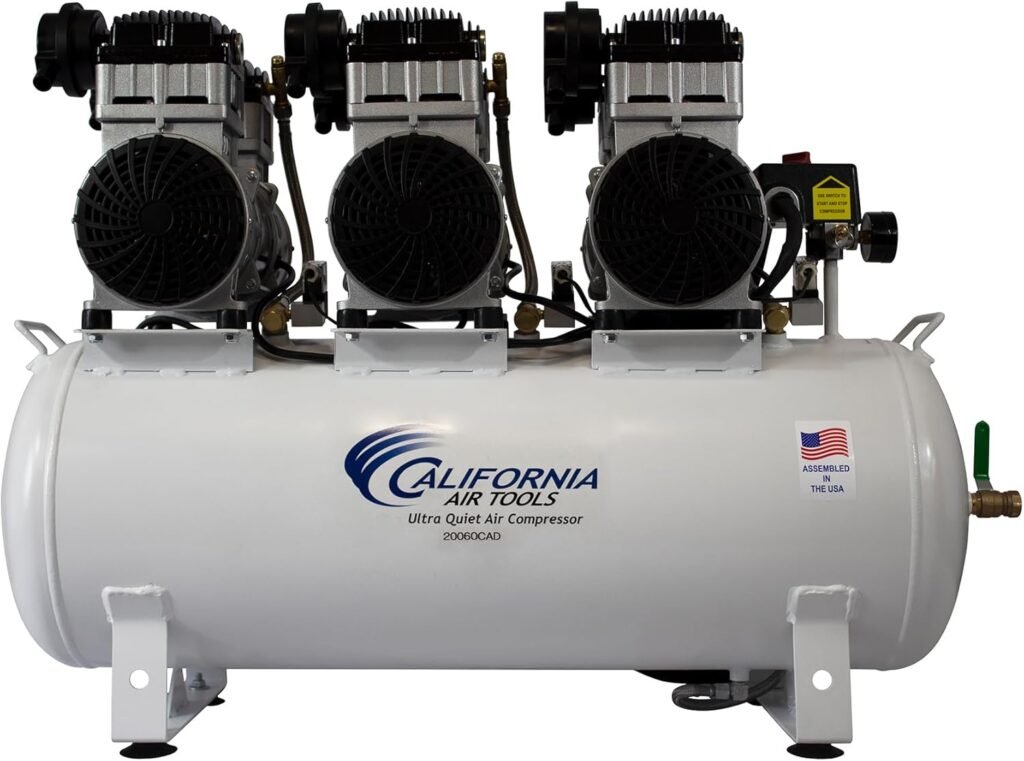
When we first look at the California Air Tools 20060CAD Powerful 6.0 HP Ultra Quiet and Oil-Free Air Compressor, 20 Gallon Tank, 78 dB Noise Level, with Automatic Drain Valve, 220V / 60Hz, Off White, we immediately notice how purpose-built it is for serious, frequent use. It is not a tiny portable unit; it is a hefty, workhorse compressor designed to run multiple tools and support longer projects.
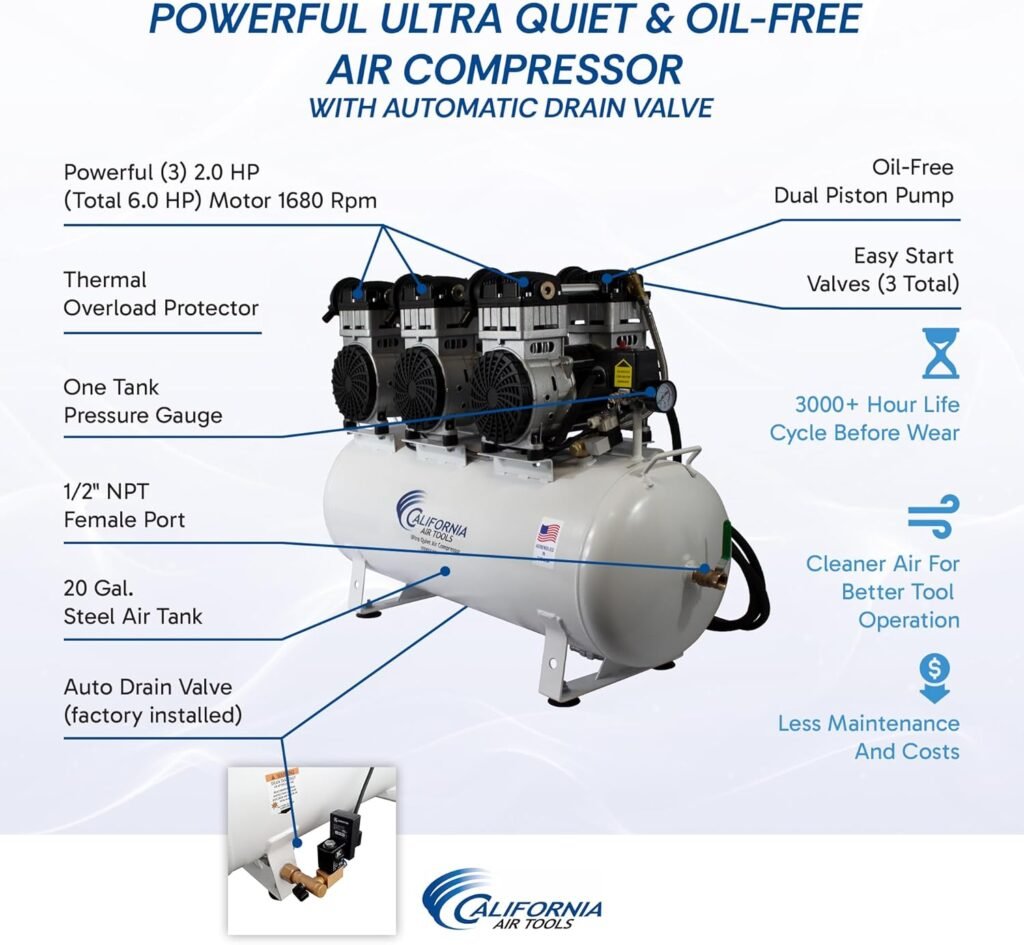
We see a strong combination of features here: a 6.0 HP motor setup, a 20-gallon tank, oil-free dual piston pump, and a relatively quiet 78 dB operating level. That mix positions this compressor for shops, garages, and small professional environments that value both performance and a more comfortable noise level.
Key Specifications at a Glance
To understand what we are getting, it helps to see the main specs laid out clearly. These numbers tell us how much power, capacity, and convenience we can expect once it is in our workspace.
| Feature | Specification |
|---|---|
| Model | California Air Tools 20060CAD |
| Motor Power | 6.0 HP total (three 2.0 HP motors) |
| Pump Type | Oil-free dual piston |
| Voltage / Frequency | 220V / 60Hz |
| Noise Level | 78 dB |
| Tank Capacity | 20-gallon steel tank |
| Air Delivery (CFM @ 40 PSI) | 19.80 CFM |
| Air Delivery (CFM @ 90 PSI) | 14.60 CFM |
| Pump Life Cycle | Over 3000 hours |
| Weight | 178 lbs |
| Dimensions (L x W x H) | 40″ x 15″ x 28″ |
| Special Features | Automatic drain valve, thermal overload protection, pressure control gauge |
| Color | Off white |
This quick breakdown shows us that we are dealing with a substantial machine that aims to balance performance, noise control, and reduced maintenance.
Noise Level: Is 78 dB Really “Ultra Quiet”?
When we read “ultra quiet,” we might be skeptical. Air compressors have a reputation for being loud, rattling beasts that force us to shout over them. At 78 dB, this model sits in a comfortable range compared to many traditional compressors.
In practical terms, 78 dB is comparable to a vacuum cleaner or a loud conversation, rather than the harsh, hammering noise of many large shop compressors. We will still hear it, but it is far less jarring and stressful on our ears.
Why a Quieter Compressor Matters
If we work in a shared space, a home garage next to living areas, or a small commercial shop, sound becomes a real quality-of-life issue. A quieter compressor lets us work longer without feeling drained by constant noise.
We might also appreciate the quieter operation when we have customers nearby, neighbors close to our garage, or family at home. It means fewer complaints and less need to shut everything down just to have a conversation.
Oil-Free Dual Piston Pump: Low Maintenance and Cleaner Air
One of the standout features here is the oil-free dual piston pump. Oil-free technology has become very attractive for many of us who want something that just works without constant upkeep.
With this design, we are not dealing with regular oil changes, oil level checks, or the risk of oil contaminating our air lines. For projects where cleaner air matters—like painting, finishing work, or using sensitive pneumatic tools—that is a big plus.
Durability and Life Cycle
The manufacturer states a life cycle of over 3000 hours for the pump, which is quite significant for an oil-free system. That indicates it is not just meant for occasional home use; it can handle more demanding schedules.
We can expect this kind of longevity to suit:
- Small to mid-size workshops
- Home garages with frequent DIY projects
- Light commercial environments
- Contractors who need a reliable unit in a jobsite trailer or shop
As with any compressor, actual life depends on how we use and maintain it, but the rating gives us confidence in its overall build quality.
Powerful 6.0 HP Motor Setup
Instead of a single massive motor, the California Air Tools 20060CAD uses three 2.0 HP motors working together. This configuration is interesting because it allows high total horsepower with motors that each run at only 1680 RPM.
Running at a lower RPM is one of the reasons the compressor stays quieter and experiences less wear and tear. High-RPM units often generate more noise, more heat, and more vibration. By keeping the speed down, this system aims for smoother, more durable performance.
What This Power Means for Real-World Use
The real measure of power comes from the CFM ratings:
- 19.80 CFM at 40 PSI
- 14.60 CFM at 90 PSI
These numbers are strong for a 20-gallon compressor in this noise class. They give us enough airflow to run many air tools continuously or nearly continuously, including:
- Impact wrenches and ratchets
- Air hammers
- Spray guns (for many finishing tasks)
- Die grinders and sanders (depending on demand)
- Nailers and staplers (easily handled)
We should always check the CFM requirements of our tools, but this compressor is clearly meant to support more than casual nail gun use. It fits the profile of a shop workhorse rather than a small hobby unit.
20-Gallon Steel Tank: Capacity and Portability Balance
Tank size affects how the compressor behaves during use. At 20 gallons, we get a generous buffer of stored air that helps:
- Reduce how often the motor needs to start and stop
- Provide smoother airflow for high-demand tools
- Support short bursts of heavy use without immediate pressure drops
The tank is made of steel, contributing to the sturdy 178-pound weight. This weight gives a solid, stable footprint, but it also means we should plan its location carefully since it is not something we will casually move around like a small pancake unit.
Where a 20-Gallon Tank Fits Best
We see this capacity working nicely in:
- A dedicated garage workshop
- A small to medium professional shop
- A jobsite where it can stay in a fixed position
- A trailer or service truck (if we have a way to secure and move it safely)
It is not too big to be unreasonable in a home garage, yet not too small to feel underpowered for heavier tools and projects.
Automatic Drain Valve: A Small Feature That Solves a Big Headache
Moisture is an unavoidable side effect of compressing air. Over time, water collects in the tank, leading to:
- Corrosion inside the tank
- Rust particles in our air lines
- Moisture causing trouble for tools and finishes
Many of us know we should manually drain our tanks every day, but we might forget or put it off. The automatic drain valve on this compressor removes that chore by regularly releasing built‑up moisture without us having to remember.
Why We Appreciate the Auto Drain
This feature extends tank life, improves air quality, and keeps the compressor functioning more reliably. It is especially useful in humid climates where moisture builds up quickly.
For anyone who has ever seen rusty water blow out through an airline or discovered a weakened tank, this type of built‑in protection feels like a big upgrade.
Electrical Requirements: 220V / 60Hz
This compressor is rated for 220V / 60Hz power, which is typical of many larger shop tools in North America. That higher voltage allows the unit to deliver strong performance with less strain and lower current draw compared to similar power at 120V.
However, this also means we must ensure we have the correct circuit and outlet available. If we are using it in a home garage, we may need to add a suitable 220V line if one is not already present.
Planning for Power
We should think about:
- Confirming that our panel can support another 220V circuit
- Using the proper breaker size as recommended by the manufacturer or electrician
- Ensuring safe, code-compliant installation
Once that is in place, the compressor is ready to run at full capability without overloading typical household circuits.
Safety and Protection Features
Air compressors put mechanical and electrical systems under constant load. Safety features are not just nice extras; they are essential. The California Air Tools 20060CAD includes several important protections:
- Thermal overload protection: Helps prevent damage to the motors if they overheat.
- Pressure control gauge: Lets us see and manage the output pressure for different tools and tasks.
- Sturdy construction: Steel tank and solid frame provide stability and support.
These elements work together to keep the unit running safely and help us avoid costly repairs or unsafe situations.
Working With Confidence
We can run the compressor during longer tasks knowing there is a layer of built‑in protection against overheating and over‑pressurizing. Combined with the relatively quiet operation, this adds to the feeling that we are working with a well‑designed, professional-grade machine.

Design and Build Quality
The physical design of the 20060CAD emphasizes a compact footprint relative to its tank capacity. At 40″ long, 15″ wide, and 28″ high, we can place it against a wall or in a corner without eating up too much floor space.
The off‑white color gives it a cleaner, more modern look compared to the usual bright red or blue tanks. That is not a functional detail, but in a neat shop or showroom, aesthetics can be a nice extra.
Ergonomics and Practical Details
While this is not a tiny portable unit, the overall size and layout make it reasonably manageable to position during setup. Once it is in place, it is mostly about connecting our air lines and power, then letting it do its job.
We might also appreciate:
- Straightforward gauge layout
- Clearly accessible drain and connections
- Stable stance thanks to its weight and frame design
All these small touches make daily use feel easier and less frustrating.
Performance in Different Environments
One of the claims for this compressor is that it works well across various temperatures and terrains. Since it uses an oil-free pump, we do not have to worry as much about oil viscosity changes in cold weather or spills in uneven or mobile setups.
In a Home Garage
For us as home DIY users, this unit might feel like “more compressor than we ever thought we needed.” However, if we run:
- Impact wrenches for automotive work
- Sprayers for furniture refinishing
- Sanders or grinders
- Multiple nail guns when building projects
then the airflow capacity and quiet operation can transform the way we work. We can stay productive without constant pauses for pressure recovery, and without shaking the house with noise.
In a Small Professional Shop
In a small auto shop, cabinet shop, or fabrication space, this compressor can serve as a primary or backup unit. The oil-free design and automatic drain help minimize maintenance time, while the CFM output supports multiple users or tool types.
In these environments, noise reduction becomes especially valuable when workers are nearby for full workdays. The 78 dB level helps keep the overall shop environment more comfortable and less fatiguing.
On a Jobsite or Mobile Setup
At 178 pounds, we will not casually lift this compressor, but with a proper ramp, dolly, or lift, it can be moved onto a trailer or truck. For contractors who maintain a mobile workshop or jobsite trailer, the combination of power, moderate noise, and lower maintenance is very appealing.
The automatic drain and oil-free pump also reduce the hassle of regular service tasks in remote or rotating locations.
Pros and Cons Summary
It can be useful to step back and look at what we gain and what trade‑offs we accept with this model.
Advantages
- Relatively quiet for its size and power (78 dB)
- Strong airflow: 19.80 CFM @ 40 PSI and 14.60 CFM @ 90 PSI
- Oil-free dual piston pump reduces maintenance and keeps air cleaner
- Automatic drain valve prevents moisture buildup with minimal effort
- Durable design with over 3000-hour pump life cycle
- 20-gallon steel tank balances capacity and footprint
- Thermal overload protection for safer long-term operation
- 220V / 60Hz power supports robust, efficient performance
- Suitable for varied temperatures and terrains
Potential Drawbacks
- Requires 220V power, which not all home garages already have
- 178-pound weight makes it more of a stationary unit than a truly portable one
- Larger and more expensive than small hobby or single‑tool compressors
- Off-white casing can show dirt and shop grime more easily than darker colors
By understanding these pros and cons, we can better judge if it fits our specific needs and workspace.
Best Use Cases for the California Air Tools 20060CAD
Not every compressor is right for every user. This model shines in particular scenarios where we want a balance of power, quieter operation, and ease of ownership.
Ideal Scenarios
- Dedicated Home Workshops: For serious DIYers who frequently use air tools or do automotive work.
- Small to Medium Commercial Shops: Auto repair, woodworking, fabrication, or similar trades needing reliable airflow.
- Jobsite Trailers or Remote Workstations: Where maintenance time is limited but performance is crucial.
- Noise-Sensitive Workspaces: Shared commercial spaces, home garages near living areas, or shops with customers present.
If we are using air tools only occasionally—say, a brad nailer every few weeks—this compressor might be more than we truly require. But if we are pushing smaller compressors to their limits, this unit becomes very attractive.
Comparing With Traditional Oil-Lubricated Compressors
Many of us grew up around oil-lubricated compressors and might wonder how this oil-free model stacks up. Each approach has its strengths, and it helps to think through the differences.
Oil-Free vs. Oil-Lubricated
-
Maintenance
- Oil-free: No oil changes, no oil checks, generally simpler upkeep.
- Oil-lubricated: Regular oil changes and level monitoring required.
-
Air Quality
- Oil-free: Cleaner air, less risk of oil contamination in lines—better for painting and finishing.
- Oil-lubricated: Possible oil mist in air stream; filtration becomes more important.
-
Durability
- Historically, oil-lubricated models were considered longer-lasting.
- Modern oil-free dual piston pumps (like this one with 3000+ hour life) narrow that gap significantly.
-
Noise
- Oil-free designs often emphasize lower RPM and quieter operation, as we see here.
- Many older oil-lubricated shop compressors can be significantly louder.
Overall, this model offers the best of current oil-free technology, giving us serious durability without the oil-related hassles.
Day-to-Day Experience: What It Feels Like to Use
When we think about owning this compressor, we picture daily tasks rather than just specs. Our typical experience would look like:
-
Start-Up
We switch it on, and it comes to life with a steady hum rather than a jarring roar. We might still want hearing protection when working close by for long periods, but it is noticeably more comfortable than many big shop units. -
Waiting for Pressure
The 6.0 HP system fills the 20-gallon tank in a reasonable time, allowing us to get to work fairly quickly. -
Tool Use
As we run an impact wrench, sprayer, or grinder, we see how well the tank and airflow keep up. For many tools, it provides steady, reliable performance without constant pauses. -
Maintenance
We do not have to remember to drain the tank at the end of the day or schedule oil changes. We mainly need to watch the gauges, check connections, and follow basic safety and inspection practices. -
Noise and Comfort
We can talk near the compressor more easily, listen to a radio in the shop, or keep a conversation going without shouting. This lower noise adds a lot to our willingness to use the compressor regularly.
Who Might Not Need This Much Compressor?
It is also honest to recognize who may not benefit as much from this unit. If we:
- Only use a small brad nailer occasionally
- Rarely use air tools at all
- Have no access or ability to install a 220V outlet
- Need something ultra-portable to carry with one hand
then a smaller, simpler compressor might be more appropriate. The 20060CAD is clearly designed for users who treat compressed air as a central part of their work, not an occasional convenience.
Tips for Getting the Most Out of This Compressor
To maximize the value and lifespan of the California Air Tools 20060CAD, we can adopt a few good habits from the start.
Setup and Placement
- Position it on a level, solid surface.
- Allow enough clearance around it for air flow and access to drains, gauges, and connections.
- If noise is still a concern, place it in a corner or against a wall that can help block sound toward sensitive areas.
Electrical Considerations
- Use a properly rated 220V circuit.
- Avoid long, undersized extension cords, which can cause voltage drop and overheating.
- Consult an electrician if we are unsure about correct wiring and breakers.
Air Delivery System
- Use hoses and fittings that match the CFM capacity of the compressor.
- Consider a moisture filter and regulator at our work area, especially for painting or sensitive tools.
- Keep hoses in good condition to avoid leaks that waste air and strain the compressor.
Routine Checks
Even with an oil-free pump and auto drain, it is wise to:
- Periodically inspect the tank for any signs of exterior corrosion.
- Monitor for any unusual noises or vibration changes.
- Confirm that the automatic drain is functioning properly.
- Keep dust and debris away from cooling areas and vents.
These simple habits help ensure we enjoy the full 3000+ hour life and beyond.
Energy Use and Operating Efficiency
Running a 6.0 HP compressor is not free, so we care about how efficiently it converts electricity into work. While specific energy consumption numbers are not listed, we can infer several efficiency factors:
- Lower RPM motors generate less friction and heat, wasting less power as noise and vibration.
- Properly sized tank minimizes excessive cycling, which can waste energy.
- Oil-free design reduces internal drag related to oil viscosity in certain conditions.
We can also manage efficiency on our side by:
- Avoiding air leaks in hoses and fittings
- Shutting off the compressor when it is not needed for extended periods
- Matching outlet pressure to the tool’s actual requirements instead of running unnecessary high pressure
By treating compressed air as a valuable resource rather than an endless supply, we get more value and lower operating costs.
A Closer Look at Noise Comfort
While 78 dB is a numerical rating, our comfort experience depends on more than just the number. The quality of the sound, its pitch, and how constant it is all play a role.
Sound Character
Lower-RPM compressors tend to sound like a steady mechanical hum rather than a high-pitched whine or sharp knocking. That type of noise can blend into the background more easily, especially if we have other shop sounds like fans or radios.
If we mount the compressor on vibration‑dampening pads or position it on solid flooring, we also cut down on transmitted noise through the building structure. This helps make the sound even less intrusive.
Practical Hearing Considerations
We might still choose to wear hearing protection when working close by for extended periods, since 78 dB is not whisper-quiet. However, it is far more comfortable than being around many industrial compressors that can exceed 90 dB or more.
For our neighbors, family, or coworkers, this difference can be the line between constant irritation and an acceptable background sound.
Long-Term Ownership Perspective
When we think about buying a compressor like this, we are making a multiyear decision. Over that time, what we tend to notice most is:
- Whether it keeps up with our tools
- How often it needs attention or repair
- How annoying its noise is during long projects
- How well it handles changes in season and workload
With the California Air Tools 20060CAD, the combination of a strong pump life rating, oil-free design, automatic draining, and lower noise aims to make that long-term experience simpler and more pleasant.
We may pay more upfront compared to basic units, but we gain time, comfort, and consistency over the years. That can be worth a lot if we rely on compressed air as a daily necessity rather than an occasional luxury.
Final Thoughts: Is the California Air Tools 20060CAD Right for Us?
If we are looking for a powerful, relatively quiet, and low-maintenance air compressor that can serve as a central part of our workshop or small business, the California Air Tools 20060CAD is a very strong candidate.
We get:
- Serious airflow for demanding tools and longer jobs
- Quieter operation than many comparable units at only 78 dB
- Oil-free convenience and cleaner air for our projects
- Automatic draining, reducing a notorious maintenance chore
- A 20-gallon steel tank and 6.0 HP motor setup tailored to real-world workloads
We do need to be ready for the 220V requirement, the 178-pound weight, and the fact that this is not a tiny portable machine. But for those of us who want a long‑term, shop-grade solution without sacrificing our ears or our time on maintenance, this compressor offers a compelling balance.
If our workflow involves frequent air tool use, automotive work, spraying, or multi‑tool setups, and we care about both performance and comfort, the California Air Tools 20060CAD feels like the kind of tool we can install, rely on, and appreciate every time we switch it on.

Disclosure: As an Amazon Associate, I earn from qualifying purchases.