Have we ever wished our air suspension system could keep up with our lifestyle without constantly making us worry about heat, pressure, or reliability?

What Is the VIAIR 480C Dual Air Compressor and Who Is It For?
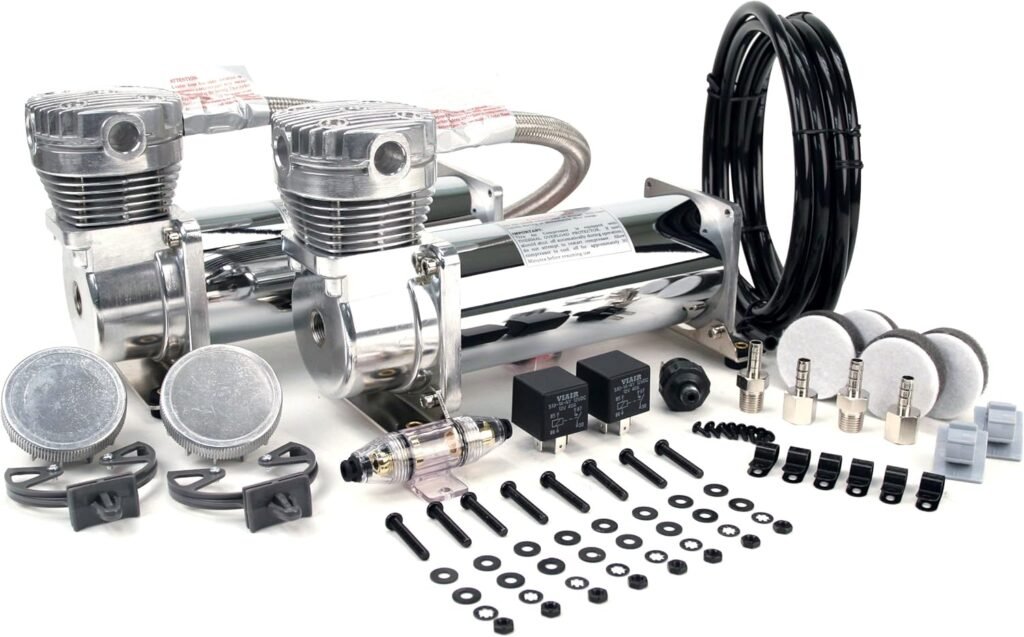
When we talk about the VIAIR 480C Dual Air Compressor (Chrome, 12V, 200 PSI), we are really talking about a serious upgrade for any air suspension or on‑board air setup. This is a pair of heavy‑duty, continuous‑duty compressors designed for people who actually use their systems hard and often.
These compressors suit us best if we run air suspension, air bags, air tanks, or air horns and we want consistent performance, faster fill times, and long-term durability. If we are tired of small, cheap compressors that overheat or struggle at higher pressures, this kit sits in a completely different category.
Key Specifications at a Glance
Before we get into real‑world use, it helps to see the core specs the manufacturer lists. These numbers tell us a lot about what we can reasonably expect from this setup.
| Feature | Specification |
|---|---|
| Product Name | VIAIR 480C Dual Air Compressor (2 Pack), Chrome |
| Voltage | 12V DC |
| Max Working Pressure | 200 PSI |
| Duty Cycle | 100% at 100 PSI (continuous), 50% at 200 PSI |
| Quantity in Kit | 2 Compressors |
| Finish | Chrome |
| Thermal Overload Protection | Built‑in (automatic shutoff when overheated) |
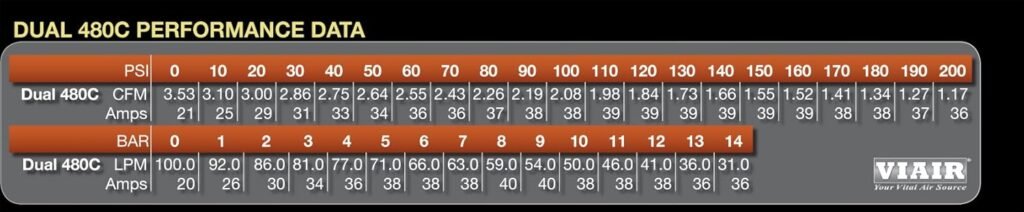
| Tank Fill Performance (reference) | Fills a 2.5‑gallon tank from 0 to 200 PSI in about 2 min 22 sec |
| Application Use | Air suspension, air tanks, air bags, air horns, general on‑board air |
These specs show us right away that this kit is aimed at serious vehicle setups. Twin compressors, 200 PSI capability, and a 100% duty cycle at 100 PSI are strong indicators we are not dealing with entry‑level equipment.
Build Quality and Design
Construction and Materials
We can feel a difference in quality when we handle the VIAIR 480C compressors. The chrome finish is not just there to look flashy; it also has functional value. Chrome offers extra protection against corrosion and harsh weather, which matters when we mount these under a truck, in a bed, or in a wheel well where moisture and road grime live.
The compressors use robust housings, solid brackets, and high‑quality hardware. Components feel tight and precise, not loose or flimsy. That sturdiness matters if we drive on rough roads, off‑road, or simply rack up plenty of highway miles.
Chrome Finish and Aesthetics
Many of us care about how our engine bay or trunk setup looks. The chrome version of the 480C gives us a cleaner, more polished look versus plain black or uncoated metal. When we pair them with a nicely mounted air tank and clean wiring, the overall impression is that our system is professionally built.
Even if aesthetics are secondary, the coating still offers an additional protective layer against the elements, which can extend the life of the compressors.
Duty Cycle and Heat Management
Understanding the Duty Cycle
The most important performance detail here is the duty cycle rating: 100% at 100 PSI and 50% at 200 PSI. In simple terms, this means:
- At 100 PSI, the compressors are rated for continuous operation. We can run them non‑stop without requiring rest periods, assuming they have proper ventilation.
- At 200 PSI, they are rated for a 50% duty cycle. That means for every 10 minutes, they should run for 5 minutes and rest for 5 minutes in a continuous cycle, under that specific pressure condition.
This rating is a big step above many cheaper compressors that might be 25% duty at lower pressures. A higher duty cycle means we get more consistent performance, we wait less between runs, and we stress the components less over time.
Thermal Overload Protection
We all know heat is the enemy of any compressor. VIAIR includes built‑in thermal overload protection, which automatically shuts the compressor down when temperatures exceed safe levels. This is especially important if:
- We live in a hot climate
- We run the system hard during summer
- We have limited airflow in the mounting location
Instead of burning up the motor, the compressor protects itself and then resets once it has cooled. We might be temporarily annoyed if it cuts out unexpectedly, but in the long run, it saves us from replacing a burnt‑out unit.

Pressure Capability and Real‑World Use
200 PSI Max Working Pressure
A 200 PSI max working pressure opens up more options for us than many 150 PSI systems. With 200 PSI, we can:
- Run air suspension with enough overhead for load leveling and lifting
- Feed air horns that need higher pressures for loud and sharp sound
- Store more usable air in the same tank volume, giving us more “reserve” for tools or repeated uses
While we might not always need to fill all the way to 200 PSI, having that ceiling means the compressors are operating within their capabilities rather than constantly near their limit.
Performance with a 2.5‑Gallon Tank
The manufacturer’s reference spec says the dual 480C setup fills a 2.5‑gallon tank from 0 to 200 PSI in about 2 minutes and 22 seconds. For a system rated to 200 PSI, that is impressive. This gives us a sense of how quickly we can go from empty to full pressure in normal use.
We can translate that into real life:
- Air suspension: adjusting ride height or refilling after airing out becomes faster and more responsive.
- Air horns: if we trigger the horns several times, the tank refills quickly enough that we are not waiting forever to be ready again.
- Light air tools or airing tires: we can perform multiple tasks without a long pause between cycles.
Our actual time might vary with line size, wiring, check valves, tank location, and ambient temperature, but the spec gives us a solid performance baseline.
Installation Considerations
Space and Mounting Layout
Because this is a dual compressor kit, we need enough space not only for each compressor but also for proper airflow around them. We will usually mount them:
- In the trunk or rear cargo area
- Under the bed of a truck
- On a frame rail with shields or covers
- In a specialized compressor/tank enclosure
We need to think in advance about the orientation, vibration isolation, and how we will run air lines and electrical wiring. Ideally, we give them room to “breathe” so the cooling fins and housing can dissipate heat properly.
Wiring and Power Requirements
High‑performance compressors draw real current, so our wiring has to be up to the job. We want:
- Appropriately sized power wire (gauge large enough for the length of run and amperage draw)
- Good grounds to bare metal
- Proper fusing or circuit breakers for each compressor
- A quality pressure switch controlling the on/off cycle
Because we are dealing with two compressors, current draw is cumulative. We should verify our alternator and battery are up to the system’s needs, especially if we run other accessories (lights, audio, winch, etc.). It is also wise to keep the wiring as short and direct as practical to minimize voltage drop.
Noise and Vibration Management
Compressors make noise and create vibrations—that is unavoidable. However, good mounting techniques can reduce the annoyance to a reasonable level:
- Use rubber isolator feet or pads where the brackets attach to the vehicle
- Avoid thin, resonant panels that can amplify sound
- Secure air lines and wires so they do not rattle or buzz
Compared with many low‑quality compressors, VIAIR units are relatively refined, but we should still plan ahead if we care about cabin noise or if our system is near sleeping areas (for example, in a camper or overland rig).
Performance for Air Suspension Systems
Ride Height Adjustments and Responsiveness
If we run air bags or a full air suspension system, the VIAIR 480C dual pack is aimed right at our use case. The dual‑compressor design means our tank recovers faster, which affects how responsive the system feels:
- Raising from “aired out” to ride height happens more quickly and consistently.
- We can make multiple adjustments (front, rear, individual corners) without waiting long for the compressors to catch up.
- If we carry loads, tow trailers, or frequently switch between loaded and unloaded states, the higher duty rating means we can keep the system active without constant rest periods.
The compressors work comfortably in the 100–150 PSI range that many bag systems use, and since they are rated for 100% duty cycle at 100 PSI, this is their sweet spot.
Long‑Term Reliability Under Daily Use
One of the more important benefits for air suspension drivers is how this kit handles regular, daily cycling. Cheap compressors may work initially but then struggle or fail prematurely once subjected to months of real driving.
With the 480C dual setup, we are getting:
- Motors designed to handle continuous service at moderate pressures
- Built‑in protection to prevent thermal damage
- A brand with a track record in the air suspension and on‑board air community
That combination gives us more confidence if this vehicle is our daily driver, work truck, or road trip rig where reliability matters heavily.
Use with Air Tanks and On‑Board Air
Tank Sizing and Fill Strategy
The 2.5‑gallon fill time specification gives us a benchmark for planning our tank size. We can use this to estimate performance for other tank sizes:
- Smaller tank (e.g., 1–2 gallons): fills even faster, but we have less stored volume for extended tasks.
- Larger tank (e.g., 3–5 gallons or more): more reserve for air tools, tire inflation, and multiple horn blasts, but fill time extends roughly in proportion to the tank volume.
With a dual 480C kit, a 3–5 gallon tank is quite reasonable for most vehicle setups. We just want to balance our space, weight, and how often we actually drain the tank aggressively.
Practical Uses Beyond Suspension
While this combo is marketed heavily for air suspension, we can use it for a variety of tasks, which makes it more valuable overall:
- Inflating tires (especially larger truck or off‑road tires)
- Operating air horns
- Running small pneumatic tools for short bursts
- Blowing out dust, cleaning work areas, or operating air‑powered accessories on an overland build
We would not treat this as a replacement for a full‑size shop compressor, but for mobile, on‑board use, it punches well above what many single small compressors offer.
Air Horn Compatibility and Performance
Supplying High‑Pressure Air to Horns
Air horns generally benefit from higher pressures and reliable air supply. The 200 PSI capacity of the dual 480C kit helps horns reach their full volume and tone. With a properly matched tank and solenoid, we can:
- Achieve louder, sharper horn output
- Trigger the horn multiple times without a big drop in volume
- Rely on quick recovery from the compressors between bursts
This matters especially for drivers who use their horns frequently—for example, in large trucks, RVs, or show vehicles where horn performance is a highlight.
Reliability and Consistency
Because the compressors do not strain at moderate pressures, the air supply for our horns remains consistent over time. Instead of a horn that sounds good the first few blasts and then becomes weak or inconsistent, our system stays ready for regular use.
Noise, Vibration, and User Experience
How Loud Are These Compressors?
No on‑board compressor is truly quiet, but VIAIR does a respectable job balancing power and sound levels. The 480C dual kit will be:
- Audible when running, especially in enclosed areas
- Noticeable if mounted directly to thin sheet metal
- Less intrusive if installed in a trunk, under the bed, or behind good insulation
In practice, once we are driving, road noise usually masks most of the compressor sound, especially if they cycle only intermittently as the tank maintains pressure.
Reducing Perceived Noise
We can significantly improve our experience by planning our installation thoughtfully:
- Use isolation mounts and rubber pads.
- Avoid mounting very close to the cabin firewall if the cabin is poorly insulated.
- Route the intake to a quieter location if possible, especially if we are particularly sensitive to high‑frequency noise.
Most owners who install these correctly report that the noise is more of a background hum than a constant annoyance.
Comparing the 480C Dual Pack to Other Options
Why Choose a Dual 480C Instead of a Single Compressor?
Going with a dual pack offers several advantages over a single compressor of similar size:
- Faster tank fill times
- Built‑in redundancy: if one compressor has an issue, we might still have partial function from the other
- Reduced strain on each compressor because they can share the workload
For active air suspension or heavy on‑board air use, this redundancy and speed become more than just a luxury; they contribute directly to reliability.
Where It Stands in the VIAIR Lineup
Within VIAIR’s lineup, the 480C dual pack sits in the higher‑end segment geared toward serious users. It is more robust than smaller, lower‑duty models but not as massive as some specialty, extremely high‑output units.
For many of us with 12V systems who need up to 200 PSI and continuous use at mid‑range pressures, this kit hits a very practical balance: strong performance, proven reliability, and a form factor that still fits typical vehicles.
Maintenance and Longevity
Routine Checks We Should Do
To keep the VIAIR 480C dual compressors healthy, we do not need an elaborate maintenance routine, but some basic steps go a long way:
- Periodically inspect wiring connections for corrosion or looseness.
- Check air lines and fittings for leaks using soapy water or leak detection fluid.
- Ensure the compressors’ intake filters (if installed) are clean and not blocked.
- Make sure the mounting hardware remains tight and the rubber isolators are not cracked or deteriorated.
These simple checks help prevent performance loss, overheating from excessive run time due to leaks, and random failures on the road.
What Affects Lifespan the Most
The main factors that influence longevity are:
- Heat: proper ventilation and avoiding constant high‑pressure operation extend life.
- Duty cycle respect: running within or below rated duty cycle helps the motors last longer.
- Electrical quality: undervoltage from poor wiring or weak batteries can strain the motors.
If we treat the kit as heavy‑duty but not indestructible and run it within its design limits, we can reasonably expect a long service life.
Pros and Cons of the VIAIR 480C Dual Air Compressor
What We Are Likely to Love
We can list several standout benefits that make this kit attractive:
- Strong duty cycle: 100% at 100 PSI lets us run the compressors continuously at moderate pressures.
- 200 PSI max pressure: Plenty of headroom for suspension, horns, and on‑board air.
- Dual‑compressor setup: Faster fills, redundancy, and better workload distribution.
- Thermal overload protection: Automatic safety against excessive heat.
- High‑quality construction: Solid materials and chrome finish for durability and appearance.
- Versatility: Suitable for air suspension, air tanks, air horns, and general on‑board air needs.
Trade‑Offs We Should Be Aware Of
No product is perfect, and there are some points we need to consider:
- Current draw: Dual compressors can place a substantial load on our electrical system, especially if we have other accessories.
- Noise: While not extreme, they are still audible, especially in tight spaces.
- Space requirements: We need enough room to mount two compressors plus tank, wiring, and accessories.
- Install complexity: Dual systems are slightly more involved to install than a simple, single compressor kit.
If we understand these factors going in, none of them are deal‑breakers; they simply require proper planning.
Practical Tips for Getting the Most from This Kit
Planning Our System Layout
Before we start bolting things down, it helps to sketch out our system:
- Decide where the tank will go and how close the compressors can be mounted.
- Plan the route for air lines to suspension components or horns.
- Choose mounting points that are strong and not prone to flex.
- Consider access for future maintenance or inspections.
Laying this out beforehand often prevents frustration later, especially if we discover clearance issues after we have started drilling.
Wiring Best Practices
To keep everything safe and reliable, we should:
- Use quality automotive wire of the proper gauge, not generic household extension cable.
- Crimp and, ideally, heat‑shrink electrical connections for durability.
- Run wires away from sharp edges or hot components like exhaust parts.
- Use appropriate fuse sizes as recommended by VIAIR and place them close to the power source.
Good wiring not only supports performance but also reduces the risk of electrical failures or shorts.
Real‑World Use Cases Where This Kit Shines
Daily Driven Air‑Suspension Cars and Trucks
For those of us who run bagged daily drivers, this kit lets us:
- Air out at shows or parking lots and return to driving height without long waits.
- Maintain consistent tank pressure for automatic height management systems.
- Trust that our compressor setup will not overheat during normal commuting and weekend fun.
The combination of 100% duty cycle at 100 PSI and a respectable 200 PSI ceiling makes daily operation smooth and predictable.
Work Trucks and Towing Rigs with Air Bags
If our primary interest is load‑leveling bags on a work truck, tow rig, or camper, this setup is more than capable:
- We can adjust ride height frequently as loads change, without worrying about compressor cooldowns.
- The system can maintain air in the bags and supply other accessories without running at the edge of its abilities.
- We can integrate it into existing upfit packages fairly easily, given the standard 12V design.
For vehicles that earn money or haul family, avoiding downtime and failures is a big benefit.
Overland and Adventure Builds
Overlanders and adventure travelers often need a reliable air source for tires, tools, and accessories. In that context, the VIAIR 480C dual pack offers:
- Sufficient pressure and volume for truck and SUV tires after off‑road airing down.
- Capacity to support lockers, horns, and suspension simultaneously.
- Long‑duty performance in remote environments where help is not nearby.
We just need to ensure our electrical system (battery, alternator, possibly an auxiliary battery) matches the higher demand of this dual‑compressor configuration.
Value for Money and Overall Assessment
Balancing Cost and Performance
We should look at this not just as two compressors, but as a long‑term piece of our vehicle system. When we factor in:
- Higher duty cycle and reduced overheating
- Faster tank fills and better responsiveness
- Greater reliability and thermal protection
- Versatile usage for suspension, horns, and general air
The overall value is strong, especially for those of us who actually use air every day or on frequent trips. Cheaper compressors might save money up front, but they frequently cost more in replacement, frustration, and downtime.
Who Gets the Most Benefit from This Product?
We are likely to be happiest with the VIAIR 480C Dual Air Compressor kit if:
- We run air suspension or air bags and use them regularly.
- We need or want up to 200 PSI in our system.
- We appreciate faster fill times and reduced wait periods.
- We care about durability, thermal protection, and consistent performance.
If our needs are very light—occasional tire top‑offs a few times a year—a smaller, simpler solution could be enough. But for builders, enthusiasts, and serious users, this kit fits squarely into the “buy once, cry once” category.
Final Thoughts: Is the VIAIR 480C Dual Air Compressor Right for Us?
When we step back and look at the whole package, the VIAIR 480C Dual Air Compressor for Air Suspension (Chrome, 12V, 200 PSI) offers a thorough solution for demanding air systems. We get:
- Dual 480C compressors with strong build quality
- 100% duty cycle at 100 PSI and 50% at 200 PSI
- A 200 PSI max working pressure that broadens what we can do with our tank
- Built‑in thermal overload protection for safety and longevity
- Fast fill times, exemplified by the 2.5‑gallon tank spec of about 2 minutes and 22 seconds from 0 to 200 PSI
If we are building or upgrading an air suspension, planning a reliable air horn setup, or outfitting a serious on‑board air system, this kit gives us power, resilience, and flexibility in one package. With proper installation and wiring, it becomes a dependable core component we can trust on daily drives, long hauls, and weekend adventures.

Disclosure: As an Amazon Associate, I earn from qualifying purchases.