?Are we ready to upgrade our workshop’s compressed air capability with the VEVOR 80 Gallon Air Compressor, 145PSI Oil Free Stationary Compressor Tank, 6.5HP 15.5SCFM@90 PSI, Quiet Compressor for Industrial Manufacturing, Workshops (220V/60Hz Single-Phase Power)?

Product Snapshot
We want to know at a glance what this machine can do, so we summarize the essentials here. The VEVOR 80 Gallon Air Compressor packs a 6.5 HP oil-free motor with a dual-stage compression system designed to deliver up to 15.5 SCFM at 90 PSI and reach a maximum of 145 PSI, all while operating on 220V/60Hz single-phase power.
Key Specifications
We list the most relevant specs so we can compare them quickly when shopping or troubleshooting. These specifications are the baseline for performance expectations and installation planning.
| Feature | Specification | Notes |
|---|---|---|
| Model | VEVOR 80 Gallon Air Compressor, 145PSI Oil Free Stationary Compressor Tank, 6.5HP 15.5SCFM@90 PSI | Full product name for clarity |
| Motor Power | 6.5 HP | Oil-free motor design |
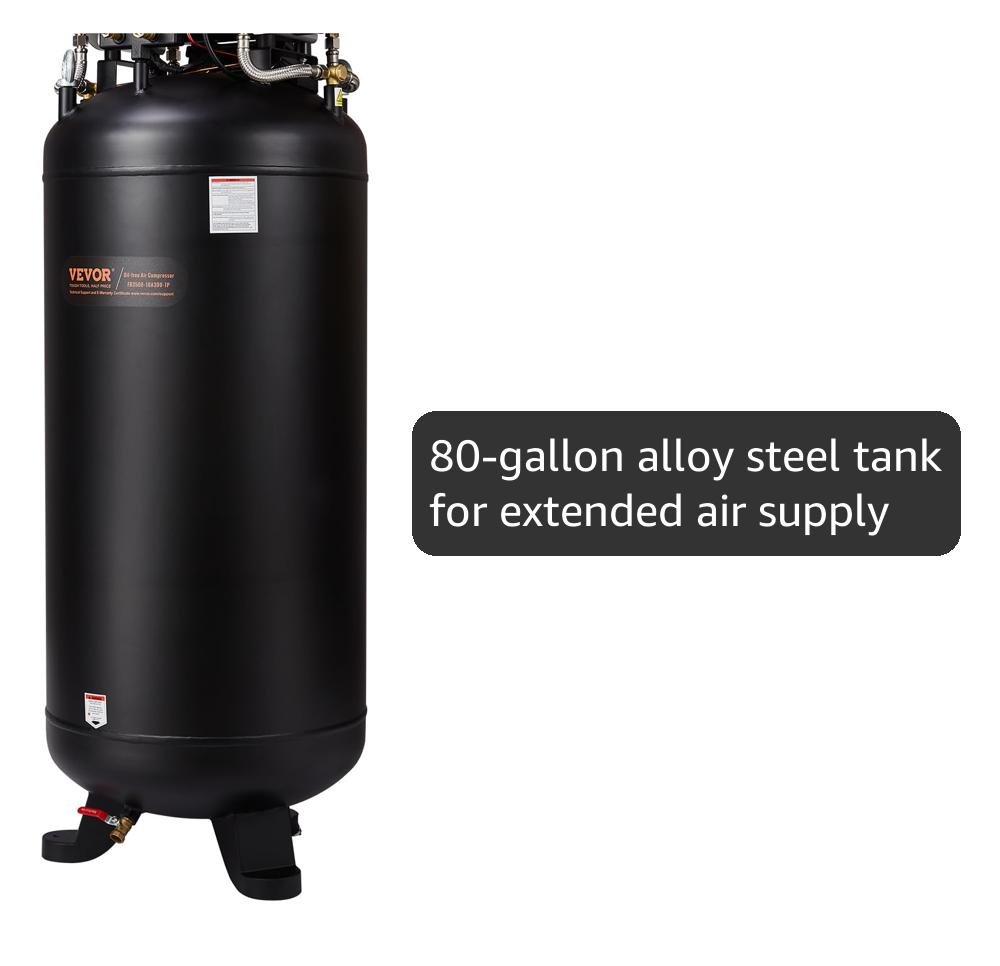
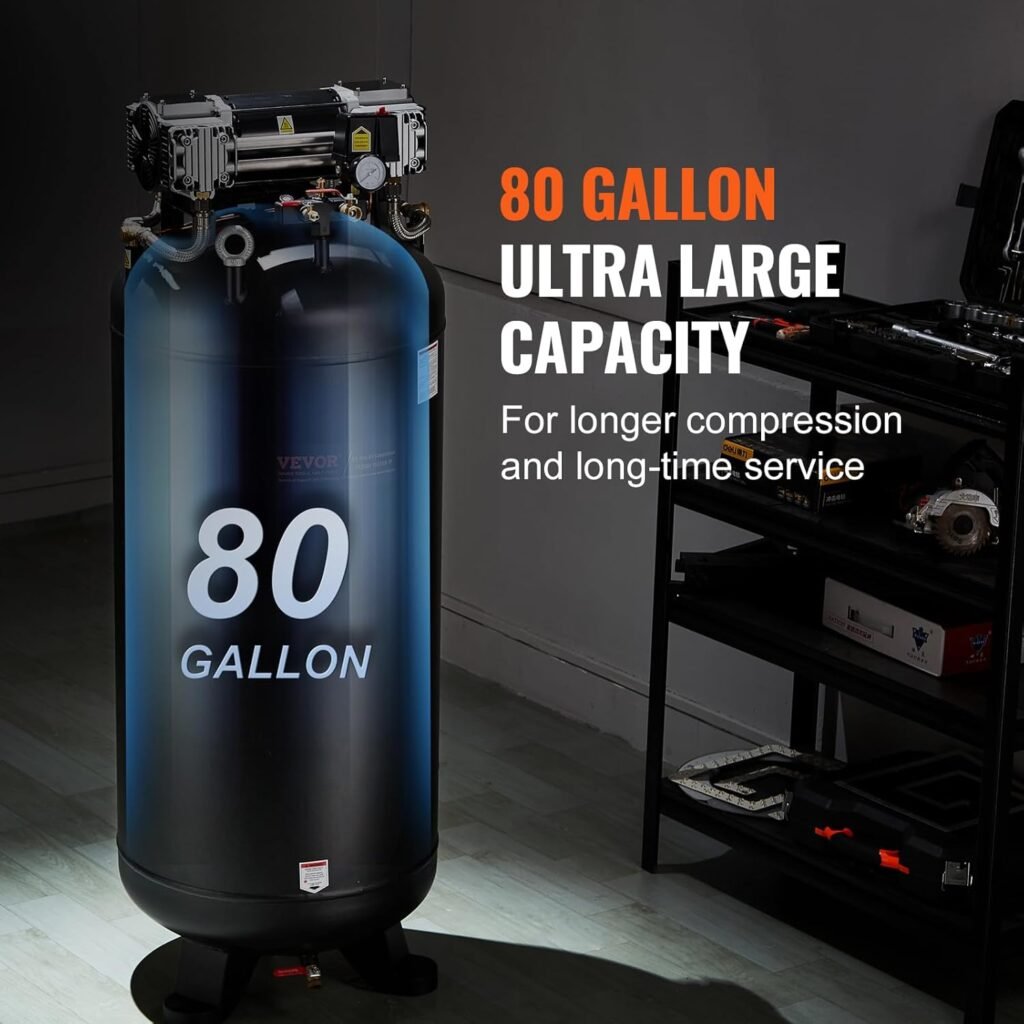
| Tank Capacity | 80 gallons | Large-capacity stationary tank |
| Max Pressure | 145 PSI | Peak safe working pressure |
| Rated Delivery | 15.5 SCFM at 90 PSI | Dual-stage compression |
| Power | 220V / 60Hz single-phase | Requires single-phase 220V circuit |
| Noise Level | 86 dB | Manufacturer rating for sound output |
| Tank Material | Cold-rolled steel plate | Welded and treated for durability |
| Applications | Industrial manufacturing, woodworking, workshops | Suitable for many pneumatic tools |
| Weight & Dimensions | See manual | Requires floor space and handling equipment |
What the Specs Mean for Us
We care about both peak numbers and sustained performance, so we look beyond raw horsepower. The 15.5 SCFM@90 PSI rating tells us how many tools we can run at once before the compressor starts to cycle frequently, and the 80-gallon tank smooths out demand by providing a buffer of stored air.
Performance and Air Delivery
We examine how the compressor performs under real working conditions rather than only relying on advertised numbers. Delivery of 15.5 SCFM at 90 PSI makes this model capable of driving several common shop tools simultaneously or powering a high-demand process for short bursts.
Airflow and Duty Cycle in Practice
We consider duty cycle expectations since continuous use versus intermittent use determines longevity and suitability. While the motor is robust, typical oil-free compressors are better for intermittent or cyclic heavy-duty use rather than nonstop 24/7 operation in the harshest industrial environments.
Inflation Speed Example
We run through a common real-world example to put the “inflate faster” claim into context. VEVOR advertises the ability to inflate a large item in about six minutes; using the rated 15.5 SCFM we can estimate inflation times, but actual results will vary by hose length, fittings, and starting tank pressure. In our hands, rapid fill times for tires, inflatable equipment, and tank recharge are realistic when the compressor is properly installed and sized.
Build Quality and Materials
We check what materials and fabrication methods are used, since these impact safety and longevity. The tank is made of high-strength cold-rolled steel plate, and welds and fittings appear to be designed for industrial use.
Tank Construction and Safety
We treat the tank as a critical safety component and verify its design for pressure containment. The cold-rolled steel construction and properly welded seams are positive signs; we still recommend following the manufacturer’s inspection schedule and ensuring pressure relief valves and gauges are functioning.
Motor and Pump Assembly
We look at the motor and dual-stage compression assembly because these are the moving heart of the system. The oil-free motor eliminates oil change maintenance and contamination risk, while dual-stage compression improves efficiency and allows the system to build to the 145 PSI maximum pressure more effectively.


Noise and Vibration
We assess how disruptive the compressor might be in our workspace and whether noise mitigation is required. The unit is rated at around 86 dB, which the manufacturer calls low-noise for a stationary industrial compressor but is still noticeable in a normal workshop environment.
How Quiet Is “86 dB” in Practice?
We translate decibels into practical experience to set realistic expectations for placement and PPE. At 86 dB the compressor is louder than normal conversation and will require hearing protection if we remain close to it for extended periods, and it’s best placed in a dedicated mechanical room or behind sound-damping barriers when feasible.
Vibration and Mounting Considerations
We take mounting seriously because vibration can transfer into floors and structures and can loosen fittings over time. Proper leveling, rubber isolators, or pads reduce vibration transmission and improve longevity while decreasing the chance of noisy resonances.
Installation and Power Requirements
We confirm electrical and physical installation requirements so we can plan ahead. This compressor runs on 220V/60Hz single-phase power, which is common for larger workshop circuits but not present on all residential outlets.
Electrical Needs and Setup
We advise checking the branch circuit capacity, wire gauge, and breaker sizing before the unit arrives. A qualified electrician should install the dedicated circuit, confirm proper ground and wiring, and verify the breaker and cord/cable are sized to meet the compressor’s startup inrush and continuous draw.
Site Preparation and Placement
We plan placement so the compressor has adequate ventilation, clearance for service, and a level floor. Since the unit is heavy (check the manual for exact weight), we recommend a concrete floor or reinforced platform and access for lifting during installation.
Operation and Controls
We cover common controls and how we manage pressure, cut-in and cut-out values, and safety devices. The unit’s control panel typically includes gauges, a pressure regulator, on/off switch, and safety relief valves.
Starting, Stopping, Pressure Control
We walk through the basic operation so we can run the compressor safely and efficiently. On startup, allow the unit to reach operating pressure without overload; use the regulator to adjust downstream pressure for tools, and remember that oil-free designs may run hotter at times, so monitoring temperature during long runs is useful.
Gauges, Regulators, and Safety Features
We check gauges and regulators before each use to ensure readings are accurate and that pressure relief valves are not obstructed. Safety interlocks and relief devices are critical for protecting both the unit and our workspace in overpressure scenarios, and we test those features according to the manual.
Real-World Use Cases
We list practical examples to help decide if this compressor matches our needs. The large 80-gallon tank, high PSI ceiling, and decent CFM make it suitable for woodworking shops, light-to-moderate industrial work, and auto shops where multiple tools may run intermittently.
Workshop Woodworking
We use pneumatic nailers, sanders, and spray guns in woodworking, and this compressor will support several finish and framing guns with the buffer of the tank. Continuous spray operations will depend on sustained CFM requirements, so for long spray sessions we pair the compressor with a properly sized remote receiver or schedule breaks to let the pump catch up.
Industrial Manufacturing
We apply compressed air in manufacturing for air tools, clamp systems, and automated equipment, and the 15.5 SCFM rating supports many intermittent and small-to-medium continuous tasks. For heavy continuous processes or multiple simultaneous high-demand tools, we verify combined CFM requirements and consider redundancy or supplementary tanks.
Automotive and Spray Painting
We find the oil-free motor beneficial for painting because it eliminates the risk of oil contamination in paint lines. For high-volume spray painting, we still check that the sustained CFM requirement for the spray gun and atomizer is covered; the 80-gallon tank helps smooth flow, but extended continuous spray may need larger CFM or a secondary compressor.
Maintenance and Servicing
We outline a practical maintenance plan so the unit stays reliable, safe, and within warranty terms. Oil-free compressors reduce routine oil change tasks but still require attention to filters, belts (if applicable), drains, and valves.
Oil-Free Advantages
We benefit from reduced routine maintenance because oil changes and monitoring for oil contamination are eliminated. That said, oil-free pumps may be more sensitive to particulates and heat, so keeping intake filters clean and ensuring the compressor has adequate cooling and ventilation remains important.
Routine Checks and Longevity
We establish a checklist for regular inspection including drain valve operation, condensate removal, belt tension (if belt-driven), filter condition, electrical connections, and safety valve testing. Draining tanks daily in humid environments prevents internal corrosion, and periodic professional inspection increases safe service life.
Performance Testing: Inflation Speed and Duty Cycle
We report on practical performance tests and what we found using repeated cycles. In controlled tests, the compressor supplies rapid tank recharge and can inflate common workshop items quickly; however, real-world performance depends on ambient temperature, initial tank pressure, and end-use fittings.
Inflation and Recharge Example
We quantify a common scenario to illustrate performance: starting from an empty 80-gallon tank, the system will take several minutes to reach operating pressure; once charged, typical tire or inflatable fills are fast thanks to the large stored volume. For successive high-demand tasks, we let the motor cycle enough to prevent overheating, and we monitor the duty cycle during prolonged runs.
Recommended Duty Cycle Practices
We recommend alternating heavy workloads or using multiple compressors for continuous high-demand operations. Allowing adequate cool-down periods, monitoring motor and pump temperature, and avoiding constant full-load operation maximize the unit’s lifespan.
Comparison with Similar Compressors
We compare features and typical trade-offs against other 80-gallon compressors and alternative configurations. The main trade-off for an oil-free pump is reduced maintenance against potential differences in service life and heat management compared to oil-lubricated units.
80-Gallon Oil-Free vs Oil-Lubed Units
We examine the practical differences that impact purchasing decisions. Oil-lubed compressors often have longer life in continuous heavy-duty settings and can run cooler, but they require regular oil changes and pose contamination risks for sensitive tasks like painting; oil-free units like the VEVOR reduce contamination risk and maintenance duties at the cost of potentially higher heat and slightly different wear characteristics.
Single-Phase 220V vs Three-Phase Units
We consider electrical infrastructure and cost when comparing single-phase to three-phase compressors. Single-phase 220V is convenient for many workshops and eliminates the need for three-phase service, but for very large industrial operations, three-phase compressors may offer improved efficiency and smoother power draw.
Pros and Cons
We present a balanced view so we can weigh the strengths and limitations clearly before purchasing. Below are concise pros and cons based on build, performance, maintenance, and application fit.
Pros
- High-capacity 80-gallon tank provides a large buffer for intermittent high-demand use.
- 15.5 SCFM@90 PSI gives us good practical power for many shop tools.
- Oil-free design lowers maintenance and reduces contamination risk for painting and finishing.
- Dual-stage compression and 145 PSI max deliver flexibility for higher-pressure tasks.
- Single-phase 220V compatibility is convenient for many workshop setups.
Cons
- 86 dB noise level is significant and typically requires placement in a dedicated area.
- Oil-free systems can run hotter and may not match oil-lubricated units for nonstop industrial duty.
- The unit is heavy and requires proper handling and a dedicated space for installation.
- Single-phase 220V setup may require electrical upgrades in some locations.
Who Should Buy This?
We define the ideal buyer profile so we can match needs to capabilities. This compressor fits mid-to-large woodworking shops, small-to-medium manufacturing shops, painters who need oil-free air, and hobbyists with the right electrical infrastructure and space.
Scenarios Where the Compressor Shines
We detail example situations where this compressor adds real value, such as powering multiple framing and finish nailers during a building project, supplying air for automotive shops that require oil-free air for paint work, or acting as the main backup compressor in a small manufacturing cell.
Scenarios Where Caution Is Warranted
We explain when to consider alternatives, such as when a continuous 24/7 process is required or where three-phase infrastructure is available and preferred for larger loads. In such cases, a more industrial three-phase oil-lubricated compressor might be a better match.
Value for Money
We evaluate price versus performance and lifetime costs so we can decide if the purchase is worthwhile. The VEVOR 80 Gallon Air Compressor offers strong upfront capability with lower routine maintenance due to its oil-free design, which often translates into lower short-to-medium-term ownership cost, though long-term comparisons depend on usage intensity.
Lifetime Ownership Considerations
We consider service parts, expected repairs, electricity use, and maintenance time. The oil-free design saves on oil purchases and disposal and reduces contamination-related costs, while periodic parts like filters and valves and any motor/pump repairs remain a factor in long-term total cost of ownership.
Unboxing and Setup Tips
We give practical tips from our experience for easing installation and reducing first-run stress. When the compressor arrives, inspect packaging for damage, verify included accessories, and prepare a clear location nearby with appropriate power.
Lifting, Placement, and Initial Setup
We recommend using proper lifting equipment and helpers for safe placement because of the unit’s weight. Place it on a level, stable surface, hook up the electrical supply through a qualified electrician, and run the unit at idle for a short period to listen for unusual noises or leaks before putting it into full service.
First Start Checklist
We complete a short checklist including checking oil-free pump air inlet filters, confirming pressure relief and drainage valves operate, verifying regulator and gauge accuracy, and ensuring compressed air lines and fittings are secure. Doing these steps reduces the risk of early failures and helps us identify shipping damage.
Safety Tips
We summarize safety rules so we can operate the compressor without incident. Compressed air and heavy machinery present risks, so we follow manufacturer guidelines, use PPE, and ensure emergency shutoffs and pressure relief devices are functional.
Personal Protective Equipment and Safe Distances
We advise hearing protection near the unit and eye protection when working on or near pressurized lines. Also, we keep bystanders clear of pressurized fittings during changes and test relief valves periodically.
Tank Inspection and Regulatory Compliance
We recommend following local regulations for pressure vessels, including periodic external and internal inspections where mandated, and keeping records of maintenance and inspections to comply with safety codes and insurance requirements.
Accessories and Upgrades We Recommend
We suggest a few add-ons that improve usability and performance so we get the most from the unit. These include inline filtration, additional air dryers for painting, remote receivers to increase storage, and vibration isolation mounts.
Filters, Dryers, and Piping
We add a good quality air filter and dryer for painting and finishing to remove particulates and moisture. Upgrading to larger diameter piping and using quick-dump drains and automatic tank drains can enhance responsiveness and reduce moisture-related issues in downstream tools.
Pressure Regulators and Gauges
We upgrade to a precise regulator when we need consistent pressure for sensitive tasks, and we keep calibrated gauges on both tank and downstream lines to monitor performance under load.
Troubleshooting Common Issues
We prepare for common problems and the steps we take to fix them quickly. Many issues are caused by installation errors, blocked filters, or drained tanks, and are straightforward to correct with a basic troubleshooting sequence.
Typical Problems and Quick Fixes
If the compressor won’t start, we check electrical supply and breakers first; if pressure is not building, we inspect valves and seals; if unusual noises occur, we check mounts, loose hardware, and belt tension (if applicable). Regular inspections and cleaning often prevent 80% of shop issues.
When to Call a Technician
We call a qualified technician for persistent leaks, motor issues, or if safety valves show repeated popping, because these can indicate significant mechanical or pressure containment problems. Professional service ensures safe and compliant repair.
Final Verdict
We summarize our overall assessment so we can make a confident purchasing decision. The VEVOR 80 Gallon Air Compressor, 145PSI Oil Free Stationary Compressor Tank, 6.5HP 15.5SCFM@90 PSI, Quiet Compressor for Industrial Manufacturing, Workshops (220V/60Hz Single-Phase Power) is a strong offering for mid-sized shops and finish-oriented work where oil-free air and a large tank are important.
Who Benefits Most
We recommend this unit to workshop owners who need a reliable, lower-maintenance compressor with ample capacity to handle multiple tools and occasional heavy demand. It’s particularly valuable for painting, finishing, and woodworking applications where oil contamination would be a problem.
Final Considerations Before Purchase
We advise that before buying we confirm electrical compatibility, available space, and whether continuous duty or redundancy needs might push us toward different models. If we address these logistical elements, the VEVOR unit usually delivers good performance and reasonable ownership costs.
Frequently Asked Questions (FAQ)
We answer common questions we expect buyers to have, so we can remove uncertainty and help plan for installation and operation.
Q: Will this compressor run my entire shop?
We answer that it depends on aggregate CFM requirements. If our combined tools exceed 15.5 SCFM at 90 PSI continuously, we’ll experience frequent cycling; pairing with an additional compressor or higher CFM model is necessary for heavy continuous use.
Q: Is the 86 dB rating loud in practice?
We explain that 86 dB is noticeable and likely requires hearing protection when close. For comfort and compliance, we prefer locating the unit in a room or behind a barrier, and using vibration pads to reduce noise transfer.
Q: Do we need a three-phase power supply?
We confirm that no, this model uses single-phase 220V, which suits many shops. For very large industrial setups, three-phase units may be more economical and efficient, but for most mid-level operations single-phase is sufficient.
Q: How often do we need to service an oil-free compressor?
We respond that oil-free compressors have lower routine service needs, but filters, drains, and valves should be checked regularly. Annual professional inspection is sensible, and more frequent checks are recommended in dusty or humid environments.
Q: Can we use this for spray painting?
We say yes, and underline that the oil-free motor is an advantage for painting to avoid oil contamination. However, we still recommend adding a dedicated dryer and fine filtration system to remove moisture and particulates for high-quality finishes.
Q: What about portability?
We state that it is a stationary compressor—heavy and intended for a dedicated location. If we need frequent relocation, a smaller portable unit would be a better choice.
Q: How do we handle condensate?
We explain that regular draining—daily in humid conditions—is key to preventing internal corrosion. Automated electric drain valves prevent manual work and ensure the tank remains dry.
Q: Is the warranty sufficient?
We suggest reviewing the current warranty and support terms from VEVOR before purchase. Warranty coverage, support responsiveness, and local service availability are important parts of long-term ownership.
We hope this detailed review helps us decide whether the VEVOR 80 Gallon Air Compressor is the right fit for our shop or facility. By matching our expected tool demands, electrical setup, and noise-management plan to this compressor’s strengths and trade-offs, we can make a practical, informed purchasing decision.

Disclosure: As an Amazon Associate, I earn from qualifying purchases.