Are we ready to find out whether the PowerMate Vx PLA4708065 80-Gallon Electric Air Compressor fits our shop and our workflow?

Product Overview
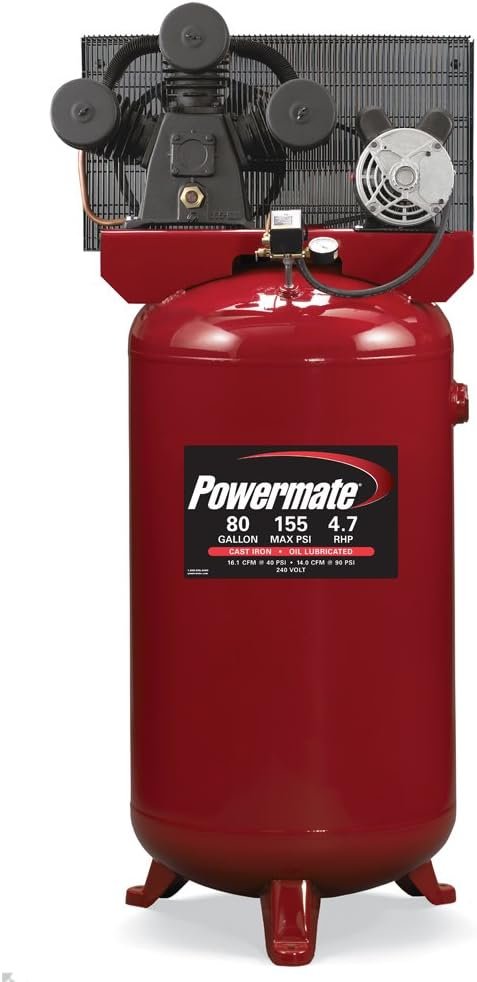
We find that the PowerMate Vx PLA4708065 80-Gallon Electric Air Compressor is positioned as a heavy-duty, stationary solution for serious shop use. It combines a high-capacity tank with a robust 240-volt motor and an oil-lubricated pump, which together aim to give consistent pressure and long run times for demanding tools.
What the PowerMate Vx PLA4708065 Offers
We appreciate that this unit is built around raw utility: a large 80-gallon steel tank, a 240-volt, 15 Amp motor delivering the equivalent of 4.7 HP, and a maximum pressure of 155 psi. Those numbers tell us that the compressor is designed for professional tasks like sustained use of spray guns, impact tools, and other air-driven equipment.
Key Specifications
We like to see the headline specs clearly, so we put the most important details into a compact table for quick reference. This helps us compare on power, capacity, and pump type at a glance.
| Specification | Detail |
|---|---|
| Model | PowerMate Vx PLA4708065 80-Gallon Electric Air Compressor |
| Motor | 240-volt, 15 Amp |
| Rated Power | 4.7 HP (as delivered by motor) |
| Maximum Pressure | 155 psi |
| Air Delivery | 14 CFM at 90 psi |
| Tank Capacity | 80 gallons (steel) |
| Pump Type | Oil-lubricated pump |
| Pump Construction | 1-piece cast-iron crankcase; full cast-iron cylinder body |
| Intended Use | Shop / professional / stationary applications |
We like that the table consolidates the essentials; it gives us a clear sense of what to expect without hunting through a product page.
Performance in Real-World Use
We look at how a compressor performs under load, and this model aims to deliver steady performance for longer bursts of tool usage. The 14 CFM at 90 psi is the metric we watch most closely because that determines whether our air tools will run continuously or force us into wait cycles.
Power and Pressure
We value the combination of a 240-volt supply and a 15 Amp motor because it provides the electrical headroom for sustained power draw. With a maximum pressure rating of 155 psi, the compressor has the capacity to handle tools and tasks that require higher-than-average pressure and to keep pressure topped up quickly after heavy demand.
Run Time and Tool Compatibility
We find the stated 14 CFM at 90 psi particularly useful for real-world tool compatibility. That flow rate allows us to run air ratchets, medium-duty impact wrenches, spray guns, and pneumatic hammers for extended periods without immediate lag in performance. For high-consumption tools or multiple tools at once, we still recommend checking combined CFM requirements to make sure the compressor meets the total demand.
Duty Cycle and Continuous Use
We prefer oil-lubricated compressors for continuous-duty environments because they typically run cooler and last longer under heavy loads. The 1-piece cast-iron crankcase and full cast-iron cylinder body suggest a pump that was engineered for durability and rebuildability, which matters when we expect heavy daily use. Although the manufacturer’s duty-cycle percentage may not be printed in the product sheet we have, the construction and specs indicate this unit is geared toward frequent or near-continuous shop applications rather than occasional home garage tasks.
Build Quality and Design
We pay attention to materials and construction because these determine the long-term reliability and serviceability of the compressor. The PowerMate Vx PLA4708065 uses steel tank construction and cast-iron pump components that point to dependable build quality.
Tank and Frame
We like the large 80-gallon steel tank because it acts as a buffer, smoothing out pressure dips when tools demand sudden bursts of air. A large tank also reduces the number of pump cycles needed for the same amount of delivered air, which can translate to longer pump life and lower energy cycling. The steel construction should resist denting and stand up to shop use better than thinner tank materials.
Pump and Internal Components
We are reassured by the oil-lubricated pump and cast-iron internals. A 1-piece cast-iron crankcase minimizes stress points and machining seams, while full cast-iron cylinder bodies tolerate heat and wear better than aluminum counterparts. For us, that means a pump that will likely tolerate rebuilds and maintain tolerances for many service intervals.
Footprint and Placement
We expect the unit to be relatively heavy and best suited to a fixed location in a shop environment. The 80-gallon capacity implies a larger footprint than portable compressors, so we recommend planning for a dedicated area with stable, level flooring and adequate clearance for maintenance access. This is not a piece of equipment we would move around frequently.
Noise and Vibration
We take noise and vibration seriously because they affect operator comfort and shop layout choices. Large air compressors can be loud and generate vibrations, so planning for placement and isolation is part of the installation.
Expected Sound Levels
The product sheet does not specify a decibel rating, but based on comparable oil-lubricated, stationary compressors of this class we typically expect sound levels in the mid-to-high 70s or low 80s dB when measured from a few feet away. That means we should anticipate needing hearing protection for extended exposure in close proximity, or consider acoustic enclosures or a separate compressor room to reduce perceived noise for those working nearby.
Vibration and Isolation
We recommend mounting the compressor on a stable floor and using vibration dampening pads or flexible connections to reduce transmission to the concrete slab or metal framing. Controlled vibration helps prevent loose fittings over time and improves user comfort during operation. If we position the unit on a mezzanine or elevated surface, structural reinforcement and vibration considerations become more important.

Installation and Setup
We take installation seriously with a unit that requires 240 volts and a fairly high amperage draw. Proper setup ensures safety, reliable performance, and longer life.
Electrical Requirements
We note that the unit’s motor requires 240 volts at 15 Amps. That means we should confirm an appropriate dedicated circuit is available and wired to handle continuous use. We recommend consulting a licensed electrician to confirm wiring, breaker sizing, and compliance with local electrical codes; wiring that’s undersized or shared with other heavy loads will cause voltage drop and could damage the motor or reduce performance.
Site Preparation
We advise positioning the compressor in a dry, ventilated area with at least the manufacturer-recommended clearances (check the manual for exact numbers). The floor should be level and rated to bear the weight of an 80-gallon tank and pump assembly. We also recommend planning for safe oil changes, condensate drain routing, and adequate ventilation for heat dissipation during heavy-duty runs.
Maintenance and Serviceability
We like maintenance tasks to be predictable and accessible, and this compressor’s oil-lubricated pump implies a regular schedule of checks and services.
Routine Maintenance Tasks
We plan to perform regular oil checks and changes according to the manufacturer’s schedule, clean or replace intake filters, and drain condensate from the tank daily (or after each use) to prevent tank corrosion. Additionally, we’ll inspect hoses, fittings, and safety valves periodically to verify they operate correctly. Replacing or tightening drive belts (if the model uses belts) and checking pulleys and couplings for wear also belong on our routine checklist.
Long-Term Care
To preserve the pump and tank over the long term, we recommend following a formal maintenance log: scheduled oil changes, valve seat inspections, and periodic pressure switch and unloader checks. If the compressor will be idle for a long period or exposed to cold conditions, we should take winterization steps like draining water and storing in a heated area to avoid freeze-related damage. For extended service life, we recommend working with a qualified compressor technician for major pump rebuilds or if we detect any abnormal vibration or performance issues.
Safety Features and Best Practices
We treat compressor safety as non-negotiable. Proper safety devices and good operational practices reduce injury risk and equipment damage.
Built-in Protections
Although the specific safety components are not exhaustively listed on the product sheet we have, we expect standard protection features on an industrial compressor: a pressure relief valve, an operational pressure switch, and thermal overload protection for the motor. We always advise verifying which safety devices are installed by consulting the user manual and ensuring they are tested periodically.
Operational Safety Tips
We always use rated hoses, fittings, and quick-disconnects suitable for the compressor’s maximum pressure and temperature. We wear hearing protection when working nearby, and eye protection when using air tools. Before performing any maintenance, we drain the tank, isolate the unit, and lock out the electrical supply. We also confirm the pressure is fully removed from the system before opening any fittings.
Pros and Cons
We weigh strengths and weaknesses to see if this compressor fits our needs and shop environment.
Pros
- Robust 80-gallon tank provides stable pressure and longer tool run times. We appreciate how the big tank reduces pump cycling.
- Strong motor and high maximum pressure deliver a wide operating envelope for both moderate and heavy tasks. We value the ability to reach 155 psi if a task demands it.
- Oil-lubricated cast-iron pump design promotes durability and serviceability in heavy-duty applications. We expect a longer pump life and easier rebuilds.
- 14 CFM at 90 psi supports many professional tools without constant lag. We can run common shop tools comfortably.
Cons
- Requires a 240V dedicated circuit and professional installation if we don’t already have the necessary wiring. We should budget for electrical setup if needed.
- Larger footprint and weight make it unsuitable for mobile or compact workshops. We need a dedicated, permanent space.
- Potentially louder than smaller, quieter models, so shop layout and PPE need consideration. We may want to mitigate noise with enclosures or separate compressor rooms.
Comparison to Alternatives
We find it helpful to compare this compressor to other common categories so we can decide if it’s right for our scenario.
Small Portable Compressors
Compared with small portable compressors (e.g., 1–10 gallon pancake or hotdog units), the PowerMate Vx PLA4708065 is far more capable for continuous use and simultaneous tool demands. While portables are convenient for light tasks and mobility, they do not match the sustained CFM, pressure range, or longevity that an 80-gallon oil-lube compressor offers.
Larger Industrial Units
When compared to larger industrial compressors (e.g., 120–240 gallon or multi-stage units), the PowerMate sits in the mid-range. We see it as a solid choice for single-shop operations or smaller production environments. If our operation runs multiple high-demand tools simultaneously or needs clean, oil-free air for critical processes, a larger or specialized compressor (or dedicated air dryers and filtration) might be more appropriate.
Use Cases and Recommended Applications
We map capabilities to real-world tasks to decide where this unit will add the most value.
Automotive Shops and Garages
We see this compressor as an excellent match for automotive shops that use impact wrenches, pneumatic ratchets, sanders, and paint equipment. The large tank and 14 CFM rating minimize tool lag and maximize productivity across common automotive tasks.
Painting and Finishing
We find that for painting applications, consistent pressure is crucial. The high tank capacity and pressure capability give us a stable supply for HVLP and conventional spray guns, though we may want to pair the compressor with a suitable air dryer and filtration system to ensure paint quality and prevent contamination.
Construction and Heavy Tools
For stationary shop-based construction tool use—such as pneumatic hammers, high-capacity nailers, and large impact tools—this compressor can supply the airflow necessary for intermittent and semi-continuous heavy-duty tasks. It’s less suitable for on-site construction where portability is required.
Value and Cost Considerations
We assess cost not only in purchase price but in operating cost, maintenance, and long-term reliability.
Upfront Cost vs Long-Term Value
While a compressor like this requires a higher up-front investment and appropriate electrical infrastructure, we expect it to deliver long-term value for shops that use their pneumatic tools regularly. The oil-lubricated pump and cast-iron construction point to lower lifecycle costs if we perform routine maintenance and repairs as needed.
Who Should Buy This
We recommend the PowerMate Vx PLA4708065 for small-to-medium professional shops, automotive repair centers, and hobbyists who have heavy-duty tool demands and a secured location for the compressor. If we’re running multiple tools or require frequent sustained runs, this model fits our needs. If we only need occasional, mobile, or lightweight usage, a smaller portable compressor may be a better fit.
Frequently Asked Questions (FAQ)
We know questions come up when considering a compressor of this size. Below we answer common queries to help with decision-making.
What electrical service do we need for this unit?
We need a 240-volt circuit capable of handling a 15 Amp draw for the compressor’s motor. We recommend a dedicated circuit and consultation with a licensed electrician to ensure correct wiring and breaker sizing, and to comply with local codes.
How many tools can we run at once?
That depends on the combined CFM requirement of the tools at their working pressure. With 14 CFM at 90 psi, we can run several moderate-demand tools sequentially or a couple concurrently, but high-demand tools used simultaneously may exceed the available flow. We advise listing your tools’ CFM requirements and comparing the total with the compressor’s rating.
Do we need to change the oil often?
Oil changes should follow the schedule in the owner’s manual, but for heavy daily use we typically expect more frequent checks and possibly more frequent changes than for light-use compressors. Regular oil monitoring keeps the pump running cooler and reduces wear.
Can we use this compressor outdoors?
We recommend installing the compressor in a dry, ventilated, and sheltered location. While the pump and tank are robust, exposure to moisture or freezing conditions can cause damage and increase corrosion risk. If temporary outdoor use is necessary, we should provide a shelter and ensure the electrical connections are protected.
What maintenance items should we track?
We track oil level and changes, intake filter condition, condensate draining from the tank, hose and fitting inspections, and periodic checks on safety valves and pressure switches. A logbook helps us keep consistent intervals and identify trends before they become problems.
Is an air dryer necessary?
For painting, finishing, or any application where moisture and oil aerosols must be minimized, we generally recommend using an air dryer and filtration. Even in routine shop use, a dryer extends tool life and improves product outcomes for finish work.
Setup Checklist
We find a checklist useful before the first start-up to make sure we don’t miss any critical steps.
- Verify dedicated 240V electrical circuit and proper breaker sizing with a qualified electrician.
- Position the compressor on a stable, level floor with clearance for service and ventilation.
- Check oil level and add the recommended lubricant before initial start (consult manual for oil type).
- Drain any transit preservation fluids if present; verify drain valve operation.
- Ensure all fittings and hoses are properly tightened and rated for the compressor’s maximum pressure.
- Confirm safety valve operation and set pressure switch according to intended use if adjustments are needed.
- Run the compressor and observe for abnormal vibration, leaks, or electrical issues; log initial run hours.
We recommend keeping this checklist handy for commissioning and for any future installations.
Trouble-Shooting Tips
We know problems occasionally arise; here are steps we take for common issues.
- Low or no pressure build-up: Check that the intake valve isn’t blocked, ensure the motor is receiving full voltage, and verify the unloader and pressure switch function.
- Excessive cycling: Confirm that tank drains aren’t clogged and that the tank is not corroded internally, check for leaks in the compressed-air system, and verify the pressure switch cut-in and cut-out settings.
- Overheating motor: Ensure adequate ventilation, check oil level and condition, and verify electrical supply voltage under load. An undersized or shared circuit can cause excessive heat and premature wear.
- Loud or unusual noises: Inspect belts and pulleys (if present), check mounting bolts and isolation pads, and have a technician evaluate the pump bearings and cylinder assemblies if the noise persists.
We find that keeping a log of symptoms and maintenance actions speeds diagnosis when recurring issues appear.
Accessories and Add-Ons We Recommend
We find that a few accessories enhance functionality and protect the compressor and tools.
- Air dryer and filtration system for paintwork and moisture-sensitive tools.
- High-quality hoses and quick-disconnect couplers rated above the compressor’s working pressure.
- Isolation pads or anti-vibration mounts to reduce transmitted vibration.
- Secondary pressure tanks or receivers for distributed shop applications.
- A condensate drain separator if local discharge regulations require it.
We consider these additions essential for specific uses, such as finishing or multi-station tool setups.
Environmental and Operational Considerations
We consider how the compressor fits into our shop’s daily life and environmental constraints.
- Noise control may require either an enclosure or a dedicated compressor room to keep the workspace comfortable for staff.
- Condensate disposal should be handled per local environmental rules—don’t simply dump oily condensate into drains.
- Heat generated by the compressor can be beneficial in cooler months but may need ventilation in hotter climates to prevent overheating.
We suggest planning the room layout with both comfort and regulatory compliance in mind.
Final Verdict
We find the PowerMate Vx PLA4708065 80-Gallon Electric Air Compressor to be a compelling option for professional shops and serious hobbyists who need reliable, sustained air delivery. Its combination of a large 80-gallon tank, a 240-volt 15 Amp motor delivering 4.7 HP, a maximum of 155 psi, and 14 CFM at 90 psi make it well-suited to many common shop applications including automotive repair, paint booths, and medium-duty industrial tasks.
We recommend this compressor for users who can provide the required electrical service and a permanent installation location, and who will benefit from the durability of an oil-lubricated, cast-iron pump. If our needs are limited to light, mobile, or occasional tool use, a smaller portable unit may be more practical and economical. For those running multiple high-demand tools or requiring specialized air quality, we advise considering additional filtration, dryers, or even larger capacity systems.
We hope this review helps us make an informed choice about whether the PowerMate Vx PLA4708065 matches our workshop needs.

Disclosure: As an Amazon Associate, I earn from qualifying purchases.