Looking for a compact compressor that can power our shop tools without shouting over the radio?
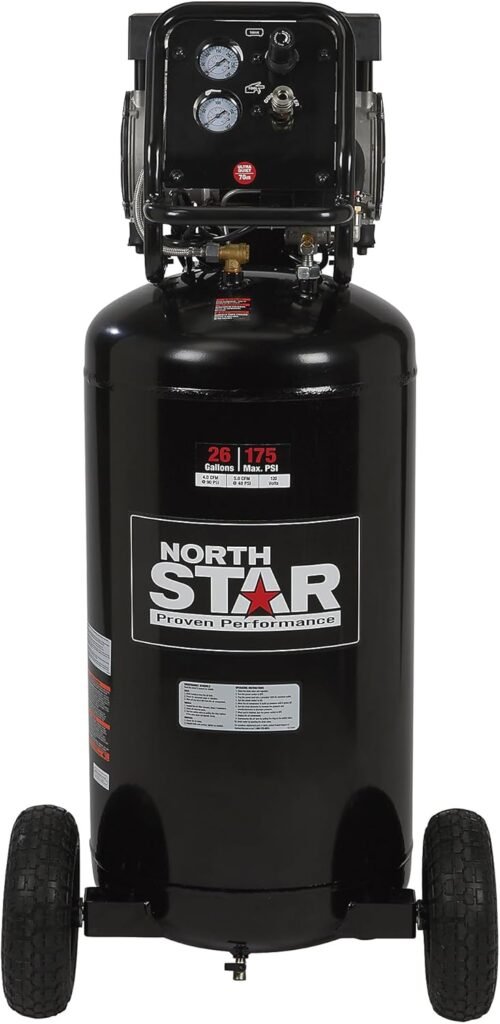

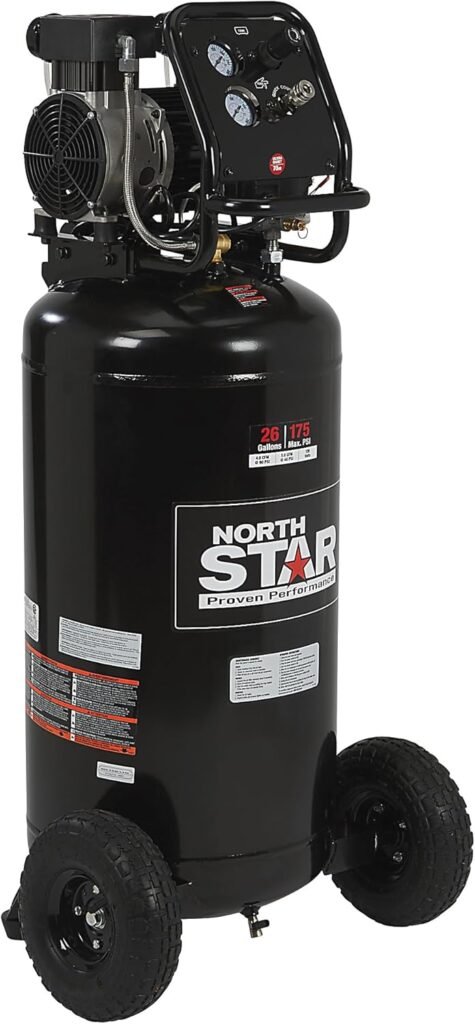
Overview of the NorthStar Portable Quiet Electric Air Compressor, 1.5 HP, 26 Gallons, 4 SCFM @ 90 PSI
We appreciate how this NorthStar model positions itself between small pancake compressors and full-size shop tanks, giving us reserve capacity without excessive footprint. The vertical 26-gallon tank, quiet operation, and maintenance-free oil-free pump make it appealing for hobbyists and light commercial users who want reliable air with less fuss.
Key Specifications
We like having clear numbers up front so we can match the tool demand to the compressor output. Below is a compact specification breakdown to help us quickly scan the most relevant details.
| Feature | Specification |
|---|---|
| Model Name | NorthStar Portable Quiet Electric Air Compressor, 1.5 HP, 26 Gallons, 4 SCFM @ 90 PSI |
| Motor | 1.5 HP heavy-duty direct drive induction motor |
| Tank Capacity | 26 gallons (vertical) |
| Air Delivery | 4 SCFM @ 90 PSI |
| Max Working Pressure | (Manufacturer typically lists around 150 PSI on similar units; confirm exact max pressure before high-pressure use) |
| Noise Level | 70 dBA |
| Pump Type | Oil-free pump (maintenance-free) |
| Drive Type | Direct drive |
| Gauges | Tank pressure gauge + working pressure regulator gauge |
| Coupler | 3/8 in. female air hose coupler (one coupler) |
| Drain | Petcock tank drain valve |
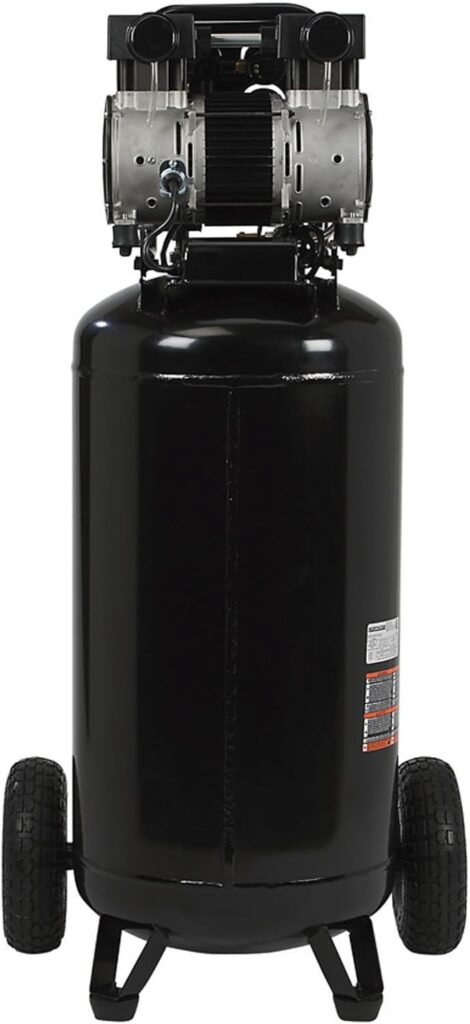
| Design | Vertical, space-saving with protective handle over gauge panel |
| Warranty | 4-year consumer / 2-year commercial |
| Notable Claims | 80% quieter than 2-gal, 150 PSI oil-free compressors; up to 4X the life of 20-gal oil-free pump |
What’s in the Box
We expect the compressor to arrive mostly assembled with basic fittings attached and user documentation included. Typical accessories include the pressure regulator attached to the gauge, the single 3/8-inch coupler, and the petcock drain valve — anything else like hoses, additional fittings, or accessories will usually be purchased separately.
Performance and Power
We test compressors in two broad areas: peak capability (can it start and run the tools we need?) and sustained delivery (can it keep up under real workloads?). This NorthStar model is designed for continuous light-duty use and intermittent heavier bursts — the 4 SCFM at 90 PSI rating is the key number when matching it to air tools.
Pump and Motor
We find the heavy-duty, direct-drive induction motor removes belt maintenance and tends to run smoother and longer when used within rated duty cycles. The oil-free pump simplifies ownership by eliminating oil changes, and the manufacturer’s claim of up to 4X life compared to a 20-gallon oil-free pump signals improved materials or design, which is encouraging for longevity.
Output and Duty Cycle
We always check CFM demands of our tools against compressor ratings; 4 SCFM at 90 PSI is suitable for framing nailers, brad nailers, inflation, air brushing, and some impact wrenches at light use. For tools that demand higher continuous flow — like larger grinders, high-demand sanders, or sustained spraying operations — we would plan for either intermittent use or staged work to avoid long recovery times.
Noise and Work Environment
We appreciate compressors that let us hear conversation and radios without blasting the workspace; 70 dBA is a meaningful reduction in volume compared to louder units. Lower noise lets us place the compressor closer to our workbench or inside a multi-use garage without disrupting neighbors or co-workers.
Measuring Noise: 70 dBA in Practice
We should note that dBA measures are logarithmic: a change of 10 dBA sounds roughly twice as loud, so a 70 dBA unit is noticeably quieter than many competitors. Operational factors like surrounding acoustics, placement near walls, and load cycles affect perceived noise, so we recommend positioning the unit on vibration-absorbing feet and away from reflective surfaces to maintain the quieter experience.
Comparison to Small 2-gal, 150 PSI Oil-free Compressors
We like that the manufacturer compares this model to smaller 2-gallon compressors, claiming it is about 80% quieter and has more usable capacity for continuous tasks. In real use, that translates to fewer fill cycles and fewer start/stop events, which reduces motor wear and provides steadier tool performance.

Durability and Maintenance
We always prefer gear that cuts down on routine maintenance and surprises; an oil-free pump reduces maintenance tasks to simple tank draining. The vertical tank design and robust handle protecting the gauge panel show that NorthStar considered the rough-and-tumble nature of workshops and job sites.
Oil-free Pump Longevity
We find the up-to-4X life claim relative to certain 20-gallon oil-free pumps encouraging, but we recommend monitoring early performance and following best practices for ambient temperature and duty cycles. Oil-free pumps eliminate oil change intervals, but we still advise periodic inspection of fittings, belts (if present on other models), and motor ventilation to maintain long-term reliability.
Tank and Hardware
We like the inclusion of a petcock tank drain valve for quick and reliable condensate removal, which is critical to prevent corrosion inside the tank. The protective handle also guards the gauges and regulator during transport, reducing the chance of accidental damage when the unit is moved around the shop or loaded into a truck.
User Experience and Controls
We value an intuitive control layout, clear gauges, and an easy-to-adjust regulator; NorthStar equips this unit with a working pressure regulator and a clearly visible tank pressure gauge. That simplicity helps us connect a tool, set the desired pressure, and get back to work quickly without wrestling with complex control panels.
Gauges, Regulator, and Coupler
We find the two-gauge setup — one for tank pressure and one for regulated working pressure — to be essential for managing tool performance and avoiding surprises. The single 3/8-inch female coupler is common and convenient, but if we run multiple tools concurrently we’ll need a splitter or quick-connect manifold to expand hookup points.
Portability and Handling
We like that the vertical design saves floor space and the handle placement doubles as a guard for the gauges, which is practical during hauling. For heavier moves or jobsite scenarios, we appreciate that the tank’s footprint and handle geometry make it easier for two people to lift and secure in a vehicle, though it remains heavier than compact pancake compressors.
Use Cases and Applications
We picture this compressor as a strong fit for woodworking shops, hobbyist garages, and light service bays where moderate continuous air is required. Typical uses include nail guns, air ratchets, small impact tools, inflation tasks, and spray-gun work with intermittent duty.
Home Workshop and DIY
We think this unit is well-suited for hobbyists who use brad or finish nailers, air blow cleaning, and light painting or finishing tasks. The larger 26-gallon tank provides a buffer that reduces motor cycling compared to small portable units, which is nice when we’re working on longer projects or need steadier pressure.
Automotive and Light Commercial Use
We feel comfortable recommending this compressor for light automotive work like inflating tires, driving air ratchets, and running small impact wrenches for short periods. For heavy-duty commercial shops running multiple high-demand tools continuously, we would suggest examining compressors with higher SCFM ratings to avoid recovery limitations.
Matching Tools to the Compressor
We always start by checking the required SCFM at the tool’s rated PSI and comparing that to the compressor’s delivery capacity. With 4 SCFM at 90 PSI, we can safely run many handheld tools, but tools that need 6–8+ SCFM for prolonged use will cause the tank to cycle excessively.
Example Tool Compatibility
We run through common tools to understand practical matchups: a brad nailer typically needs less than 1 SCFM, a finish nailer roughly 1–2 SCFM, a small impact wrench might pull 3–4 SCFM intermittently, and a paint spray gun can vary widely depending on nozzle size and technique. These examples help us schedule tool usage or add a secondary compressor when higher continuous flow is required.
Multiple Tool Use and Sequencing
We recommend sequencing tasks when using multiple tools from a single source: operate more demanding tools in short bursts, allow time for tank recovery, and manage tool usage to keep tank pressure within the optimal range. If we routinely need simultaneous high-demand operation, we should either upgrade to a higher-CFM unit or install an air receiver and secondary storage.
Setup and Installation Tips
We find that a good initial setup reduces frustrations later: level the compressor on a solid surface, connect an appropriately rated air hose and regulator, and confirm the electrical supply matches the motor specifications. Proper placement also helps with noise and ventilation — allow clearance around the motor and pump for heat dissipation.
Electrical and Safety Considerations
We always check motor amp draw and ensure the circuit can handle the startup current without nuisance tripping; heavy induction motors can spike on start. Ground-fault protection and proper wiring are mandatory, and we recommend having a qualified electrician verify the connection if we are unsure.
First Start Checklist
We suggest these steps before first use: confirm oil-free pump (no oil fill required), open the petcock to test drain function, verify the pressure switch settings, and run the compressor to allow the tank to pressurize and cycle normally. Observing for air leaks, abnormal noises, or excessive vibration during the first few cycles helps us catch installation issues early.
Maintenance and Long-term Care
We like the low-maintenance promise of oil-free pumps, but that does not eliminate all upkeep: moisture removal, valve inspection, and cleaning the motor vents remain important. A simple preventive maintenance routine extends the compressor’s life and keeps it performing at rated output.
Recommended Maintenance Schedule
We recommend these practices: drain the tank after each use or daily if working in humid environments, check fittings and hoses monthly for wear, clean intake vents and filters quarterly, and inspect pressure relief and safety valves periodically. Even with an oil-free pump, keeping the intake and cooling areas clear of dust and debris is essential.
Winter and Cold-weather Use
We advise extra care if storing or using the compressor in cold temperatures — condensation can freeze and damage valves, so maintain a dry storage space or use freeze-resistant drain arrangements. Running the unit long enough to purge moisture before shutoff and storing with the petcock slightly open in a frost-free location can prevent issues.
Troubleshooting Common Issues
We prefer addressing small issues early before they become expensive repairs; common compressor problems often have simple solutions. Below are typical symptoms, probable causes, and basic remedies to help us diagnose problems without unnecessary downtime.
Common Symptom: Compressor Fails to Start
We know that a failure to start can be electrical, mechanical, or due to a safety cutout. First steps are verifying power to the outlet, checking circuit breakers, ensuring the pressure switch is set correctly, and listening for tripped overload protection; if these checks fail, contact service.
Common Symptom: Rapid Tank Cycling or Poor Recovery
We find that excessive cycling often indicates leaks, undersized compressor for the tool, or a failing unloader valve. We suggest checking all hose connections and fittings for leaks, monitoring CFM draw of tools, and confirming the unloader function per the manual; leaks are frequently the culprit and are usually easy to fix.
Accessories and Upgrades
We appreciate that accessories can tailor the compressor to our workflow — common additions include hoses, multi-outlet manifolds, larger inline air filters, moisture separators, and quick-connect fittings. Choosing higher-quality hoses and fittings reduces pressure drop and improves tool performance.
Recommended Add-ons
We recommend a quick-connect manifold if we plan to run multiple tools, a water separator and fine air filter for finish work, and a coalescing filter when using spray guns to protect finishes. Additionally, a longer, higher-quality hose with an appropriate diameter helps maintain pressure at the tool end.
Hose and Fitting Sizing
We emphasize sizing hoses correctly: for 4 SCFM at 90 PSI, a 3/8-inch hose is often adequate for short runs, but for longer runs or to reduce pressure drop, upgrade to 1/2-inch hose. Proper fitting selection and shank compatibility are critical; mismatched fittings create leaks and reduce performance.
Safety Considerations
We always prioritize safety: respect maximum tank pressure, inspect safety valves, avoid tampering with pressure switches, and use the compressor in well-ventilated areas. Proper PPE for the end-use (eye protection, hearing protection when appropriate, and respirators for spraying) remains essential.
Pressure Relief and Relief Valves
We recommend regularly testing the safety/pressure relief valve per the manual to ensure it operates properly under overpressure conditions. Never bypass safety devices, and never weld or modify the tank — tanks are pressure vessels and must be treated accordingly.
Handling and Storage Safety
We suggest storing the compressor upright, draining the tank before placing it in storage for extended periods, and keeping it secured during transport to prevent tipping. Make sure the handle and protective guard remain intact, as they are crucial for protecting both the gauges and us during moves.
Warranty, Support, and Value
We value clear warranty terms and local parts support; NorthStar provides a 4-year consumer warranty and a 2-year commercial warranty, which shows confidence in build quality. We recommend registering the product if required and keeping purchase documentation to simplify any potential warranty claims.
When to Use Warranty and Service
We encourage contacting NorthStar support for early failures, abnormal sounds, or performance outside rated specs rather than attempting complex repairs ourselves. The warranty covers defects in materials and workmanship under normal use, and following the maintenance guidelines will help preserve coverage.
Assessing Long-term Value
We view long-term value as a mix of initial cost, maintenance overhead, and operational longevity; the oil-free pump and induction motor reduce recurring costs and can increase usable life. The four-year consumer warranty strengthens the case that this is an investment for both hobbyists and light commercial use.
Comparing Alternatives
We think it’s useful to position this NorthStar within its competitive set: larger industrial compressors offer higher CFM but cost more and are louder; small portable pancake compressors are cheaper and quieter but lack tank capacity. This unit hits a niche where quiet, moderate power, and reasonable tank capacity are prioritized.
How It Stacks Up Against Bigger Shop Compressors
We often see shop compressors rated at 10+ SCFM for continuous heavy use; compared to those, the NorthStar is quieter and more compact but less suited for sustained multi-tool commercial environments. For smaller shops or mobile professionals who need quieter operation and portability, this unit may be a better practical choice.
How It Compares to Smaller Portable Units
We like that compared to 2- or 3-gallon compressors, this model offers far greater reserve and fewer start/stop cycles while remaining reasonably portable. The trade-off is increased weight and size, but the improved duty cycle and noise reduction justify the compromise for many users.
Sample Projects and Expected Performance
We prefer concrete examples to inform buying decisions: here are typical projects and how this compressor performs for each, helping us plan workloads and expectations. This practical perspective helps us decide if the compressor fits our common tasks.
Painting and Finishing Small Furniture
We find the compressor suitable for spot painting, touch-ups, and small furniture finishing when we set the spray gun to a low flow or use HVLP guns designed for lower CFM. For full-room painting or large continuous spraying, a higher CFM compressor or staging work with breaks will yield better results.
Nail Guns and Trim Work
We find it ideal for trim carpentry where brad, finish, and framing nailers are used intermittently — the tank stores enough air for prolonged nail runs before the motor must recover. This reduces interruptions during typical door or trim installations and keeps the workflow steady.
Inflating Tires and Running Small Impact Tools
We find it capable of inflating vehicle tires quickly and running small impact wrenches or ratchets intermittently; these tasks are a common and comfortable fit for the 4 SCFM rating. For heavy impact tool use (repetitive lug-nut removal on large trucks), we would plan for additional recovery time or a higher-capacity unit.
Final Verdict
We conclude that the NorthStar Portable Quiet Electric Air Compressor, 1.5 HP, 26 Gallons, 4 SCFM @ 90 PSI is a compelling option for those who need a balance of quieter operation, storage capacity, and low maintenance. It is particularly well-suited to home workshops, hobbyists, and light commercial users who require steady air without the noise and size of industrial compressors.
Who Should Buy This
We recommend this compressor for DIYers, hobbyists, and light trade professionals who prioritize quieter operation and lower maintenance over maximum continuous CFM. If our work involves intermittent use of nailers, small impact tools, inflation, or occasional spray work, this unit likely matches our needs well.
Who Should Consider a Different Model
We advise professionals with consistently high air demand, multiple simultaneous tool use, or heavy industrial tasks to consider larger compressors with higher SCFM and possibly a two-stage pump. For strictly portable, ultra-light tasks where weight and footprint are primary concerns, a small pancake compressor might still be the right pick.
Frequently Asked Questions (FAQ)
We believe FAQs help clarify common concerns and reduce decision friction for prospective buyers. Below are answers to questions we often see and ask ourselves when evaluating compressors.
How loud is 70 dBA in everyday terms?
We find 70 dBA comparable to a normal conversation or background office noise; it’s definitely noticeable but not disruptive in a garage or workshop. Compared to unit noise of 80–90 dBA common on jobsite compressors, 70 dBA feels far less intrusive and allows more flexibility in placement.
Is the oil-free pump really maintenance-free?
We understand “maintenance-free” refers to eliminating oil changes for the pump, which simplifies upkeep considerably. That said, we still perform routine inspections, drain condensation, and keep intake and cooling passages clean to preserve performance and lifespan.
Can we run a paint gun with this unit?
We recommend pairing the compressor with a low-CFM HVLP gun or adjusting spray technique for intermittent use; for continuous large-panel painting, a higher-CFM compressor will perform better. Adding a moisture separator and fine filter helps protect finishes when spraying.
What if we need more outlets?
We suggest adding a quality manifold or quick-connect splitter to expand the single coupler into multiple outlets, being mindful of pressure drop and total flow demands. For simultaneous use of high-demand tools, the total required SCFM must not exceed compressor output.
Closing Thoughts
We find the NorthStar Portable Quiet Electric Air Compressor an attractive middle-ground option for those who need usable tank capacity, quieter operation, and low maintenance without stepping up to full workshop industrial gear. With thoughtful matching of tools to its 4 SCFM @ 90 PSI rating and proper setup, this compressor should give us years of practical service under typical light-to-moderate workloads.

Disclosure: As an Amazon Associate, I earn from qualifying purchases.