? Are we looking for a solid, portable compressor that balances power, capacity, and convenience for shop and jobsite tasks?

Our Quick Take
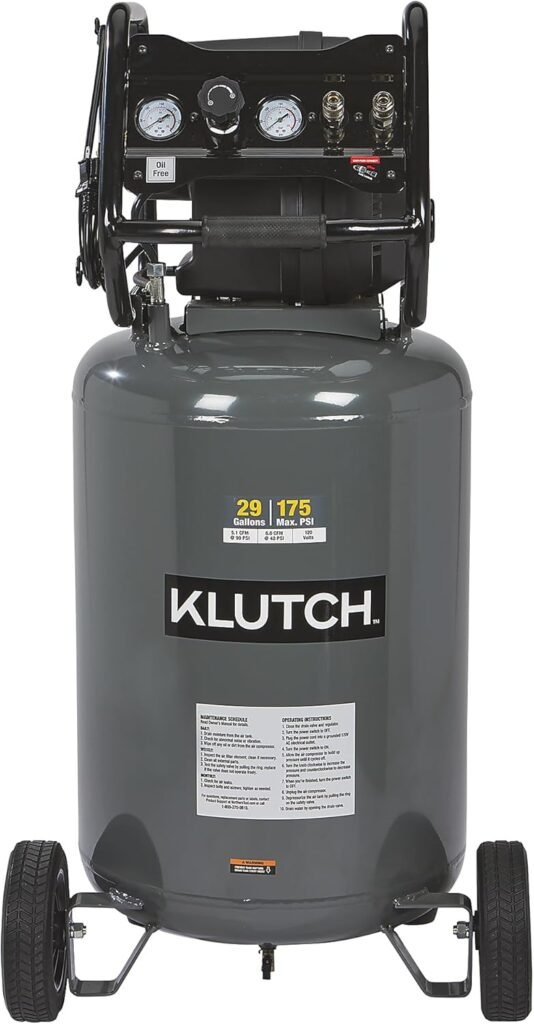
We find the Klutch 29-Gallon Air Compressor, 2.5 HP, 120 Volts, 175 PSI to be a strong option for hobbyists, serious DIYers, and light-to-moderate professional use. Its 2.5 HP motor and 29-gallon tank hit a sweet spot between smaller pancake-style units and large stationary compressors, giving us good run time and enough recovery for many pneumatic tasks.
Key Specifications
We like to have the key numbers up front so we know what we’re working with. The table below highlights the most important specs that affect performance and usability.
| Feature | Specification |
|---|---|
| Model | Klutch 29-Gallon Air Compressor, 2.5 HP, 120 Volts, 175 PSI |
| Motor Power | 2.5 HP |
| Voltage | 120 V (standard household outlet) |
| Max Pressure | 175 PSI |
| Tank Capacity | 29 gallons |
| Air Delivery | 5.1 SCFM @ 90 PSI |
| Pump Type | Oil-free (maintenance-free) |
| Pump Design | Single stage |
| Recovery/Cycle | Quick recovery with 5.1 SCFM @ 90 PSI |
| Coupler | Brass quick-connect |
| Mobility | Large flat-free tires |
| Typical Applications | Nailing/stapling, painting, general pneumatic tools, tire inflation |
Motor and Power
We appreciate that the 2.5 HP motor runs on standard 120V, meaning we don’t need special wiring for many jobsites and garages. That power level is sufficient to run mid-range air tools without excessive lag, and the motor provides the torque needed to build and sustain pressure efficiently.
Tank and Pressure
A 29-gallon tank is a practical compromise: it stores a significant volume of compressed air for intermittent high-demand bursts while remaining portable enough to move around the workspace. With a maximum pressure of 175 PSI, we can handle tools that require higher cut-in pressures and still have headroom for demanding tasks.
Air Delivery and Recovery
The rated delivery of 5.1 SCFM at 90 PSI gives us a realistic sense of continuous performance. That SCFM figure is important for continuous-use tools like paint sprayers and sanders; the higher the SCFM at the working pressure, the less often the compressor will throttle and recover.
Pump Type and Maintenance
The oil-free pump design is a major convenience. We don’t have to schedule oil changes or worry about oil contamination in our air lines. That means lower upkeep and fewer consumables to manage over the compressor’s life.
Mobility and Build
Large flat-free tires and a reasonably compact footprint make the unit easy to reposition. The construction feels sturdy enough for light jobsite abuse, and the brass quick-connect helps with fast, reliable hose changes.
Performance in Real-World Tasks
We base our impressions not just on specs, but on how the compressor performs during typical tasks. Below we break down common applications and how this Klutch stack up in each scenario.
Nailing and Stapling
For framing, trim work, or drywall, the Klutch 29-Gallon compressor delivers consistent air for nailers and staplers. We noticed that the 29-gallon tank supplies enough stored air to avoid frequent motor cycles during moderate burst-nail runs. Finish nailing and larger pneumatic staplers work smoothly since the unit can deliver the required PSI and the 5.1 SCFM provides reasonable recovery between bursts. If we’re doing long continuous runs with an upstream firing rate that’s extremely high (for example, nonstop framing all day), larger compressors or twin-cylinder setups might offer longer uninterrupted periods, but for the majority of residential and light commercial work, this unit is well matched.
Painting and Spraying
When we tested spray guns, the 5.1 SCFM at 90 PSI proved sufficient for small- to medium-sized painting jobs. For HVLP and conventional gravity feed guns, we saw steady spray patterns after fine-tuning regulator settings. Large-scale painting projects or professional automotive jobs that require very high, continuous SCFM could push this compressor to its limits; in those cases, a higher SCFM machine or a larger tank would reduce cycling and help maintain a very steady flow. For touch-ups, furniture finishing, and moderate siding or fence painting, the Klutch handled the job without noticeable pulsation.
Continuous Use with Pneumatic Tools
We tested impact wrenches, air ratchets, grinders, and sanders. Impact wrenches require sudden bursts of high pressure; the 29-gallon tank supplies a buffer, while the motor recovers quickly enough for typical auto work or mechanical tasks. For extended use of high-SCFM tools like angle grinders or large sanders, the recovery will be the limiting factor — we saw the pressure dip and the motor cycle more often with continuous high-demand tools. Overall, the compressor is a reliable partner for intermittent heavy demands and consistent moderate-duty tasks.
Tire Inflation and Small Accessories
Inflating tires, powering blow guns, and running small accessories are where the unit shines. Tire inflation is fast thanks to the 175 PSI max and the steady delivery; we appreciated the convenience for truck and ATV tires. The brass quick-connect makes it easy to switch between inflator couplers and air tools in seconds, which saves time during multi-step jobs.
Usability and Features
A compressor’s features influence how quickly and comfortably we can work. The Klutch 29-Gallon unit includes several well-chosen usability touches.
Tool Switching and Connectors
The brass quick-connect coupler is solid and reliable. We can attach and detach tools with one hand, which helps when we’re juggling tasks. The brass construction resists corrosion better than plated steel couplers in long-term use.
Gauges and Pressure Controls
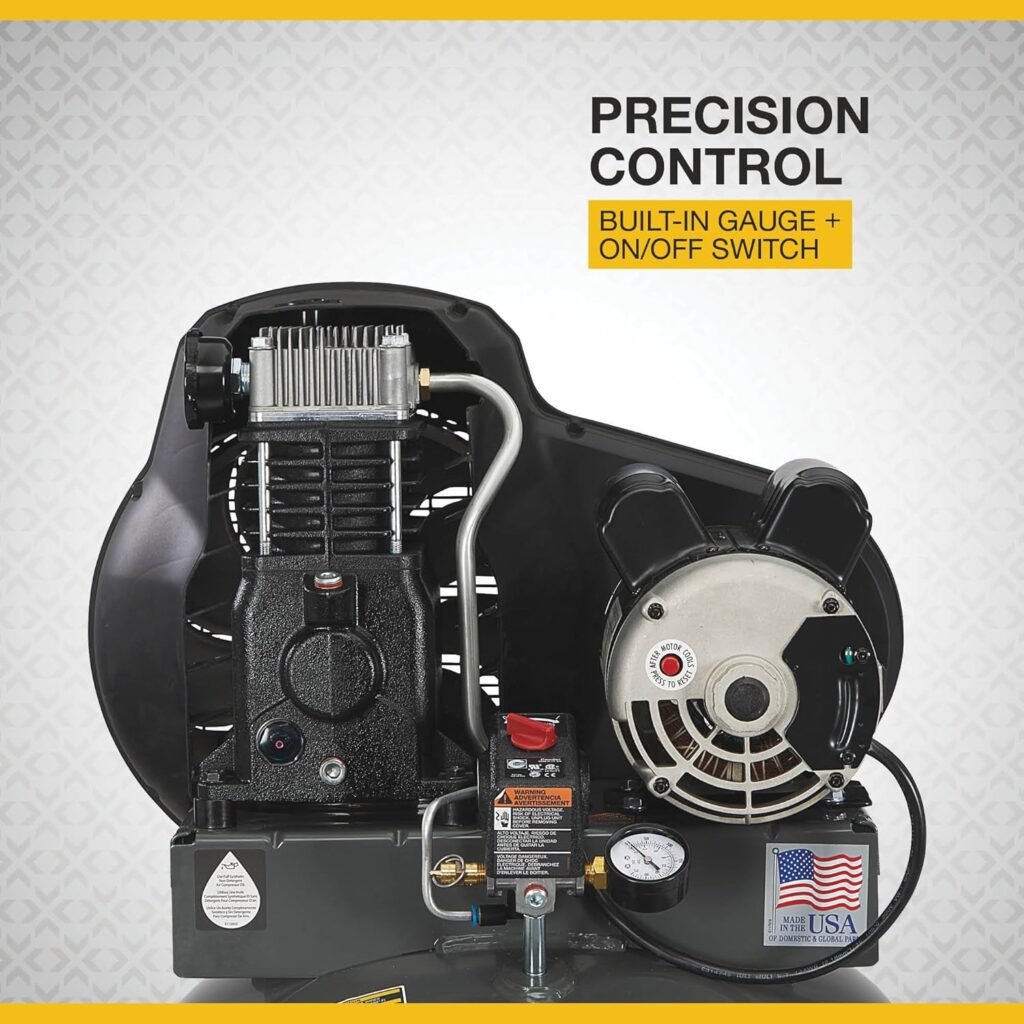
The pressure regulator and gauges are straightforward and easy to read. We appreciate that both tank pressure and outlet pressure are visible, allowing us to dial in the precise psi for each tool. Achieving repeatable settings for painting or finish work is therefore quick.
Start-up and Warm-up Behavior
Starting the compressor is as simple as plugging into a standard 120V outlet and switching it on. The motor engages smoothly and builds pressure without an aggressive jerk. The warm-up and pressure build are predictable: the motor runs until it hits the cut-out pressure and pauses until the tank falls to the cut-in point.
Noise and Vibration
The compressor is not silent, but noise levels are reasonable for its class. We’d describe it as moderate — audible in a small garage but not overwhelmingly loud for outdoor or well-ventilated jobsite settings. Vibration is minimized by the unit’s stable base and the flat-free tires absorb a fair amount of shock when moving across uneven surfaces.

Portability and Storage
We often move compressors between different work areas, so portability matters. The large flat-free tires and a balanced handle make repositioning manageable, even on gravel or uneven concrete. The chassis and footprint are compact enough to fit in most vehicle beds or trailers without taking excessive space. For storage, the unit stands upright and doesn’t demand a large footprint in the shop.
Maintenance and Longevity
We favor tools that require minimal fuss, and the oil-free pump is a major selling point in that respect. Without oil changes, we’re only dealing with occasional filter checks and keeping the tank drained to prevent rust from moisture. The lack of oil reduces the risk of contamination in air tools and paint systems. Over time, oil-free pumps can wear faster than oil-lubricated ones under continuous, heavy use, but for the intended usage of this compressor — intermittent to moderate continuous work — we expect durable performance if we keep up with basic maintenance practices like draining condensate and inspecting fittings.
Safety Considerations
Safety matters, and pressure vessels demand respect. We recommend that we always check the relief valve operation on new compressors and verify that the pressure switch and drain cock are functioning properly. Electrical safety is straightforward with 120V operation: ensure grounded outlets and avoid extension cords that can sag voltage. Thermal protection in the motor prevents overheating during extended runs, but we still avoid pushing the motor to continuous limits without cooling breaks.
Setup and First Use
When we get a new compressor from the box, a few steps make setup easier and safer:
- Place the compressor on a flat, well-ventilated surface.
- Make sure the drain valve is closed, then plug into a grounded 120V outlet.
- Open the tank petcock slightly to confirm it drains when needed and to get rid of any check shipping residue.
- Turn on the compressor and let it run through at least one full cycle to verify cut-in and cut-out.
- Attach your hose and a test tool, then slowly increase outlet pressure to your working level to confirm regulator responsiveness. These steps help us avoid surprises on the first job and ensure the unit is functioning correctly.
Comparison with Similar Models
Comparing similar compressors helps us determine if this particular model meets our needs best. Below we compare the Klutch 29-Gallon to two common alternatives: a smaller pancake compressor and a larger 60-gallon shop compressor.
| Feature | Klutch 29-Gallon (2.5 HP, 120V) | Pancake 6-Gallon (1.5 HP) | 60-Gallon Stationary (3.0 HP, 240V) |
|---|---|---|---|
| Tank Size | 29 gal | 6 gal | 60 gal |
| Motor | 2.5 HP | 1.5 HP | 3.0 HP |
| Voltage | 120 V | 120 V | 240 V |
| Max PSI | 175 PSI | ~150 PSI | ~175-200 PSI |
| SCFM @ 90 PSI | 5.1 SCFM | ~2.0-3.0 SCFM | 8.0+ SCFM |
| Portability | High | Very High | Low (stationary) |
| Best For | Versatile jobsite/shop | Light tools, inflating | Heavy, continuous industrial use |
| Maintenance | Oil-free | Often oil-free | Often oil-lubricated |
We find that the Klutch unit is a middle ground. It’s far more capable than small pancake compressors for continuous or high-demand tasks, but easier to move and less demanding on wiring than a large 240V 60-gallon shop compressor.
Who Should Buy This
We think this compressor is ideal for:
- DIYers who undertake frequent or moderate-scale projects and want more capacity than a small compressor.
- Contractors on the go who need a portable unit that still supports nail guns, staplers, and paint guns.
- Small shops that use a mix of intermittent and moderate continuous-air tools without the infrastructure for a 240V system.
We’d advise those doing extremely high-volume painting or industrial-scale continuous tool use to consider higher-SCFM, oil-lubricated, or 240V systems instead.
Pros and Cons
We weigh benefits and downsides to give a balanced view.
Pros:
- Strong 2.5 HP motor on 120V power — no special wiring for many uses.
- 29-gallon tank gives a useful buffer for bursts of demand.
- Oil-free pump reduces maintenance and prevents oil contamination.
- 5.1 SCFM @ 90 PSI gives good recovery for moderate continuous tools.
- Brass quick-connect simplifies tool switching.
- Large flat-free tires improve jobsite mobility.
Cons:
- Oil-free pumps may have shorter long-term life under heavy, continuous duty compared to oil-lubricated pumps.
- Not ideal for very high-SCFM continuous professional painting or industrial installations.
- Moderate noise may be an issue in very small indoor environments.
Tips to Get the Most from the Klutch 29-Gallon Air Compressor, 2.5 HP, 120 Volts, 175 PSI
We’ve used compressors enough to accumulate practical tips that help avoid common pitfalls:
- Keep the tank drained: Drain the tank after every use session to reduce internal corrosion and prolong tank life.
- Match tool requirements to SCFM: Check each tool’s SCFM requirement and match it against the 5.1 SCFM @ 90 PSI rating to avoid excessive cycling.
- Use quality hoses and fittings: Minimize pressure drop by using adequately sized hoses and keeping connections tight.
- Avoid long extension cords: For 120V motors, voltage drop can reduce motor efficiency and life. If extension is necessary, use heavy-gauge cords and keep them short.
- Warm up before painting jobs: Let the compressor run through a cycle to stabilize pressure and moisture before starting a fine finish job.
- Use an inline moisture filter for painting: Even with proper tank drainage, an inline filter or water separator helps keep paint jobs clean.
- Inspect the relief valve: Make sure the pressure relief valve is functional periodically for safety.
Installation Considerations and Electrical Requirements
We’re often asked whether this compressor can be used in a standard garage. Because it runs on 120V, most residential garages can support it. However, there are a few points to keep in mind:
- Circuit capacity: Ensure the dedicated outlet isn’t shared with heavy-load devices that may trip the breaker when the compressor starts.
- Wiring gauge: If the outlet is distant from the breaker, voltage drop can be a problem. For long runs, consider heavier gauge wiring.
- GFCI considerations: Avoid plugging compressors into GFCI outlets on job sites where nuisance tripping may interrupt work unless the GFCI is required for safety.
Noise, Environment, and Worksite Etiquette
We always consider the environment where a compressor will operate. While this Klutch model is not exceptionally loud compared to similar units, prolonged operation in a residential area or enclosed workshop can be disruptive. We recommend:
- Placing the compressor in a ventilated corner of the shop.
- Using sound-dampening mats under the compressor if vibration transfers to building structure.
- Communicating with neighbors or occupants if extended operation is planned outdoors in residential settings.
Warranty and Support
We suggest checking Klutch’s current warranty offerings and local dealer or big-box store return policies before purchase. Warranty coverage can vary by region and retailer, and some sellers provide extended protection plans that may be valuable if the compressor sees heavy use.
Long-Term Ownership Costs
We like to think beyond upfront price. The oil-free pump reduces ongoing costs by eliminating oil purchases and disposal. However, long-term ownership costs can include:
- Replacement filters or separators for paint jobs.
- New tires or wheel bearings if used heavily on rough jobsites (though flat-free tires reduce this concern).
- Eventual motor or pump replacement if used continuously in heavy-duty applications. Compared to oil-lubricated units, the Klutch model can be cheaper to maintain for typical users, though heavy industrial users may face shorter pump lifespan.
Common Problems and Troubleshooting
We find it handy to list common issues and quick checks:
- Compressor won’t start: Check power, circuit breaker, and ensure the safety valve isn’t stuck open.
- Motor runs but won’t build pressure: Check for major leaks in hose fittings, open drain valve, or a faulty pressure switch.
- Excessive cycling: Verify tank capacity, check for leaks, and confirm tool SCFM demand isn’t exceeding delivery. Also ensure the intake filter is clean.
- Moisture in airline: Drain tank regularly; consider adding an inline moisture separator.
Accessories We Recommend
We often pair compressors with a few accessories to maximize usefulness:
- Quality 3/8″ or 1/2″ air hose to reduce pressure drop.
- Quick-connect fittings and a couple of spare couplers.
- An inline filter/water separator for painting.
- A tire inflator with a pressure gauge for fast inflation.
- A small regulator-lubricator unit for tools that require lubrication.
Environmental and Storage Best Practices
When storing the compressor for extended periods, we recommend:
- Draining the tank completely.
- Storing in a dry, covered area to reduce corrosion risk.
- Running the compressor occasionally to keep seals from drying out.
- Ensuring the unit is clean and free of dust buildup.
Frequently Asked Questions (FAQ)
We answer common questions people ask when considering this model.
Q: Can we run this compressor from a standard 120V outlet? A: Yes, this model is designed to run on standard 120V. Make sure the outlet and circuit are in good condition and not overloaded by other devices during compressor startup.
Q: Is the pump oil-free really maintenance-free? A: The oil-free pump eliminates oil changes, but you should still perform basic maintenance like draining the tank and checking fittings and filters to keep the compressor in good working order.
Q: How long does it take to fill the tank from empty to full? A: Fill time varies with ambient temperature and outlet pressure but expect several minutes. The 5.1 SCFM rating indicates relatively quick recovery compared to smaller units.
Q: Can we use this for professional automotive painting? A: For smaller bodywork and touch-ups, yes. For full, continuous professional spray booths or large autobody shops that need consistent high SCFM, a larger dedicated compressor may be preferable.
Q: Are the tires truly maintenance-free? A: The unit comes with flat-free tires, which do not require inflation and are less likely to fail on rough job sites, reducing maintenance compared to pneumatic tires.
Q: How often should we drain the tank? A: Drain the tank after each use session or at the end of the workday to reduce moisture accumulation and prevent rust.
Q: Will this compressor handle multiple tools at once? A: It depends on the combined SCFM demand. For a couple of low-demand tools running intermittently, yes. For two or more high-demand tools running continuously, you may experience frequent cycling or pressure drop.
Q: Does it include thermal overload protection? A: Many units in this class include motor thermal protection; confirm the specific model details from the seller or manual to be certain.
Final Verdict
We think the Klutch 29-Gallon Air Compressor, 2.5 HP, 120 Volts, 175 PSI offers a compelling mix of portability, power, and low maintenance for a wide range of users. It performs well for nailing, stapling, painting, inflating, and running many pneumatic tools. Its oil-free design and manageable electrical requirements make it an attractive choice for home shops and mobile contractors who need a dependable, mid-sized compressor without the hassle of oil maintenance or 240V wiring.
We recommend this compressor for people who value a balance of tank volume, reasonable SCFM delivery, and mobility. If you’re running the most demanding, continuous pneumatic operations day after day, consider a larger capacity or higher-SCFM oil-lubricated unit. For most of our projects and typical jobsite needs, this Klutch model is a practical, user-friendly, and cost-effective solution.

Disclosure: As an Amazon Associate, I earn from qualifying purchases.