Have we ever wished our home or shop air setup felt as dependable and capable as the tools we use with it?
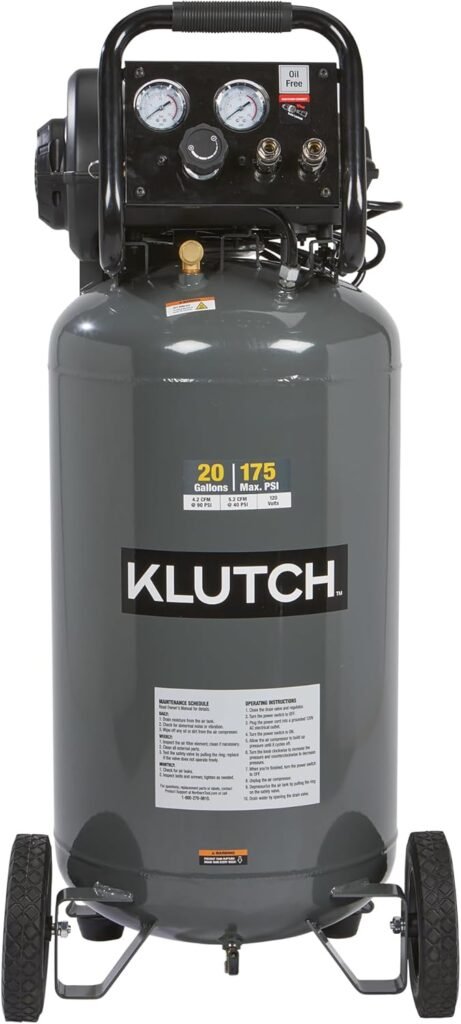

Klutch 20-Gallon Air Compressor, 2 HP, 120 Volts, 175 PSI – Our Full Hands-On Style Review
When we look at a compressor for our garage or small shop, we usually want three things: reliability, enough power to handle real work, and something that does not become a maintenance headache. The Klutch 20-Gallon Air Compressor, 2 HP, 120 Volts, 175 PSI aims to hit all three. In this review, we walk through how it fits into day‑to‑day use, where it shines, and where we might want to think twice before buying.
Key Specs at a Glance
Before we get into how it feels to use, it helps to see the most important details in one place. We find that this kind of overview quickly tells us whether a compressor even belongs on our shortlist.
| Feature | Specification / Detail |
|---|---|
| Brand / Model | Klutch 20-Gallon Air Compressor |
| Tank Capacity | 20 gallons |
| Motor Power | 2.0 HP (electric) |
| Voltage | 120 Volts (standard household circuit) |
| Maximum Pressure | 175 PSI |
| Air Delivery | 4.2 SCFM @ 90 PSI |
| Pump Type | Oil-free pump |
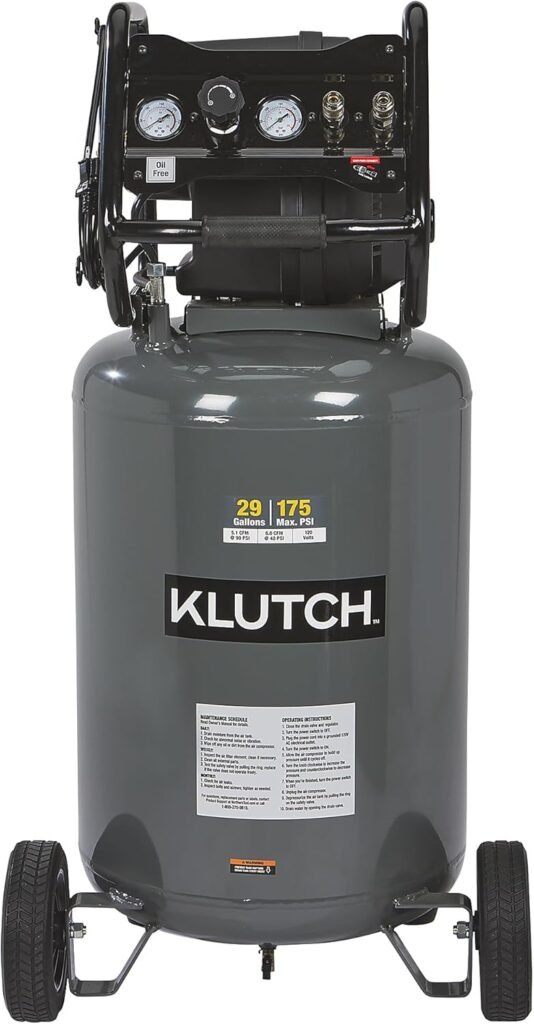
| Portability | Large rubber wheels, ergonomic handle |
| Protection | Thermal overload protection |
| Stability | Rubber foot stabilizers to reduce vibration |
| Primary Use Cases | Home garage, small shop, light-to-medium duty tasks |
Looking at these specs, we see a unit that aims to bridge the gap between basic homeowner compressors and more serious shop equipment, without requiring 240V power.
Design and Build Quality
When we first look at a compressor, we want to know if it feels solid enough to trust in our workspace. The Klutch 20-gallon strikes us as a machine designed around practicality rather than flashy looks.
Overall Construction
The 20-gallon horizontal tank gives this unit a compact profile that is easy to tuck against a wall. We notice that the tank and frame feel sturdy enough for regular shop use, rather than like a flimsy “big box store” budget tool.
The pump and motor assembly look well integrated on top of the tank, with accessible gauges and controls. Our impression is that Klutch aims this at users who actually plan to work with it often, not just inflate a tire once a year.
Oil-Free Pump Build
The oil-free design is one of the defining features of this compressor. That means we do not have to track oil levels, change oil, or worry about oil carryover into our air lines. For many of us, that alone reduces one of the most annoying aspects of compressor ownership.
We also know that oil-free pumps can be a bit louder than oil-lubricated ones and often are designed with longevity balanced against ease of maintenance. We see this Klutch model as leaning toward “low maintenance, everyday use” rather than “industrial continuous-duty workhorse.”
Power and Performance
Performance is where this compressor either justifies its place in our shop or turns into a frustration. With a 2 HP motor and 20-gallon tank, this Klutch unit aims to handle a broad range of tasks without constant cycling.
Motor Strength and Reliability
The 2.0 HP motor on standard 120V power is a big selling point. Many compressors that feel this capable require 240V, which is not always available in home garages. Here, we can plug into a properly rated household circuit and get serious power.
The motor is backed by thermal overload protection, which shuts it down automatically if it starts to overheat. That gives us added peace of mind, especially during longer sessions where the compressor may be cycling often. We appreciate knowing we are less likely to “cook” the motor accidentally.
Air Delivery and Recovery Time
The rated 4.2 SCFM @ 90 PSI tells us how much airflow we actually get under a common working pressure. For most light-to-medium duty air tools, 90 PSI is the sweet spot.
We find this output adequate for:
- Impact wrenches (light to moderate use)
- Air ratchets
- Blow guns and cleaning
- Brad nailers and finish nailers
- Light spraying (touch-up work, not heavy production)
- Tire inflation and general shop tasks
The quick recovery time means that once the pressure dips during use, the compressor comes back up to working pressure without long delays. For many of us, that is the real test: does the compressor keep up with our work rhythm, or do we constantly wait on it?
This unit feels particularly comfortable in “burst” usage scenarios, where our tools draw air in spurts rather than continuously.

Pressure Capacity: 175 PSI and Why It Matters
The 175 PSI maximum pressure rating might sound like just a bigger number, but it does have a practical impact on how our compressor serves us.
Higher Pressure, More Usable Air
By storing air at a higher pressure, the 20-gallon tank effectively holds more usable air before pressure drops below our working range. That translates into:
- Longer tool run times between cycles
- Fewer interruptions for the motor to kick on
- Better performance for tools that operate best at 100–120 PSI
Even if we do not run tools directly at 175 PSI, the higher storage pressure gives us a buffer. We notice this especially when inflating higher-pressure tires or running tools that cause a quick pressure drop.
Consistency Under Load
Higher max pressure also helps maintain consistent performance when we are in the middle of a task. For instance, if we are using an impact wrench on a difficult fastener, we want pressure to remain strong rather than falling off mid-job.
With this Klutch model, the combination of 175 PSI and 4.2 SCFM @ 90 PSI makes the experience feel balanced. We do not get the feeling of a small compressor constantly straining to keep up.
Reliability and Long-Term Durability
When we add a compressor to our setup, we expect it to last for years if we treat it right. The Klutch 20-gallon focuses on simple features that protect the unit and enhance longevity.
Thermal Overload Protection
The thermal overload protection is one of those safety measures we might forget about until we need it. During heavy use, or in hotter environments, motors can overheat. With this protection, the system shuts down before serious damage occurs.
This means:
- Less risk of motor burnout
- Increased lifespan under demanding use
- Extra confidence for long work sessions
We like designs that assume we might push the machine hard and build in defenses against misuse.
Vibration Control with Rubber Foot Stabilizers
Heavy vibration not only makes a compressor annoying to be around, it also contributes to faster wear and tear. This Klutch model uses rubber foot stabilizers to smooth operation.
We notice benefits such as:
- Less “walking” or movement of the unit on smooth floors
- Reduced rattling noise
- Lower stress on connections and fittings over time
This feels like a small detail, but over years of use, it can help keep the compressor structurally sound and quieter in our space.
Portability and Ease of Movement
A 20-gallon compressor is not tiny, but it does not have to be a back-breaking beast either. Portability is where this Klutch unit stands out for anyone sharing a compressor among multiple work areas.
Large Rubber Wheels
The large rubber wheels make moving the compressor a practical one-person job. Instead of scraping or dragging metal feet across the floor, we can tilt the unit back slightly and roll it like a cart.
This matters when:
- We shift between indoor and outdoor work
- We move from one bay or corner of the shop to another
- We need to store it out of the way after use
The wheel design feels focused on real-world shop floors, where we encounter dust, cords, and small debris.
Ergonomic Handle
The ergonomic handle pairs with the wheels to give us comfortable control when moving the unit. Rather than struggling to push or drag it, we can steer it with a bit of leverage and decent posture.
We find this especially helpful when maneuvering in tighter spaces—around vehicles, benches, or stored items in a garage. It also encourages us to store the compressor in a smart spot, because moving it is not such a chore.
Practicality and Everyday Usability
A compressor can look great on paper but still be annoying to live with. Usability is about how it behaves day in and day out, and how much effort we put into keeping it running.
Oil-Free Pump Convenience
The oil-free pump is central to the practicality of this unit. For many of us, the idea of not buying compressor oil, not changing it, and not worrying about oil mist in our lines is attractive.
We appreciate that:
- Setup is simpler with fewer consumables
- Seasonal maintenance is reduced
- We can feel more confident using the air for tasks like painting small parts (with proper filtration)
We understand oil-lubricated compressors can have edges in longevity and smoothness, but for a home or light shop environment, an oil-free design often feels like the right balance between performance and simplicity.
Always Ready as a Shop Compressor
Because of its design and features, this Klutch model sits in that comfortable “always ready” category. We can wheel it out, plug it in, and start working without a big checklist of prep tasks.
In a typical week, we might:
- Top off car, truck, or bike tires
- Blow out filters or work areas
- Use nailers for carpentry or trim work
- Use an impact wrench on wheels or suspension parts
- Do light painting or touch-up jobs
In each of these, the compressor feels like a tool we depend on rather than a project in itself.
Noise and Comfort During Use
No compressor is completely quiet, and closed spaces amplify sound. Still, some designs are easier to live with than others, especially if we are sharing the area with other people or want to limit fatigue.
Operating Noise Level
The oil-free pump and 2 HP motor will produce a noticeable amount of sound. We should expect a volume level typical of mid-size portable shop compressors. While specific decibel numbers are not given, this is not a “whisper quiet” unit, but it is not unusually loud for its class either.
We find that:
- It is comfortable for garage or shop use with hearing protection
- It may be too loud for very small indoor rooms without sound management
- It cycles on and off, so noise comes in bursts when recovering pressure
For those of us sensitive to noise, placing the compressor a bit farther away or behind a partial barrier can help.
Reduced Vibration for Better Comfort
The rubber foot stabilizers help minimize the harsher aspects of operating noise by cutting down on vibration transmitted through the floor and frame. Less rattling and walking makes the acoustic environment feel less chaotic, even if the pumped air noise is still present.
We find that the compressor feels more “planted” and less jarring to be around, which matters across a long day.
Best Use Cases for This Compressor
Not every compressor fits every job. Our experience with the Klutch 20-gallon suggests a clear set of tasks where it shines and a few where we might want something bigger.
Ideal Tasks and Environments
This Klutch compressor fits particularly well in:
-
Home garages:
- Tire inflation
- Light mechanical work
- Blowing out debris
- Occasional air tool use
-
Small workshops:
- Brad and finish nailers
- Staplers for upholstery
- General cleanup
- Light spraying and touch-up painting
-
DIY renovation projects:
- Trim and molding installation
- Fence or deck work with nailers
- On-site blowdowns and tool cleaning
We see it as a strong middle-ground option for those of us who want more than a tiny pancake compressor, but who do not need a massive stationary unit.
Where It Might Fall Short
We should consider alternatives if we frequently do:
- Heavy, continuous sandblasting
- Large-scale automotive painting requiring high CFM for long stretches
- Multiple high-demand air tools running at once
- Full industrial or commercial-level workloads
In those cases, we would probably want a larger tank, higher CFM rating, and possibly a 240V dedicated circuit for heavier-duty compressors.
Comparison to Smaller Portable Compressors
Many of us start with a small 6–8 gallon pancake or hot dog compressor. The Klutch 20-gallon represents a noticeable step up, and it is worth understanding how that feels in real-world use.
More Air, Less Waiting
Compared with smaller units, the 20-gallon tank and higher pressure rating give us:
- Longer tool run times before pressure dips
- Less frequent cycling of the motor
- Better support for more demanding tools, like impact wrenches
We might still need to pause occasionally during heavy work, but the difference from a 6-gallon unit is significant in practice.
A More Capable “One and Done” Setup
With smaller compressors, we sometimes end up upgrading or adding another unit as our projects grow. The Klutch 20-gallon has enough capacity to serve as the primary compressor for many home mechanics and DIYers, at least until our needs get truly professional or industrial.
If we want a compressor that can grow with us a bit, this format offers more breathing room than the smallest portable models.
Maintenance and Care
Even an oil-free compressor needs some basic attention. The good news is that this Klutch model keeps the maintenance list short and manageable.
Routine Checks
We still want to:
- Drain the tank regularly to remove condensation and prevent rust from building inside
- Check hoses and fittings for leaks or wear
- Inspect cords and plugs for damage
- Monitor gauges to ensure pressure behavior stays normal
These small habits help us keep performance consistent and prevent unexpected failures.
Long-Term Ownership Experience
Because we are not dealing with oil changes or regular lubrication schedules, most of our long-term attention goes to:
- Keeping the compressor in a dry, reasonably clean environment
- Allowing good airflow around the unit during operation
- Avoiding running it beyond its intended duty cycle for extended periods
If we respect those limits, we can expect a dependable, low-fuss workhorse for our garage or small shop.
Safety Features and Best Practices
Air compressors pack a lot of energy into a small footprint, so it is worth paying attention to safety – both built-in and in how we use them.
Built-In Safety Measures
The Klutch 20-gallon includes:
- Thermal overload protection: Protects the motor from overheating and damage
- Pressure relief valves: Prevents pressure from exceeding safe limits
- Stable rubber feet and wheels: Reduces movement and accidental tipping
These features work quietly in the background, reducing the chance of an accident or catastrophic failure.
Safe Use Habits
We still need to do our part:
- Use the compressor on a properly rated circuit and avoid overloading power strips
- Keep the area around the unit clear during operation
- Wear hearing and eye protection when working with air tools and blow guns
- Drain the tank regularly to avoid corrosion-related failures
When we combine thoughtful design with responsible use, we get a safer, more predictable experience.
Pros and Cons Summary
To make our decision easier, we find it helpful to look at a straightforward list of strengths and tradeoffs.
What We Like
- 120V compatibility: Works in most home garages without special wiring
- 2 HP motor: Strong enough for a wide range of shop and garage tasks
- 175 PSI max pressure: More stored energy and longer run times between cycles
- 4.2 SCFM @ 90 PSI: Adequate airflow for many common air tools
- Oil-free pump: Low maintenance and cleaner air output
- Portable design: Large rubber wheels and ergonomic handle make moving it simple
- Rubber foot stabilizers: Smoother operation and less vibration
- Thermal overload protection: Added motor safety and extended lifespan
What We Should Consider
- Not designed for heavy continuous-duty industrial use: Better for intermittent or moderate workloads
- Noise typical of its class: Not excessively loud, but far from silent
- Oil-free pump tradeoff: Some users prefer oil-lubricated designs for the longest lifespan under harsh conditions
We see the overall balance as very favorable for home and light shop users who want capability without the complexity of a full industrial setup.
Who This Compressor Is Best For
We get the most value from the Klutch 20-Gallon Air Compressor if we match its strengths to our needs.
Great Fit If We Are:
- A home mechanic who rotates tires, works on brakes, and does general repairs
- A DIY enthusiast who handles carpentry, remodeling, and trim work with air nailers
- A small workshop owner who needs a reliable, portable, mid-size compressor
- Someone who prefers low-maintenance tools and an oil-free system
- Working primarily on a 120V power supply without access to 240V
In these situations, this compressor feels like a very capable “centerpiece” for our air system.
Maybe Not Ideal If We Are:
- Running industrial-level air tools all day
- Doing large-scale automotive painting or sandblasting regularly
- Needing a nearly silent compressor for noise-sensitive environments
For those tasks, moving to a larger, often stationary, higher-CFM and possibly 240V unit would be the better route.
Tips for Getting the Most from the Klutch 20-Gallon
Once we decide this compressor fits our needs, a few simple habits help us squeeze the best performance and lifespan out of it.
Setup and Placement
- Place the compressor on a flat, stable surface so the rubber feet and wheels can do their job
- Allow good airflow around the motor and pump for cooling
- Keep it in a dry area to minimize internal rust from moisture in the tank
- Use appropriately sized hoses and fittings to avoid throttling airflow
This grid of thoughtful setup choices can make the difference between a smooth, reliable experience and one plagued by small issues.
Operating Habits
- Let the compressor reach full pressure before heavy tool use
- Avoid pushing it into near-continuous duty when it is clearly designed for intermittent cycles
- Periodically check for air leaks by listening or using soapy water on fittings
- Drain condensate often, especially in humid climates
Treating it with respect means we are much more likely to get years of dependable service.
Our Overall Verdict
After looking closely at the Klutch 20-Gallon Air Compressor, 2 HP, 120 Volts, 175 PSI, we see a compressor that is thoughtfully designed for real-world users who need:
- More capacity and power than tiny portable units,
- The convenience of an oil-free, low-maintenance pump,
- And the flexibility of 120V operation with true shop-ready performance.
Its combination of 175 PSI, 4.2 SCFM @ 90 PSI, and a 20-gallon tank delivers enough muscle for typical garage and light workshop tasks. The thermal overload protection, rubber foot stabilizers, and portable wheel-and-handle design round out a package that feels friendly to own and use.
We would choose this compressor if we want a reliable, portable workhorse that can handle regular use in a home or small-shop setting without burdening us with frequent maintenance or special power requirements. It is not meant to be a giant industrial unit, but for the majority of our automotive, DIY, and light professional tasks, it offers a very comfortable balance of power, portability, and practicality.
If our goal is to equip our space with a compressor that feels ready whenever we are, the Klutch 20-Gallon Air Compressor makes a strong case to be at the heart of our setup.

Disclosure: As an Amazon Associate, I earn from qualifying purchases.