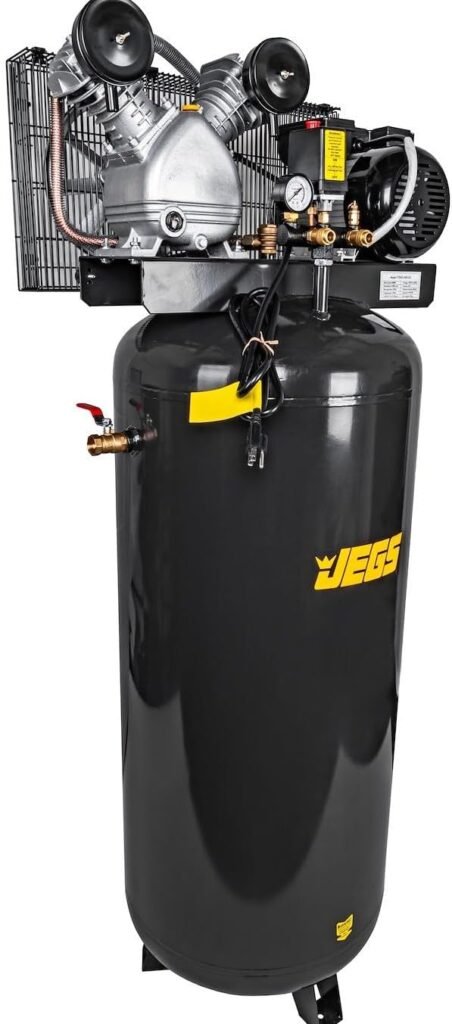
Can this JEGS Air Compressor | 3 HP 120 Volt Single Phase | 60 Gallon Vertical Tank | Single Stage handle everything we throw at it in our home garage or small shop?

Product Overview
We want reliable, consistent compressed air without constantly waiting for the tank to refill. The JEGS Air Compressor | 3 HP 120 Volt Single Phase | 60 Gallon Vertical Tank | Single Stage aims to provide a balance of power and capacity for small-to-medium tasks in garages and workshops.
What this model is designed for
This compressor is intended for automotive work, pneumatic tools, inflation, and light to moderate spray painting. Its single stage V-Twin pump and 60-gallon vertical tank offer sustained air delivery that reduces cycling frequency compared with smaller tanks.
Who should consider it
We recommend it for enthusiasts, small shop owners, and anyone who needs a larger stationary compressor that runs on single-phase household power. If we rely on continuous air for tools like impact wrenches, sanders, or spray guns, this unit is a practical option.
Key Specifications
We like clear numbers when evaluating compressors, so we compiled the main specs in one place. These values are critical for matching the compressor to our tools and intended tasks.
| Specification | Value |
|---|---|
| Product name | JEGS Air Compressor | 3 HP 120 Volt Single Phase | 60 Gallon Vertical Tank | Single Stage |
| Motor | 3 HP single phase (V-Twin) |
| Voltage | Marketed as 120V (specs may reference 110V nominal household voltage) |
| Stage | Single-stage |
| Tank capacity | 60 gallons (vertical) |
| CFM at 40 PSI | 8.6 CFM |
| CFM at 90 PSI | 6.3 CFM |
| Max PSI | Rated at 115 PSI |
| Pump type | V-Twin single stage pump |
| Typical uses | Automotive, pneumatic tools, painting, inflation |
Notes on the specifications
We noticed the product name indicates 120 Volt while some specs mention 110 Volt. In North American household terms these are often used interchangeably to refer to the same single-phase mains supply. The key practical takeaway is that this unit is designed to run on standard single-phase household power without requiring three-phase service.
Performance and Air Delivery
Reliable air delivery is the heart of any compressor, and we focus on CFM and PSI to evaluate performance. The JEGS compressor provides a solid airflow for many common shop tasks.
CFM and PSI explained
CFM (cubic feet per minute) measures how much air a compressor supplies, while PSI (pounds per square inch) measures air pressure. We need both numbers to determine if the compressor can keep up with our tools. For example, impact wrenches typically require higher CFM at moderate PSI, while spray guns need steady pressure over time.
What the CFM numbers mean in practice
At 40 PSI the unit delivers 8.6 CFM, and at 90 PSI it delivers 6.3 CFM. That means we can run most pneumatic tools one at a time without frequent motor cycling. Tools like dual-piston ratchets or larger grinders may approach its limits, so we should check each tool’s CFM requirement against these numbers.

Motor and Pump Design
We assess motor and pump design to understand durability, thermal performance, and maintenance needs. The V-Twin single-stage pump is a common and robust configuration for larger single-phase compressors.
V-Twin single-stage pump advantages
A V-Twin configuration allows for better balance and more efficient displacement compared to a single-cylinder pump of similar size. We appreciate that this arrangement helps with smoother operation and can often provide better heat dissipation, which contributes to longevity when used under moderate load.
Motor specifications and implications
The 3 HP single-phase motor gives the compressor the muscle needed for a 60-gallon tank and respectable CFM ratings. Single-phase motors are convenient for residential setups since they run on typical household power. We should confirm our breaker and wiring capacity before installation to ensure safe operation.
Tank Capacity and Vertical Design
Tank size affects how long we can work before the motor cycles to refill the tank. The vertical 60-gallon tank aims to offer a compact footprint while delivering large储d capacity.
Benefits of a 60-gallon vertical tank
A 60-gallon tank stores a significant volume of compressed air, reducing how often the motor needs to run during intermittent tool use. The vertical orientation keeps the footprint smaller, which is useful in tighter spaces or when we prefer to stand the compressor against a wall.
Considerations for placement
Because it’s a vertical tank, we should place it on a level, stable surface and leave clearance for maintenance access and airflow. The extra height can be advantageous for gravity drainage of condensate through the tank drain valve.
Noise and Vibration
Noise is an important factor for in-shop comfort and neighbor relations. We examine how the V-Twin pump and motor affect noise and vibration.
Typical noise levels for this class
Single-stage V-Twin compressors are not as quiet as specialty quiet models, but they are generally consistent. We can expect moderate noise typical of a 3 HP compressor — louder than small pancake compressors but quieter than larger two-stage industrial units.
Vibration control and mounting
We recommend placing the compressor on vibration-dampening pads or a solid concrete floor to minimize movement and reduce noise transmission. Proper mounting and anti-vibration measures will also protect fittings and the tank over time.
Power and Electrical Requirements
We need to verify electrical compatibility before plugging in and running the compressor. The product name suggests 120V single-phase operation, which suits most garages.
Understanding the 110V vs 120V labeling
Manufacturers often list 110V or 120V interchangeably to represent standard household single-phase voltage in North America. We should confirm the unit’s nameplate and manual for exact requirements, but in practice this unit should be compatible with typical 120V circuits.
Circuit and breaker recommendations
A compressor with a 3 HP motor can draw a significant startup current. We recommend running it on a dedicated circuit with appropriate amperage and a proper breaker size as specified in the manual. Using undersized wiring or sharing a circuit with other heavy loads risks nuisance tripping and potential damage.
Installation and Setup
We walk through the steps to get the compressor ready for use and point out important setup tasks. Proper initial setup will help ensure performance and safety.
Unpacking and positioning
When we unpack, we should check for shipping damage and confirm that all hardware and paperwork are present. Place the compressor on a level surface near a suitable electrical outlet while allowing access for routine maintenance and ventilation.
Initial checks and first run
Before first use we should drain any residual packing fluid, check oil levels if the pump is oil-lubricated, and inspect hoses and fittings. On first run, watch pressure build-up and listen for abnormal sounds, confirming the pressure switch functions and that the motor stops at the cut-out pressure.
Maintenance and Serviceability
Like any mechanical equipment, the compressor requires regular maintenance to remain reliable. We outline routine tasks and expected service points.
Routine maintenance tasks
We recommend regularly checking and changing the pump oil (if applicable), draining condensate from the tank after use, cleaning or replacing the air filter, and inspecting belts and fittings. Regular oil changes and condensate drainage are particularly important to prevent premature wear and internal corrosion.
Longevity and service parts
The V-Twin pump design is serviceable, and parts such as valves, pistons, and gaskets are typically replaceable. Keeping spare parts on hand or having a service plan will extend the life of the unit and reduce downtime when something needs attention.
Safety Features and Best Practices
Safety is non-negotiable when working with compressed air. We highlight built-in protections and safe operation tips.
Built-in safety elements
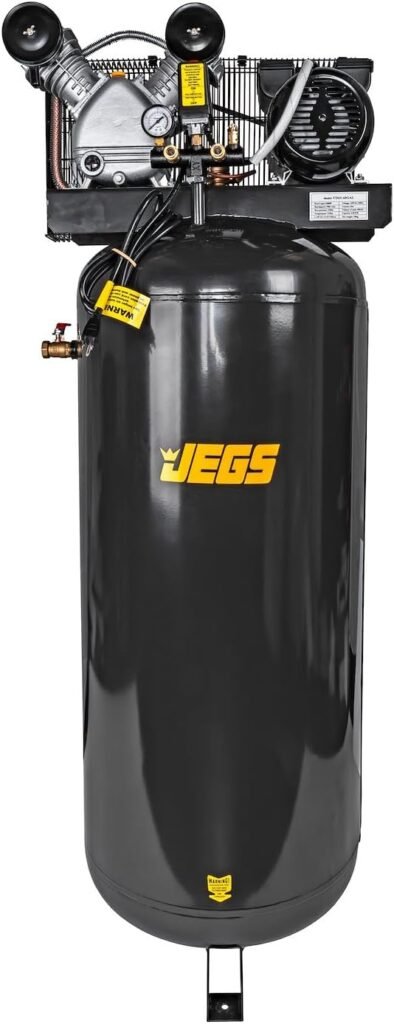
The compressor should include a pressure relief valve and pressure switch to prevent overpressurization beyond its 115 PSI rating. We should also ensure the motor has thermal overload protection or other safeguard features per the manual.
Operational safety tips
We always relieve tank pressure before maintenance and wear eye and hearing protection when operating pneumatic tools. Secure hoses to prevent tripping hazards and avoid modifying safety devices or bypassing pressure controls.
Portability, Footprint, and Storage
The vertical 60-gallon tank balances capacity with space efficiency. We discuss practical storage and movement considerations.
Size and weight considerations
A 60-gallon vertical compressor is considerably heavier than small portable units. We should plan for its weight when moving it into the shop and use furniture dollies or mechanical assistance rather than trying to lift it ourselves.
Space planning
Place the compressor where it’s convenient to connect tools and where noise and vibration aren’t an issue. If we plan to leave it outdoors or in a damp area, provide shelter and ensure frost protection to prevent damage.
Use Cases and Applications
We look at common scenarios and whether this compressor meets their demands. Matching our tools and tasks to the compressor’s capabilities helps us set realistic expectations.
Automotive and impact tools
For automotive work, including impact wrenches and air ratchets, the compressor’s 6.3 CFM at 90 PSI should power most tools intermittently. For continuous use of multiple tools simultaneously, we may need to stagger tool usage or consider a higher-CFM unit.
Paint spraying and finishing
The 8.6 CFM at 40 PSI makes this compressor reasonably suited for small to medium HVLP or gravity-feed spray guns. For larger paint booths or high-volume professional work, we would want to confirm the spray gun’s CFM requirement and possibly use a secondary storage tank or booster to prevent pressure drop.
Sanding, grinding, and stapling
Air sanders and grinders require varied CFM ranges, but this compressor covers many of those tools for intermittent use. Finish nailers and staplers typically have low CFM requirements and will function well with this unit.
Pros and Cons
We aim to lay out the strengths and limitations so we can decide whether it meets our specific needs.
Pros
- Large 60-gallon vertical tank reduces motor cycling and provides longer run time between fills.
- 3 HP single-phase motor allows operation on standard household power without three-phase.
- V-Twin single-stage pump offers reliable airflow and balanced operation.
- CFM ratings (8.6 @ 40 PSI, 6.3 @ 90 PSI) support many common pneumatic tasks.
Cons
- Noise and vibration are moderate and may be higher than purpose-built quiet compressors.
- Startup current and electrical requirements may necessitate a dedicated circuit or wiring upgrade.
- Not ideal for simultaneous heavy-duty tools without monitoring combined CFM requirements.
- Being a larger, heavier unit, it isn’t easily portable.
Comparison with Similar Models
We compare this JEGS model against other compressors in the same category to give context for value and fit.
Typical alternatives
Comparable units usually include 60-gallon single-stage or two-stage compressors in the same horsepower range. Two-stage units can offer higher pressure and better recovery for continuous heavy use but often require three-phase power or more complex electrical setups.
Where the JEGS stands out
This model’s balance of 3 HP on single-phase power and a substantial 60-gallon tank makes it more accessible to home workshops that lack three-phase power. We appreciate that it brings larger-tank benefits without heavy industrial power requirements.
Price and Value Consideration
Cost vs capability matters a lot when selecting a compressor. We assess whether this unit represents good value for typical users.
Upfront cost vs alternatives
The price for a 3 HP, 60-gallon single-stage compressor tends to be mid-range for serious DIYers and small shops. It provides better capacity than portable units at a fraction of the cost of industrial two-stage compressors.
Long-term value
If we use pneumatic tools frequently, the reduced motor cycling and larger tank offer long-term benefits through lower wear and less downtime. With proper maintenance the unit should provide many years of service, enhancing its value over time.
Installation Checklist
We provide a concise checklist to help prepare for installation and first-time operation. This helps prevent common setup mistakes.
- Verify electrical supply and breaker size against the unit’s nameplate requirements.
- Choose a stable, level location with adequate clearance and ventilation.
- Inspect for shipping damage and tighten visible fittings.
- Check oil level and fill if the pump is oil-lubricated.
- Connect an appropriate regulator and safety valve as recommended.
- Perform an initial run and confirm cut-in/cut-out pressures and leak-free operation.
- Drain tank and reset any integrated moisture traps after test cycles.
Frequently Asked Questions (FAQ)
We answer common questions to clarify typical concerns.
Can this compressor run off a standard household outlet?
Yes, it is designed for single-phase household power (marketed as 120V/110V nominal). However, because of the 3 HP motor and high startup current, we recommend a dedicated circuit sized according to the manual’s specifications.
Is it suitable for spray painting a car?
It can be suitable for painting one vehicle with the correct spray gun setup and if the gun’s CFM requirements match the compressor’s output. For professional continuous spraying or multiple guns, a higher-capacity or two-stage unit might be preferable.
How loud is it?
Expect moderate noise typical for a 3 HP single-stage compressor. If noise is a major concern, consider installing vibration isolation pads, a sound-dampening enclosure, or choosing a purpose-built quiet model.
How often do we need to change the oil?
Oil change intervals vary by use and manufacturer recommendation. As a rule, check the manual and perform initial oil change after a break-in period, then on a regular schedule based on hours of operation.
Our Verdict and Recommendation
After considering specs, performance, and practical use cases, we summarize whether the compressor fits common needs. We balance pros and cons and provide guidance tailored to likely buyers.
Final thoughts
We find the JEGS Air Compressor | 3 HP 120 Volt Single Phase | 60 Gallon Vertical Tank | Single Stage to be a solid choice for home shops and small commercial setups that need reliable, larger-capacity air without industrial electrical requirements. Its 60-gallon tank and respectable CFM ratings make it well-suited for a wide range of pneumatic tools.
Who should buy it
We recommend it if we want sustained air delivery for automotive work, general shop use, and occasional painting, and if we have access to a suitably rated single-phase circuit. For heavy commercial use with continuous multi-tool operation, we advise evaluating higher-capacity or two-stage compressors.
Final Setup Tips and Best Practices
We wrap up with practical tips to get the most from the compressor and avoid common pitfalls.
Practical usage tips
Use a quality regulator and moisture trap near the connection point for paint or finish work. Keep hoses short enough to minimize pressure drop but long enough for convenient access to work areas.
Long-term care
Keep the compressor clean, follow oil and filter service intervals, and drain the tank after each session to prevent moisture buildup. Periodic inspection of pressure relief valves, safety devices, and structural integrity will keep the unit safe and dependable.
We feel confident that, with proper installation and routine maintenance, this JEGS compressor will serve us well in many workshop and garage scenarios.

Disclosure: As an Amazon Associate, I earn from qualifying purchases.