? Are we ready to assess a heavy-duty compressed air system that combines a rotary screw compressor, an integrated refrigerated dryer, and coalescing filtration in a single, compact package?


Product Overview
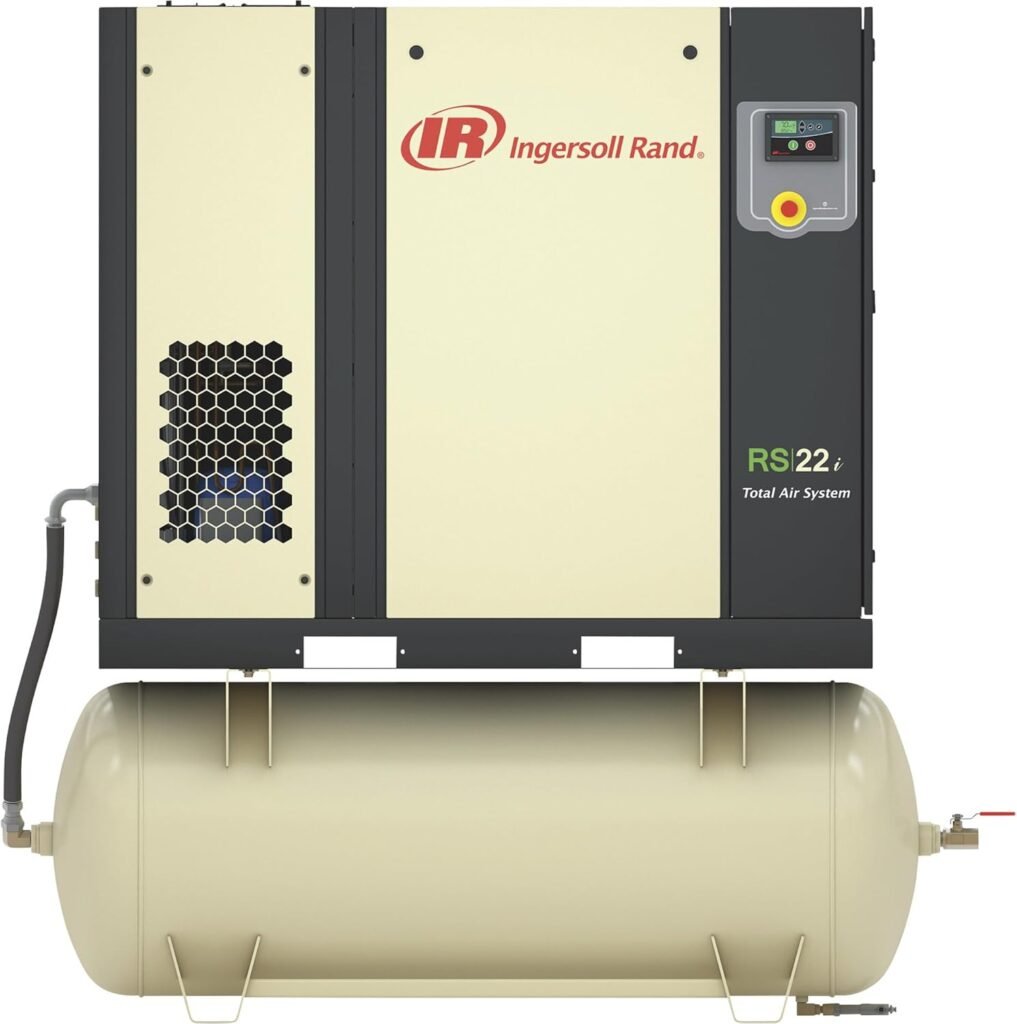
We find that the Ingersoll Rand Next Generation R-Series Oil-Flooded Rotary Screw Air Compressor With Integrated Air Dryer, 30 HP, 208 Volt, 3 Phase, 120 Gallon Horizontal, Model# RS22i-A118-TAS is designed as a total air system package for shops and light industrial facilities. We appreciate that the unit is intended to reduce installation complexity by combining the compressor, refrigerated dryer, and basic filtration into one enclosed assembly that is ready for plant air service.
This package targets users who want a quieter, cleaner, and more compact solution than separately mounted components. We see advantages in reduced piping runs, simplified start-up, and a more predictable performance baseline out of the crate. The unit’s fully enclosed design, integrated dryer, and coalescing filters make it an attractive option for operations where indoor noise and air quality matter.
What the Package Includes
We notice that the package includes an oil-flooded rotary screw airend, a motor and drive system, a 120-gallon horizontal receiver, an integrated refrigerated air dryer, and integrated coalescing filters. We also observe a fully enclosed cabinet engineered to run at about 74 dBA, which helps when the compressor is placed inside a shop or equipment room.
The integrated filtration is intended to remove oil and particulate to protect downstream equipment and processes. We appreciate that having these items matched by the manufacturer reduces the guesswork around sizing the dryer and filters to the compressor’s output.
Technical Specifications
We want to be explicit about the core specifications so we can match the machine to air demand and electrical infrastructure. We also think an easy-to-read table helps compare the important numbers at a glance.
| Specification | Detail |
|---|---|
| Model | Ingersoll Rand Next Generation R-Series RS22i-A118-TAS |
| Motor Power | 30 HP |
| Free Air Delivery | 123 CFM |
| Maximum Pressure | 115 PSI |
| Tank Size | 120 gallon horizontal receiver |
| Voltage | 208 Volt |
| Phase | 3 Phase |
| Noise Level | 74 dBA (fully enclosed) |
| Dryer Type | Integrated refrigerated air dryer |
| Filtration | Integrated coalescing filters |
| Package | Total air system (compressor, dryer, filters, receiver) |
| Application | Industrial, automotive, small production shops |
We recommend verifying the motor wiring and motor starter compatibility with local supply conditions before purchase. We also advise confirming that the compressor’s rated CFM and pressure match peak and average demand in our shop or facility to prevent undersizing or excessive cycling.
Performance and Output
We find that the 30 HP, 123 CFM rating at up to 115 PSI is a common and useful performance point for many small-to-medium production environments. We observe that the rotary screw airend offers steady, continuous delivery better suited to sustained demand than intermittent piston compressors.
In operation, we expect this package to provide more stable outlet pressure and less pulsation than reciprocating compressors, which benefits pneumatic tool performance and process stability. We also expect the 120-gallon receiver to act as a buffer, smoothing pressure fluctuations and reducing the frequency of starts and stops.
Airflow and Pressure
We note that 123 CFM is a realistic delivered flow for a 30 HP rotary screw when measured at standard conditions, with an operating envelope near 100–115 PSI depending on the specific test point and ambient conditions. We also point out that actual delivered flow will vary with inlet conditions, discharge pressure, and any pressure drops through filters and dryer.
We recommend that we size systems to allow a margin above peak demand, typically 10–25%, to accommodate future growth, leaks, or temporary demand spikes. We also advise performing a compressed air survey or logging tool usage to accurately map our CFM and PSI needs before confirming that this model is the best fit.
Duty Cycle and Reliability
We appreciate that oil-flooded rotary screw compressors are intended for continuous duty and are built for high utilization environments. We believe the Next Generation R-Series design aims to balance long service life with manageable maintenance intervals.
We should expect longer run times and fewer mechanical starts than piston compressors, which reduces wear on motor starters and belts (where present). With proper maintenance—oil changes, filter replacements, and periodic service—we anticipate years of reliable operation even under steady loads.

Integrated Refrigerated Air Dryer
We like that the refrigerated air dryer is integrated into the cabinet, which simplifies piping and ensures the dryer is matched to the compressor’s output. We also appreciate that an integrated dryer reduces the number of separate components we must find space for and connect during installation.
An onboard dryer improves downstream air quality by condensing and removing moisture, which prevents corrosion in piping and damage to pneumatic tools and processes. The energy-saving design mentioned in the product details implies the dryer is sized to be efficient for the matched compressor output rather than being overdesigned and wasteful.
Why an Integrated Dryer Matters
We think an integrated dryer matters because dry, clean air protects production quality, reduces tool failures, and minimizes rust and contamination in finished products. We also note that an integrated component lowers the risk of incorrect matching or installation mistakes that could reduce system effectiveness.
From a practical standpoint, less external plumbing and fewer separate components mean a tidier installation and fewer leak points. For facilities that need reliable, ready-to-run compressed air with minimal on-site integration, the package approach reduces startup time and commissioning complexity.
Dryer Performance and Maintenance
We expect the refrigerated dryer to maintain pressure dew points appropriate for general industrial applications, typically around +35°F to +40°F, depending on load and ambient conditions. We also understand that seasonal ambient temperatures and flow can change dryer load, so periodic checks and maintenance are important.
We anticipate routine maintenance items like condensate drain checks and occasional refrigerant or component service will be required per the manufacturer’s schedule. Proper maintenance of the dryer is essential to avoid carryover moisture, which can shorten downstream filter life and degrade air quality.
Filtration and Air Quality
We value that this package includes integrated coalescing filters designed to remove oil aerosols and particulate from the compressed air. We see this as an important step toward meeting tool and process air quality needs without adding separate filter housings and piping.
Coalescing filters will extend the life of downstream equipment, reduce contamination-related rework, and protect sensitive pneumatic components. We advise selecting the proper grade of final filters for the required air purity, especially if we are supplying paint booths, instrumentation, or food-contact processes.
Coalescing Filters
We understand that coalescing filters capture oil and liquid droplets by forcing air through specialized media that coalesces and drains the captured contamination. We also note that these filters typically require replacement or element changeouts on a scheduled basis depending on load and inlet conditions.
We recommend monitoring pressure drop across the filters as an indicator of when service is due, and we suggest stocking spare filter elements to minimize downtime during service. Proper disposal or recycling of used filters should be performed in accordance with local environmental regulations.
Achieving Clean Air for Tools and Processes
We believe that the combination of coalescing filtration and the refrigerated dryer will satisfy the needs of many workshops and light industrial processes that require general-purpose clean, dry air. We also caution that applications with higher purity needs—medical gas, ultra-fine instrumentation, or certain food-grade uses—may require additional filtration or specialized dryers.
We suggest defining the required ISO air quality class for our application before finalizing the filtration strategy. If necessary, final particulate and activated carbon filters can be added downstream to remove residual oil vapors or odors.
Noise and Vibration
We note that the fully enclosed unit is rated to operate at about 74 dBA, which is relatively quiet for a 30 HP rotary screw package. We find this noise level suitable for indoor placement in many workshops, provided the surrounding area is not noise-sensitive like office or retail spaces without additional acoustic treatment.
Although the cabinet reduces radiated noise, vibration isolation, and proper mounting still matter to avoid structure-borne noise transmission to floors and nearby equipment. We recommend using vibration isolators or rubber pads under the receiver base to minimize transmitted vibration and rattling.
Measured Noise Levels and Practical Impact
We estimate that 74 dBA at the unit is comparable to a busy workshop environment and will typically remain acceptable for operator workspaces that are not directly adjacent. We advise that if personnel occupy nearby enclosed offices or hearing-sensitive areas, additional sound barriers or relocating the compressor to a separate equipment room may be appropriate.
It’s also useful to test the unit under normal operating conditions on-site to confirm perceived noise matches the specification. Acoustic performance can vary with installation, floor reverberation, and piping connections.
Vibration Isolation and Installation Tips
We recommend placing the unit on a level, sturdy surface and using appropriate isolators to reduce structure-borne vibration. We also advise securing piping so that vibration is not transferred through rigid runs, which could cause noise or fatigue over time.
Flexible connectors between the compressor and plant piping will also minimize stress and leak risks. Regular checks for loose panels or brackets during maintenance visits help keep noise and vibration from increasing over time.
Installation and Footprint
We find that the complete package simplifies installation because fewer separate components need to be sited and piped. We also note that the horizontal 120-gallon tank adds length, so floor space planning should account for the full package footprint and service clearances.
Clearances for airflow, service access, electrical connections, and condensate discharge must be provided per the manufacturer’s recommendations. We recommend reviewing the installation manual for minimum distances from walls and other machines to ensure adequate cooling and service room.
Electrical Requirements and Setup
We advise confirming the available supply is 208 V, 3-phase and that the facility can support the inrush and continuous current of a 30 HP motor. We also recommend coordinating with an electrician for appropriate starter gear (across-the-line, soft-start, or VFD depending on the model and options) and ensuring overcurrent protection matches the motor specifications.
Proper grounding and compliant wiring practices are essential for safe operation and to avoid nuisance trips. If the installation includes a variable frequency drive (VFD) or specific starter, we recommend reviewing the motor cooling and wiring instructions for correct setup.
Space, Placement, and Tank Configuration
We recommend locating the unit where routine maintenance access is convenient and condensate drains can be routed to an appropriate drain or condensate treatment system. We also suggest leaving clearance on the service side for filter and oil changes, and simplifying access to the dryer and control panel.
The 120-gallon horizontal receiver provides reserve capacity while also increasing the footprint compared to vertical receivers. We find horizontal receivers often fit well against walls in mechanical rooms, but we advise checking door clearances and transport constraints during delivery planning.
Controls, Monitoring, and Usability
We appreciate when modern compressors come with intuitive controls and monitoring that offer fault codes, run-hours, and basic maintenance reminders. We believe that a clear control interface reduces downtime by helping operators quickly diagnose issues and respond to alerts.
If remote monitoring or connectivity is available, we see value in being able to review system state remotely and capture operating trends. The more accessible the diagnostic information, the easier it is to maintain efficiency and anticipate part replacements.
Control Panel and User Interface
We recommend an easy-to-read control panel that shows pressure, temperature, fault codes, and run time so operators can make confident decisions. Clear indicators for oil level, dryer status, and filter differential pressure are particularly helpful for routine checks.
Buttons and menus should be logically organized and resilient to shop environments. We also appreciate lockable panels or restricted access to prevent accidental changes to critical settings.
Remote Monitoring and Maintenance Alerts
We find that remote alarm forwarding and trend logging can significantly improve uptime by enabling timely responses to abnormal conditions. If the package supports connection to a building management system or cloud service, it may simplify fleet management for multi-compressor installations.
When remote features are unavailable, we advise implementing a regular manual inspection schedule and logging run-hours to guide preventive maintenance. Either approach helps ensure service intervals are not missed.
Energy Use and Efficiency
We note that refrigerated dryers and properly matched compressors reduce energy waste compared to oversized or poorly matched systems. We also observe that oil-flooded rotary screws usually offer better specific power (CFM per kW) than reciprocating compressors in continuous-duty scenarios.
We recommend evaluating the specific power and annual energy consumption when comparing machines, as electricity often dominates lifetime ownership costs for compressors. Energy-efficient machines and controls pay back over time through reduced operating expenses.
How the System Saves Energy
We believe the integrated dryer and matched filtration reduce pressure drops and heat losses associated with mismatched external components, which improves system efficiency. Properly sized receiver capacity and stable pressure control reduce the number of starts and stops, cutting peak electrical demands and extending starter life.
If the model includes load/unload sequencing or an efficient control platform, we expect further energy savings during variable demand. For operations with widely varying demand, we recommend considering options like VFDs for additional efficiency.
Comparing Operating Costs to Other Options
We find that while the initial purchase cost may be higher than simpler piston compressors, the lower maintenance demands, longer service life, and improved energy performance can yield lower life-cycle costs. We also point out that integrated systems reduce installation labor and piping complexity, which lowers up-front indirect costs.
We recommend running a life-cycle cost analysis that includes energy consumption, maintenance intervals, parts costs, and downtime risk to determine the total cost of ownership. This analysis will typically show rotary screw packages with matched dryers are competitive for continuous-duty environments.
Maintenance and Serviceability
We insist that routine maintenance—oil and filter changes, dryer checks, and condensate drain maintenance—is followed to ensure reliability. We expect the manufacturer’s service manual to specify recommended intervals, and we recommend tracking service activities in a maintenance log.
We also advise training one or more staff members to perform routine inspections and basic service to minimize downtime between visits from certified technicians. Having a clear spare parts kit onsite speeds up common repairs and reduces lost production.
Scheduled Maintenance Tasks
We suggest including oil and oil filter changes, air filter and separator inspections, coalescing filter element replacements, condenser cleaning for the dryer, and periodic belt and coupling checks where applicable. Monitoring oil quality and drain condition is also important to prevent premature component wear.
We recommend changing coalescing filters before pressure drop increases noticeably and replacing dryer condensate components if drains exhibit intermittent operation. Recording run-hours and operating conditions helps predict and schedule these routine tasks proactively.
Service Intervals and Parts Availability
We expect service intervals will vary with usage but anticipate typical oil changes at several thousand run-hours and coalescing filter changes at intervals dictated by contamination loads. We advise ordering replacement elements and oils that meet manufacturer specifications to maintain warranty and performance.
We also recommend establishing an account with a certified service provider or stocking common wear parts to reduce repair times. Ingersoll Rand’s wide dealer network often improves parts availability and technician access compared to lesser-known brands.
Applications and Use Cases
We see this package fitting well in small-to-medium manufacturing plants, metal fabrications, paint shops, automotive service centers, and other workshops requiring reliable, clean compressed air. We also find it suitable for facilities that prefer indoor installation where lower noise and integrated components simplify logistics.
Because the unit is a matched system, it is especially valuable where an owner wants a single-source solution with predictable performance. For shops that need a turnkey compressed air system without assembling separate components, this model offers a good balance of capability and convenience.
Industrial and Manufacturing Settings
We think the 123 CFM output at 115 PSI is adequate for many machine shops and small production lines, and the integrated dryer and filters support manufacturing processes sensitive to moisture and oil. We also expect the continuous-duty design to handle multiple simultaneous tools and machining centers with moderate to heavy use.
If production grows significantly, we advise planning for additional capacity or a supplemental compressor to avoid frequently running at maximum load. A compressed air audit can help identify whether multiple units or a staged solution would serve long-term needs better.
Automotive, Body Shops, and Small Production Shops
We feel that automotive repair shops and body shops will benefit from the dryer and filtration for painting, sanding, and air tool operation. The quieter fully enclosed design is a plus in customer-facing or shared spaces.
We recommend ensuring that paint booth systems meet specific dew point and particle requirements; for stricter paint applications, additional polishing filters may be necessary. Nonetheless, the integrated package makes site setup simpler and more predictable.
Laboratories, Food Packaging, and Sensitive Applications
We caution that while the integrated filtration and dryer improve air quality, highly regulated or sterile processes may still require additional polishing, microbiological controls, or oil-free compressor technologies. For laboratories and medical applications, oil-lubricated compressors are often not suitable unless extensive downstream treatment is applied.
We suggest consulting application-specific standards and, if needed, considering oil-free or dry screw alternatives for sensitive environments. For general packaging and non-critical pneumatic uses, this model typically performs well.
Safety Features and Compliance
We emphasize following all local electrical and mechanical codes during installation and operation to ensure safety. Properly installed safety devices, pressure relief valves, and electrical protections are essential for safe long-term operation.
We encourage keeping safety data and operation manuals accessible, maintaining guard covers, and training personnel on safe operation and emergency shutdown procedures. Periodic safety audits help uncover potential hazards before they become incidents.
Built-in Protections and Standards
We expect the unit to include basic protections such as high temperature shutdown, low oil pressure shutdown, and overpressure relief to meet industry norms. Control systems often include fault diagnostics to assist in safe and prompt shutdown during abnormal conditions.
We recommend confirming that the model meets relevant regional standards and that electrical installation follows local code requirements. If additional safety features are needed, these should be specified at purchase or added by certified technicians.
Best Practices for Safe Operation
We advise locking out power before performing maintenance and following the manufacturer’s procedures for depressurizing and draining the receiver. Regular safety training for operators and maintenance staff reduces the risk of accidents during service and operation.
Additionally, we suggest establishing a clear maintenance schedule, using personal protective equipment where required, and documenting any incidents or near-misses to improve procedures.
Pros and Cons
We find that the Ingersoll Rand RS22i-A118-TAS package combines convenience, matched performance, and quieter operation, making it attractive for many workshops and light industrial users. We also acknowledge that, like any packaged system, it has trade-offs in terms of initial cost and some limitations for ultra-pure air applications.
Overall, the package is designed to reduce installation time, improve air quality out of the box, and provide a reliable continuous-duty solution. Below we summarize specific strengths and potential drawbacks to help our decision-making.
Pros
We appreciate the integrated dryer and coalescing filters for delivering cleaner, drier air without extra components. We value the fully enclosed design with a 74 dBA noise rating and the matched 30 HP rotary screw optimized for continuous service.
We also like the 120-gallon receiver included in the package which reduces pressure fluctuations and the fact that Ingersoll Rand has a broad service network for parts and maintenance. The reduced need for separate piping and components simplifies commissioning and reduces initial labor costs.
Cons
We recognize that the initial cost of an integrated rotary screw package can be higher than a basic piston compressor, and the oil-lubricated design may not suit oil-free air requirements. We also point out that package weight and footprint may challenge small facilities with tight access or limited floor load capacity.
Replacement parts like coalescing filters and scheduled services are essential to maintain air quality, so budget and planning for ongoing maintenance should be considered. If ultra-low dew points or oil-free air are required, additional downstream equipment or an oil-free compressor alternative may be necessary.
Comparison with Alternatives
We think the Ingersoll Rand package competes strongly with separate component installations on ease of setup and matched performance. In many cases, a packaged system reduces installation errors and provides better initial system balance than ad-hoc assemblies.
However, modular or staged systems with multiple smaller compressors can offer redundancy and better efficiency under highly variable loads. We recommend weighing the single-package simplicity against the benefits of redundancy and modularity depending on our operational priorities.
How it Stacks vs Fixed-Speed Rotary Screw
Compared to standalone fixed-speed rotary screws without integrated dryers, the RS22i-A118-TAS’s integrated components reduce installation time and ensure matched dryer capacity. Fixed-speed screws without integrated dryers may require additional space, piping, and sizing considerations, increasing installation complexity.
If our site already has an appropriate dryer and filtration, a standalone compressor might offer slight cost savings. But for new installations or replacements, the integrated package often simplifies procurement and commissioning.
How it Stacks vs Portable Reciprocating Compressors
We find that portable reciprocating compressors are cheaper up-front but are noisier, require more frequent maintenance, and are less efficient under continuous loads. The rotary screw package excels where continuous duty, lower noise, and cleaner air are required.
If our needs are intermittent, low-duty, or highly mobile, reciprocating compressors can still be a practical choice. For steady production, the RS22i-A118-TAS typically delivers lower life-cycle costs and better performance.
Buying Considerations
We suggest confirming electrical supply compatibility, installation space, and average and peak compressed air demand before purchasing. We also recommend checking that local service providers can support maintenance and warranty work for this model.
It’s sensible to request a site assessment or consultation with an authorized distributor to confirm the package is sized correctly and that installation constraints (door clearance, floor loading, condensate routing) are manageable. Budgeting for spare parts, filter elements, and scheduled service is also part of a sound purchase plan.
Sizing and Matching with Air Demand
We recommend conducting an actual air demand analysis (CFM vs. time) so we can size the compressor to meet peak loads without excessive cycling. An allowance for leaks, growth, and temporary peaks prevents undersizing and pressure-related production issues.
Selecting compressor controls that support our demand profile—standby sequencing, load/unload control, or VFD—can also improve efficiency and expand usable capacity. Work with a specialist if our demand profile is unusual or highly variable.
Long-Term Ownership Costs
We urge accounting for energy consumption, regular maintenance, filter element replacements, oil changes, and potential downtime when analyzing total cost of ownership. Electricity typically dominates operating costs, so even modest improvements in specific power can pay back quickly.
Consider extended warranties or service agreements if they offer predictable costs and guaranteed response times. A proactive maintenance plan and parts inventory reduce unplanned downtime and preserve production continuity.
Final Thoughts and Recommendation
We conclude that the Ingersoll Rand Next Generation R-Series Oil-Flooded Rotary Screw Air Compressor With Integrated Air Dryer, 30 HP, 208 Volt, 3 Phase, 120 Gallon Horizontal, Model# RS22i-A118-TAS is a strong candidate for shops and small industrial users seeking a quieter, cleaner, and more compact compressed air solution. We recommend this package when continuous-duty, matched dryer performance, and reduced installation complexity are priorities.
If our operations require oil-free air, ultra-low dew points, or a staged redundancy approach, we should evaluate alternatives or additional downstream treatment. For many typical workshop and light production applications, this integrated package offers a compelling balance of performance, usability, and serviceability that makes it worthy of serious consideration.

Disclosure: As an Amazon Associate, I earn from qualifying purchases.