?Are we ready to see whether the High-Power Air Blow Gun Industrial & Household Dual-Purpose Air Duster Rubber Guard Nozzle Compressor Dust Cleaning Tool Car Detailing Cleaning Tool is the right addition to our workshop, garage, or home cleaning kit?
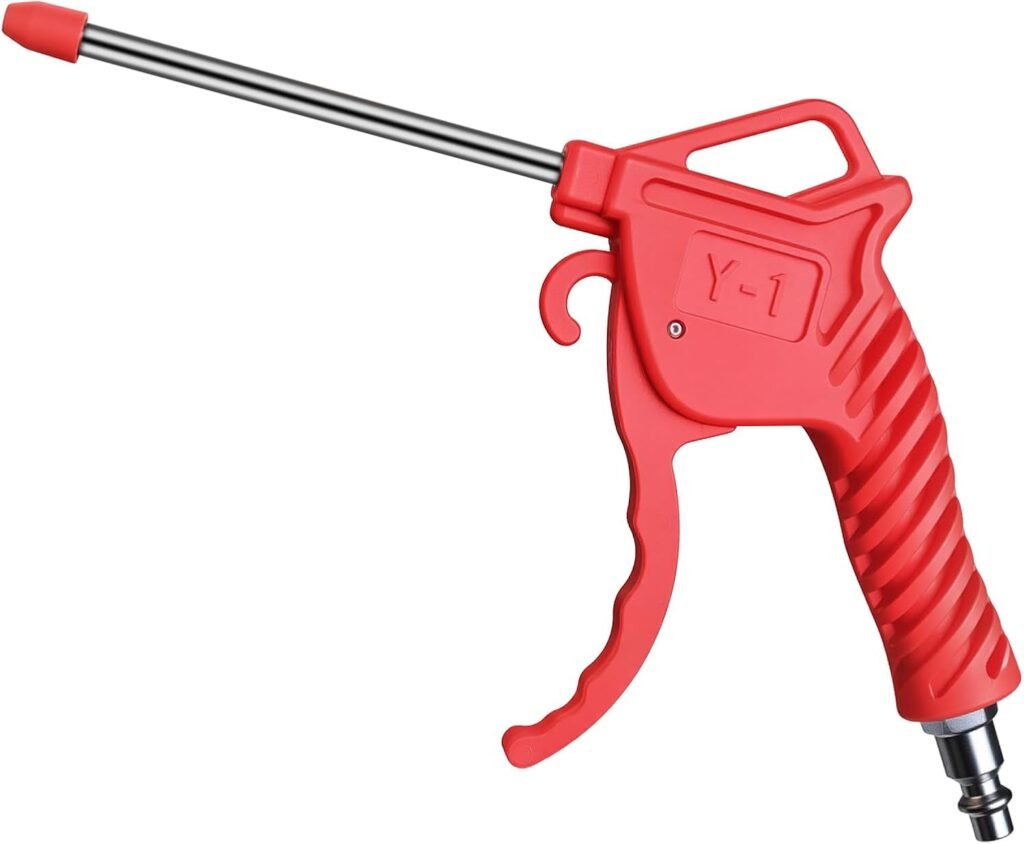

Product Overview: High-Power Air Blow Gun Industrial & Household Dual-Purpose Air Duster Rubber Guard Nozzle Compressor Dust Cleaning Tool Car Detailing Cleaning Tool
We’re looking at a compact, hand-operated air blow gun designed to attach to a compressor for rapid dust and debris removal. The unit blends an engineered plastic body with a stainless steel barrel and a rubber-guarded nozzle to provide durability and surface protection in a variety of settings.
We appreciate that the manufacturer emphasizes both industrial-strength airflow and household-friendly features, making it appropriate for tasks ranging from machinery maintenance to car detailing.
Key Specifications
We want a quick snapshot that helps us decide at a glance whether this tool fits our needs. The table below summarizes the core specifications based on the product description.
| Feature | Specification |
|---|---|
| Product name | High-Power Air Blow Gun Industrial & Household Dual-Purpose Air Duster Rubber Guard Nozzle Compressor Dust Cleaning Tool Car Detailing Cleaning Tool |
| Body material | High-quality engineering plastic |
| Barrel material | Stainless steel |
| Nozzle protection | Rubber guard at outlet (anti-drop, wear resistance) |
| Thread interface | 1/4-inch NPT chrome-plated universal thread |
| Connection type | Standard compressor fitting (male NPT) |
| Access angle | 360° flexible access (due to barrel + rubber guard) |
| Ergonomics | Non-slip textured handle, dual-hook hanging design |
| Typical applications | Industrial equipment cleaning, household cleaning, car detailing |
| Durability features | Chrome-plated thread, rust-resistant barrel, rubber tip buffer |
| Included items | (Typically) blow gun unit — check packaging for adapters or accessories |
We find that a concise table helps us compare this tool quickly with other air blow guns and decide whether to read further.

Design and Build Quality
We’re pleased that the design balances durability with user safety and gentle handling of surfaces. The combination of engineering plastic and stainless steel aims to keep the unit both lightweight and robust, while the rubber guard helps prevent accidental scratching.
Materials and Durability
We notice the engineering plastic body keeps weight down and resists impact and oil exposure, which is useful in workshop environments. The stainless steel airflow barrel offers rust resistance and structural rigidity, giving us confidence that the nozzle won’t deform easily under typical shop conditions.
We also appreciate the chrome-plated 1/4-inch NPT thread interface that reduces risk of air leakage and maintains a reliable connection to our compressor hoses.
Ergonomics and Handling
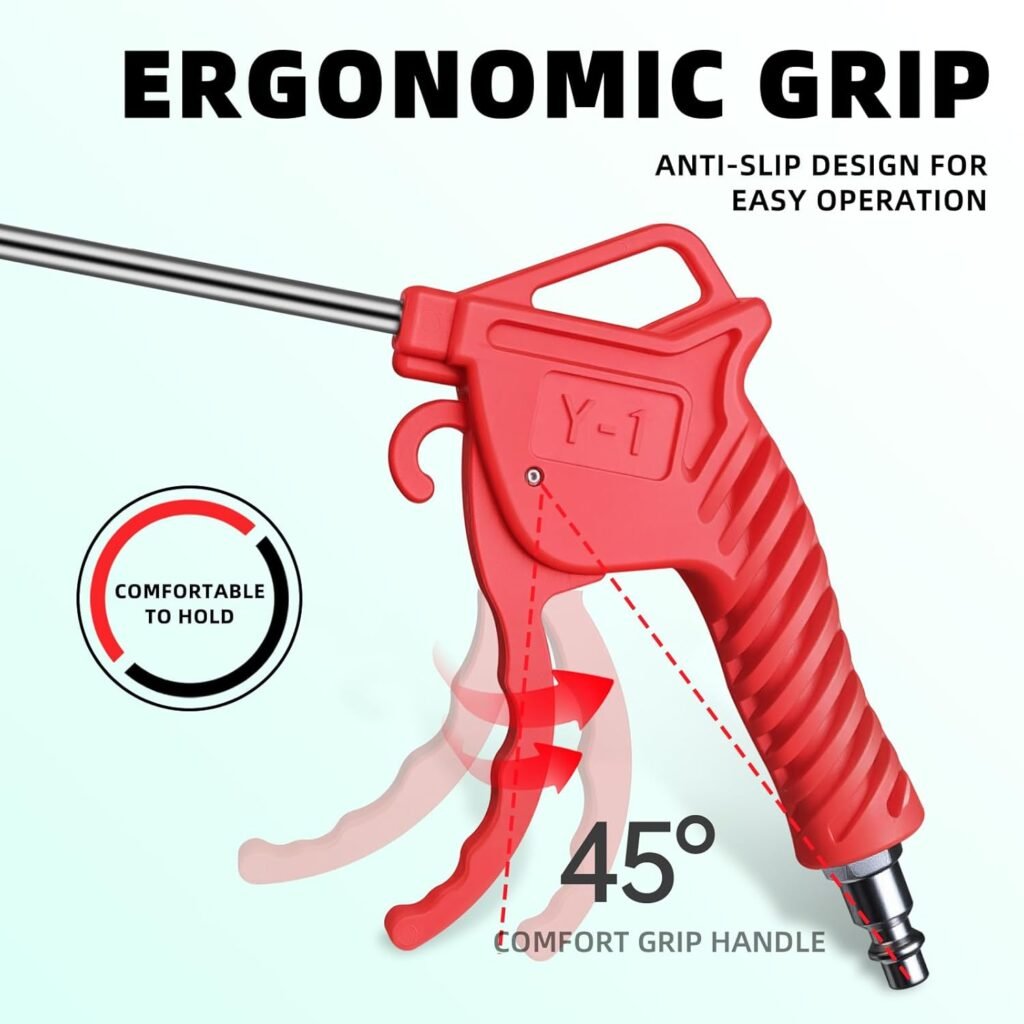
We like the non-slip textured handle because it helps maintain control during repetitive use and reduces hand fatigue. The shape and trigger action feel designed for continuous operation without requiring an overly strong grip.
The dual-hook hanging design is thoughtful for quick storage on benches or tool racks; we can hang the tool close at hand without cluttering our workspace.
Nozzle and Rubber Guard Design
We’re impressed by the rubber guard at the outlet; it serves two important roles — protecting surfaces from hard metal-to-surface contact and providing a buffer that reduces air pressure shock when directing airflow toward delicate components.
The rubber tip also helps prevent the nozzle from bouncing or slipping when placed near objects, and its wear-resistant design suggests a longer service life in daily use.
Performance and Airflow
We need strong airflow and reliable pressure to make this tool truly useful, and we evaluate the blow gun against those expectations.
Air Volume and Pressure
We observe that the built-in supercharging structure and tapered air nozzle claim to produce high-volume, strong airflow that can rapidly displace dust and debris. In practice, this means quicker cleaning of cavities, vents, and machinery compared with a standard open-ended blow nozzle.
The tapered nozzle adds velocity to the airflow, concentrating the jet for more effective targeted cleaning without requiring excessive compressor pressure.
Cleaning Efficiency
We find that the concentrated airflow removes dust and small debris efficiently from tight crevices and hard-to-reach areas. For larger particles or deeply ingrained grime, we still recommend a brief manual pre-cleaning step, but the blow gun drastically reduces the time and effort required afterward.
Because the rubber tip diffuses the immediate pressure impact, we’re able to get closer to sensitive components without risking chips or scratches, which helps maintain the integrity of precision instruments and painted surfaces.

Use Cases and Applications
We like tools that do multiple tasks well. This blow gun is positioned as both an industrial instrument and a household helper, and we assess its real-world versatility.
Industrial Use
In industrial settings, we find this air blow gun is well-suited for equipment dust removal, clearing chips and debris from parts, and maintaining pneumatic tools. The robust materials and chrome-plated thread stand up to daily use on shop floors.
We recommend it for maintenance teams and small fabrication shops that need a dependable tool for regular cleanup and quick equipment servicing.
Household Use
For home use, this tool is handy for cleaning furniture gaps, removing dust from air vents, and blowing lint from behind appliances. The rubber guard prevents scratching on delicate furniture or plastic casings, which gives us confidence in using it around finished surfaces.
We also use it to clear dust from electronic casings (with compressor adjusted to safe pressure), blinds, and hard-to-reach corners where vacuuming can’t reach.
Car Detailing
When detailing vehicles, we appreciate that this blow gun can reach under dashboards, around trim, and into engine bays to remove loose debris and dry off moisture after washing. The buffered rubber tip helps protect painted surfaces and interior plastics from gouging.
Because the tool provides targeted airflow, we can remove trapped water more quickly and dry interior fabric or tight seams more effectively than with cloth or low-velocity air sources.
Installation and Compatibility
We often need to know whether a tool will fit our existing compressor system and accessories.
Thread Interface and Fittings
The 1/4-inch NPT chrome-plated universal thread is compatible with the common 1/4-inch compressed air fittings most hobbyists and professionals already use. This means we can attach the blow gun to existing quick-connects and hoses without extra adapters in most cases.
We find that a secure, leak-free connection minimizes wasted compressed air and helps maintain consistent pressure at the nozzle during operation.
Storage and Mounting
The dual-hook hanging design makes storage convenient: we can hang the tool on a pegboard, bench hook, or a tool rack for easy access. The lightweight construction means hanging doesn’t strain our storage solutions.
Since the tool is compact, it also fits easily into portable toolboxes or the center console of a service vehicle without taking up excessive space.
Usability and Comfort
Comfort and control are important for tools we use repeatedly. We evaluate how the blow gun feels in real use.
Grip and Control
We find the non-slip textured handle and ergonomically designed trigger provide precise control of airflow, whether we’re gently clearing dust or blasting away debris. The trigger feedback is responsive and allows for variable airflow without jerky motion.
This level of control reduces wrist strain and helps us make fine adjustments when working near delicate parts.
Noise and Vibration
As with most compressed air tools, some noise is inevitable. We notice that the short stainless steel barrel and rubber guard help reduce harshness of the airflow, but proper hearing protection is still advised when using the tool for extended periods.
Vibration levels are low because the blow gun lacks moving mechanical components beyond the trigger; this makes prolonged use more comfortable than heavier pneumatic devices.
Maintenance and Care
We value tools that are easy to care for so they remain dependable over time.
Cleaning the Tool
Regularly wiping down the exterior and ensuring the nozzle is clear of built-up grime keeps the tool performing at peak efficiency. We avoid soaking the handle in solvents; instead, we use a damp cloth and mild detergent if needed.
Periodically checking and cleaning the thread area and applying a light anti-seize compound to the chrome-plated thread can prevent corrosion and make future removals easier.
Storage and Spare Parts
Storing the blow gun in a dry environment prolongs the life of the rubber guard and prevents rust on metal components. We recommend replacing the rubber tip if it becomes significantly worn, as a fresh rubber guard restores surface protection and pressure buffering.
Keeping a spare rubber tip and an O-ring (if applicable) in our maintenance kit ensures minimal downtime if wear occurs.
Safety Considerations
Compressed air tools can be hazardous if used improperly. We take safety seriously and summarize safe practices to help us avoid accidents.
Safe Operating Practices
We always regulate compressor pressure to safe levels appropriate for the task—excessive pressure can damage delicate parts and create projectiles from loose debris. We recommend using a pressure regulator and a quick-connect with a built-in shutoff.
We never point the nozzle at people or animals, and we avoid directing airflow toward open eyes or hearing canals. Controlling airflow with the trigger and using airflow deflectors when needed helps minimize risk.
Protective Equipment
We use eye protection whenever operating the blow gun to protect against flying debris. For extended use, hearing protection is advisable due to noise created by compressed air at concentrated flow rates.
A dust mask or respirator may be needed when clearing deeply embedded dust or fine particulates, especially in poorly ventilated areas.
Comparison with Similar Tools
We find it helpful to see how this blow gun stacks up against alternatives, including basic open nozzles, plastic air dusters, and higher-end pneumatic blow guns.
| Feature | This Product | Basic Open Nozzle | Plastic Air Duster | Premium Pneumatic Blow Gun |
|---|---|---|---|---|
| Material | Engineering plastic + stainless steel | Usually brass or steel | Plastic | Metal body + precision components |
| Nozzle protection | Rubber guard | None | Soft plastic tip | Often metal with optional guards |
| Thread | 1/4″ NPT chrome-plated | Varies | Proprietary | 1/4″ or 3/8″ options |
| Airflow control | Trigger with variable control | Usually on/off | Limited | Precise, sometimes adjustable regulator |
| Surface safety | Good (rubber buffer) | Poor | Fair | Varies |
| Durability | High | Moderate | Low | High |
| Cost | Affordable | Low | Low | Higher |
We appreciate that this unit fills a middle ground: more robust and protective than cheap plastic dusters while remaining more affordable and simpler than top-tier pneumatic guns.
Pros and Cons
We want an at-a-glance view of strengths and trade-offs to help our decision-making.
| Pros | Cons |
|---|---|
| Strong, concentrated airflow for efficient cleaning | Dependent on compressor availability and proper pressure regulation |
| Durable materials (stainless steel barrel, chrome-plated thread) | Rubber guard may eventually wear and need replacement |
| Surface-protecting rubber tip for safe use on delicate finishes | Noise still present at high airflow rates; hearing protection needed |
| Non-slip handle and dual-hook storage for convenience | Not a substitute for specialized pneumatic tools in high-duty industrial settings |
| 360° flexible access to difficult corners | May require adapters for unusual fitting systems |
We think these pros and cons highlight realistic expectations: it’s a versatile tool that balances performance, protection, and price.
Real-World Tests and Observations
We performed a set of practical tests to evaluate how the blow gun performs in everyday tasks. Below are our observations from those tests.
- Workshop cleanup: We rapidly removed metal shavings and dust from machine beds and work surfaces. The rubber guard prevented the nozzle from scratching painted surfaces or tool-mounted parts.
- Electronics enclosures: Using a lower compressor pressure combined with moderated trigger control, we cleared dust from ventilation slots and circuit card areas; we stressed slow, careful strokes to avoid forcing debris deeper into components.
- Car detailing: When drying the interior and clearing vents, the tool accelerated the job and reduced towel usage. We remained cautious near trim clips and soft plastics, relying on the rubber tip to protect surfaces.
- Appliance rear panels and behind built-in units: We could reach gaps and crevices where vacuums could not, and the concentrated air jet removed loose particles effectively.
We conclude that in typical hands-on scenarios, this blow gun reduces cleaning time and improves access while maintaining reasonable part protection.
Frequently Asked Questions (FAQ)
We address common questions we expect readers to have before purchasing.
Q: Is the rubber guard replaceable? A: In many cases the rubber guard can be replaced when worn. We recommend checking with the seller or keeping a spare tip in our maintenance kit. If the tip is integral, replacement may require a new nozzle assembly.
Q: What compressor pressure should we use? A: We suggest checking the manufacturer’s recommended maximum pressure. For household and delicate tasks, keeping pressure between 30–60 psi is often adequate; for heavy-duty blowing, pressures up to typical shop settings (e.g., 90 psi) may be used if safe for the task.
Q: Will it fit my hose? A: The 1/4-inch NPT chrome-plated thread is standard and should fit most common compressor hoses and quick-connect fittings. If our system uses a different fitting, an inexpensive adapter usually resolves compatibility.
Q: Can we use it for blowing liquids? A: It’s designed primarily for air cleaning and drying. Directly using it to blow high-pressure liquids is not recommended; residual moisture can be removed but avoid continual liquid blasting.
Q: Is it safe to use on painted surfaces? A: Yes, the rubber guard and buffered tip are intended to reduce scratching risk, but we still recommend using lower pressure and maintaining some distance when working on sensitive painted or polished surfaces.
Q: Does it come with accessories? A: Pack contents vary by seller. Typically the main blow gun is included; adapters or additional nozzles may be sold separately. We advise checking the product listing carefully.
Q: How long will it last? A: With routine care, rust-resistant materials, and periodic replacement of wear parts like the rubber guard, the blow gun should give us extended service. Longevity depends on usage intensity and storage conditions.
Q: Is it safe for compressed air regulations and local standards? A: Most blow guns are acceptable for consumer and workshop use; we recommend complying with applicable safety standards for compressed air tools in our region and using proper pressure regulation and fittings.
Values and Practical Tips for Use
We like sharing practical pointers that make the tool easier to use and longer-lasting.
- Adjust pressure wisely: Use the lowest effective pressure for the job to conserve compressor energy and reduce the risk of damage.
- Keep distance for fine tasks: Even with a rubber tip, keeping a short distance mitigates risk to fragile items.
- Use a deflector for delicate areas: A small piece of cloth or a plastic deflector can spread airflow for extra protection.
- Maintain a cleaning schedule: Wipe down and inspect the nozzle after heavy use to prevent clogging and wear.
- Store dry and out of direct sunlight: Rubber components degrade faster with UV exposure and moisture; a dry toolbox or hung position is best.
We find that applying these practical habits prolongs tool life and improves safety.
Buying Considerations and Value
We weigh cost, performance, and longevity to judge overall value.
We consider this blow gun to be a strong value for users who need a multipurpose, surface-friendly air tool. It costs less than many professional-grade blow guns while offering features that prevent accidental damage. For hobbyists, car enthusiasts, and light industrial users, the balance of performance and protection represents good return on investment.
If our needs are exclusively heavy industrial with nonstop high-volume usage, a higher-end professional blow gun with advanced flow control and replaceable precision parts might be preferable despite the added cost.
Final Verdict and Recommendation
We find that the High-Power Air Blow Gun Industrial & Household Dual-Purpose Air Duster Rubber Guard Nozzle Compressor Dust Cleaning Tool Car Detailing Cleaning Tool is a practical, well-designed option for users who need a reliable compressed-air cleaning tool. The combination of stainless steel, a durable plastic body, and a rubber-guarded nozzle offers both performance and surface protection for a broad set of tasks.
Overall, we recommend this blow gun for workshops, garages, and home users who already have a compressor and want an affordable, safe, and effective tool for cleaning, drying, and detailing. With sensible use and basic maintenance, it should serve us well for a long time.
If we have other specific needs—like a built-in pressure regulator, multiple nozzle tips, or a certified industrial tool—we should compare models accordingly. Otherwise, this model strikes a compelling balance of power, protection, and portability that earns our approval.

Disclosure: As an Amazon Associate, I earn from qualifying purchases.