Are we searching for a dependable, weather-resistant compressor to keep our pond or lake oxygenated year-round?
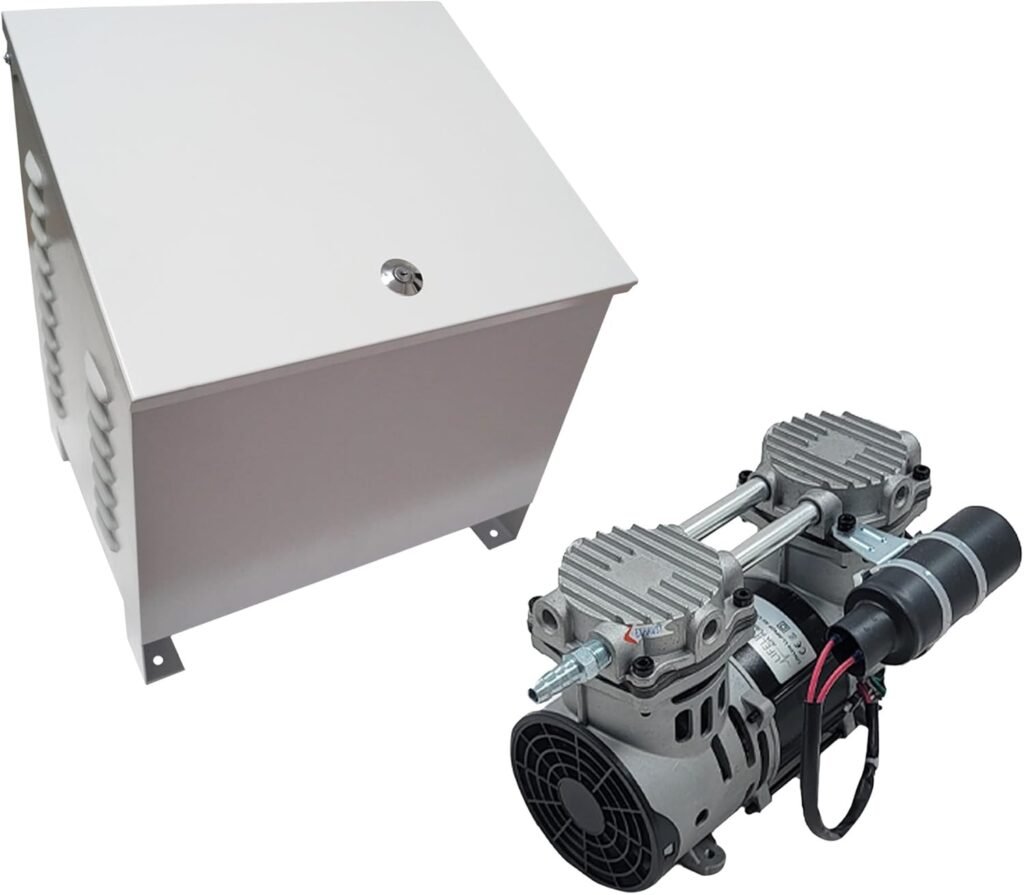

Product Overview: HALF OFF PONDS 3.9 CFM Deep Water Aeration Rocking Piston Air Compressor with Cabinet for Aeration of Ponds and Lakes – PA-RP60P-CAB
We want clarity on what this model offers and why it might suit our aeration needs. This product is a rocking piston (reciprocating) compressor packaged in a weather-resistant cabinet, designed for subsurface aeration of ponds and lakes and intended for durable, low-maintenance operation.
What the kit includes
We appreciate seeing exactly what arrives when we order. The kit includes:
- (1) Half Off Ponds 3.9 CFM Subsurface Aeration Rocking Piston Compressor
- Weather-resistant cabinet with multipurpose mounting options (ground or wall/post)
- Cooling fan assembly integrated into cabinet
- Lock and key for cabinet security
- Pre-drilled back panel for mounting and feet for standalone placement
Key Features and Why They Matter
We want features that translate into longer life, easier installation, and steady oxygen delivery. The main features and their practical benefits are:
- Weather-resistant cabinet: protects the compressor from the elements and gives us flexible mounting options.
- Cooling fan assembly: improves air circulation inside the enclosure, helping to prevent overheating during extended use.
- Operating temperature range and overheat protection: rated to run between -5°F and 175°F with built-in overheat protection at 290°F for safety.
- Oil-free air compressing chamber with sealed connecting rod and bearing lubrication: reduces maintenance, contamination risk, and oil changes.
- Shock-absorbing, vibration-isolating mounts: reduce transmitted vibration and noise and protect components from premature wear.
- Replaceable air filter element: traps debris to deliver cleaner air and protect internal parts.
- Energy-efficient motor: 120 V, 3.54 A, 60 Hz; operates at about 420 watts for lower electrical draw.
- Durable construction: aluminum alloy body with copper motor components for longevity and thermal reliability.
- 2-year manufacturer’s warranty: provides a level of assurance for initial operation.
Technical Specifications
We like having the essential specs in one place so we can compare and plan. Below is a concise breakdown.
| Specification | Value |
|---|---|
| Model Name | HALF OFF PONDS 3.9 CFM Deep Water Aeration Rocking Piston Air Compressor – PA-RP60P-CAB |
| Displacement / Output | 3.9 CFM (cubic feet per minute) |
| Motor | 1/2 HP (Deep Water 1/2 HP Aeration Compressor) |
| Voltage / Current / Frequency | 120 V / 3.54 A / 60 Hz |
| Power Consumption | ~420 watts |
| Body Material | Aluminum alloy |
| Motor Components | Copper motor |
| Lubrication | Sealed connecting rod and bearing lubrication (oil-free compression chamber) |
| Air Filtration | Replaceable debris-trapping element |
| Mounting | Cabinet pre-drilled for wall/post or can stand on feet |
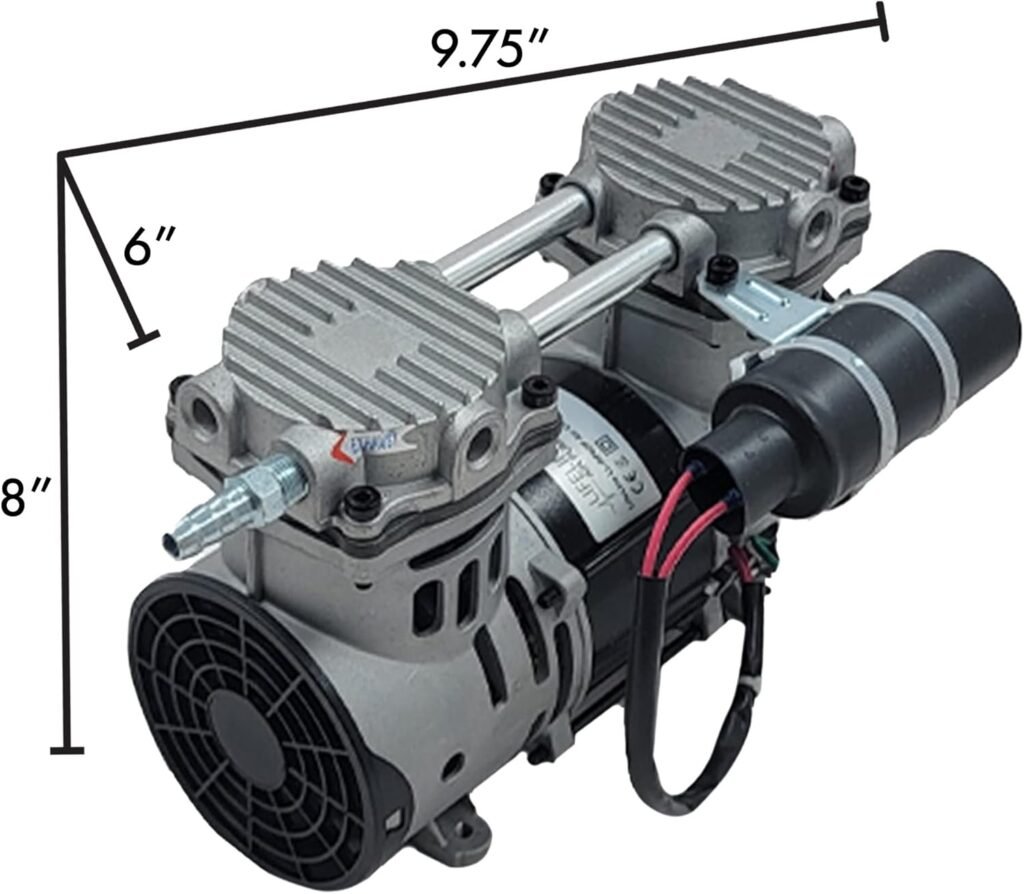
| Cabinet Dimensions | 19″ W x 25″ H x 15″ D |
| Operating Temp Range | -5°F to 175°F |
| Overheat Protection | Triggers at 290°F |
| Cooling | Cabinet cooling fan assembly |
| Vibration Control | Shock-absorbing, vibration-isolating mounts |
| Security | Lock and key on cabinet |
| Warranty | 2-year Manufacturer’s Warranty |
| Shipping | Ground package |
Performance and Efficiency
We want a compressor that consistently moves air to our diffusers without wasting energy. The 3.9 CFM output is a modest but useful airflow for many deep-water aeration setups; paired with efficient diffusers and appropriate airline, it can keep oxygen levels healthier and circulation patterns moving.
- Efficiency: At approximately 420 watts and a copper motor, we can expect reasonable energy efficiency compared to older or less optimized compressors.
- Reliability: The sealed lubrication for connecting rods and bearings combined with an oil-free compression chamber reduces maintenance and contamination issues over time.
- Thermal management: The cooling fan and overheat protection reduce the risk of thermal damage during long run times or summer peak temperatures.

Noise, Vibration, and Cabinet Benefits
We care about neighborhood comfort and gear longevity. The cabinet and vibration-isolating mounts help reduce noise and vibration meaningfully, though rocking piston compressors are inherently louder than diaphragm pumps. We should expect lower transmitted vibration to the mounting surface and reduced direct audibility compared to an un-enclosed unit, but if noise is a primary constraint we should verify decibel ratings from the manufacturer or consider additional sound-dampening enclosure measures.
Vibration isolation and mounting flexibility
We value the flexibility to mount on a wall or set on a foundation. The cabinet’s multipurpose mounting and feet let us locate the compressor out of the way while minimizing vibration transfer and protecting it against ground moisture and animals.
Installation Guidance
We want a straightforward installation that keeps our system safe and effective. The cabinet is pre-drilled for mounting and includes feet for a standalone setup. Here are practical steps we recommend:
- Select location: Choose a weather-protected, durable mounting surface near a GFCI-protected 120V outlet; avoid low-lying, flood-prone areas.
- Mount cabinet: Use the pre-drilled holes for wall/post mounting or place on a concrete pad using the included feet. Secure cabinet if exposed to vibration or animals.
- Locking: Use the included lock and key to secure access to valves and controls.
- Airline routing: Run airline from compressor outlet to manifolds/diffusers, using appropriate anti-siphon loops and check valves as required by system design.
- Diffuser placement: Ensure diffuser lines drop to the intended depth for effective circulation; consult diffuser manufacturer guidance for exact placement.
- Initial run: Start the compressor and check for steady airflow to each diffuser, listen for abnormal sounds, and monitor cabinet temperature and fan operation.
We recommend having an electrician install a properly rated outlet and circuit protection if we are unsure about existing wiring.
Maintenance Tips
We want low-maintenance gear but some routine care will extend life and performance. Here is a maintenance checklist that we suggest:
- Monthly: Inspect cabinet, check filter element for debris, verify fan operation, ensure all mounting bolts are tight.
- Every 3–6 months: Replace air filter element if dirty, inspect airline and fittings for leaks, check vibration mount integrity.
- Annually: Fully inspect motor and compressor housing for wear, test overheat protection and cooling fan function, check cabinet seals for weatherproofing.
- As-needed: Replace worn gaskets or fittings, address unusual noises promptly, ensure lock and key function.
Following these steps helps us avoid downtime and maintain compressor efficiency.
Troubleshooting Common Issues
We prefer to fix simple issues ourselves before calling for help. Here are common symptoms and suggested actions:
- Low airflow to diffusers:
- Check for clogged filter or blocked airline.
- Inspect fittings and manifold for leaks.
- Confirm compressor is running at rated speed and is not thermally throttling.
- Compressor runs but no air output:
- Verify outlet valve alignment, check for internal blockage, and ensure the compression chamber hasn’t failed.
- Excessive heat in cabinet:
- Ensure cooling fan is running and vents are not blocked.
- Confirm ambient temperatures remain within the operating range (-5°F to 175°F).
- If overheat protection trips regularly, reduce duty cycle and consult manufacturer.
- Unusual noise or excessive vibration:
- Verify vibration mounts are intact and hardware is tight.
- Confirm the compressor sits level and is secured.
- Inspect internal components for wear or loose parts.
- Electrical trips or overload:
- Check wiring and circuit capacity; ensure compressor is on a dedicated circuit if necessary.
- Inspect motor for signs of short or overload.
If basic troubleshooting does not resolve an issue, we should reference the 2-year warranty and contact the manufacturer or an authorized service provider.
Pros and Cons
We want quick, balanced perspective to guide our decision. The tables below summarize our impressions.
| Pros | Why it matters |
|---|---|
| Weather-resistant cabinet | Protects the unit and increases reliability in outdoor settings |
| Cooling fan assembly | Helps maintain operating temperature and prevents overheating |
| Energy efficient (420W) | Keeps electrical consumption lower than many older compressors |
| Oil-free compression chamber with sealed lubrication | Reduces contamination risk and maintenance needs |
| Vibration-isolating mounts | Lower vibration transfer and extended component life |
| Replaceable air filter | Easier maintenance and cleaner air delivery to diffusers |
| Multipurpose mounting and lockable cabinet | Flexible placement and security |
| 2-year warranty | Warranty-support for early life issues |
| Cons | What to consider |
|---|---|
| Rocking piston compressors can be noisier | Even with cabinet, these are typically louder than diaphragm pumps |
| CFM is modest (3.9 CFM) | May not be sufficient for very large lakes or systems needing high oxygen transfer |
| Lack of published dBA | If quiet operation is critical, we may need to source decibel info from the manufacturer |
| Not a “plug-and-play” water-side kit | We must combine with diffusers, airline, and anchors to complete an aeration system |
Recommended Applications and Limitations
We want to match the compressor to the right job. Based on the design and output:
- Best for: Small to medium-sized ponds and localized deep-water aeration systems, seasonal aeration for fish health, targeted oxygenation near problem areas, and hobbyist or light-commercial use where robust cabinet protection is desired.
- When to reconsider: Large lakes or multi-acre systems that require substantially higher CFM or multiple diffusers in distributed arrays; in these cases, a higher-capacity compressor or multiple units may be more appropriate.
We recommend consulting a pond aeration professional for precise system sizing and layout if our pond has complex contours, extensive depth variation, or substantial biological oxygen demand.
Comparing This Model to Alternative Compressor Types
We want to know how this rocking piston compressor stacks up against other options. Here are high-level comparisons:
- Rocking piston (this product) vs. diaphragm compressors:
- Rocking piston: Higher durability and typically better CFM per watt, but generally noisier. Good for continuous, high-duty applications when sound can be managed.
- Diaphragm: Often quieter and oil-free by design but may have lower airflow for the same electrical draw and sometimes higher maintenance in heavy-duty applications.
- This cabineted unit vs. open compressors:
- Cabineted: Better protection against weather and animals, easier to place outdoors, lower perceived noise.
- Open: Typically cheaper and easier to service but require dedicated shelter and more careful mounting.
We should choose based on priority: airflow and continuous-duty capability favor rocking piston in a cabinet like this one; noise-sensitive environments may push us toward diaphragm options or more elaborate sound enclosures.
Sizing Guidance and Practical Tips
We want to size our system so the compressor’s 3.9 CFM output is used effectively. While exact sizing depends on diffuser type, pond volume, depth, and biological load, these practical tips help:
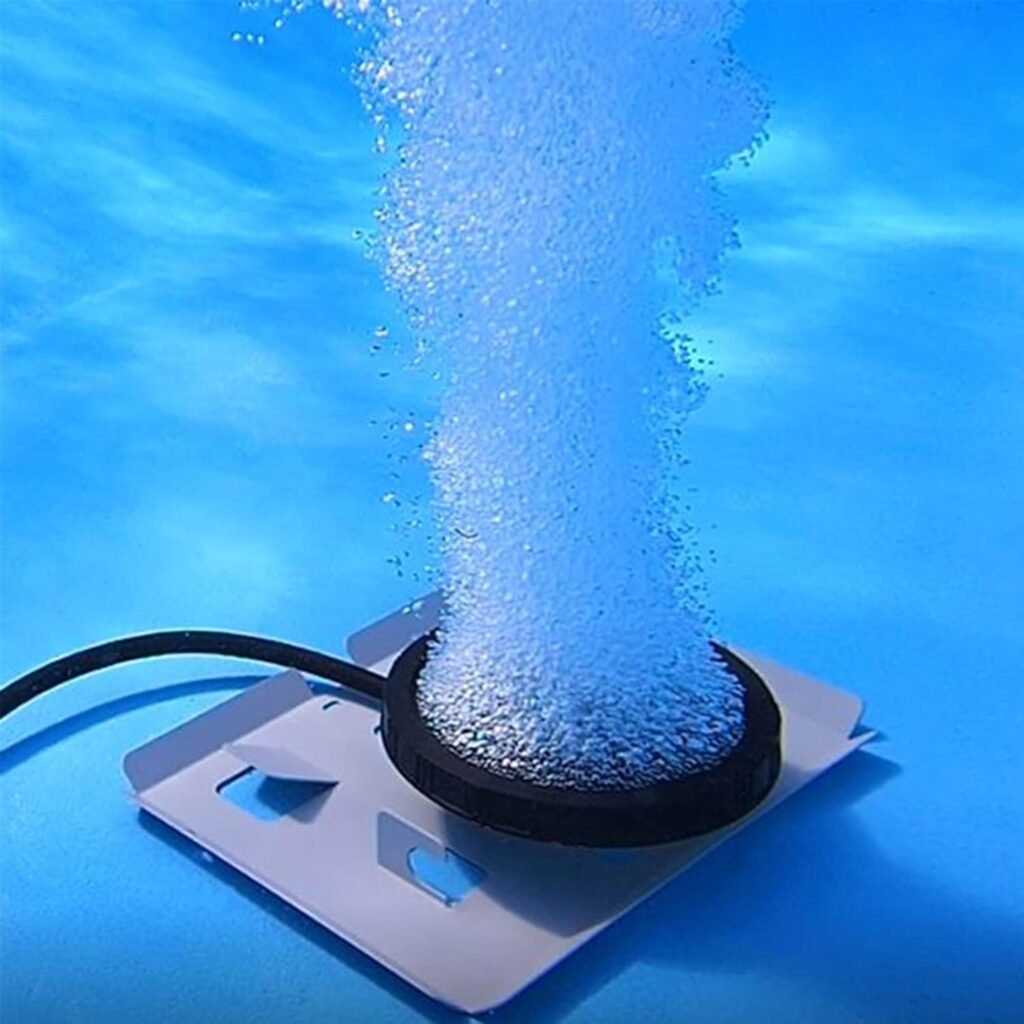
- Prioritize diffuser efficiency: Use high-efficiency fine-bubble diffusers to maximize oxygen transfer from the available CFM.
- Avoid excessive head pressure: Keep airline paths as straight and short as possible to minimize pressure loss and maintain airflow to the diffuser.
- Consider multiple diffusers: If our pond layout needs distributed aeration but we only have one compressor, a manifold can split flow—balance is critical to avoid under-powering each diffuser.
- Check duty cycle: Although this compressor is built for continuous operation with cooling and thermal protection, monitor its temperature during the first weeks and adjust placement or duty cycle if needed.
- Winter operation: The operating temperature rating allows for cold-weather use down to -5°F, but ensure airlines and diffusers are winterized appropriately for your climate.
If we are uncertain about sizing, we should consult a pond aeration specialist who can recommend diffuser count and placement based on pond bathymetry and desired water quality targets.
Installation Accessories and Add-ons We Recommend
We want the whole system to run well, not just the compressor. Common accessories that improve system longevity and performance include:
- Check valves and anti-backflow valves: Prevent water from siphoning back into the compressor during shutdown.
- Airline of appropriate diameter and quality: Select vinyl or polyethylene airline of the correct ID to minimize pressure loss.
- Manifolds with shutoff valves: Allow us to control airflow to different diffusers and isolate lines for maintenance.
- Surge suppressors and GFCI circuits: Protect the compressor from electrical faults and improve safety.
- Weatherproof conduit and proper electrical installation: Prevent moisture ingress in the power connection.
- Sound-absorbing pads under the cabinet: Further reduce transmitted structure-borne noise.
We should budget for these items when organizing an installation to avoid durability and performance surprises.
Value, Warranty, and Support
We want confidence in our purchase. The two-year manufacturer’s warranty provides a safety net against manufacturing defects or early-life failures. The lockable cabinet also adds value by protecting the investment and deterring unauthorized tampering.
- Value proposition: For users needing robust, cabineted aeration at reasonable energy consumption, this compressor represents a solid middle ground between inexpensive, exposed compressors and more expensive, commercial-grade systems.
- After-sales support: We recommend registering the unit with the manufacturer (if available) and saving purchase receipts to facilitate warranty claims.
Final Recommendations and Use-Case Scenarios
We prefer practical, actionable guidance to decide whether this compressor suits our needs. Here are scenarios where this product makes sense:
- Small hobby ponds or estate ponds where a single cabineted compressor provides reliable oxygenation and protection from the elements.
- Situations where equipment security matters (e.g., public or semi-public properties) — the lockable cabinet is a major plus.
- Cold climate users who need a compressor rated to operate in sub-freezing temperatures without frequent oil changes.
- Owners who prioritize energy efficiency and lower maintenance through sealed lubrication and oil-free compression chambers.
When this product might not be ideal:
- Large lakes or heavily loaded systems that require significantly more than 3.9 CFM of aeration.
- Extremely noise-sensitive locations unless additional noise mitigation is implemented.
Frequently Asked Questions (FAQ)
We like concise answers to common concerns when evaluating equipment.
Q: How quiet is the unit? A: The cabinet and vibration-isolating mounts reduce perceived noise compared to an unenclosed rocking piston compressor, but exact decibel (dBA) figures aren’t provided. For noise-critical installations we recommend asking the manufacturer for dBA specs or planning additional sound insulation.
Q: Is the compressor suitable for continuous operation? A: Yes. The design includes cooling and thermal protection for continuous-duty use, but we advise monitoring cabinet temperature and fan function, especially during hot weather.
Q: Can we mount the cabinet outdoors exposed to rain? A: The cabinet is weather-resistant and designed for outdoor installations. We still recommend mounting in a location that minimizes direct exposure to extreme weather and avoids flood-prone spots.
Q: What maintenance is required for the air filter? A: The compressor uses a replaceable debris-trapping filter element that should be checked monthly and replaced as needed to ensure clean airflow.
Q: Is the compressor oil-lubricated? A: The compression chamber is oil-free, while connecting rod and bearing lubrication are sealed. This reduces oil changes and contamination risk.
Q: What if our pond needs more aeration later? A: We can scale by adding another compatible compressor, increasing diffuser efficiency, or using a manifold and higher-efficiency diffusers. Consult a professional to design a multi-compressor layout.
Closing Thoughts
We find the HALF OFF PONDS 3.9 CFM Deep Water Aeration Rocking Piston Air Compressor with Cabinet for Aeration of Ponds and Lakes – PA-RP60P-CAB to be a practical, secure, and fairly energy-efficient solution for small to medium pond aeration needs. Its cabinet protection, cooling fan, sealed lubrication, and vibration isolation are strong advantages for outdoor installations and long-term reliability. For larger or very noise-sensitive projects, evaluating higher-CFM models or quieter compressor technologies may be necessary.
If we proceed with this compressor, we recommend pairing it with efficient diffusers, appropriate airline and check valves, and ensuring clean power and proper site placement to maximize oxygen transfer and equipment lifespan.

Disclosure: As an Amazon Associate, I earn from qualifying purchases.