Have we ever wished our air compressor felt a bit more like a reliable partner than a temperamental machine?

What the Eagle P3120H1-CC 20-Gallon 125 PSI Electric Compressor Is All About
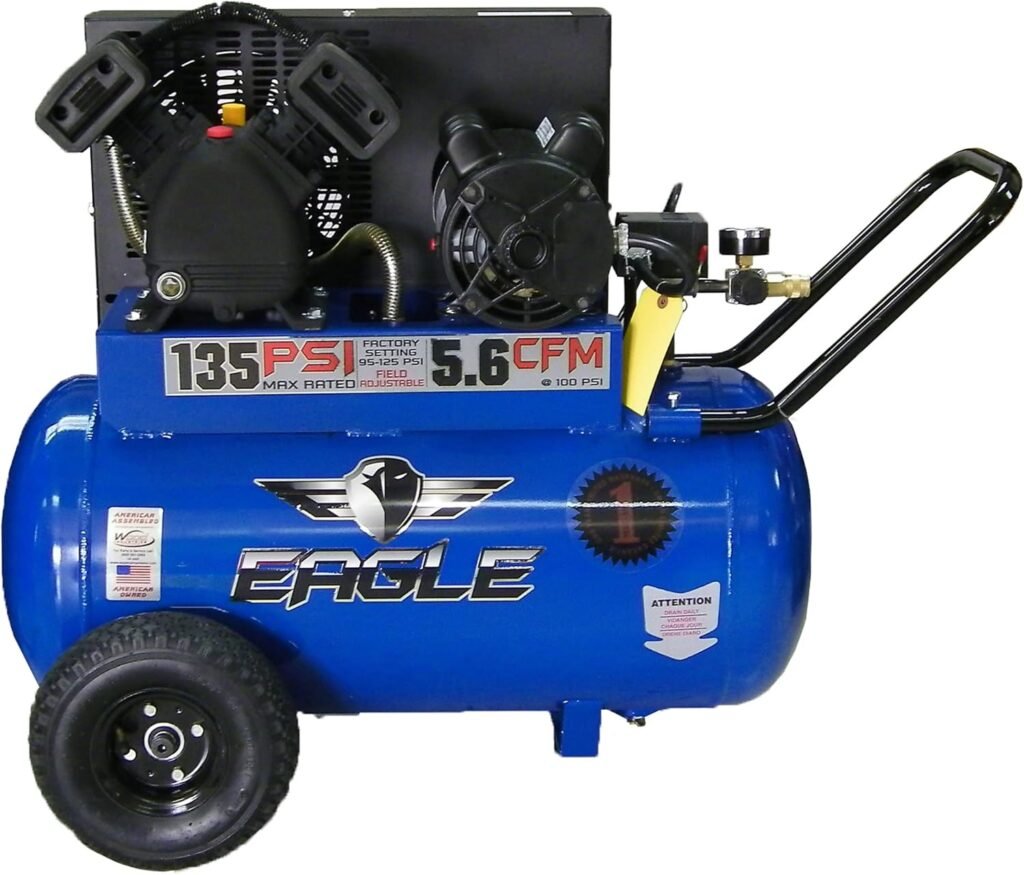
When we look at the Eagle P3120H1-CC 20-Gallon 125 PSI Max PSI Electric Compressor, we are looking at a mid-sized electric compressor built for serious users who still care about portability. It aims to balance tank capacity, power, ease of use, and durability, making it a practical option for home garages, small workshops, and light professional work.
This unit is clearly geared toward users who want dependable performance for air tools, inflating tasks, and light-duty spraying without stepping into the size and cost of large shop compressors. Its 20-gallon tank and 125 PSI maximum pressure sit in a sweet spot between small pancake units and bulky stationary systems.
Key Features at a Glance
To help us quickly understand where this compressor stands, we can look at its main features side by side. These elements shape how it feels to use, maintain, and move around our workspace.
| Feature | Description | Why It Matters |
|---|---|---|
| Tank Capacity | 20-gallon horizontal tank | Offers a good balance between run time and portability |
| Max Pressure | 125 PSI max | Supports most common air tools and general shop tasks |
| Power Source | Electric | Cleaner, quieter, and easier to run indoors than gas compressors |
| Tires | Sturdy wheels for mobility | Easier to move around a garage, driveway, or jobsite |
| Oil Drain Location | Convenient oil drain located at the front of the unit | Makes regular maintenance faster and cleaner |
| Reed Valves | High-efficiency reed valves | Helps maximize airflow and compressor performance |
| Cooling Design | Efficient heat removal from pulley-fan | Promotes cooler running and longer compressor life |
| Construction | Sturdy metal belt guard; outlet valve and regulator included | Increases safety, protection, and plug-and-play usability |
This overview helps set expectations: the P3120H1-CC is not a tiny beginner’s compressor, and it is not a heavy industrial unit either. It targets that middle ground many of us actually need.
Build Quality and Durability
We often judge a compressor first by its build quality, and the Eagle P3120H1-CC feels intentionally designed to withstand real-world use. The sturdy metal belt guard is one of the more reassuring elements, signaling that the moving parts are protected from accidental contact and stray debris.
The overall construction suggests the unit is meant to be rolled, bumped, and used regularly without feeling fragile. The tank and frame give the impression of solidity rather than flimsy sheet metal. For those of us who plan to use this in a busy garage or small shop, that confidence in the hardware matters as much as the specs on paper.
Protection and Safety Features
The belt guard stands out as more than a cosmetic feature. It shields the belt and pulley system, which is not only a safety consideration for us and anyone else in the shop, but also a protective measure for the mechanical components.
With the outlet valve and regulator included, the unit comes closer to ready-to-use out of the box. We do not have to scramble to match fittings and pressure control components, which reduces setup complexity and potential leaks. Good protection and solid fittings turn what could be a noisy, rattling machine into a more trustworthy part of our tool collection.
Tank Capacity and Performance
A 20-gallon tank is a practical choice when we want more than “burst” performance without stepping into fully stationary compressor territory. The Eagle’s 20-gallon capacity means it can store a reasonable volume of air so our tools can run for a while before the motor kicks back on.
The 125 PSI maximum pressure enables a wide range of applications. It is well suited for:
- Inflating car and truck tires
- Running brad nailers, finish nailers, and some framing nailers
- Staplers and light impact wrenches
- Air blow guns for cleaning parts or work surfaces
- Light-duty HVLP or small-scale spray painting (with proper configuration)
What 125 PSI Means for Real-World Use
We often see PSI values on boxes without a sense of what they truly mean for our work. At 125 PSI, we are squarely in the range needed for most common DIY and light professional air tools. We should still consider CFM (cubic feet per minute), which is not fully specified in the provided details, but 20 gallons combined with 125 PSI usually indicates that intermittent tool use feels smooth and efficient.
Continuous high-demand tools, like sanders or grinders, may still tax a 20-gallon tank. For those kinds of tools, the tank will likely cycle more often. But for the majority of day-to-day tasks, 125 PSI gives us enough overhead that tools will not feel starved of pressure.
Portability and Handling
One standout detail about the P3120H1-CC is the emphasis on sturdy tires for handling and maneuverability. We all know that even a moderately sized compressor can feel like dead weight when we try to shift it around a cluttered workspace.
The tires help us move the unit without lifting the full weight. For anyone working in a multi-car garage, a small shop, or even around the driveway and house, being able to roll the compressor smoothly from spot to spot makes a big difference in how often we actually use it.
Working Around the Shop or Garage
With its 20-gallon tank and wheeled design, we can park the compressor in one corner, run a hose across the space, and then relocate it easily when needed. We do not have to permanently commit floor space or set up a complicated plumbing system to reach every corner of our workspace.
The tires and handle arrangement are meant to give us the flexibility of a portable unit with much better capacity than a tiny pancake or hot dog compressor. For anyone who frequently shifts between vehicle maintenance, woodworking, and home repair, that portability is a welcome feature.

Cooling and Heat Management
Heat is one of the biggest enemies of compressor longevity, and the Eagle P3120H1-CC addresses this with an efficient heat removal system via its pulley-fan design. That might sound like a technical detail, but it has very practical implications.
Cooler running temperatures usually mean:
- Less wear on internal components
- More consistent performance across longer sessions
- Reduced risk of overheating shutoffs
- Extended overall compressor life
Why Cooler Operation Matters for Us
If we work in warmer climates or tend to run tools for extended sessions, heat buildup becomes obvious. The motor gets hot to the touch, lines warm up, and performance can dip or cycle more frequently. An efficient cooling setup helps the compressor recover and maintain stable output.
For those of us who love having a reliable “shop companion” we can turn on without worrying about babying it, this design element helps reassure us the unit is built for real use, not just light occasional tasks.
Valve Design and Efficiency
The Eagle P3120H1-CC uses high-efficiency reed valves, which may sound like a minor design point, but valves are the heart of how the compressor takes in and compresses air. Poorly designed valves can limit output and lower efficiency, making the motor work harder for less usable air.
Reed valves that are optimized for efficiency help increase airflow and maintain better performance at the same power level. This can translate into faster tank fill times and more reliable pressure delivery when we need it most.
What That Means During Regular Use
When we are in the middle of a project, we rarely think about valve design. Instead, we notice that our tools either keep up with us or constantly lag. Efficient reed valves quietly do their job to keep the compressor responsive.
Faster recovery times and steadier pressure also reduce frustration with tools that suddenly weaken mid-task. For nails, bolts, and fastening jobs, that consistency directly affects how clean and precise our work feels.
Maintenance and Ease of Servicing
Many of us shy away from oil-lubricated compressors because we assume maintenance will be complicated. The Eagle P3120H1-CC addresses this concern by placing the oil drain conveniently at the front of the unit.
This simple design choice makes regular oil changes far less of a chore. Instead of crawling around or tilting the compressor awkwardly, we can access the drain quickly, set a pan in front, and complete maintenance without making a major mess.
The Importance of Simple Maintenance
When maintenance is easy, we are much more likely to do it on schedule. Regular oil changes can greatly extend the life of an oil-lubricated compressor and keep it running smoothly. The front-facing drain is a clear signal that the manufacturer expects and encourages us to care for the machine, not just run it until something fails.
Over time, this can translate into more years of service from one purchase, which improves the compressor’s value considerably.
User Experience and Day-to-Day Operation
From a user standpoint, we want to know how this compressor feels to live with day after day. The included regulator and outlet valve simplify initial setup, so we can connect hoses and tools with minimal extra purchases.
Once set up, the 20-gallon tank and 125 PSI maximum give us enough air for many common tasks without forcing us to constantly wait for the tank to refill. The wheels let us easily reposition the unit if cross-traffic in the garage or shop demands it.
Noise and Comfort
While noise levels are not specified in the product details we have, mid-sized electric compressors usually run quieter than gas-powered units but louder than small compact “quiet” models. We can reasonably expect it to produce a solid, mechanical hum while operating, but not the intense roar of a jobsite gas compressor.
In a home garage or small shop, we might want ear protection when working close to the unit for extended periods. Still, we gain the benefits of electric operation: no fumes, easier indoor use, and simpler power access through a typical electrical circuit, assuming we respect the amperage requirements.
Best Use Cases for the Eagle P3120H1-CC
When we consider whether this compressor fits our needs, it helps to picture specific jobs and projects. The Eagle P3120H1-CC is not a tiny convenience compressor, and it is not an industrial workhorse either. It shines in the middle ground of:
- Enthusiast auto work: tire changes, impact tools for light to medium tasks, blow-off cleaning
- Woodworking and carpentry: brad and finish nailers, framing nailers (within reason), staplers
- Home and property maintenance: inflating tires, sports equipment, pressure dusting, occasional painting
- Hobby and small business use: small furniture shops, hobbyist restorers, or makers with air tools
Who Will Appreciate This Compressor Most
We can see this compressor fitting well for:
- DIY enthusiasts who have outgrown tiny pancake units
- Home mechanics who regularly work on vehicles
- Small-shop owners who need a reliable, mobile air source
- Hobbyists who want one main compressor for multiple tasks
If we run high-CFM, continuous-use tools all day, we might want a larger stationary unit. But if we do frequent, varied, but not industrial-scale work, this model offers a practical balance.
Pros and Cons Overview
To form a balanced picture of the Eagle P3120H1-CC, it helps to weigh strengths and trade-offs side by side. No compressor is perfect for every user, and knowing the trade-offs makes our decision clearer.
| Pros | Cons |
|---|---|
| 20-gallon tank offers solid capacity for most home/shop tasks | Likely heavier and bulkier than small pancake or hot dog units |
| 125 PSI max supports a wide range of tools | Not ideal for continuous high-demand industrial tools |
| Sturdy tires for good mobility | Oil-lubricated design requires periodic maintenance |
| Convenient front oil drain simplifies servicing | May be louder than “ultra-quiet” compact compressors |
| Efficient reed valves boost performance | Requires enough electrical capacity for startup and running load |
| Effective heat removal for cooler running and longevity | Larger footprint may demand more floor space |
| Sturdy metal belt guard for safety and protection | May be more than some casual users really need |
| Outlet valve and regulator included for easy setup |
Looking at these pros and cons helps clarify whether we will value the combination of size, power, and mobility enough to justify the space and upkeep.
How It Compares to Smaller Compressors
Many of us might be upgrading from a tiny portable unit. When we move from a 1–6 gallon compressor to a 20-gallon unit like this Eagle model, the difference in use experience is significant.
With a larger tank:
- The motor cycles less often during typical tasks
- Tools run more smoothly and consistently
- We can tackle slightly heavier work without feeling limited
Upgrading Our Air System
If we have ever had a brad nailer sputter or a small impact wrench feel weak because a tiny tank could not keep up, stepping up to 20 gallons and 125 PSI is a noticeable improvement. The Eagle P3120H1-CC can effectively become the central air system in a garage or hobby shop, provided we add enough hose length to reach all our work areas.
We are no longer thinking in terms of “can my compressor manage this quick little job?” but rather “what can we do next while the tank stays ready?” That psychological shift makes our shop feel more capable.
How It Compares to Large Stationary Compressors
On the other side, compared with 60–80 gallon stationary compressors, the P3120H1-CC is clearly more modest. Those big units can support higher CFM tools continuously and serve as long-term shop infrastructure.
However, large stationary models:
- Require more permanent installation
- Take much more floor space
- May need dedicated electrical circuits or higher voltage
Choosing Portability Over Pure Power
We sacrifice some continuous high-volume capacity with the 20-gallon Eagle unit, but we gain critical advantages in flexibility. We can shift it to different bays, different houses, or different job sites. We do not have to dedicate a large corner of the shop to a compressor we rarely move.
For many small-shop owners, hobbyists, or homeowners, that portability and smaller footprint matter more than the extreme power ceiling of big stationary systems.
Setup and Getting Started
Getting up and running with the Eagle P3120H1-CC is straightforward, especially with the outlet valve and regulator already part of the package. We will still want to check all connections, verify oil levels, and confirm our power outlet can safely handle the compressor’s starting and running current.
Once assembled and inspected, the process typically looks like:
- Position the compressor on a stable, level surface.
- Connect an appropriate air hose to the outlet valve.
- Set the regulator to the recommended PSI for our tool.
- Plug the unit into a dedicated electrical outlet, if possible.
- Turn on the compressor and allow the tank to fill to maximum pressure.
- Check for any leaks around fittings using soapy water.
First Impressions After Setup
After those initial steps, we will likely notice a few things quickly: the tank fills with a confident hum, the regulator allows for smooth, precise pressure settings, and the wheels make it easy to correct our initial placement mistakes. From there, we can begin integrating it into our regular workflow.
Having a compressor that is relatively simple to set up encourages us to start using air tools more often rather than letting it collect dust.
Everyday Tasks the Compressor Handles Well
To get a feel for daily life with this compressor, we can picture a normal weekend in the garage or shop. The Eagle P3120H1-CC can comfortably support tasks like:
- Rotating tires and using an impact wrench for lugs
- Blowing dust off workbenches and saws
- Running a brad nailer to assemble trim, moldings, or cabinetry
- Inflating bike tires, balls, and garden cart tires
- Using a small spray gun for touch-up painting or protective coatings
Intermittent vs. Continuous Use
Most of these tasks are intermittent, which plays well into the strengths of a 20-gallon, 125 PSI unit. The compressor runs, fills the tank, and then powers tools in bursts. We get enough working time between cycles that we do not feel constantly interrupted.
If we regularly need to run high-CFM tools like orbital sanders or large spray rigs for extended periods, the tank will cycle more often. In those cases, we might accept the compromise in exchange for portability or consider a larger system.
Reliability and Longevity Expectations
Long-term reliability is a key concern for any compressor purchase. With the Eagle P3120H1-CC, several design choices hint at a product intended to last:
- Efficient heat removal from the pulley-fan for cooler operation
- Sturdy metal belt guard protecting vital moving parts
- Convenient oil drain promoting regular maintenance
- High-efficiency reed valves for effective air management
Getting the Most from the Compressor Over Time
If we respect the recommended maintenance schedule, keep the unit clean and properly ventilated, and avoid overloading it beyond its design, we can reasonably expect a long service life. We can also extend its usefulness by pairing it with high-quality hoses, fittings, and tools that do not leak or strain the system unnecessarily.
We should think of this compressor as a long-term shop investment that rewards us for treating it as a core piece of equipment, not a disposable gadget.
Value for Money
When we consider value, it is not only about the sticker price. We weigh how often we will use it, how many different tasks it can handle, and how long we expect it to last. The Eagle P3120H1-CC positions itself as a mid-level solution with features that typically appear on more robust units, such as improved cooling and efficient valves.
For users who only need a compressor for very occasional inflating or one-off projects, this might feel like more machine than necessary. But for anyone who plans to use air tools regularly, the extra capacity, cooling, and ease-of-maintenance features help justify the investment.
Cost vs. Capability Balance
If we imagine the cost spectrum from budget pancake compressors to professional stationary shop systems, this Eagle unit sits in the middle while leaning toward the more capable side. We gain:
- Greater versatility
- Longer run times
- Better reliability features
without fully committing to industrial-level expense or space demands. For many of us, that balance feels just right.
Who Should Choose the Eagle P3120H1-CC
This compressor is a strong fit if we see ourselves in any of these groups:
- We are serious DIYers who regularly tackle home improvement and auto projects.
- We run a small woodworking or light fabrication shop and need reliable, mobile air.
- We maintain multiple vehicles and want a compressor that can handle a wide set of tools.
- We want one main compressor that supports many different tasks instead of several small, limited units.
Who Might Need a Different Option
On the other hand, we may want to look elsewhere if:
- We only need a compressor for occasional tire inflation or one specific, light-duty task.
- We run heavy air tools all day and require very high CFM and large tanks.
- We have extremely limited space and cannot accommodate a 20-gallon footprint.
Understanding where we fall between casual and heavy professional use helps us decide if this model hits our personal “sweet spot.”
Final Thoughts on the Eagle P3120H1-CC 20-Gallon 125 PSI Electric Compressor
When we put all the details together, the Eagle P3120H1-CC 20-Gallon 125 PSI Max PSI Electric Compressor presents itself as a well-rounded, thoughtfully designed unit for users who take their work seriously but do not necessarily run a full-scale industrial shop.
We get a 20-gallon tank for solid capacity, 125 PSI for broad tool compatibility, sturdy tires for mobility, efficient reed valves for performance, robust cooling for longevity, and convenient maintenance touches like the front oil drain. The sturdy metal belt guard and included outlet valve and regulator round out a package that feels ready for real-world tasks.
If our goal is to have a dependable, mobile compressor that can anchor our garage or small shop for years, this model offers a compelling blend of power, convenience, and durability that can easily become the backbone of our air-powered projects.

Disclosure: As an Amazon Associate, I earn from qualifying purchases.