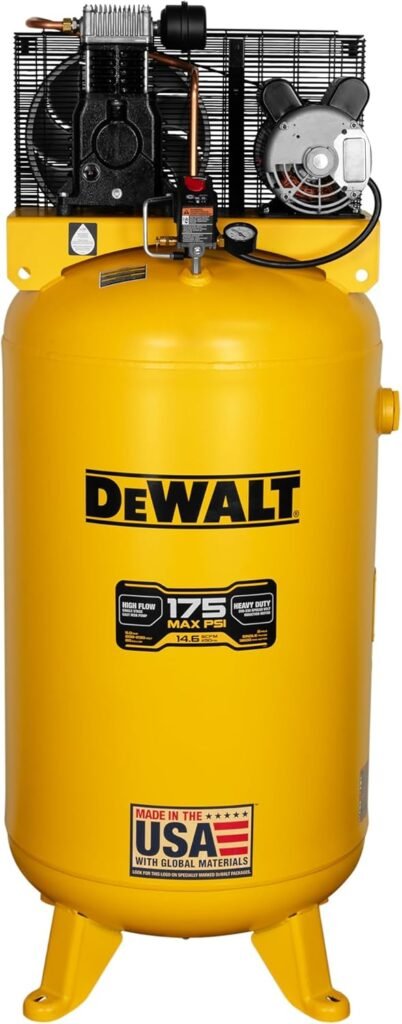
?Are we ready to find out if the DEWALT 80 Gallon Vertical Air Compressor, 5 HP, 175 Max PSI, Single Stage, Oil Lube, 230V – High Performance Industrial Air Compressor for Professional Use – Durable and Efficient 80 Gallon Compressor is the right fit for our shop or job site?

Overview of the DEWALT 80 Gallon Vertical Air Compressor
We want a clear picture of what this unit offers, so we’ll summarize the headline features and intended use. This compressor is built for heavy-duty, professional applications and provides a substantial air reserve in a vertical footprint for space-conscious shops.
What this model is designed for
We see this as a professional-grade, industrial compressor intended to supply consistent, high-pressure air for demanding tasks. The 5 HP motor and 175 PSI maximum make it suitable for multiple simultaneous tools and extended use with high-demand equipment.
Key selling points at a glance
We can point to the 80 gallon tank capacity, 175 max PSI, and solid CFM numbers as immediate strengths for contractors and serious hobbyists. The oil lube single-stage design and 230V motor add reliability and efficiency for continuous use.
Technical Specifications (Quick Reference)
We’ll break down the most relevant specifications so we can quickly compare numbers when sizing for tools or projects. This table condenses the core technical details into an at-a-glance format.
| Specification | Detail |
|---|---|
| Model | DEWALT 80 Gallon Vertical Air Compressor, 5 HP, 175 Max PSI, Single Stage, Oil Lube, 230V |
| Motor Power | 5 HP |
| Tank Capacity | 80 gallons (vertical) |
| Maximum Pressure | 175 PSI |
| Airflow (CFM) | 17 CFM @ 40 PSI; 14.6 CFM @ 90 PSI |
| Stage | Single-stage |
| Lubrication | Oil-lube |
| Voltage | 208-230V spread volt induction motor |
| Flywheel | Aluminum flywheel for cooling |
| Intended Use | Professional / industrial |
| Drive Type | Induction motor (spread voltage) |
| Typical Applications | Framing nailers, paint booths, sandblasting prep, air tools, multiple simultaneous tools |
Performance and Air Delivery
We’ll examine how the unit performs in realistic use, focusing on CFM delivery, pressure stability, and recovery time. Performance is measured by both peak pressure and the usable airflow at standard working pressures.
Airflow and pressure behavior
We notice that the compressor provides 17 CFM at 40 PSI and 14.6 CFM at 90 PSI, which is a strong performance profile for many professional tools. That means we can run several moderate-demand tools at once or a single high-demand tool with a solid buffer from the 80 gallon tank.
How the 80 gallon tank helps
We appreciate that the larger tank reduces short-cycling and supplies bursts of compressed air for tools with intermittent high demand. The vertical design saves floor space while still delivering the air volume needed to smooth out pressure drops during heavy use.

Motor, Voltage, and Electrical Considerations
We’ll cover the motor type, voltage compatibility, and what we need to know before connecting this compressor. A robust electrical setup is essential for reliable operation.
5 HP motor and spread volt induction design
We value the 5 HP motor for steady torque and the spread voltage (208–230V) induction motor that offers stability across a range of supply voltages. That flexibility helps keep the compressor running predictably in environments where voltage can vary.
Electrical installation advice
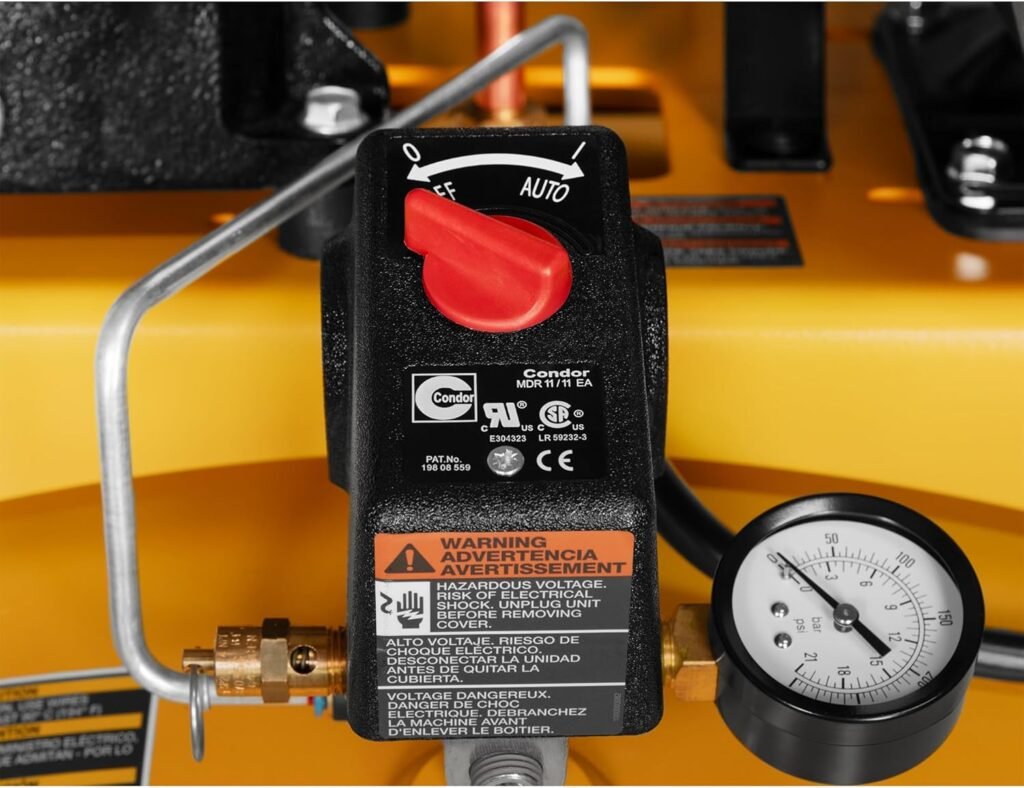
We recommend a dedicated circuit and professional electrician for proper breaker and wiring sizing to match local codes and actual load requirements. Because motor startup currents can be high, we should verify that the service panel and wiring support this 5 HP motor at the available voltage.
Build Quality and Component Details
We’ll discuss construction, materials, and specific design choices that affect durability and maintenance. The DEWALT name suggests a focus on heavy-duty, long-lasting components.
Oil-lube single-stage pump and longevity
We like that the compressor uses an oil-lube system, which reduces internal wear and extends the life of the pump under heavy loads. Oil lubrication is a proven design for longevity when we intend to run the compressor for many hours.
Aluminum flywheel and cooling
We can appreciate the high-efficiency aluminum flywheel, which helps drive cooling airflow and maintain operating temperatures. Consistent cooling improves long-term reliability, especially during continuous or repeated cycles.
Usability and Workspace Integration
We’ll look at how the compressor fits into a workshop or job site, including vertical footprint, mobility, and connection points. Usability includes how quickly we can get it online and keep it running.
Vertical orientation and footprint
We find the vertical orientation particularly helpful for shops with limited floor space because it gives us a large tank without a large footprint. This makes it easier to locate the compressor in corners or against walls while keeping plumbing access straightforward.
Accessibility and service points
We prefer designs that provide easy access to oil fill, drain valves, and serviceable parts, and this compressor follows that practical layout. Routine checks and oil changes are simpler when service points are clearly positioned and unobstructed.
Noise, Vibration, and Comfort in Use
We’ll discuss typical noise and vibration considerations, and how to mitigate them. Professional compressors can be loud, so planning is important for worker comfort and safety.
Noise expectations
We should expect industrial-level noise from a 5 HP compressor, particularly during start-up and under load. We recommend hearing protection and considering acoustic isolation or placement away from occupied workspaces when possible.
Vibration damping and mounting
We suggest mounting the unit on a firm, level surface and using anti-vibration pads if necessary to reduce transmitted noise and movement. Stable mounting also protects fittings and prolongs life by reducing stress on connections.
Maintenance and Service Recommendations
We’ll outline routine maintenance tasks and intervals to keep this compressor performing well for years. Oil-lube systems require regular attention, but the payoff is extended service life.
Daily and weekly checks
We advise draining condensation from the tank after each use, checking oil level daily in heavy use, and visually inspecting for leaks or loose fittings weekly. These quick checks reduce the risk of corrosion and prevent small issues from becoming big problems.
Scheduled maintenance tasks
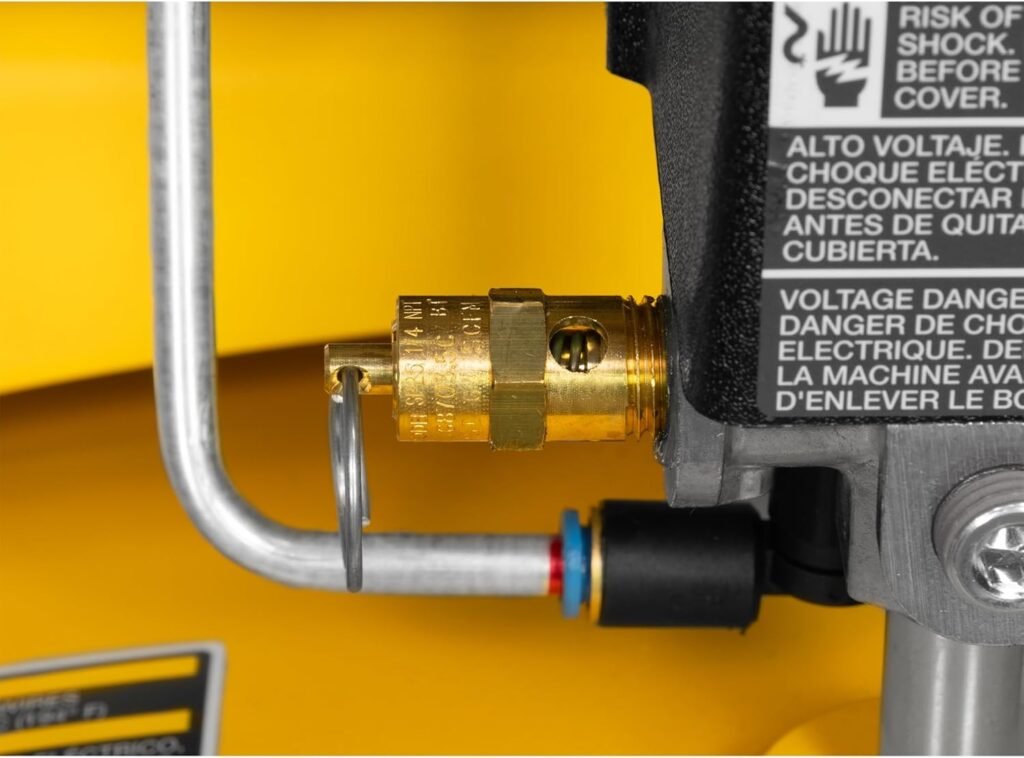
We recommend an oil change at manufacturer-recommended intervals, cleaning or replacing air filters, and inspecting pressure relief and safety valves periodically. Keeping a maintenance log helps us track service history and preempt failures.
Safety Features and Best Practices
We’ll highlight important safety considerations and how to operate the compressor responsibly. Safety components and correct procedures help prevent incidents and extend equipment life.
Built-in safety elements
We like that industrial compressors typically include overpressure relief valves, thermal protection on motors, and shutoff systems to prevent dangerous operation conditions. We should also confirm all safety elements are functioning before each use.
Operator safety habits
We commit to using hearing protection, eye protection when connecting tools, and checking hoses and fittings for wear before pressurizing the system. Proper PPE and good habits are as important as the machine’s safeguards.
Tool Compatibility and Application Guide
We’ll map the compressor’s output to common tools and applications so we can predict how it will perform for our specific needs. This helps ensure we match the compressor to our planned usage.
Common tools it supports
We can run high-demand tools like paint sprayers, sandblasters, heavy-impact wrenches, and multiple framing nailers with this compressor, given its CFM and PSI ratings. For continuous spray operations or sandblasting, the large tank and 14.6 CFM at 90 PSI give a meaningful buffer.
Matching CFM needs to tasks
We advise comparing each tool’s required CFM at its operating PSI to the compressor’s output. For example, tools that need 4–6 CFM each at 90 PSI mean we can often run multiple tools simultaneously, but continuous operations may need a secondary compressor or larger CFM head for uninterrupted workflows.
Installation, Placement, and Plumbing
We’ll cover practical tips for where and how to install the compressor, including piping layout and safety clearances. Proper installation reduces pressure loss and improves system efficiency.
Placement and ventilation
We recommend placing the compressor in a well-ventilated area to aid cooling and avoid heat buildup, and leaving adequate clearance for maintenance access. Heat buildup shortens component life, so ventilation and avoidance of cramped spaces are key.
Piping and air distribution tips
We prefer using appropriately sized pipe (copper, steel, or quality aluminum piping) rather than small-diameter hose for long runs to minimize pressure drop. Consider installing a tank-mounted regulator, filters, and an oil/water separator at the point of use for cleaner, drier air.
Pros and Cons
We’ll list clear strengths and potential drawbacks so we can weigh value against our needs. This helps make a rational purchase decision based on priorities like noise, power, and maintenance.
Pros
- Robust 5 HP motor and 175 PSI maximum provide strong performance for professional tasks.
- Large 80 gallon tank reduces short-cycling and supports multiple tools or intermittent high demand.
- Oil-lube single-stage design enhances durability and long-term reliability under heavy use.
- 17 CFM at 40 PSI and 14.6 CFM at 90 PSI deliver consistent airflow for many applications.
- Vertical footprint saves floor space and is easier to integrate into busy shops.
Cons
- Industrial-level noise may require hearing protection and thoughtful placement for comfort.
- Requires a properly sized 208–230V electrical supply and likely professional installation.
- Oil-lube design means scheduled oil changes and maintenance, which adds to operating tasks.
- Vertical units can be tall and may not fit under low ceilings or mezzanines.
Comparison to Other Options
We’ll compare this DEWALT model to common alternatives so we can see where it stands in the market. Looking at similar-capacity compressors helps us understand relative value.
How it stacks up against horizontal 80 gallon units
Compared to horizontal 80 gallon compressors, the vertical DEWALT saves floor space at the cost of height, and offers similar tank volume and often better footprint efficiency for tight shops. Horizontal units can be easier to move with wheels, while vertical units are typically stationary but more space-efficient.
How it compares with higher-CFM packages
If we need continuous air for industrial spray booths or multiple continuous sandblasting lines, systems with higher sustained CFM or multiple compressors in parallel may be better. The DEWALT 17 CFM at 40 PSI and 14.6 CFM at 90 PSI is strong for most trades, but ultra-high-demand manufacturing may need greater capacity.
Typical Use Cases and Scenarios
We’ll describe specific scenarios where we’d recommend this compressor and where we might choose something different. This helps us align expectations with reality on job sites and in shops.
Ideal scenarios
We recommend this compressor for construction crews using multiple nailers, paint shops with moderate spray booths, automotive shops, and small manufacturing cells needing reliable, high-pressure airflow. It’s especially fitting where space is limited but air demand is substantial.
When to consider alternatives
We might pick an alternate compressor if we need ultra-quiet operation for indoor finishing work, if the site lacks 230V service, or if continuous, uninterrupted high CFM across multiple lines is required. In those cases, either a dedicated higher-CFM compressor or an additional secondary compressor may suit better.
Cost of Ownership and Long-Term Value
We’ll evaluate initial purchase considerations, maintenance costs, and how the oil-lube design affects long-term ownership. Value for professionals comes from uptime, durability, and serviceability.
Upfront and installation costs
We should factor the purchase price plus potential electrical upgrades and installation by a licensed electrician. A proper installation is a one-time cost that pays off via reliable operation and fewer electrical problems.
Maintenance and operating expenses
We expect routine oil changes, filter replacements, and tank draining to be the main recurring costs; these are manageable and typical for oil-lube machines. Over years of heavy use, the oil-lubricated pump will likely outlast many oil-free designs under equivalent workloads, offering better long-term value for demanding applications.
Troubleshooting and Common Issues
We’ll note problems we might encounter and straightforward steps to diagnose them. Knowing common issues helps us stay proactive about maintenance.
Loss of pressure or slow recovery
If the compressor seems to lose pressure quickly or has slow recovery, we check for leaks in hoses and fittings first, then verify the pump oil level and condition. A worn piston ring or valve can reduce capacity over time, so a service inspection may be warranted for persistent performance loss.
Excessive noise or vibration
Unusual noise or vibration often comes from loose mounts, degraded anti-vibration feet, or failing motor bearings. Tightening mounts, replacing pads, or scheduling bearing service can restore quieter operation.
Frequently Asked Questions (FAQs)
We’ll answer common practical questions we all ask when choosing a compressor, providing concise guidance. These are the quick facts we return to when making a decision.
Do we need a dedicated 230V circuit?
Yes; for safety and reliable performance, we recommend a dedicated 208–230V circuit sized appropriately for a 5 HP motor. Consult an electrician to determine breaker and wiring gauge that meet local codes and motor start requirements.
How often should we change the oil?
Oil-change frequency depends on hours of operation and manufacturer guidelines, but a typical interval for heavy-use industrial compressors is every few hundred hours. We advise checking the owner’s manual for exact recommendations and monitoring oil condition regularly.
Can we run multiple tools at once?
Yes; with 17 CFM at 40 PSI and 14.6 CFM at 90 PSI, we can operate multiple moderate-demand tools concurrently, depending on their individual CFM requirements. For continuous high-demand scenarios, consider duty cycle and total combined CFM needs to avoid performance drops.
Installation Checklist Before First Use
We’ll list practical steps to ensure a smooth setup and reliable first runs. A quick checklist prevents common mistakes.
- Verify dedicated 208–230V circuit and breaker sizing with an electrician.
- Place unit on a level, well-ventilated surface with adequate clearance.
- Inspect oil level and top up as needed before startup.
- Drain tank after first use to remove any manufacturing moisture and verify drain valve operation.
- Check all fittings, hoses, and safety valves for tightness and function.
Final Verdict and Recommendation
We’ll summarize our overall opinion based on performance, build, and intended professional use. This gives us a concise takeaway for decision-making.
We find the DEWALT 80 Gallon Vertical Air Compressor, 5 HP, 175 Max PSI, Single Stage, Oil Lube, 230V – High Performance Industrial Air Compressor for Professional Use – Durable and Efficient 80 Gallon Compressor to be a strong choice for professionals and demanding hobbyists who need reliable, high-pressure air with a compact footprint. Its combination of a large tank, high max PSI, solid CFM delivery, and oil-lube durability makes it a solid long-term investment when paired with the proper electrical and installation support.
Purchasing Tips and Final Considerations
We’ll finish with practical buying advice so we can get the most out of our purchase and avoid common pitfalls. Thoughtful planning up front makes a big difference in the life and convenience of the machine.
- Confirm electrical service availability at the installation site before purchase to avoid surprises.
- Consider sound mitigation or placement if the compressor will be used near occupied work areas.
- Budget for routine maintenance items like oil and filters and schedule them proactively.
- If we expect continuous high-volume operations, plan for additional compressors or a higher-CFM solution to avoid capacity bottlenecks.
We hope this review helps us decide how well the DEWALT 80 Gallon Vertical Air Compressor fits our needs and what steps we should take to install and maintain it for reliable professional performance.

Disclosure: As an Amazon Associate, I earn from qualifying purchases.