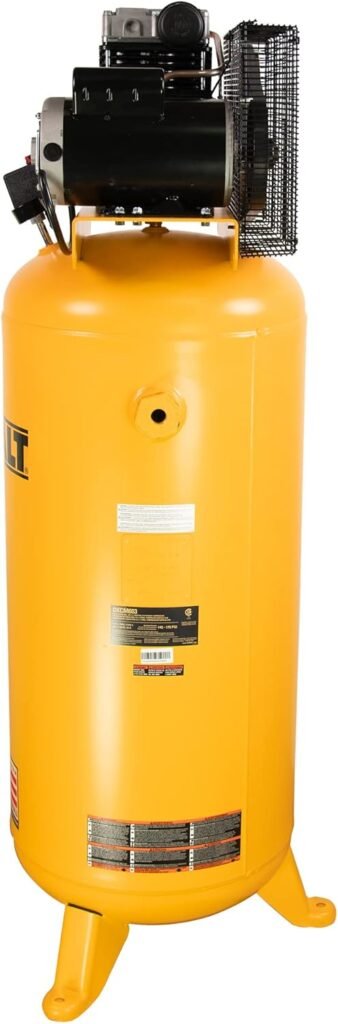
? Are we ready to see whether the DEWALT 60 Gallon Vertical Air Compressor, 5 HP, 175 Max PSI, Single Stage, 240V is the right fit for our shop or industrial needs?


Overview of DEWALT 60 Gallon Vertical Air Compressor, 5 HP, 175 Max PSI, Single Stage, 240V
We want to present a clear summary of what this compressor brings to the worksite, so we can quickly decide whether to consider it further. This model is a heavy-duty vertical compressor built around a 60 gallon ASME-rated tank, a 5 HP motor, and a single-stage pump capable of delivering up to 175 psi, intended for industrial and high-demand shop environments.
Key Features at a Glance
We like to list the standout characteristics early so we can refer back to them as we assess performance and usability. Key features include high air flow (17 CFM at 40 psi and 14.6 CFM at 90 psi), a 5 HP motor suited for continuous or intermittent heavy use, a rugged ASME 60 gallon tank, and compatibility with 240V, 60 Hz single-phase service with a 208–230 spread volt induction motor.
Specifications Table
We find tables help us compare technical data quickly and reduce misreading when making purchasing decisions. Below is a straightforward specification breakdown for the main technical points and what they mean for day-to-day use.
| Specification | Detail |
|---|---|
| Model | DEWALT 60 Gallon Vertical Air Compressor, 5 HP, 175 Max PSI, Single Stage, 240V |
| Tank Capacity | 60 gallons (ASME-rated) |
| Motor Power | 5 HP |
| Max Pressure | 175 PSI |
| Pump Stages | Single stage |
| Air Delivery | 17 CFM @ 40 PSI; 14.6 CFM @ 90 PSI |
| Voltage / Frequency | 240V, 60 Hz (208–230 spread volt induction motor) |
| Phase | Single-phase (connect to 240V, 60 Hz AC only) |
| Intended Use | Industrial / Heavy-duty shop applications |
| Tank Type | Vertical, ASME code build |
| Typical Applications | Air tools, sandblasting, spray painting, auto shops, production lines |
Performance and Power Output
We want to evaluate how this compressor performs in realistic jobsite conditions so we can predict productivity and tool compatibility. With a 5 HP motor and a single-stage pump, this compressor is built to sustain higher air demand while keeping the tank pressure up to 175 psi, which is especially useful for tools that need bursts of higher pressure or continuous flow.
Air Flow and CFM Analysis
We need to focus on cubic feet per minute (CFM) numbers because they directly define what tools and tasks the compressor will reliably support. This DEWALT produces 17 CFM at 40 psi and 14.6 CFM at 90 psi, which places it well within the range for many heavy pneumatic tools like framing nailers, air sanders, grinders, and mid-size paint spray setups that require consistent flow.
Interpreting CFM for Tool Use
We should match tools to the compressor’s CFM to avoid undersized setups that stall productivity. For example, a larger paint gun, continuous sandblasting, or an impact wrench used for long stretches will benefit from the 14.6 CFM @ 90 psi rating, but truly continuous, multi-gun paint operations might still need a second compressor or an inline air reservoir system.

Motor and Electrical Requirements
We need to address electrical needs carefully because improper wiring or insufficient service can lead to nuisance trips and potential equipment damage. The unit uses a 208–230 spread volt induction motor designed to be connected to a 240V, 60 Hz AC supply; installation should follow local electrical codes and typically requires a dedicated circuit and the correct size breaker and wiring.
Wiring, Breaker, and Startup Considerations
We must ensure the electrical infrastructure supports the compressor’s inrush and running amps to avoid nuisance trips and voltage drop. We recommend consulting the DEWALT manual for exact amp draw figures during startup and running, and hiring a qualified electrician to install a suitable dedicated circuit, appropriate disconnect, and correct conduit/wiring to accommodate startup current.
Voltage Spread and Compatibility
We should be aware that the motor is tolerant of a 208–230 spread, but the manufacturer states connection to a 240V, 60 Hz supply; this makes it naturally suited for North American industrial settings. If we are in a location with different supply characteristics, we should verify compatibility or arrange a voltage conversion or alternative model.
Tank and Build Quality
We want equipment that holds up in demanding environments, and the 60 gallon ASME-rated vertical tank is designed for that. The ASME designation means the tank is manufactured to a recognized standard for pressure vessels, which gives confidence in its structural integrity and long-term safety when used within rated limits.
Vertical Tank Advantages and Footprint
We should note how a vertical tank saves floor space compared with horizontal models while still providing significant air storage. This makes the compressor attractive for smaller shops or areas where floor real estate is limited, and the large 60 gallon capacity helps bridge demand spikes without excessive short cycling.
Materials and Durability
We appreciate robust construction when working with heavy equipment regularly, and the DEWALT’s heavy-gauge tank and industrial-grade components are designed to withstand shop conditions. For long service life, we recommend routine inspections for corrosion, proper tank draining, and adherence to any recommended service intervals provided in the owner’s manual.
Noise and Vibration
We want to manage our workspace environment for comfort and compliance, so noise and vibration are important considerations. Vertical compressors with larger motors can produce significant noise and vibration; while DEWALT builds to industry standards, we should plan for hearing protection and potential vibration isolation mounts if we place the unit near sensitive workstations.
Expected Sound Levels and Mitigation
We should assume typical industrial compressor noise levels unless DEWALT specifies a dB rating; practical steps include placing the compressor in a dedicated mechanical room, adding sound-dampening panels, or installing anti-vibration pads beneath the feet. These measures help reduce the perceived noise and protect surrounding equipment and structures.
Vibration Control and Mounting
We need to secure the compressor to minimize movement and to protect piping and fittings from fatigue. Proper installation using manufacturer-recommended anchoring and flexible connections for air lines will reduce stress on fittings and help lengthen service life.
Installation and Setup
We like to think through installation to avoid surprises and downtime, so planning for electrical, plumbing, and placement is critical. This compressor requires a dedicated 240V, 60 Hz AC supply and adequate space around the unit for service access, so we should plan layout and clearances before delivering the unit to the site.
Site Preparation and Clearance
We must ensure there is sufficient vertical space for the tall tank and access to controls and drain valves. Leave room for routine maintenance tasks such as checking belts (if applicable), oiling, filter changes, and tank draining; often that means a few feet clearance on all accessible sides.
Plumbing and Air Distribution
We want to prevent pressure drops and condensation issues, so using appropriately sized inlet/outlet piping and trap/filters downstream is important. Installing a properly sized pressure regulator, air dryer or moisture separator, and a filtration system will protect tools and products and improve consistency for paint or finishing work.

Maintenance and Serviceability
We plan to keep compressors running reliably by following manufacturer maintenance guidelines and performing regular checks ourselves. Routine maintenance typically includes tank drainage, air filter changes, oil inspections/changes (if oil-lubricated), belt tension checks (if a belt-driven pump is used), and general visual inspections for leaks or wear.
Daily, Weekly, and Monthly Tasks
We should set up a simple maintenance schedule to keep the compressor in peak condition and to spot problems early. Daily tasks can include draining condensate and checking pressure; weekly tasks might include checking belts and filters; monthly tasks often involve checking oil levels, inspecting safety valves, and ensuring all fittings are secure.
Serviceability and Parts Availability
We value equipment that is easy to service, and DEWALT’s parts and service network typically makes replacement components accessible. Keeping a small stock of common wear items—filters, belts, safety valve replacements—can reduce downtime when the compressor is a critical part of daily operations.
Safety Features and Compliance
We care about safety for our team and our facility, and this compressor incorporates features to operate within safe limits when used properly. The ASME-rated tank indicates adherence to recognized standards for pressure vessels, and typical safety components include pressure relief valves and regulators; we should confirm and test these regularly.
Safe Operation Practices
We need to adopt safe operating routines such as never exceeding the max rated pressure, keeping pressure relief devices operational, and ensuring that all electrical installations meet local codes. Lockout-tagout procedures during maintenance and appropriate personal protective equipment (PPE) are essential for safer repairs and inspections.
Compliance and Documentation
We prefer to keep documentation for inspections and regulatory compliance, especially when equipment is used in an industrial setting. Keeping owner’s manual, service logs, and inspection records organized helps with warranties, insurance, and regulatory audits.
Use Cases and Applications
We like to match machine capabilities to practical needs so that investment decisions deliver predictable returns. This compressor is aimed at industrial and heavy-shop environments, supporting applications such as auto repair and body shops, carpentry with high-demand pneumatic nailers, mid-size spray paint booths, and general-purpose plant air needs.
Best-Fit Scenarios
We should use this compressor where intermittent bursts and mid-term continuous CFM demands align with its 14.6–17 CFM output and 60 gallon capacity. It is particularly well suited where multiple simultaneous tools may be used (though not always at maximum continuous draw) and where a vertical footprint is desired to conserve shop floor space.
Less-Appropriate Situations
We must recognize situations where even higher continuous CFM or dual-stage pumps are necessary, such as large-scale finishing operations with multiple high-volume spray guns running continuously. In such cases, either a larger compressor or multiple units would better match the load demands.
Pros and Cons
We find it useful to summarize the benefits and trade-offs so we can weigh the purchase against our needs quickly. The DEWALT 60 gallon vertical compressor offers robust airflow, a reliable 5 HP motor, and a compact vertical tank configuration, but it also requires a proper 240V supply and may need noise and vibration mitigation depending on placement.
Pros
We appreciate strong air delivery, an ASME-rated 60 gallon tank, and industrial motor design that supports a wide variety of pneumatic tasks. The vertical tank saves floor space and the single-stage 175 psi capability provides extra overhead for tools requiring higher pressure bursts.
Cons
We must account for the need for a dedicated 240V circuit and the potential for significant noise and vibration without isolation measures. For continuous multi-gun finishing operations, a single unit of this size might still fall short and require an additional compressor or a larger system.
Comparison with Similar Models
We like to compare similar compressors so we can understand relative strengths and weaknesses when considering brand and model choices. Compared to other 60 gallon, single-stage compressors from competitors, this DEWALT’s CFM ratings and motor horsepower place it competitively against many industrial-grade options, with the added advantage of ASME tank construction and a trusted service network.
How It Stacks Up
We should look at CFM, PSI, motor HP, and tank build when comparing; on those points this model is solidly positioned for mid-to-high demand shop work. Other models may offer quieter operation, two-stage pumps, or different footprint options, so we should match those features to our priorities like noise level, continuous duty, or shop layout.
When to Consider Alternatives
We need to consider alternatives if our work requires very high continuous CFM for extended durations, if we need near-silent operation in an open customer-facing space, or if our power supply is not compatible with a 240V single-phase connection. In those cases, selecting a two-stage or larger-system solution or a model with specific noise-control engineering may be better.
Value for Money
We want to balance initial purchase cost against lifetime utility and operating expenses, and a compressor that reduces downtime and supports productivity is often a good investment. Given the DEWALT brand reputation, ASME tank, and the 5 HP powertrain, we find that this unit represents solid value for professional shops that need dependable, high-flow compressed air without resorting to much larger systems.
Long-Term Cost Considerations
We should account for electricity usage, maintenance, and potential additional items like air dryers or filters when evaluating total cost of ownership. Investing in routine maintenance and proper installation will generally minimize operating costs and prolong the unit’s useful life.
resale and Longevity
We find that well-maintained industrial compressors tend to retain reasonable resale value, and a brand-name unit with proper documentation of care will be more attractive in the used market. Prioritizing maintenance and keeping service records will protect that value.
Accessories and Upgrades
We like to plan extra equipment that complements the compressor so we can get the most reliable and clean air for our tools and processes. Useful accessories include an air dryer, coalescing and particulate filters, regulators with gauges, quick-connect fittings, and potentially an additional receiver tank for very bursty or multi-tool setups.
Recommended Add-Ons
We recommend installing an air dryer and proper filtration if the air will be used for painting or precision pneumatic tools, as moisture and oil carryover can damage finishes and tools. A pressure regulator and localized drop tanks or hoses with quick-connect fittings will improve convenience and reduce pressure drop across long runs.
Upgrades for Specific Needs
We might upgrade piping to larger diameter or add secondary reservoirs if we plan to run multiple high-demand tools concurrently. In higher-volume finishing operations, adding a refrigerated dryer and multi-stage filtration becomes essential to maintain product quality.
Tips for Getting the Most Out of the Compressor
We want to maximize uptime and performance while minimizing unexpected problems, so a few practical tips go a long way. Properly sizing our electrical supply, installing good filtration and drying systems, and following a disciplined maintenance schedule will keep performance high and reduce long-term costs.
Operational Best Practices
We should avoid frequent short cycling by using the compressor within its recommended duty cycle and by matching tool usage to available CFM. Using a properly sized air receiver, and staging tools or adding a second compressor where needed, will reduce wear and improve delivery stability.
Maintenance Habits to Adopt
We recommend draining the tank daily in humid environments, changing filters on schedule, checking belts and oil levels routinely, and keeping an eye out for air leaks which can silently waste capacity. Logging maintenance actions and performance observations helps catch small issues before they become costly failures.
Frequently Asked Questions
Q: What tools can we run continuously on this compressor?
We should expect to run a range of pneumatic tools reliably, from nail guns and impact wrenches to mid-size spray guns, but continuous multi-gun paint booths or heavy sandblasting operations may exceed the continuous CFM capability. Always sum the CFM requirements of all tools you plan to run simultaneously and compare that to the compressor’s effective delivered CFM at the target operating PSI.
Q: Do we need a special electrician or breaker to install it?
We must have a qualified electrician install the dedicated 240V circuit, choose the correct breaker size, and ensure wiring meets local code; this protects the compressor and the facility. Before installation, consult the DEWALT installation and electrical requirements to confirm exact amperage and startup characteristics to size the breaker and wiring appropriately.
Q: Is the tank safe for high-pressure industrial use?
We can rely on the ASME-rated tank for safe operation within the specified pressure limits, assuming the compressor is installed and maintained according to the manufacturer’s recommendations. Periodic inspections and adherence to local pressure vessel inspection requirements will help ensure ongoing safety and compliance.
Our Verdict
We want to conclude with a practical recommendation that reflects real-world needs and budgets, so we can make a confident decision. The DEWALT 60 Gallon Vertical Air Compressor, 5 HP, 175 Max PSI, Single Stage, 240V is a solid choice for professional shops and industrial environments that need dependable mid-to-high CFM delivery in a compact vertical footprint, provided we have the proper electrical supply and take steps to manage noise and airflow distribution.
Who Should Buy This Compressor
We should consider this compressor if we operate automotive shops, smaller industrial lines, mid-size finishing setups, or multi-tool shop floors that need a robust single-unit solution without sacrificing floor space. It’s especially attractive when we value brand support, ASME-rated construction, and the ability to sustain higher pressures for heavier tools.
When to Look Elsewhere
We ought to look at alternative configurations if our primary needs are for very quiet operation in customer-facing spaces, continuous multi-gun finishing that exceeds 15+ CFM continuously per gun, or when our facility lacks 240V service and conversion isn’t feasible. In those cases, a larger two-stage compressor, a quieter model, or a different voltage option may be preferable.
We hope this hands-on assessment helps us decide whether the DEWALT 60 Gallon Vertical Air Compressor matches our workshop requirements and budget.

Disclosure: As an Amazon Associate, I earn from qualifying purchases.