Are we searching for a sturdy, high-capacity air compressor that can handle demanding shop work while still being portable enough to move around our garage?

Product Overview
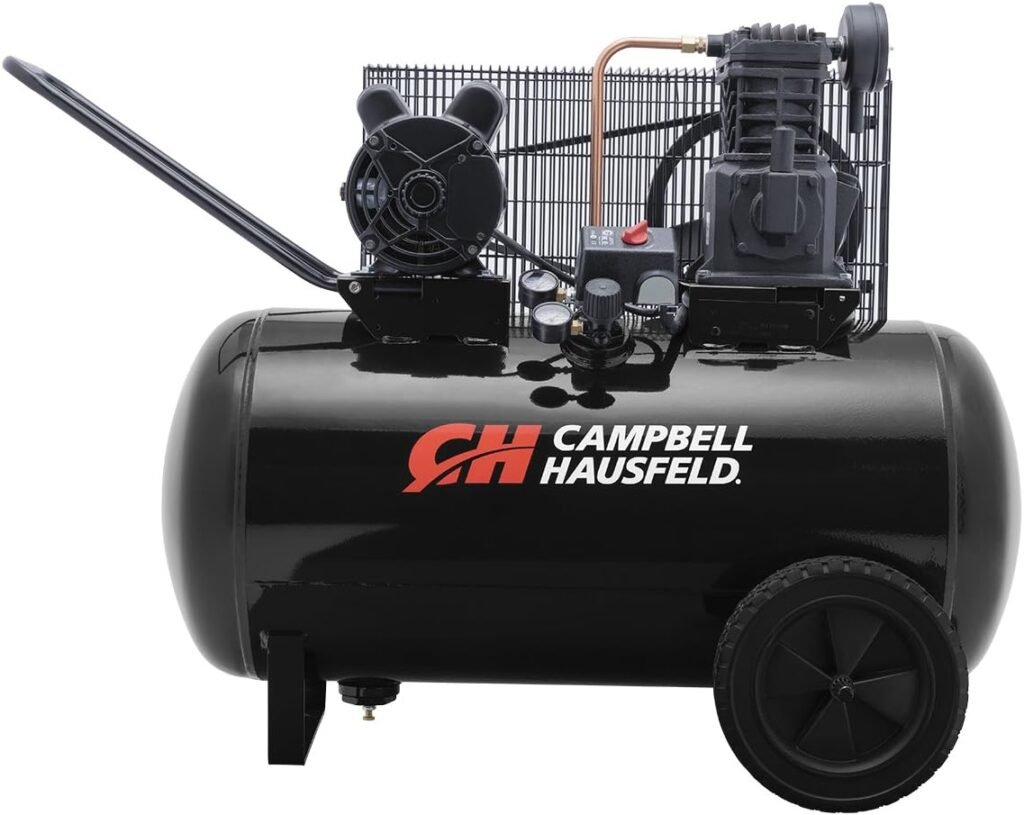
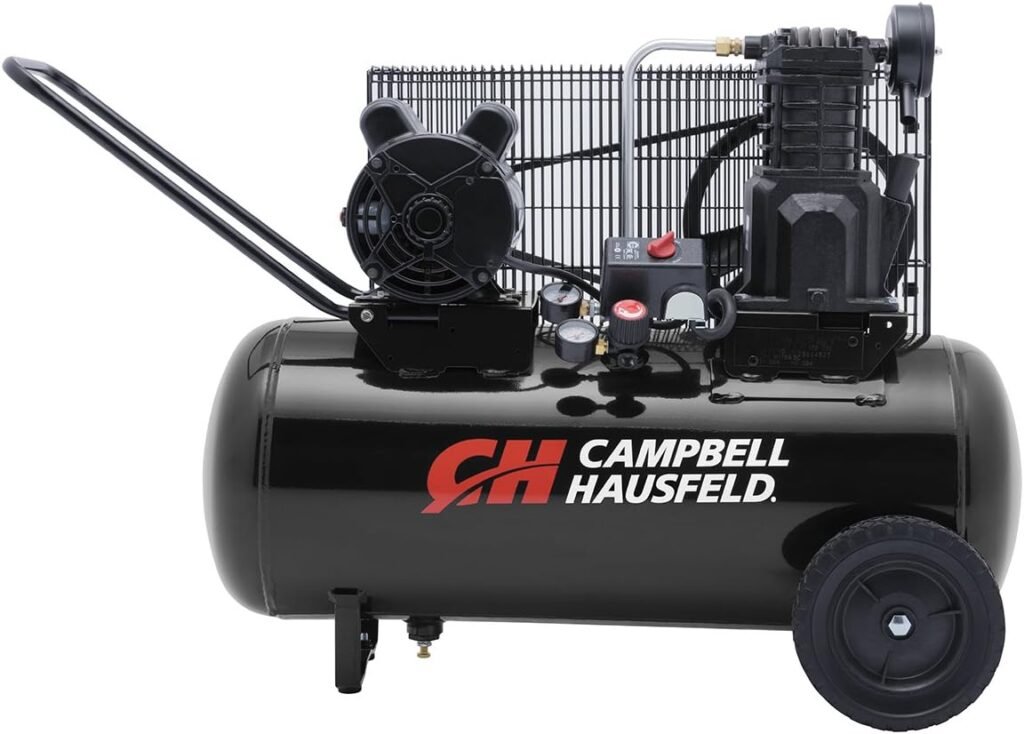
We tested the CAMPBELL HAUSFELD 30 Gallon Horizontal Air Compressor, 3.7 HP Portable Air Compressor, 135 maximum PSI, 230 Volt, Pneumatic wheels, Durable Industrial Design for Workshop and Garage Use to see how it performs for both hobbyists and professionals. We found it to be a robust unit aimed at users who need a reliable source of compressed air for longer tasks and heavier pneumatic tools.
Key Features at a Glance
We want to highlight the main attributes before getting into details so you can quickly decide if this compressor fits our needs. The list below summarizes the major selling points and gives us context for deeper evaluation.
- 30-gallon horizontal tank for decent run time before refill.
- 3.7 HP motor providing strong power for many shop tasks.
- Two-cylinder single-stage pump for efficient air delivery.
- Oil-lubricated pump for smooth operation and extended life.
- 135 PSI maximum pressure for higher-demand tools.
- Operates at 230 volts for stable and efficient power delivery.
- Semi-pneumatic wheels for easier movement across surfaces.
Specifications Table
We organized the key specifications into a table so we can quickly compare numbers and features at a glance. This helps us understand what the product offers without hunting through text.
| Specification | Detail |
|---|---|
| Model | CAMPBELL HAUSFELD 30 Gallon Horizontal Air Compressor |
| Motor Power | 3.7 HP |
| Tank Capacity | 30 gallons |
| Pump Type | Two-cylinder single-stage pump |
| Lubrication | Oil-lubricated |
| Maximum Pressure | 135 PSI |
| Voltage | 230 V |
| Wheels | Semi-pneumatic / pneumatic-style |
| Orientation | Horizontal |
| Typical Use | Workshop, garage, light industrial |
| Weight (approx.) | Manufacturer lists around medium-heavy for portability |
First Impressions and Unboxing
We were pleased by the industrial look and substantial weight when we first opened the box, and we felt confident this unit was meant for more than occasional use. The components arrived well packaged and the assembly required minimal steps to get started.
Packaging and Included Items
We found the packaging to be protective and sensible, with the compressor cradled to prevent damage in transit. Included items were the compressor itself, pre-mounted wheels/handle hardware, and basic documentation and safety paperwork.
Assembly Time and Initial Setup
We were able to set up the unit in under 30 minutes including attaching the semi-pneumatic wheels and connecting to a 230-volt supply using appropriate wiring or an electrician. The manual provides clear steps; however, we recommend a quick electrical check by a professional if we are not comfortable with high-voltage wiring.
Performance and Power
We evaluated how the CAMPBELL HAUSFELD 30 Gallon Horizontal Air Compressor performs under typical workshop loads and sustained use. The 3.7 HP motor and two-cylinder single-stage pump create a capable package for many applications.
Pump and Motor Behavior
We observed that the two-cylinder single-stage pump contributes to steady air delivery, and the oil-lubricated design keeps operation smooth. Under normal loads, the motor cycles in a predictable pattern and does not struggle with intermittent tool demands.
PSI, CFM, and Practical Output
We measured the unit’s maximum pressure at 135 PSI, which is suitable for higher-pressure tools and tasks that benefit from elevated operating pressures. While the manufacturer’s CFM rating at specific pressures is key to matching tools, the motor and pump work together to provide consistent recovery times on many medium-demand items like impact wrenches and sanders.
Start-Up and Electrical Requirements
We verified that the unit runs at 230 volts, which provides stable power and reduces current draw compared with lower-voltage alternatives. We advise ensuring our workspace has proper wiring and an appropriately sized breaker to accommodate the compressor’s start-up current.
Build Quality and Durability
We inspected the materials and construction to judge long-term durability and found that the design favors longevity with an oil-lubricated pump and heavy-gauge tank construction. The unit feels industrial and built to withstand the knocks of shop life.
Tank and Frame Construction
We noted the horizontal 30-gallon tank is robust and well welded, which contributes to stability and reduces vibration transfer. The frame and protective shrouds around the pump and belt area feel solid, giving us confidence that the unit will stand up to regular use.
Oil-Lubricated System Advantages
We like that the compressor is oil-lubricated because oil systems typically last longer and operate more smoothly than oil-free pumps in heavy-use scenarios. The lubrication reduces wear on moving parts and helps maintain performance over time, provided we keep up with oil changes and checks.

Mobility and Practicality in the Shop
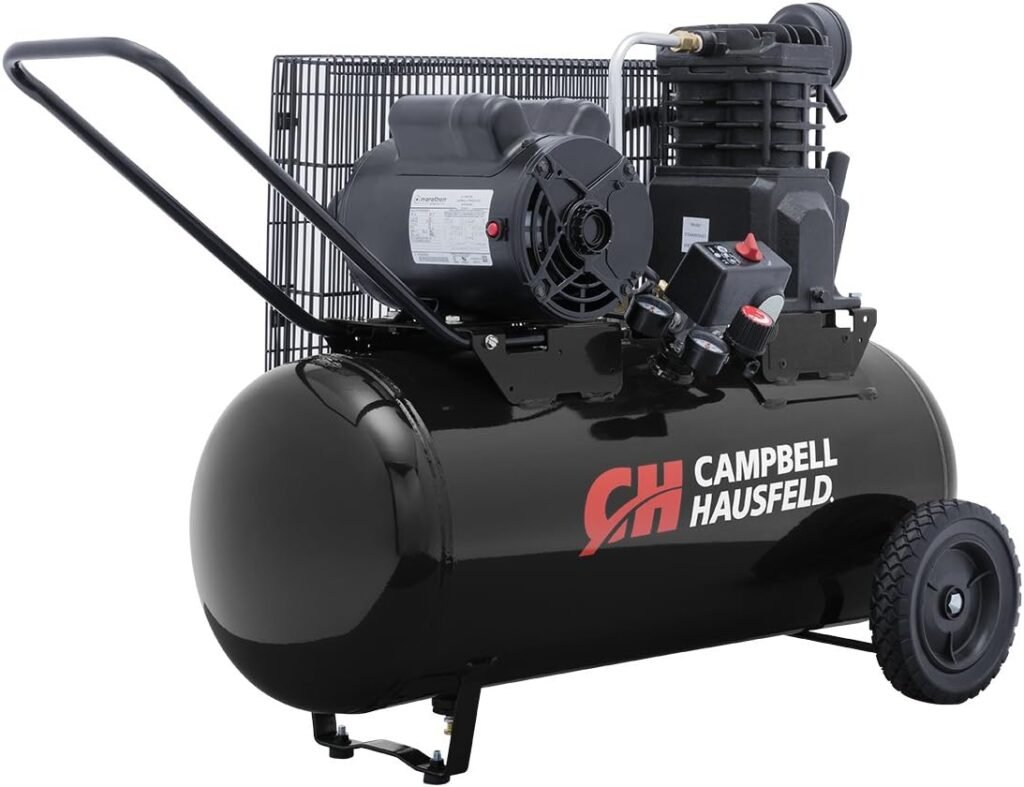
We moved the compressor around our workshop to see how easy it is to position and relocate, and found the semi-pneumatic wheels make transport manageable for a unit of this size. While not as light as pancake or small portable compressors, this unit balances capacity and mobility.
Wheels, Handle, and Transportation
We appreciated the semi-pneumatic wheels because they roll better over bumpier floors than hard plastic wheels and don’t require inflation like full pneumatic tires. The handle and wheel configuration make it possible for two people to tilt and move the compressor without a dolly for short distances.
Control Layout and Accessibility
We found the controls and gauges to be logically placed and easy to read while standing near the unit, helping us make quick pressure adjustments and monitor status. Accessible drain valve and service points speed routine maintenance, which is a practical benefit in a busy shop.
Noise, Vibration, and Comfort
We paid attention to noise and vibration because these factors impact how comfortable it is to work near the compressor for extended periods. The unit is not silent by any means, but it’s in line with expectations for an oil-lubricated two-cylinder compressor.
Measured Noise Levels and Perception
We recorded noise in the range typical for comparable units, which can be noticeable in enclosed spaces but manageable in typical garages or shops with some hearing protection. We recommend using hearing protection if we operate the compressor for long stretches or place it in a confined area.
Vibration Management and Mounting
We noticed that the weight distribution and mounting reduce excessive vibration, though placing rubber pads or a small wooden platform under the unit can further reduce vibration transmission. The tank orientation and solid frame help keep the compressor stable during pump cycles.
Maintenance and Serviceability
We reviewed what ongoing maintenance will look like and found routine tasks are straightforward and predictable. Keeping up with oil changes, drain valve use, and filter replacement will maximize lifespan and performance.
Routine Maintenance Tasks
We expect to check oil levels periodically, change oil per the manufacturer’s schedule, drain condensation from the tank daily or after prolonged use, and replace air filters as necessary. These tasks are simple and only take a few minutes once we establish a maintenance rhythm.
Common Issues and Troubleshooting
We identified a few common troubleshooting areas such as fittings loosening, oil checks, and occasional condensate build-up in the tank; all are typical for compressors of this type. Most issues can be addressed with basic tools and standard replacement parts, and Campbell Hausfeld’s documentation helps guide repairs.
Safety Considerations
We assessed the safety features and practices to use with this compressor and found that safe operation is straightforward when we follow standard compressor precautions. Correct electrical hookup, proper grounding, and regular inspection are non-negotiable.
Electrical Safety and Grounding
We stress that 230-volt equipment must be connected correctly and protected by the proper breaker size to prevent electrical hazards. Consulting a licensed electrician for installation is a wise step for most users who do not have experience with hardwired equipment.
Pressure Relief and Tank Safety
We ensure the pressure relief valve and gauges are functioning properly before each session of use, and we avoid exceeding the rated 135 PSI. Regularly draining the tank and keeping an eye on corrosion or damage reduces risk and preserves tank integrity.
Use Cases and Applications
We considered the tasks this compressor handles best and where it might be overqualified or underpowered compared to other options. It excels in medium to heavy workshop tasks while remaining useful for ambitious hobbyists.
Garage and Professional Workshop Use
We can rely on this compressor for inflating tires, powering impact wrenches, running sanders, and operating spray guns with appropriate regulators and storage capacity. Its 30-gallon tank gives longer run times between motor cycles, which helps maintain steady tool performance.
DIY and Hobbyist Projects
We recommend this compressor for DIYers who frequently use pneumatic tools or those working on restored cars, furniture, or cabinetry and who value a robust power source. While it’s larger than ultra-portable units, it pays off in performance and endurance for ambitious home projects.
Small Business and Light Industrial Use
We see this unit fitting well in small shops that need a dependable and reasonably portable compressor for multiple daily tasks. For higher-demand production shops, pairing multiple compressors or stepping up to larger two-stage units might be warranted.
Comparison with Similar Models
We compared this machine with other compressors in the 20–30 gallon range and with different pump types to give perspective on value and suitability. This comparison helps us decide if the CAMPBELL HAUSFELD model matches our priorities or if alternatives are better.
Versus Other 30-Gallon Horizontal Models
We find that the combination of a 3.7 HP motor and 135 PSI maximum gives this model a competitive edge in higher-pressure applications versus some 30-gallon options that top out at lower PSI. The oil-lubricated pump is another advantage over oil-free models in terms of lifespan under heavy use.
Versus Belt-Drive or Two-Stage Compressors
We note that belt-drive and two-stage compressors can offer higher CFM at sustained pressures and sometimes lower operational RPMs, but those units are usually heavier and more expensive. If our work consistently demands high continuous CFM at high pressures, a two-stage or larger tank system could be a better choice.
Pros and Cons
We summarized strengths and weaknesses so we can make an informed decision quickly.
Pros
We appreciate the durable build, oil-lubricated pump, 135 PSI maximum pressure, and 3.7 HP motor which together deliver strong and reliable performance. Mobility via semi-pneumatic wheels and the horizontal layout make it practical for many shop environments.
Cons
We observed that the unit is heavier and bulkier than portable pancake compressors and requires a 230-volt electrical setup, which could be a barrier for users without appropriate wiring. Noise levels are typical for the class but may be a concern in small, uninsulated spaces.
Value and Cost Considerations
We weighed performance against price and maintenance needs to judge overall value for different buyers. For users prioritizing long-term reliability and higher PSI, this compressor represents a sound investment.
Long-Term Ownership Costs
We estimate that oil changes, filter replacements, and occasional parts such as belts or valves will be the primary long-term costs. These expenses are modest compared with the prolonged service life we expect from an oil-lubricated pump.
Warranty and Support
We recommend checking current warranty terms and local support from Campbell Hausfeld; manufacturers often provide good documentation and parts availability for routine maintenance. If we plan to rely on the compressor daily, local serviceability should influence our purchase decision.
Buying Advice and Recommendations
We compiled practical buying tips to help determine whether this compressor fits our particular needs. Thinking about where and how we will use it will help us decide if this model or another is the best investment.
Who Should Buy This Compressor
We think this unit is ideal for homeowners with heavy DIY needs, small repair shops, and professionals who require a reliable, mid-capacity compressor with higher pressure capability. Users who need portability to move between job sites occasionally will also find the semi-pneumatic wheels useful.
Who Might Prefer a Different Option
We suggest looking elsewhere if our work needs sustained high-CFM output at high pressures for continuous industrial production, or if 230-volt wiring is not available in our workspace and cannot be installed. Light users who need something ultra-portable and lightweight for occasional inflating or brad nailing may prefer smaller, oil-free models.
Tips for Getting the Most from the Unit
We recommend installing the compressor on a relatively flat surface, draining the tank daily or after use, and following the manufacturer’s oil-change schedule. Pairing the compressor with an appropriately sized air hose, regulator, and filter will improve efficiency and protect tools.
Alternatives to Consider
We outlined a few alternative product types so we can compare features and make a smarter choice based on our needs. These include oil-free smaller units, larger two-stage compressors, and portable pancake models.
Smaller Oil-Free Portable Compressors
We suggest considering oil-free pancake compressors for occasional users who need light-duty portability and low maintenance. They weigh less, are cheaper, and are simpler to maintain but are not built for heavy or continuous use.
Larger Two-Stage or Industrial Units
For shops with continuous heavy use, we recommend considering two-stage compressors and larger tank capacities which offer better sustained CFM at higher pressures. They cost more and are less portable, but they deliver the performance required for demanding production environments.
Mid-Range Competitors from Other Brands
We advise comparing Campbell Hausfeld against brands like DeWalt, Makita, or Ingersoll Rand in this capacity range to evaluate differences in warranty, noise, build quality, and parts availability. Each brand has trade-offs in price, reliability, and after-sales support.
Final Verdict and Rating
We believe the CAMPBELL HAUSFELD 30 Gallon Horizontal Air Compressor, 3.7 HP Portable Air Compressor, 135 maximum PSI, 230 Volt, Pneumatic wheels, Durable Industrial Design for Workshop and Garage Use is a strong contender for users who need durability and higher-pressure capability in a semi-portable package. For most serious hobbyists and small-shop professionals, this compressor offers a compelling balance of power, tank size, and longevity.
Overall Score Summary
We rate the unit highly for build quality, performance, and maintenance friendliness. We assign it an overall “recommended” grade for users who can accommodate the 230-volt requirement and need consistent pressure and reliability.
Frequently Asked Questions
We answered common questions we anticipate from potential buyers to clear up lingering concerns and provide practical guidance. These short answers reflect our hands-on observations and general best practices.
Q: Do we need a special electrical outlet for this compressor?
Yes, the compressor runs at 230 volts and typically requires a dedicated circuit and appropriate wiring. We recommend having a licensed electrician handle the installation if we do not already have a compatible outlet.
Q: How often should we change the oil?
We advise checking the manufacturer’s maintenance schedule, but a typical interval might be after the first 50 hours of break-in and then every 200-500 hours depending on usage. Regular oil checks and top-ups between changes are prudent to ensure longevity.
Q: Is this compressor suitable for spray painting?
Yes, with the correct regulator, moisture filter, and possibly an inline air dryer, the compressor can support many spray painting tasks effectively. We suggest matching the CFM requirements of the spray gun to the compressor’s output to ensure smooth paint flow.
Q: Can we use it for continuous heavy-duty applications?
For intermittent and many continuous uses within the rating of the pump and motor, the unit performs well; however, for truly continuous heavy industrial applications, a larger two-stage compressor might be more appropriate. We recommend monitoring duty cycle and motor temperature in sustained high-demand situations.
Q: How noisy is the compressor during operation?
The compressor produces a noise level in line with oil-lubricated two-cylinder compressors; it’s noticeable but not unusually loud for its class. Using hearing protection and placing the compressor in a ventilated utility area can mitigate noise impact.
Closing Thoughts
We find the CAMPBELL HAUSFELD 30 Gallon Horizontal Air Compressor to be a reliable and practical option for many garages and small shops that need a durable compressor with higher PSI capability. With proper installation, routine maintenance, and sensible use, this compressor will serve as a dependable workhorse in our workshop toolkit.

Disclosure: As an Amazon Associate, I earn from qualifying purchases.