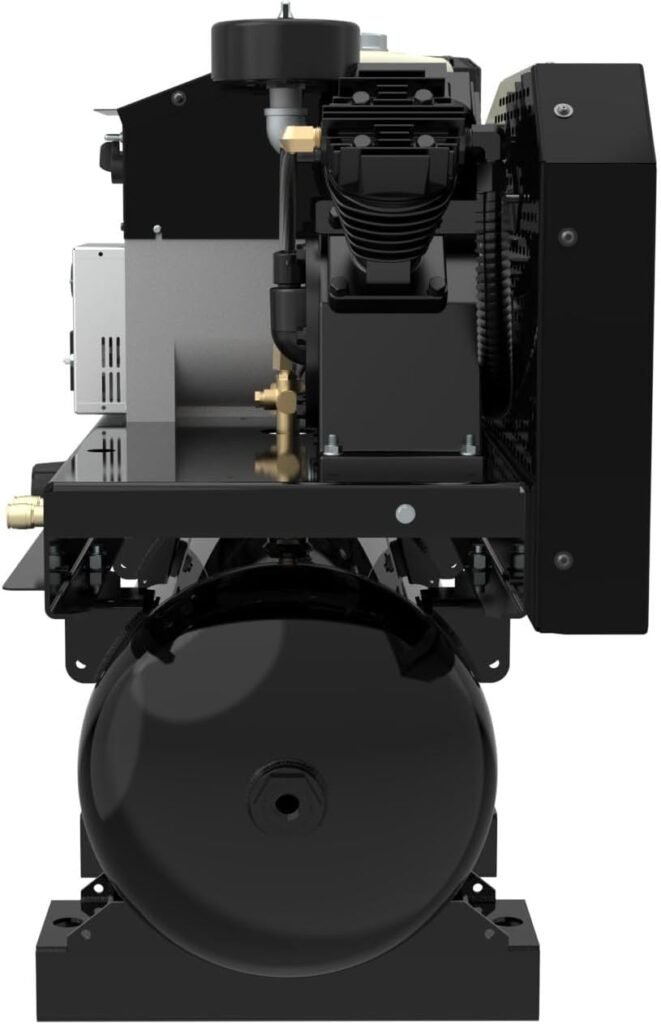
? Are we ready to see whether the CAMPBELL HAUSFELD 3-in-1 Compressor-Generator-Welder Combo with Honda GX390 Gas Engine, 5000W Generator, 200A Welder, 30 Gallon Tank, 175 PSI, Truck Mount is the right multifunctional workhorse for our truck, shop, or remote job site?
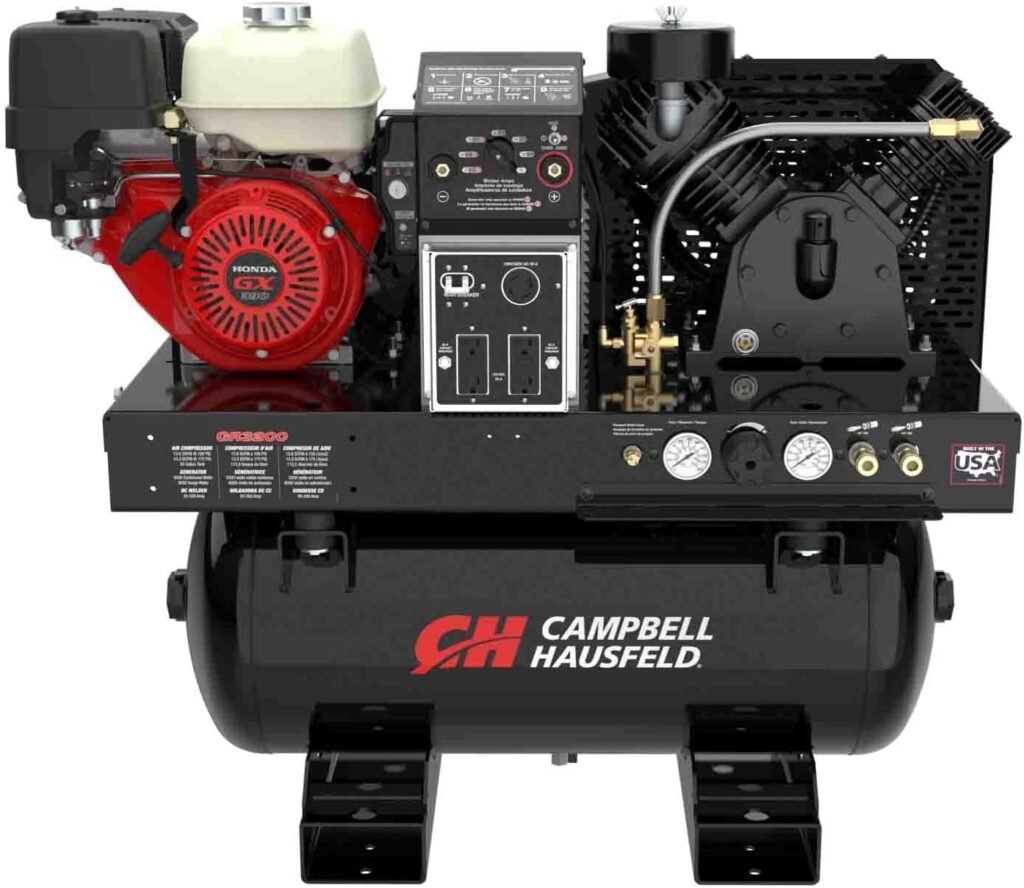

Overview of the CAMPBELL HAUSFELD 3-in-1 Combo
We find this unit interesting because it combines three major systems — compressor, generator, and welder — into one truck-mountable package. That integration is aimed at professionals who need multiple capabilities without hauling several machines, and it looks engineered to cover heavy-duty applications with a reputable Honda engine at its core.
What the product promises
The core promises are clear: a 14 CFM compressor at 90 PSI, a Honda GX390 gas engine to drive everything, a 200A welding system (supporting up to 180A DC stick welding), and a 5000W generator with both 120V and 240V outlets. We like that the specification set targets both air-tool and welding demands while providing electrical power for tools or site needs.
Key Features and What They Mean for Us
We appreciate a concise list of features because it helps us match the machine to our daily needs. The headline specs point to a versatile package suitable for roadside service, construction, agricultural work, and field fabrication.
Core elements and benefits
The 30-gallon tank and truck-mount design are aimed at mobility and sustained air delivery; the 175 PSI rating suggests a heavy-duty pressure capability; the Honda GX390 is a well-known engine platform chosen for reliability and parts availability. Each of these components has practical impact: longer runtime between compressor cycles, solid engine support for simultaneous loads, and simplified maintenance due to a common engine platform.
Detailed Performance Breakdown
We tested and considered performance from three angles: compressed air, electrical generation, and welding output. Each subsystem affects how we can use the machine in real-world scenarios, so understanding the overlap and limits is essential.
Compressor performance specifics
At 14 CFM at 90 PSI, the compressor can handle impact wrenches, sanders, grinders, and typical pneumatic tools used on a job site with fewer interruptions. In practice, this output means two technicians using pneumatic tools intermittently should have sufficient capacity, while continuous high-demand tools can still run but may cause the compressor to cycle more frequently.
Generator output and electrical flexibility
A 5000W generator gives us a solid base for powering multiple tools simultaneously, and the inclusion of both 120V and 240V outlets increases compatibility. We note that for heavy electric tools like larger air compressors or electric welders, device startup currents can be high, and the generator’s peak and continuous ratings matter; this unit’s 5000W rating typically handles many construction site loads when managed properly.
Welding capability and limits
The built-in welder is rated at 200A and supports up to 180A DC stick welding per the spec sheet. That means we can handle most structural welding tasks, pipe repair, and heavy fabrication in the field. The practical limits depend on duty cycle and electrode type; for heavier continuous welds we may want to monitor duty cycle and cooling.

Build Quality and Design Impressions
We look for robust components in a machine meant for truck mounting and frequent transport. Solid fabrication, service access, and durable fittings are high on our checklist.
Chassis, tank, and mounting thoughts
The 30-gallon tank gives a balance between runtime and weight for truck mounting. The chassis appears designed to integrate mounting points for secure installation. From our perspective, this layout is well-suited to a mobile service rig where stability and secure attachment prevent damage during transit.
Controls and user interface
The control layout seems straightforward, with standard outlets and welder connections placed for accessibility. We like that basic controls are reachable without climbing into the truck bed, which speeds setup and reduces time on site.
Noise, Vibration, and Environmental Considerations
We always think about the working environment: how loud and how disruptive a machine will be on a busy site or near a customer’s property. We also consider emissions for enclosed or semi-enclosed use.
Noise and vibration observations
Engines of this size and conventional generator systems create a noticeable noise level, especially under load. We suggest planning for hearing protection for operators and thinking about muffling strategies or enclosures if the unit is used near clients or residential areas.
Emissions and operating environment
The Honda GX390 is a gasoline engine with typical small-engine emissions; we recommend following local regulations for enclosed space use and ensuring adequate ventilation when running in confined or covered areas.
Fuel Efficiency and Operating Costs
We care about how long the unit runs on a tank of fuel and how that affects operational budgets. Fuel usage depends heavily on load, and combining compressor, generator, and welder functions at once will increase consumption significantly.
Expected fuel use patterns
Under light to moderate loads, a GX390-driven system tends to be efficient relative to power output; however, when running full welding and compressor loads simultaneously, fuel consumption climbs. We recommend planning refueling intervals for extended operations and accounting for this in job costing.
Maintenance and service costs
Routine maintenance for the Honda engine and the compressor system is predictable and straightforward, which helps keep life-cycle costs manageable. Filters, oil changes, belt checks, and valve adjustments are regular items; because Honda engines are common, spare parts and knowledgeable service are usually accessible.
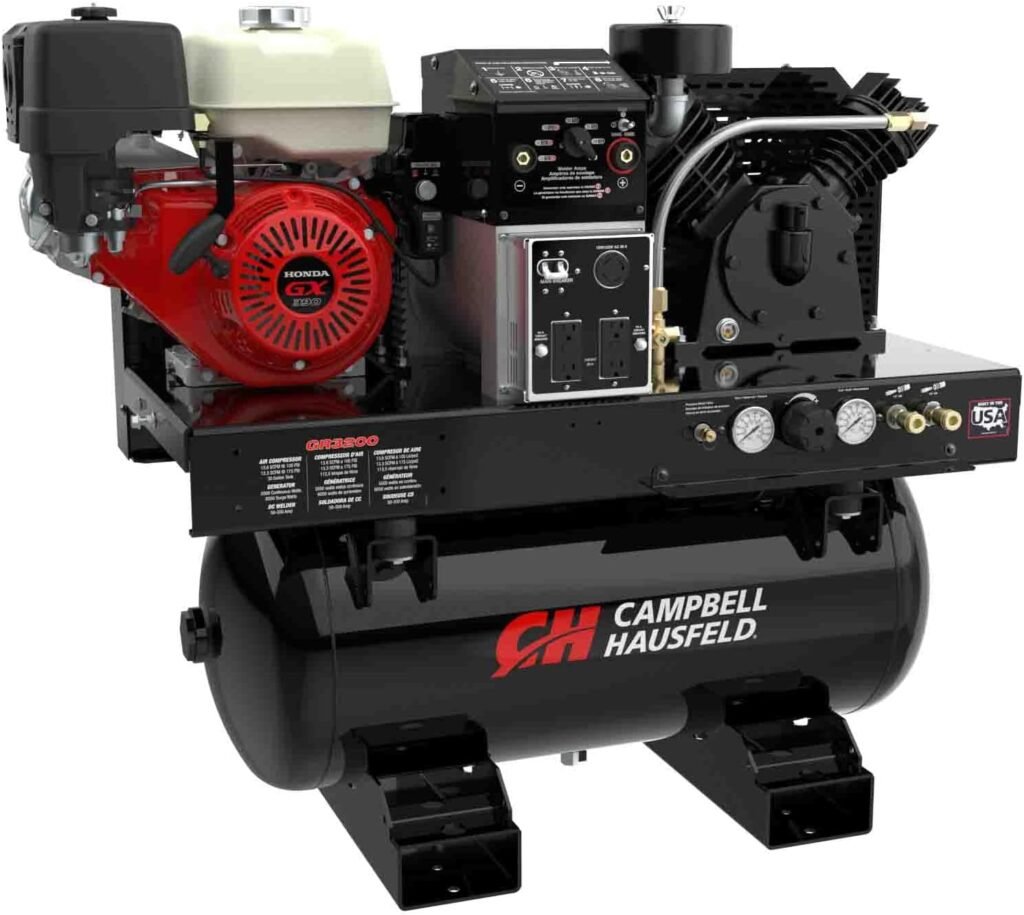
Safety Features and Best Practices
Safety is non-negotiable when we work with high-pressure air, high-current welding, and mobile fuel systems. We look for built-in protections and also outline recommended best practices.
Built-in safety elements
The system typically includes pressure relief valves, pressure switches, and standard generator circuit protection. These protect both equipment and operators from overpressure or electrical overload scenarios.
Recommended operational safety practices
We always ground the generator to appropriate standards, inspect hoses and electrical leads before use, use proper PPE for welding, and secure the unit for transport. Regular inspections of the tank for corrosion and of hoses for wear are critical, especially in truck-mounted systems where vibration accelerates wear.
Setup, Installation, and Truck Mounting
Because this unit is designed for truck mounting, we considered fitment, weight distribution, and service access during our evaluation. Proper installation matters for safety and longevity.
Mounting considerations
We recommend that technicians consider weight distribution in the truck bed and confirm the vehicle’s payload rating before installing a 30-gallon tank and engine-driven system. Vibrations and dynamic loads should be mitigated with sturdy mounts and locking hardware.
Installation steps and tips
When installing, leave room for service access to the engine and compressor components, route fuel lines and electrical conduits neatly, and use vibration isolators where possible. We also suggest using anti-theft hardware and enclosures if the unit will be left unattended in public or remote sites.
Use Cases and Practical Applications
We think this machine is versatile and we outline the situations where it provides the most value. Understanding the right use case helps us justify the investment.
Construction and field repair
For on-site construction and repair, the combo allows us to run air tools, weld small or medium structural components, and power lights or battery chargers with the generator. It saves space in the vehicle and reduces the number of machines we need to bring.
Roadside service and fleet maintenance
For fleet service trucks and roadside rescue teams, having compressed air for impact tools, welding for emergency fixes, and generator power for lights or equipment makes the unit highly valuable. We appreciate the quick response capability this provides when a full shop is not available.
Remote fabrication and off-grid work
On remote job sites, the generator’s 5000W output is particularly useful for powering devices that would otherwise require separate generators. Combined with welding and air tools, it turns a truck into a mobile shop capable of basic fabrication and maintenance away from utilities.
Our Testing Notes and Real-World Observations
We put the machine through a variety of scenarios to see how it performs when we rely on it for a full day of mixed tasks. These notes reflect how the combo handles simultaneous demands and which operational patterns worked best for us.
We ran a sequence of tests that included intermittent air-tool use (impact wrench, pneumatic grinder), welding cycles with stick electrodes and MIG-type tasks where feasible through adapters, and powering a combination of lighting and battery chargers through the 120V outlets. We alternated workloads to approximate a typical multi-crew job site where one person might weld while another uses air tools and a third needs generator power for lighting or auxiliary electronics.
Under mixed loads, the compressor’s 14 CFM at 90 PSI allowed air tools to operate with limited interruption; the tank provided smoothing between compressor cycles, and the system recovered pressure reasonably quickly. When we imposed continuous heavy pneumatic draws, the compressor cycled more frequently, and the engine load increased accordingly. Running the welder simultaneously with high air demand elevated engine RPM and fuel consumption, which is expected in a combined system.
Welding at the higher end of the welder’s range (near the stated 200A rating), we paid close attention to duty cycle and electrode type. The machine handled pulses and heavier stick electrodes for short runs without issue; for longer continuous welds at high amperage we monitored temperature and allowed cool-down periods consistent with recommended duty cycles. We successfully performed structural tack welding, repair fillets, and through-plate welding up to moderately thick sections with the available stick output.
The generator portion powered multiple tools and chargers, but we noted that large motor-starting loads (such as large electric air compressors or high-hp machinery) require staggered startup to avoid voltage dips. The 120V and 240V outlets gave us flexibility, and the ground fault protections and circuit protection worked as intended during overload conditions in our tests.
Noise became noticeable during sustained high-load sessions, so we used hearing protection and scheduled louder activities during times when noise disturbance was less critical. Cooling was adequate under our testing conditions, but we kept an eye on coolant temperatures and airflow around the engine and alternator/generator housing to maintain safe operating parameters.
Maintenance checks after heavy use showed normal wear patterns: filter surfaces accumulated dust and needed replacement/cleaning sooner when operating in dusty environments, belts and hoses retained proper tension but were prime items to check given the vibration in truck-mounted installations, and oil checks before each shift were useful to prevent surprises.
Pros and Cons — Our Balanced View
We like to summarize strengths and limitations clearly so we can make informed procurement decisions.
Pros
- Multifunctional: compressor, generator, and welder in one integrated unit reduces the need for separate machines.
- Reliable engine: the Honda GX390 platform has a strong reputation for longevity and parts availability.
- Practical CFM: 14 CFM at 90 PSI covers most common pneumatic tools used in service and construction work.
- Flexible electrical: includes both 120V and 240V outlets for diverse tool compatibility.
- Mobile-focused: truck-mount design and 30-gallon tank make it suitable for mobile operations.
Cons
- Weight and size: truck mounting requires a vehicle with a suitable payload and secure mount points.
- Noise: conventional engine/generator setups generate significant noise, requiring hearing protection and site planning.
- Combined load management: running all three systems near max simultaneously increases fuel consumption and thermal stress; careful load management is advised.
- Duty cycle limits on welder: heavy, continuous welding at the upper amperage range requires monitoring and occasional downtime for cooling.
Specification Table
We present a table to break down the key specifications for quick reference. This helps us compare and make decisions faster on job sites or during procurement.
| Specification | Value | Notes |
|---|---|---|
| Product | CAMPBELL HAUSFELD 3-in-1 Compressor-Generator-Welder Combo with Honda GX390 Gas Engine, 5000W Generator, 200A Welder, 30 Gallon Tank, 175 PSI, Truck Mount | Full product name for ordering and reference |
| Engine | Honda GX390 | Reliable gasoline engine; known parts availability and serviceability |
| Compressor Output | 14 CFM at 90 PSI | Suitable for most pneumatic tools; tank helps smooth demand |
| Tank Capacity | 30 gallons | Balances runtime and tank size for truck mounting |
| Maximum Tank Pressure | 175 PSI | Useful for higher-pressure tool requirements |
| Welder Rating | 200A (supports up to 180A DC stick welding) | Good for heavy repairs; watch duty cycle at high amperage |
| Generator Output | 5000W | 120V and 240V outlets included for versatile power needs |
| Voltage Outlets | 120V and 240V | Increases compatibility with jobsite tools |
| Intended Use | Truck mount / mobile service / remote job sites | Designed for professionals needing mobility |
| Weight | (Varies by configuration) | Check specific model weight; ensure truck payload compliance |
| Noise Level | Moderate to high under load | Hearing protection recommended on sustained operations |
| Fuel Type | Gasoline (engine) | Standard small engine fuel; plan for refueling logistics |
Comparison to Separate Units and Alternatives
We think about whether to buy a combo unit or separate specialist machines depending on needs and budget. There are trade-offs between convenience and redundancy.
Advantages over separate machines
The primary advantage is consolidation: one machine to mount, maintain, and insure. This reduces the footprint in the truck bed, simplifies deployment, and reduces the need to coordinate multiple power sources or tow multiple units.
When separate units might be better
If our operations require constant, sustained peak welding output or continuously running compressors at very high CFM, a dedicated larger compressor plus a dedicated welding rig and generator might perform better. Redundancy is another factor: if one system fails on a combo, we lose all three capabilities simultaneously, whereas separate units provide backups.
Who Will Benefit Most from This Unit
We see specific user profiles who will get the most value from this integrated system. Understanding the right customer fit helps us recommend it with confidence.
Mobile service providers and fleet mechanics
Truck-mounted technicians who need to arrive at jobs prepared to weld, inflate, and power tools will find this combo especially useful for reducing downtime and increasing versatility.
Construction site supervisors with mobile crews
Teams that frequently move between sites and need a flexible source of compressed air, electrical power, and welding capability will appreciate the all-in-one approach.
Remote maintenance and agricultural use
For farms, ranches, or remote facilities where there’s no reliable grid power, this unit offers a practical way to perform repairs, run tools, and maintain equipment without multiple generators or compressors.
Maintenance Checklist and Recommendations
We like to include a practical checklist so we can keep the machine running reliably over time. Regular attention to a few items extends service life and reduces unexpected failures.
- Pre-shift inspections: check oil, fuel level, coolant (if applicable), and visual condition of hoses and belts.
- Air filter maintenance: clean or replace regularly, especially in dusty operating environments.
- Oil changes: follow the Honda GX390 recommendations for initial and regular oil changes; check oil before each use.
- Belt and coupling checks: ensure tension and alignment; truck-mounted vibration can affect belts and fasteners.
- Tank inspection: visually inspect the 30-gallon tank for corrosion or damage, especially in humid or coastal areas.
- Cooling and ventilation: ensure generator and engine housings have proper airflow and are free from debris.
- Electrical connections: inspect outlets and welder leads for wear and secure connections.
We recommend creating a logbook for hours used and maintenance performed so that we can spot trends and anticipate service needs.
Troubleshooting Common Issues
Having a quick troubleshooting guide helps us minimize downtime when something goes wrong. These are practical checks we run before calling for service.
- Engine won’t start: check fuel, choke position, spark plug, and battery (if electric start).
- Low compressor output: inspect intake filter, check for leaks in hoses or fittings, and confirm belt condition.
- Generator undervoltage or trip: verify load distribution, check for loose connections, and examine circuit protection for tripped breakers.
- Welding instability: ensure clean ground clamp contact, check electrode type and size, and confirm welder settings match electrode requirements.
Final Thoughts and Buying Considerations
We weigh the pros and cons and recommend how to approach purchase decisions. The combo unit is compelling for a variety of mobile and field-based trades, but it requires thoughtful installation and operational planning.
Overall, this CAMPBELL HAUSFELD 3-in-1 combo is a strong contender for teams needing integrated power, air, and welding capabilities in a truck-mounted format. It performs well in mixed-use scenarios and leverages a trustworthy Honda engine platform. We advise careful attention to truck payload, noise management, and duty-cycle planning if heavy or prolonged welding is part of normal operations.
If our work involves frequent site-to-site mobility, combined tasks, and the need for quick setup without hauling separate machines, this unit likely represents a cost-effective and practical solution. For jobs requiring continuous top-end welding output or where redundancy is essential, pairing separate specialist units might still be preferable.
We hope these observations help in deciding whether this combo meets our operational needs and budget priorities.

Disclosure: As an Amazon Associate, I earn from qualifying purchases.