Have we ever wished we could bring serious compressed air power anywhere we go, without being tied to an outlet or stuck in one corner of the shop?
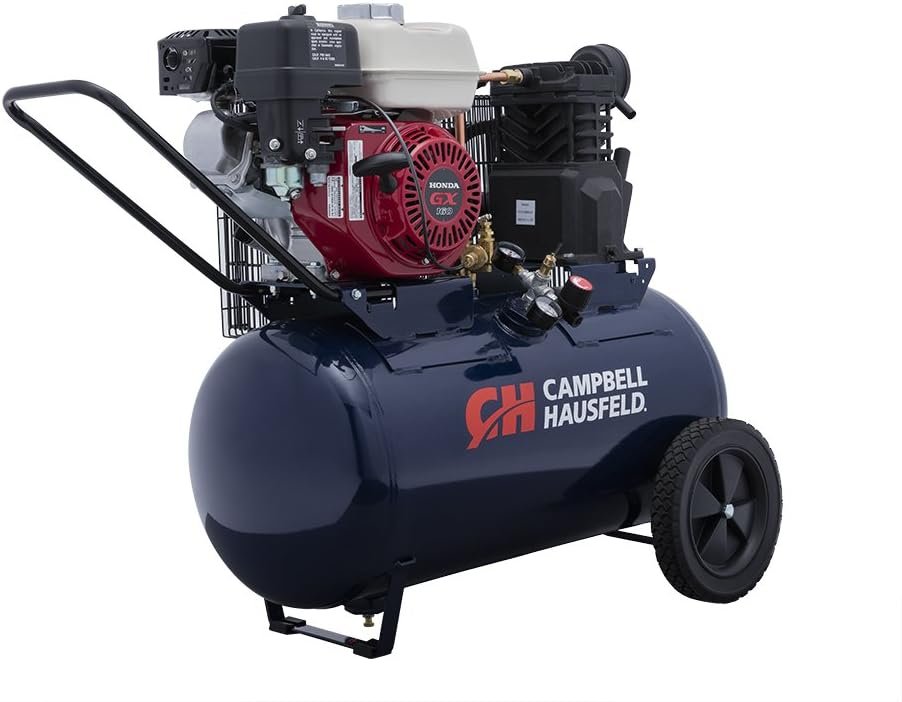

What Is the CAMPBELL HAUSFELD 20 Gallon Gas Powered Air Compressor?
This gas-powered air compressor is built for those of us who need on-the-go performance with real muscle behind it. With a 20 gallon tank, a 5.5 HP GX160 Honda engine, and up to 135 max PSI, it’s clearly aimed at serious DIY users and professionals who work on job sites, farms, and remote locations.
Instead of being a small, light-duty unit just for inflating tires, this model is designed for powering air tools, handling heavier tasks, and traveling across different terrains thanks to its pneumatic wheels and handle.
Key Specifications at a Glance
Sometimes it helps to see the main numbers in one place. We like using a quick breakdown so we can easily compare with other options we might be considering.
| Feature | Specification / Description |
|---|---|
| Brand & Model | CAMPBELL HAUSFELD 20 Gallon Gas Powered Air Compressor |
| Power Source | Gas (GX160 Honda engine) |
| Engine Power | 5.5 HP |
| Max Pressure | 135 PSI |
| Air Delivery (CFM) | 10.2 CFM at 90 PSI |
| Tank Capacity | 20 gallon |
| Compressor Type | Single stage, horizontal |
| Tank Orientation | Horizontal |
| Mobility Features | Pneumatic wheels and handle |
| Guarding | Fully enclosed metal belt guard |
| Intended Use | Portable, on-the-go, job sites, workshops, heavy-duty tasks |
From this table, we can already see that this unit is not a light toy. The 10.2 CFM at 90 PSI and 20 gallon tank place it squarely in the category of serious portable compressors.
Performance and Power: 135 Max PSI and 10.2 CFM at 90 PSI
When we look at performance, two numbers really matter: PSI and CFM. With this compressor, we get up to 135 PSI, which is more than enough for most air tools we’d run on a job site or in a garage. The 10.2 CFM at 90 PSI is where the real value shows up.
What 135 PSI and 10.2 CFM Mean for Real-World Use
We can talk about numbers all day, but what we really want to know is what tools we can run and how effectively this compressor keeps up.
At 10.2 CFM at 90 PSI, we’re in a range that can support:
- Impact wrenches
- Ratchets
- Framing nailers and roofing nailers
- Finish nailers and staplers
- Air chisels
- Some smaller paint guns and spray equipment
- Blow guns and tire inflators
For continuous, very air-hungry tools (like large sanders or grinders), we might need to pause occasionally and let the compressor catch up, but for typical construction, mechanical, and maintenance work, it offers solid, practical performance.
Single Stage Operation and What That Means for Us
This is a single stage air compressor, which is common in portable job-site compressors. For most of us, that’s perfectly fine, especially if we’re running standard tools that operate in the 90–120 PSI range.
Single stage means:
- Reasonable recovery times
- Fewer parts compared with more complex multi-stage units
- Straightforward maintenance
- Great suitability for general-purpose work
It’s clearly optimized for practicality and portability, not ultra-high industrial pressures.
The GX160 Honda Engine: Reliable Power Source
One thing that stands out in the description is the GX160 Honda engine. This engine line has a strong reputation for durability, reliability, and easy starting, which is crucial when we’re relying on gas power instead of plugging into an outlet.
Why a Honda GX160 Matters
We often see generic engines in cheaper compressors, and that can be a gamble over the long haul. With a Honda GX160, we’re getting:
- Strong brand reputation for small engines
- Consistent power output
- Good parts availability and service support
- Typically easier starting, especially in varying weather
For those of us working on remote sites, farms, or large properties, the last thing we want is an engine that refuses to start on a cold morning. A name-brand engine like this gives us more confidence.
Gas Power vs. Electric: Who Is This For?
Gas power is not for everyone, but for the right kind of user, it makes all the difference. This compressor is ideal for us if:
- We often work where there’s no electrical outlet
- We want to avoid running long extension cords and risking voltage drop
- We move between job sites frequently
- We need strong CFM output without relying on shop power
On the other hand, if we’re in a small garage with reliable electricity and neighbors close by, we might prefer an electric compressor for quieter operation and zero engine exhaust. Gas power shines when we prioritize mobility and independence from grid power.

20 Gallon Tank: Balancing Capacity and Portability
The 20 gallon capacity sits in a nice middle ground. It’s significantly more than the tiny 6–8 gallon portable units, but not as massive and immobile as 60 or 80 gallon stationary shop compressors.
Why 20 Gallons Can Be the Sweet Spot
With 20 gallons, we get:
- Enough air reserve to handle bursts of tool usage
- Fewer compressor cycles compared with smaller tanks
- More stable pressure for longer-running jobs
- Manageable overall weight for a “portable” gas-powered unit
For tasks like framing, roofing, auto repair, construction punch work, and farm maintenance, 20 gallons gives us workable air storage without turning the compressor into a stationary beast.
Heavy-Duty Tasks Without Going Overboard
This size and capacity fit users who are serious about their work but don’t necessarily want to install a permanent shop system. We might be:
- Contractors with changing job locations
- Farmers needing a compressor in the field
- Mobile mechanics or service technicians
- DIY enthusiasts working on large home or vehicle projects
We get a heavy-duty feel without fully giving up portability and on-the-go flexibility.
Horizontal Design: Stability and Usability
The horizontal layout of this compressor is more than just a design choice; it directly affects how we use and move the unit.
Advantages of a Horizontal Air Compressor
A horizontal compressor like this typically offers:
- Lower center of gravity for better stability during transport and operation
- Easier storage under shelves or in the corner of a garage
- A familiar form factor for those used to wheeled job-site compressors
Because the tank lies horizontally, we can roll it around more comfortably. This can also reduce tipping risk when we’re moving across uneven ground.
Single Stage, Horizontal, and Portable: A Practical Combination
The single stage mechanism combined with a horizontal tank is clearly meant for practical, frequent use, not specialty, ultra-high-pressure industrial work. For us, that means:
- It’s designed to be moved often
- It’s built to live in real work environments like construction sites and workshops
- The balance and wheel placement work together to make transport more manageable
If we’ve used small “pancake” compressors in the past, this unit will feel like stepping up into more professional territory while still remaining familiar in shape and handling.
Portability: Pneumatic Wheels and Handle
Portability can make or break our experience with a gas-powered compressor, especially when the tank size and engine add plenty of weight. This model addresses that with pneumatic wheels and an integrated handle.
Moving Across Different Terrains
The pneumatic wheels are designed to roll over:
- Gravel and dirt on job sites
- Grass or uneven ground around a farm or property
- Rough concrete or warehouse floors
Solid plastic wheels can get hung up or make movement feel harsh and jarring, but pneumatic tires absorb some of the bumps and make it easier to pull the compressor without feeling like we’re dragging dead weight.
Why the Handle Matters More Than We Might Think
The handle provides control and leverage, letting us tilt and roll the compressor much like a hand truck. Together with the wheels, we can:
- Load and unload from trailers or trucks more easily
- Move it between work areas on a larger property
- Park it where it’s convenient, rather than where it’s easiest to leave it
For anyone who regularly relocates tools, this kind of mobility can be just as important as PSI and CFM ratings.
Safety and Durability: Fully Enclosed Metal Belt Guard
When we’re dealing with a belt-driven compressor and a gas engine, safety is not optional. The fully enclosed metal belt guard is a standout detail in that regard.
Why a Fully Enclosed Guard Matters
We sometimes see partial guards or light plastic covers on cheaper units, which can leave moving parts more exposed. A fully enclosed metal guard offers:
- Protection from accidental contact with the belt and pulleys
- Reduced risk of loose clothing or debris getting caught
- Added durability if something bumps into the guard during transport
If we’re working in busy job sites or around helpers, that extra protection can help prevent accidents.
Longer-Term Reliability
A solid metal guard also speaks to build quality. It helps shield moving components from:
- Dust, dirt, and job-site debris
- Impacts from tools, lumber, or other equipment
- Minor bumps during loading and unloading
All of this can extend the life of the compressor and reduce the odds of unexpected mechanical damage.
Efficiency and Air Delivery: Matching Tools to 10.2 CFM at 90 PSI
Efficiency isn’t just about raw horsepower; it’s about how effectively air is delivered to our tools. This unit’s rated 10.2 CFM at 90 PSI gives us a clear idea of what kind of workload it can handle.
Typical Tools This Compressor Can Support
We can confidently use this compressor to power:
- 1/2″ impact wrenches for lug nuts and heavy fasteners
- Framing nailers and roofing nailers for structural and exterior work
- Finish nailers and brad nailers for trim and cabinetry
- Air ratchets for under-hood and under-car access
- Blow guns for cleaning parts and work surfaces
- Tire and equipment inflators
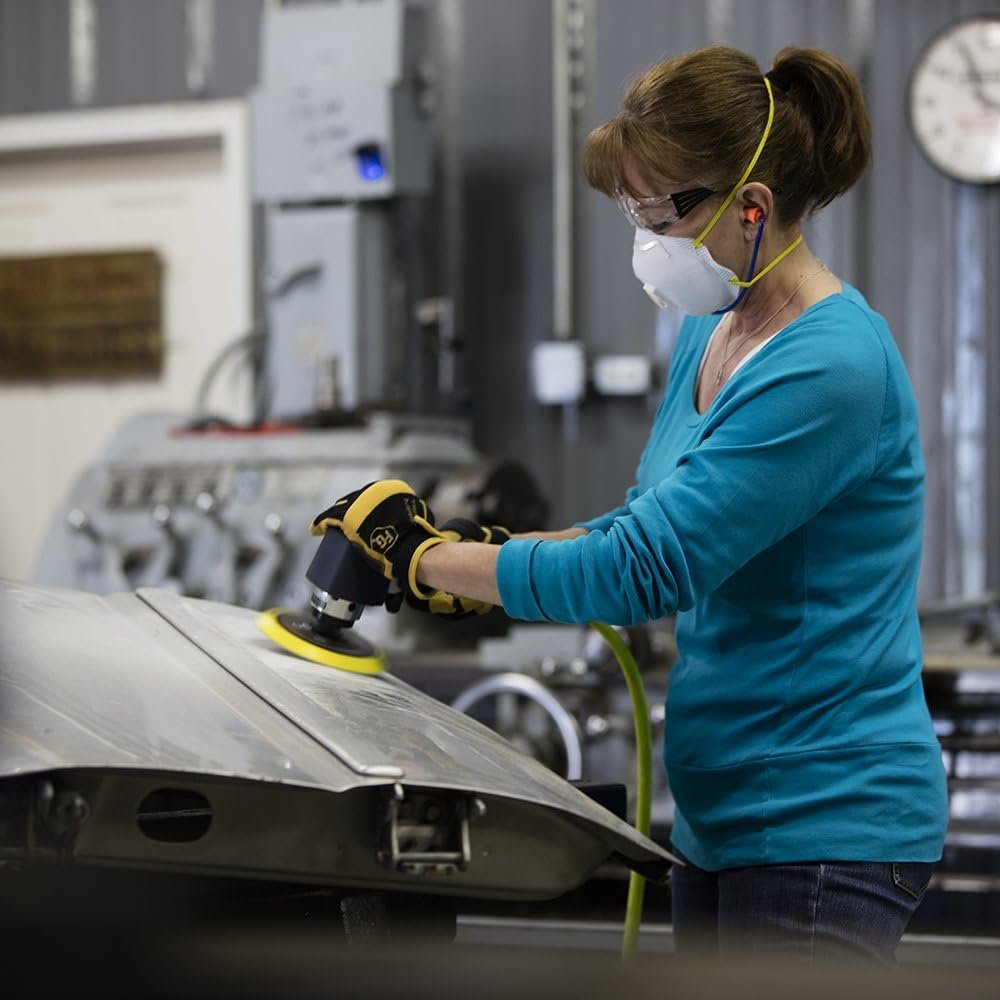
For high-demand tools like large DA sanders or big grinders, we should keep an eye on recovery times. It can do intermittent use, but continuous heavy use might outpace the compressor’s ability to maintain maximum output.
Working in Bursts vs. Continuous Operation
In real-world use, most of us don’t run tools absolutely constantly. We work in bursts—drive some nails, pause to place materials; break loose some bolts, then reposition; spray in short passes, then check coverage. The 20 gallon tank and 10.2 CFM support this kind of on-and-off workflow extremely well.
If we plan on running highly demanding tools nonstop for extended periods, that’s when a large stationary shop compressor might be a better fit. For most on-the-go tasks, this model offers a strong balance between storage, delivery, and portability.
Use Cases: Where This Compressor Shines
To decide if this compressor is right for us, it helps to picture how and where we’d actually use it. Different environments bring out different strengths of the machine.
On Construction and Remodeling Job Sites
For contractors or serious home renovators, this compressor fits naturally into:
- Framing and rough carpentry work
- Deck building and structural repairs
- Roofing projects using air nailers
- Siding installation and exterior trim
We can set it up at the job site, route air hoses where needed, and not worry about having a power pole or generator nearby just to power the compressor itself.
On Farms, Ranches, and Large Properties
On larger properties, we often need to maintain:
- Tractors, ATVs, and other equipment
- Fencing projects requiring nailers or staplers
- Outbuildings where power might be limited
This gas-powered unit lets us bring the air supply directly to the equipment, whether it’s parked at the far edge of a field or in a shed without outlets.
Mobile Mechanics and Service Technicians
If we’re running a mobile repair or maintenance service, this compressor gives us a portable source of air that doesn’t depend on the client’s facilities. We can:
- Change tires and use impact wrenches on-site
- Perform basic mechanical repairs
- Use air blowers for cleaning parts or radiators
The combination of gas power, 20 gallon capacity, and 10.2 CFM gives us more capability than typical small portable electric units.
Ease of Use: Everyday Experience
Beyond specs and capabilities, we should think about what day-to-day use feels like. That includes starting, controlling, and maintaining the compressor.
Starting and Operating the Unit
With the GX160 Honda engine, we can generally expect:
- Reliable starting, even with regular on/off cycles during the workday
- Straightforward throttle and control layout
- Smooth and consistent power delivery
We’ll still need to follow normal gas engine practices: checking oil, using fresh fuel, and storing properly during long breaks between uses.
Basic Maintenance Considerations
Like any engine-driven compressor, this unit will ask for routine attention, such as:
- Engine oil changes
- Air filter checks and replacements
- Periodic inspection of belts and fittings
- Draining moisture from the 20 gallon tank
None of this is unusual, but we should be prepared to treat it as a piece of serious equipment rather than a plug-and-play appliance.
Pros and Cons: Honest Assessment
We find it useful to lay out strengths and trade-offs clearly so we can see if they match our priorities.
What We’re Likely to Appreciate
- Gas-powered independence: No need for electrical outlets or long extension cords.
- Strong performance: 135 max PSI and 10.2 CFM at 90 PSI give us enough power for most common air tools.
- Reliable engine: The Honda GX160 is a big plus for long-term reliability.
- Good tank size: 20 gallons strikes a balance between capacity and portability.
- Mobility features: Pneumatic wheels and handle make job-site movement more practical.
- Safety-first design: Fully enclosed metal belt guard offers peace of mind and durability.
What Might Be Drawbacks for Some Users
- Weight and bulk: A 20 gallon gas-powered unit is not something we casually carry; we roll it.
- Noise: Gas engines and compressors are loud; this is not a whisper-quiet machine.
- Exhaust and ventilation: We need to use it outdoors or in very well-ventilated areas.
- Maintenance: Gas engines and belt-driven compressors require more maintenance than small electric units.
- Overkill for light users: If we only inflate tires and run a brad nailer twice a year, it may be more compressor than we need.
If we see these potential drawbacks as acceptable trade-offs for the power and flexibility we gain, then this compressor begins to look like a strong match.
Comparing to Smaller Electric Compressors
Many of us might already own a small electric compressor, so we naturally wonder whether this gas-powered 20 gallon unit is an upgrade, a replacement, or simply a different tool for different jobs.
When This Unit Outperforms Smaller Electric Models
We’ll feel the difference most clearly when:
- We’re far from power outlets
- We use multiple air tools in a day
- We work on demanding projects like framing, roofing, or auto repair
- We need longer tool runtime before waiting for the compressor to catch up
Smaller electric tanks (like 6–8 gallons) recover more often and can struggle to keep up with higher CFM tools. The 20 gallon tank and higher CFM rating reduce those slowdowns.
When a Small Electric Compressor Still Makes Sense
We might still prefer a small electric compressor if:
- We work mostly indoors in a small garage or basement
- We have close neighbors and care about noise
- Our use is intermittent and light-duty
- We prefer plug-in simplicity over engine maintenance
In many cases, the best solution is not either/or, but both. A small electric unit for indoor, quiet, light work—and this gas-powered unit for field jobs, heavy tasks, and remote locations.
Who This Compressor Is Best Suited For
We can narrow this down to a few key user profiles. If we see ourselves in any of these categories, this compressor is worth strong consideration.
Professional and Semi-Professional Users
- General contractors
- Framers and roofers
- Mobile mechanics
- Farmers and ranchers
- Maintenance teams for large facilities
For these users, the combination of Honda engine, 20 gallon tank, 10.2 CFM at 90 PSI, and mobility features provides a practical, work-ready solution.
Serious DIY and Enthusiast Users
If we:
- Restore vehicles as a hobby
- Take on large home improvement projects
- Regularly help friends and family with construction or repairs
- Want a more capable compressor that can grow with our tool collection
Then this compressor gives us room to expand into more demanding air tools and tackle bigger projects with confidence.
Those Who Might Want to Look Elsewhere
We might consider a different type of compressor if:
- Our work is mostly light and infrequent
- We live in an apartment or have very limited outdoor space
- We can’t easily deal with gas storage, engine noise, and ventilation needs
In those situations, a compact electric model may be a more appropriate match.
Practical Tips for Getting the Most Out of This Compressor
Once we decide that this compressor is right for us, a few habits can help us get the best performance and longest life out of it.
Use Proper Hoses and Fittings
To keep the 10.2 CFM at 90 PSI flowing effectively:
- Use quality air hoses of appropriate diameter (often 3/8″ for higher-demand tools)
- Avoid running extremely long hoses if we don’t need to
- Make sure fittings and couplers are not restrictive or leaking
Good air plumbing can noticeably improve tool performance.
Maintain Safe and Efficient Operation
For safe and efficient use, we should:
- Always operate the compressor in well-ventilated spaces
- Wear hearing protection when working near the compressor
- Regularly drain condensate from the 20 gallon tank to prevent rust
- Check belts, guards, and connections periodically
Treating it as a serious, professional tool, not just another gadget, will pay off in reliability.
Our Overall Impression
Looking at the CAMPBELL HAUSFELD 20 Gallon Gas Powered Air Compressor as a whole, we see a unit built for people who truly need portable, powerful compressed air. It’s not about convenience in a tiny package; it’s about bringing real job-site performance wherever we go.
We get:
- A robust Honda GX160 engine for dependable power
- 135 max PSI and 10.2 CFM at 90 PSI to handle real air tools
- A 20 gallon horizontal tank that balances storage and mobility
- Safety-focused features like a fully enclosed metal belt guard
- Pneumatic wheels and a handle for movement across tough terrain
For professionals, mobile workers, and serious DIY enthusiasts, it offers an appealing mix of strength, reliability, and portability. If we regularly find ourselves wishing we had “shop-level” air somewhere out in the field, this compressor is designed to make that wish a daily reality.

Disclosure: As an Amazon Associate, I earn from qualifying purchases.