Have we ever wished our air compressor could actually live in the same room with us without sounding like a jet engine?

Why We Chose the California Air Tools 8010AD
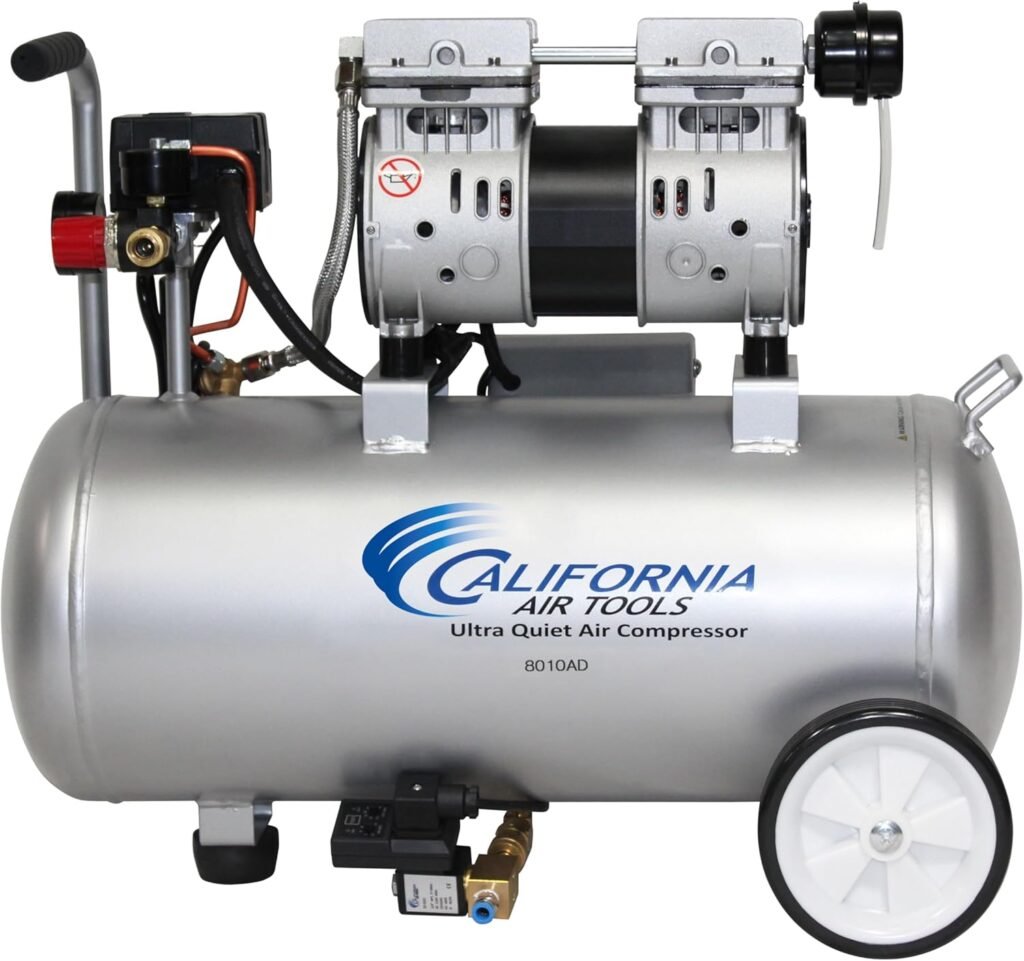
When we started looking for a new compressor, our checklist was pretty clear: quiet, low-maintenance, portable, and powerful enough to handle everyday tasks without constant cycling. The California Air Tools 8010AD 1.0 HP Ultra Quiet and Oil-Free Air Compressor, 8 Gallon Steel Tank, Lightweight with Wheels, 60 dBA Noise Level, with Automatic Drain Valve kept popping up, so we decided to take a closer look.
What we found is a well-balanced machine that tries to solve some of the biggest annoyances of traditional compressors: noise, weight, maintenance, and downtime. It is not a heavy-duty shop monster, but for most household, DIY, and light professional tasks, it hits a very comfortable sweet spot.
Core Specs at a Glance
To make everything easier to compare, we pulled the most important specs into a simple table. This helped us understand where this unit fits in compared to other compressors we have used.
| Feature | Specification |
|---|---|
| Model | California Air Tools 8010AD |
| Motor Power | 1.0 HP |
| Pump Type | Oil-free Dual Piston Pump System |
| Noise Level | 60 dBA |
| Tank Capacity | 8 gallon steel tank |
| Airflow (CFM @ 40 PSI) | 3.10 CFM |
| Airflow (CFM @ 90 PSI) | 2.20 CFM |
| Max Pressure | 120 PSI |
| Pump Life Expectancy | Over 3,000 hours before wear (approximate) |
| RPM | 1680 RPM |
| Tank Fill Time (Empty to Full) | About 165 seconds |
| Recovery (90 to 120 PSI) | About 60 seconds |
| Weight | Approx. 48 lbs |
| Portability | Wheel kit and handle included |
| Drain Type | Automatic drain valve |
| Dimensions | 26″ L x 14″ W x 23″ H |
This snapshot gives us a sense of the balance between quiet operation, portability, and performance that this compressor aims for. It is not a high-CFM framing compressor, but it is far beyond the little pancake units in usability and comfort.
Noise Level: Is 60 dBA Really That Quiet?
Working Next to the Compressor Without Losing Our Mind
The standout feature of the 8010AD is its 60 dBA noise level. To put that into context, 60 dBA is roughly equivalent to a normal conversation. That means we can run the compressor in the same garage or workshop and still be able to talk without shouting, listen to music, or hear a podcast.
In actual use, the sound is more of a soft hum than the harsh, rattling thunder that many oil-based compressors produce. We notice a significant difference when we use air tools that cycle the compressor frequently; the reduced noise adds up over hours of work and leaves us less fatigued and stressed.
Why Quiet Matters More Than We Think
A quieter compressor changes how and where we are willing to work. Because this unit is so quiet, we feel more comfortable using it:
- In a basement workshop
- In a shared garage in an apartment or townhouse
- Indoors for trim work or finishing (when appropriate and ventilated)
- In noise-sensitive neighborhoods or during early/late hours
We are not constantly planning around the noise, and that alone makes this compressor feel like a major upgrade in daily usability.
Power and Performance: What Can We Actually Run?
CFM and PSI in Real-World Terms
On paper, the 8010AD produces 3.10 CFM at 40 PSI and 2.20 CFM at 90 PSI, with a maximum pressure of 120 PSI. Those numbers tell us it is not designed for large continuous-demand tools, but it is very capable for intermittent use and many common applications.
In real terms, we find it works well for:
- Inflation (car tires, bike tires, sports balls, inflatables)
- Finish and brad nailers
- Staplers and light upholstery tools
- Airbrush work at moderate duty cycles
- Blowing dust off workpieces and tools
- Light-duty impact wrenches or ratchets (short bursts)
- Caulking and sealing guns that are air-powered
- Occasional small spray projects (with the right gun and technique)
Where it starts to reach its limits is with high-CFM continuous tools like sanders, grinders, or paint sprayers used for large surfaces. We can still use it for small tasks, but we will notice the compressor running more frequently and possibly needing to pause to let it recover.
Tank Size and Cycle Behavior
The 8 gallon steel tank sits in a very useful middle ground. It holds more air than tiny 1–3 gallon units, so we do not feel like it is constantly cycling on and off. At the same time, it is small enough that it fills quickly and keeps the unit relatively compact and portable.
With the tank filling from empty in about 165 seconds and recovering from 90 PSI to 120 PSI in about 60 seconds, we rarely feel like we are waiting around. For nailers and general shop tasks, the recovery time fits very comfortably into a normal working rhythm.

Oil-Free Dual Piston Pump: What That Means for Us
Maintenance and Reliability Advantages
The oil-free Dual Piston Pump System is another major selling point for this compressor. Traditional oil-lubricated units require periodic oil checks, oil changes, and can sometimes leak or mist oil into the air line. With this pump design:
- We avoid oil changes entirely.
- We can store and use the unit on various surfaces without worrying about oil spills.
- The air output remains cleaner, which is especially useful for painting, finishing, and air tools that are sensitive to contaminants.
California Air Tools rates this pump for over 3,000 hours before wear. For most home users and many light pros, that translates to years of use before we have to think about pump-related issues. It is not indestructible, but we get a strong sense of long-term value.
Versatility in Different Environments
Because the pump is oil-free, it performs reliably in a wider range of temperatures and orientations. We can wheel it around job sites, up and down driveways, or set it in slightly uneven areas without worrying that oil will shift and cause lubrication problems.
We still want to follow basic guidelines (like not operating it at extreme temperatures well outside the manufacturer’s recommendations), but overall it is more forgiving than a more finicky oil-based design.
Automatic Drain Valve: One Less Chore to Remember
Why Draining the Tank Matters
Compressed air naturally carries moisture, which condenses inside the tank. Left alone, that moisture leads to rust, reduced tank life, and water in our air lines. Normally, we must remember to manually open a valve at the bottom of the tank and bleed that moisture regularly.
The 8010AD includes an automatic drain valve, which is a surprisingly helpful feature. Instead of relying on us to remember to open a manual drain after each use, this system handles much of that routine task.
How It Improves Daily Use
We appreciate the automatic drain from two angles:
-
Longevity and safety
Regular draining helps reduce internal corrosion, extending the life of the tank and maintaining safety over time. It is an invisible benefit, but an important one. -
Convenience
We have all had days where we forget to drain the tank, especially after a long job. The automatic system helps prevent that common oversight. It does not mean we never check or maintain the unit, but the burden is lower.
We still recommend periodically verifying that the drain is functioning properly and visually inspecting the tank and connections as part of responsible ownership.
Portability: Lightweight Design with Wheels
Handling, Moving, and Storing the Unit
At approximately 48 lbs, this compressor is much lighter than many other steel tank units in its class. The weight is paired with:
- A wheel kit that allows us to roll it around easily.
- A handle that makes steering and lifting more manageable.
We find this combination especially helpful in these scenarios:
- Moving from garage to driveway for car maintenance
- Shifting between different rooms or floors in a house (with some lifting help if stairs are involved)
- Rolling between workstations in a small shop
- Transporting in a vehicle to remote job sites
We would not call it feather-light, but it is absolutely manageable for most adults, especially considering the 8 gallon capacity.
Compact Size for Smaller Workspaces
With dimensions of 26″ L x 14″ W x 23″ H, the 8010AD fits comfortably into tight corners, under workbenches, or beside shelving units. For those of us with limited garage or workshop space, that modest footprint is an advantage.
When not in use, we can tuck it away, coil the hose, and it will not dominate the area. That makes it more likely we keep it handy instead of burying it behind bigger equipment.
Setup and Everyday Use
Getting Up and Running Quickly
Setup is straightforward, even if we are not especially mechanical. Once we unbox the compressor, our usual steps look like this:
- Attach the wheels and handle if they are not preinstalled.
- Place the unit on a flat, stable surface.
- Plug it into a suitable standard household outlet (check the manual for exact electrical requirements).
- Connect our air hose and any inline moisture or filter systems we prefer.
- Turn it on and let the tank pressurize to the maximum 120 PSI.
From empty, we reach full pressure in about 165 seconds. Once it hits the cut-out pressure, the motor shuts off until we use enough air to trigger it again.
Controls and User Interface
The layout is intuitive enough that we can operate it without much thought:
- A pressure switch or power button to turn it on and off
- Gauges to show tank pressure and regulated outlet pressure
- A regulator knob to adjust the output PSI for different tools or tasks
- Quick-connect fittings (depending on our hose and accessory choice)
After a few uses, we barely think about the controls. We just set the desired pressure, glance at the gauges occasionally, and work.
Typical Use Cases Where This Compressor Shines
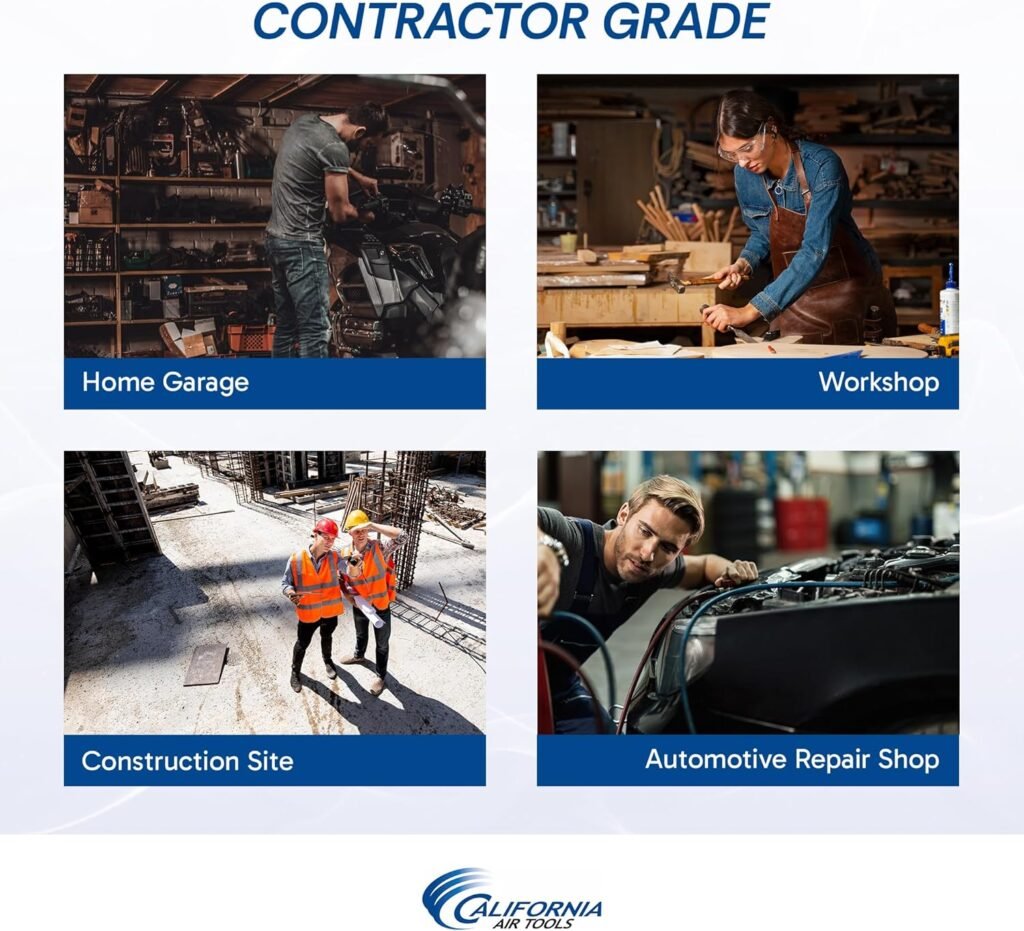
Home and DIY Projects
For most household tasks, this compressor feels overqualified in a good way. We have used similar units for:
- Inflating vehicle and bicycle tires
- Blowing out leaves and debris from crevices in outdoor equipment
- Powering a brad nailer for trim and molding projects
- Driving a stapler for upholstery repairs
- Cleaning sawdust off tools and benches
- Blowing out water lines (with correct adapters and caution)
Because it is quiet and easy to roll around, we do not hesitate to bring it out, which means we actually use it more often instead of reaching for manual pumps or other workarounds.
Light Professional and Contractor Use
For trades like carpentry, finish work, and handyman services, the 8010AD provides a great balance of portability and usability. It works particularly well for:
- Finish and trim carpentry in existing homes (where noise is a concern)
- Punch list work and door/window adjustments
- Light roofing touch-ups with compatible nailers (within duty limits)
- On-site repairs needing a compact, low-noise compressor
We still need to match our tool choice and workflow to the compressor’s air output. High-demand framing nailers or multiple users working simultaneously might push its limits. For solo or small-team finish work, however, it is an excellent fit.
Hobby and Craft Areas
We can also see this unit fitting nicely in hobbyist spaces such as:
- Small woodworking shops
- Model building and airbrushing tables
- Makerspaces and community workshops
- Home garages set up for weekend projects
The quietness is key here; it is much easier to share a space without the compressor dominating the environment.
Pros and Cons: A Balanced Look
What We Really Like
We find it helpful to summarize the strengths clearly:
-
Very low noise (60 dBA)
Comfortable to use indoors and around other people, without hearing protection in many scenarios. -
Oil-free dual piston pump
Minimal maintenance, no oil changes, cleaner air output. -
Automatic drain valve
Reduces a tedious but necessary maintenance task and helps fight corrosion. -
Decent tank capacity (8 gallons)
A good compromise between usable air volume and portability. -
Reasonable CFM for common tasks
3.10 CFM at 40 PSI and 2.20 CFM at 90 PSI is solid for finish work, inflation, and many shop uses. -
Lightweight and portable (about 48 lbs)
Wheels and handle make movement easy in a shop, garage, or job site. -
Fast fill and recovery times
Full tank in about 165 seconds and 90–120 PSI recovery in about 60 seconds keeps us working.
Where It May Not Be Ideal
To keep expectations realistic, we should also consider where this unit might fall short:
-
Not for heavy continuous industrial use
If we need to run high-demand tools (grinders, sanders, big paint sprayers) for long periods, we will likely overload this compressor’s capacity. -
Limited to 120 PSI max
Suitable for many tools, but some specialized equipment prefers higher pressure. -
Single-user focus
Running multiple air tools at once can tax the airflow and increase cycle frequency.
Understanding these limitations helps us decide whether this compressor matches our specific tasks or if we should scale up to a larger, more powerful unit.
Comparing Quiet Performance and Traditional Units
Our Experience with Typical Compressors
Most of us are familiar with the standard, louder compressors that rattle the walls when they kick on. They often run in the 80–90+ dBA range, which is several times louder than 60 dBA in perceived volume.
With those compressors, we often end up:
- Moving them outside or into another room
- Wearing hearing protection regularly
- Pausing conversations whenever they cycle
- Scheduling noisy tasks to avoid disturbing others
How the 8010AD Changes the Working Environment
With the California Air Tools 8010AD, our routine adjusts in several subtle but important ways:
- We keep the compressor closer to our actual work area instead of tucking it away.
- We can use it in more shared or indoor spaces with much less hesitation.
- The constant start-stop cycle noise is no longer jarring.
These changes are hard to measure on a spec sheet, but they make a real difference in how pleasant it is to work with air tools for extended periods.
Durability, Build Quality, and Long-Term Use
Steel Tank and Robust Construction
The steel tank gives this compressor a solid, grounded feel. While steel can rust without proper care, the combination of:
- Automatic draining
- Reasonable maintenance habits
- Indoor storage when possible
should keep the tank in good shape for years. The frame and fittings appear purposeful and intended for real use, not just occasional decoration in a garage.
Pump Longevity and Wear
With a claimed 3,000+ hour life before wear, the dual piston system is positioned as a long-lasting component. We do not expect it to be maintenance-free forever, but compared to cheaper single-piston or poorly designed pumps, it offers confidence for steady, regular use.
We still suggest:
- Checking fittings periodically for leaks
- Ensuring adequate ventilation around the unit
- Keeping the compressor relatively clean and free from heavy dust buildup
Treating it like a proper tool, not a disposable gadget, will reward us with a longer service life.
Power Requirements and Electrical Considerations
Using Standard Outlets
One of the advantages of a 1.0 HP motor operating at 1680 RPM is that it usually runs on a typical household circuit without special wiring. We simply plug it into a standard outlet (following the user manual’s guidance) and use it.
We do pay attention to:
- Avoiding sharing the same circuit with other heavy-draw devices (heaters, large power tools) when possible.
- Using appropriately rated extension cords if we must, and keeping them as short as realistically possible.
Doing this helps reduce voltage drop and keeps the motor running efficiently and safely.
Motor Speed and Wear
The relatively low RPM (1680) compared to many high-speed compressors reduces both noise and wear. Slower rotation typically means less friction and heat, which contributes to the extended life expectancy and smoother operation.
Comfort, Safety, and Usability Details
Working Comfort Over Long Sessions
Because this compressor is quiet and steady, we notice a few comfort benefits during long work days:
- Less ear fatigue and overall stress from noise
- Better ability to focus on measurements, cuts, and fine details
- Easier communication with others in the workspace
We still may choose hearing protection depending on the environment and total noise sources, but the compressor itself is much less of an issue than traditional units.
Safety Considerations
Even with a quieter and more user-friendly design, it is still a high-pressure device, so we keep safety in mind:
- We read and follow the manufacturer’s instructions.
- We avoid exceeding rated pressures for tools and hoses.
- We keep children and pets away while in operation.
- We periodically check hoses and fittings for leaks or visible damage.
The automatic drain valve helps reduce one major risk factor (internal corrosion), but safe handling and storage are still crucial.
Who This Compressor Is Best For
Ideal Users and Scenarios
From our perspective, the California Air Tools 8010AD is best suited for:
- Homeowners who want a reliable, quiet compressor for tires, small projects, and occasional repairs.
- DIY enthusiasts with a small workshop who frequently use nailers, blow-off tools, and light air tools.
- Finish carpenters and trim specialists working in occupied homes where noise is a concern.
- Hobbyists and makers using airbrushes, finish nailers, and light pneumatic tools in shared or indoor spaces.
If we recognize our needs in those categories, this model offers an appealing blend of capability and comfort.
Who Might Need a Different Option
On the other hand, we might want to consider a larger or more powerful compressor if we:
- Run multiple air tools at once on a regular basis.
- Need to power continuous-duty, high-CFM tools like DA sanders, body-shop tools, or large spray guns for extended periods.
- Work in a large industrial shop with many users and heavy workloads.
In those situations, we may need a larger tank, higher CFM rating, higher PSI, or even a multi-stage compressor.
Practical Tips for Getting the Most Out of the 8010AD
Accessories and Setup Enhancements
To make this compressor even more effective and pleasant to use, we find a few additions helpful:
-
Quality air hose
A flexible, kink-resistant hose matched to our pressure requirements makes daily use smoother. -
Moisture filters and regulators
Especially important for painting, finishing, or sensitive pneumatic tools. -
Quick-connect fittings
Standardizing our fittings across tools and hoses speeds up changes and setups. -
Hose reel or storage hook
Keeps the workspace tidy and reduces tripping hazards.
Operating Habits
We also follow some habits to keep performance high and wear low:
- Let the compressor reach full pressure before heavy use.
- Do occasional checks for leaks by listening or using soapy water on fittings.
- Avoid running the compressor continuously at its absolute limit for long stretches.
These are not strict requirements, but they help maintain a longer, more trouble-free life.
Price-to-Value Perspective
Cost Versus Benefits
When we factor in:
- The low noise level
- The oil-free dual piston pump
- The automatic drain valve
- The 8 gallon tank and quick recovery
- The portability and compact size
we see a compressor designed not just to function, but to fit pleasantly into our regular workflow. Many cheaper compressors can technically power a nailer or inflate a tire, but they do so with far more noise, more maintenance, and often less durability.
We are essentially paying for:
- A more comfortable experience
- Reduced maintenance tasks
- Longer service life under typical use
For those of us who use a compressor regularly, these benefits tend to justify the cost.
Our Overall Impression and Final Thoughts
After looking closely at the California Air Tools 8010AD 1.0 HP Ultra Quiet and Oil-Free Air Compressor, 8 Gallon Steel Tank, Lightweight with Wheels, 60 dBA Noise Level, with Automatic Drain Valve, we see a product that is thoughtfully designed around real-world frustrations: excessive noise, maintenance hassles, and clunky portability.
We get:
- A remarkably quiet 60 dBA operation that changes where and how we are willing to work.
- An oil-free dual piston pump rated for over 3,000 hours, which cuts down on upkeep.
- An 8 gallon steel tank with quick fill and recovery, giving us practical air reserves without sacrificing mobility.
- An automatic drain valve that helps protect the tank and reduce routine chores.
- A lightweight, wheeled design that fits easily into garages, workshops, and job sites.
It is not intended to be a high-capacity industrial workhorse, and we should not expect it to stand in for a big, multi-stage compressor in a large shop. But for homeowners, DIY enthusiasts, and many light professional users, it strikes a very appealing balance between quiet performance, usability, and reliability.
If our priorities include low noise, minimal maintenance, solid everyday power, and easy portability, this compressor feels like a smart, user-friendly choice that can comfortably become part of our regular toolkit for years to come.

Disclosure: As an Amazon Associate, I earn from qualifying purchases.