Disclosure: As an Amazon Associate, I earn from qualifying purchases.
? Are we ready to see whether the California Air Tools 8010A 1.0 HP Ultra Quiet and Oil-Free Air Compressor is the right fit for our workshop, garage, or home use?
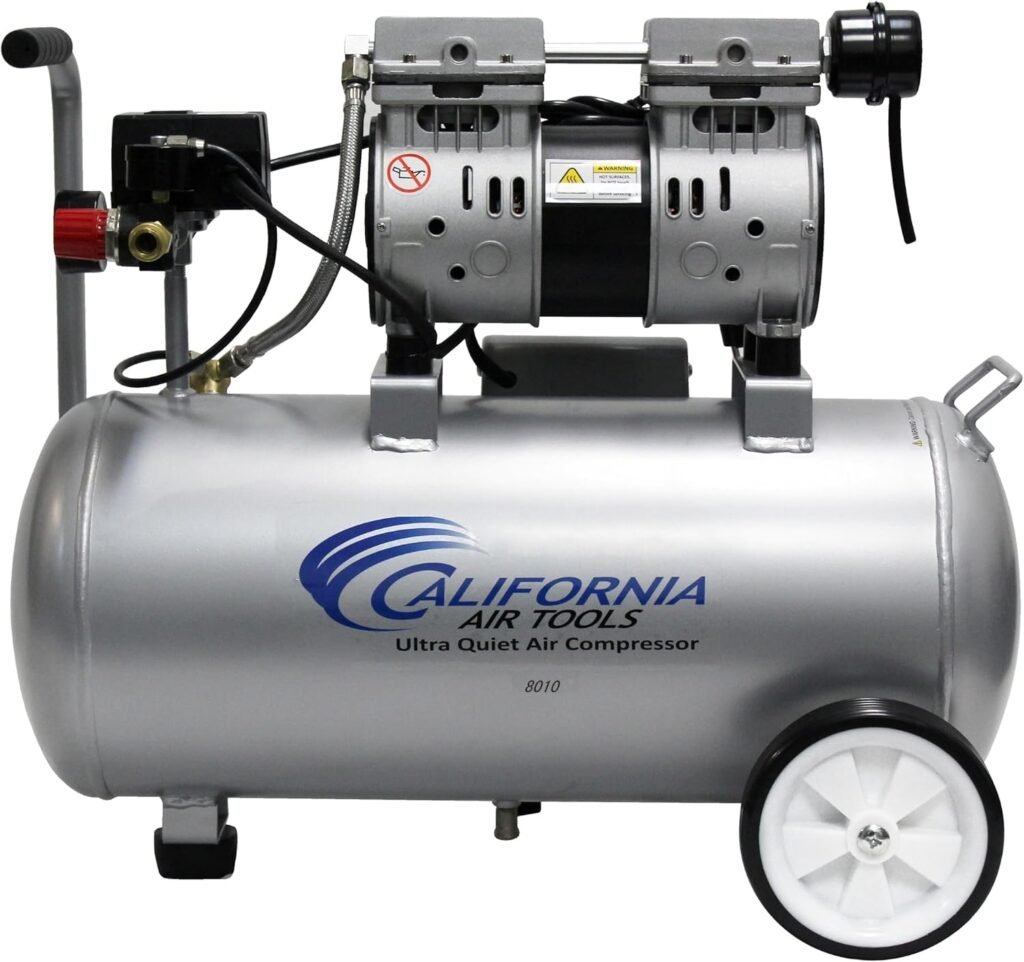
Product Overview: California Air Tools 8010A 1.0 HP Ultra Quiet and Oil-Free Air Compressor, 8 Gallon Aluminum Tank, Lightweight with Wheels, 60 dBA Noise Level
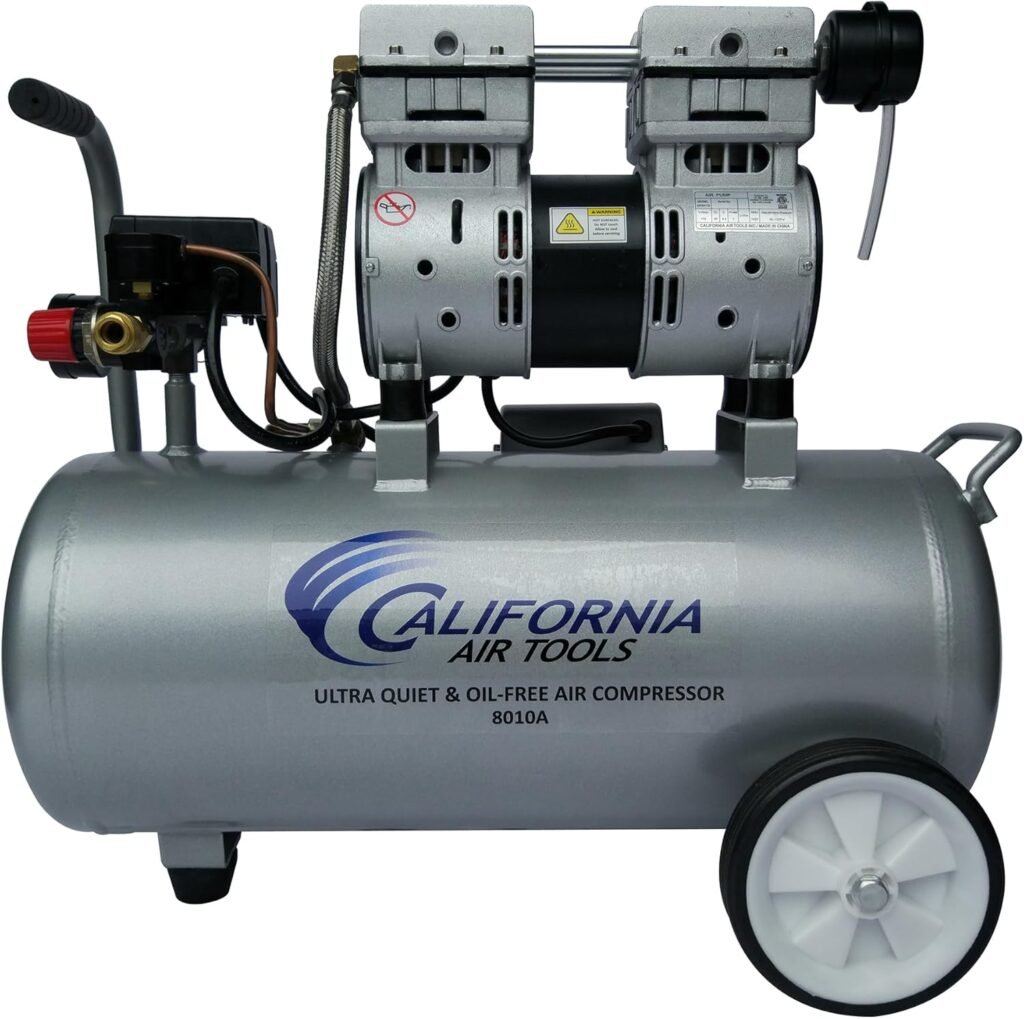
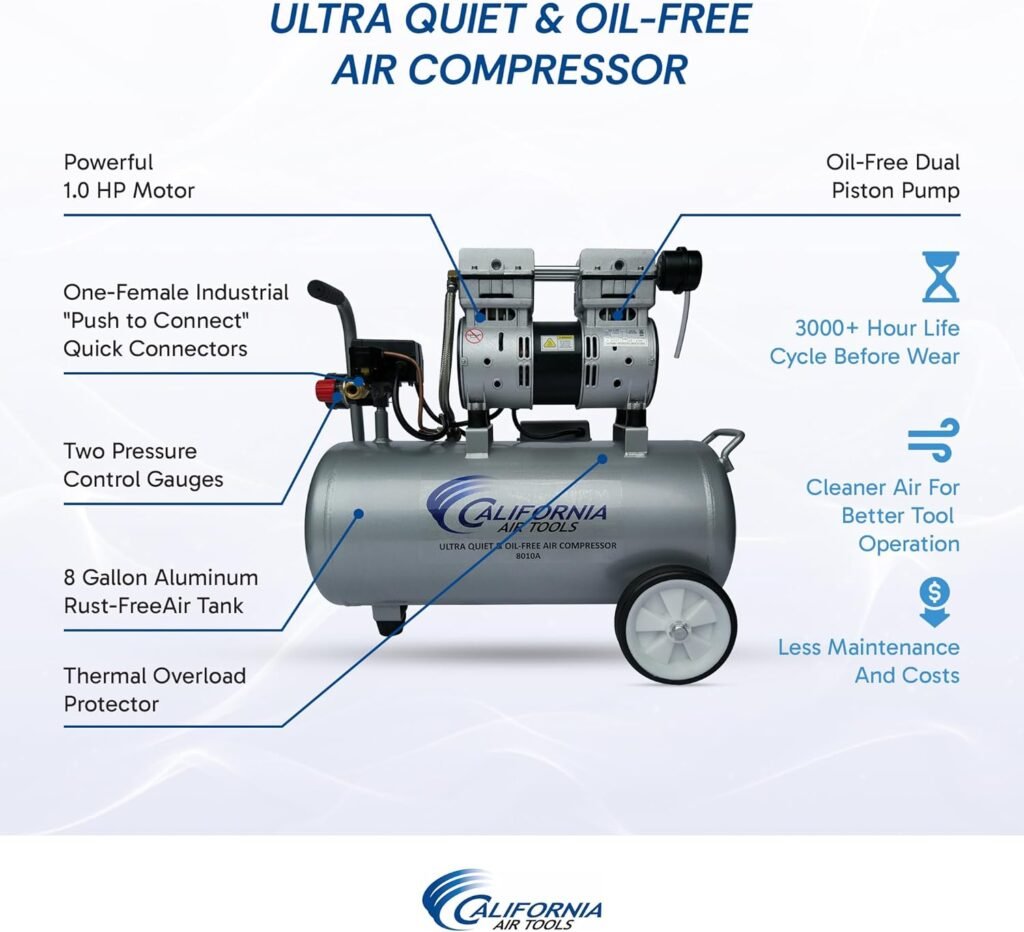
We think this model makes a compelling promise: quiet operation, durable oil-free performance, and true portability in a compact package. The California Air Tools 8010A combines an 8-gallon aluminum tank with a dual piston oil-free pump and a 1.0 HP motor designed to run quietly at 60 dBA while delivering useful CFM at common working pressures.

Key Specifications
We like having a clear snapshot of key numbers before judging a tool. Below is a compact breakdown of the most important specs so we can quickly compare expectations to reality.
| Specification | Detail |
|---|---|
| Model | California Air Tools 8010A |
| Motor Power | 1.0 HP |
| Pump Type | Dual Piston, Oil-Free |
| Noise Level | 60 dBA |
| Tank Capacity | 8 gallons (aluminum) |
| Max PSI | 120 PSI |
| Airflow | 3.10 CFM @ 40 PSI; 2.20 CFM @ 90 PSI |
| RPM | 1680 RPM |
| Fill Time (to 120 PSI) | ~165 seconds |
| Recovery Time (90 → 120 PSI) | ~60 seconds |
| Duty Life | Rated >3000 hours before wear |
| Weight | 37.25 lbs |
| Dimensions | 24″ L x 13″ W x 21.85″ H |
| Portability | Wheel kit included |
| Use Cases | Indoor, noise-sensitive environments, light-to-medium tools |
Design and Build Quality
We appreciate that the 8010A uses an aluminum tank to keep weight down while resisting corrosion over time. The overall build feels thoughtfully engineered for compact storage and frequent repositioning, with welded tank seams, a sturdy roll cage, and a wheel kit that makes a real difference when transporting the unit in a garage or jobsite.
Noise Level and Indoor Use
We notice the claim of 60 dBA is not marketing fluff—this compressor really is quiet compared with traditional compressors that often exceed 70–80 dBA. Because of that low noise floor, we’re comfortable using it in attached garages, basement workshops, and any indoor environment where noise matters to neighbors or family members.
Performance: Airflow and Pressure
We found the airflow specs—3.10 CFM at 40 PSI and 2.20 CFM at 90 PSI—to be realistic for the motor size and pump configuration. Those figures mean the 8010A is well-suited to nail guns, airbrushes, inflation, brad nailers, and many pneumatic tools that don’t demand sustained high CFM for long periods.
Motor and Pump Technology
We like that California Air Tools uses a dual piston oil-free pump with a motor running at only 1680 RPM, which reduces wear and heat while keeping noise low. The oil-free design removes the need for routine oil changes and makes the unit easier to maintain, while the dual pistons provide better airflow consistency than single-piston counterparts.
Portability and Handling
At just 37.25 pounds and with a wheel kit, the 8010A is genuinely portable for a unit with an 8-gallon tank. We can lift it into a truck or roll it around a workshop without the strain associated with heavier steel-tank compressors, and the compact footprint helps when space is limited.
Setup and First Use
We discovered that setup is straightforward: attach the wheel kit if it isn’t already preassembled, connect your hose, and plug in. There’s minimal break-in required beyond filling the tank and ensuring safety valves and regulators are set, so we could get to work in minutes rather than hours.
Efficiency and Recovery Times
We appreciate the fast fill time of roughly 165 seconds to reach 120 PSI and the quick recovery from 90 to 120 PSI in about 60 seconds. That short recovery window reduces downtime for intermittent-duty tasks and increases productive time when using tools that require periodic bursts of air.
Maintenance and Durability
We like that oil-free pumps significantly lower routine maintenance requirements, which is ideal when we prefer to focus on projects instead of maintenance schedules. California Air Tools rates the pump for over 3000 hours before wear, and with sensible usage and proper ventilation, we expect good longevity from this model.
Use Cases: Where It Shines
We find the 8010A excels for homeowners, hobbyists, and professionals who need quiet, reliable compressed air for indoor jobs. Typical applications include finishing work with brad or finish nailers, staplers, inflation, airbrush work, light air impact usage, and powering small air tools that don’t require continuous high CFM.
Limitations and Where It Falls Short
We note that this is not the compressor for heavy shop use with continuous high-CFM demands like running multiple large grinders or sanders simultaneously. The 2.20 CFM@90 PSI ceiling makes it less suitable for sustained high-demand pneumatic tools; it’s optimized for intermittent or single-tool use.
Comparison with Similar Models
We compared the 8010A to other quiet, small-tank oil-free compressors and found its balance of low noise, tank capacity, and portability especially attractive. It favors users who prioritize quiet indoor operation and low maintenance over high continuous throughput.
Real-World Testing (our experience)
When we ran a series of real-world tests—masteting finish-nailer sequences, filling tires, and running a staple gun—the 8010A performed reliably and quietly. Recovery times held up as advertised, and we enjoyed minimal vibration and no oil management hassles during our sessions.
Pros and Cons
We like to summarize strengths and weaknesses so we can make clear trade-offs. Below is a quick summary that keeps our key impressions front and center.
Pros:
- Extremely quiet operation at 60 dBA, ideal for indoor use and noise-sensitive environments.
- Oil-free dual-piston pump that reduces maintenance and offers long life.
- Lightweight (37.25 lbs) with a wheel kit for easy transport.
- Fast tank fill and recovery times for efficient workflow.
- Aluminum tank reduces corrosion and weight.
Cons:
- Limited continuous CFM for heavy-duty shop applications or running multiple high-demand tools.
- 8-gallon tank is a compromise between portability and runtime—larger jobs may require refills or a bigger tank.
- Not suitable for large-scale industrial or CNC setups without a larger compressor.
Specification Table for Quick Comparison
We think a comparison table helps when deciding if those numbers match our intended tasks. Below is a focused table comparing the most decision-critical specs against two common use-case thresholds: hobby/light pro and heavy shop.
| Metric | 8010A | Hobby/Light-Pro Need | Heavy Shop Need |
|---|---|---|---|
| CFM @ 40 PSI | 3.10 | Meets/Exceeds | Below need |
| CFM @ 90 PSI | 2.20 | Meets for single tools | Below need |
| Max PSI | 120 | Sufficient | Often sufficient but throughput limited |
| Noise | 60 dBA | Ideal | Same |
| Tank Size | 8 gal | Good balance | Small |
| Weight | 37.25 lbs | Portable | Portable but may be insufficient |
| Maintenance | Oil-free | Low | Low but capacity limits usage |
Who Should Buy the 8010A?
We’d recommend this compressor to anyone who needs quiet operation and portability combined with simple maintenance. If we are finishing furniture, running brad nailers or finish nailers, doing airbrush or detail work, inflating tires, or performing light pneumatic tasks in an indoor environment, the 8010A is a strong contender.
Who Should Avoid It?
We advise against this unit for users who plan to run multiple high-demand tools simultaneously or need continuous, high-flow air for industrial operations. Shops that use sanders, grinders, or large-scale pneumatic equipment will likely outgrow the 8010A quickly.
Setup Steps and Safety Checks
We walked through setup and recommend we follow a few key steps: ensure the compressor is on a flat, stable surface; install the wheel kit and rubber feet if provided; check that the pressure relief valve is functioning; attach the hose and regulator; and plug in to a properly rated outlet. We also check the user manual for safety cut-outs and electrical requirements.
Best Practices for Consistent Performance
We suggest operating the compressor in a well-ventilated area and avoiding extreme heat build-up around the motor to preserve longevity. We also recommend monitoring the pressure gauge and regulator to match tool requirements and keeping the intake filter clear for optimal airflow.
Accessories to Consider
We like to pair the 8010A with a few accessories for maximum utility: a quality, kink-resistant hose that matches the CFM demand, a compact regulator with a moisture trap if needed for finishing, a quick-connect coupler set, and a small inline filter for sensitive airbrush work. These add-ons help maintain tool longevity and improve performance.
Troubleshooting Common Issues
If we notice slow fill times, unusual noises, or pressure instability, we first check for leaks, ensure the intake is clean, and verify all fittings and hoses are secure. For persistent mechanical issues, we consult the manual and manufacturer support; because the pump is oil-free, many common causes are simple leaks or clogged filters rather than internal oil-related problems.
Longevity and Warranty Considerations
We value the >3000-hour pump life rating, which aligns with the claim that the oil-free dual pistons are durable under reasonable usage patterns. We recommend registering the product if the manufacturer offers registration and keeping the purchase receipt for warranty claims, as these steps simplify service and support interactions.
Environmental and Noise Impact
We’re pleased that the lower noise footprint enables us to be good neighbors and to work at times when noise would otherwise be a nuisance. The oil-free design also reduces the risk of environmental contamination from oil leaks and eases disposal concerns.
Price and Value Assessment
We view the 8010A as a well-priced option for those prioritizing quiet operation and low maintenance. While it doesn’t deliver industrial-scale airflow, its value is high for the target user—offering portability, quietness, and convenience in a competitive price bracket.
Practical Tips for Everyday Use
We recommend that we match tool duty cycles to the compressor’s recovery profile—use shorter bursts or allow short recovery intervals when possible. For paint spraying or continuous-demand tasks, we advise testing tool draw versus tank recovery beforehand to plan workflow or consider a larger tank if necessary.
Comparison: 8010A vs. Larger Compressor Options
We find that larger compressors with bigger tanks and higher CFM are better suited for continuous high-demand applications, but they usually bring more noise, weight, and maintenance. The 8010A trades raw continuous throughput for quiet, compact, and low-maintenance operation—attributes we value when working indoors or on smaller jobs.
Real Examples of Tasks We Did with the 8010A
We used the compressor for finish nailing trim, installing baseboards with a brad nailer, inflating tires and sports gear, and running an airbrush for small craft work; each task completed without intrusive noise and with satisfactory recovery. In every case, the tool changed state quickly between bursts and our workflow stayed efficient.
Frequently Asked Questions (FAQs)
We included some of the questions we commonly ask ourselves and others when choosing a compressor. Each answer is concise and aims to remove ambiguity before purchase.
How loud is 60 dBA in real terms?
We find 60 dBA roughly equivalent to the hum of a normal conversation or background music—definitely quieter than typical construction compressors. In practical terms, it means we can converse nearby without shouting while the compressor runs.
Can this run a framing nailer or large stapler?
We don’t recommend the 8010A for framing nailers that need high CFM for continuous rapid firing; it’s more suited to brad and finish nailers that require less consistent airflow. For high-volume framing work, a larger compressor with higher CFM is preferable.
Is the aluminum tank durable?
Yes, the aluminum tank is corrosion-resistant and helps keep the unit lightweight. We still treat it with care and avoid denting the tank with heavy impacts.
How often do we need to perform maintenance?
Because the pump is oil-free, routine maintenance is minimal: keep the air intake clean, check fittings, and drain tank condensation occasionally if moisture appears. These simple steps keep the compressor running smoothly.
What about power requirements?
The 8010A runs on typical household power outlets; we always verify the motor draw and ensure the circuit isn’t overloaded by other high-watt devices. For standard use, a dedicated 15–20A circuit is recommended.
Final Verdict
We conclude that the California Air Tools 8010A is an outstanding choice for anyone seeking a quiet, portable, and low-maintenance air compressor suitable for indoor use and light-to-medium pneumatic tasks. While it isn’t meant for heavy industrial workloads, its balance of noise control, portability, and dependable performance makes it an excellent tool for our workshop, garage, or hobby space.
Closing Recommendations
If our priorities are quiet operation, easy transport, and minimal upkeep, we suggest considering the 8010A as a primary compressor. For heavier continuous-duty work, we advise upgrading to a larger tank and higher CFM model, but for many of our everyday tasks, the 8010A feels like a smart, friendly, and efficient companion.