Have we ever wished we could run serious pneumatic tools without shouting over our own air compressor?
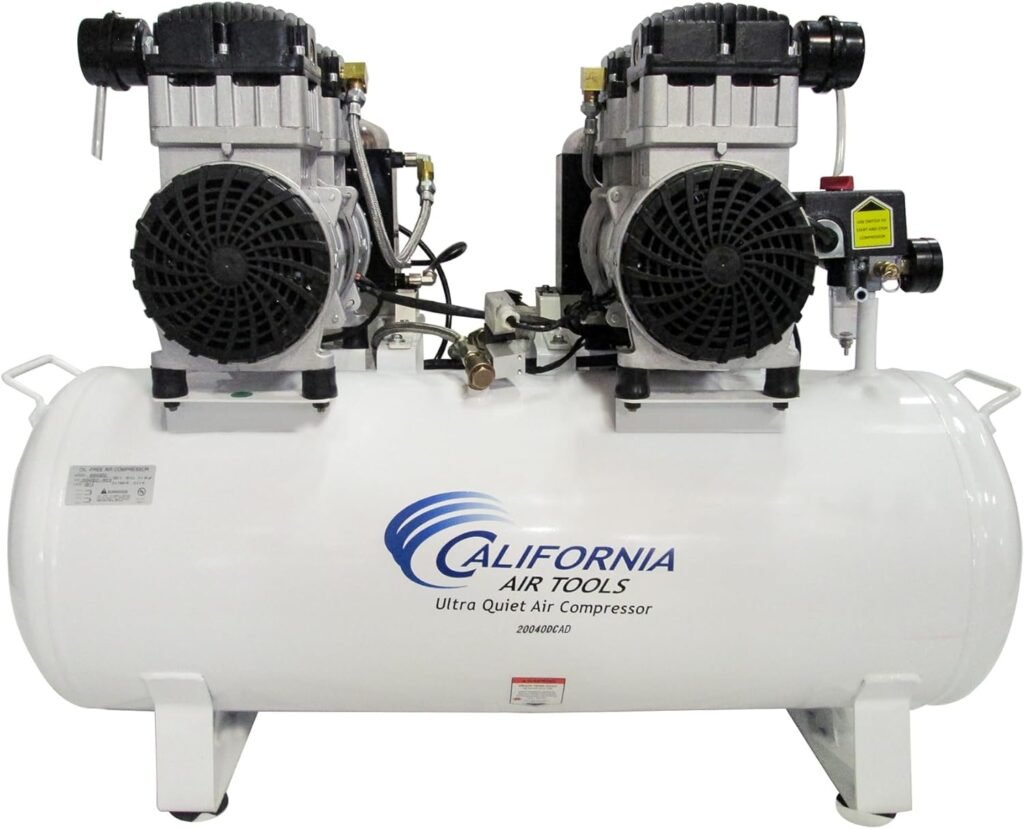

What Is the California Air Tools 20040DCAD and Who Is It For?
This model is a powerful, ultra-quiet, oil-free air compressor built for people who need serious air output without turning their workspace into a noise zone. We are looking at a 4.0 HP, 220v, 20-gallon unit with an 80% air drying system and an automatic drain valve, all wrapped into a relatively compact, professional-grade package.
We see it fitting best in small shops, home garages, light industrial settings, and any environment where noise, moisture, and maintenance are major concerns. If we run air tools regularly and care about clean, dry air and less hassle, this unit sits in that sweet spot between DIY and full industrial.
Key Specifications at a Glance
Sometimes it helps to see the numbers laid out clearly. This compressor offers a blend of power, quiet operation, and air quality features that we don’t often see in one unit.
| Feature | Specification |
|---|---|
| Brand / Model | California Air Tools 20040DCAD |
| Motor Power | 4.0 HP |
| Voltage / Frequency | 220v, 60 Hz |
| Noise Level | 75 dB |
| Pump Type | Oil-free dual piston |
| Life Cycle (Pump) | Over 3,000 hours |
| Tank Capacity | 20-gallon steel tank |
| Air Delivery @ 40 PSI | 12.80 CFM |
| Air Delivery @ 90 PSI | 10.60 CFM |
| Tank Weight | ~176 lbs |
| Overall Dimensions | 39″ (L) x 25″ (W) x 28″ (H) |
| Air Drying System | 80% air dryer with aftercooler |
| Drainage | Automatic drain valve |
| Lubrication | Oil-free (no oil changes required) |
| Typical Uses | Shop, garage, jobsite, noise-sensitive workplaces |
Looking at these specs, we can already sense the direction: relatively compact footprint, high CFM, quiet operation, and thoughtful moisture management. It targets users who want performance without constant tinkering.
Noise Level: How Quiet Is 75 dB Really?
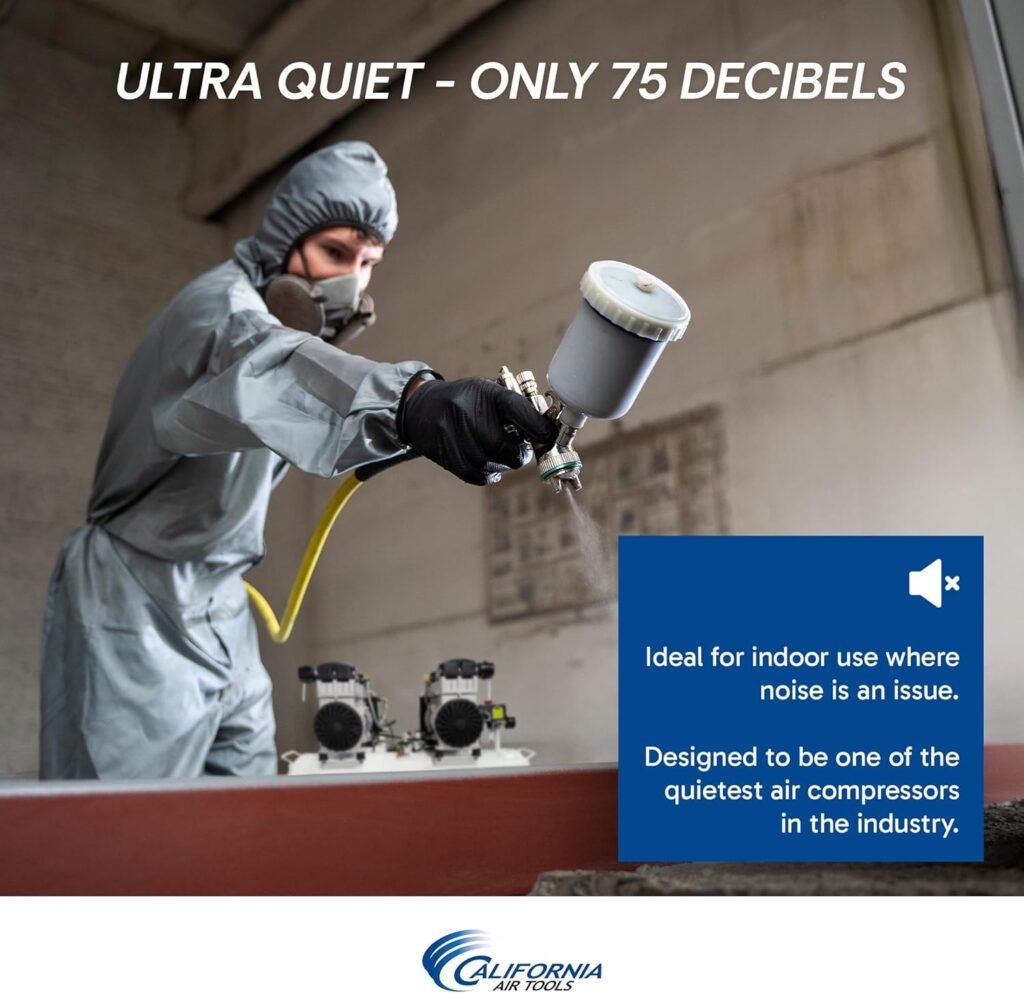
Noise is often the first thing we notice with air compressors, especially if we’re working in a small shop or shared space. This unit is rated at 75 dB, which is very quiet for a professional-grade 4.0 HP compressor.
Working Around 75 dB in Real Life
We might not instantly know what 75 dB sounds like. In practical terms, 75 dB is roughly like a loud conversation or being near a running dishwasher. It is significantly quieter than many traditional shop compressors, which can easily sit in the 85–90 dB range or higher.
This means we can:
- Hold a conversation at normal voice levels while it’s running.
- Use it in a home garage without rattling the whole house.
- Operate it in a shop without everyone needing ear protection all day.
The low 1680 RPM motor speed also plays a big part here. Lower RPM means less mechanical noise, less vibration, and generally a less stressful environment over a long workday.
Power and Performance: 4.0 HP With Serious CFM
Power and airflow determine what tools we can use and how efficiently we can work. The California Air Tools 20040DCAD leans heavily into that with its CFM ratings.
CFM Output and What It Lets Us Run
We get:
- 12.80 CFM @ 40 PSI
- 10.60 CFM @ 90 PSI
Those are respectable numbers for a 20-gallon unit. With this airflow, we can comfortably run:
- Impact wrenches, ratchets, and air hammers.
- Die grinders and some sanders (especially if we pace our work).
- Framing or roofing nailers, brad nailers, and staplers.
- HVLP spray guns for painting and finishing (with proper setup).
- Blow guns and general shop cleanup.
We might not power a huge sandblasting cabinet continuously, but for typical automotive work, woodworking, metalworking, or finishing tasks, this CFM range is strong enough to feel like we’re using a “real” shop compressor, not a hobby toy.
4.0 HP at 1680 RPM: Why the Low Speed Matters
The motor is a 4.0 HP unit running at only 1680 RPM. That relatively low speed is a big part of:
- Reduced noise.
- Lower wear and tear on components.
- Increased longevity of the pump and motor.
We’re essentially trading slightly larger components and thoughtful engineering for a quieter and more durable system. For us as users, that translates into fewer interruptions, fewer repairs, and a smoother work experience.
Oil-Free Dual Piston Pump: Maintenance and Air Quality
The pump is the heart of any compressor, and here we have an oil-free dual piston design. This choice affects maintenance, air quality, and longevity.
What Oil-Free Means for Our Shop
Oil-free means we don’t have to worry about:
- Changing oil.
- Oil leaks or spills.
- Oil getting into our air lines and onto our work.
This is especially important if:
- We do painting or finishing where oil contamination is a problem.
- We use air tools around clean or sensitive environments.
- We want cleaner air for extended tool life.
We trade a bit of traditional “industrial feel” for ease of ownership and cleaner output, which for most small shops is a huge benefit.
Life Cycle and Durability
California Air Tools rates the life cycle of this oil-free pump at over 3,000 hours. While that number depends on maintenance and operating conditions, it’s a strong rating for an oil-free design.
For typical small shop or serious DIY use, that can represent many years of service. If we’re running the compressor constantly in a production environment, we’ll hit that number more quickly, but the design is still aimed toward longer life compared to low-end consumer units.
20-Gallon Steel Tank: Capacity, Size, and Portability
Tank size affects how often the compressor cycles on and off and how steadily we can supply air to our tools. With a 20-gallon steel tank, this unit lands in the mid-capacity range.
Why 20 Gallons Is a Practical Sweet Spot
Twenty gallons is large enough to:
- Handle short bursts of high-demand tools.
- Reduce the number of starts and stops compared to small portable units.
- Provide a buffer for tasks like nail gun bursts, short grinding sessions, or smaller spray jobs.
At the same time, it’s not so large that we’re committing to a massive stationary system or giving up all portability.
Weight and Footprint
The unit weighs about 176 pounds and measures:
- 39″ (L) x 25″ (W) x 28″ (H)
This is heavy, but not immovable. It’s best thought of as a semi-stationary unit:
- Easy to keep in a corner of a shop or garage.
- Possible to move around on a flat surface with help or appropriate wheels/handle (depending on specific configuration).
- Light enough to relocate on occasion but not something we’ll toss in a trunk casually.
For most of us, we’ll set it up in a dedicated space and leave it there, running hoses where we need them.
Air Drying System: 80% Dryer and Aftercooler
Moisture is one of the sneakiest enemies in compressed air systems. This model comes with an 80% air drying system and an aftercooler, which is a big step up from bare-bones compressors.
Why Moisture Control Matters
When we compress air, we condense water vapor. That water:
- Accumulates in the tank.
- Travels through our air lines.
- Ends up in tools, spray guns, and sometimes on our work surface.
The built-in 80% air dryer helps remove much of that moisture from the air before it reaches our tools. Meanwhile, the aftercooler cools the discharge air, improving the dryer’s effectiveness.
This matters a lot if we:
- Spray paint or apply finishes where moisture can ruin the surface.
- Run pneumatic tools that rust or wear quickly if exposed to damp air.
- Live in a humid climate where condensation is a constant issue.
The result is cleaner, drier air and less need for additional drying equipment, especially for light-to-moderate professional or advanced hobby use.

Automatic Drain Valve: Less Mess, Less Work
Draining a tank is one of those maintenance chores we know we should do but often forget. The 20040DCAD includes an automatic drain valve, which is a welcome feature.
What the Auto Drain Actually Does for Us
The automatic drain:
- Periodically releases accumulated moisture from the tank.
- Reduces the risk of internal tank corrosion.
- Lowers the chance of water spitting into our lines.
Instead of bending down and manually opening a petcock under the tank every day or week (or whenever we remember), the system takes care of this for us. We still need to be aware of where it drains to (and manage that responsibly), but it removes the constant mental reminder and the risk of long-term neglect.
In practical terms, this makes the compressor feel more “set and forget” and helps extend tank life.
Ease of Use and Everyday Operation
Beyond the specs, we care about how it feels to live with this compressor day to day. We want to know if we’ll be fighting with it or if it will quietly support our work.
Startup and Controls
Once wired correctly to a 220v 60 Hz supply, operation is straightforward:
- On/off switching is simple and intuitive.
- Pressure gauges typically show tank pressure and regulated pressure.
- We set our regulator to match the tool’s requirements and get to work.
Because the unit is relatively quiet for its power, starting it up doesn’t jolt everyone around us. The low RPM and good sound damping make the initial start less dramatic than many high-speed, oil-lubed compressors.
Duty Cycle and Work Rhythm
While the exact duty cycle isn’t highlighted in the brief product details, the combination of:
- 4.0 HP motor
- 10.60 CFM @ 90 PSI
- 20-gallon tank
- Oil-free dual piston design
suggests it’s built for regular use rather than occasional bursts only. This is the kind of compressor we feel comfortable running through the day in a typical small shop environment, with periodic cycling rather than constant struggle.
We still want to avoid exceeding recommended duty cycles for any compressor to maximize life, but for typical automotive work, carpentry, and moderate spray or air tool use, this model is well within a comfortable operating range.
Suitability for Different Users and Applications
Not every compressor fits every user. Let’s break down who is likely to benefit most from this model.
For Home Garage and Serious DIY Users
If our garage is our workshop and we:
- Work on cars.
- Build furniture or cabinets.
- Do small metal fabrication.
- Occasionally paint or clear-coat.
Then this compressor hits a very nice balance. We get:
- Enough CFM to run serious tools.
- Manageable noise levels that won’t drive family or neighbors mad.
- Cleaner, drier air for better finishes.
- Low maintenance thanks to oil-free design and auto drain.
It may be more compressor than a casual DIYer needs, but for serious tinkerers, this feels like buying once and using for a long time.
For Small Professional Shops
For small auto shops, woodworking shops, or fabrication spaces, this compressor can serve as:
- A primary compressor for lower-volume operations.
- A secondary or backup unit in larger shops.
- A dedicated clean-air source for specific tasks (e.g., finishing area).
The quiet operation is a big plus in professional settings where workers are nearby all day. The moisture control and clean output also help maintain quality in paint and finish work.
For Noise-Sensitive or Shared Environments
If we work:
- At home with close neighbors.
- In a shared maker space.
- In an indoor environment where noise carries easily.
The 75 dB rating becomes more than just a number; it’s our ticket to using air tools without constant complaints. This is one of the stronger arguments for choosing this model over a louder, cheaper alternative.
Advantages of the California Air Tools 20040DCAD
To make our evaluation clearer, we can line up the major advantages that stand out.
Key Strengths
-
Ultra Quiet Operation (75 dB)
We can work closer to the compressor, hold conversations, and generally reduce ear fatigue. This is a huge quality-of-life upgrade over traditional loud units. -
Strong CFM for a 20-Gallon Package
With 12.80 CFM @ 40 PSI and 10.60 CFM @ 90 PSI, we have enough airflow to run a wide variety of air tools confidently. -
Oil-Free Pump = Low Maintenance + Cleaner Air
No oil changes, no oil contamination, and less mess. The dual piston design also gives us more durability and efficiency. -
80% Air Drying System with Aftercooler
Moisture is a silent killer in pneumatic systems. This built-in air dryer and aftercooler setup are a big benefit, especially if we paint or work in humid climates. -
Automatic Drain Valve
This tackles one of the most commonly neglected maintenance tasks. It keeps the tank healthier and the air drier with minimal effort from us. -
Durable Life Cycle (Over 3,000 Hours)
For an oil-free system, this is a solid life expectancy, offering long-term value for both pros and serious hobbyists. -
220v 60 Hz Efficiency
Running on 220v allows for efficient power delivery, which is ideal in shops with higher demand tools and equipment. It’s more in line with professional setups.
Potential Drawbacks and Limitations
No product is perfect for everyone. It’s helpful to call out the areas where this compressor might not be the best fit.
Things We Should Consider
-
Requires 220v Power
If our space doesn’t already have a 220v 60 Hz circuit, we’ll need an electrician to install one. This adds cost and complexity and may not be feasible for some homes or rental spaces. -
Weight and Portability
At around 176 lbs, this isn’t a lightweight, toss-in-the-truck compressor. It’s best treated as a semi-stationary unit. If we need frequent on-site portability, this model isn’t ideal. -
20-Gallon Tank May Be Small for Heavy Continuous Use
For high-volume production environments (e.g., large body shops, large fabrication shops), we may want a larger tank and higher continuous CFM. This unit is powerful, but it’s not designed to feed multiple high-demand tools at once for long periods. -
Oil-Free Sound Profile
While quieter and cleaner, oil-free compressors can have a slightly different sound character compared to oil-lubed units. It’s not a deal-breaker, but purists sometimes prefer the classic oil-lubed feel and sound. -
Initial Cost vs. Basic Units
With the extra features—air dryer, auto drain, quiet design—this will cost more than bare-bones compressors with similar tank sizes. We’re paying for convenience, performance, and air quality.
How It Compares to Typical Alternatives
To better understand its value, we can think about how this compressor stands against common alternatives we might be considering.
Compared to Small Portable 120v Compressors
Versus small 120v pancake or hot-dog style units:
-
Pros:
- Much higher CFM and power output.
- Quieter under load than many small high-RPM units.
- Larger tank and better air drying.
- Far more capable for shop-level tools.
-
Cons:
- Requires 220v.
- Heavier and less portable.
- Higher upfront cost.
If we are moving from a 120v home compressor, this is a major upgrade that brings us into a more professional tier.
Compared to Larger, Noisier Shop Compressors
Versus big, loud, oil-lubed 60-gallon shop units:
-
Pros:
- Much quieter at 75 dB.
- Oil-free, cleaner air, lower maintenance.
- Built-in air drying and automatic drain make everyday use easier.
- Smaller footprint for small shops or garages.
-
Cons:
- Smaller tank and lower total output for sustaining multiple tools.
- For heavy industrial use, a big stationary unit still wins in raw capacity.
For many of us, this compressor offers a middle ground: enough output for serious work, but without committing to a huge and deafening industrial setup.
Long-Term Ownership: What We Can Expect
Thinking beyond the first weeks, we want to understand what it’s like to own this compressor for years.
Maintenance Routine
Because of the oil-free design and auto drain, our tasks shrink to:
- Periodic checks of fittings and hoses for leaks.
- Monitoring filters and drying system components.
- Keeping the area around the compressor clean and ventilated.
- Ensuring the auto drain is working and draining to a suitable location.
Compared to an oil-lubed compressor where we might have to manage oil levels, changes, and potential contamination issues, this is a simpler life.
Reliability and Wear
The motor’s low RPM and the dual piston configuration suggest a design focused on longevity. The rated life cycle of 3,000+ hours provides confidence that, with reasonable care, we’ll get a lot of service out of it.
We can treat it as a central part of our shop and expect it to handle day-to-day workloads without constantly worrying about failure, so long as we stay within its realistic capacity limits.
Ideal Use Cases That Match This Compressor Well
To make our decision easier, it can help to picture real scenarios where this compressor shines.
Great Fit Scenarios
-
Automotive Enthusiast Garage
We’re rotating tires, using impact wrenches, blowing out filters, occasionally painting small parts, and we want a quiet but capable system. -
Woodworking Shop With Finishing Area
We’re running brad nailers, staplers, maybe random orbital sanders, and occasionally spray guns for clear coats or finishes. Clean, dry air and low noise are both critical here. -
Small Metalworking or Fabrication Shop
We use die grinders, riveters, and other pneumatic tools throughout the day but don’t need a massive industrial compressor. This unit supports small teams or individual makers well. -
Mixed-Use Makerspace
Different users share tools, and noise is a concern. The built-in air dryer and auto drain also reduce maintenance oversight and the chance someone forgets to drain the tank.
In each of these cases, the combination of quiet operation, good airflow, cleaner air, and low maintenance creates a very user-friendly backbone for pneumatic work.
When We Might Want Something Else
We should also be honest about when another type of compressor might be better suited.
- If we need to run multiple high-demand air tools continuously in a large industrial shop, we may outgrow this and want a large stationary compressor with a bigger tank (60–80 gallons or more) and higher CFM.
- If we move our compressor constantly between jobsites and vehicles, a smaller, lighter 120v portable unit might be more practical, even if it’s louder and less powerful.
- If we do only extremely light work—occasional tire inflation and the odd brad nailer shot—a large, advanced unit like this might be more than we truly need.
Being clear on our actual usage patterns will help us decide if this model is the right match.
Summary: Is the California Air Tools 20040DCAD Worth It for Us?
Putting everything together, the California Air Tools 20040DCAD Powerful 4.0 HP Ultra Quiet and Oil-Free Air Compressor, 20 Gallon Tank, 75 dB Noise Level, White, 220v 60hz, with 80% Air Drying System and Automatic Drain Valve presents itself as a thoughtfully engineered solution for serious users who care about both performance and comfort.
We get:
- Quiet operation (75 dB) that respects our ears and our environment.
- Robust performance with 4.0 HP and up to 10.60 CFM @ 90 PSI.
- Oil-free dual piston pump for low maintenance and clean air.
- 20-gallon steel tank that balances capacity and reasonable size.
- 80% air drying system with aftercooler to protect finishes and tools.
- Automatic drain valve to handle condensation without constant manual effort.
- Long pump life rated at over 3,000 hours.
We trade off:
- The need for a 220v 60 Hz power source.
- Higher weight and less portability than small 120v units.
- A smaller tank compared to large stationary industrial compressors.
If our goal is a quiet, capable, low-maintenance compressor that we can trust for a broad range of tasks—especially in a home garage, small shop, or noise-sensitive space—this model is a very compelling choice. It feels like a compressor we can install, rely on for serious work, and live with comfortably day after day.

Disclosure: As an Amazon Associate, I earn from qualifying purchases.