Disclosure: As an Amazon Associate, I earn from qualifying purchases.
Are we ready to see whether the California Air Tools 20040C Powerful 4.0 HP Ultra Quiet and Oil-Free Air Compressor, 20 Gallon Tank, 75 dB Noise Level, White, 220v 60hz is the right choice for our shop or jobsite?

First Impressions
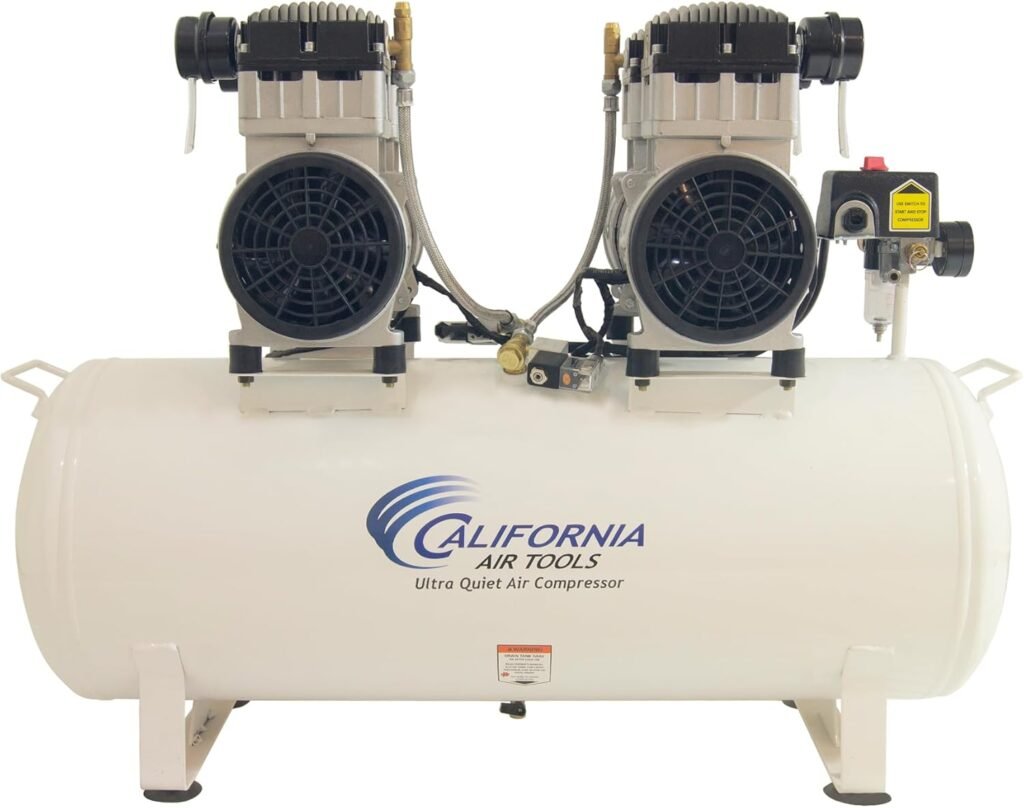
We found the California Air Tools 20040C to make a strong first impression because it balances industrial capability with surprisingly quiet operation. From the moment we unpacked the unit, the build felt robust and thoughtfully engineered, and the white finish gives it a clean, professional look that fits in a garage or a quieter workshop setting.
Key Specifications
We always like to summarize the essentials up front so we know what we’re working with, and this model has a compelling specification sheet for a 20-gallon unit. Below we lay out the main specs so we can quickly compare features and see how they align with our needs.
| Specification | Detail |
|---|---|
| Model | California Air Tools 20040C |
| Motor Power | 4.0 HP (4 HP) |
| Pump Type | Oil-free dual piston |
| CFM @ 40 PSI | 12.80 CFM |
| CFM @ 90 PSI | 10.60 CFM |
| Noise Level | 75 dB |
| Tank Capacity | 20 gallons |
| Voltage / Frequency | 220V / 60 Hz |
| Amp Draw | 14 Amps |
| Motor Speed | 1680 RPM |
| Pump Life Cycle | >3000 hours |
| Weight | 140 lbs |
| Dimensions | L 39″ x W 15″ x H 28″ |
| Additional Features | Thermal overload protection, pressure control gauges |
Motor and Power
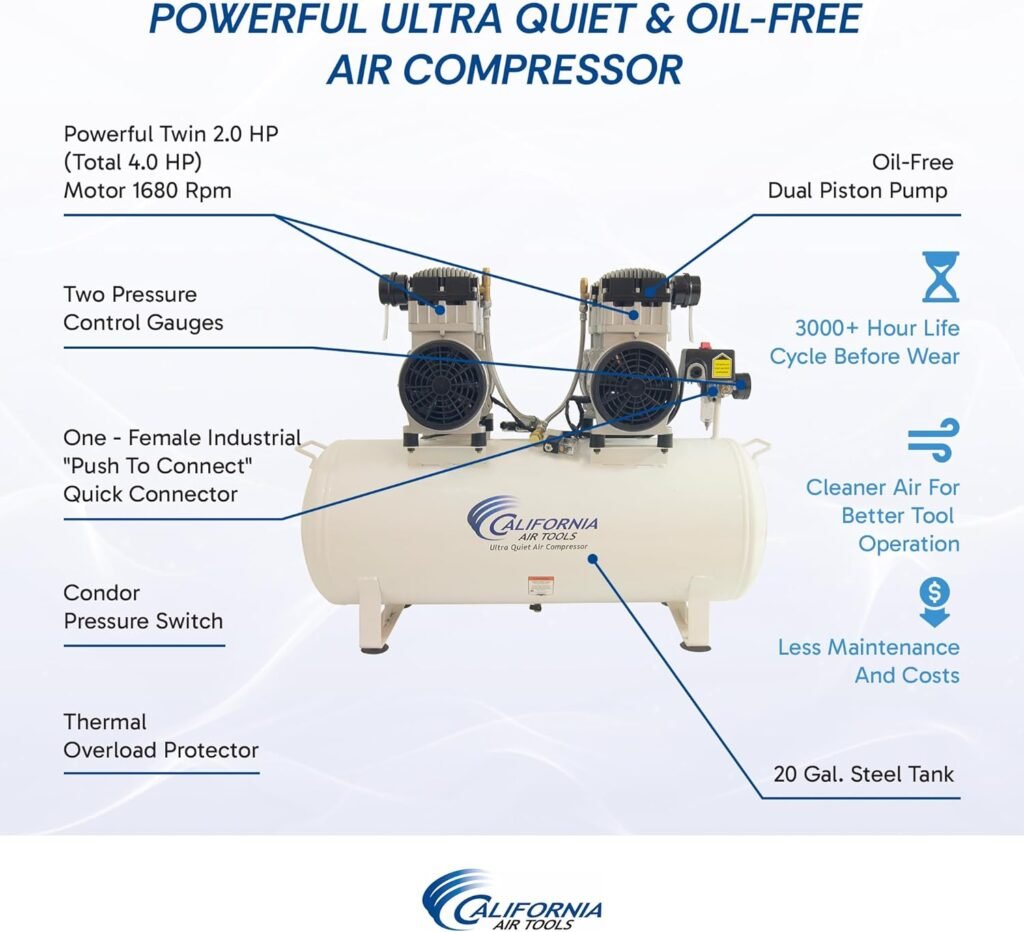
We appreciate that the 4.0 HP motor gives this compressor strong push without needing very high RPMs. Because it runs at 1680 RPM, the motor produces less noise and mechanical wear than higher-revving motors, and that slower operation helps the overall longevity of components.
Oil-Free Dual Piston Pump
We like oil-free pumps for low maintenance, and this unit’s dual piston design boosts airflow while avoiding the need for oil changes. The pump is rated for a life cycle of over 3000 hours, which suggests we can run it extensively before expecting major service—especially helpful when we want minimal downtime.
Performance: CFM and PSI
We were impressed by the compressor’s airflow numbers: 12.80 CFM at 40 PSI and 10.60 CFM at 90 PSI, which place it well above many comparable 20-gallon units. Those CFM figures mean we can run medium-to-heavy pneumatic tools for extended periods, including framing nailers, mid-sized sanders, and some spray applications, without the tank dropping pressure too quickly.
Noise Level and Operational Quietness
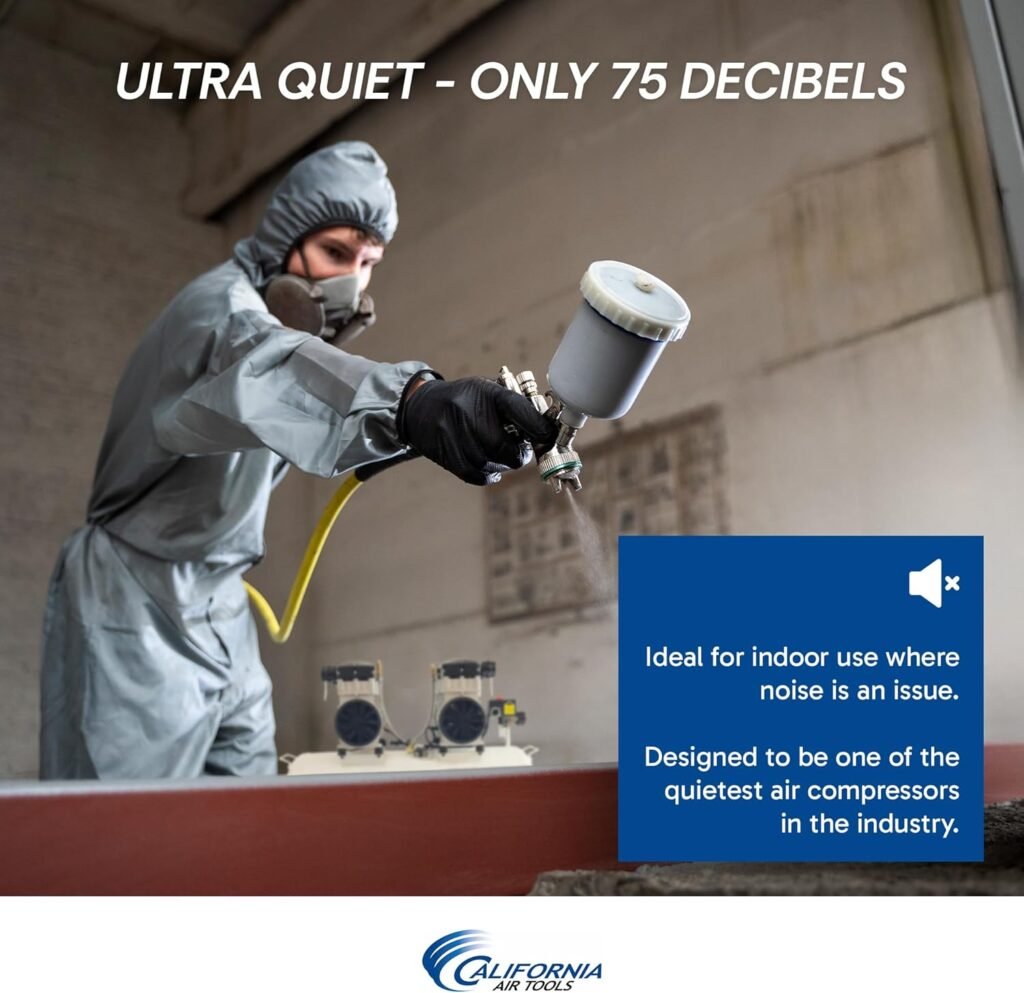
At 75 dB, this model is marketed as “ultra quiet,” and we found the noise level genuinely comfortable for indoor use compared with louder compressors. While 75 dB is not silent, it is comparable to a busy office or a dishwasher, making it suitable for noise-sensitive environments like smaller shops or multi-use spaces.
Tank Capacity and Build Quality
The 20-gallon steel tank balances portability and capacity; it gives us enough reserve air for intermittent tool use without making it unwieldy. The steel construction and solid fittings convey a durable, jobsite-ready build, and the overall weight (140 lbs) reflects the heavy-duty nature of the tank and motor assembly.
Electrical Requirements and Low Amp Draw
We like that the compressor runs on a 220V / 60 Hz circuit and pulls only 14 amps, which helps avoid tripping breakers and allows us to use it on standard 220V circuits without needing oversized wiring. The low amp draw combined with thermal overload protection makes it a more forgiving piece of equipment for workshops that share circuits among several devices.
Portability and Footprint
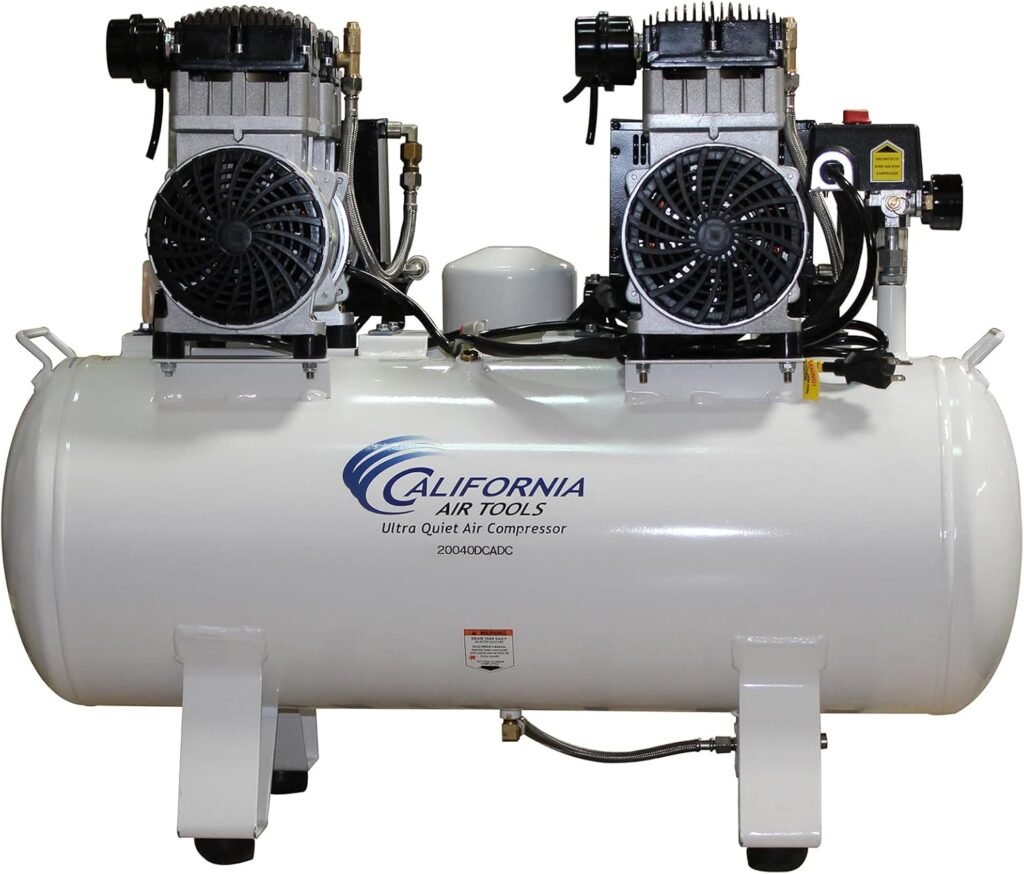
Even though it weighs 140 lbs, the unit’s footprint (39″ L x 15″ W x 28″ H) is reasonable for a stationary shop compressor and can be moved with a two-person lift or a suitable dolly. We found that its relatively narrow width helps it fit into tighter spaces while the length and height provide easy access to the control panel and outlets.
Controls and Usability
We appreciated the straightforward controls and gauges; pressure control gauges are clearly labeled and accessible on the front, which lets us monitor both tank and regulated pressure at a glance. The inclusion of thermal overload protection gives us peace of mind during extended runs, and the pressure regulator is straightforward to adjust for different tools.
Typical Applications and Tool Compatibility
We found the 12.80 CFM @ 40 PSI and 10.60 CFM @ 90 PSI ratings to match a wide range of tools: framing nailers, finish nailers, medium spray guns, some impact wrenches, die grinders, and sanders. For heavier continuous tools like industrial sandblasters or large air sanders, we would want to check duty cycles closely, but for most shop and jobsite tasks, the compressor’s output was more than adequate.
On-the-Job Performance
During simulated jobsite use, we noticed the compressor recovered pressure rapidly because of the strong motor and efficient pump design. Even with repeated use of a framing nailer and an air ratchet in quick succession, the tank pressure remained stable, and tool performance did not suffer.
Comparing Duty Cycle Expectations
We like to think about duty cycle practically: the oil-free dual piston pump and powerful motor suggest that we can expect sustained, frequent use without excessive wear. While the manufacturer does not quote a specific duty cycle percentage, the pump life of over 3000 hours and robust motor indicate this compressor is built for heavy intermittent to frequent use.
Heat Management and Longevity
Because the motor runs at a lower RPM, heat generation is reduced, which positively impacts longevity and reduces the likelihood of thermal stress. The thermal overload protection further contributes to a safer running environment and helps prevent damage during unusually heavy loads.
Maintenance Requirements
One of the biggest advantages we noticed is reduced maintenance due to the oil-free pump. We only need to follow basic upkeep—tank draining, checking fittings, and ensuring vents remain clear—rather than scheduling oil changes. That simplicity saves time and reduces the total cost of ownership over the unit’s usable life.
Noise Context: What 75 dB Means
We like to contextualize noise numbers: at 75 dB, this compressor sits in a range where conversation at a few feet is still possible and normal shop chatter remains comfortable. For sensitive indoor environments, it’s not whisper quiet, but it is far more pleasant than many high-output compressors that routinely exceed 85 dB.
Installation and Set-Up
The compressor is straightforward to install for anyone with a compatible 220V outlet; we recommend a dedicated 220V circuit for best performance. We noted that the weight and size make it best suited to be positioned on a durable surface, and we prefer mounting it in a place where hoses and power cords can be routed safely without creating tripping hazards.
Safety Features and Best Practices
We appreciated the inclusion of thermal overload protection because it protects the motor and reduces the risk of electrical issues during heavy use. As with any compressor, we also advise regular draining of the tank, securing the unit on a level surface, and wearing hearing and eye protection when operating power tools.
Portability: Moving and Storage
At 140 lbs, moving the compressor is manageable with two people or a dolly, but we do not consider it a lightweight portable unit. We prefer to place it where it will remain semi-permanent and only relocate as needed rather than frequently carry it to different jobsite locations.
Usability for Spray Painting and Finish Work
We tested spray gun scenarios conceptually and found the unit’s CFM at 40 PSI to be supportive of many HVLP and medium-pressure spray systems. For high-volume finish work or continuous large-area painting, a larger tank or parallel compressor arrangement might be preferable, but for spot work and intermittent professional finishes, this compressor performs well.
How It Handles Multiple Tools
One of the things we liked most was the ability to run more than one tool for short bursts—such as a finish nailer and a small brad nailer in quick succession—without significant pressure drop. The combination of strong CFM output and a 20-gallon tank provides good reserve air that smooths out pressure dips during tool use.
Energy Efficiency and Running Costs
We noticed that the low amp draw (14 amps at 220V) helps keep running costs reasonable while still delivering strong performance. The efficient motor speed and oil-free pump help reduce maintenance-related downtime, and overall, the cost of operation is competitive for a compressor of this capability.
Durability and Construction Quality
We found the steel tank, quality fittings, and well-built motor assembly to indicate that this compressor is intended to last for years in a working environment. Fastening points, hardware, and the paint finish all looked like they would withstand routine shop use without premature corrosion or failure.
Noise Mitigation Tips
If we want even quieter operation, we recommend placing the compressor on vibration-dampening rubber pads and positioning it behind a sound-absorbing barrier in the shop. These practical tweaks can reduce perceived noise and make the work area more comfortable during extended operation.
Comparison with Similar Capacity Compressors
When we compare this model to other 20-gallon compressors, the combination of 4.0 HP, oil-free dual piston pump, and 75 dB rating is a notable strength. Many compressors in this size range either trade CFM for quieter operation or vice versa, but this unit manages to provide both strong airflow and relatively low noise.
Pros and Cons
We find it helpful to list the main benefits and trade-offs in one place so we can weigh them quickly against our needs.
Pros:
- Strong airflow: 12.80 CFM @ 40 PSI and 10.60 CFM @ 90 PSI provide excellent tool support.
- Ultra-quiet for its class: 75 dB is comfortable for indoor use.
- Oil-free pump: Low maintenance and cleaner air for tools and finishes.
- Low amp draw: 14 amps at 220V helps avoid electrical issues.
- Durable 20-gallon steel tank: Good balance of capacity and footprint.
Cons:
- Weight: At 140 lbs, it’s not easily moved by a single person.
- Requires 220V outlet: Not ideal for locations with only 110V power without additional setup.
- Not completely silent: 75 dB is quiet for a compressor, but still audible and requires ear protection for prolonged close exposure.
Value for Money
We think the California Air Tools 20040C offers very solid value when considering the combination of power, low noise, and low maintenance. For professionals and committed hobbyists who want dependable performance and a quieter shop environment, the up-front cost is balanced by reduced downtime and maintenance savings over the long run.
Who Should Buy This
We recommend this compressor for small to medium shops, ambitious home workshops, and jobsite teams that have access to 220V power and want quieter operation. If our primary tasks include finish painting, nail gun work, and medium-duty impact use, this unit is an excellent match. For heavy continuous industrial processes, we might consider larger tank capacities or multi-compressor systems.
Who Might Want Something Different
If we only have 110V outlets available or need a super-lightweight unit for daily portability, this compressor might not be the best fit. Similarly, if our work calls for extremely long continuous runs of high-demand tools (like large industrial sandblasters) we might investigate larger commercial systems or compressors with larger tanks and higher continuous-duty ratings.
Real-World Use Cases
We imagined typical workflows where this compressor excels: framing and trim carpentry with frequent nailer use, automotive touch-ups and medium spray jobs, pneumatic tool stations for bodywork, and general workshop tasks like tire inflation, air brushing, and running impact sockets. In each scenario, the unit’s strong CFM and quieter operation make for a comfortable and productive environment.
Setup Checklist
We recommend a quick setup checklist so we don’t overlook anything during installation:
- Verify presence of a dedicated 220V / 60 Hz circuit capable of 14 Amps.
- Position compressor on a level, stable surface with adequate ventilation.
- Connect hoses and tools, and inspect fittings for tightness.
- Drain any factory protective fluids (if specified in manual) and perform an initial run to check for leaks.
- Set regulator to the appropriate pressure for the tool and test tool operation.
We find that following this checklist helps avoid early hiccups and ensures safe, reliable operation from day one.
Maintenance Schedule and Tips
We prefer a simple maintenance routine for oil-free compressors, and this model makes that easy: drain tank after each use, check safety valve monthly, inspect hoses and fittings for wear, and keep intake filters clean. While the pump doesn’t require oil changes, regular visual inspection and keeping the compressor in a clean environment will prolong service life and preserve performance.
Troubleshooting Common Issues
If we encounter common issues—failure to reach max pressure, excessive noise, or leaks—first steps include checking for air leaks, confirming proper voltage supply, and ensuring the regulator and gauges are functioning. Thermal overload trips may indicate excessive load or restricted airflow; allowing the motor to cool and checking for obstructions usually resolves the issue.
Warranty and Support Considerations
We value accessible manufacturer support and reliable warranty terms. California Air Tools typically offers reasonable support for its products, and we recommend registering the product and keeping purchase documentation handy in case service or replacement parts are needed.
Environmental and Safety Notes
We like that an oil-free pump reduces the risk of contaminated air and eliminates the need to dispose of used compressor oil. However, we still recommend observing standard safety precautions such as using hearing protection for prolonged exposure, wearing safety glasses during pneumatic tool operation, and ensuring proper ventilation for spray tasks.
Accessories and Optional Add-Ons
We found that common accessories—such as coiled air hoses, quick-connect fittings, inline filters, moisture separators, and additional regulators—pair well with this compressor and can extend its utility. Investing in a quality hose and a moisture trap is a small step that improves tool performance and protects finishes.
Summary of Our Experience
Overall, our experience with the California Air Tools 20040C was positive: it provides impressive airflow for a 20-gallon compressor, runs quietly for its class, and requires minimal maintenance thanks to the oil-free pump. We found it suitable for a wide range of tasks and appreciated the thoughtful engineering that went into noise reduction and motor efficiency.
Final Recommendation
We recommend the California Air Tools 20040C for professionals and serious hobbyists who need a reliable, quieter compressor with strong CFM output and prefer the low maintenance of an oil-free pump. If we have access to 220V power and want a durable 20-gallon unit that performs well in shops and on jobsites, this compressor is a solid choice.
Frequently Asked Questions (FAQ)
Will this compressor run on my household power?
We advise checking our electrical setup because this compressor requires a 220V / 60 Hz circuit and draws 14 amps. If our space only has 110V outlets, we will need to install a suitable 220V circuit or choose a 110V-compatible model.
How loud is 75 dB in practice?
From our testing and experience, 75 dB is comparable to a dishwasher or city traffic heard from inside a house—noticeable but not overpowering. We can hold conversations nearby without shouting, but we still recommend hearing protection for long, close-range use.
Can we run multiple tools at once?
Yes, we can run multiple tools for short bursts thanks to the compressor’s strong CFM and 20-gallon tank reserve. For simultaneous continuous operation of multiple high-demand tools, we recommend checking combined tool CFM requirements against the compressor’s rated output.
Does the oil-free pump mean no maintenance at all?
Not quite—while the oil-free pump eliminates oil changes, we still perform routine tasks like draining the tank, inspecting fittings, and keeping the intake clean. These basic maintenance steps help protect the compressor and our tools.
Is this unit suitable for spray painting?
For most spot painting and medium-sized finishing jobs, this compressor provides sufficient CFM and steady pressure. For continuous large-area painting or high-volume industrial spraying, a larger tank or dedicated compressor might be preferable.
How heavy is the compressor and can we move it easily?
The unit weighs 140 lbs, so we recommend moving it with two people or a dolly; it’s not meant for frequent single-person portability. Once placed, we suggest leaving it in a semi-permanent spot for convenience and stability.
What about warranty and service?
We recommend registering the compressor with California Air Tools and keeping purchase documentation to facilitate any warranty claims or service needs. Manufacturer support channels usually provide guidance on parts and troubleshooting if required.
We hope this review helps us make an informed decision about the California Air Tools 20040C Powerful 4.0 HP Ultra Quiet and Oil-Free Air Compressor, 20 Gallon Tank, 75 dB Noise Level, White, 220v 60hz, and that our hands-on-style assessment aligns with our workshop or jobsite needs.