Have we ever wished our workspace could stay quiet, clean, and efficient while still giving us plenty of compressed air to work with?
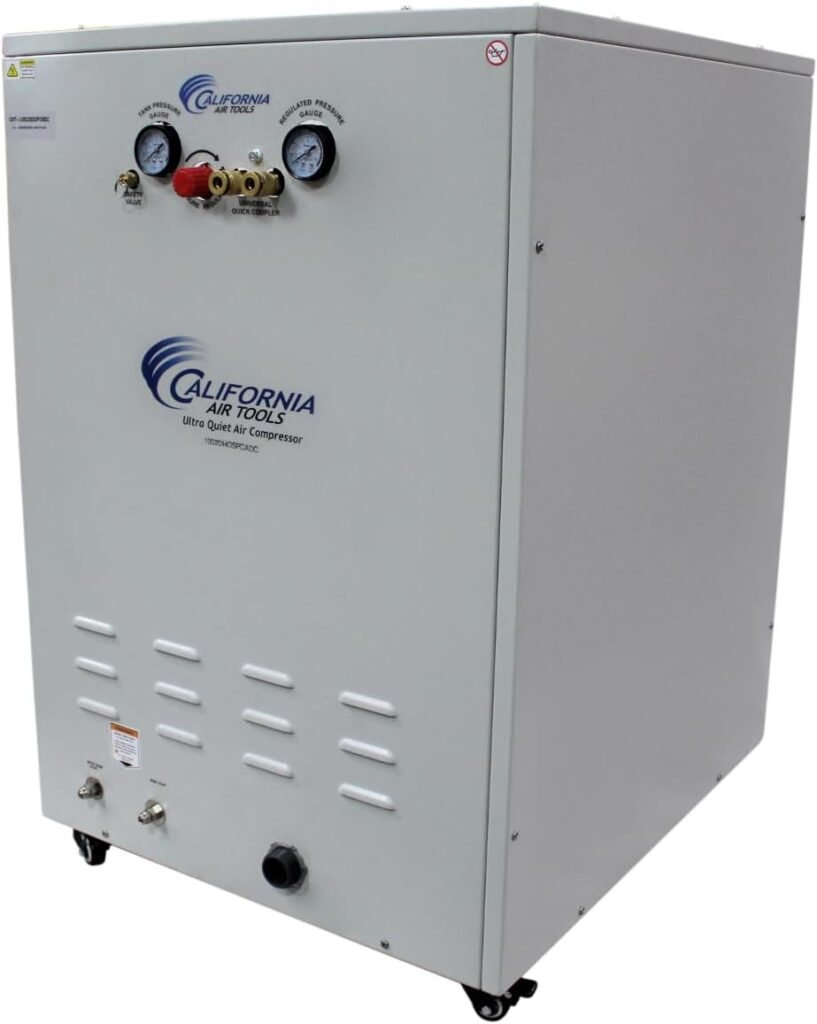

What Is the California Air Tools 10020HDSPCADC?
This air compressor is a 10-gallon, 2.0 HP, ultra-quiet, oil-free unit housed in a soundproof cabinet, designed for serious users who still care about noise levels and air quality. We get not only low noise and steady performance, but also a built-in air drying system that removes up to 98% of moisture, plus an automatic drain to handle condensation for us.
The full name is a mouthful: California Air Tools 10020HDSPCADC 10 Gal. 2.0 Hp Ultra Quiet & Oil-Free Air Compressor with 98% Air Drying System and Automatic Drain in Sound Proof Cabinet. Under that long name, though, is a thoughtfully engineered machine aimed at people who want professional results without an industrial roar.
Key Features at a Glance
Before we get into deeper impressions, it helps to have a clear snapshot of what this unit brings to our shop or garage. This table breaks down some of the main specs and what they actually mean for us.
| Feature | Specification | What It Means for Us |
|---|---|---|
| Tank Capacity | 10 gallons | Enough air for continuous light-to-medium tasks without constant cycling. |
| Motor Power | 2.0 HP | Strong enough for many air tools, inflation, and shop tasks. |
| Noise Level | 58 decibels | Quiet enough to hold a normal conversation while it runs. |
| Pump Type | Oil-free (Class 1) | Cleaner air, less maintenance, and no oil changes. |
| Air Drying System | 98% moisture removal | Extremely dry air, ideal for paint, finishing, and sensitive tools. |
| Filters | 0.01 micron prefilter + 5.0 micron (Class 2) filter & regulator | Clean, filtered air that protects tools and improves finish quality. |
| Connections | Two 1/4″ NPT “push to connect” female quick connectors | Fast tool changes and option to run two lines. |
| Max Pressure | 125 PSI | Suitable for most common shop and home tools. |
| Electrical | 110V / 60Hz / Single Phase | Plugs into standard household/shop power in North America. |
| Protection | Thermal overload protector + Condor pressure switch | Extra safety and reliable pressure control. |
| Cabinet | Soundproof housing with automatic drain | Low noise and no manual tank draining. |
From this overview, we can already see the theme: quiet operation, clean and dry air, and reduced maintenance, all rolled into a fairly compact setup.
Noise Level: How Quiet Is 58 Decibels Really?
We often hear “ultra quiet” in marketing, but 58 decibels puts this compressor in a genuinely different category. For comparison, normal human conversation sits around 60 dB. So when we run this unit, the sound is more like background hum than construction-site racket.
This matters a lot in everyday use. We can run it in a small shop, a garage attached to the house, or even in a studio-style workspace without feeling like we need ear protection all day. It is especially helpful when we share space with family members, coworkers, or neighbors who are sensitive to noise.
Real Comfort in Day-to-Day Use
In practice, the low noise level means we can comfortably:
- Talk to each other while the compressor cycles
- Listen to music or podcasts without cranking the volume
- Work late or early without disturbing others in the building
We might not even feel the need to stick the compressor in a separate room, since the cabinet and design help keep sound levels low right where we are working.
Oil-Free Pump (Class 1): Why It Matters
The oil-free pump is one of the core strengths of this model. With a Class 1 oil-free pump, we get cleaner air output and avoid the need to top off or change oil. That translates into lower maintenance and fewer contaminants in the air stream.
Oil carryover can be a huge problem for certain applications. With oil-filled units, we might end up with aerosolized oil getting into our tools, onto surfaces, or mixed into paint and finishes. Here, the design specifically helps reduce those risks.
Benefits of Oil-Free Operation
Using this oil-free system gives us several advantages:
- Cleaner air: Better for paint sprayers, airbrushes, and pneumatic tools that need oil-free air.
- Less mess: No oil mist to wipe off surfaces or worry about in our work area.
- Reduced maintenance: No oil changes, fewer service steps, and less downtime.
- Lower long-term cost: We save money on oil and service visits over time.
For anyone running a small shop, studio, or home garage, not having to schedule oil changes or deal with disposal is a real relief.
Air Drying System: Up to 98% Moisture Removal
Moisture in compressed air is more than an annoyance; it can ruin paint jobs, cause rust in tools, and damage sensitive equipment. The built-in air drying system on this compressor is rated to remove up to 98% of moisture, which is a big step up from basic filters alone.
Instead of bolting on a separate dryer, we get a drying solution integrated into the system. That saves space, setup effort, and, in many cases, additional cost.
Why Dry Air Is Such a Big Deal
When we use air tools or painting systems, moisture can cause:
- Water droplets in paint, leading to imperfections or fisheyes
- Interior rust inside tools and cylinders
- Clogged or corroded lines
- Inconsistent performance in sensitive equipment
By starting with very dry air, we give ourselves a strong foundation for both tool longevity and finish quality. For woodworking finishing, automotive painting, or even advanced DIY projects, this can make a visible difference.
Automatic Drain System: Less Hassle, Better Protection
Most traditional compressors need us to manually drain the tank to remove accumulated water. Forget to do it, and we risk tank corrosion, reduced capacity, and dirty, wet air. This model includes an automatic drain that regularly removes condensation, so we do not have to remember to crack open a valve at the end of the day.
This is particularly convenient in busy shops or shared workspaces, where no one is quite sure who drained the compressor last. The automatic function takes that small, but important, task off our plate.
How the Automatic Drain Helps Over Time
The automatic drain helps in a few key ways:
- Prevents tank corrosion by reducing standing water
- Maintains air quality since moisture is removed consistently
- Saves time by eliminating a daily or weekly manual step
- Increases reliability as we are less likely to run the system with a waterlogged tank
We still want to keep an eye on the system occasionally, but the day-to-day management becomes almost hands-free.
Filtration: Prefilter and Class 2 Air Filter & Regulator
On top of the drying system, this compressor includes serious filtration: a 0.01 micron prefilter and a 5.0 micron (Class 2) air filter and regulator. These components work together to remove fine particulates and help regulate pressure, giving us both clean air and consistent performance.
A 0.01 micron prefilter is extremely fine, capturing tiny contaminants that could otherwise pass through many standard filters. Then, the 5.0 micron filter and regulator ensure the air going out to tools is both clean and at the right pressure level.
Clean Air for Better Results
With this setup, we notice benefits across several use cases:
- Painting and finishing: Cleaner air means fewer defects, less rework, and better overall coatings.
- Pneumatic tools: Tools last longer and run more smoothly when not ingesting dust and debris.
- Precision applications: For delicate or high-precision tasks, cleaner air provides more predictable results.
Instead of building a filter stack piece by piece, we get a strong baseline system right in the cabinet.
Dual Pressure Gauges and Two Quick-Connect Ports
On the front of the unit, we have two pressure control gauges that help us see what the system is doing at a glance. Usually, one gauge shows tank pressure, while the other shows regulated outlet pressure. This makes it easy to monitor how the compressor is cycling and how much pressure we are feeding our tools.
We also get two female industrial “push to connect” quick connectors (1/4″ NPT). That means we can run two air lines at once, or keep two frequently used tools connected and ready.
Practical Workflow Improvements
This dual-port, dual-gauge setup gives us a smoother working rhythm:
- We can keep, for example, a brad nailer on one line and an air blower on the other.
- We can watch tank pressure and outlet pressure separately to avoid accidentally overdriving tools.
- We can quickly swap hoses and tools without messing with T-fittings or extra manifolds.
It might sound like a small detail, but in daily use it really cuts down on little interruptions and setup adjustments.

Condor Pressure Switch and Thermal Overload Protector
Under the hood, the system uses a Condor pressure switch to control when the compressor cycles on and off. Condor is a respected name in this area, and having a quality switch adds to reliability and consistency.
We also have a thermal overload protector, which helps guard the motor against overheating. If the motor is pushed too hard or the temperature gets too high, the overload protector steps in to prevent damage.
What This Means for Safety and Longevity
Together, these components build confidence in the system:
- Condor pressure switch: More accurate cut-in and cut-out points, fewer odd cycling behaviors, and smoother overall operation.
- Thermal overload protection: Less risk of burning out the motor when the workload is heavy or ventilation is less than ideal.
For us, it boils down to peace of mind: we can run the compressor hard when needed without constantly worrying about component failure.
Maximum Pressure and Power: 125 PSI and 2.0 HP
The compressor tops out at 125 PSI, which covers the needs of most general-purpose pneumatic tools, inflators, and shop uses. Paired with a 2.0 HP motor, the unit strikes a balance between capability and reasonable electrical requirements.
We are not looking at a massive industrial unit here, but for most DIYers, hobbyists, small shops, and even some light professional tasks, this performance envelope fits quite well.
What We Can Realistically Run
Within its range, we can comfortably power:
- Nailers and staplers (framing, finish, brad, roofing in many cases)
- Blow guns for cleaning and debris removal
- Tire and equipment inflators
- Some light to moderate spray painting tasks (depending on gun CFM requirements)
- Light pneumatic wrenches and ratchets, within limits
We always want to check the air consumption (CFM) of our tools and match it to this unit, but for many standard tools, the 10-gallon tank and 2.0 HP power plant are adequate.
Electrical Requirements: Standard 110V Convenience
This model runs on 110 Volts / 60 Hertz / Single Phase, which means it plugs into standard North American household or shop outlets. We do not need a special 220V circuit or industrial-grade power supply to use it.
That convenience is a big win for small shops, garages, and home setups. We can move it between work areas with flexible access to power and avoid hiring an electrician just to run a compressor.
Practical Setup and Placement
In terms of installation, we simply need:
- A suitable 110V outlet on a properly rated circuit
- Enough space for airflow around the soundproof cabinet
- A dry, reasonably clean area where the unit can sit permanently or semi-permanently
Once in place, usage becomes as easy as plugging in, connecting hoses, and setting outlet pressure as needed.
Soundproof Cabinet: A Quieter, Cleaner Installation
One of the standout physical features is the soundproof cabinet wrapped around the compressor. This is not just a cosmetic box; it is a functional enclosure designed to contain noise and protect the unit.
The cabinet has openings and design features that balance cooling and access with noise reduction. It allows us to integrate the compressor into our workspace without the usual visual and auditory chaos of bare compressors.
Benefits of a Cabinet Design
Housing the compressor in a cabinet gives us:
- Noise control: Even quieter operation than a bare ultra-quiet compressor.
- Neater appearance: The unit looks more like a piece of shop furniture than a tangle of hoses and metal.
- Some protection from dust and debris: The cabinet can help keep the interior components cleaner over time.
- Easier placement: It is more acceptable to keep in more visible or shared areas.
We just need to ensure that ventilation is not blocked, so the compressor can cool properly during use.
Everyday Usability and Workflow
Beyond specs, we care about how a machine fits into our daily routine. With this compressor, usability feels like a central design goal. From the quiet operation to the dual connectors and integrated filtration, most features are aimed at making our workflow smoother, not more complicated.
Controls are usually straightforward: on/off, pressure adjustment, and visible gauges. Once we have hoses attached and our tools connected, we can leave much of the management to the automatic systems (drying, draining, cycling).
Maintenance Routine
Even though it is oil-free and has an automatic drain, we still want to follow a simple maintenance routine:
- Periodically check filters and replace them as needed.
- Inspect hoses, fittings, and connections for wear or leaks.
- Make sure the automatic drain is functioning correctly and not clogged.
- Keep the exterior and cabinet reasonably clean for good airflow.
Compared with traditional oil-lubricated compressors, our ongoing workload is significantly lighter.
Who Is This Compressor Best For?
Not every compressor is for every user. Based on features and capabilities, this model is particularly well-suited for people and shops that value quiet, clean, and dry air above all else.
We see it fitting well in:
- Home garages and serious hobby shops: For woodworking, car projects, home renovation, and general tasks.
- Small professional shops: Cabinetmakers, finish carpenters, and light automotive work where noise matters.
- Studios and creative spaces: Artists, makers, and designers who use painting or air tools but need quiet operation.
- Shared or attached spaces: Wherever other people in the same building might be bothered by loud noise.
If we are running high-demand industrial tools all day long, we might need a larger tank or higher CFM unit. But for controlled, steady workflows, this compressor is a strong match.
Strengths of the California Air Tools 10020HDSPCADC
To better understand what makes this unit stand out, we can group its major strengths into a few categories. This helps us compare it with other compressors we might be considering.
Noise and Comfort
One of the biggest strengths is the 58 dB ultra-quiet rating, especially combined with the soundproof cabinet. This is far below many traditional compressors that run in the 80–90 dB range or higher.
For us, that means we can:
- Work longer without fatigue from constant noise
- Use the compressor in closer proximity to living or office spaces
- Maintain a more relaxed and productive shop atmosphere
Over months and years, that comfort becomes a meaningful benefit, not just a nice-to-have feature.
Air Quality and Dryness
The integrated 98% air drying system, 0.01 micron prefilter, and 5.0 micron (Class 2) filter and regulator are not typical in consumer-level compressors. We get both dry air and clean air straight out of the unit, which is a significant advantage for professional-quality results.
These features help:
- Improve paint and finish results
- Extend tool life
- Reduce rust and corrosion inside lines and tools
- Lower the chance of moisture-related issues in critical applications
We often have to add extra equipment to get this level of air quality; here, it is built right into the system.
Reduced Maintenance
Being oil-free and equipped with an automatic drain, the compressor minimizes time-consuming maintenance. Instead of oil checks, oil changes, and daily manual draining, we focus on periodic filter checks and general inspection.
For people who use their compressor regularly but do not want to become compressor mechanics on the side, this low-maintenance design is a real plus.
Usability and Flexibility
Dual pressure gauges, dual quick-connect ports, and standard 110V operation all contribute to convenient daily use. We can set it up in a wide range of locations and run two tools or lines from the same unit without complex plumbing.
The 10-gallon size is also a nice middle ground: more stable than a very small portable tank, while still reasonable to house in a modest shop.
Potential Limitations to Consider
No product is perfect, and it is helpful for us to be clear about where this compressor might not be the best fit or where we might need to adjust expectations.
Not a Heavy-Industrial Workhorse
While powerful for its size and design, this is not a massive, continuous-duty, industrial machine. For extremely high air consumption tasks, like heavy sandblasting, constant use of large impact wrenches, or large-scale production painting, we might hit its limits.
We should:
- Check the air consumption (CFM) requirements of our tools
- Compare them against the compressor’s output (from manufacturer documentation)
- Decide if our workload aligns with what this unit is designed to handle
For many shops, it will be more than enough, but extremely demanding users may need multiple units or a larger system.
Space and Mobility
Because it comes in a soundproof cabinet, this compressor is more of a stationary unit than a highly portable one. We can move it, but it is not as simple as tossing a small pancake compressor into the trunk.
We want to plan its position in our workspace so that hoses can reach where we need them and ventilation remains adequate.
Initial Investment
With all the integrated features—noise reduction, drying, filtration, automatic drain—the upfront cost may be higher than bare-bones compressors with similar tank capacity. However, over time, reduced maintenance, cleaner air, and less need for add-on accessories can offset that initial price.
It becomes a question of how much we value quiet, clean, dry air versus saving a bit on day-one expense.
Comparing to a Basic 10-Gallon Compressor
To understand value, it can help to imagine this unit alongside a standard, no-frills 10-gallon oil-lubricated compressor without a cabinet.
In that comparison, we typically see:
- Noise: The 10020HDSPCADC is dramatically quieter.
- Air quality: The built-in dryer and filters produce much cleaner, drier air.
- Maintenance: No oil changes and no manual draining vs. regular oil service and tank draining.
- Convenience: Dual ports, cabinet design, and automatic functions vs. more manual oversight.
If our only goal is sporadic inflation and occasional tool use, a simpler compressor might be enough. But if we care deeply about our working environment and results, the added systems pay off.
Using the Compressor for Specific Tasks
To make the value more concrete, it can help to look at a few common use cases and how this compressor supports them.
Woodworking and Finishing
For woodworking shops, we often use nailers, staplers, and sometimes HVLP or LVLP spray guns for finishes. Moisture and dust in the air line can ruin a carefully prepared stain or clear coat.
Here, the:
- 98% drying
- Fine filtration
- Oil-free design
all combine to help maintain consistency in finish quality. The quiet operation also fits well with focused woodworking environments, where loud equipment can be distracting during layout and assembly.
Automotive and Garage Work
In a typical garage, we might use the compressor for tire inflation, air blow-off, light impact tools, and possibly touch-up spraying. Noise in a garage attached to a house can be a real concern.
This unit lets us:
- Work without rattling the entire house
- Use clean, dry air for paint and detailing work
- Avoid dealing with oil changes and complicated maintenance
- Keep a more professional, tidy appearance with the cabinet housing
For light automotive work, it offers a good balance of capacity, air quality, and convenience.
Creative and Studio Applications
For artists, prop makers, or model builders using airbrushes or small spray systems, the quality of compressed air can make or break details. Noise can also completely disrupt the creative flow.
This compressor offers:
- Air quality suitable for detailed spray work
- Quiet operation that does not dominate the studio environment
- Minimal maintenance so we can focus on the creative side, not the machine
Instead of hiding the compressor in another room, we might comfortably keep it in the same space we work in.
Long-Term Ownership: What We Can Expect
Thinking beyond the first month, we want to understand how this compressor behaves over years of use. While real longevity depends on workload and care, the design choices give us a reasonable expectation of stable performance.
The oil-free pump, combined with solid-brand components like the Condor pressure switch and thermal protection, suggests that the unit is built with both convenience and durability in mind. As long as we respect manufacturer limits and keep up with basic checks and filter replacements, we can expect reliable service over time.
Because we are not doing oil changes, our ongoing costs mostly involve:
- Occasional filter replacements
- Electricity usage
- Normal wear-and-tear items like hoses and fittings
The automatic drain and drying system further reduce sources of internal wear, by keeping moisture from accumulating and corroding the tank or lines.
Our Overall Take on the California Air Tools 10020HDSPCADC
When we look at the full picture, this compressor is much more than a basic air tank with a motor. It is a compact, self-contained air system that prioritizes quiet operation, air quality, and ease of use.
We see it as an excellent choice for:
- Users who work in noise-sensitive environments
- Shops that care deeply about cleanliness and finish quality
- People who prefer low-maintenance, oil-free systems
- Anyone who wants a more professional, integrated air setup without assembling filters and dryers piece by piece
The tradeoffs are mainly around initial cost and extreme heavy-duty demands. For most serious hobbyists and many small professional operations, those tradeoffs are more than acceptable, given the benefits to comfort, results, and long-term simplicity.
In our view, the California Air Tools 10020HDSPCADC 10 Gal. 2.0 Hp Ultra Quiet & Oil-Free Air Compressor with 98% Air Drying System and Automatic Drain in Sound Proof Cabinet stands out as a thoughtfully engineered solution for those of us who want quiet, clean, and reliable compressed air in a single, well-organized package.

Disclosure: As an Amazon Associate, I earn from qualifying purchases.