Have we ever wished our air compressor could be powerful, quiet, low-maintenance, and still give us clean, dry air right out of the tank?
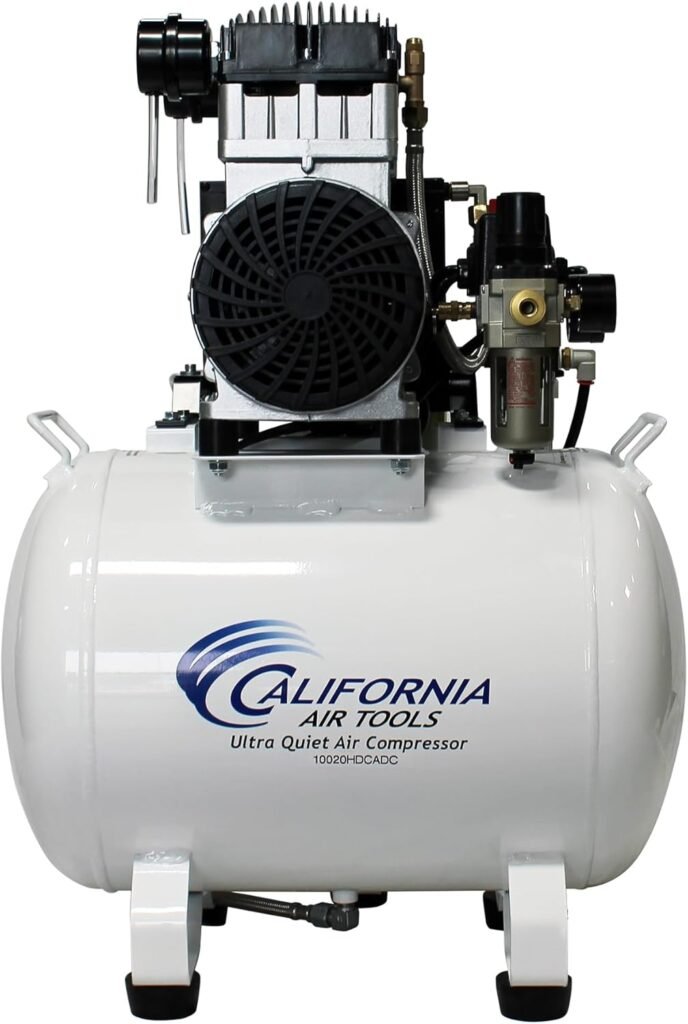

Why We Chose the California Air Tools 10020HDCADC
When we started looking for a new compressor, we were tired of three things: ear-splitting noise, constant draining of the tank, and dealing with moisture that ruined tools and finishes. The California Air Tools 10020HDCADC Powerful 2.0 HP Ultra Quiet, Oil-Free Air Compressor promised to solve all three.
This unit gives us a 2.0 HP motor, a 10-gallon tank, a built-in 98% air drying system, and an automatic drain valve, all running at about 70 dB. That combination is not common, and in regular use, it genuinely changes how comfortable compressed air work can be.
Key Features at a Glance
To understand what we are really getting, we found it helpful to break the main specs into a simple table. It gives us a quick snapshot before we go deeper into performance and real-world use.
| Feature | Specification / Description |
|---|---|
| Model | California Air Tools 10020HDCADC |
| Motor Power | 2.0 HP |
| Pump Type | Oil-free dual piston |
| Noise Level | 70 dB |
| Air Delivery (CFM) | 6.40 CFM @ 40 PSI / 5.30 CFM @ 90 PSI |
| Tank Capacity | 10 gallon horizontal steel tank |
| Operating Speed | 1680 RPM |
| Weight | ~100 lb |
| Air Drying System | 98% Air Dryer (ISO 8573 2.3.1 compliant) with aftercooler |
| Drain System | Automatic drain valve |
| Power Source | Electric |
| Dimensions | Approx. 20″ (L) x 28″ (W/D) x 26″ (H) |
| Intended Use | Noise-sensitive settings, clean/dry air applications, general shop and garage work |
This table sums up why we see this compressor as a good fit for both serious DIY users and light professional use where clean, dry air and lower noise really matter.
Ultra Quiet Performance (70 dB Noise Level)
How Quiet Is 70 dB in Real Life?
Noise was one of the first things that stood out. At around 70 dB, the 10020HDCADC is dramatically quieter than many traditional shop compressors. Instead of feeling like we have a jackhammer in the corner, the sound is more like a loud conversation or a dishwasher.
We can have a conversation nearby without shouting over the compressor. In a garage or small workshop, this level makes a huge difference, especially if we are around it for several hours at a time.
Why Low Noise Matters in Our Workspace
Running loud equipment is not just annoying; it is exhausting over time and can even impact hearing in the long run. With this unit, we are less tempted to shut it off between tasks just to enjoy some quiet.
For those of us who use a shared space, work from home, or have neighbors close by, the 70 dB rating opens up possibilities. We can work earlier in the morning or later in the evening without feeling guilty about disturbing everyone.
Oil-Free Dual Piston Pump
Low Maintenance and Cleaner Operation
The oil-free pump is one of the most practical features. With an oil-free dual piston design, we do not have to think about changing oil, checking oil levels, or worrying about oil carryover into the air lines.
For many of us, less maintenance means less opportunity to neglect the compressor. We get a system that is easier to own, and our air output stays cleaner because there is no compressor oil in the mix.
Durability and Long Service Life
The manufacturer rates the pump with a life cycle of over 3,000 hours. For most home shops and even light commercial use, that is quite a lot of runtime. Because the pump is oil-free, we might expect compromises, but this dual piston design is built with durability in mind.
This also makes the compressor versatile in different climates and environments. With no oil viscosity to worry about in colder temperatures, we can operate the compressor in varied conditions with more confidence.
Powerful 2.0 HP Motor and CFM Output
Balancing Power, Speed, and Longevity
The 2.0 HP motor runs at 1680 RPM, which is relatively low compared to many high-speed, high-noise compressors. This slower speed helps reduce wear, keep the noise down, and extend the life of the pump and motor.
We found this balance between horsepower and RPM gives us solid airflow without making the compressor feel overworked. It is strong enough for many demanding tasks but not so aggressive that it becomes a maintenance headache.
What the CFM Ratings Mean for Our Tools
The air delivery is rated at:
- 6.40 CFM @ 40 PSI
- 5.30 CFM @ 90 PSI
These numbers are central to matching the compressor to our tools. At 90 PSI with over 5 CFM, we can comfortably run:
- Impact wrenches (especially 3/8″ and many 1/2″ models)
- Framing, brad, and finish nailers
- Blow guns and air nozzles
- Smaller HVLP spray guns (for some finishing tasks)
- Air ratchets and similar medium-demand tools
We do need to be realistic though. For extremely high-demand tools used continuously—such as sandblasters or large industrial sanders—we might need a larger, more industrial setup. For most general shop work, these CFM numbers are very usable.
10-Gallon Horizontal Steel Tank
Capacity for Real Work Without Being Oversized
The 10-gallon tank feels like a sweet spot for many of us. It is large enough to prevent constant cycling if we are doing intermittent tasks such as nailing, filling tires, or using blow guns.
At the same time, it is not so big that the compressor becomes impossible to store. Ten gallons lets us run many tools with reasonable cycle times and gives us some buffer when a task suddenly needs more air than expected.
Space-Saving Horizontal Design
The horizontal layout helps this unit tuck under a bench, desk, or cabinet. That means we can keep the compressor out of the way and still have quick access when needed.
If our shop is short on floor space or we share a garage with vehicles and storage, this footprint is very manageable. The weight is around 100 lb, so we probably will not want to lift it by ourselves, but for a stationary or semi-stationary compressor, that is a fair tradeoff.
98% Air Drying System (ISO 8573 2.3.1 Compliant)
Why Moisture in Compressed Air Is a Problem
Any time we compress air, we get moisture. That water ends up in the tank, in our lines, and eventually in our tools or on our projects if we do not manage it. Moisture can:
- Rust air tools and internal components
- Contaminate paint and finishes
- Cause fisheyes, blushing, and poor adhesion in coatings
- Promote corrosion in piping and fittings
Instead of bolting on a separate dryer right away, this compressor comes with a built-in 98% air dryer.
How the 98% Air Dryer Helps Our Work
The included air dryer is rated to remove about 98% of the water vapor from the compressed air, following ISO 8573 2.3.1 standards. That is a big step up from just running a basic compressor with no drying system.
For our uses, this means:
- Cleaner air for paint and finish work
- Less water blowing out of blow guns and nailers
- Reduced rust risk in air tools and fittings
We might still choose to add final filters or dryers at the point of use for ultra-critical applications (for example, high-end automotive or furniture finishing), but this built-in system gets us much closer to clean, dry air than a typical off-the-shelf compressor.
Integrated Aftercooler for Cooler, Drier Air
What the Aftercooler Does
The aftercooler acts as a heat exchanger to cool the hot compressed air before it reaches the dryer and the tank. As air cools, moisture condenses and can be managed more effectively.
By combining the aftercooler with the air dryer, the system can pull more moisture out of the air stream, improving both air quality and dryer efficiency.
Practical Benefits of an Aftercooler in Our Setup
Cooler discharge air reduces stress on the rest of the system and enhances the performance of the dryer. In day-to-day terms, that means we see:
- Less condensation in our hoses
- More stable air quality over longer runs
- Better consistency when we are working for extended periods
It is easy to ignore the value of an aftercooler until we have worked with a compressor that does not have one. Then we notice how much wetter the system can feel, especially in humid climates.

Automatic Drain Valve
No More Forgetting to Drain the Tank
One of the chores many of us overlook is draining the air tank daily. Over time, moisture collects, and if we forget or get lazy, the inside of the tank starts rusting. The 10020HDCADC includes an automatic drain valve that handles this task for us.
Instead of crawling under the tank or remembering to twist a manual drain every session, the system purges moisture automatically according to its built-in timing or pressure cycles.
Why Automatic Draining Protects Our Investment
By automatically removing water, we are helping to:
- Extend the life of the tank
- Keep corrosion under control
- Reduce water carryover into the air lines
This is one of those features that does not feel flashy, but it quietly saves money and reduces risk over the life of the compressor.
Build Quality and Durability
Steel Tank and Robust Construction
The 10-gallon horizontal steel tank is built to handle typical shop and garage use. The compressor weighs about 100 lb, which gives it a solid, planted feel. It is heavy enough to stay put but still within a range where two people can move it when needed.
The components, including the pump, motor, dryer, and aftercooler, are arranged in a compact, serviceable way. We can reach most critical parts without disassembling half the machine.
Oil-Free Pump and Long Life Expectancy
The oil-free dual piston pump is rated for over 3,000 hours of life. For many of us who use the compressor intermittently, that can translate to years of use.
Because the pump is oil-free, we do not have to worry about oil degradation, contamination, or neglecting oil changes. That simplicity makes the compressor more forgiving for users who want a reliable system without constant upkeep.
Noise-Sensitive Applications and Environments
Using It in a Garage, Workshop, or Basement
With the 70 dB rating, we can comfortably place this unit in a garage or workshop that is attached to our home. The sound is noticeable but not harsh. It will not dominate the space the way many louder compressors can.
For a basement or indoor workshop, the combination of quiet operation and compact design is attractive, especially for hobbyists, makers, and small professional shops.
Friendly for Shared and Urban Spaces
In apartments, townhouses, or tightly spaced neighborhoods, loud equipment can be a real problem. The relatively low noise output of this compressor helps us maintain better relationships with neighbors and family members.
We can run it while others are home without it feeling like we are shaking the walls or drowning out normal activity in adjacent rooms.
Real-World Use Cases
Automotive and Mechanical Work
For automotive work, this compressor covers a lot of ground. We can use it to:
- Run impact wrenches and ratchets (within the CFM limits)
- Fill tires quickly
- Operate blow guns for cleaning parts
- Use with air chisels and smaller grinders intermittently
We should always check our specific tools’ CFM requirements, but for most general automotive tasks, the 5.30 CFM @ 90 PSI rating is very usable.
Woodworking and Finish Work
In woodworking, air is often used for:
- Brad and finish nailers
- Framing nailers (for shop, home, or outbuilding projects)
- HVLP spray guns for paint, lacquer, or clear finishes
- Cleaning dust from tools and work surfaces
Here, the clean, dry air from the 98% air dryer is particularly valuable. We do not want moisture compromising our finishes or blowing water onto surfaces we just prepared.
For serious finishing work, we might still add an additional inline filter or regulator near the spray gun, but starting with drier air from the source gives us a big advantage.
Small-Scale Painting and Coating
If we run smaller HVLP or LVLP guns within this compressor’s flow capacity, we can do:
- Cabinet painting
- Touch-ups on vehicles
- Furniture finishing
- Metal parts and machinery coating
We will want to pay attention to the compressor’s duty cycle and allow recovery time for long, continuous spraying sessions. For lighter or intermittent work, the 10-gallon tank and CFM output handle things well.
General Home and DIY Projects
For day-to-day tasks, this compressor is more than enough. We can use it to:
- Inflate car and bike tires
- Power staplers and light-duty air tools
- Blow out filters and radiators
- Assist with seasonal chores like blowing out irrigation lines (within system specs)
Over time, having reliable compressed air on hand becomes a core part of how we handle both small and medium projects around the house.
Ease of Use and Everyday Convenience
Simple Operation and Quick Startup
The basic controls are straightforward: connect power, set our regulator, and go. The compressor starts, fills the tank, and then cycles on and off automatically based on pressure.
The oil-free design and automatic drain mean two of the main “maintenance items” are essentially taken off our task list. That frees us to focus on using the air instead of constantly tending to the machine.
Positioning and Storage
With its horizontal design and compact footprint, we can usually find a corner, under-bench space, or wall-adjacent spot for it. Once it is in place, we are not likely to move it often, but the manageable size keeps it from feeling overwhelming in a smaller shop.
We can run longer air hoses to wherever we need air, rather than trying to roll the whole unit around all the time.
Energy, Noise, and Comfort Considerations
Efficiency Versus Oversized Compressors
Compared to larger, more industrial compressors, this 2.0 HP unit uses less power and produces less noise yet still offers enough performance for a wide range of users. We are not paying the operating cost of a 5–7.5 HP machine for work that does not require that much air.
This balance helps us keep both noise and energy usage in check without sacrificing daily functionality.
Comfort During Long Work Sessions
Running a loud compressor all day can be draining. The softer sound profile of the 10020HDCADC makes it easier to stay in the shop longer without feeling worn out by constant noise.
We can listen to music, podcasts, or conversations without everything being drowned out whenever the compressor cycles. That improves the overall comfort of our workspace in a way that is easy to underestimate until we experience it.
Pros and Cons
What We Really Like
- Very Quiet Operation (70 dB): Easier on our ears and our environment, suitable for attached garages and indoor spaces.
- Oil-Free Dual Piston Pump: Low maintenance, no oil changes, cleaner air output.
- Integrated 98% Air Dryer and Aftercooler: Far drier air than a typical bare compressor, beneficial for tools and finishing.
- Automatic Drain Valve: Reduces corrosion risk and removes a manual chore.
- 2.0 HP Motor with 5.30 CFM @ 90 PSI: Strong enough for many automotive, woodworking, and DIY applications.
- 10-Gallon Tank in a Compact Footprint: Good blend of capacity and space-saving design.
- Suitable Across Temperature Ranges: Oil-free design handles varied climates and terrains more comfortably.
Where We See Tradeoffs
- Weight (~100 lb): While stable, it is not the easiest unit to move frequently, especially for one person.
- Not for Continuous, High-CFM Industrial Use: Users with very large sandblasters or multiple air-hungry tools running non-stop may need a higher-capacity system.
- Requires Adequate Electrical Supply: We need to ensure our circuit can handle a 2.0 HP compressor load without frequent tripping.
- Price Reflects the Added Features: The integrated dryer, aftercooler, and ultra-quiet design may cost more than bare-bones compressors with similar tank sizes.
Who This Compressor Is Best For
Ideal Users and Environments
We see the California Air Tools 10020HDCADC as a strong choice if we are:
- Running a home workshop or garage where noise is a concern
- Doing automotive and mechanical work with moderate air demands
- Working on woodworking and finishing where drier air improves results
- Operating in a shared or attached space where we want quieter equipment
- Interested in low-maintenance ownership with features like oil-free operation and an automatic drain
For users who appreciate a quieter workspace and want cleaner, drier air without building a separate dryer system from scratch, this model fits especially well.
Users Who Might Need Something Different
We might want to look at alternative setups if we are:
- Running multiple high-demand pneumatic tools at the same time, continuously
- Operating a large body shop or industrial facility that requires very high CFM
- Needing a highly portable, lightweight unit for constant jobsite movement
In those scenarios, a larger compressor or a different form factor might align better with our workload.
Practical Tips for Getting the Most Out of It
Plan Our Air System Layout
Even with the built-in dryer and aftercooler, we get the best results if we:
- Use quality air hoses with proper diameter for our tools
- Keep hose runs as short as reasonably possible for high-demand tools
- Add point-of-use regulators and filters for critical tasks like fine finishing
Designing our air system thoughtfully can help us squeeze maximum performance and air quality out of the compressor.
Maintain a Simple Checkup Routine
Even though this unit is lower-maintenance than oil-lubed compressors, we should still:
- Periodically check for air leaks in fittings and hoses
- Inspect the dryer and any filters we add for signs of saturation or contamination
- Keep the area around the compressor clean and unobstructed for proper cooling
A few minutes every so often can help us avoid small issues that might grow into bigger problems later.
Long-Term Value and Ownership Experience
Balancing Upfront Cost with Lifespan
When we factor in the included dryer, automatic drain, and ultra-quiet operation, the 10020HDCADC becomes more than just a tank and pump. It is closer to a ready-to-go air system for many small shops.
Over time, the lower maintenance, reduced moisture issues, and improved comfort can easily justify the cost compared to running a louder, wetter, more labor-intensive compressor.
How It Changes Our Day-to-Day Workflow
The combination of quiet running, clean air, and minimal daily chores means we are more likely to use the compressor freely instead of treating it as a noisy, messy last resort.
We can:
- Turn it on and forget about it while we work
- Feel better about using air tools often
- Focus on the task at hand, not on babying the equipment
That shift in how we relate to our tools is subtle but meaningful, especially if we are in the shop frequently.
Our Overall Verdict
If we are looking for a powerful yet quiet air compressor that gives us drier, cleaner air out of the box and asks for very little maintenance, the California Air Tools 10020HDCADC Powerful 2.0 HP Ultra Quiet, Oil-Free Air Compressor with 10-gallon tank, 98% air drying system, aftercooler, and automatic drain valve is an impressive option.
We get:
- 2.0 HP of power at a gentle 1680 RPM
- 5.30 CFM at 90 PSI for a wide range of tools
- Significantly reduced noise at around 70 dB
- An integrated system that tackles moisture and tank drainage for us
For home workshops, garages, and light professional use in noise-sensitive environments, this compressor strikes a smart balance between performance, comfort, and air quality. It is not a giant industrial unit and does not pretend to be, but within its category, it stands out as a thoughtfully designed, user-friendly solution for anyone who wants powerful air without turning their workspace into a noise and moisture problem.

Disclosure: As an Amazon Associate, I earn from qualifying purchases.