We’ve tested twin-tank air compressors that balance power, portability, and steady airflow for real shop work. From oil-free quiet runners to oil-lubed workhorses, the right pick comes down to CFM needs, noise limits, and duty cycle. We’ll compare standout models for nailers, spray guns, and tire work, and share who each serves best. If you want fewer interruptions, faster recovery, and manageable weight, the shortlist below is where we’d start.
Senco PC1131 Compressor, 2.5-Horsepower (Peak) 4.3 gallon


March 16, 2026 10:39 am
Looking for twin‑tank muscle without jumping to a jobsite wheelbarrow unit? We like Senco’s PC1131 for its durable, oil‑lubed, direct‑drive design and stout numbers: 2.0 HP running (2.5 HP peak), 4.4 SCFM at 90 PSI, 4.3 CFM at 100 PSI, and 125 PSI max. The 4.3‑gallon twin tanks and heavy‑duty induction motor support finish to light framing, nailers, small spraying, and intermittent multi‑tool use.
Expect tradeoffs. At 60 lbs and 14.5″ x 20.5″, it’s sturdy, not grab‑and‑go. Noise is typical piston clatter. Cold starts below 40°F may require warm‑up. Maintain the splash‑lubed oil, and you’ll likely enjoy long service. 115V, 1/4″ coupler included.
Best For: Contractors and serious DIYers who need a durable, oil‑lubed twin‑tank compressor for finish work to light framing and intermittent multi‑tool use without stepping up to a wheelbarrow unit.
Pros:
- Strong output for size: 4.4 SCFM @ 90 PSI (4.3 CFM @ 100 PSI) with 125 PSI max supports nailers, small spraying, and light framing
- Durable build: heavy‑duty induction motor, cast‑iron components, and oil‑splash lubrication for long service life
- 115V operation with included 1/4″ universal coupler; twin‑tank design provides stable air supply
Cons:
- Heavy at 60 lbs and 14.5″ x 20.5″; not very portable
- Louder piston-style operation compared to quieter oil‑free or scroll units
- Cold starts below ~40°F can be difficult; may require warm‑up and extra care in winter
Stark USA 3.5HP 10 Gallon Ultra Quiet Air Compressor (Horizontal Tank)
March 16, 2026 5:10 am
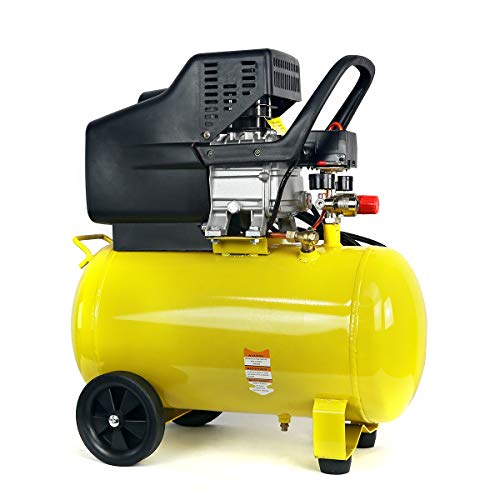
Need ultra-quiet power without a bulky footprint? We like the Stark USA 3.5HP 10 Gallon Ultra Quiet Air Compressor for shops and garages that demand low noise and steady output. It delivers 8.37 CFM with a 3.5 HP motor spinning at 3450 r/min, capped at 125 PSI. At just 62 dB, we can run it in a basement workshop without bothering anyone.
The horizontal 10-gallon, structural-steel tank uses seamless welding for durability and leak resistance. Recovery is quick—refilling in minutes—so we keep nailers, impact wrenches, and spray guns moving. It’s fit for woodworkers, mechanics, contractors, and DIYers alike, imported and ready for everyday duty.
Best For: DIYers, woodworkers, mechanics, and contractors who need an ultra-quiet, compact 10-gallon compressor with steady output for garages, basements, and small shops.
Pros:
- Ultra-quiet 62 dB operation suitable for residential and indoor use
- Strong performance: 3.5 HP motor, 8.37 CFM, 125 PSI, with rapid tank recovery
- Durable structural-steel, seamless-weld horizontal tank for leak resistance
Cons:
- 10-gallon capacity may be limiting for extended high-demand pneumatic use
- Capped at 125 PSI, which may not meet requirements for some specialty tools
- Imported unit; parts/service availability may vary by region
ARB (CKMTP12) 12V Twin Motor High Performance Portable Air Compressor

March 16, 2026 10:39 am
Serious off-roaders and mobile mechanics will appreciate how ARB’s CKMTP12 pairs twin motors with a 4-liter integrated tank to deliver up to 6.16 CFM and a 100% duty cycle at room temp—meaning rapid, continuous air on the trail without cooldowns. We like its 12V portability, 135–150 PSI operating range, and quiet 65 dB output. The waterproof, impact-resistant case organizes the 20 ft hose, blow gun, and fittings, while braided stainless lines and anodized mounts boost durability. In use, we’ve seen 33-inch tires jump from 15 to 37 PSI in under two minutes. Downsides? It’s heavy (33 lb) and pricey, with occasional thermal trip reports.
Best For: Off-road enthusiasts, overlanders, and mobile mechanics who need fast, continuous 12V air for tire inflation and light air tools in a portable, durable package.
Pros:
- High output: 6.16 CFM no-load (4.65 CFM at 29 PSI) with 100% duty cycle at room temp for continuous use
- Integrated 4L tank, pressure switch, and quiet 65 dB operation in a waterproof, impact-resistant case
- Durable build with braided stainless lines, anodized mounts, and IP55 cooled twin motors
Cons:
- Heavy at 33 lb and fairly large (19.5 x 14.5 x 7.75 in) for portable use
- Pricey compared to smaller/cheaper compressors; some wish for multi-tire inflation accessories included
- Occasional reports of thermal protection tripping and early unit failures requiring exchange
California Air Tools 8010 Ultra Quiet Oil-Free Air Compressor (8 Gallon)

March 15, 2026 3:47 pm
Quiet power defines the California Air Tools 8010: a 60 dB, oil-free 1.0 HP dual-piston unit that hits 2.2 CFM at 90 PSI and tops out at 120 PSI—perfect for indoor projects, trim work, and general air tools without drowning out conversation. We like its 8-gallon steel tank, 110V/8-amp draw, and quick times: about 165 seconds to fill and 60 seconds to recover from 90 to 120 PSI. At 48 lbs with a wheel kit, it’s easy to position. The oil-free pump boasts 3,000+ hours before wear, automatic shut-off, and a 1-year warranty. Users report quiet operation, simple assembly, and broad hose compatibility.
Best For: DIYers, contractors, and homeowners needing a quiet, low-maintenance 8-gallon compressor for indoor projects, trim work, and general air tools in noise-sensitive spaces.
Pros:
- Ultra-quiet 60 dB operation suitable for indoor use and conversation-level environments
- Oil-free dual-piston pump with 3,000+ hour life and quick recovery (90–120 PSI in ~60 seconds)
- Portable 48 lb design with wheel kit, broad hose/tool compatibility, and 110V/8A power
Cons:
- Max pressure capped at 120 PSI and 2.2 CFM @ 90 PSI may limit high-demand pneumatic tools
- Steel 8-gallon tank adds bulk compared to smaller, truly portable units
- 1-year limited warranty is shorter than some competitors
California Air Tools Ultra Quiet 4.6-Gallon Portable Air Compressor (CAT-4610AC)

March 16, 2026 10:39 am
Looking for a compact twin‑tank that won’t wake the house yet still runs two trim guns? The California Air Tools CAT‑4610AC nails that brief. Its 1.0 hp oil‑free dual‑piston pump delivers 2.2 CFM at 90 PSI (3.10 at 40), topping out at 120 PSI, and hums at just 60 dB. The rust‑free 4.6‑gallon aluminum twin tanks and 44‑pound frame keep it portable yet durable.
We like the dual gauges and push‑to‑connect outlets—easy to run two trim guns or a single framer in short bursts. It sips 8.5 amps on 110V, even a 2500‑watt generator. Best for indoor trim, nailing, inflation, and light‑duty tools. One‑year warranty.
Best For: Quiet, portable indoor trim work and light-duty tasks where running one framer in short bursts or two trim guns with minimal noise is a priority.
Pros:
- Ultra-quiet 60 dB operation suitable for indoors and noise-sensitive environments
- Oil-free dual-piston pump with long life (3000+ hours) and low maintenance; rust-free aluminum twin tanks
- Dual push-to-connect outlets and gauges support two trim guns; low 8.5A draw on 110V or small generator
Cons:
- Limited to 120 PSI and 2.2 CFM @ 90 PSI—struggles with high-demand, continuous-use air tools
- 4.6-gallon capacity means more frequent cycling on larger jobs
- Heavier than tiny pancake units (about 44–45.5 lbs) and no mention of wheels for easier transport
Factors to Consider When Choosing Twin Tank Air Compressors
Before we pick a twin-tank compressor, let’s match airflow (CFM) and PSI to the tools we’ll run and choose a tank size that supports our duty cycle. We should weigh noise ratings and decide between oil-free convenience or oil-lubed longevity. Finally, portability matters—let’s check weight, handle design, and wheel quality for jobsite or garage use.
Airflow and PSI
How much airflow at a given pressure do our tools really need? We should match cubic feet per minute (CFM) at the PSI our tools specify. Many twin-tank units deliver about 4.3–4.6 CFM at 90–100 PSI—enough to sustain brad nailers, small impact drivers, or two light tools at once. If we run sanders, sprayers, or grinders, we’ll want higher CFM at that same PSI to avoid lag.
Maximum operating pressure matters, too. Twin-tank compressors often reach 125–150 PSI, giving us headroom for tools that spike demand. What really counts is sustained CFM at the target PSI, not peak horsepower. Dual-stage or well-designed twin-tank systems improve duty cycle and recovery, keeping airflow steadier between draws. Compare CFM at the PSI you’ll actually use.
Tank Size Matters
Why does tank size matter so much with twin-tank compressors? Because storage dictates how long we can work between motor cycles and how steady our airflow feels. Twin tanks naturally boost total air reserve versus single-tank units with the same horsepower, so we get longer runtimes and fewer interruptions.
Go larger when tools need consistent CFM at higher pressures. An 8–10 gallon setup smooths delivery and cuts start-stop cycling for intermittent use. The tradeoff: bigger tanks take longer to recover from empty, though they hold pressure longer during peak demand.
For nailers and small spray jobs, 4–6 gallon twin-tank models hit the sweet spot—enough reserve without sacrificing portability. If we value grab-and-go convenience and tight storage, smaller capacities shine; for burst-heavy tools, higher-capacity twins win.
Noise Level Rating
Curiously, noise matters as much as pressure when we’re working in garages, basements, or shared shops. Twin-tank models often earn “ultra-quiet” badges, with listings around 60–65 dB. The CAT-4610AC, for instance, is rated at 60 dB, making conversation-level operation realistic. Lower decibels mean less fatigue and fewer complaints during long sessions or in noise-sensitive spaces.
We should weigh the posted dB number against how we’ll actually use the compressor. Sound often rises with load, distance, and room acoustics. Some units claim 60–62 dB, yet may run louder when cycling hard. Consider duty cycle, too: higher-output bursts can push noise up briefly. Designs with twin pumps and enhanced cooling typically keep sound down, making them ideal for indoor workshops.
Oil-Free Vs Oil-Lubed
When we pick between oil-free and oil-lubed twin-tank compressors, we’re really choosing a maintenance rhythm and duty profile. Oil-free systems cut upkeep—no oil changes, fewer leak worries—and many run cooler and, in some models, quieter for indoor tasks. They rely on engineered seals and filters, which suits intermittent nailers, brad guns, and quick trim work. Under heavy, continuous cycles, though, the lack of lubrication can accelerate wear and shorten lifespan.
Oil-lubed compressors use splash or direct splash lubrication to protect internals during sustained loads. They’re built for durability, ideal for contractors who run impact wrenches, sanders, and framing guns all day. Expect periodic oil drains and refills to keep performance tight. Choose oil-free for light, stop‑start workflows; choose oil-lubed for regular, high-demand operation.
Portability and Weight
How portable do we need our twin‑tank compressor to be? If we’re climbing stairs or moving between rooms, weight matters first. Lightweight models around 44–60 lbs are genuinely carryable; heavier setups demand wheels or a second set of hands. We should match weight to our typical work pattern and terrain.
Portability features make the difference. Integrated wheels, a sturdy fold‑up handle, and compact dimensions turn a bulky twin‑tank into a roll‑anywhere tool. If we’re loading trucks, look for balanced frames and protected gauges to handle bumps.
Twin‑tank designs split storage, which helps recovery and keeps airflow steadier for intermittent tools. Noise also affects practical portability—units in the 60–mid‑60 dB range are easier to use in finished spaces, occupied homes, or shared shops without drawing complaints.
Duty Cycle/Runtime
Portability gets us to the job; duty cycle and runtime keep us working once we’re there. Duty cycle is the percent of a 10-minute window the compressor can run under load. A higher duty cycle means longer continuous operation before cooling. While some units claim 100% at room temperature, real-world duty drops as ambient heat and tool load rise.
Twin tanks help runtime by storing more air, so the motor cycles less during intermittent use. But storage isn’t everything. We also weigh recovery time—the refill rate after cut-in—because faster recovery extends productive tool time.
For sustained, high-demand tasks, we look at tank size plus CFMs at the target PSI. That pairing estimates how long we can work before pressure sags and cycling interrupts us.
Conclusion
We’ve covered five standout twin-tank air compressors that balance power, portability, and quiet performance for real-world shop tasks. Whether we value oil-free convenience, oil-lubed longevity, or 12V portability, there’s a fit for our tools and space. Let’s match CFM to our nailers and sprayers, consider duty cycles and noise, and choose the footprint we can live with. Pick confidently, maintain regularly, and we’ll enjoy faster recovery, fewer interruptions, and durable performance in our garage or basement.