If we’re shopping used gas air compressors in 2025, we should focus on output, reliability, and value, not hype. We’ve narrowed the field to three standouts: a budget-friendly portable 9-gallon workhorse, a rugged 30-gallon two-stage unit for steady high PSI, and a compact 13HP option with electric start for field jobs. We’ll compare CFM, tank size, and pump type—plus where to spot real deals—so we don’t overpay for compromises.
RYC Automotive Air Conditioning Compressor EG942


February 25, 2026 7:16 pm
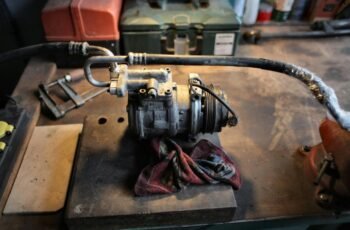
If you’re replacing a factory A/C unit on a specific vehicle and want a ready-to-install solution, the RYC Automotive Air Conditioning Compressor EG942 stands out with its pre-filled oil and included clutch. We like that RY AC Compressors tests each unit for noise, leaks, and durability, so we can install with confidence. It’s an automotive part, painted exterior, measuring 12 x 12 x 12 inches and about 15 pounds. Fit is easy to confirm via Amazon’s Garage, and there’s a 30-day voluntary return policy plus warranty info. While not a gas shop compressor, this EG942 offers reliable, vehicle-specific cooling performance.
Best For: Vehicle owners replacing a factory A/C compressor who want a ready-to-install, pre-oiled unit with an included clutch and verified fit via Amazon Garage.
Pros:
- Pre-filled with the correct oil and includes A/C clutch for quicker installation
- Each unit tested for noise, leaks, and durability for reliable performance
- Easy fit confirmation via Amazon Garage, plus 30-day return policy and warranty info
Cons:
- Vehicle-specific fit means not universal; must verify compatibility
- Limited customer reviews (only 2) may not reflect long-term reliability
- Not a shop/gas air compressor; only for automotive A/C replacement tasks
Gas Driven Portable Air Compressor, 6.5HP, 9 Gal, 125 PSI, 12 CFM
February 2, 2026 1:54 pm
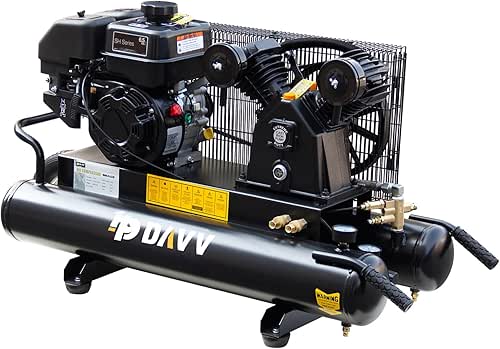
Looking for wheelbarrow portability without sacrificing output? This HPDAVV Gas Driven Compressor pairs a 6.5 HP gas engine with a single-stage, cast-iron pump and twin 9-gallon tanks. It delivers 11–12 CFM at up to 125 PSI, ideal for low-to-medium air demand on construction sites, service trucks, farms, and mechanic shops. We like the wheelbarrow frame, handle, and pneumatic wheels for easy loading or truck-bed mounting.
Expect heavy-duty build, straightforward maintenance, and outdoor-only operation—never run a gas compressor indoors due to carbon monoxide. Verify the actual CFM (listings vary). Assembly can be finicky; consider professional setup. Warranty: 1-year product, 2-year air end, lifetime maintenance.
Best For: Contractors, service techs, and farmers who need a heavy‑duty, wheelbarrow‑portable gas compressor delivering 11–12 CFM up to 125 PSI for outdoor, low-to-medium air demand.
Pros:
- Wheelbarrow design with handle and pneumatic wheels for easy transport and truck-bed mounting
- Durable single-stage, cast-iron pump and twin 9-gallon tanks for steady output (11–12 CFM) at 125 PSI
- Backed by 1-year product, 2-year air end, and lifetime maintenance support
Cons:
- Gas engine requires outdoor-only use due to carbon monoxide hazards
- Conflicting CFM listings (11 vs. 12) require spec verification before purchase
- Assembly/setup can be finicky; may benefit from professional installation
13HP Gas Powered Air Compressor with 30-Gallon ASME Tank (24 CFM, 180 PSI, Electric Start)

February 25, 2026 7:16 pm
Need serious airflow without tying into shop power? This 13HP gas-powered, two-stage unit delivers 24 CFM at up to 180 PSI, backed by a 30-gallon ASME-certified tank for steady output. We like the electric start, 79 dB noise rating, and 1/2-inch NPT outlet for easy hookups.
Built to last, it uses a cast iron pump head and cast cylinder sleeves, running at 880 rpm across three cylinders. It’s EPA-certified and portable for trucks, fields, and shops. Expect reliable performance for auto body, construction, agriculture, and service vehicles. Buyers praise its durability and punch. Warranty and returns are available online.
Best For: Contractors, mechanics, and service crews who need high CFM, high-pressure air on the go without relying on shop power, especially for truck-mounted or field operations.
Pros:
- Strong performance: 24 CFM at up to 180 PSI from a 13HP, two-stage, three-cylinder pump
- Durable build: cast iron pump head, cast sleeves, ASME 30-gallon tank, EPA-certified
- Practical features: electric start, 79 dB noise rating, 1/2-inch NPT outlet, portable for truck or site use
Cons:
- Gas engine requires fuel, maintenance, and emits exhaust (not ideal for enclosed spaces)
- Heavier and bulkier than small portable electrics; may need vehicle mounting or lifting equipment
- Limited tank size (30 gal) compared to stationary shop compressors for continuous high-demand use
Factors to Consider When Choosing Gas Air Compressors for Sale Used
Before we pick a used gas compressor, let’s match power output and CFM to our tools and check the maximum PSI rating they require. We’ll decide between single- and two-stage compression, pair it with the right tank size, and confirm the unit can keep up without constant cycling. Finally, we’ll weigh portability and mounting—wheelbarrow, truck-mount, or skid—so it fits how we work.
Power and CFM
How much air and pressure do we really need? Let’s match power and CFM to the tools we run most. CFM tells us how much air the compressor delivers; higher CFM supports bigger tools and steadier operation with fewer cycles. Many portable gas units advertise around 11–12 CFM, sometimes listed as a 12 CFM max. That matters for runtime and duty cycle, especially when we’re nailing, spraying, or grinding nonstop.
Two-stage pumps typically hold their CFM better at higher pressures than single-stage designs, so they’re smarter when we need consistent airflow under load. Engine horsepower usually tracks with CFM and endurance—more HP sustains higher CFM but adds weight and fuel burn. When buying used, verify claimed CFM at operating pressure and compare it to our tool requirements.
Maximum PSI Rating
CFM tells us how much air we get; maximum PSI tells us how hard that air hits. We match PSI to the job: around 125 PSI suits nailers, blow guns, and most shop tasks, while 150–180 PSI supports dense-air work like seating beads, running some impact tools, or powering high-pressure regulators.
When we’re shopping used, we verify that the advertised max PSI is real under load—not just a brief peak. We look for a seller demo with gauges or ask for a video from cut-in to cut-out pressure. Tank size and duty cycle matter, too; larger ASME-certified tanks help maintain pressure longer and cut short cycling. Higher-pressure models often carry ASME tanks and relevant EPA certifications, signaling stricter build and performance standards.
Single Vs Two-Stage
When we’re weighing single vs two-stage on a used gas compressor, the decision hinges on pressure needs, runtime, and budget. Single-stage units compress air once, so they run hotter at the intake and typically deliver lower maximum pressures with less stable output over long stretches. They’re lighter, simpler, and usually cheaper—great for light, intermittent tasks where portability and cost matter.
Two-stage designs add a second compression step, cooling the air between stages to reach higher PSI with better efficiency and steadier delivery. For the same horsepower, they usually provide higher CFM at elevated pressures, making them better for continuous-duty work and longer runtimes. If we need frequent high-pressure operation or sustained demand, we’ll favor two-stage reliability; otherwise, single-stage value can win.
Tank Size Matters
After deciding between single and two-stage, we should match that choice with the right tank size because reserve air dictates real-world runtime and pressure stability. Tank size determines how long we can deliver a given airflow before the pump must kick back on. Bigger tanks store more air, smooth pressure dips, and cut cycling.
For bursty work, a 9-gallon twin-tank can deliver higher instantaneous CFM for short stretches, trimming starts compared with a single small tank. If we’re running grinders, sanders, or multiple nailers, a 30-gallon ASME tank provides the reserve to minimize frequent restarts and maintain steadier pressure.
Pairing a two-stage pump with a larger tank typically yields the most stable pressure and longest time between cycles. Choose the smallest tank that still meets your peak demand and duty profile.
Portability and Mounting
How easily can we move it and where will it live between jobs? Portability starts with the frame. Wheelbarrow-style compressors with handles and pneumatic wheels are easier to muscle across gravel or up ramps, especially when weights hit 131+ lb. Dimensions matter too; compact wheelbarrow forms fit tighter truck beds and leave space for hose reels.
We should match tank size to mobility. A 9-gallon unit is lighter and quicker to load, while 30 gallons adds runtime between refills but can require two-person lifts or a liftgate. Mounting plans drive choices: bed-mount kits, tie-down points, and vibration isolators keep the unit stable.
Don’t ignore performance trade-offs. Higher PSI ratings (125 vs. 180) and bigger engines (6.5 HP vs. 13 HP) typically add bulk, influencing transport and mounting.
Engine Condition Check
Ready to judge a used compressor’s heart? We start by confirming it fires up consistently. A healthy engine should start without drama and settle into a smooth idle—no knocking, rattling, or hunting. Next, we verify compression and firing: even cylinder pressure, no warm‑up smoke, and no misfires under light throttle.
Fuel system integrity matters. We inspect for leaks, cracked lines, or soft, degraded hoses, and make sure the carburetor or injectors respond cleanly off idle. Then we assess lubrication. We confirm the recommended oil type and level, ensure the pre-fill matches spec, and look for contamination, fuel dilution, metal flecks, or burnt odor.
Finally, we review exhaust and emissions—no excessive smoke, leaks, or odd fumes that suggest internal wear.
Maintenance and Support
We’ve checked the engine’s health; now we make sure the compressor won’t strand us when it counts. We verify warranty coverage—parts, labor, and duration—and confirm what’s excluded. Then we review after-sales policies: authorized repair centers nearby, field-service availability, and realistic response times.
We assess the supplier’s technical support. Do they answer quickly, publish step-by-step troubleshooting, and ship replacement parts fast? Turnaround matters when downtime costs money. We also want the manufacturer’s maintenance schedule in writing: oil-change cadence, air and fuel filter intervals, belt inspection and tension specs.
Next, we check access to consumables and wear parts—drains, filters, belts, plugs—and whether common failures have documented fixes or recalls. Finally, we favor models with clear service points and parts diagrams for straightforward upkeep.
Safety and Emissions
Why prioritize safety and emissions first when buying a used gas compressor? Because carbon monoxide kills. We should never run a gas-powered compressor indoors; operate it outside in a well‑ventilated area. Keep exhaust pointed away from doors, windows, and occupied spaces to prevent CO from drifting inside. We also check for EPA certification—it signals the engine meets emissions standards, lowers harmful output, and reduces regulatory risk. If we’re eyeing a higher‑pressure, two‑stage unit, we plan for stricter ventilation and heat management, since these systems can produce more exhaust and thermal load. Before every start, we verify oil level, belt tension, and filters. Proper maintenance prevents hard starts, cuts excess emissions, and keeps the engine running cleaner, safer, and more reliably.
Conclusion
We’ve covered three smart used gas air compressor picks for 2025: a budget-friendly 9‑gallon portable for quick bursts, a rugged 30‑gallon two‑stage workhorse with 24 CFM and 180 PSI, and a compact 13HP unit with electric start for field work. As we compare, let’s match engine HP, pump type, tank size, and warranty to our jobs and budget. Shop verified sellers, check hours and maintenance records, and test before buying to lock in a deal that lasts.