We’ve tested the latest engine air compressors to find five that balance power, reliability, and value. From compact inflators to gas-powered workhorses, these picks cover high PSI, solid CFM at working pressure, and practical duty cycles. We’ll weigh noise, portability, tank size, and maintenance needs with a focus on real jobsite performance. Whether you’re a contractor or a dedicated DIYer, there’s a standout here—and one model surprised us for all the right reasons.
AstroAI Portable Tire Inflator Air Compressor (150 PSI)


February 24, 2026 4:49 pm
If you want a fast, fuss-free inflator for everyday tires, AstroAI’s 12V Portable Tire Inflator stands out with its TrueGauge display and auto shut-off. We like its quick top-offs: it takes a 195/65/R15 from 30 to 36 PSI in under a minute. The TrueGauge sensor samples up to 200 Hz, boosting accuracy and safety. It’s compact (3.5 x 7.1 x 6.3 in), about 2 lb, and plugs into 12V with 90W power and 0.77 CFM airflow. The 12-LED light helps at night. It’s rated to 150 PSI, but operates best to 36 PSI. Not for trucks; allow cooldowns after 15 minutes.
Best For: Drivers who want a compact, fast 12V inflator for routine car, bike, and motorcycle tire top-offs with accurate digital shut-off and a bright work light.
Pros:
- TrueGauge display samples up to 200 Hz for more accurate readings and safer inflation
- Rapid top-offs (e.g., 195/65/R15 from 30 to 36 PSI in under 1 minute) with auto shut-off
- Compact, lightweight design with 12-LED light and included valve adapters (Presta, needle)
Cons:
- Not compatible with truck tires; operates best up to 36 PSI despite 150 PSI rating
- Needs 10-minute cooldown after 15 minutes of continuous use
- 92 dB noise level and 21-inch hose may be short/noisy for some users
PHOBOOS A/C Compressor with Clutch for Dodge Nitro 2007-2008 & Jeep Liberty 2006-2008 (V6 3.7L)
February 26, 2026 4:29 am
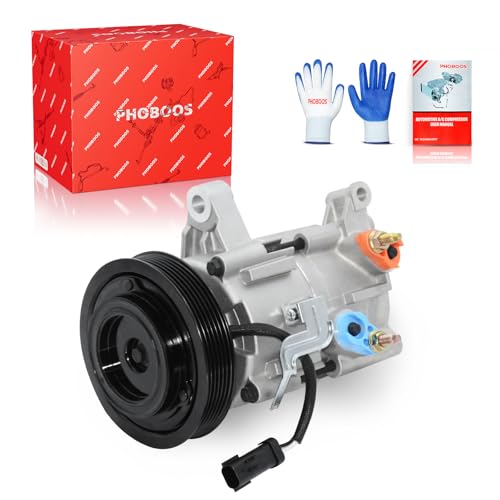
Seeking a bolt-on, OE-matched replacement that cools fast and runs quiet? We like the PHOBOOS A/C Compressor with Clutch for Dodge Nitro 2007–2008 and Jeep Liberty 2006–2008 (V6 3.7L). It’s pre-filled with PAG46 oil, tested for performance, and delivers up to 4000W cooling even at 149°F while keeping noise under 70 dB.
Installation’s straightforward: direct bolt-on fit, OE cross-refs include R5111406AG/AF/AE/AD and 55111-406AD/AC/AB/AA/AE, plus CO10900C. The PBACC086 unit weighs 14.55 lb and ships polished. Backed by a 12-month unlimited mileage warranty. Check Amazon Garage for fitment, compare images, and note mixed reviews on non-target vehicles. 4.4/5 stars, category bestseller.
Best For: Owners of 2007–2008 Dodge Nitro or 2006–2008 Jeep Liberty with the 3.7L V6 seeking a direct bolt-on, OE-matched A/C compressor that cools fast and runs quietly.
Pros:
- OE-matched bolt-on fit; includes clutch and arrives pre-filled with PAG46 oil for easier installation
- Strong performance: up to 4000W cooling capacity even at 149°F with low noise under 70 dB
- Backed by 12-month unlimited mileage warranty; widely cross-referenced (e.g., R5111406AG, 55111-406AD, CO10900C)
Cons:
- Fitment is specific to 3.7L V6 Dodge Nitro (2007–2008) and Jeep Liberty (2006–2008); not for other models/engines
- Mixed user reports when installed in non-target vehicles—must verify part numbers and images before purchase
- Heavier unit (14.55 lb) may require care during handling and installation
Cordless Portable Electric Air Compressor for Nailing, Garage, Car, and Pneumatic Tools

February 19, 2026 3:22 pm
Need a cordless compressor that actually keeps up with real tools? We like this 220W, 0.53-gallon unit for its balance of power and portability. It’s cordless with a 15,000mAh battery and fast charger, so we can move from nailing trim to topping off tires without hunting outlets. At 8.14 lbs, it’s easy to carry.
The 2000 RPM induction motor is ultra-quiet at 65 dB and delivers a smooth, reliable air supply. It hits 116 PSI in 9 seconds, supporting staple guns, nailers, spray guns, airbrushes, and light pneumatic drills. Oil-free, low-maintenance design and dependable cold-weather starts seal the deal.
Best For: DIYers, contractors, and hobbyists who need a portable, ultra-quiet cordless compressor that can handle trim work, tire top-offs, and light pneumatic tools without hunting for outlets.
Pros:
- Cordless with large 15,000mAh battery and fast charger for true portability
- Ultra-quiet 65 dB, low-vibration 2000 RPM induction motor with smooth airflow
- Quick performance: reaches 116 PSI in 9 seconds; supports nailers, staplers, spray guns, and airbrushes
Cons:
- Small 0.53-gallon tank limits sustained high-demand tool use
- 220W motor is best for light-to-medium tasks, not heavy-duty pneumatic tools
- Battery adds cost and requires charging management for longer jobs
DeWalt 4 Gallon Portable Gas Powered Air Compressor (DXCMTA5590412)

February 25, 2026 4:39 pm
Punching above its size, the DeWalt DXCMTA5590412 pairs a Honda GX160 163cc engine with an oil-free, direct-drive pump to deliver 5.0 SCFM at 90 psi and up to 155 psi—ideal for pros who want gas-powered reliability in a compact, 4-gallon pontoon setup. We like the twin 2-gallon tanks for stability, the 1-hand push-to-connect coupler, and clear tool and tank gauges. The patented two-piece cooling system and multi-chamber exhaust help tame noise and heat. At 93 pounds, it’s portable for rooftops and framing. Expect 6.9 SCFM at 40 psi and dependable starts. Downsides: modest capacity and middling user ratings.
Best For: Pros and serious DIYers who need a compact, gas-powered compressor for framing, roofing, and mobile jobs where electrical power is limited.
Pros:
- Honda GX160 163cc engine with oil-free, direct-drive pump delivers 5.0 SCFM at 90 psi and up to 155 psi
- Twin 2-gallon pontoon tanks improve stability; portable 93 lb design with clear tool/tank gauges and 1-hand quick coupler
- Patented two-piece cooling and multi-chamber exhaust reduce heat and noise; low-maintenance oil-free pump
Cons:
- Modest 4-gallon capacity limits runtime for air-hungry tools
- Middling user ratings (3.3/5) suggest mixed real-world satisfaction
- Heavier than some portable options and gasoline engine adds fuel/exhaust considerations
Metabo HPT 8-Gallon Gas Powered Wheeled Air Compressor (EC2510E)

February 21, 2026 7:05 pm
For pros who want gas power without babysitting a compressor, the Metabo HPT EC2510E pairs a professional-grade Honda GX engine with an 8-gallon tank and a cast iron cylinder to drive framing, roofing, siding, and finish nailers all day. We like its 116–145 PSI operating range, low oil carryover, and robust build that extends tool life. The baseplate-integrated control panel shields gauges and plumbing, while a full-size pre-installed 3/8-inch locking regulator simplifies setup. At 144 pounds, the wheeled design and handle help jobsite mobility. Expect around 70 dB operation. Note mixed feedback on outlet size. Metabo HPT backs it with a 1-year warranty.
Best For: Pros and serious DIYers who need a durable, gas-powered, portable compressor to run framing, roofing, siding, and finish nailers all day without babysitting.
Pros:
- Honda GX engine and cast iron cylinder deliver reliable, high-performance compression for heavy-duty nailers
- Integrated control panel with pre-installed 3/8-inch locking regulator and protected gauges simplifies setup and use
- Rugged, wheeled 8-gallon design with handle for jobsite mobility; low oil carryover extends tool life
Cons:
- Mixed feedback on outlet size (3/8 vs 1/4 NPT) may require adapters
- Heavy at 144 lb; still bulky despite wheels
- Only a 1-year warranty compared to some competitors offering longer coverage
Factors to Consider When Choosing Engine Air Compressors
Before we pick a model, let’s match the power source type to where we’ll use it and check that the maximum PSI range and CFM output meet our tools’ demands. We should size the tank capacity for the duty cycle we expect, so the compressor doesn’t short-cycle or lag. Finally, let’s factor in the noise level rating to keep jobsites compliant and our ears comfortable.
Power Source Type
How do we pick the right power source without over- or under-building our setup? We start with where and how we’ll work. Gasoline units shine on remote sites; they’re portable, autonomous, and pair well with proven engines like Honda GX, though they’re louder and need fuel. Diesel offers similar field independence with strong torque and efficiency. Electric corded compressors deliver clean, quiet operation, but they rely on nearby outlets and adequate circuit capacity. If mobility outweighs runtime, cordless models using high-capacity packs (think 15000 mAh) keep us nimble, though heavy loads drain batteries faster. We also weigh design details: oil-free pumps reduce maintenance, and direct-drive layouts simplify service. Balancing job location, noise tolerance, fueling or power access, and upkeep guides the smartest choice.
Maximum PSI Range
When we talk maximum PSI, we’re really deciding how much pressure we need without pushing the system past its limits. PSI is the ceiling of what an engine-driven compressor can safely deliver, and models span roughly 100 to 200+ PSI. Portable units usually cap near 150 PSI, which suits general fastening and inflation. Heavy-duty shop compressors often hit 175–200 PSI for tougher tasks and thicker materials.
Pump design, valve configuration, and the safety relief valve define that operating window. We should match our tools’ required PSI to the compressor’s limit—exceeding it accelerates wear, blows seals, and risks dangerous bursts. We also like units with dual-range or adjustable regulators, so we can dial down for delicate work and step up when the job demands higher pressure.
CFM Output Needs
So what really keeps our tools humming isn’t PSI alone—it’s CFM, the volume of air the compressor can deliver at a given pressure. We match each tool’s CFM requirement to the compressor’s output at the pressure we’ll run. If a nailer needs 4 CFM at 90 psi, we want a compressor that delivers slightly more than 4 CFM at 90–100 psi, not just at 40 psi.
We also account for starting load and duty cycle. Impact wrenches, grinders, and sanders can spike above their running CFM, so we budget headroom for startup surges and longer run times. Running multiple tools? We sum their CFM needs and add a buffer so pressure doesn’t sag. Finally, we compare CFM ratings at 90–100 psi, where performance really matters.
Tank Size Capacity
Curiously, tank size is the quiet workhorse that dictates how long we can keep tools running before pressure dips. Measured in gallons, it sets the window between refills: larger tanks deliver longer continuous operation but add weight and cut portability. Gas-powered, wheel-mounted units often carry bigger reservoirs—around 8 gallons—for extended use; compact, carry-friendly models typically stay at 4 gallons or less.
We should match tank capacity to our tools and tasks. High-demand pneumatic tools like nailers and impact wrenches benefit from more volume to sustain steady PSI. Tank size also works with CFM at a given PSI to determine how fast we hit operating pressure and how long we hold it under load. Bigger tanks can improve duty cycle by reducing rapid on/off cycling.
Noise Level Rating
How loud is too loud? Noise level, measured in decibels (dB), varies widely: many handheld units land around 65–92 dB, while industrial models can exceed 90 dB. We should weigh comfort against performance and cost. Quieter compressors often add multi-chamber exhausts, insulated housings, or run at lower RPMs. Those features reduce sound, but they can slow fueling or increase price.
Let’s compare more than the spec sheet. A lower dB rating generally means a more tolerable workspace, yet user feedback shows high-output units can still sound civilized if they use effective muffling and vibration isolation. We also consider vibration alongside base noise; vibration can amplify perceived loudness. Our takeaway: target the lowest practical dB and vibration profile without sacrificing the output we need.
Portability and Weight
After taming noise, we’ve got to think about portability and weight because getting the compressor to the job matters as much as how it sounds. Weight and form factor drive real-world usability: handheld or compact 2–8 lb units sling easily into a cab or pack, while larger tanks and wheeled frames trade carry-ability for capacity.
We look for smart ergonomics. Rubber pads, well-shaped handles, and compact housings reduce hand strain and make ladder climbs safer. Integrated handles and tandem wheels help, but bulkier dimensions can complicate storage in tight vans or crowded shops.
Cordless models ditch cords for grab-and-go convenience, yet battery packs add heft—consider spare batteries versus total carry weight. Quick-connect hoses and lightweight accessories speed setup and breakdown, enhancing on-site portability.
Duty Cycle Limits
When uptime matters, duty cycle tells us how long a compressor can run in a 10‑minute window before it needs a breather. A 50% rating means five minutes on, five minutes off; push past that and heat builds fast. That leads to overheating, sagging performance, and premature pump wear.
Match duty cycle to the job. Continuous or high‑use work—spraying, sandblasting, long ratchet runs—calls for 60–100%. Intermittent tasks—nailing, short impact bursts—can live with 20–50%. Larger tanks and beefier cooling help shed heat, so bigger units often sustain higher duty.
Maintenance Requirements
Though specs and price grab attention, maintenance will determine how reliably a compressor serves us year after year. We should match upkeep needs to how and where we work. Oil-lubed units demand regular oil changes with the correct grade; oil-free, direct-drive pumps cut routine tasks but still need periodic inspections.
Before every start, we’ll verify fuel, oil level, and the air filter to protect the engine and sustain airflow. After long runs, we’ll plan cool-downs—think 15 minutes on, 10 minutes off—to curb heat stress and extend service life.
Gas-engine models may add belt or timing checks and lubrication intervals. Whatever we choose, we’ll follow the manufacturer’s schedule. Warranty validity often hinges on documented service, so skipping intervals can cost repairs later.
Conclusion
We’ve covered a range of engine air compressors that balance power, reliability, and value—from cordless convenience to gas-powered muscle. Remember, airflow matters: a compressor delivering 5–10 CFM at 90 PSI can power most framing nailers and impact wrenches efficiently, while pros may need 12+ CFM. Prioritize duty cycle, maintenance, and portability for your workflow. Whether you’re inflating, nailing, or running pneumatic tools all day, choosing the right PSI/CFM combo pays off in performance and longevity.