Are we ready to find out whether the Air Compressor Pump Head, 3HP 2.2KW Industrial Compressor Pump Motor, Single Stage Twin Cylinder Splash Lubrication Pumps Head is the right replacement for our compressor setup?

Product Overview
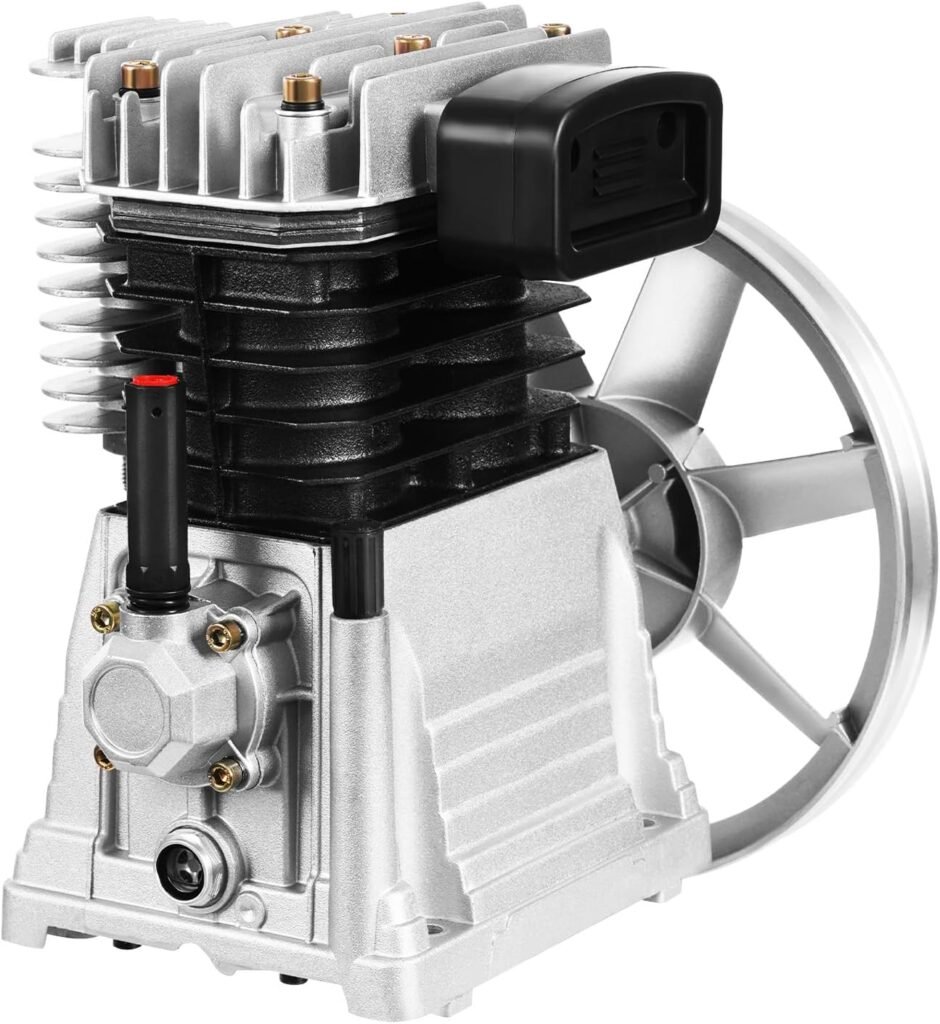
We want to summarize what this pump head offers and why it might matter for our work. The Air Compressor Pump Head, 3HP 2.2KW Industrial Compressor Pump Motor, Single Stage Twin Cylinder Splash Lubrication Pumps Head is a replacement compressor pump head designed to support a 3HP/2.2KW motor. It’s a single-stage, twin-cylinder unit with splash lubrication, intended to deliver reliable compressed air for both professional and DIY tasks. We’ll cover its features, construction, performance, and practical considerations so we can decide whether it suits our needs.
What the product claims
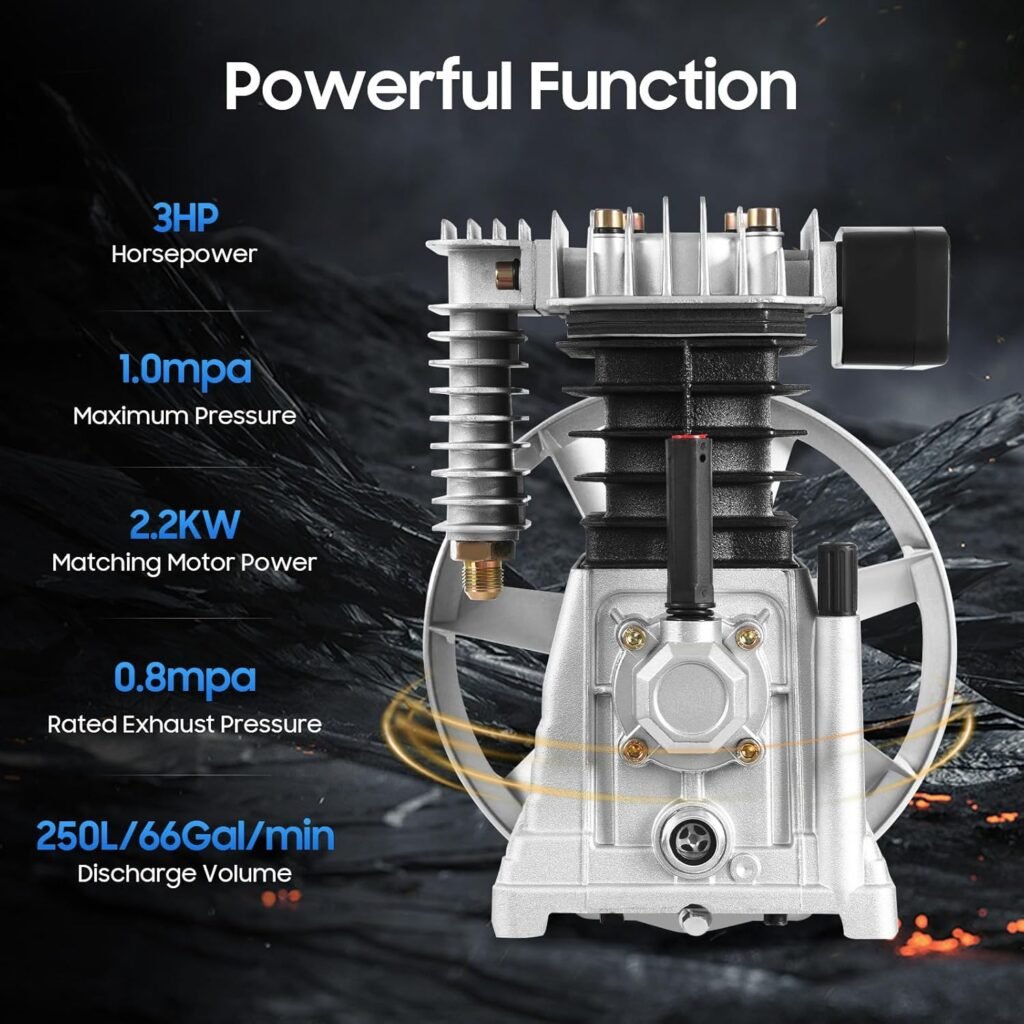
We like clear specs when evaluating replacement parts, and this unit provides specific performance numbers. The pump head claims to support a rated exhaust pressure of 0.8 MPa (about 116 psi) and a maximum pressure of 1.0 MPa (about 145 psi). It features a twin-cylinder design with up to 66 Gal/min discharge (roughly 250 L/min) and a belt-driven layout with a cooling fan and balanced mainframe belt system. The head is made from aluminum and iron and is treated with paint for extra durability.
Key Specifications
We find a consolidated view of specifications useful to compare and confirm compatibility with our compressor system. Below is a quick specification table that we can use at a glance.
| Specification | Details |
|---|---|
| Product Name | Air Compressor Pump Head, 3HP 2.2KW Industrial Compressor Pump Motor, Single Stage Twin Cylinder Splash Lubrication Pumps Head |
| Motor Support | 3HP / 2.2KW |
| Stage | Single stage |
| Cylinder Configuration | Twin-cylinder |
| Lubrication Type | Splash lubrication |
| Rated Exhaust Pressure | 0.8 MPa (≈116 psi) |
| Maximum Pressure | 1.0 MPa (≈145 psi) |
| Discharge Volume | Up to 66 Gal/min (≈250 L/min) |
| Drive Type | Belt-driven |
| Cooling | Strong cooling fan |
| Materials | Aluminum and iron (painted) |
| Typical Applications | Automotive, pneumatic tools, construction, textile, food, electronics, machinery, DIY |
| Construction Features | Intake & exhaust valves, balanced mainframe belt system |
We appreciate that the key numbers are clearly stated because they help us determine whether our motor, tank, and tools are compatible with the pump head’s output and pressure ratings.
Design and Build Quality
We always check construction quality since it impacts longevity and reliability. This pump head is manufactured using a mix of aluminum and iron, which balances weight reduction and structural strength. The painted finish adds corrosion resistance and improves durability, which matters if the unit will operate in humid or dusty environments.
We also note that the twin-cylinder design inherently improves intake smoothness and helps distribute mechanical load more evenly. The use of splash lubrication simplifies the lubrication system by relying on oil splashed around the crankcase to lubricate bearings and piston assemblies, reducing complexity compared with forced-oil systems. For those who prefer robust, straightforward designs rather than precision-heavy maintenance schedules, this construction approach is often favorable.
Twin-Cylinder Single-Stage Performance
We want to understand how the twin-cylinder single-stage layout affects performance in everyday use. The twin-cylinder configuration provides smoother airflow because two pistons phase their strokes to reduce pulsation. In a single-stage layout, air is compressed once within each cylinder before discharge to the receiver tank, which is efficient for moderate-pressure applications.
The pump head’s rated exhaust pressure of 0.8 MPa, with a peak of 1.0 MPa, makes it suitable for many industrial and workshop uses such as powering pneumatic tools, spray equipment, or general plant air supplies. The discharge volume of up to 66 Gal/min indicates good capacity for intermittent to semi-continuous workloads when paired with the appropriate receiver tank and motor.
Belt Driven Design and Cooling System
We prioritize systems that can run stably over long periods, and belt-driven pumps often offer advantages in maintenance and thermal management. The belt-driven design isolates the pump head from motor vibrations and allows us to fine-tune pulley ratios for desired pump RPM. This flexibility helps match motor output characteristics to pump requirements.
Alongside the belt system, a strong cooling fan is included to enhance heat dissipation during continuous operation. The balanced mainframe belt system contributes to reduced vibration and longer belt life. Together, these features help prevent overheating of both the pump and motor during prolonged duty cycles, which is essential in industrial or heavy workshop environments.
Intake and Exhaust Valve Design
We care about valve design because it affects efficiency and service life of the pump. The pump head features dedicated intake and exhaust valves for each cylinder that draw air from the external environment and then discharge compressed air into the receiver tank. Properly designed valves contribute to efficient airflow, reduced backflow, and reliable compression cycles.
During operation, the valves must seat and seal effectively to maintain the rated pressures. Wear on valves or improper seating can cause pressure drops or decreased airflow. We should expect these valves to be serviceable, and we should plan for periodic inspection or replacement depending on operating hours and the cleanliness of intake air.

Durability and Materials
We prefer components that can stand up to tough conditions and sustain long service lives. This unit’s aluminum and iron construction provides a durable core while maintaining manageable weight for installation. The painting process applied to the metal surfaces adds an extra layer of protection against rust and wear, which is helpful when the pump operates in environments where moisture, dust, or occasional chemical exposure is present.
Splash lubrication is a simple and reliable method for keeping internal components lubricated, but it also depends on proper oil level maintenance and periodic oil changes. If we keep up with basic maintenance, we can expect the pump head to deliver consistent service over many operating hours.
Installation and Compatibility
We want to make sure we understand what is involved before fitting this pump head to an existing compressor system. Firstly, we must confirm motor compatibility: the head supports 3HP/2.2KW motors. Beyond motor power, we need to check shaft diameter, pulley alignment, mounting hole patterns, and baseplate compatibility. Because the pump is belt-driven, selecting the correct pulley sizes and belt type is critical for achieving the right pump RPM and torque transfer.
We should also ensure that our receiver tank and safety components (pressure relief valves, pressure switches, check valves) match the pump head’s pressure ratings. For instance, a 1.0 MPa maximum means we should use appropriately rated fittings and safety valves. Finally, we need to verify clearances for the cooling fan and access for maintenance, such as changing oil or servicing valves.
Installation Checklist
We find a checklist helps prevent surprises during installation, so we typically follow a structured approach. Here’s a practical checklist to guide us through the process:
- Verify motor power: 3HP / 2.2KW compatibility.
- Confirm shaft diameter and keyway match or adapt.
- Check mounting hole pattern and dimensions for bolt alignment.
- Select correct pulleys to achieve intended pump RPM.
- Inspect belt type and tensioning equipment; install belt guards for safety.
- Ensure intake air is filtered; install intake screen or filter if missing.
- Verify oil type and initial fill level per manufacturer or standard practices for similar pumps.
- Confirm receiver tank pressure rating and safety valves correspond to pump head pressure limits.
- Align motor and pump to avoid belt misalignment and premature wear.
- Test briefly for leaks, vibration, and correct pressure build-up.
We recommend following this checklist step by step to reduce installation downtime and avoid damage from misalignment or improper parts.
Performance in Real-World Use
We want to know how the pump behaves under practical loads, not just on paper. With a discharge of up to 66 Gal/min and a rated pressure of 0.8 MPa, this pump head is well-suited to tasks like running air tools, inflators, finishing tools (spray guns) with appropriate tank buffering, and medium-duty production tasks. When paired with a properly sized receiver tank and 3HP motor, we expect steady pressure delivery with reasonable recovery times for moderate intermittent use.
In continuous heavy-duty scenarios where very high CFM at elevated pressures is required, we should consider the system holistically: motor cooling, pump run cycles, and duty rating. For many shops and smaller industrial cells, though, this head will provide ample performance and a good balance of capacity and durability.
Noise, Vibration, and Mounting Considerations
We always factor noise and vibration into installation decisions because they affect comfort and component longevity. Twin-cylinder units are generally smoother than single-cylinder equivalents because of phased piston strokes, leading to less pulsation. That said, belt-driven pumps will produce mechanical noise from belts, pulleys, and the fan.
To reduce noise and vibration, we recommend mounting the pump on a solid, level base with anti-vibration pads if the floor is prone to transmitting noise. Proper belt tension and pulley alignment will reduce both noise and premature wear. Additionally, installing a belt guard not only improves safety but can also reduce airborne vibration noise to some extent.
Maintenance and Service Life
We believe that predictable maintenance schedules are key to long pump life. With splash lubrication, the oil must be checked and changed periodically to maintain lubrication effectiveness and to remove contaminants. Oil-change intervals will vary with hours and operating conditions, but we should inspect oil after the first break-in period and then at regular intervals, perhaps every few months with heavy use.
Other maintenance tasks include checking valve seating and condition, inspecting and replacing intake filters, maintaining belt tension and condition, checking for leaks around seals and gaskets, and ensuring the cooling fan is clean and unobstructed. With organized maintenance and use of quality consumables (oil, belts, filters), we can expect long, reliable service life from the pump head.
Common Problems and Troubleshooting
We often encounter a handful of recurring issues with replacement pump heads, and it’s helpful to be prepared with solutions. Typical issues include low discharge pressure, excessive oil consumption or leakage, overheating, belt slipping, and noisy operation.
- Low pressure: Check valve seating, intake restrictions, leak points on hoses and fittings, and belt slippage. Verify pump RPM and motor power.
- Overheating: Ensure cooling fan is operating; check belt tension (over-loaded belts can create heat); verify ambient ventilation; confirm oil level and condition.
- Oil leaks: Inspect seals, gaskets, and filler cap for tightness and damage. Replace worn seals and re-torque mounting bolts to spec.
- Belt slipping: Adjust belt tension; replace glazed or worn belts; reinspect pulley alignment.
- Noise: Inspect bearings and valve train; check for loose bolts or misalignment; ensure balanced pulley assembly.
We keep a simple log of hours and issues to identify trends and act before failure occurs.
Safety Considerations
We treat safety as non-negotiable and expect the same in our installations. Because this pump head can produce pressures up to 1.0 MPa, we must ensure our receiver tanks, hoses, fittings, and pressure relief devices are rated for this pressure. Pressure switches and safety valves should be installed and tested regularly.
Additionally, we must install proper guards for belts and moving parts, provide ventilation for cooling, and maintain a safe working distance from rotating components. Personal protective equipment like eye protection and hearing protection should be used when operating or servicing compressors. Finally, we should lock out power before any maintenance to avoid accidental startup.
Applications and Use Cases
We like seeing a variety of real-world applications to gauge suitability. This pump head is appropriate for automotive shops (tire inflation, impact wrenches, paint guns), industrial pneumatics (assembly tools, actuators), construction sites (nailers, staplers), textiles and electronics (cleaning and assembly tools), and food machinery setups where compressed air is needed for actuators or packaging. For DIY enthusiasts, it’s also well-suited to home workshops running air tools and small spray booths as long as we manage noise and ventilation.
We find it helpful that the pump is versatile; however, the system it’s installed into (tank size, motor, and accessories) determines whether it will meet the required duty cycle for a specific task.
Comparison with Other Pump Types
We want to compare this unit against other common pump configurations to understand trade-offs. Below is a comparison table that contrasts three common types: our pump (single-stage twin-cylinder splash-lubed belt-driven), oil-free pumps, and two-stage pumps.
| Feature | This Pump (Single-Stage Twin-Cylinder Splash) | Oil-Free Pump | Two-Stage Pump |
|---|---|---|---|
| Typical Pressure Capability | Up to 1.0 MPa | Lower pressures (varies) | Higher pressures (often >1.0 MPa) |
| Lubrication | Splash (requires oil changes) | No oil (clean air) | Oil-lubricated (usually) |
| Maintenance Complexity | Moderate | Low | Higher (more components) |
| Noise Level | Moderate | Often higher (noisy pistons) | Moderate to high |
| Application Fit | General industrial/workshop | Food/medical/cleanrooms | High-pressure industrial |
| Initial Cost | Moderate | Moderate to high | Higher |
We note that oil-free units are preferred for applications requiring oil-free discharge (food, pharma), while two-stage pumps deliver higher pressures for demanding industrial processes. Our pump strikes a balance between durability, cost, and performance for general industrial and workshop tasks.
Pros and Cons
We like to clearly list strengths and weaknesses so we can weigh the decision.
Pros:
- Supports 3HP/2.2KW motors for robust performance.
- Twin-cylinder design reduces pulsation and increases airflow smoothness.
- Up to 66 Gal/min discharge suitable for many workshop tasks.
- Belt-driven system allows flexible pulley ratios and easier motor maintenance.
- Strong cooling fan and balanced belt system promote continuous operation.
- Durable aluminum and iron construction with painted surfaces for corrosion resistance.
- Splash lubrication offers simplicity and reliability with routine maintenance.
Cons:
- Requires regular oil maintenance due to splash lubrication design.
- Not oil-free—unsuitable for applications requiring oil-free air without downstream filtration.
- Installation requires careful alignment and correct pulley selection for optimal performance.
- Potential noise and vibration if not mounted or aligned properly.
We find that the product’s advantages make it a strong choice for general shop use, while the cons are manageable with proper maintenance and installation practices.
Purchasing Tips and Considerations
We advise taking a few steps prior to purchase to ensure a smooth upgrade or replacement. First, confirm motor compatibility including shaft size and mounting. If the pump comes without pulleys, ensure you obtain the correct pulley sizes to match your desired pump RPM. Verify the availability of spare parts (valves, seals, gaskets) as these wear items become important over time.
Consider what downstream filtration or separators you need, especially if your applications are sensitive to oil in compressed air. Finally, check warranty and seller return policies in case the pump head arrives with shipping damage or incorrect fittings.
Cost of Ownership
We think beyond purchase price to anticipated operating costs. With splash lubrication, oil changes are a recurring expense, and belts, filters, and valves will require periodic replacement. However, compared to higher-complexity systems, maintenance tasks are straightforward and typically lower cost. If we buy quality oil and maintain the pump according to a schedule, total cost of ownership is reasonable for a durable, belt-driven industrial pump head.
Environmental and Operational Factors
We always take the installation environment into account because temperature, humidity, and dust influence performance. For hot climates or enclosed spaces, ensure proper ventilation and consider adding an external cooling solution if continuous operation generates excessive heat. In dusty environments, robust intake filtration is critical to prevent valve and cylinder wear.
If operating in food or electronics manufacturing, we must add downstream oil separation and filtration to meet air quality standards. We can also consider adding an air dryer if moisture is a concern for our downstream processes.
Warranty and Support
We recommend checking warranty details and vendor support before purchasing. Good vendor support helps when we need parts, documentation, or troubleshooting advice. We should confirm the warranty period, coverage level (parts vs labor), and availability of consumables and replacement components.
Our Verdict
We believe the Air Compressor Pump Head, 3HP 2.2KW Industrial Compressor Pump Motor, Single Stage Twin Cylinder Splash Lubrication Pumps Head represents a solid, practical choice for many industrial and workshop users. It offers a robust balance of airflow, pressure capacity, and durability when paired with a compatible motor and receiver tank. For general use, automotive shops, light industrial applications, and serious DIYers, it provides reliable performance with manageable maintenance commitments.
If our needs include oil-free air or very high-pressure continuous operation, we would evaluate an oil-free unit or a two-stage pump respectively. For standard workshop and many industrial uses, however, this pump head should perform well when installed and maintained correctly.
Frequently Asked Questions (FAQs)
We know common questions help resolve final doubts before purchasing.
Q: Is this pump head compatible with any 3HP motor? A: In most cases, yes, but we must confirm shaft diameter, keyway, pulley compatibility, and mounting hole pattern. Adapters may be necessary for non-standard shafts.
Q: Can we use this pump for spray painting and pneumatic tools? A: Yes, when paired with an appropriately sized receiver tank and filtration, it can support spray guns and pneumatic tools commonly used in automotive and workshop settings.
Q: How often should we change the oil? A: Oil-change intervals depend on use. We recommend an initial oil check after the break-in period and then periodic changes based on operating hours or every few months with heavy use. Consult similar pump maintenance guidelines if vendor-specific instructions aren’t provided.
Q: Is the air delivered oil-free? A: No. Because this is a splash-lubricated pump, some oil carryover can occur. If oil-free air is required, install downstream oil separation and filtration or choose an oil-free pump.
Q: What maintenance parts should we keep on hand? A: Spare belts, valve kits, gaskets, oil, and an intake filter are good items to keep in stock for routine service and rapid repairs.
Q: Does the pump head include a pulley and belt? A: That depends on the specific seller or package. We should verify whether pulleys and belts are included or need to be purchased separately.
Final Recommendations
We recommend confirming compatibility with our existing motor and tank before purchasing. During installation, we should prioritize correct alignment, belt tension, and intake filtration to optimize performance and minimize wear. For applications requiring clean, oil-free air, we recommend adding appropriate downstream filtration or selecting a different pump type. With proper installation and routine maintenance, we expect this pump head to be a dependable component in our compressed air system.
If we decide to proceed, let’s make sure we gather the necessary pulleys, belts, oil, and basic spare parts to minimize downtime and ensure a smooth transition to the new pump head.

Disclosure: As an Amazon Associate, I earn from qualifying purchases.