Have we ever wished we could run our tools, inflate tires, or tackle home projects without that painfully loud compressor rattling our ears and shaking the floor?
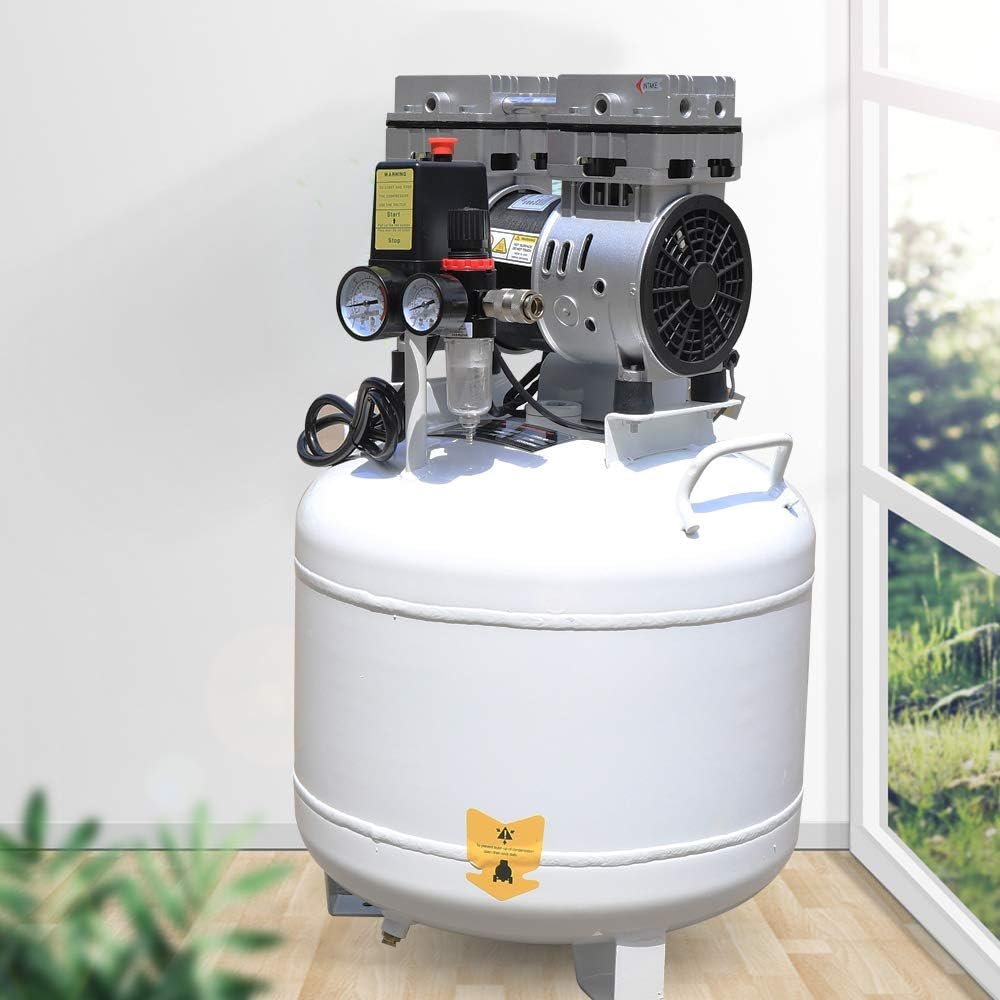

Our Overall Take on the 40L/10Gal 165PSI Super Quiet Oil-Free Air Compressor
We see this air compressor as a smart, user-friendly option for homeowners, DIY enthusiasts, and light professional use who care about noise level, low maintenance, and portability. It combines a fairly large 40L/10-gallon tank, a quiet 58 dB rating, and an oil-free design into a compact vertical form factor.
We would not choose it for heavy industrial tasks or continuous high-demand use, but for home decoration projects, tire inflation, small air tools, and general garage or workshop tasks, it fits very nicely.
Key Features at a Glance
We like to start with a clear snapshot of the most important specs, so we can quickly see where this compressor fits into our needs.
| Feature | Specification |
|---|---|
| Product Name | Air Compressor, 40L/10Gal 165PSI Super Quiet Oil Free Kit |
| Voltage | 110V / 60Hz |
| Power | 0.75 kW (750W) |
| Tank Capacity | 40 liters / 10 gallons |
| Air Volume (Listed) | 165 L/min (about 5.8 CFM, likely at lower pressure) |
| Max Pressure (Listed) | 8 psi (likely a misprint; typical units in this class reach 115–165 psi) |
| Noise Level | 58 dB |
| Compressor Type | Oil-free, electric, vertical |
| Plug Type | American triangle plug |
| Product Size | 41 × 41 × 65 cm (approx. 16.1″ × 16.1″ × 25.6″) |
| Design | Vertical tank, 3-point triangular base with foot pads |
| Intended Use | Home decoration, tire inflation, general home/garage projects |
We notice the listing says “pressure: 8 (psi),” which clearly does not align with 165 PSI in the title. Based on typical compressors in this configuration, we interpret the “8” as likely 8 bar (around 116 psi). For our purposes, we treat this as a standard mid-range shop compressor with a realistic max pressure between 115–165 PSI.
Design and Build Quality
We always look at design and construction first, because they tell us how the machine will behave after months or years, not just on day one.
Vertical 40L/10-Gallon Tank Layout
The vertical tank design matters more than it might seem at first glance. Instead of taking up a lot of side-to-side floor space, this compressor rises upward, giving us a smaller footprint in a garage, workshop, or utility room.
We find this style convenient when space near walls or in tight corners is limited, especially in apartments, small garages, or multipurpose rooms where floor space is shared with other tools or storage.
Triangular Base with Three Foot Pads
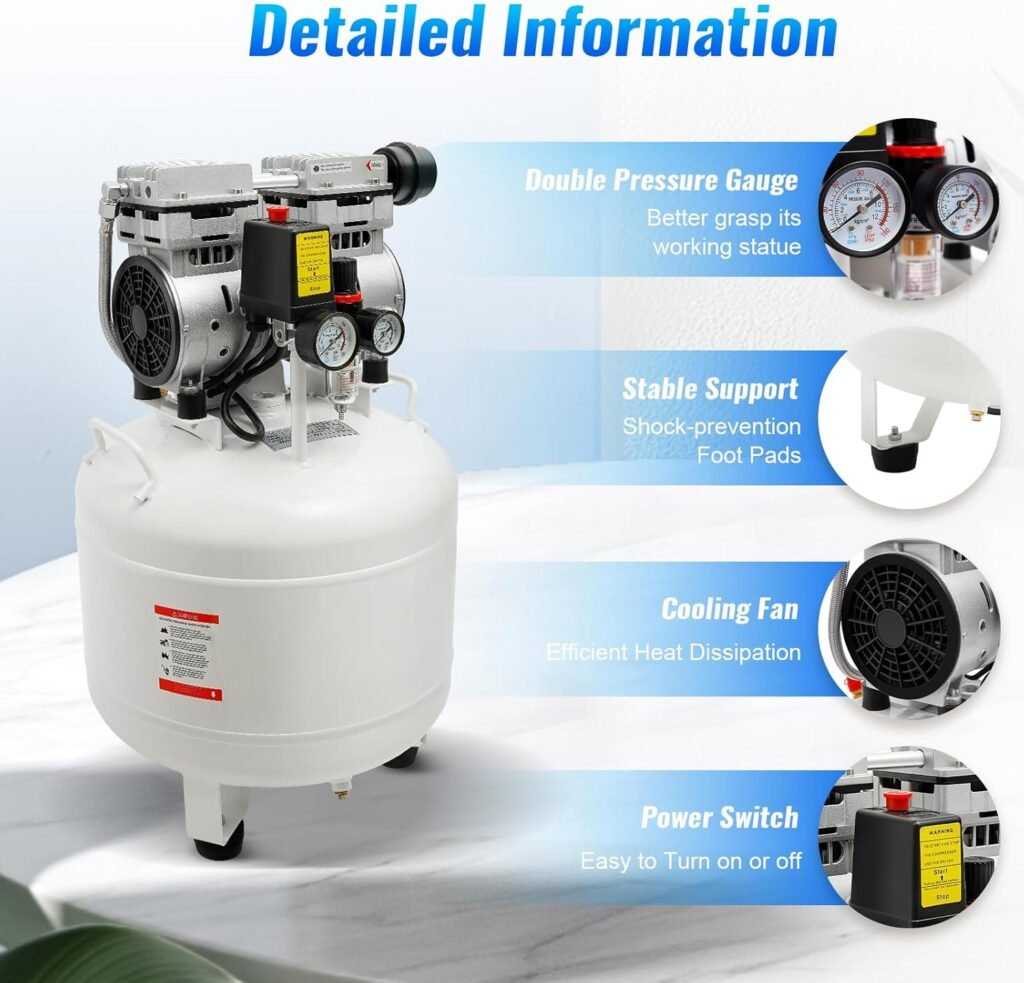
The triangular base with three foot pads gives the compressor a stable, tripod-style stance. Three-point contact usually avoids rocking, even on slightly uneven floors, which is useful in older garages or basements.
We like that the foot pads help absorb vibration and protect flooring. When we use a quieter compressor like this, we tend to roll or move it often between rooms or stations, so the stable base makes relocation feel safer and easier.
Build Materials and Overall Feel
While the listing does not spell out every material, we can infer from typical units that the tank is steel, with metal fittings and a combination of metal and hardened plastic for external covers, handles, and controls.
We appreciate that a vertical, steel-tank compressor with this size and power rating usually feels substantial but not overbearing. We can expect some heft, but once it is in place, it stands solidly without tipping or wobbling, especially thanks to the triangular support.
Power and Performance
Performance is where we ask: can this compressor handle what we need it for, and can it do it without constant frustration?
Motor Power: 750W (0.75 kW)
A 750W motor roughly translates to about 1 horsepower. That puts this compressor into the light-to-medium duty range, which is exactly where most home and hobby users live.
We should not expect it to keep up with large industrial sanders or a full professional automotive paint line, but we can comfortably power nailers, staplers, blow guns, small impact tools (in short bursts), and regular tire inflation.
Air Volume and Pressure
The listing claims an air volume of 165 L/min, which is around 5.8 CFM. We do need to treat that number cautiously, because we are not told at what pressure this is measured. CFM always drops as pressure increases.
Still, this figure suggests:
- Enough air for intermittent use of brad nailers, finish nailers, and staplers.
- Adequate output for blowing off sawdust, cleaning surfaces, and general workshop cleanup.
- Suitable performance for inflating car, bike, and trailer tires, as well as sports equipment.
We would match it with tools that specify up to about 4–5 CFM at 90 PSI for comfortable intermittent use. For tools requiring more constant high CFM, we would either step up to a bigger compressor or accept that we will wait for the tank to refill between bursts.
Real-World Use Cases
Here are some typical activities where this compressor feels well-matched:
- Home decoration tasks: Powering nail guns for baseboards, trims, crown molding, wainscoting, or framing light partitions.
- Furniture and cabinetry: Running a brad nailer or pin nailer while assembling cabinets, shelving, or furniture pieces.
- Tire and inflatable work: Filling car tires, motorcycle tires, bicycles, strollers, wheelbarrows, and inflatables like air mattresses or pool toys.
- Garage tasks: Powering an air blower to clear dust from workbenches, machines, or car interiors.
When we stay within those typical uses, the balance of tank size, motor power, and CFM feels well aligned.
Noise Level: Super Quiet 58 dB
For many of us, noise is the deciding factor between a tool we actually use often and one that stays tucked away in the corner.
What 58 dB Means in Real Terms
A 58 dB rating is impressively quiet for a 40L/10-gallon compressor. For context:
- Normal conversation is often around 60 dB.
- Traditional oil-lubricated shop compressors often run in the 80–90+ dB range.
So we are talking about a sound level that is closer to a background conversation than a roaring machine. We could comfortably run this in a garage attached to our home without overwhelming the rest of the house.
Working Comfort and Location Flexibility
Because the noise is relatively low:
- We can work longer without fatigue or headaches from constant loud humming.
- We might not need ear protection for short tasks, although we would still consider it for any extended use around power tools.
- We can run it in a basement, workshop, or utility room where others in the household may be studying, relaxing, or sleeping nearby without major disturbance.
We particularly like this if we work from home and need to squeeze in projects early in the morning or late in the evening, when neighbors or family members might be extra sensitive to loud noise.
Oil-Free Design and Maintenance
We always pay close attention to whether a compressor is oil-lubricated or oil-free, because that affects both day-to-day maintenance and long-term operating costs.
No Oil Changes, No Oil Stains
The oil-free design means:
- No regular oil checks or oil changes.
- No risk of oil leaking onto floors, benchtops, or workpieces.
- Cleaner air output for some light spray work (though we still need proper filters for serious painting).
We appreciate that we can store and use this compressor without worrying about messy spills, and that we do not need to schedule maintenance intervals for changing oil.
Lower Maintenance Costs and Simpler Ownership
By eliminating the oil system, the manufacturer has reduced the number of consumables we need to buy and the number of steps we must remember over time. This keeps ownership simpler and often cheaper.
That said, we should still:
- Drain the tank regularly to remove moisture and prevent internal rust.
- Check hoses, fittings, and quick-connect couplers for leaks.
- Keep the intake filter clean, if present, to maintain good airflow and performance.
Oil-free compressors sometimes have slightly shorter lifespans than heavy-duty oil-lubricated models under extreme daily use, but for typical home and light professional work, the advantages in convenience usually outweigh that difference.

Portability and Ease of Use
We look for compressors that are not just powerful, but also easy to move, position, and operate without wrestling with them every time we need compressed air.
Compact Size and Vertical Format
At 41 × 41 × 65 cm, this unit is quite compact for a 10-gallon tank. The vertical format means:
- We can park it against a wall or in a narrow corner.
- It is easier to roll or carry through tight spaces or around parked vehicles.
We find this especially convenient in smaller garages, garden sheds, or combined work–living spaces where every square foot matters.
Simple Electrical Setup
With 110V/60Hz input and an American triangle plug, connecting this compressor is straightforward for North American households. We can plug it into a standard household outlet, ideally a dedicated 15A or 20A circuit, depending on local wiring and breaker ratings.
We always avoid running heavy compressors on long, thin extension cords, as voltage drop can stress the motor. For best reliability, we use a heavier-gauge, shorter extension cord or plug it directly into a wall outlet.
Easy Controls and Basic Operation
While the specific control layout is not fully described, we can reasonably expect:
- An on/off switch for the motor.
- A pressure gauge for tank pressure.
- A regulator knob and regulated pressure gauge for tool output.
- A safety relief valve.
- A drain valve at the bottom of the tank.
Once we have set our desired pressure for the tool we are using, the compressor should cycle on and off automatically to maintain that pressure within an acceptable range. This kind of “set it and use it” simplicity is what we appreciate for casual and regular use alike.
Applications: Where This Compressor Fits Best
Before we purchase, we like to connect the specs to the actual tasks we care about. That way, we know if we are buying the right machine for our specific plans.
Home Decoration and Renovation
Since the product description specifically mentions home decoration, we first think about:
- Installing baseboards, trim, and moldings with brad or finish nailers.
- Attaching wall paneling, beadboard, shiplap, or decorative trim.
- Fixing or building light interior framing, door casings, and window trims.
The combination of a 10-gallon tank, modest-sized motor, and quiet operation makes sense for these tasks. The tank size gives us enough stored air that the compressor does not need to start and stop constantly with every single nail shot, and the lower noise level helps us work indoors more comfortably.
Tire Inflation and General Vehicle Care
For anyone with multiple vehicles, bikes, trailers, or lawn equipment, this compressor works very nicely as a dedicated inflation and garage tool.
We can use it to:
- Top up car tires to the manufacturer’s recommended PSI.
- Inflate bicycle and motorcycle tires for commuting or recreational rides.
- Expand air mattress, inflatable boats, pool floats, and sports balls more quickly than with small plug-in inflators.
- Clear debris from engine bays, filters, and crevices using an air blow gun.
We like that the quiet operation encourages us to actually pull the compressor out and use it instead of relying on underpowered portable pumps.
Light Air Tool Usage
For many small and mid-sized air tools, this machine should serve well, as long as we respect its limits:
- Great fits: Brad nailers, finish nailers, pin nailers, staplers, upholstery tools, small blow guns.
- Moderate fits (intermittent): Small impact wrenches, small ratchets, light-duty spray guns, tire changing tools used briefly.
- Poor fits: Large sanders, grinders, or tools that demand high CFM continuously.
We view this compressor as a versatile “shop helper” rather than a central power station for several workers running multiple heavy-duty air tools simultaneously.
Energy Use and Efficiency
While we are not given detailed energy efficiency metrics, we can reason from the motor’s power and operating style.
750W Motor and Duty Cycle
At 750W, the compressor draws significantly less than large shop units that often run at 1.5–3 HP (about 1100–2200W and beyond). For home use, this means:
- Lower peak current draw on our household circuits.
- Potentially less stress on older wiring when used responsibly.
- More modest power bills compared to heavy professional compressors.
In practice, the energy consumption depends on how often we run the compressor and how hard we push it. For intermittent tasks like short bursts of nailing or topping up tires, we find this class of compressor very manageable.
Automatic Shutoff Behavior
Most compressors like this automatically shut off once they reach their preset maximum tank pressure, then restart when the pressure drops below a certain threshold. That cycling helps prevent constant running and improves both efficiency and motor life.
We can help the compressor stay efficient by:
- Using properly sized hoses and fittings, avoiding air leaks.
- Only inflating to the pressure we truly need.
- Not oversizing air tools for what the compressor can comfortably sustain.
Safety Considerations
Any pressurized device deserves respect, and we like to keep a small mental checklist for safe compressor operation.
Overpressure Protection and Safe Components
We expect this compressor to include:
- A pressure relief valve to prevent dangerous overpressure situations.
- A reliable pressure switch to shut off the motor at the max rated pressure.
- Strong steel tank construction tested up to safe operating standards.
We always make sure we never tamper with or bypass any safety component, and we check valves and gauges periodically for correct readings and response.
Safe Use Practices
To stay safe, we consistently follow these habits:
- Drain the tank after use, or at least regularly, to reduce corrosion.
- Never exceed the recommended pressure for any tool, hose, or fitting.
- Use only rated hoses and connectors designed for the pressure levels involved.
- Keep the compressor in a well-ventilated space, away from direct water contact.
We also avoid leaving the compressor pressurized and powered on unattended for long periods, especially in households with children or pets.
Pros and Cons Summary
We find it helpful to condense our impressions into a quick pros-and-cons overview so we can decide if this compressor aligns with our needs.
What We Like
- Very quiet operation at 58 dB – comfortable for indoor and attached-garage use.
- Oil-free design – minimal maintenance, no oil mess, and easier ownership.
- Generous 40L/10-gallon tank – good balance between capacity and size.
- Compact vertical footprint – takes up less floor space in small workshops.
- Triangular base with 3 foot pads – stable placement and easier relocation.
- 110V compatibility – works with standard household power in North America.
- Versatile use – home decoration, tire inflation, general DIY and workshop tasks.
What We Need to Keep in Mind
- Not designed for heavy industrial or continuous high-CFM tools – best suited for light-to-medium duty.
- Confusing pressure listing (8 psi vs. 165 PSI) – we need to confirm the actual maximum pressure from the manufacturer or manual.
- Oil-free compressors can be slightly louder over long-term wear compared with when new, though this still likely remains quieter than traditional models.
We see the strengths clearly aligning with quiet home and light shop use, while the limitations revolve around heavy-duty and industrial requirements.
Who This Compressor Is Best For
We like to picture specific user types to see who would be happiest with this equipment.
Homeowners and DIY Enthusiasts
If we are the type of household that:
- Tackles our own room renovations, trim work, and built-ins,
- Maintains our vehicles’ tires and basic care,
- Enjoys weekend woodworking or small build projects,
then this compressor fits nicely. The balance of tank size, quiet operation, and oil-free simplicity lines up with exactly these needs.
Light Professional or Side-Gig Users
For professionals who:
- Install trim and moldings,
- Do small renovation or decoration projects,
- Carry a compact compressor from site to site,
this unit can be a helpful addition or backup. The quietness can be a big selling point when working in occupied homes or offices, where noise restrictions and client comfort matter.
We would not rely on it as the core compressor for a full-scale body shop or large construction crew, but for smaller-scale or mobile work, it can be very practical.
Apartment and Small-Space Users
If we live in an apartment or small home where:
- Storage space is limited,
- Neighbors are close, and
- Noise carries through walls and floors,
the small footprint and quiet 58 dB operation make this compressor one of the more neighbor-friendly options. We can still work on bikes, small furniture, and home upgrades without feeling like we are disturbing everyone nearby.
Matching Tools and Tasks to This Compressor
To help decide if this machine is a good match for our toolbox, we can think through which tools pair well with it and how.
Ideal Tool Pairings
We would confidently pair this compressor with:
- Brad nailers and finish nailers – for trim installation, furniture, light framing.
- Pin nailers – for delicate moldings, small workpieces, and crafts.
- Staplers and upholstery tools – for furniture repair, home decor, and soft furnishings.
- Blow guns – for cleaning sawdust, metal shavings, and debris.
- Standard tire inflators – for vehicle and bicycle tires.
In each of these cases, the compressor provides enough tank reserve and output that we can work comfortably without feeling constant pressure drops.
Tools That May Push the Limits
We would approach the following tools with caution, using them only lightly or intermittently:
- Small impact wrenches – such as 3/8″ drive for lug nuts, used in shorter bursts.
- Light HVLP or touch-up spray guns – for small areas or occasional painting, with proper filtration.
- Air ratchets – for intermittent use when we give the compressor time to catch up.
For any of these tools, we would carefully check their CFM requirements at 90 PSI and ensure they do not demand continuous high output.
Tools That Are Not a Good Match
We would avoid expecting this compressor to handle:
- Large DA sanders or grinders that run continuously.
- Multiple heavy tools running at the same time.
- Industrial-level painting requiring consistent high-volume air supply.
For those kinds of tasks, a larger, more powerful compressor with significantly higher CFM and often a larger tank is the more appropriate choice.
Our Practical Usage Tips
Over time, we have picked up some practical habits that make owning this type of compressor smoother.
Setup and First Use
When we first set up the compressor, we like to:
- Place it on a level surface using the three foot pads for stability.
- Check all factory fittings visually for tightness (without over-tightening).
- Plug into a properly grounded 110V outlet, avoiding overloaded circuits.
- Turn it on and let it build to full pressure, then check for any audible leaks.
- Test the regulator and gauge by adjusting output pressure and observing response.
We want to make sure everything behaves predictably before relying on it for real tasks.
Regular Care and Storage
For ongoing reliability, we:
- Drain the tank after use by opening the drain valve at the bottom to release accumulated moisture.
- Store it in a dry place, away from direct weather and humidity.
- Coil hoses neatly and avoid kinking them, since leaks waste both air and power.
- Listen for changes – if the compressor gets louder or cycles oddly, we check for leaks, clogged filters, or other issues.
With these few simple steps, we help extend the compressor’s life considerably.
Value for Money and Long-Term Ownership
When we think about value, we consider not only the purchase price but also how much real, practical work we get out of each dollar over time.
Long-Term Cost Savings
With an oil-free, maintenance-light compressor:
- We do not need to buy oil or plan oil change intervals.
- We spend less time on routine upkeep, which matters if we only use the compressor occasionally.
- The quiet design increases the likelihood that we actually use it, instead of letting it gather dust.
For casual and frequent DIY users, these advantages usually offset any premium we might pay for the quiet, oil-free design compared to noisier, older-style compressors.
Resale and Ongoing Utility
Because quiet and oil-free compressors are popular in residential and small-shop markets, we can often resell them locally if our needs change. Their portability and general-purpose nature ensure that they remain useful for a wide audience, from car hobbyists to homeowners and small contractors.
We see this as a solid long-term tool, especially if we intend to keep improving our home, working on our own furniture, or maintaining several vehicles over the next few years.
Final Thoughts: Is This Compressor Right for Us?
If we want an air compressor that:
- Fits in a modest space,
- Runs at a remarkably low noise level for its size,
- Requires minimal maintenance thanks to its oil-free design,
- Handles home decoration, tire inflation, and general light-to-medium tasks with ease,
then the “Air Compressor, 40L/10Gal 165PSI Super Quiet Oil Free Kit,110V 750W Portable Electric Vertical Air Compressor,for Home Decoration, Tire Inflation” is a strong candidate.
We would choose it with confidence for home garages, workshops, small renovations, and regular tire care. If our work involves continuous heavy-duty tools or industrial applications, we would look toward larger, higher-HP units. But for everyday projects where comfort, quiet, and convenience matter, this compressor provides a very appealing balance of features and performance.

Disclosure: As an Amazon Associate, I earn from qualifying purchases.