?Are we looking for a reliable, energy-efficient air compressor that balances power with portability for our workshop or garage?

Product Overview
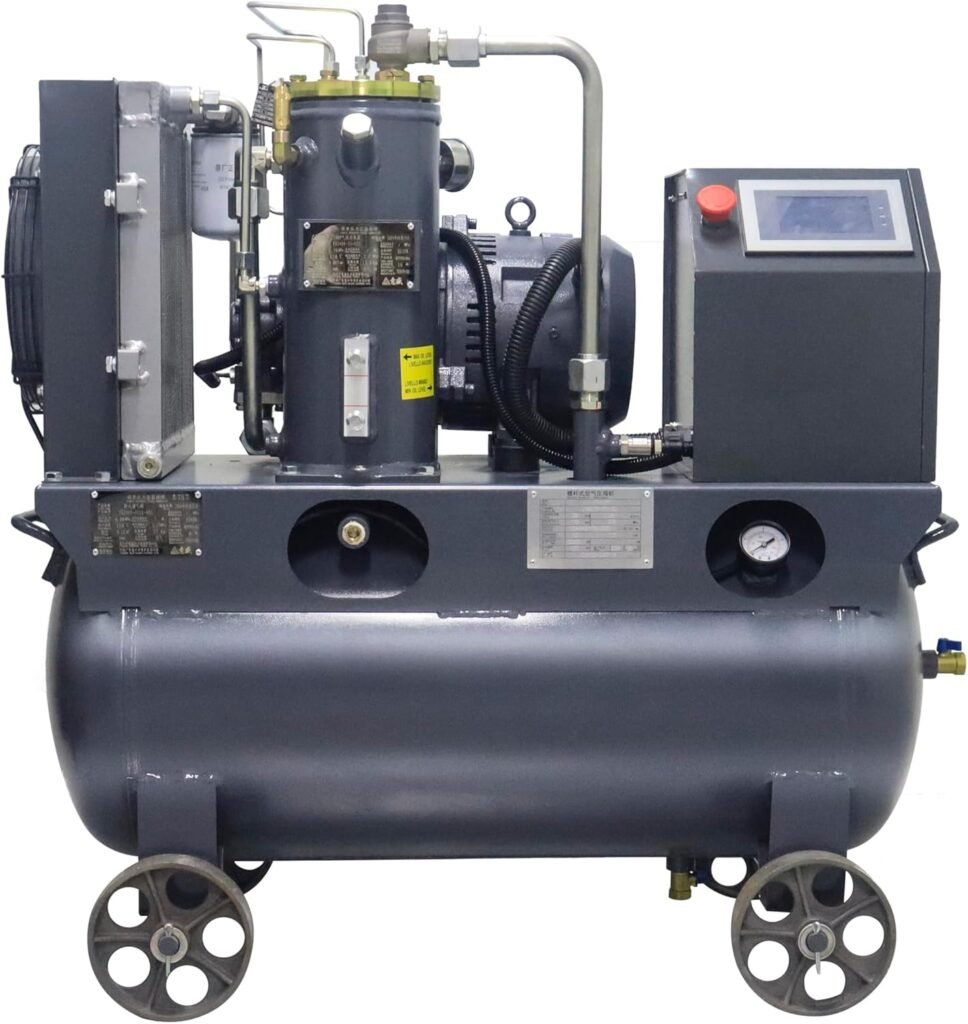
We want to give a clear snapshot of the 10HP/7.5kw Variable Speed Frequency Rotary Screw Air Compressor with 30 Gallon Tank, 230V/60hz/single Phase/38CFM@116PSI Two in One Movable Air Compressor so we know what to expect. This unit pairs a rotary screw compressor with a 30-gallon tank and a variable frequency drive (VFD), aiming to provide steady pressure and better energy efficiency than fixed-speed alternatives.
What this model aims to do
We see this compressor as a mid-to-high-capacity tool for serious hobbyists, small shops, and light industrial use. It is intended to give constant, adjustable airflow with reduced start-up current and smoother operation compared to a traditional piston compressor.
Key Specifications
We like to have specifications clearly laid out, so we can compare and make decisions quickly. Below is a compact table that breaks down the crucial parameters of the compressor.
| Parameter | Specification |
|---|---|
| Product Name | 10HP/7.5kw Variable Speed Frequency Rotary Screw Air Compressor with 30 Gallon Tank, 230V/60hz/single Phase/38CFM@116PSI Two in One Movable Air Compressor |
| Power | 10 horsepower (7.5 kW) |
| Input Voltage | 208-230V / 60Hz |
| Phase | Single Phase (1 phase) |
| Air Flow | 38 CFM |
| Max Working Pressure | 116 PSI |
| Motor Speed | 3600 RPM |
| Output Pipe Diameter | NPT 1/2” |
| Tank Capacity | 30 gallons |
| Frequency Control | Variable Frequency Drive (VFD) |
| Mobility | Casters mounted for movement |
| Noise & Operation | Soft start, reduced noise relative to piston compressors |
| Warranty | 1 year full machine warranty; free spare parts replacement during warranty |
| Important Note | Cannot convert single-phase to three-phase with a converter |
Why these specs matter
We consider the combination of a rotary screw head and VFD to be especially significant. The 38 CFM at 116 PSI gives us a practical flow rate for many pneumatic tools, and the single-phase 208–230V input makes it suitable for many residential and light-commercial electrical setups without the need for three-phase service.
Design and Build Quality
We appreciate robust construction in equipment that sees daily use, and the rotary screw technology generally offers a more compact, durable head than reciprocating compressors. The chassis, tank, and piping are built for workshop durability, and the addition of casters means we can reposition it when workflows change.
Materials and components
We note that the motor runs at 3600 RPM and is matched to a screw element designed for continuous duty. The VFD and controls are integrated to allow soft starts and precise speed control. We find the welded tank and fittings typical of this class, with an NPT 1/2” outlet that fits standard industrial hose fittings.
Performance
We evaluate performance across airflow stability, pressure consistency, and how well the compressor meets intermittent vs continuous demands. With 38 CFM at 116 PSI, this unit fits many mid-duty scenarios, and the variable speed drive helps match output to demand rather than cycling the motor on and off.
Air delivery and pressure stability
We like that the VFD allows the motor to ramp and modulate speed according to actual air consumption. This leads to fewer pressure spikes and more consistent tool performance. For tasks such as continuous spraying or prolonged pneumatic tool use, the steady pressure is a real advantage over piston compressors that rely on tank cycling.
Start-up and load handling
We appreciate the soft-start capability because it reduces inrush current and lowers mechanical stress on the motor and electrical system. This makes the compressor friendlier to household or small-shop circuits and reduces the likelihood of tripping breakers during start-up.
Energy Efficiency and Operating Costs
We pay close attention to energy use because compressors can be significant ongoing expenses. The variable frequency design is the crux of the efficiency case: by matching motor speed to demand, the compressor avoids the frequent full-power restarts and idling associated with fixed-speed units.
How VFD reduces consumption
We observe that by letting the compressor run only as fast as needed, the motor draws less power during light-load conditions. Over weeks and months, this modulation can lead to meaningful energy savings, especially if we frequently have partial-load periods where 100% motor power is unnecessary.
Financial implications
We estimate that for workshops with variable demand, the VFD can lower electricity bills compared to a fixed-speed compressor that cycles on/off frequently. The precise savings depend on usage patterns, but our expectation is lower peak demand charges and better overall efficiency.

Noise and Vibration
We always care about operator comfort and workplace noise compliance. Rotary screw compressors typically produce lower frequency noise and smoother operation than piston compressors, and the soft-start feature further reduces abrupt noise at start-up.
Real-world noise expectations
We find that while rotary screw units are quieter in the mid and low frequencies, they still produce a continuous hum during operation. This is preferable to the loud cyclical bangs of a piston compressor starting and stopping, and it helps create a calmer work environment.
Vibration and mounting
Because the unit sits on casters, we recommend checking the floor surface and ensuring the casters are locked during operation to avoid movement. Proper placement on a firm, level surface will minimize vibration transfer and ensure consistent operation.
Installation and Setup
We value quick and straightforward installation to get our projects going faster. This compressor is designed to be easy to set up: connect power, hook into the air system, and we’re ready to go after a short commissioning period.
Electrical requirements and the single-phase limitation
We must highlight the important note: this unit is single-phase and cannot be converted to three-phase via a converter. We need to confirm our site’s power compatibility—208–230V/60Hz single-phase—before purchase or arrange appropriate electrical service. Trying to convert to three-phase will not work and can damage the unit.
Mechanical setup and piping
We recommend straightforward piping with NPT 1/2” fittings and good-quality hose and quick couplers. We also advise positioning the compressor with sufficient clearance for ventilation and maintenance access, and making sure the condensate drain path is properly plumbed or a drain valve is accessible.
Mobility and Tank Considerations
We like the idea of a built-in 30-gallon tank and casters because it combines steady reserve capacity with portability. The two-in-one design gives us both a tank buffer and the smoother flow of a screw compressor.
Tank capacity and role
A 30-gallon tank provides a useful buffer for short bursts of high demand and helps reduce pressure fluctuation. We can run intermittent high-peak tools without immediately forcing the motor to speed up, which improves responsiveness for things like nail guns and impact tools.
Casters and movement
The mounted casters help us move the unit across the shop floor for localized tasks and storage between jobs. We advise using the caster locks during operation and checking the floor condition to avoid tipping or movement when hoses pull on the unit.
Controls, Interface, and Usability
We value intuitive controls for daily ease of use. The integrated VFD control typically includes basic status displays, fault indicators, and setpoint adjustment so we can quickly change target pressure and monitor running conditions.
Control features we find useful
We like to be able to set cut-in and cut-out pressures or a target pressure for the VFD to hold. Clear fault indications and easy access to reset or service modes are a big help for troubleshooting without needing specialized tools.
Remote diagnosis and support
The product includes remote diagnosis services in its after-sales package, which we see as very helpful. Remote diagnostics can shorten downtime and help determine whether an issue needs spare parts or only a settings adjustment.
Maintenance and Serviceability
We prefer equipment that doesn’t demand constant attention, and rotary screw compressors tend to have lower maintenance overhead than reciprocating models. Annual maintenance typically involves filter and oil changes at scheduled intervals, and the VFD reduces some mechanical wear.
Routine maintenance tasks
We plan to change air filters and oil per the manufacturer’s recommended intervals, inspect hoses and fittings, drain condensate from the tank, and check belts or coupling components if applicable. These tasks are straightforward and can be completed with basic workshop tools.
Warranty and parts availability
The one-year warranty covering the whole machine and free replacement of spare parts during that period gives us peace of mind. We also value the emergency spare parts replacement service, which can be essential for minimizing downtime during a busy schedule.
Safety Features and Best Practices
We prioritize safety in any compressed-air system due to the stored energy in tanks and the mechanical dangers of rotating equipment. This unit’s soft-start reduces electrical stress, and standard safety fittings like pressure relief valves and proper electrical protection are critical.
Safety checklist we recommend
We suggest confirming the presence and function of pressure relief valves, regularly inspecting the tank for corrosion or damage, ensuring proper grounding and circuit protection, and following lockout/tagout procedures during maintenance. We also emphasize wearing hearing protection during prolonged exposure to running equipment.
Electrical safety reminders
We must reiterate that the compressor is single-phase and not convertible to three-phase. Improper electrical connections or attempts at conversion can lead to motor or VFD damage, voided warranties, or dangerous electrical faults. Only licensed electricians should perform installation and wiring.
Applications and Use Cases
We view this compressor as versatile for a wide range of tasks: tire inflation, painting, nailing, automotive repairs, and continuous spray work. Its steady output and energy efficiency make it attractive for continuous-duty tasks where consistent pressure matters.
Typical workshop tasks
For woodworking with pneumatic nailers, automotive body shops doing extended spray work, and home renovation projects involving frequent tool use, this compressor gives the steady pressure and CFM needed. It’s also well suited for small manufacturing setups that require sustained air delivery.
Limitations for heavy industry
We note that while 38 CFM is strong for many applications, large industrial facilities or high-demand central systems might require higher-capacity compressors or multiple units. For such environments, three-phase systems and higher CFM solutions are typically the standard.
Pros and Cons
We like to look at the balanced picture, listing strengths and trade-offs so we can decide more objectively.
Pros
- Variable frequency drive for energy savings and steady pressure.
- Rotary screw technology offers smoother, quieter continuous operation.
- Soft-start reduces inrush current and mechanical stress.
- Portable 30-gallon tank with casters for mobility.
- Reasonable CFM (38) at useful pressure (116 PSI).
- One-year warranty with spare parts coverage and remote diagnostics.
Cons
- Single-phase only — cannot be converted to three-phase, limiting some industrial setups.
- 30-gallon tank may be small for very long, high-flow continuous operations.
- Initial cost for VFD and screw technology can be higher than basic piston compressors.
- Requires proper electrical service (208–230V single-phase), which may not be available in all residential settings.
Comparing to Alternatives
We often compare rotary screw with variable frequency units against piston compressors and fixed-speed screw compressors to understand trade-offs. The choice depends on duty cycle, noise tolerance, and energy priorities.
Versus piston compressors
Compared to piston compressors of similar power, the screw/VFD unit will typically run quieter, provide steadier pressure, and require less frequent mechanical maintenance for continuous use. However, pistons often have lower upfront costs and can be suitable for infrequent, high-pressure bursts.
Versus fixed-speed screw compressors
Compared to fixed-speed screw compressors, the VFD-equipped unit will usually use less energy and provide finer pressure control under variable demand. Fixed-speed machines can be simpler and slightly cheaper but will cycle more and may consume more electricity over time.
Buying Considerations and Checklist
We want to ensure our purchase fits our electrical setup, application needs, and space constraints. Use this checklist to confirm compatibility and readiness.
- Confirm electrical supply: 208–230V / 60Hz single-phase availability.
- Verify that single-phase is adequate; do not attempt to convert to three-phase.
- Ensure floor space and ventilation for the compressor and place for the 30-gallon tank with casters.
- Decide if 38 CFM and 116 PSI meet current and near-future tool demands.
- Plan for maintenance access and spare parts availability, especially after warranty.
- Ask about installation support and whether remote diagnostics are included.
Questions to ask the seller
We recommend asking about lead times for spare parts, whether optional extended warranties exist, availability of local service providers, and if any setup assistance is offered. Also confirm the recommended maintenance schedule and parts list.
Troubleshooting Common Issues
We prefer being prepared for common occurrent issues so we can respond quickly. Below we outline a few likely problems and practical steps.
Compressor won’t start
Check power supply and breakers, confirm proper voltage, and inspect VFD fault codes. If the VFD shows a fault, follow the manual for fault interpretation and contact remote diagnostics if necessary.
Low pressure or insufficient CFM
Verify intake filters are clean, check for leaks in the pneumatic system, and ensure setpoint pressures are correct. Also confirm the motor is running and the VFD is modulating correctly rather than being stuck at partial speed.
Excessive noise or vibration
Confirm casters are locked, the compressor is on a level surface, and mounting hardware is tight. Persistent unusual noise might indicate mechanical wear or issues with bearings—engage service if these persist.
Real-World Usage Tips
We like practical tips that improve efficiency and extend equipment life. These are small steps that yield large benefits over the compressor’s lifecycle.
- Warm up the compressor briefly in cold environments to ensure proper oil circulation.
- Use quality hoses and fittings to reduce pressure loss and avoid hose ruptures.
- Drain condensate daily or install an automatic drain to prevent tank corrosion.
- Keep intake areas clear of dust and debris to maintain filter life and airflow.
Optimizing for paint and finish work
For painting and finishing, consistent pressure is essential. We recommend setting the VFD to hold a steady target pressure slightly above the maximum nozzle requirement and using a 30-micron filter to avoid oil carryover into finishes.
Environmental and Regulatory Considerations
We think about environmental impacts and compliance with local noise regulations. The lower operating noise and better energy efficiency help the compressor meet community and workplace expectations.
Emissions and oil handling
Proper handling of oil changes and used filters is necessary to comply with local disposal regulations. We recommend following manufacturer guidance and local waste disposal regulations to minimize environmental impact.
After-Sales Service and Support
We value strong after-sales service because compressors are critical shop equipment and downtime can be costly. The included one-year warranty and free spare parts replacement within that period are important selling points for us.
Remote diagnostics and emergency support
The availability of remote diagnosis and emergency spare parts replacement can significantly shorten repair times. We appreciate vendors who offer good documentation, responsive technical lines, and clear warranty claim processes.
Final Recommendations
We want to be decisive and practical: this compressor is a strong candidate for small shops, paint booths, and serious home workshops that need steady, efficient compressed air. The rotary screw head, VFD control, and portability make it attractive, but we must ensure our electrical setup supports single-phase 208–230V and accept the tank capacity and CFM limits.
Who should buy this unit
We recommend this compressor for:
- Small to medium automotive shops doing spray and finishing work.
- Woodworking shops using pneumatic nailers and continuous sanding/finishing tools.
- Small manufacturing or production lines with moderate continuous air demand.
- Enthusiastic home users with higher-compressed-air needs and proper electrical service.
Who should consider alternatives
We suggest looking elsewhere if:
- You require three-phase power or much higher CFM for heavy industrial usage.
- You need very large tank capacity for long, high-flow cycles without motor ramping.
- Your electrical infrastructure cannot supply 208–230V single-phase.
Our Verdict
We conclude that the 10HP/7.5kw Variable Speed Frequency Rotary Screw Air Compressor with 30 Gallon Tank, 230V/60hz/single Phase/38CFM@116PSI Two in One Movable Air Compressor is a compelling choice for anyone needing steady, efficient compressed air with mobility and sensible maintenance demands. We especially value the VFD-driven rotary screw head for reduced noise, smoother operation, and potential energy savings. Provided our electrical supply matches the single-phase requirement and the 38 CFM and 30-gallon capacity meet our needs, this unit stands out as a practical, efficient solution.
Final checklist before purchase
We recommend confirming:
- 208–230V / 60Hz single-phase power at the site.
- Acceptance of the one-year warranty terms.
- Availability of local service and spare parts.
- That 38 CFM and 116 PSI meet current tool and process demands.
If we follow these steps, we can be confident this compressor will be a productive addition to our shop and deliver reliable performance with lower operational headaches than many piston alternatives.

Disclosure: As an Amazon Associate, I earn from qualifying purchases.