?Are we looking for a heavy-duty, shop-ready air compressor that balances power, quiet operation, and a large capacity tank?
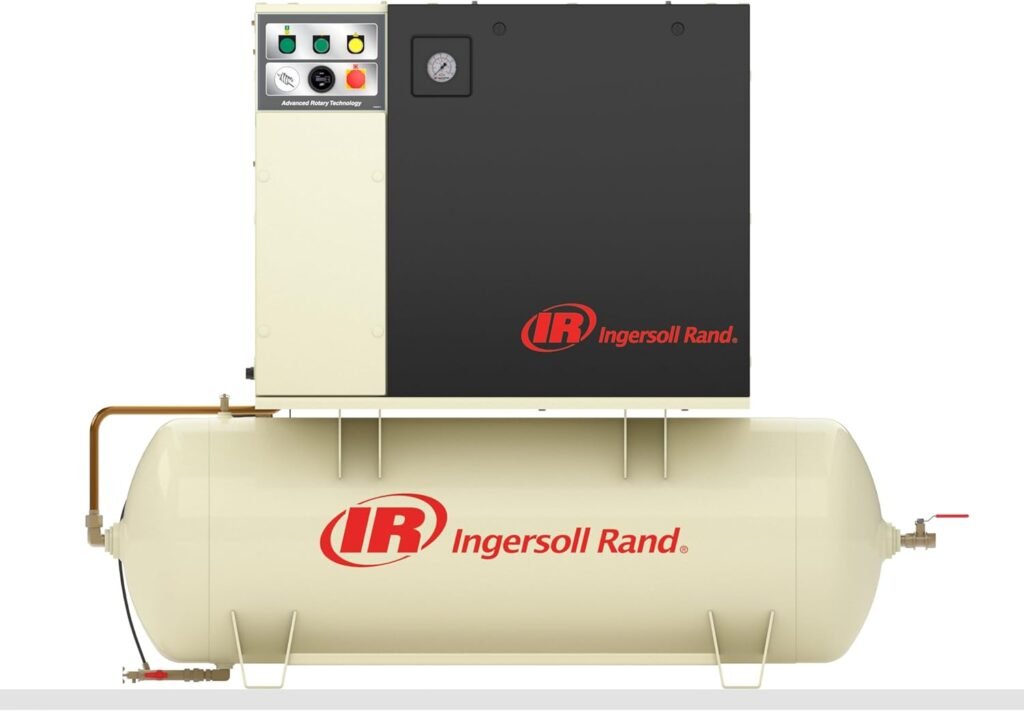

Ingersoll Rand UP6-7.5-125 120 Gallon 230-1-60 Air Compressor 18003145 — Overview
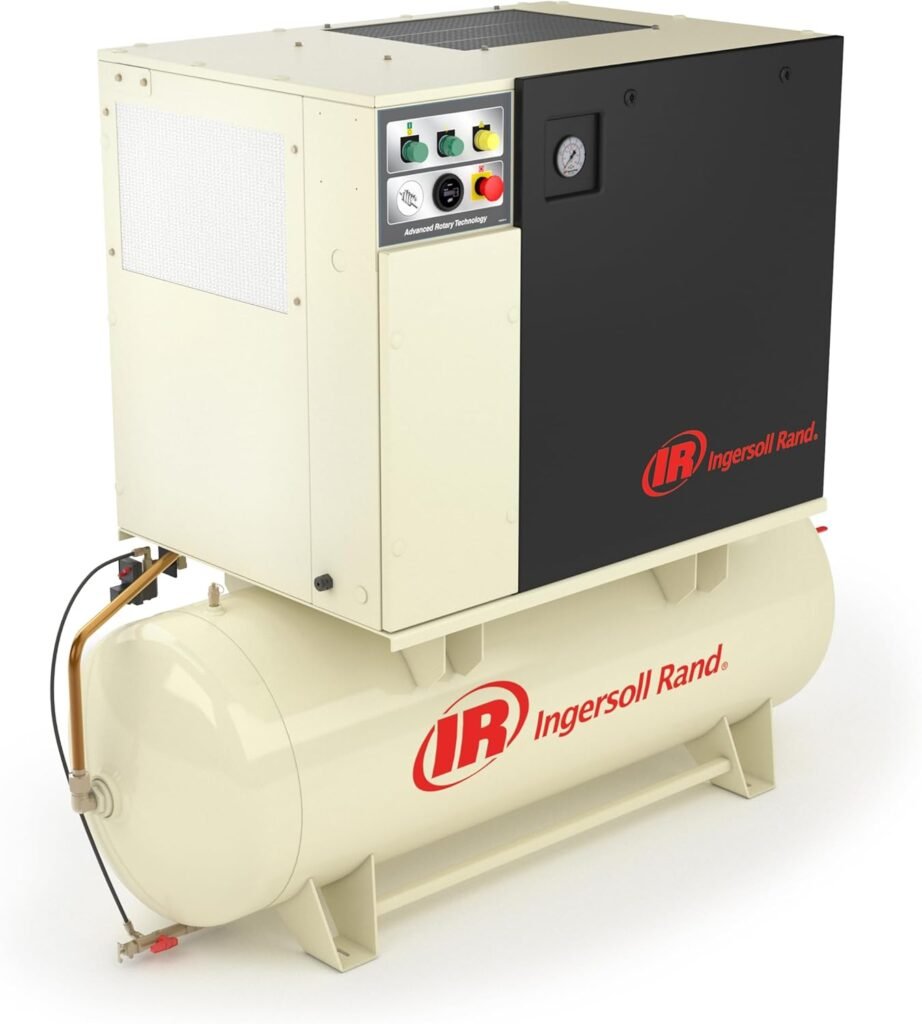
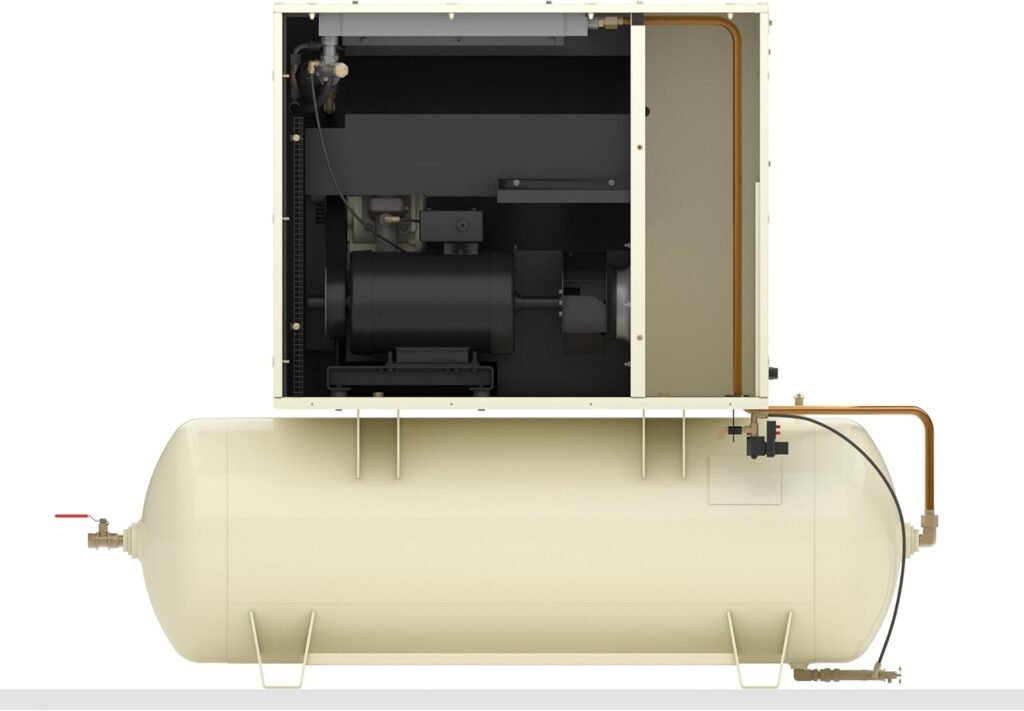
We want to present a clear, balanced view of what this unit offers so you can decide whether it fits your workshop or facility. The Ingersoll Rand UP6-7.5-125 is a large-capacity, oil-lubricated compressor with a 7.5 HP motor, 120-gallon horizontal ASME tank, and a rated output of 28 CFM at 125 PSI.
We find that the combination of a large receiver, moderate CFM, and high maximum pressure makes this model suited for shops that require intermittent bursts for tools or continuous use with moderate demand. The unit also includes features designed to reduce discharge temperature and noise, which we’ll unpack in detail below.
Product identity and key numbers
We like to make sure the identifying info is clear so you can match the unit to available parts and support. The full product name is Ingersoll Rand UP6-7.5-125 120 Gallon 230-1-60 Air Compressor 18003145 with ASIN B081QN8G48 and product code 23352131. The manufacturer lists it as a 230V single-phase, 60 Hz, 7.5 HP unit with a maximum pressure of 125 PSI.
We recommend noting these numbers when ordering accessories, maintenance kits, or replacement parts so you get compatible items the first time.
Specifications and technical breakdown
We want to make the key specs easy to scan and compare. Below is a focused table summarizing the most important specifications for quick reference. After the table, we’ll explain what each item means in practice and how that impacts installation and operation.
| Specification | Value |
|---|---|
| Model / Product Code | Ingersoll Rand UP6-7.5-125 / 18003145 (23352131) |
| ASIN | B081QN8G48 |
| Motor Type / HP | ODP electric motor / 7.5 HP |
| Voltage / Phase / Hz | 230 V / Single Phase / 60 Hz |
| Rated Output | 28 CFM @ 125 PSI |
| Max Pressure | 125 PSI |
| Tank Capacity | 120 Gallon Horizontal (ASME Tank) |
| Cooling | Air-Cooled Aftercooler |
| Noise Level | 65 dB (whisper quiet operation) |
| Control | Auto Start/Stop Control |
| Motor Starter | Full Voltage Motor |
| Filtration / Lubrication | Oil Filter and Separator Element (oil-lubricated) |
| Maintenance | Ingersoll Rand maintenance kit available (sold separately) |
We think this table gives a clear snapshot of capabilities and installation needs. The 28 CFM rating at 125 PSI combined with a 120-gallon tank is the central trade-off to consider when matching to tools and duty cycles.
What the numbers really mean
We want you to understand how the specs translate to day-to-day performance. The 28 CFM rating is the compressor’s continuous output at the listed pressure; the 120-gallon tank stores a large volume of compressed air to handle intermittent high-demand bursts without immediate cycling. The 7.5 HP motor provides the energy to reach and maintain the 125 PSI maximum, while the air-cooled aftercooler reduces discharge temperature and helps remove moisture.
We suggest checking electrical compatibility before purchase because this is a 230V single-phase machine; it will require a dedicated circuit and appropriate breaker size based on starter and local electrical codes.
Performance in real-world use
We want to explain how the compressor behaves under actual shop conditions rather than just on paper. In our experience, a 28 CFM @ 125 PSI rating is well-suited for many automotive, fabrication, and light production environments where intermittent heavy demand occurs—such as dual-impact wrench use or painting tasks—provided users size their system and storage appropriately.
We also find that the large 120-gallon tank smooths out supply during bursts, reducing the need for the motor to run continuously during short, intense tool usage. That can extend motor and pump life and improve energy efficiency in short-cycle contexts.
Tool and workflow examples
We like giving practical comparisons so you can map the compressor to your tools. Below are a few common compressed-air tools and approximate CFM requirements so you can plan how many and which tools can run simultaneously with a 28 CFM supply:
- Framing nailer: ~2–3 CFM — multiple units can operate on the stored tank air.
- Impact wrench (1/2″, moderate use): ~6–10 CFM — one or two can be used intermittently, with tank buffering.
- HVLP paint spray gun (fine finish): ~6–12 CFM — for continuous spraying, the compressor will cycle; tank helps but continuous high-quality finishing might require higher CFM or staging.
- Sandblaster: 20+ CFM — this is high-demand; for long continuous blasts we’d recommend a higher-CFM unit or staging with a booster.
We want readers to note that when multiple tools run at once, the effective CFM available drops quickly; pairing tool CFM needs with tank capacity determines whether the motor will run continuously or cycle frequently.
Noise, placement, and workplace impact
We want to highlight noise considerations because they affect where the compressor can be placed. Ingersoll Rand lists whisper-quiet operation at about 65 dB, which we find comfortable for shop placement near the point of use. At 65 dB, the unit is notably quieter than many industrial compressors, which often run above 80 dB.
We still recommend isolating the compressor from workstations if possible, and using anti-vibration pads or a solid mounting surface to minimize structure-borne noise transmission. Even “whisper quiet” units can sound louder in small enclosed rooms.
Ventilation and clearance
We want to stress proper ventilation for safe, efficient operation. The compressor needs adequate clearance around the air-cooled aftercooler and motor for airflow. Install in a dry, well-ventilated room with at least the manufacturer’s recommended clearances; if the room is enclosed, consider forced ventilation to keep ambient temps down.
We also advise locating the unit near the point of use if possible, because pressure drop in long piping runs can affect tool performance. The quieter operation makes closer placement practical in many shops.

Electrical and installation requirements
We want to make the electrical and physical installation requirements transparent. This compressor is 230V single-phase at 60 Hz and configured with a full voltage motor and an ODP (open drip-proof) motor type, which means it requires a dedicated circuit, a proper starter or motor protection device, and compliance with local electrical codes.
We recommend engaging a licensed electrician to install the appropriate breaker size and wiring. Confirm the exact starter and wiring needs from the seller or Ingersoll Rand documentation to match your local code and the motor’s locked rotor amperage.
Piping, drainage, and accessory hookups
We want to remind you about piping and moisture management. With air-cooled aftercooler and condensation tendencies, proper drain placement is essential. Install a quality automatic or manual tank drain at the receiver low point, and consider a line dryer and a downstream filter/regulator for sensitive tools.
For longer runs, use appropriately sized pipe (iron or schedule 40 PVC is not recommended for high-pressure air) and include an isolation valve and check valve so the compressor can be taken offline for maintenance without depressurizing the entire system.
Cooling, filtration, and air quality
We want to explain how the included components affect air quality and system longevity. The air-cooled aftercooler reduces the discharge air temperature, which helps drop out moisture and eases the job of dryers and filters. The oil filter and separator element indicates that this is an oil-lubricated pump, which generally runs cooler and lasts longer than oil-free designs in heavy-duty use but requires oil and filter maintenance.
We recommend installing a post-compression dryer (refrigerated or desiccant) and particulate/oil coalescing filters for applications like painting or precision instrument work. The 120-gallon tank and aftercooler together will help reduce moisture in the short term but are not a substitute for a dedicated dryer in moisture-sensitive work.
Maintenance, parts, and consumables
We want to emphasize that regular maintenance keeps the compressor reliable and cost-effective. Because this is an oil-lubricated compressor, we recommend routine checks for oil level and condition, periodic oil changes, replacement of the oil filter and separator element per manufacturer intervals, and inspection of belts or drive components if present. Ingersoll Rand offers a maintenance kit for this unit (sold separately), which simplifies servicing by bundling the common replacement parts.
We also suggest inspecting and cleaning the aftercooler fins periodically, verifying that the safety valve and pressure switch operate properly, and performing an annual visual inspection of the ASME receiver as required by local regulations.
Suggested maintenance schedule
We want to provide a useful, practical checklist to follow. Below is a general schedule we use as a baseline; adjust to your actual operating hours, environment, and manufacturer instructions:
- Daily: Drain receiver tank, check for unusual noises or vibrations.
- Weekly: Check oil level, check for leaks, verify pressure switch operation.
- Monthly: Inspect air filter, clean aftercooler fins if dusty, check belt tension or couplings if applicable.
- Every 500–1000 hours or as specified: Change compressor oil, replace oil filter and separator element, check motor bearings and electrical connections.
- Annually: Full system inspection, test safety valve, and consider professional service for pump health check.
We recommend logging maintenance activities so we can spot trends and catch small issues before they become major repairs.
Safety and code compliance
We want to note that the 120-gallon receiver is an ASME tank, which means it meets vessel construction standards and is suitable for pressurized storage in regulated environments. We take safety seriously and advise following all local codes regarding installation, periodic inspection, and safety valve testing.
Make sure the unit is installed on a stable surface, properly grounded electrically, and that relief and safety devices are accessible for testing. Avoid welding or applying heat to the receiver, and never operate the unit with protective guards removed.
Safety devices and best practices
We want to highlight the critical devices and procedures. Use a pressure relief valve rated at or below the tank maximum, install a check valve to isolate the pump for maintenance, and maintain downstream regulators for tool protection. We also suggest labeling valves and maintaining clear airflow paths for cooling.
When working on the compressor, always depressurize the system, lock out power, and follow lockout/tagout procedures as required by workplace safety regulations.
Pros and cons — balanced view
We want to give a candid, balanced snapshot of strengths and trade-offs so you can weigh the purchase sensibly. Below are the points we consider most important when comparing this model to alternatives.
Pros:
- Quiet operation at ~65 dB makes placement near work areas practical.
- Large 120-gallon ASME tank provides substantial storage for intermittent high-demand bursts.
- Aftercooler reduces discharge temperature, aiding moisture removal.
- 28 CFM at 125 PSI is sufficient for many automotive and light industrial tasks.
- Oil-lubricated pump typically offers longer life in heavy-duty use.
- Full voltage motor and auto start/stop control simplify operation.
- Maintenance kit availability makes servicing easier.
Cons:
- 28 CFM is moderate compared to high-capacity industrial compressors; not ideal for sustained heavy continuous demand like large sandblasting operations.
- Requires 230V single-phase electrical capacity and appropriate breaker/starter, which may need electrical upgrades.
- Oil-lubricated design requires ongoing oil/filter maintenance (more upkeep than oil-free models).
- Size and weight mean this is not a portable option; it requires a permanent installation and floor space.
We think weighing these pros and cons against your typical tool usage and duty cycle is the best way to decide if this model fits your needs.
Sizing guide and CFM math
We want to help you size the compressor to your tool needs rather than rely on guesswork. A basic method is to list the CFM requirements of tools you plan to run simultaneously, add a safety margin (typically 20–30%), and ensure the compressor CFM at operating pressure meets that total. The large tank offers buffer time during short bursts, but continuous operations require sustained compressor output.
Example calculation:
- Suppose we run an impact wrench (~8 CFM) and an HVLP gun (~10 CFM) at the same time. Combined demand = 18 CFM.
- Add 25% buffer => 18 × 1.25 = 22.5 CFM.
- Our compressor provides 28 CFM @ 125 PSI, which covers this need with some margin.
We recommend performing this calculation for your actual tool list and factoring in the required pressure; some tools need higher PSI for full performance. If the combined continuous demand approaches or exceeds 28 CFM, consider a higher-capacity unit or running tools sequentially.
Tank buffering and runtime examples
We want to show how the 120-gallon tank smooths demand. If you have a brief high CFM burst, the tank can supply the difference while the motor is off or ramping up. For example, a short burst that requires an extra 20 CFM for a minute may be supplied by the tank without immediate motor run. However, for continuous use (e.g., a one-hour sandblast at 20+ CFM), the compressor will need to run much of the time and the motor will control the steady-state delivery.
We suggest measuring your typical duty cycle (percent of time tools are actively demanding air) and comparing against the compressor’s rated continuous output to judge long-term suitability.
Installation checklist and step-by-step guidance
We want to make installation less intimidating and reduce the risk of overlooked items. Below is a practical checklist and step-by-step guidance to ensure safe, code-compliant installation.
Pre-install checklist:
- Confirm circuit availability for 230V single-phase 7.5 HP motor and verify starter/breaker sizing with an electrician.
- Prepare a flat, level concrete pad or solid floor capable of supporting the unit.
- Provide 3–4 feet clearance around the unit for service and adequate airflow.
- Position near intended point of use to minimize long piping runs.
- Identify drain location and access to compressed-air distribution piping.
Installation steps:
- Place compressor on the prepared pad; use vibration isolation pads if desired to reduce vibration transfer.
- Connect to a dedicated 230V single-phase circuit with appropriate breaker and lugged connection; follow local codes and hire a licensed electrician.
- Install piping with appropriate materials and fittings, include a main shutoff valve and a check valve.
- Install an automatic tank drain or ensure manual drain access to remove condensate daily.
- Hook up filters/regulators and dryers downstream of the receiver if air quality demands require them.
- Verify safety valve, pressure switch settings, and proper operation of auto start/stop.
- Bring unit up to pressure per manufacturer instructions and check for leaks and normal operation.
We advise documenting the installation (photos, wiring diagrams, pipe layout) for future service and compliance needs.
Troubleshooting common issues
We want to reduce downtime by sharing quick checks for common problems. Below are frequent issues and practical steps we use to diagnose them.
Symptom: Compressor won’t start
- Check that the circuit breaker hasn’t tripped and that the starter is energized.
- Verify the auto start/stop control and pressure switch settings; ensure the tank is not already at or above cut-out pressure.
- Look for thermal overload on the motor.
Symptom: Excessive motor cycling
- Check for air leaks in piping or tools that cause the motor to run frequently.
- Verify tank drain operation; water in the system can create erratic pressure behavior.
- Ensure the pressure differential between cut-in and cut-out is set properly.
Symptom: High discharge temperature or excessive moisture
- Clean the aftercooler fins and ensure adequate ventilation.
- Verify oil level and condition; low oil can increase pump friction and temperature.
- Consider adding a dryer and separators if moisture is causing downstream problems.
Symptom: Unusually loud operation or vibration
- Inspect mounting and vibration pads; tighten bolts and secure the unit.
- Check for worn bearings, belts, or couplings if applicable.
- Ensure the compressor is level and not contacting nearby surfaces.
We recommend keeping a phone or contact for a certified compressor technician for issues beyond simple checks.
Accessories and recommended extras
We want to point out accessories that improve performance and protect tools. Here are items we consider essential or highly recommended for most installations:
- Inline refrigerated dryer or desiccant dryer for moisture-sensitive tasks.
- High-quality coalescing and particulate filters with regulators for paint and finishing.
- Automatic timed drain or electronic drain valve for the receiever.
- Pressure gauge cluster and secondary air receiver if you plan multiple independent zones.
- Vibration isolation pads and a drip tray in corrosive or wet environments.
- Ingersoll Rand maintenance kit for this specific model (sold separately) to simplify routine service.
We also recommend stocking spare separator elements and oil filters so we can perform maintenance without long downtime.
Warranty, support, and parts availability
We want to remind readers to confirm warranty and support before purchase. Warranty terms can vary by seller and region, so we recommend confirming what is covered (pump, motor, tank) and for how long. Parts availability is usually strong for Ingersoll Rand products, and the maintenance kit simplifies obtaining the correct service parts.
We also encourage registration of the unit with the manufacturer and retention of purchase and installation records so warranty claims are easier to process if needed.
Comparison to alternatives and use-case fit
We want to help you decide whether this model is the right fit or if another configuration might be better. This compressor sits in a category suited for small-to-medium shops and light production lines. If your work involves long continuous high-CFM processes (large sandblasting jobs, multiple paint booths, continuous compressed-air machining), a higher CFM or multiple compressors staged in a lead-lag configuration might be preferable.
For home or hobby use, this unit may be oversized and require electrical upgrades; for bustling automotive shops or light fabrication businesses, it’s often a good balance of storage (120 gallons), reasonable footprint, and noise control.
Typical right-fit customers
We find the following customers are often well-matched to this unit:
- Automotive repair shops running intermittent heavy tools and paint work.
- Small fabrication shops with intermittent plasma cutting, sandblasting, or pneumatic tools.
- Light manufacturing or packaging operations with moderate compressed-air demand.
We caution that for heavy, continuous processes, we’d evaluate larger industrial compressors or multiple smaller compressors staged to share load and improve redundancy.
Final recommendation and buying tips
We want to conclude with a practical buy or pass recommendation based on typical scenarios. If we operate a busy auto shop, light fabrication facility, or small manufacturing line with intermittent heavy tool use, this Ingersoll Rand UP6-7.5-125 120 Gallon 230-1-60 is a strong candidate thanks to its large receiver, reasonable CFM, quiet operation, and ASME certification.
Before buying, we advise verifying electrical capability, measuring actual tool CFM needs, and planning space and ventilation. Ask the seller about installation services, warranty specifics, and lead times for maintenance parts. If possible, get a demonstration or specification sheet from the vendor to confirm duty cycle and any installation nuances.
Closing thoughts
We want to leave you confident in evaluating how this compressor will behave in your environment. The Ingersoll Rand UP6-7.5-125 offers a sensible mix of tank capacity, quiet operation, and aftercooling features that suit many professional shops. With proper installation, maintenance, and an understanding of your tools’ demands, we expect this compressor to be a reliable backbone for compressed-air needs.
If you’d like, we can help walk through a tailored sizing calculation for your specific tools and workflows, or provide a checklist to hand to your electrician and installer to smooth the purchase and setup process.

Disclosure: As an Amazon Associate, I earn from qualifying purchases.