Are we looking for a rugged, vehicle-mounted air compressor that can carry us through heavy-duty jobs on site and on the road?

Product Overview
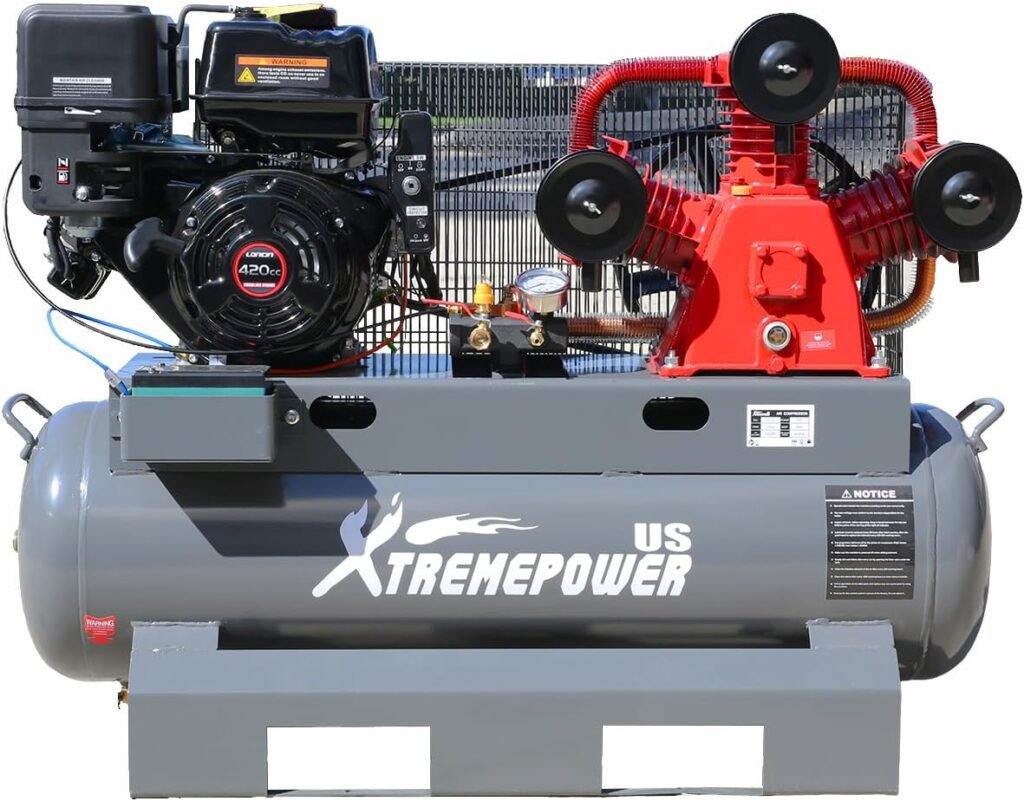
We want to get straight to what this unit is and where it fits in our workday. The XtremepowerUS 13.0HP Horizontal Air Compressor Tank 30 Gallon Tank Gas-Powered 3-Cylinder Service Truck Mount Workshop, Construction Sites, Machinery is a gas-powered, three-cylinder compressor designed primarily for service truck mounting and industrial applications. It aims to serve mechanics, contractors, agricultural operations, and anyone needing portable, reliable compressed air.
What the model is designed to do
We see this compressor as a dedicated solution for environments that require steady compressed air without relying on electrical power. It is tailored for service trucks, farms, construction sites, and remote jobs where portability and durability matter. The design emphasizes ruggedness with cast-iron construction and removable cylinders for ease of maintenance and longevity.
Who will benefit most
We think contractors, truck service operators, farmers, and remote service professionals will get the most value. If our work involves pneumatic tools, inflating, sandblasting, or running air-powered machinery away from fixed shop power, this compressor fits the bill. It also matches industries with varying air demand from low to medium volumes: light manufacturing, textile, electronics, and mining applications can benefit too.
Key Specifications
We like to have the numbers in front of us when evaluating any compressor. Below are the core specs that define the machine’s capability, size, and intended use.
| Specification | Detail |
|---|---|
| Model | XtremepowerUS 13.0HP Horizontal Air Compressor |
| Power Source | Gas-powered (engine-driven) |
| Horsepower | 13.0 HP |
| Cylinders | 3-cylinder, two-stage pump |
| Tank Capacity | 30 gallons |
| Mounting | Horizontal, service truck mountable |
| Pump Construction | Cast iron pump with cast cylinder sleeves |
| Cooling | Cast iron flywheel with large extended fins |
| Drive | Direct drive or belt-driven via pulleys |
| Typical Applications | Service trucks, construction sites, workshops, agriculture, industry |
| Maintenance Features | Individually removable cylinders; designed for easy maintenance |
| Material Durability | Iron construction, cast cylinder sleeves |
Why these specs matter to us
These details tell us whether the compressor fits our workload and operational constraints. The 13.0 HP engine and 3-cylinder configuration indicate enough power for multi-tool use in a service truck context, while the 30-gallon tank provides a balance between capacity and space constraints in vehicle installations.
Build Quality and Design
We want equipment that can take a beating and keep working. The build materials and design choices matter for long-term reliability and ease of repair.
Cast-iron construction and durability
The XtremepowerUS compressor uses a solid cast-iron pump design, which we appreciate for its ruggedness. Cast iron is known for wear resistance and thermal stability, meaning the pump can handle repeated cycles and high temperatures better than lighter materials.
Cooling and pump life
We like the cast-iron flywheel with extended fins because it helps dissipate heat more efficiently. Lower operating temperatures reduce wear on components and help maintain compression efficiency. The design also lowers RPMs, which typically prolongs pump life and reduces the chance of premature failure.
Removable cylinders for maintenance
We find the individually removable cylinders to be a major convenience. When maintenance is needed, serviceability is easier and quicker, which means less downtime. Replacement or repair of one cylinder should not require disassembling the whole pump.
Performance and Air Delivery
We need to know how this compressor handles real-world tasks. Performance covers air delivery at working pressures, recovery time, and consistency under load.
Airflow and pressure capability
While the product description emphasizes suitability for variable air demand from low to medium volumes, we typically want details like CFM (cubic feet per minute) at specific PSI (pounds per square inch). The 13.0 HP engine and two-stage pump suggest competent performance for operating multiple tools, but CFM ratings can vary based on engine configuration and drive setup. In many service truck setups, this class of compressor will deliver sufficient CFM for impact wrenches, air ratchets, and small sanders when used within rated duty cycles.
Duty cycle and continuous use
We consider the duty cycle important for sustained tasks. The robust cast-iron pump and cooling features imply that the compressor is intended for heavier use than light-duty consumer models. That said, gas-powered compressors mounted on trucks are often expected to run intermittently while the engine or vehicle runs; continuous heavy-duty operation for full-day production requires monitoring cooling and oil levels closely.
Start-up and load handling
Because it is gas-powered, we like that the unit can be started independent of shore power. This makes it usable in remote locations. The three-cylinder pump and two-stage compression help manage load transitions and recovery times between tool cycles. We should ensure the engine is appropriately sized and tuned so start-up under load is consistent.

Mounting and Installation
We know installation can be a deal-breaker for vehicle-mounted systems. Mounting options, footprint, and how it integrates with a truck bed matter significantly.
Ease of truck bed installation
This compressor is explicitly designed to mount on truck beds and service vehicles. We find that the horizontal 30-gallon tank layout and dedicated mounting points simplify installation compared to vertical models that may require specialized brackets. It is ideal for mechanics and service trucks that need a compact but capable compressor.
Anchoring and vibration isolation
We recommend mounting the unit on anti-vibration pads or isolators to reduce stress on the truck bed and to limit noise and vibration transfer. Proper anchoring keeps the compressor stable during transport and operation, which helps avoid damage to fittings or the pump itself.
Space and weight considerations
The 30-gallon tank and the pump assembly add height and weight to our vehicle. We must account for the combined weight, center of gravity, and clearance for bed covers or toolboxes. We suggest measuring available space, ensuring proper clearances for airflow and maintenance access, and confirming the vehicle suspension can handle the added mass.
Connection Options and Power Considerations
We have to think about how tools and auxiliary components will hook up to the compressor and how the compressor will be powered and controlled.
Direct drive versus belt drive
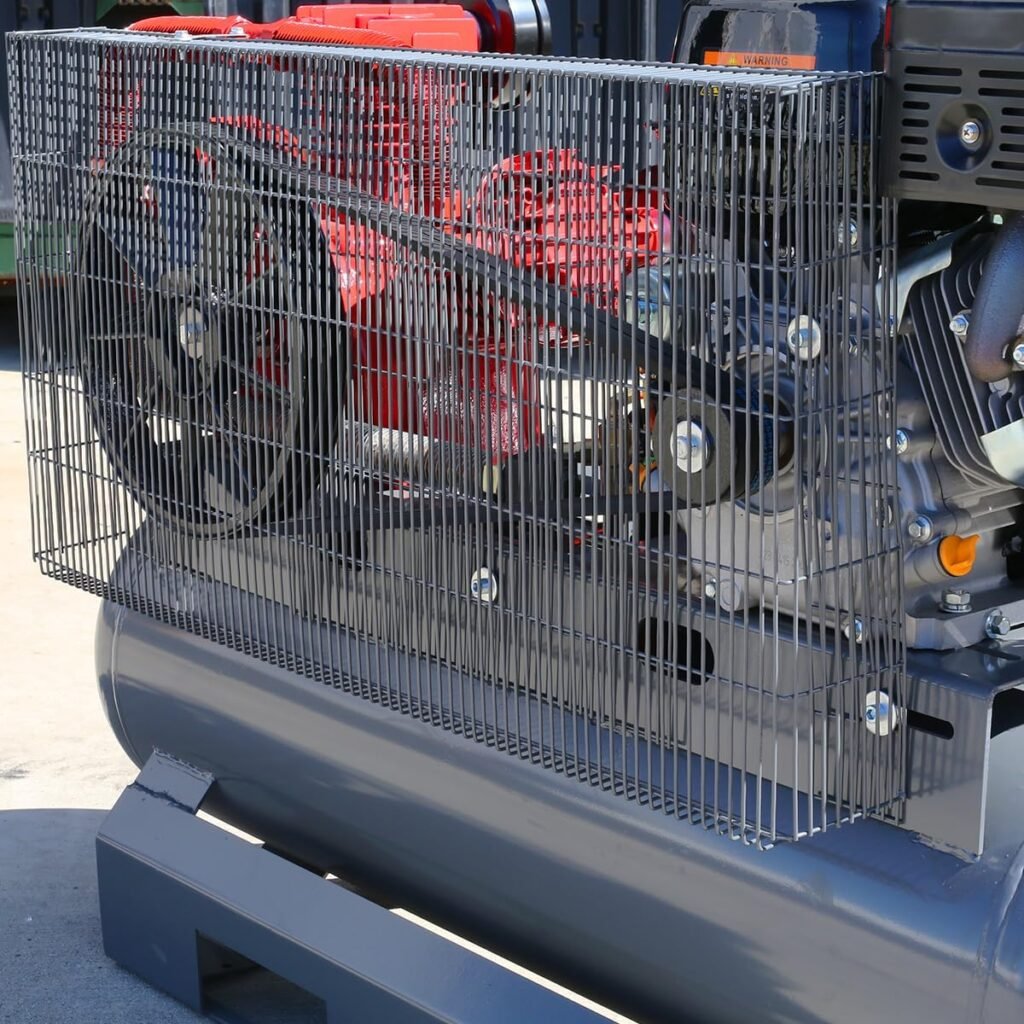
The product notes the compressor can be direct driven from a motor or belt-driven via pulleys from a motor. We appreciate the flexibility because belt drive setups can allow engine rpm matching and reduce shock load, whereas direct drive systems can be simpler and more compact. We should choose based on the engine/transmission setup in our service vehicle and our preference for maintenance complexity.
Hose and fitting choices
We advise using heavy-duty hoses rated to the working PSI and compatible fittings that minimize pressure drops. Quick-connect couplers that are standard in our shop will facilitate fast tool changes. It’s essential we match hose diameter to expected CFM to prevent throttling.
Fuel and oil supply
Being gas-powered, the compressor requires reliable fuel supply for the engine. We need to plan for fuel storage, refueling logistics, and safe fuel handling in service trucks. Regular oil changes for both the engine and the pump are crucial for long-term reliability, so accessible fill and drain points are helpful.
Maintenance and Longevity
We want equipment that’s easy to keep running. Maintenance intervals, ease of parts replacement, and the presence of consumables are important factors.
Routine maintenance tasks
We should plan on checking oil levels, filters, belts (if belt-driven), and cooling fins regularly. Since the cylinders are removable, piston and ring service becomes manageable when performance degrades. Drain the tank regularly to prevent moisture buildup and corrosion, and inspect safety valves and gauges frequently.
Parts availability and support
Replacement parts—such as gaskets, piston rings, valves, and belts—should be reasonably available for a common industrial design like this. We recommend keeping a small parts kit on the truck to minimize downtime. Checking supplier support and warranty terms before purchase will save headaches later.
Expected service life
With proper maintenance, cast-iron pump units typically have long service lives. We estimate several years of reliable performance in typical service-truck usage, but exact longevity will depend on duty cycle, environment, and upkeep. Operating in dusty or corrosive environments requires more frequent maintenance.
Safety Features and Best Practices
We take safety seriously, especially with gas-powered compressed-air systems mounted in vehicles and used around people.
Built-in safety elements
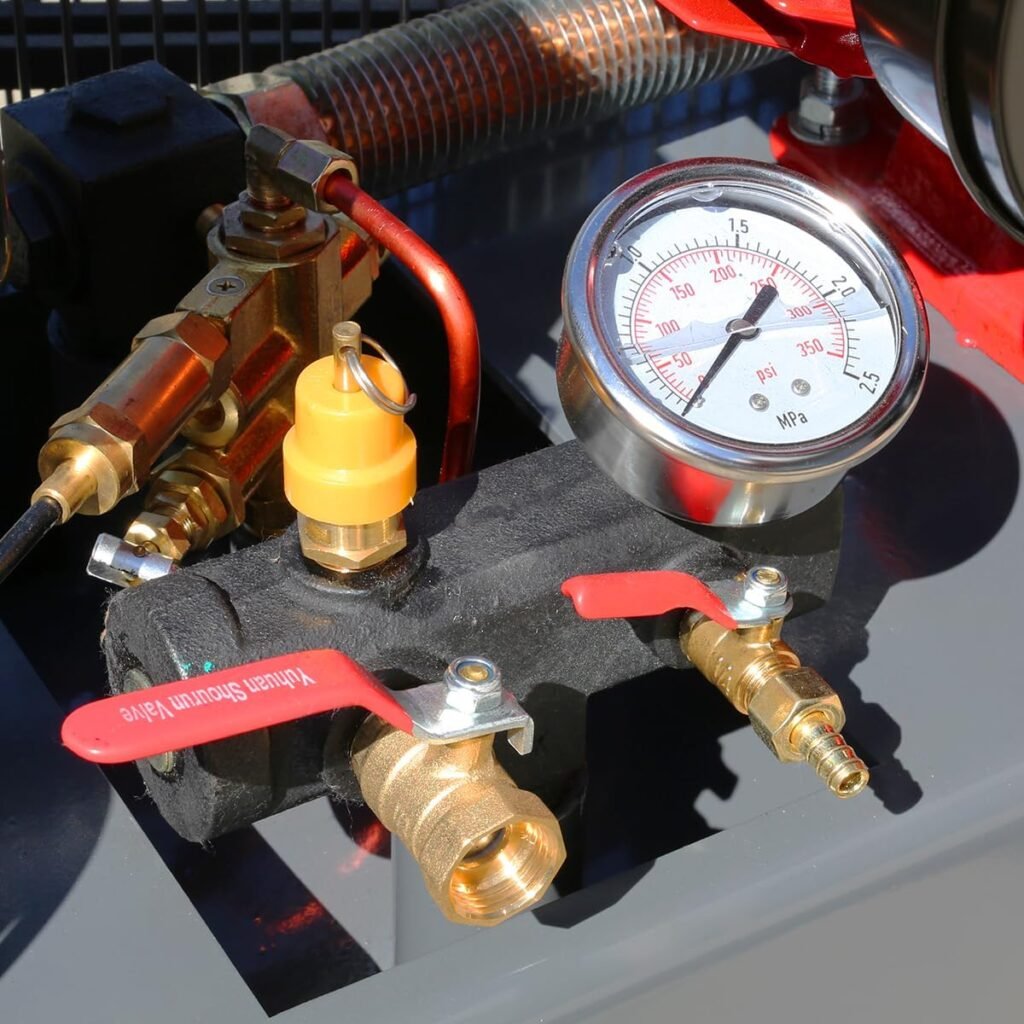
The compressor includes typical safety features like pressure relief valves and robust iron construction. We should confirm the presence and functionality of a working pressure relief valve, accurate pressure gauges, and secure mounting hardware.
Safe operating practices
We always advise securing the vehicle and engine during compressor operation, ensuring adequate ventilation to avoid exhaust fume buildup, and preventing fuel or oil leaks. Never operate the compressor in enclosed spaces without proper ventilation, and always use hearing protection when operating near the unit. Also, we should isolate the tank and relieve pressure before performing maintenance.
Transport and storage safety
When transporting the compressor on a truck, lock down fittings and secure hoses to prevent damage. If the compressor will remain mounted for extended periods, we suggest using protective covers for rain and debris while ensuring cooling airflow is not blocked during operation.
Noise and Environmental Considerations
We recognize that noise and emissions can affect how and where we use the compressor.
Noise levels
Gas-powered compressors can be noisy, especially under load. The cast-iron flywheel and lower RPM design help to mitigate noise to some extent, but we should expect significant sound output compared to electric shop compressors. We recommend hearing protection during operation and thinking about noise ordinances if working in residential areas.
Emissions and fuel usage
Because it runs on gasoline (or another gas engine fuel), this compressor emits exhaust. For use in enclosed spaces or around livestock, we need to be mindful of fumes. For cleaner, quieter options in strictly controlled environments, an electric compressor may be preferable where shore power is available.
Applications and Use Cases
We want to visualize how this compressor will live in our workflow. Here are several practical scenarios where it performs well.
Mobile mechanic service trucks
This is an excellent fit for mobile mechanics who need to run impact tools, air ratchets, and inflation devices on site. The 30-gallon tank and 13 HP pump give a balance between portability and usable air volume for common repair tasks.
Agricultural and livestock operations
We find it valuable for farms for tasks such as equipment maintenance, cleaning, and powering pneumatic tools when working away from fixed installations. Portability and the ability to mount on vehicles are strong pluses in this setting.
Construction and field maintenance
For contractors on job sites without reliable electrical power, this unit helps operate nail guns, chisels, and grinders. The robust construction suits the rough conditions encountered on job sites.
Industrial and processing support
The product description mentions suitability for light industry, food processing, textiles, and electronics. In these contexts, the compressor can support intermittent tool use, instrumentation, and local air supply needs, provided that air quality requirements such as filtration and drying are addressed.
Pros and Cons
We like to list tangible strengths and trade-offs so we can prioritize what matters in purchase decisions.
Pros
- Rugged cast-iron pump construction improves durability and thermal stability.
- Individually removable cylinders simplify maintenance and reduce downtime.
- Designed for truck mounting, providing portability for field service and remote jobs.
- Two-stage pump design promotes higher efficiency and better performance under load.
- Flexibility of direct drive or belt-driven configurations for different installation needs.
Cons
- Gas-powered units produce noise and exhaust, limiting indoor use and requiring ventilation.
- Exact CFM ratings are not always explicitly listed in the brief, which can make precise tool matching harder without additional data from the vendor.
- 30-gallon tank may require more frequent recharge for very high CFM continuous demands compared to larger stationary systems.
- Installation requires thoughtful consideration of weight, mounting, and fuel logistics.
Comparison with Similar Units
We want to position this compressor against comparable options so we can choose intelligently.
Compared to electric shop compressors
Electric compressors generally run quieter and emit no exhaust, which makes them favorable for indoor shops. However, they require shore power and are less mobile. Our XtremepowerUS gas unit wins on portability and independence from site power, making it better for remote or mobile work.
Compared to portable pancake or small tank compressors
Small, lightweight compressors are highly portable but often lack the power for multiple simultaneous tools or sustained heavy use. The 13 HP, 30-gallon XtremepowerUS unit provides higher sustained output and durability, which suits contractor-level tasks better.
Compared to larger mounted systems
Larger truck-mounted compressors with bigger tanks and higher horsepower offer greater air reserves and continuous service for high-demand applications. If we need near-constant air output for multiple high-consumption tools, a larger system might be necessary. The XtremepowerUS model balances capability with footprint for moderate-to-heavy mobile requirements.
Installation Checklist
We want to make sure we don’t miss anything when mounting and commissioning the compressor on a vehicle.
- Verify truck bed dimensions and weight capacity.
- Check clearances for the compressor height and airflow.
- Select appropriate mounting hardware and vibration isolators.
- Confirm fuel supply route and safe fuel storage provisions.
- Install hoses, fittings, and pressure regulators according to tool requirements.
- Ensure proper venting for exhaust gases and adequate airflow for cooling.
- Test the unit under no-load and typical load conditions to confirm stable operation.
- Inspect safety valves, gauges, and pressure relief devices before first use.
Post-installation testing
We recommend running the compressor for a full cycle to pressure and observing recovery times and any abnormal vibration or noise. Confirm that the tank holds pressure and that the engine and pump run smoothly through multiple tool cycles.
Cost of Ownership
We consider not just purchase price but operational and maintenance costs.
Fuel and consumables
Fuel is a recurring cost for gas-powered compressors, so assess expected hours of operation and fuel burn rate. Additionally, anti-wear oils, filters, belts, and replacement parts contribute to running costs.
Maintenance intervals and labor
Regular maintenance such as oil changes, filter replacements, and valve checks are necessary. Because cylinders are removable and the unit is designed for service-oriented environments, repairs may be more straightforward and cheaper in labor time than integrated, non-serviceable compressors.
Resale and longevity
A well-maintained cast-iron compressor often retains value. If we plan to upgrade later, a solidly built unit tends to resell better than cheap plastic-bodied alternatives.
Tips for Maximizing Performance
We want to get the most from the compressor while minimizing wear and downtime.
- Keep the oil changed at recommended intervals and use the correct grade to ensure lubrication quality.
- Drain the tank daily (or after each shift) to prevent moisture accumulation and internal corrosion.
- Use an inline air dryer or filter when air quality is critical, especially for tools requiring dry air.
- Monitor belt tension if belt-driven; replace worn belts promptly to avoid slippage and overheating.
- Store and operate in a clean environment when possible to reduce the ingress of dust and debris.
Frequently Asked Questions (FAQs)
We try to anticipate common concerns so we can answer them quickly.
Can this compressor run multiple tools at once?
Yes, for low to medium-volume demands the 13 HP two-stage design can handle multiple tools, but exact performance depends on the tools’ combined CFM requirements and the compressor’s actual rated output at working PSI. We recommend checking each tool’s CFM and allowing a safety margin.
Is the 30-gallon tank enough for heavy use?
For most mobile service operations it is adequate, but for continuous, high-demand usage such as sandblasting or several high-CFM tools used together, a larger tank or supplemental compressors may be necessary.
How noisy is it?
Gas engines and industrial pumps are louder than electric shop compressors. Noise will vary based on engine model and mounting but expect to use hearing protection during operation and to consider noise mitigation strategies around living areas.
Can it be driven by truck engine power take-off (PTO)?
The unit supports direct drive or belt-driven setups; if our truck has a PTO or suitable pulley arrangement, it can be integrated, but we should consult an installer to confirm compatibility and ensure proper drivetrain coupling.
What maintenance schedule should we follow?
Daily: drain tank, inspect for leaks; Weekly: check belts and oil level; Monthly: inspect filters and safety valves; Annually or per hours: full service including oil change, valve inspection, and cylinder checks.
Final Verdict
We find the XtremepowerUS 13.0HP Horizontal Air Compressor Tank 30 Gallon Tank Gas-Powered 3-Cylinder Service Truck Mount Workshop, Construction Sites, Machinery to be a solid option for professionals and businesses needing rugged, portable compressed air. Its cast-iron construction, two-stage pump, and removable cylinders are compelling for longevity and repairability, while the truck-mountable design makes it highly practical for mobile operations. It is not the quietest or cleanest option compared to electric compressors, but its independence from shore power and its heavy-duty build make it a very useful tool for service trucks, construction sites, and remote agricultural or industrial tasks.
Who should buy it
We would recommend this compressor to mobile mechanics, contractors who frequently work off-grid, small agricultural operations, and service truck operators who need a professional-grade, maintainable air source that’s built to take the rigors of the road.
Who might consider alternatives
If we primarily operate indoors, require very low noise and no emissions, or need very large continuous CFM, we should consider high-capacity electric compressors or larger stationary systems.
Where to Seek Further Information
We always suggest verifying specific performance numbers and compatibility with our intended tools and vehicle configuration before purchasing. Check manufacturer literature for CFM/PSI curves, consult with installation professionals about mounting and drive options, and inquire about parts and service support in our region.
Closing recommendation
If our primary requirements are portability, serviceability, and a rugged build for vehicle mounting, this XtremepowerUS unit is a practical and friendly choice that will serve us well in a variety of field conditions.

Disclosure: As an Amazon Associate, I earn from qualifying purchases.