Are we looking for a heavy-duty air compressor to upgrade our shop’s performance and efficiency?

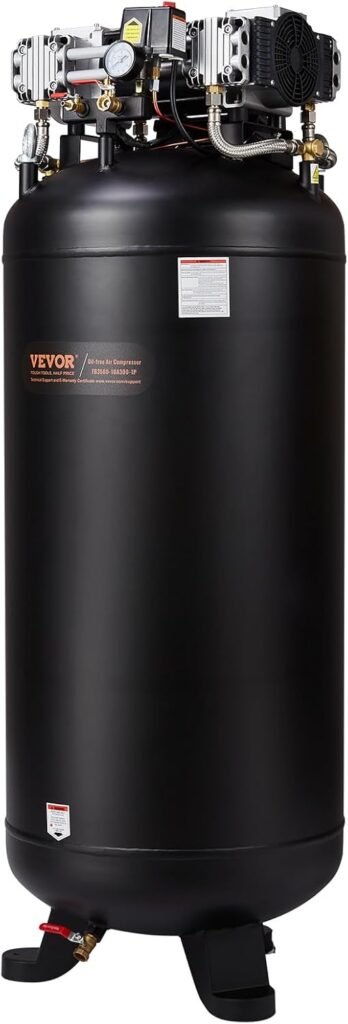
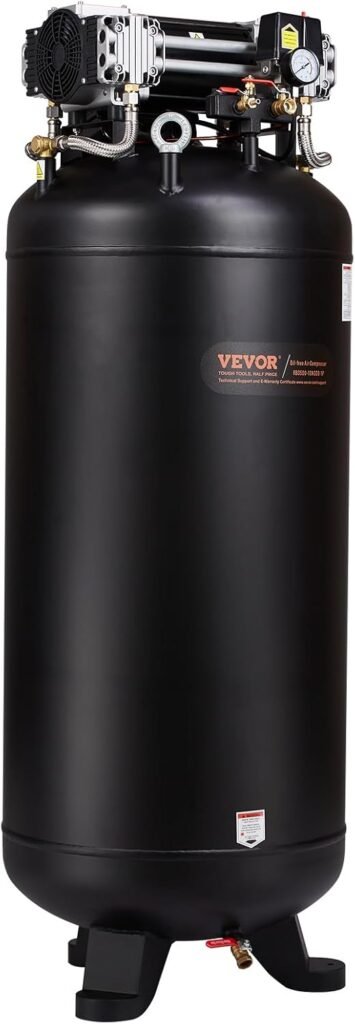
Overview of the VEVOR 80 Gallon Air Compressor, 145PSI Oil Free Stationary Compressor Tank, 6.5HP 15.5SCFM@90 PSI, Quiet Compressor for Industrial Manufacturing, Workshops (220V/60Hz Single-Phase Power)
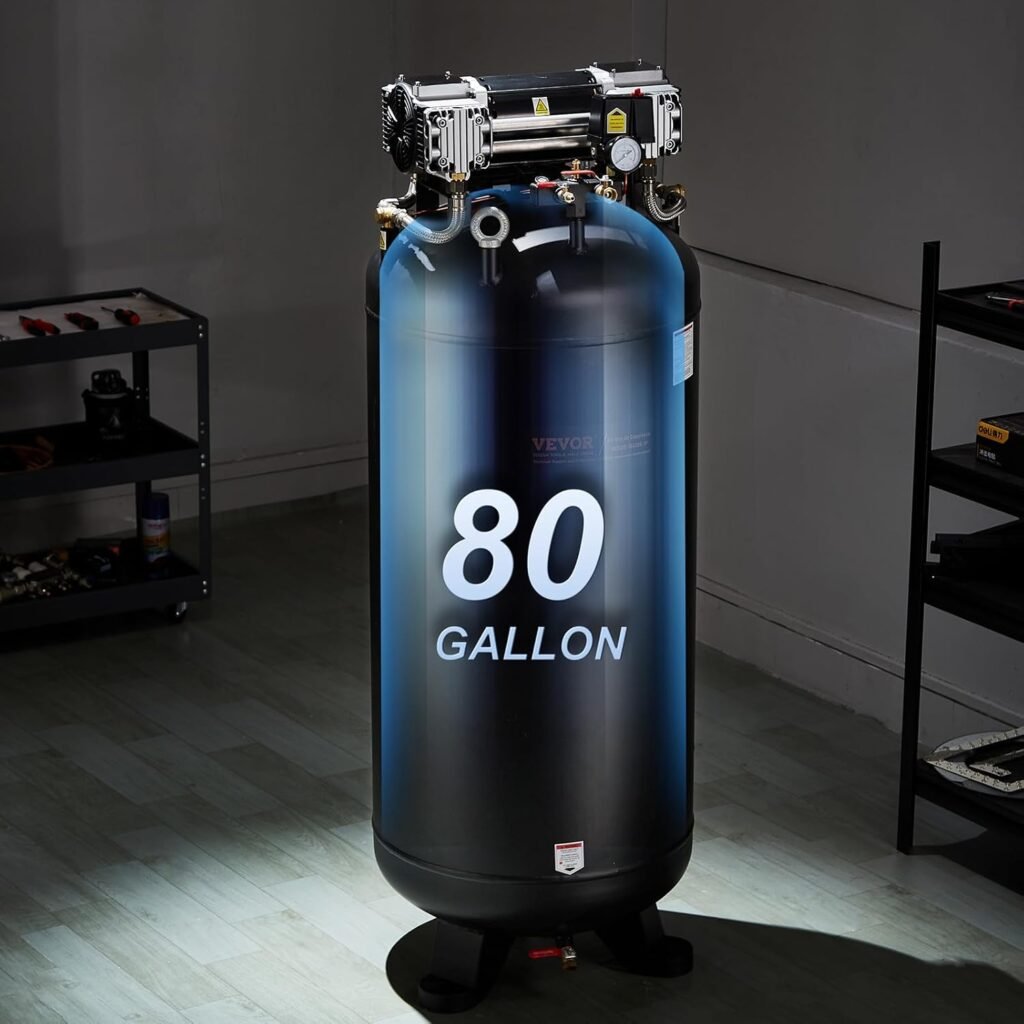
We want a clear snapshot of what this unit offers so we can decide whether it fits our workflow and budget. The VEVOR 80 Gallon Air Compressor is a stationary, oil-free model with a large 80-gallon tank, a 6.5 HP motor, and a rated delivery of 15.5 SCFM at 90 PSI, designed for workshop and light industrial use on 220V/60Hz single-phase power.
Key features at a glance
We like to see the highlights before getting into specifics so we can quickly compare to our needs. This compressor promises fast inflation, extended run time from a large tank, oil-free operation for reduced maintenance, and a design focused on durability and quiet operation relative to comparable stationary models.
Product specifications table
We find a concise table helps us process the core data quickly and compare it with other units or job requirements. Below is a breakdown of the main specifications and what they mean for our applications.
| Specification | Detail |
|---|---|
| Model | VEVOR 80 Gallon Air Compressor (220V/60Hz Single-Phase) |
| Motor Power | 6.5 HP |
| Rated Air Delivery | 15.5 SCFM @ 90 PSI |
| Maximum Pressure | 145 PSI |
| Tank Capacity | 80 gallons |
| Power Supply | 220V / 60Hz / Single-phase |
| Type | Oil-free, stationary |
| Noise Level | Rated at 86 dB (manufacturer) |
| Material | Cold-rolled steel tank |
| Typical Applications | Nail guns, spray guns, pneumatic tools, woodworking, manufacturing |
| Weight / Dimensions | Refer to seller manual for exact shipping dimensions (heavy-duty stationary unit) |
What’s included in the package
We always check what’s in the box so we know what additional parts or accessories we will need to buy. VEVOR typically ships the compressor as a complete unit with factory-fitted pressure gauges, safety valve, regulator, and standard fittings, though final contents may vary by seller or regional kit options.
Shipping and unpacking notes
We prefer to plan for how we’ll receive and place the compressor because an 80-gallon unit is heavy and bulky. The compressor usually arrives palletized or crated and will require a forklift or multiple people to move it from the truck; we recommend arranging appropriate lifting help and checking for shipping damage before signing.
Performance and air delivery
We want reliable CFM delivery under load because that determines which tools we can run and how many. The VEVOR unit is specified at 15.5 SCFM at 90 PSI, which puts it in a useful range for many medium-duty pneumatic tools and continuous applications when paired with the 80-gallon tank to smooth demand spikes.
Power and motor behavior
We care about motor robustness and electrical demands so our breakers and wiring are compatible. The 6.5 HP motor is powerful for a single-phase configuration, and the dual-stage compression helps the system reach higher pressures (up to 145 PSI) more efficiently than single-stage machines.
Airflow and pressure delivery under load
We expect consistent output when the compressor cycles and loads vary; the rated 15.5 SCFM at 90 PSI is the key figure to match to tool requirements. For intermittent tool use, the large tank will bridge gaps between motor run times, while for continuous high-demand applications we should track duty cycle — the motor will run more frequently but the dual-stage setup helps maintain stable pressure.
Inflation and task speed
We value fast inflation and reduced downtime because that keeps us productive. The manufacturer claims rapid inflation (for example, inflating a typical large pneumatic tire or extending tool run time) and indicates tasks like inflating a standard item can be completed in minutes thanks to the motor and tank pairing.

Noise levels and operational sound
We prefer lower operational noise to preserve a comfortable working environment and to minimize disruption in shared or indoor workspaces. VEVOR rates this model at about 86 dB, which is lower than many comparable industrial compressors but still requires hearing protection in close proximity over extended periods.
Measured noise in real‑world settings
We pay attention to both manufacturer noise ratings and real-world experience because installation, flooring, and surrounding reflective surfaces can amplify or dampen sound. In a typical workshop with standard concrete floors, we can expect noise to be noticeable during motor run but not overwhelmingly louder than other industrial equipment; using isolation mounts and placing the unit away from workstations reduces perceived noise.
How ‘quiet’ translates to usability
We like machines that reduce noise-related fatigue and improve communication on the shop floor. While this compressor is marketed as “quiet” for its class, we still recommend hearing protection when working nearby during prolonged runs; for offices or noise-sensitive environments, additional sound enclosure or placement in a remote room can help.
Build quality and durability
We appreciate heavy-duty construction because compressors are long-term investments that face pressure cycles and vibration. The VEVOR tank is manufactured from cold-rolled steel plate for strength and resistance to deformation, and the oil-free design reduces contamination and long-term maintenance concerns.
Tank, frame, and component materials
We inspect materials for corrosion resistance and structural stability to ensure safe, long-term use. The cold-rolled steel tank offers a solid structure and welds appear consistent in factory photos and documentation; fittings and valves are brass or plated steel to resist leaks and corrosion.
Safety features and pressure control
We prioritize integrated safety components that protect both operators and the compressor system. This unit includes factory-fitted safety valves, pressure gauges, and regulators, and the oil-free design reduces the risk of oil-related fire hazards, though we still follow standard safety and inspection protocols.
Installation and first-time setup
We plan installations carefully to ensure electrical compatibility, safe placement, and proper initial commissioning. The unit requires 220V/60Hz single-phase power and a solid, level floor that can support the weight of an 80-gallon tank and motor assembly.
Electrical requirements and wiring
We always confirm the electrical service prior to purchase, because a 6.5 HP motor draws significant current and may need a dedicated circuit. For safe operation we recommend consulting with a licensed electrician to size the breaker, verify wiring gauge, and confirm motor starting characteristics to avoid nuisance trips or damage.
Placement, ventilation, and mounting
We consider ventilation, clearance, and mounting to control heat build-up and vibration transmission. The compressor should sit on a hard, level surface with a few inches clearance on all sides for airflow and maintenance access; if installed indoors, ensure adequate room ventilation and avoid placing it next to sensitive work areas.
Maintenance and serviceability
We appreciate designs that minimize maintenance complexity and downtime, especially for frequent use. The oil-free pump reduces routine oil changes and contamination risks, but compressors still benefit from periodic checks of fittings, drains, filters, belts (if applicable), and safety devices.
Advantages of oil-free operation
We value oil-free compressors for reduced maintenance and cleaner compressed air, particularly where oil could damage tools or coating jobs. The absence of an oil sump eliminates oil changes and reduces the risk of oil vapor in the air stream, which is useful for paint shops and food-safe environments, though we still use proper filtration for critical applications.
Routine inspection checklist
We like having a concise list to guide our preventive maintenance and prolong service life. Regular tasks include draining condensation from the tank daily or weekly depending on use, checking and tightening fittings, inspecting safety valves, testing the pressure switch and gauges, and monitoring motor and pump temperatures during operation.
Versatility and common applications
We look for machines that can handle a range of tools and tasks to justify the investment and reduce tool downtime. With 15.5 SCFM at 90 PSI and an 80-gallon reservoir, this compressor supports many pneumatic tools — from framing nailers and impact wrenches to spray guns and sanders — across woodworking, automotive, and light industrial settings.
Woodworking and shop use
We often run finish sanders, nail guns, and pneumatic planers intermittently, which pairs well with a large tank that smooths pressure drops. The oil-free output is beneficial for finish work and paint operations where oil contamination could impact surface quality.
Industrial manufacturing tasks
We want continuous delivery for production lines like assembly or stamping operations where multiple users or tools might demand air. This unit can support a small to medium-sized line or multiple intermittent tools, though for heavy continuous multi-tool arrays we’d compare its SCFM against combined tool requirements.
Automotive repair and inflation duties
We appreciate compressors that make inflating tires, powering impact tools, and running paint equipment straightforward. This model’s 145 PSI max and substantial tank make it suitable for larger tire inflation jobs and for powering impact wrenches in general service bays, while the oil-free air is helpful for painting prep when combined with proper filtration.
Spray painting and finishing
We are mindful that painting requires steady, clean air. The compressor’s tank and oil-free pump reduce oil carryover risk, but we would still install a quality inline filter and regulator to ensure consistent pressure and dryness for finishes and spray guns.
Safety considerations
We never take safety for granted because compressed air can be hazardous if a tank or component fails. We will follow local codes, run routine inspections, keep the compressor secured and level, and ensure that safety relief valves and pressure gauges are always functional.
Tank safety and periodic testing
We understand that tanks subjected to pressure cycles can develop corrosion or fatigue over time, so routine tank inspections and adherence to local hydrostatic test intervals are critical. If we notice signs of rust, deep pitting, or dents, we will remove the unit from service and consult a qualified technician.
Personal protective measures
We prioritize hearing protection, eye protection, and safe handling of hoses and couplings when operating pneumatic tools. We also avoid using compressed air for personal cleaning of clothing or body due to the high risk of serious injury.
Installation checklist
We like to prepare a checklist to smooth the initial setup and prevent avoidable problems. The following items help ensure the compressor is integrated safely and correctly into our workspace.
- Verify 220V/60Hz single-phase power is available and sized for the motor.
- Plan for forklift or multiple-person lift during delivery and placement.
- Choose a level, ventilated location with a solid floor.
- Install appropriate vibration isolation pads or mounts.
- Confirm access to drain the tank and route condensate appropriately.
- Install proper airline filters, regulators, and lubricators for downstream tools if needed.
Pros and cons
We evaluate strengths and trade-offs so we can decide if the compressor matches our priorities.
Pros:
- Large 80-gallon tank provides extended air supply and smoother operation.
- 6.5 HP motor with dual-stage compression achieves 15.5 SCFM @ 90 PSI and up to 145 PSI maximum.
- Oil-free design reduces maintenance and risk of oil contamination.
- Cold-rolled steel tank and robust construction for durability.
- Rated 86 dB for relatively lower noise in its class.
Cons:
- Large form factor and weight make handling and placement more complex.
- Single-phase 220V requirement may need electrical upgrades for some shops.
- 86 dB is lower than many industrial models but still loud enough to require hearing protection in close proximity.
- For very heavy continuous multi-tool industrial lines, 15.5 SCFM may be limiting and could necessitate multiple compressors.
Comparisons and alternatives
We find it useful to compare similar capacity and CFM models to make an informed choice. Compared to smaller domestic compressors, this unit offers much higher capacity and a more industrial feature set; against three-phase industrial compressors, it may be less powerful but is easier to integrate in facilities without three-phase power.
Common alternatives to consider
We look at unit size, CFM ratings, and whether oil-lubed pumps are acceptable for the tasks at hand. If we need quieter operation, consider sound-attenuated single-stage shop compressors or rotary screw units; if higher continuous CFM is required, three-phase models or multiple parallel compressors may be more appropriate.
Value for money
We balance upfront cost, operational costs, maintenance, and expected lifetime to judge value. Given the 80-gallon tank, oil-free convenience, and a robust motor, this unit can represent strong value for small shops and light industrial applications that need cleaner air and less frequent maintenance, especially where 220V single-phase power is standard.
Setup tips and best practices
We have a few practical tips from experience that make ownership smoother and extend service life. Allow adequate warm-up and cool-down cycles for the motor; drain the tank daily to avoid moisture build-up; and install an aftercooler, dryer, or moisture trap if using the air for painting or highly sensitive processes.
Recommended accessories
We recommend a few accessories to maximize performance and protection. Install an inline air dryer or moisture separator for finishing work, add a high-quality air filter/regulator/lubricator (FRL) for precise tool control, and consider vibration mounts or a drip pan for condensate management.
Troubleshooting common issues
We like to have simple diagnostic steps ready so we can resolve common problems quickly. If the compressor fails to reach pressure, check the pressure switch settings, look for leaks in hoses and fittings, and make sure the intake filter is not clogged; if it cycles rapidly, inspect the unloader valve and pressure switch for faults.
When to call service
We recommend professional service if we detect unusual smells, persistent oil-like residues (even with oil-free pumps), significant vibration or knocking, or visible tank damage. Regular preventive service can catch many issues before they escalate into safety risks.
Environmental considerations
We try to minimize environmental impacts by choosing efficient equipment and maintaining it properly. Oil-free compressors avoid oil disposal issues, and keeping the system well-maintained reduces wasted energy from leaks and inefficient motor operation.
Warranty and support
We find that solid warranty and responsive support add peace of mind to such purchases. VEVOR units usually come with a standard warranty and access to replacement parts, though warranty terms vary by region and vendor, so we recommend verifying those terms before purchase.
Final verdict
We weigh performance, build quality, maintenance needs, and cost to reach a practical recommendation. For small to medium workshops, automotive shops, and light manufacturing environments that operate on 220V single-phase power and need an oil-free, large-capacity compressor, the VEVOR 80 Gallon Air Compressor is a compelling option that balances power, convenience, and relatively low maintenance requirements.
Frequently Asked Questions
We compiled answers to common questions we encounter to help with decision-making and operation.
What does 15.5 SCFM @ 90 PSI mean for our tools?
This rating tells us the compressor’s continuous airflow capacity at 90 PSI, which is the typical operating pressure for many pneumatic tools. We match this value to the combined SCFM requirements of the tools we’ll run concurrently to ensure adequate performance.
Can the compressor run continuous duty for production use?
While the motor and dual-stage pump are robust, continuous industrial duty requires confirming the duty cycle specified by the manufacturer. For prolonged continuous use across many tools, we might prefer a three-phase or rotary screw compressor designed explicitly for continuous heavy-duty service.
Do we need a special circuit or electrical upgrades?
A 6.5 HP single-phase motor draws significant current, so we should have a licensed electrician verify that our panel can supply a dedicated 220V circuit. Proper breaker sizing and wire gauge are essential to prevent nuisance tripping and ensure safe starts.
How often should we drain the tank?
We recommend draining condensate daily or after each heavy use session, depending on humidity levels and usage frequency. If the compressor is in a humid environment, more frequent draining prevents internal corrosion and water carryover into tools.
Is an oil-free compressor always better than an oil-lubed one?
Oil-free compressors reduce maintenance and eliminate oil contamination in the air stream, which is excellent for painting and food or medical environments. However, oil-lubed compressors often deliver better longevity and thermal characteristics in some industrial continuous applications, so we weigh the trade-offs based on our needs.
What kind of air treatment should we add?
We recommend at minimum a good quality inline filter-regulator and a moisture separator; for painting or any finish work, add a refrigerated or desiccant dryer to remove moisture and ensure clean, dry air. Proper treatment extends tool life and improves end-product quality.
How loud is 86 dB in practice?
Eighty-six decibels is loud enough to be disruptive over extended periods and to warrant hearing protection when standing near the unit. Placing the compressor in a separate room, adding an enclosure, or implementing sound-damping mounts can reduce the perceived noise at workstations.
How long will the tank and pump last?
With proper maintenance — routine draining, inspections, and attention to leaks and fittings — the tank and pump can provide many years of service. Tank life depends on environmental conditions and usage patterns; regular inspections help detect early signs of wear or corrosion.
Can we use this compressor outdoors?
While the compressor can be used outdoors in a protected environment, we recommend installing it in a sheltered, dry area to prevent exposure to weather and to ensure the motor and electrical components remain protected. Ensure compliant wiring and weatherproofing for any outdoor installation.
Is installation difficult?
Physical installation requires planning for the unit’s weight and clearance, and electrical setup should be handled by a qualified electrician. Mechanically, the unit is straightforward to set up on a level surface with proper connections to downstream airline systems.
We hope this comprehensive review helps us decide whether the VEVOR 80 Gallon Air Compressor meets our workshop’s needs, and provides practical guidance for setup, use, and maintenance.

Disclosure: As an Amazon Associate, I earn from qualifying purchases.