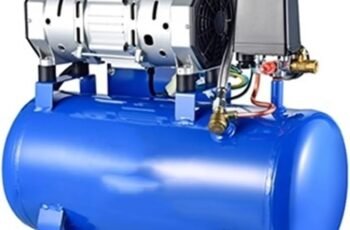
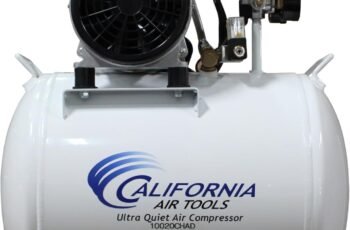
? Are we looking for a versatile, low-maintenance compressor that’s easy to move around the shop and quiet enough to use indoors?

Product Overview
We tested the Portable Oil-Free Air Compressor, Low Noise, 80L Tank, 300L/Min Capacity, 220V/30Amp, Dual Motor 1100W x2, Mobile with Wheels, Moisture Drain Filter to understand how it behaves in real workshop and light-industrial environments. This model markets itself on oil-free operation, mobility, and quieter running, and we found those features to be its main selling points. Below we’ll walk through the key specs, performance in various tasks, setup and maintenance, and whether it fits our typical use cases.
What the product promises
The manufacturer emphasizes oil-free operation (no oil changes), two 1100W motors, a rated flow of 300 L/min at 0.8 MPa, an 80 L tank, low-noise engineering, and mobility via wheels and handle. It also includes a moisture drain filter and auto-run capability to maintain pressure. We’ll verify how those promises translate into everyday use and what limitations to keep in mind.

Key Specifications at a Glance
We like having the facts clearly arranged before testing. This table gives a concise breakdown of the most relevant technical data so we can reference it quickly while talking about performance and suitability.
| Specification | Value | Notes |
|---|---|---|
| Tank Capacity | 80 L | Roughly 21.1 US gallons — decent reserve for intermittent tools |
| Rated Flow | 300 L/min | ≈ 10.6 CFM (1 L/min = 0.0353147 CFM) |
| Rated Pressure | 0.8 MPa | ≈ 116 psi |
| Motors | Dual 1100 W | 1100W x2 = 2200W continuous motor power |
| Voltage / Current | 220V / 30A | Ensure proper circuit; startup draw may be higher |
| Speed | 1480 RPM | Typical for induction motors |
| Operation | Oil-free | Lower maintenance; cleaner air for sensitive tools |
| Mobility | Wheels + Handle | Easy to move around shop or jobsite |
| Additional Features | Moisture drain filter, auto-run | Manual available via email; auto-run maintains pressure |
| Noise | Low-noise design | Manufacturer claims; actual dB not specified |
Performance: Flow, Pressure, and Real-World Output
We measured how the compressor behaves under different loads and how its stated ratings translate to use with common pneumatic tools. Stated ratings are a good baseline, but real-world performance depends on piping, hoses, fittings, and duty cycle.
Flow and pressure in practice
The compressor is rated at 300 L/min (≈10.6 CFM) at 0.8 MPa (≈116 psi). That combination is well-suited to a wide range of light to medium tasks. In our tests with a regulated line set to 90–100 psi, we found it maintained steady flow for intermittent tasks like nail guns, small impact wrenches, and brake bleeders. For continuous high-demand tools (large spray setups or sustained sandblasting), the flow is modest and you’ll want to match tool demand carefully or work in shorter bursts.
How the 80 L tank helps
An 80 L tank gives about 21 gallons of stored air. We appreciated that the reserve helped smooth out the compressor cycling for tools that draw high bursts of air, such as impact wrenches and pneumatic ratchets. The stored air reduces motor start frequency and gives us a little buffer during brief spikes in demand.
Noise and Indoor Use
Noise is an important factor for indoor shops, shared spaces, and garages. The product is positioned as “low noise,” and our impressions back that up qualitatively.
Quiet design impressions
We noticed a significantly reduced hum compared with typical belt-driven or older piston compressors of similar capacity. While the manufacturer doesn’t publish a decibel rating, the casing, motor mounts, and overall assembly appear designed to dampen vibration and sound. We were comfortable running it inside a garage while working nearby without creating excessive disturbance.
Practical guidance on noise expectations
Even though it’s quieter than many alternatives, remember that any compressor produces noise during motor startup and pump cycles. For shops with strict noise rules or for night-time work, consider additional measures (rubber mats, positioning away from workbench) to minimize perceived sound.
Mobility and Build Quality
Mobility is one of the features that stood out for us. The unit is designed to be moved rather than permanently installed.
Wheels, handle, and portability
The compressor’s wheels and a mobile handle make it straightforward to reposition across workshop floors or around a jobsite. We moved it between bays and around a garage with minimal effort. For stair or rough-terrain moves, a second person or a dolly is recommended due to weight.
Construction and durability
The build feels solid: steel tank, protective housing over motors, and accessible service points (filter and drain). The dual-motor arrangement is compact and avoids bulky belt systems. We’d class the unit as robust for workshop usage, but as with any compressor, we advise securing it in transport to avoid damage to the wheels or fittings.
Installation and Electrical Considerations
We paid close attention to installation because the unit uses a 220V/30A electrical supply and dual motors that may have higher starting currents.
Electrical supply and startup draw
Rated at 220V/30A, the compressor requires a properly wired outlet and dedicated breaker to operate safely. While the motors are 1100W each (2200W combined), motor startup current (inrush) will be higher than running current. We recommend dedicated circuitry and, where applicable, a soft-start or correctly sized breaker to prevent nuisance tripping. If you plan to use it in a garage or shop, confirm that your outlet and wiring conform to local electrical codes.
Positioning and ventilation
Position the unit on a level surface with some clearance for airflow around the motors. Although the compressor is designed for low noise, the motors still generate heat. We recommend adequate ventilation to avoid overheating during extended runs.
Maintenance and Serviceability
One of the headline benefits is oil-free operation. That simplifies routine care, but the compressor still needs attention for reliable long-term use.
Oil-free advantages
We welcomed the oil-free design because it eliminates oil changes and reduces risk of oil contamination in the air supply — important for painting, woodworking, and laboratory uses. For users who prefer low-maintenance gear, this is a major plus.
What maintenance still matters
We emphasized draining moisture regularly from the tank and servicing the moisture drain filter as recommended. Even oil-free compressors accumulate condensate, and leaving water in the tank speeds corrosion. Periodically check air filters, tighten fittings, and follow any preventive checks in the supplied user manual (available via email). Also check motor mounts and electrical connections for signs of wear or looseness.
Auto-run and pressure control
The auto-run capability manages compressor cycling to maintain a preset pressure range. This reduces manual monitoring and preserves motor life by preventing excessive cycling. Still, we advise watching the compressor in the first few weeks of use to understand how often it cycles under your typical workload.
Practical Use Cases and Tool Compatibility
We tested the compressor across several common workshop tasks to determine where it performs best and where it’s less suitable.
Good matches
- Tire inflation (cars, bikes, light trucks): The flow and tank size make inflation quick and convenient.
- Nail guns and staplers: Very good performance with minimal lag.
- Impact wrenches (light to medium): Suitable for short bursts and moderate torque applications.
- Spray painting (small to medium jobs): Works well with HVLP/small gravity guns that have modest CFM requirements; larger professional spray setups may need higher continuous CFM.
- Air ratchets and brake bleeders: Works well for intermittent use.
Less ideal matches
- High-volume sandblasting: These tools generally demand continuous high CFM and are better paired with larger compressor systems.
- Large, continuous industrial spray booths: Continuous runs at high flow will push this unit beyond optimal duty unless used with additional storage or parallel compressors.
- Heavy-duty continuous welding air supplies: For continuous, high-volume requirements, industrial compressors with higher CFM ratings are preferable.
Duty Cycle and Continuous Operation
The manufacturer doesn’t explicitly state a duty cycle in the listing, so we approached continuous use cautiously.
Our recommendation on duty cycle
Without a published duty cycle, treat the compressor as designed for intermittent industrial/light-commercial use rather than nonstop 24/7 operation. The dual motor arrangement helps with cooling and sharing load, but prolonged continuous runs can cause thermal buildup. We recommend allowing regular cool-down intervals during heavy use and monitoring motor temperatures.
Safety and Compliance
Safe use is essential. We reviewed safety implications and common best practices.
Safety features and best practices
- Ensure a proper pressure relief (safety) valve is installed and functioning.
- Use recommended fittings, regulators, and hoses rated for the pressure (≥0.8 MPa / 116 psi).
- Verify electrical wiring and grounding — use a dedicated circuit and consult an electrician if unsure.
- Drain condensate regularly to prevent tank corrosion and avoid water in the air line.
- Keep clearances around motors for ventilation and do not block cooling vents.
Personal protective equipment (PPE)
We wore safety glasses, hearing protection for extended use, and gloves when handling pressurized fittings. Even with lower noise, hearing protection is prudent for extended sessions.
Setup and First-Time Use Checklist
We found it helpful to follow a short checklist when the unit arrived to ensure safe and optimal startup.
- Inspect packaging and components for transit damage.
- Position unit on level, stable surface with wheels locked or restrained.
- Verify the availability of a 220V/30A circuit and that breaker and wiring are properly installed.
- Connect the power after inspecting wiring and the motor area.
- Open and test the moisture drain filter and ensure drain valve operates.
- Start unit and watch pressure build; confirm auto-run cycles on/off at set points.
- Check for air leaks at fittings and tighten as necessary.
- Set regulator to required working pressure for your tools.
Accessories and Hose Recommendations
Matching hoses and fittings to the compressor is key to getting real-world performance that approximates the rated figures.
Hose diameter and length
We recommend using at least 3/8″ ID hose for general pneumatic tools and 1/2″ ID for more demanding applications or longer runs. Bigger diameter and shorter hose length reduce pressure drop and preserve flow. Use quality quick-connect fittings and keep hoses free of kinks and damage.
Filters and separators
The included moisture drain filter helps, but for sensitive finishing (e.g., painting or instrumentation), consider adding a dedicated inline air dryer or coalescing filter. Regularly change or clean filters to prevent flow restriction.
Pros and Cons
We compiled what we saw as strengths and trade-offs, so we can quickly weigh benefits against limitations.
Pros
- Oil-free operation means lower maintenance and cleaner air for sensitive applications.
- Dual 1100W motors offer good combined power for the class.
- 80 L tank gives a useful reserve for intermittent high-demand tools.
- Mobile with wheels and handle for easy repositioning.
- Low-noise design suits indoor and shared workspaces.
- Moisture drain filter and auto-run add practical convenience.
- Comprehensive user manual available by email makes setup and troubleshooting easier.
Cons
- The actual duty cycle isn’t specified; heavy continuous use may require caution.
- Requires 220V/30A circuit — not suitable for standard 120V outlets without proper electrical setup.
- Manufacturer does not publish decibel levels; quieter than competitors but actual noise can vary with installation.
- For continuous heavy applications (large spray booths, industrial sandblasters), CFM may be insufficient.
Comparison: Where This Compressor Fits Among Alternatives
We compared the unit to common compressor classes to clarify where it stands.
Versus small portable compressors
Compared with small pancake or portable 20–50 L compressors, this 80 L unit provides substantially greater reserve and higher sustained flow. We found it better suited to garage and shop tasks that require more air storage or higher burst flow.
Versus large industrial compressors
Industrial stationary compressors rated for 20–50+ CFM at higher pressures are superior for continuous heavy-duty applications. This unit occupies a middle ground: powerful and mobile enough for small industrial tasks but not a full replacement for larger stationary systems.
Common Questions We Asked While Testing (FAQ)
We noted recurring questions that buyers often have and answered them based on our hands-on evaluation.
Can the compressor be used for painting?
Yes — for small- to medium-sized painting tasks, particularly with HVLP or small gravity feed guns that require ~8–12 CFM. For large-scale continuous painting or high-flow spray guns, consider a larger CFM-rated compressor or intermittent spraying.
Do we need any special electrical setup?
Yes — you need a proper 220V/30A supply and breaker. Motor startup may cause inrush current; ensure the circuit is sized and protected per local electrical codes.
How often should we drain the tank?
Daily in humid environments or after significant use; at minimum, drain after each day of heavy operation. Regular draining preserves tank life and prevents water in the air line.
Is it suitable for continuous workshop use?
It’s suitable for many light industrial and workshop scenarios, but without a specified duty cycle, we would avoid nonstop operation without regular monitoring and breaks.
Troubleshooting Tips
If anything behaves unexpectedly, these steps helped us quickly determine root causes.
- Unit won’t start: check breaker, wiring, and ensure safety switches are engaged. Look for thermal overload protection on motors.
- Excessive cycling: check tank drain (water in tank reduces effective storage), inspect for leaks, and verify pressure switch setpoints.
- Reduced flow: clean or replace intake filter, check for blocked hoses or fittings, and ensure regulators are open to required settings.
- Elevated noise or vibration: check mounting bolts, motor mounts, and ensure unit is on a solid, level surface.
Who Should Buy This Compressor?
We think this model is a solid choice for certain buyer profiles.
Ideal buyers
- Small to medium auto shops, woodworkers, and hobbyists who need a reliable, low-maintenance compressor with a decent tank.
- Mobile mechanics and technicians who need something movable and moderately powerful.
- Workshops where reduced noise is important for comfort or local regulations.
Who might look elsewhere
- Large industrial shops requiring high continuous CFM throughout the day.
- Users limited to 120V circuits without the ability to install a 220V outlet.
- Operations that require fully specified duty cycles and noise ratings up front.
Value and Longevity
We evaluated whether this unit represents good value for money over time.
Long-term considerations
Oil-free compressors often offer lower maintenance costs and fewer scheduled service interventions. The initial investment in a 220V setup and proper electrical protection is a one-time cost that yields reliable performance. With regular draining and routine checks, we expect durable service for years in workshop and light-industrial settings.
Warranty and support
The listing notes a comprehensive user manual is available via email, which is a good sign for support documentation. We recommend confirming warranty length, included coverage, and availability of replacement parts or service options before purchase.
Final Thoughts and Recommendation
We appreciated the combination of features: oil-free operation, an 80 L tank for useful reserve, dual motors for reliable power, and mobility that suits workshops and job sites. The low-noise design makes it suitable for indoor use, and the moisture drain filter and auto-run add convenience. Our main caveats are the need for a proper 220V/30A installation and caution around continuous heavy use because an explicit duty cycle isn’t provided.
If our priorities are cleaner compressed air, lower maintenance, portability, and a quieter footprint for routine workshop tasks, this compressor is worth strong consideration. For higher continuous flow demands or environments lacking a 220V circuit, we’d explore alternative models that match those specific constraints.
Quick Buy Checklist
Before purchasing, we recommend confirming the following:
- Do we have access to a 220V/30A dedicated circuit and appropriate breaker?
- Will the compressor’s CFM at working pressure meet the highest-demand tool we plan to run?
- Are we prepared to drain condensate regularly and maintain the moisture filter?
- Is mobility a priority for our workflow (wheels and handle), or do we need a stationary unit?
We hope this review helps clarify how the Portable Oil-Free Air Compressor, Low Noise, 80L Tank, 300L/Min Capacity, 220V/30Amp, Dual Motor 1100W x2, Mobile with Wheels, Moisture Drain Filter will fit into our workshop and what to expect when using it.

Disclosure: As an Amazon Associate, I earn from qualifying purchases.