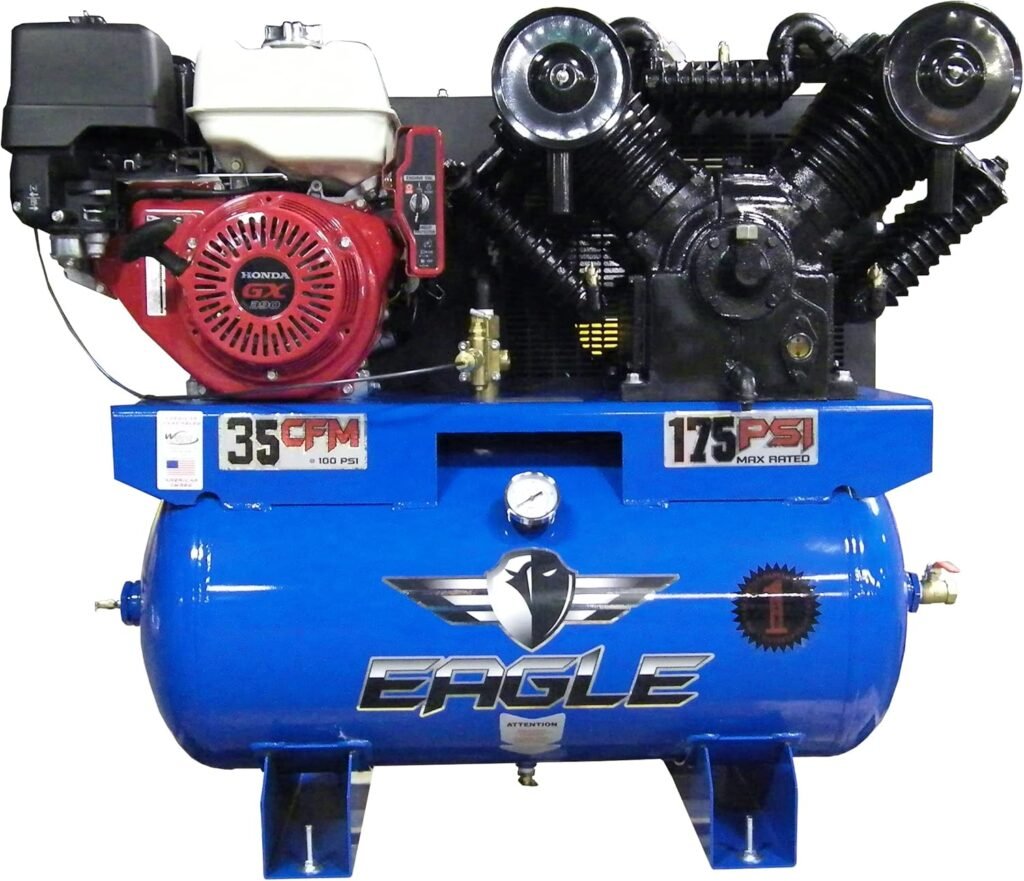
?Are we ready to see how the Eagle 13 HP Electric Start Air Compressor 35 CFM @ 100 psi (175 psi max) Two Stage “4” Cylinder Pump performs for demanding jobs?

Product Overview
We find that the Eagle 13 HP Electric Start Air Compressor 35 CFM @ 100 psi (175 psi max) Two Stage “4” Cylinder Pump is positioned as a heavy-duty shop/industrial compressor. It combines a powerful motor, a two-stage 4-cylinder pump, and a 30 gallon ASME-registered tank to serve professionals and serious hobbyists who need reliable, continuous compressed air.
Key Specifications
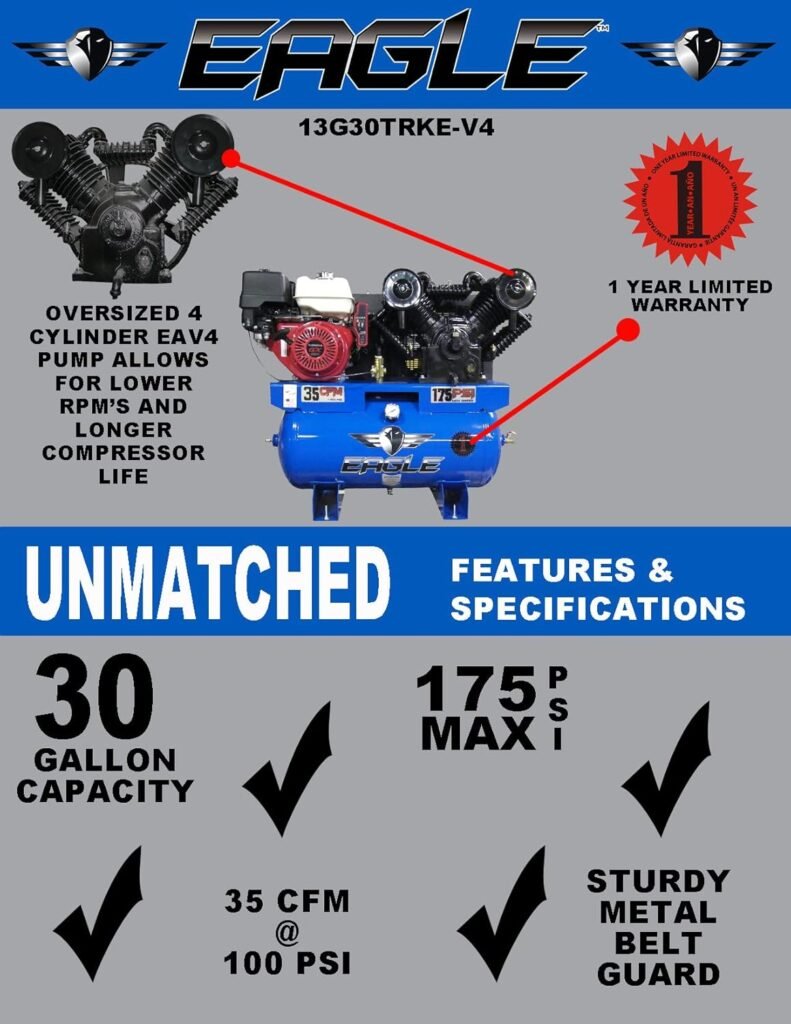
The most important numbers—13 horsepower, 35 CFM at 100 psi, and a 175 psi maximum—tell us this unit is built for work that requires steady, higher-pressure air delivery. These specs suggest the compressor can power a broad range of pneumatic tools and applications where a robust supply and reserve are essential.
| Specification | Detail |
|---|---|
| Product Name | Eagle 13 HP Electric Start Air Compressor 35 CFM @ 100 psi (175 psi max) Two Stage “4” Cylinder Pump |
| Horsepower (HP) | 13 HP |
| Air Delivery | 35 CFM @ 100 psi |
| Maximum Pressure | 175 psi max |
| Pump Type | Two-stage, 4 cylinder pump (oversized) |
| Tank Capacity | 30 gallon ASME registered tank |
| Filters | Metal air filters |
| Start Type | Electric start |
| Belt Guard | Sturdy metal belt guard |
| Typical Use | Professional shops, industrial, heavy-duty home garages |
| Other Notes | Oversized pump allows for lower RPMs |
What’s in the Box
We generally expect the compressor to arrive with the assembled pump and tank, the metal belt guard, and factory-installed metal air filters, plus basic fittings and documentation. For exact included accessories and hardware, we recommend checking the seller listing or packaging because configurations can vary by distributor or retailer.
Design and Build Quality
The overall build feels industrial and purpose-built, with an emphasis on durability and long-term service life. From the oversized 4-cylinder pump to the ASME-registered tank and metal belt guard, the design cues indicate a machine meant for heavy daily use rather than occasional light-duty tasks.
Pump and Cylinder Design
The two-stage 4-cylinder pump is oversized, which allows the pump to run at lower RPMs for the same output; this generally translates to less wear, cooler operation, and a longer life span. We appreciate the engineering choice because lower RPMs reduce stress on internal components and typically improve oil and ring life.
Tank and Frame
The 30 gallon ASME-registered tank gives a respectable amount of stored air, which helps even out load demands and reduces motor cycling for many tools and intermittent tasks. The tank and frame design appears sturdy, and having an ASME certification adds trust and regulatory compliance for safety and reliability.
Safety Features
We look for standard safety features like an overpressure relief valve, pressure gauges, and a reliable pressure switch, and the presence of a sturdy metal belt guard is a welcome touch to reduce exposure to moving parts. While every installation should follow safety codes and grounding practices, these built-in items help make the compressor safer to operate in busy shop environments.
Performance and Power
From a performance standpoint, the key metrics—35 CFM at 100 psi and a maximum of 175 psi—make this a strong candidate for operating impact wrenches, sanders, spray guns, and multiple tools in a shop setting. We find that the combination of two-stage pumping and a substantial motor ensures the compressor can handle extended tasks that single-stage, lower-horsepower units would struggle with.
CFM and PSI in Real Use
The rated 35 CFM at 100 psi means the compressor can sustain tools that require high airflow, such as larger sanders, grinders, and some spray systems, without immediate tank depletion. In practice, the two-stage pump also helps maintain pressure better under load and recovers faster than comparable single-stage compressors.
Motor and Electric Start
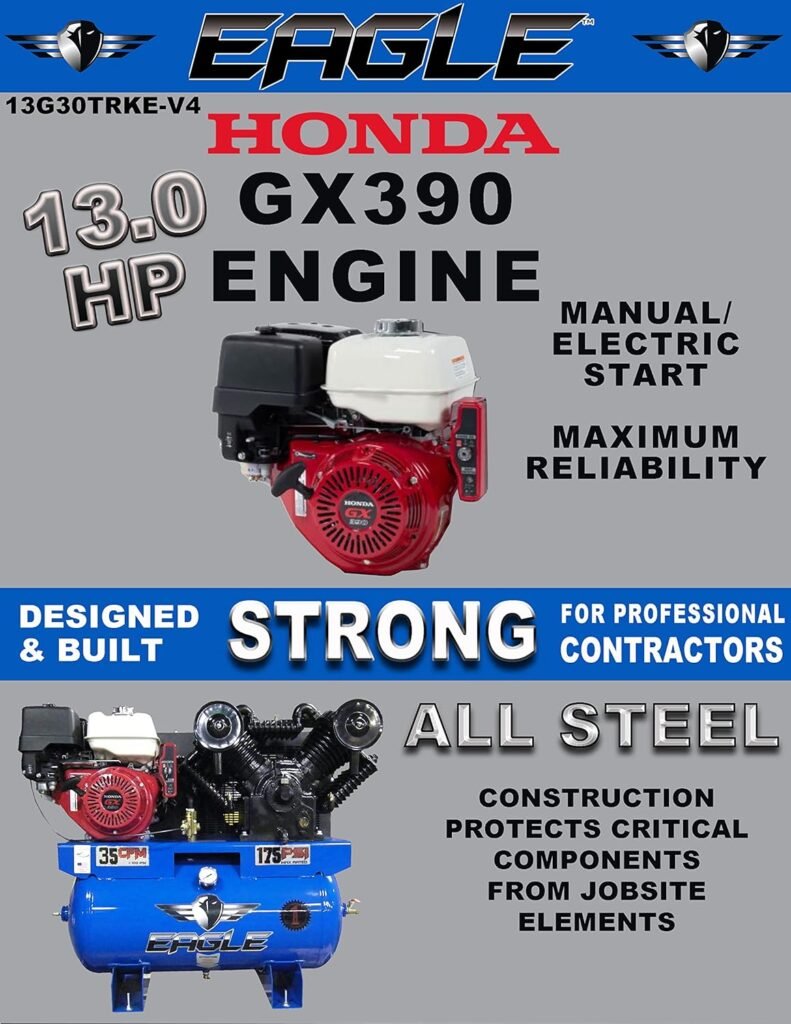
The 13 HP motor coupled with electric start is convenient and powerful; electric start simplifies initial engagement for a heavy motor and reduces manual effort that would be required with a recoil start. We value electric start in professional settings because it supports quick restarts and smoother workflow, especially in colder environments where manual starts can be harder.
Duty Cycle and Continuous Use
Two-stage compressors typically have higher duty cycles than single-stage models, and with the oversized pump, we expect this unit to handle prolonged periods of intermittent use without excessive strain. For truly continuous 24/7 industrial use, users should still check the intended duty cycle rating and, if necessary, consider larger or specifically-rated continuous-duty compressors.

Noise and Vibration
Compressors of this power and configuration are not whisper-quiet, but noise level depends on the isolation, installation location, and any enclosure used. We recommend planning for noise reduction if the compressor will sit near workspaces where communication or concentration is important.
Noise Considerations
We find that placing the unit in a dedicated compressor room or using barriers and rubber mounts will noticeably reduce perceived noise. If noise is a priority, pairing the compressor with a sound-attenuating enclosure designed for compressors can be a good investment.
Vibration Dampening and Mounting
Proper mounting—such as using anti-vibration pads, shock mounts, or securing the unit to a solid base—will reduce vibration transmission to the floor and nearby fixtures. We advise ensuring level placement and checking manufacturer recommendations for anchoring, as this helps performance and reduces fatigue on piping and fittings.
Maintenance and Serviceability
Accessible components and straightforward service points make a compressor easier to keep in top condition, and we expect the Eagle model to be serviceable given its professional orientation. Routine maintenance is the best way to protect our investment and ensure consistent uptime.
Oil and Lubrication
For a two-stage, cast-pump compressor we assume regular oil changes are necessary; oil-lubricated pumps typically need their oil checked weekly under heavy use and changed according to the manual. Using the correct oil type and maintaining proper oil levels will extend pump life and maintain cooling and sealing performance.
Filters and Belts
The metal air filters and sturdy belt guard suggest the designers thought about long-term durability and routine replacement needs. We advise checking and replacing filters as part of a monthly maintenance routine in dusty or high-use environments, and inspecting belts for tension and wear at regular intervals.
Setup and Installation
We prefer to install large compressors on a clean, level, and ventilated surface with good airflow around the pump and motor. Location is important for both noise control and cooling efficiency, and spacing also allows for easier maintenance access.
Unpacking and Initial Assembly
Unpacking should be done carefully, using two people for heavy components, and following any included instructions for assembly and tank support. We recommend inspecting for shipping damage, ensuring all fasteners are tight, and verifying that the drain valve and pressure relief are functional before first start.
Electrical Requirements and Circuitry
A 13 HP motor will demand significant electrical capacity; we strongly suggest consulting the product’s documentation and a qualified electrician to determine the correct voltage, amperage, and breaker requirements. Proper wiring and grounding are essential for safe and reliable electric start operation, and incorrect electrical setup can lead to damage or decreased performance.
Use Cases and Best Applications
This compressor is ideally suited for heavier shop tasks where multiple tools may be used sequentially or simultaneously and where robust pressure and airflow are needed. We see it fitting well in auto shops, fabrication workshops, small industrial sites, and serious home-shop setups that tackle larger projects.
Professional Shops and Industrial Use
In professional environments, the Eagle 13 HP unit will shine when powering impact guns, sandblasters, or air-driven production equipment that require stable pressures and consistent CFM. We value the 175 psi maximum for specific applications that need extra overhead pressure and the 30-gallon tank for buffer during intermittent high-demand events.
Home Garages and Hobbyists
For committed hobbyists and home garages that tackle heavy projects—like auto restoration, pneumatic tools, and painting—the compressor offers professional-grade capability that outperforms typical small shop compressors. We recommend assessing whether a 30-gallon tank and its footprint fit the available space and whether the electrical service at the home can support a 13 HP motor.
Pros and Cons
We think this Eagle compressor delivers strong power, solid construction, and service-friendly features, making it a good fit where serious compressed-air demands exist. On the downside, it will be heavier, louder, and require more robust electrical infrastructure than smaller, consumer-oriented compressors.
Pros:
- High airflow (35 CFM @ 100 psi) for demanding tools.
- Two-stage, oversized 4-cylinder pump for durability and cooler operation.
- Electric start for convenience and reliable startup.
- 30 gallon ASME-registered tank adds reserve air capacity.
- Metal air filters and sturdy belt guard improve longevity and safety.
Cons:
- Requires significant electrical capacity and proper setup.
- Larger footprint and weight; not ideal for very small garages without space planning.
- Noise and vibration can be an issue if not mounted or isolated properly.
Comparison with Similar Models
Compared to single-stage, smaller horsepower compressors, this Eagle model provides higher pressure, greater CFM, and a sturdier pump design, which is why many professionals choose two-stage units for heavy use. When comparing to other two-stage compressors in the same power band, factors like tank size, max PSI, pump oversizing, and build quality become the differentiators.
Alternatives to Consider
We usually advise reviewing models from other reputable manufacturers that offer comparable horsepower and CFM—especially if they have more familiar dealer support in our region. Look for variants that may feature larger tanks, quieter operation, or integrated oil-management systems if those attributes match our priorities.
Price, Value, and Warranty
We assess value not only by purchase price but by expected lifespan, maintenance costs, and downtime risk; for users needing dependable high-flow air, this Eagle unit often justifies its cost. Warranty and dealer support are important; buying from an authorized channel with good service options increases confidence and helps protect the investment.
Cost of Ownership
Beyond the purchase price, consider electrical upgrades, regular oil and filter changes, periodic belt replacement, and potential enclosure or vibration dampening hardware. Factoring these items into total cost of ownership will provide a more realistic picture of long-term investment and operating budgets.
Troubleshooting Common Issues
Even robust compressors can experience typical issues like starting trouble, pressure loss, or unusual noises, and most of these have straightforward diagnostics. Being proactive with routine checks and following a troubleshooting checklist will keep downtime to a minimum.
Starting Problems
If the compressor doesn’t start, we check the electrical supply, breaker, and batteries (if applicable for electric start models) and ensure the motor isn’t trying to start under load or with incorrect voltage. Overheating, low oil sensors, or safety interlocks may also prevent starting, so we inspect service lights, fuses, and wiring carefully.
Pressure Loss or Leaks
Pressure loss often comes down to leaks in fittings, hoses, or tank fittings, or a failing check valve or pressure switch. We recommend a methodical approach: isolate sections, use a soap-and-water solution to find leaks, depressurize before servicing, and replace worn seals or valves as needed.
Accessories and Upgrades
Choosing accessories that match our workflow will maximize the compressor’s usefulness; common additions include high-quality hoses, aftercoolers, driers, and storage reels. We like to pair compressors with air treatment equipment (filter/regulator/lubricator units) when running sensitive tools or paint systems.
Recommended Accessories
An inline regulator and moisture trap will protect pneumatic tools and reduce contamination; for painting, a proper air dryer or aftercooler is essential to remove moisture that can ruin finishes. Heavy-duty, appropriately sized hoses and quick-disconnect fittings also help reduce pressure drops and improve usability.
Safety Tips and Best Practices
We always follow basic safety practices: keep the area around the compressor clear, avoid leaving pressurized lines unattended, and routinely bleed the tank to remove condensed water. Regular inspections for leaks, corrosion, and proper valve function are essential to maintain a safe working environment.
- Always depressurize the tank before performing maintenance.
- Check and adhere to the manufacturer’s recommendations for oil and filter changes.
- Ensure the compressor is grounded and wired to appropriate electrical specifications.
- Use hearing protection if operating in an unenclosed area or for extended periods.
Setup Checklist for First Use
We recommend a concise setup checklist: inspect for shipping damage, verify air filter and oil levels, connect to an appropriate power supply, and do a controlled first start while watching for leaks and abnormal sounds. We also advise running the compressor under no-load conditions briefly before applying tools to ensure stable operation and proper pressure cut-in/cut-out behavior.
Step-by-step Basics
- Place the compressor on a level surface and attach anti-vibration pads if available.
- Verify the oil level and fill with the manufacturer-specified oil if required.
- Confirm the tank drain valve is closed and the safety relief valve is functional.
- Connect to the correctly sized electrical circuit, and engage the electric start following the operator manual.
- Observe the pump and motor for 10–15 minutes of initial operation, watching pressure build and listening for unusual noise.
We take these steps seriously because they help prevent damage and establish a baseline for future maintenance.
Warranty and Support Considerations
We suggest verifying the warranty period and terms and registering the unit if registration is required for coverage. Having access to a dependable parts supply and service network adds value and reduces the chance of extended downtime.
How to Maximize Warranty Value
Follow scheduled maintenance in the manual, use recommended consumables (oil/filters), and keep receipts and service records to support any warranty claims. If modifications are made, document them and check how they affect coverage.
Environmental and Operational Factors
Temperature, humidity, and altitude can affect compressor performance and motor load; we should plan installation and maintenance accordingly. Cooler, drier environments improve pump cooling and reduce moisture in the delivered air, while high ambient temperatures may require extra ventilation.
Storing and Operating in Different Environments
If we operate in cold climates, consider cold-start oil or block heaters, and always use the correct oil viscosity for the ambient temperature. In dusty or corrosive environments, increase filter maintenance frequency and consider protective coatings or location changes to prolong life.
Frequently Asked Questions (FAQ)
We collect typical questions that come up for compressors of this size and address them succinctly for clarity and easier buying decisions. These FAQs reflect commonly encountered concerns about installation, operation, and suitability for certain tools.
Q: Is a 30 gallon tank sufficient for professional use?
A: It depends on tool demands and duty cycle; a 30 gallon tank provides decent reserve capacity for intermittent high-flow use but may require longer recovery for simultaneous heavy-tool use. For continuous multi-tool operation, larger tanks or additional compressor capacity may be preferable.
Q: Will my home electrical service support this compressor?
A: That depends on your home’s service and the motor’s voltage/amperage requirements. We recommend consulting an electrician and the product documentation to confirm circuit and breaker sizing.
Q: How often should oil be changed?
A: Under heavy use, oil checks are often weekly and changes according to the manual—usually after a short break-in period and then at scheduled intervals. Always use the recommended oil type for the pump.
Final Verdict
We feel the Eagle 13 HP Electric Start Air Compressor 35 CFM @ 100 psi (175 psi max) Two Stage “4” Cylinder Pump is a compelling choice for professionals and serious hobbyists who need robust, reliable air delivery. With a powerful motor, well-designed two-stage pump, and durable construction, it delivers performance and longevity that justify the investment for demanding applications.
We recommend this compressor when our work requires sustained CFM, higher pressure capability, and a unit that will stand up to regular, heavy-duty use. If sealing, noise, electrical capacity, or space are constraints, we suggest evaluating installation needs and possibly considering accessories or alternate layouts to get the best long-term value and performance from this unit.

Disclosure: As an Amazon Associate, I earn from qualifying purchases.