Are we looking for a robust, fully packaged stationary air compressor that can handle demanding shop work while minimizing installation headaches?
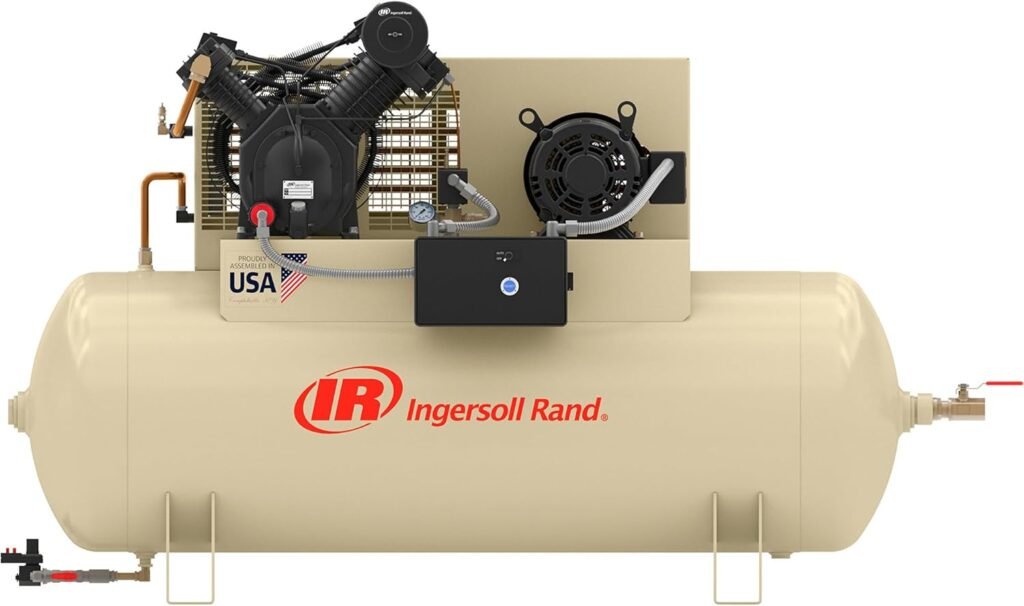

Product Overview: Ingersoll Rand Electric Stationary Air Compressor (Fully Packaged) – 15 HP, 50 CFM at 175 PSI, 230 Volts, Model Number 7100E15-P
We’re reviewing the Ingersoll Rand model 7100E15-P, a fully packaged electric stationary air compressor rated at 15 HP. This unit targets small to medium-sized shops, light industrial applications, and facilities that need reliable compressed air with a modest footprint and straightforward installation.
We’ll refer to the model by its full name throughout to keep things clear: Ingersoll Rand Electric Stationary Air Compressor (Fully Packaged) – 15 HP, 50 CFM at 175 PSI, 230 Volts, Model Number 7100E15-P.
Key Specifications
We want to summarize the essential technical details before getting deeper into performance or installation. These specs give us a snapshot of what to expect when we plan for power, air demand, and space.
We’ll also explain any apparent discrepancies between different rated CFM values, because manufacturers sometimes list multiple performance points.
- Horsepower: 15 HP
- Voltage: 230 Volt, 3 Phase
- Stages: 2-stage
- Tank Capacity: 80 gallon horizontal
- Rated Flow: 50 CFM @ 175 PSI (model name)
- Alternative rating listed: 51 CFM @ 90 PSI (product details)
- Included components: air-cooled after-cooler, electric drain valve, low oil protection switch
- Model Number: 7100E15-P
Quick-spec Table
We’ve put the key numbers into a table to make comparison and planning simpler. This table will help when we size compressors against tool requirements and shop layout.
| Feature | Specification |
|---|---|
| Model | Ingersoll Rand 7100E15-P |
| Motor | 15 HP, 230 V, 3-phase |
| Compressor Type | 2-stage rotary-screw/belt-driven (packaged stationary) |
| Tank | 80 gallon, horizontal |
| Rated Flow | 50 CFM @ 175 PSI (nameplate) / 51 CFM @ 90 PSI (alternate listing) |
| Cooling | Air-cooled after-cooler |
| Drain | Electric drain valve included |
| Protection | Low oil protection switch |
| Typical Applications | Small-to-medium shops, automotive, maintenance bays, light manufacturing |
| Package | Fully packaged — ready for plumbing/electrical connection |
What’s Included in the Package
We find the included components matter a lot for installation time and system reliability. This packaged design reduces the number of add-ons we need to source separately.
The package includes an air-cooled after-cooler to help remove water prior to the receiver, an electric drain valve to automate condensate removal, and a low oil protection switch to prevent damage in low-lubricant conditions.
Why the Included Items Matter
We prefer units that arrive with useful ancillaries because they shorten setup time and reduce the chance of errors during commissioning. The after-cooler helps lower discharge temperature and reduce moisture load.
Automating condensate removal with an electric drain valve is a convenience and reliability improvement over manual drains, and low oil protection helps prevent catastrophic bearing or crank failures if oil is lost or level drops.
Performance and Output
We want predictable flow and stability under varying loads, because fluctuation leads to tool inefficiency and frustration. We’ll summarize what to expect from the 15 HP motor and the rated CFM values and then discuss how those numbers translate to real-world tool usage.
We’ll also reconcile the rating differences and provide guidance for how to size this compressor to our needs.
CFM and PSI: Understanding the Ratings
We notice two common ways compressors are labeled: one at a higher pressure, one at a lower pressure. Here, the model name highlights 50 CFM at 175 PSI, while product detail lists 51 CFM at 90 PSI. These are both plausible since compressor output is commonly provided at different pressure points.
Practically, CFM decreases at higher outlet pressure. If purchasing for high-pressure needs (e.g., 175 PSI), we should size according to the 50 CFM @ 175 PSI figure. If our tools mostly run at 90–100 PSI, the 51 CFM @ 90 PSI rating gives slightly better margin.
Real-world Flow Expectations
We should expect roughly 50 CFM continuous output under rated conditions, assuming proper installation, adequate power, and ambient conditions within manufacturer spec. In real shop environments, supply piping friction, condensate, and elevated ambient temperatures can reduce delivered CFM, so we recommend planning a 10–15% margin above peak tool demand.
If our peak tool demand approaches or exceeds 50 CFM at the working pressure, consider a larger unit or a compressor bank to maintain air pressure and avoid excessive cycling.
Motor, Drive, and Mechanical Design
We like 3-phase motors for efficiency and durability in industrial settings, and this model uses a 15 HP 230 V 3-phase motor. The motor and compressor pairing is critical for longevity and energy efficiency.
We’ll also note any specifics about drive type and the implications for maintenance and noise.
Motor and Drive Characteristics
The 15 HP 3-phase motor is standard for this class and provides strong torque for continuous-duty applications. A 230 V configuration is common in many facilities; if our building uses 460 V, we’ll need a transformer or the alternate winding option if available.
We should confirm whether the unit uses direct-coupled or belt-driven configuration (many packaged units use belt drive for vibration isolation and easier service). Belt-drive makes pulleys and belts a wear item but tends to be simpler to service and provides a slight buffer between motor and compressor during startup.
Two-stage Compression Benefits
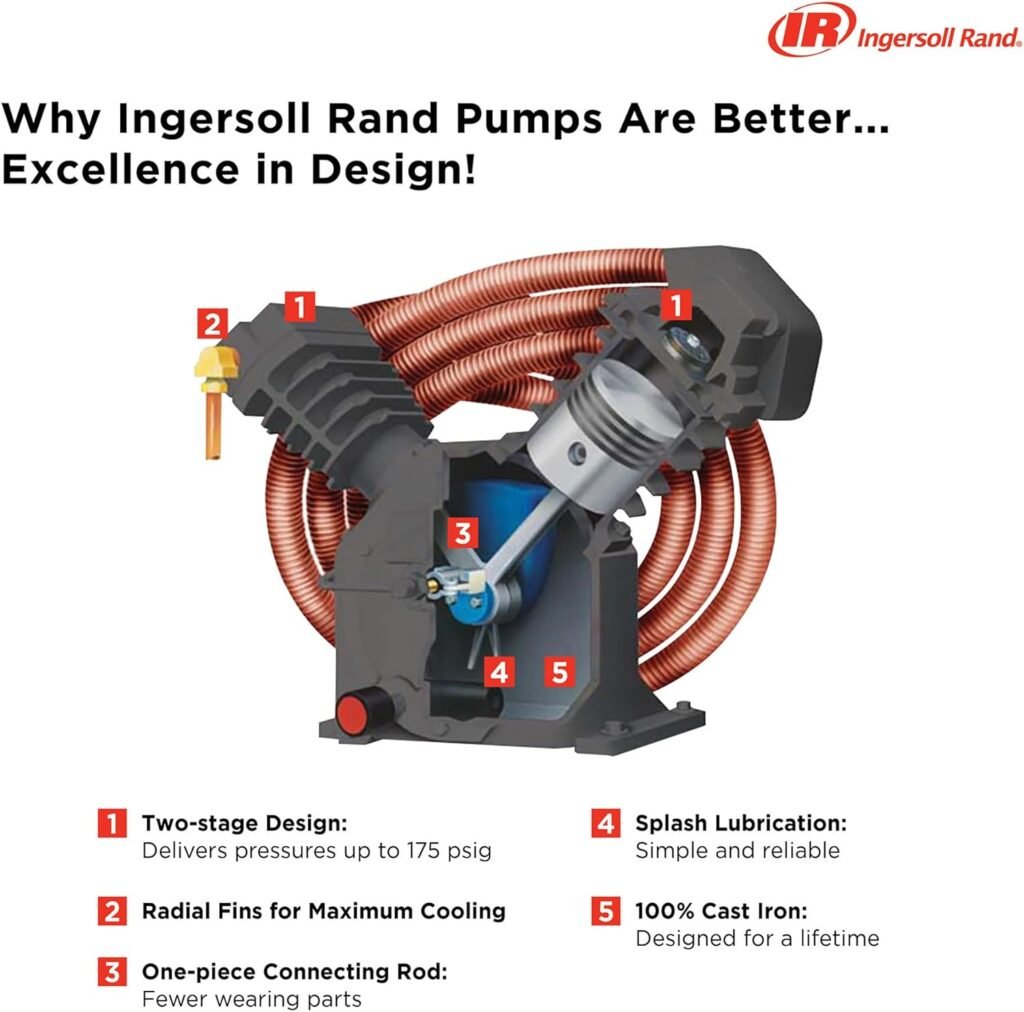
A 2-stage compressor compresses air in two steps, which improves efficiency at higher pressures and reduces discharge temperatures compared to single-stage machines at similar pressures. For applications where 175 PSI is required, the two-stage approach offers better thermal behavior and potentially longer oil and component life.
We appreciate two-stage designs in stationary compressors because they tend to handle higher pressures more gracefully and deliver more stable flow under heavy use.

Tank, Layout, and Installation Footprint
An 80-gallon horizontal tank is a good balance between runtime and footprint for shop installations. This receiver size helps buffer short air bursts without immediate motor restart and reduces pressure fluctuation during intermittent tool use.
We’ll discuss how the layout influences where we put the unit and how to plan pipe runs for minimized pressure loss.
Tank Capacity and Benefits
With an 80-gallon receiver, we get a decent reservoir to smooth demand spikes and help system dryers and filters operate more effectively. The tank stores energy that would otherwise require the motor to run more often, which reduces start-stop cycles and wear.
We recommend placing the receiver at a low point in the system and piping condensate drains to a safe discharge or oil-water separator if required by regulations.
Physical Footprint and Placement
The horizontal tank conserves vertical space and makes the unit easier to fit under mezzanines or against low ceilings. Before installation, we need to measure carefully for clearances around the motor and compressor for service access and airflow to the after-cooler.
We should allow room for piping, electrical disconnects, and future service — a cramped installation makes routine maintenance harder and can shorten component life due to poor cooling.
Cooling, Moisture Management, and After-cooler
We value efficient moisture management because wet compressed air damages tools, corrode piping, and ruins painted finishes. The included air-cooled after-cooler is a key part of that moisture control.
We’ll describe how the after-cooler works in this package and why condensation management matters for downstream equipment and system reliability.
Air-cooled After-cooler Function
The after-cooler lowers discharge air temperature by passing compressed air over a finned heat exchanger and using ambient air to remove heat. Cooler air holds less moisture, so water condenses out and can be drained before the air reaches dryers, filters, or tools.
Because the after-cooler is integrated, we save on the additional cost and installation time of a separate unit, and we reduce the moisture load conveyed to the receiver, which improves condensate management.
Electric Drain Valve Advantages
Automating condensate removal with an electric drain valve prevents tank overfill, reduces manual maintenance, and helps ensure contaminants don’t accumulate. Manual drains are easy to forget; an electric drain removes this human factor.
We do need to ensure condensate is disposed of per environmental and local regulations, since it can contain oil and lubricants requiring separation or disposal treatment.
Controls, Protection, and Safety Features
We place a premium on safeguards that prevent damage and extend compressor life. The low oil protection switch included with this model is a critical safety feature that we’d expect on any serious stationary compressor.
We’ll run through how the control package typically operates and what protections we should expect during normal operation.
Low Oil Protection and Safety Interlocks
Low oil protection prevents the compressor from running if oil pressure or oil level drops below a safe threshold, protecting bearings and other moving parts. This reduces the chance of catastrophic failure and the expense of major repairs.
We also recommend checking for additional protections like thermal overloads on the motor, pressure relief valves, and a fusible link or disconnect for safe electrical isolation during service.
Basic Control Panel Expectations
A packaged unit like this should include basic controls to start/stop the compressor and protect it from overcurrent or thermal events. We prefer units that make it easy to attach remote run/stop or network-level monitoring for preventative maintenance.
If the stock control package is limited, we can usually retrofit more advanced controllers to add sequencing, remote monitoring, or variable speed drive (VSD) capability for improved efficiency.
Installation and Electrical Considerations
We need to ensure our facility can provide a suitable electrical service and that we plan the installation to minimize pressure loss and heat buildup. Electrical supply, disconnects, and overload protection must conform to local code and manufacturer recommendations.
Installation planning also includes exhaust airflow, condensate disposal, foundation or mounting considerations, and ensuring adequate clearance for service.
Electrical Requirements and Wiring
A 15 HP 230 V 3-phase motor typically draws significant current; we must verify building service capacity and supply proper-sized conductors, breakers, and disconnects. A licensed electrician should size and install the supply per the motor nameplate and local code.
We also recommend a soft start or VFD if our facility needs to reduce inrush currents or if we want to reduce mechanical stress on the system. However, VFD integration should be handled by someone familiar with compressor control and motor protection settings.
Piping and Pressure Drop
We should use properly sized piping to reduce pressure drop. Undersized lines and long runs can significantly reduce delivered CFM at the point of use. If we expect multiple workstations, a ring-main or manifold layout helps maintain stable pressure.
We also recommend installing dedicated isolation valves and service tees near the compressor so maintenance can be performed without draining or depressurizing large portions of the plant.
Noise, Vibration, and Operation Environment
Noise and vibration matter for employee comfort and nearby processes. We’ll consider expected noise levels for a 15 HP stationary compressor and offer mitigation techniques. The fully packaged design often helps contain noise relative to loose installations.
We’ll also cover vibration isolation and how to reduce noise transmitted through building structure.
Expected Noise Levels
A 15 HP compressor can be moderately loud — typical sound levels for packaged compressors of this power class can range widely depending on enclosure and mounting, but we should plan for hearing protection and consider acoustic enclosures or locating the unit in a dedicated equipment room if possible.
If noise is a concern, consult the manufacturer for measured dB(A) ratings at a given distance and use sound-absorbing barriers or isolation mounts to reduce transmitted noise.
Vibration Control and Mounting
Proper mounting — using vibration pads or bolting to a mass slab with isolation mounts — reduces vibration transmission into building structure and piping. Minimizing rigid pipe connections or using flexible connectors near the compressor reduces noise and stress on piping.
We find flexible connectors for the discharge line and properly sized expansion loops help prevent fatigue failures in piping and reduce fatigue noise.
Efficiency and Energy Consumption
Energy costs are a major operating expense for air compressors, and a 15 HP machine running long hours can add significantly to our electricity bill. We’ll discuss duty cycles, expected power draw, and ways to improve efficiency.
We’ll also cover considerations for adding VFDs or optimizing system pressure to reduce power consumption.
Duty Cycle and Power Draw
If the compressor runs frequently or continuously, we should expect near-nameplate power consumption during loaded operation. For intermittent use, the compressor will cycle, and idling or no-load modes still consume some energy. Understanding compressed air demand patterns helps optimize operation.
Reducing system pressure slightly has a large impact on power consumption — a general rule of thumb is that each 2 psi reduction yields about a 1% reduction in power. Optimizing system pressure can lead to meaningful savings over time.
Options to Improve Efficiency
If our demand varies widely, we can consider adding a variable speed drive or sequencing multiple compressors to match supply to demand. VFDs reduce cycling losses and reduce energy use at partial loads, though they add upfront cost and complexity.
Regular maintenance — filters, oil changes, belt tension, and leak repair — also drives efficiency. Leaks in compressed air systems are often overlooked and can contribute to 20–30% extra energy consumption if not repaired.
Maintenance, Serviceability, and Life Expectancy
We want compressors that are straightforward to maintain and keep running reliably for many years. A fully packaged unit reduces initial setup complexity but still requires routine attention to oil, filters, belts, and drains.
We’ll describe the maintenance schedule we’d follow and how accessible components are for service.
Routine Maintenance Tasks
Key upkeep includes checking/changing oil per manufacturer intervals, replacing intake and oil filters, checking belts and pulleys, inspecting condensate drains, and verifying the low oil protection function. We should also inspect electrical connections and clean cooling surfaces to ensure proper heat rejection.
A preventive maintenance log helps to track service intervals and anticipate replacements before failures occur. For a 15 HP compressor running daily, we’d typically check critical items weekly and perform scheduled oil/filter changes monthly to quarterly depending on hours of operation.
Serviceability and Parts Availability
Ingersoll Rand is a widely distributed brand, and replacement parts, service manuals, and authorized service centers are commonly available. We recommend confirming local dealer support before purchase to ensure fast access to filters, belts, and service expertise.
Easy-to-remove panels, clear access to the motor and pump, and standardized parts simplify servicing and reduce downtime. We prefer models where routine-access components are reachable without extensive disassembly.
Troubleshooting Common Issues
We’ll outline common issues we might encounter and how to diagnose them quickly. Being prepared can reduce downtime and avoid unnecessary service calls.
We’ll focus on symptoms, likely causes, and practical first-step checks that maintenance staff can perform safely.
Frequent Symptoms and Quick Checks
If the compressor won’t start, check the electrical supply, disconnect and fuses, and low oil protection cutout. If the unit cycles excessively, inspect tank pressure switch settings, leaks in the system, and the receiver’s ability to recover.
If we observe excessive oil carryover, check oil level, air filter condition, and discharge piping for back-pressure. Unusual vibrations often point to belt wear, misalignment, or loose mounting hardware.
When to Call Service
If we detect bearing noise, persistent overheating, electrical tripping after confirming supply, or oil contamination that can’t be resolved with routine maintenance, call an authorized technician. These symptoms often indicate internal wear or failures that require specialized tools and parts.
Documenting operating hours and recent maintenance helps service techs diagnose issues faster and can reduce time to repair.
Comparison with Other Options
We typically compare similarly rated units by several criteria: price, efficiency, serviceability, included features, and local service support. This model’s included after-cooler and electric drain valve are useful differentiators that reduce upfront accessory costs.
We’ll give perspective on when this packaged 15 HP option makes sense versus buying separate components or choosing a different capacity.
Packaged Unit vs. Custom System
A fully packaged unit like this costs more upfront than a bare pump but saves time and integration work. For buyers who want a simpler procurement path and fewer compatibility questions, packaged systems offer predictable performance and fewer integration headaches.
If we already have specific dryers, filters, or variable-speed controls we want to keep, a custom build may fit better. Otherwise, the packaged approach is ideal for fast installation and predictable warranty coverage.
Where This Model Fits Among Competitors
For shops needing ~50 CFM at elevated pressures, this 15 HP packaged model is competitive versus 10–20 HP units from other reputable brands. Its included ancillaries (after-cooler, electric drain, low oil switch) push its value proposition higher than bare-bones compressors.
If our demand is consistently below 30 CFM, a smaller, more efficient unit might yield lower lifecycle costs. Conversely, for heavy manufacturing with continuous flow above 50 CFM, we should look at larger single compressors or multiple-unit systems.
Pros and Cons
We’ll summarize key advantages and potential limitations to help us weigh purchase decisions quickly and clearly. This list will focus on features, operation, and lifecycle considerations.
Pros
- Fully packaged with after-cooler, electric drain, and low oil protection for simplified installation.
- 80-gallon receiver provides good buffering for intermittent shop demands and reduces cycling.
- 15 HP 3-phase motor is industrial-grade and suitable for continuous or heavy intermittent workloads.
- Two-stage design handles higher pressure requirements more efficiently than single-stage alternatives.
- Ingersoll Rand has broad service networks and parts availability in many regions.
Cons
- If our facility uses 460 V as standard, a 230 V machine may require electrical adjustments or transformers.
- At around 50 CFM, the unit sits at a mid-range capacity; shops with highly variable or much larger air demands may need additional compressors or a different sizing strategy.
- Noise levels can be significant; additional acoustic measures may be necessary for noise-sensitive environments.
- Initial cost may be higher than a stripped-down pump, but the included ancillaries partially offset this.
Who Should Buy the 7100E15-P?
We advise purchase for shops and facilities that need a robust, packaged 15 HP solution and where the 50 CFM rating matches or slightly exceeds combined peak tool demand. This unit fits automotive shops, light manufacturing lines, and facilities performing maintenance on equipment where 90–175 PSI pressures are used.
We recommend avoiding this model if our demand is consistently below 30 CFM (we’d save energy with a smaller unit) or well above 50 CFM (we should consider larger capacity or multiple compressors).
Use Cases Where This Unit Excels
This model is well-suited for medium-sized automotive shops with multiple lifts and spray booths, facilities running pneumatic tools intermittently across several stations, and light manufacturing setups where a reasonable buffer and higher pressure are needed.
It’s also attractive for facilities that lack in-house plumbing or electrical integration capacity, because the fully packaged nature reduces scope of installation work.
Practical Examples of Application
To help visualize how the compressor performs in real scenarios, we’ll describe a few typical shop setups and how this unit supports them. These examples help translate specs into everyday expectations.
We’ll cover paint shops, maintenance bays, and general fabrication environments to show where 50 CFM and an 80-gallon receiver come into play.
Automotive/Repair Shop Scenario
In a shop with 3–4 technicians running impact guns, air ratchets, and occasional sanders or paint guns, we can expect intermittent bursts of high flow. The 80-gallon tank smooths these bursts, and 50 CFM at higher pressures supports most pneumatic tools without significant pressure droop.
We’d still advise installing supplementary point-of-use filters and a dryer for paint applications to ensure moisture-free air for finishes.
Fabrication and Light Manufacturing
For light manufacturing with intermittent stamping, rivet guns, or pneumatic presses, the compressor can support cyclical load profiles if peak CFM is within the 50 CFM envelope. A second compressor may be advisable for continuous multi-station operations to provide redundancy or staged supply.
Sequencing or an intelligent control panel with multiple compressors is useful if production increases, allowing us to add another machine while keeping the 7100E15-P as part of a larger system.
Purchasing Tips and Warranty Considerations
We recommend verifying local dealer support, confirming warranty terms, and asking specifically about included ancillaries and what constitutes factory-installed vs. dealer-installed options. These details influence installation and warranty coverage.
Check for bundled service plans or extended warranty options if we expect heavy duty-cycle operation or limited in-house maintenance capability.
Sizing and Matching Tools
Measure peak simultaneous demand by listing all tools that could run at once and adding their CFM at the working pressure. Add a 10–20% buffer for safety and to account for future growth or air leaks. If total peak demand approaches 50 CFM at working pressure, consider a larger machine or a second compressor.
Also consider future growth when buying; adding another compressor later can be more expensive in labor and piping than slightly upsizing at purchase.
Warranty and Dealer Support
Ask for specifics: what parts are covered, maintenance obligations to keep warranty valid, and availability of local authorized service centers. We prefer units where local dealers provide at least initial startup and commissioning support.
Document commissioning records and maintain a service log to aid warranty claims should issues arise.
Final Verdict
We believe the Ingersoll Rand Electric Stationary Air Compressor (Fully Packaged) – 15 HP, 50 CFM at 175 PSI, 230 Volts, Model Number 7100E15-P, is a solid choice for medium-duty shops that need a packaged, relatively high-pressure-capable air source. The included after-cooler, electric drain valve, and low oil protection are genuine conveniences that reduce installation complexity and improve day-to-day reliability.
If our facility’s peak and continuous CFM requirements fall within or just under the 50 CFM rating at our working pressure, this unit gives a reliable balance of cost, capability, and serviceability. For substantially higher or lower needs, sizing up or down (or considering compressor sequencing) will yield better lifecycle economics.
Final Recommendations
We’d recommend confirming local electrical compatibility, ensuring proper piping and condensate handling, and budgeting for noise mitigation if necessary. If a moderately priced, fully packaged, service-friendly compressor with decent support options fits our application profile, this Ingersoll Rand model is worth strong consideration.
When in doubt, contact a local dealer to confirm measured performance, availability of warranty and service packages, and whether alternate voltage options or upgrades (like variable speed drives) are offered for more tailored efficiency.

Disclosure: As an Amazon Associate, I earn from qualifying purchases.