Are we looking for a reliable, high-capacity stationary air compressor that can handle serious shop work without causing us headaches?
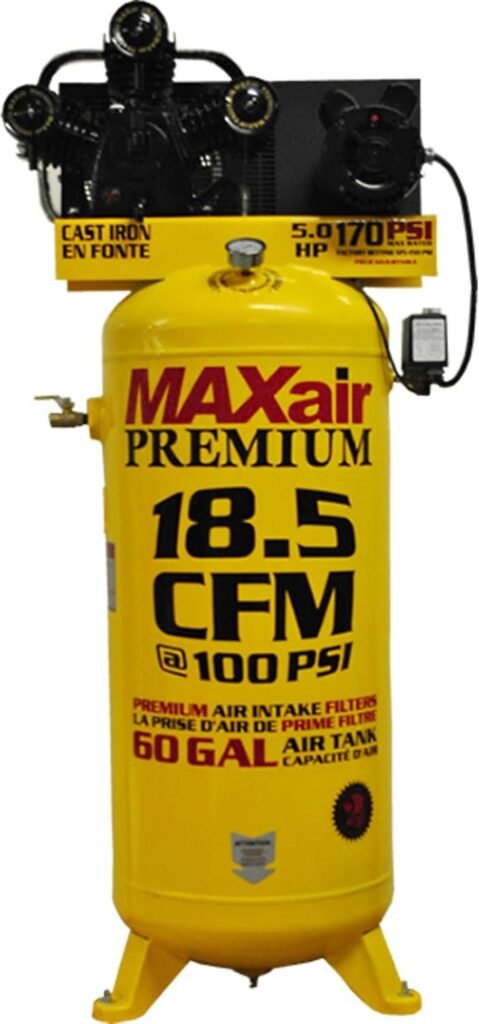

Overview of the Maxair C5160V1-MAP 60-Gallon 170 PSI Max Electric Stationary Compressor
We want a clear picture of what the Maxair C5160V1-MAP 60-Gallon 170 PSI Max Electric Stationary Compressor offers and whether it fits our workflow. This model promises a heavy-duty setup with a vertical tank and a high-performance motor aimed at both demanding hobbyists and light-to-medium commercial shops.
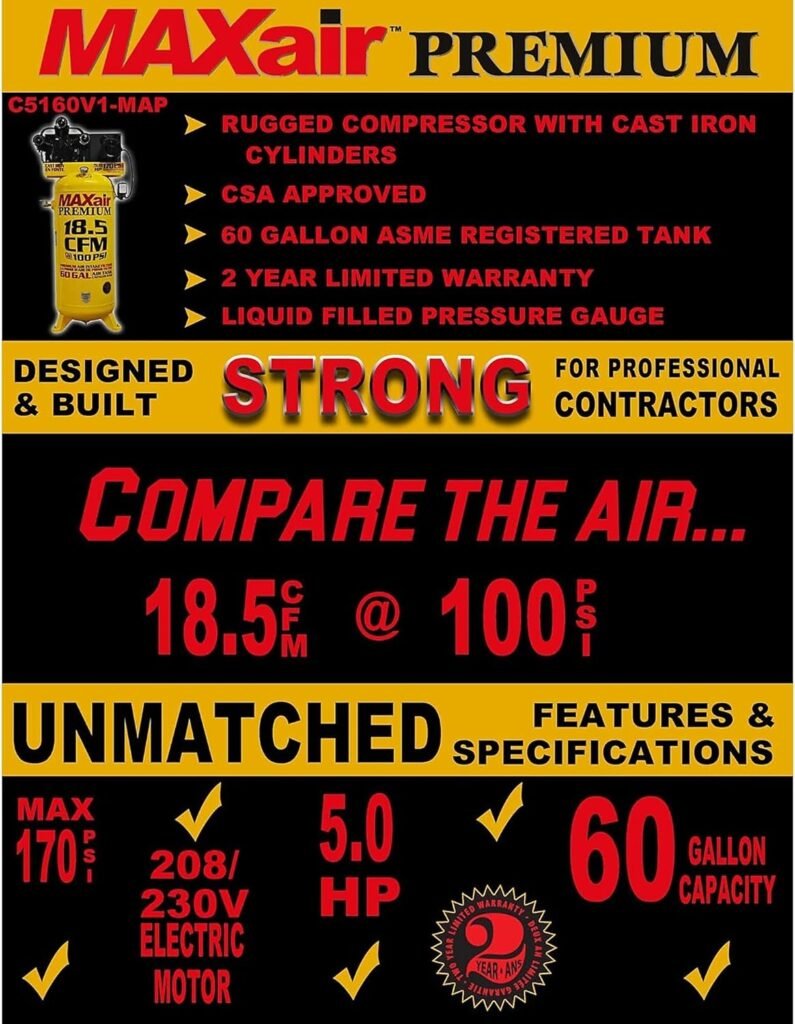
Key specifications at a glance
We should always start by noting specs, since numbers tell us a lot about capability. The most important figures for this compressor include motor horsepower, tank size, CFM at rated pressure, and maximum PSI; those influence what air tools we can run and for how long.
| Feature | Specification |
|---|---|
| Model | Maxair C5160V1-MAP 60-Gallon 170 PSI Max Electric Stationary Compressor |
| Motor | 5 HP electric motor |
| Rated Flow | 18.5 CFM at 100 PSI |
| Tank Capacity | 60-gallon vertical tank |
| Max Pressure | 170 PSI (maximum) |
| Drain | Extended drain at base |
| Guard | Heavy duty belt guard |
| Typical Applications | Shop tools, pneumatic impact tools, painting, air nailing |
| Configuration | Stationary (vertical) |
We find this table useful because it lays out the essential numbers and design choices in one place so we can compare with our needs quickly. Having the extended base drain and a heavy-duty belt guard adds to practicality and safety over time.
What these specifications mean for our daily use
We should interpret specs in terms of time between cycles, tool compatibility, and how the compressor will handle peak demands. A 5 HP motor combined with 18.5 CFM at 100 PSI gives us healthy continuous flow for many common shop tools, and the 60-gallon tank provides a good buffer for intermittent high-demand tasks like spray painting or running a framing nailer for a stretch.
Performance and power
We care about whether the compressor can supply sufficient CFM at the pressures our tools require and how quickly it recovers after a draw-down. Performance is more than a single number; it’s how the system behaves when we actually use it, including recovery time, heat management, and consistent pressure delivery.
Motor and drive system
We rely on the 5 HP electric motor to deliver both raw torque and steady performance under load, and that larger motor helps when multiple tools are used in sequence. The heavy-duty belt guard indicates a belt-driven pump, which often provides quieter operation and easier maintenance than direct-drive for heavy-duty stationary compressors.
CFM, PSI, and real-world output
We care most about the 18.5 CFM at 100 PSI figure because it tells us what tools we can run continuously without dropping pressure. That output supports a range of tools, from sanders and grinders to larger paint guns, and the 170 PSI maximum gives us headroom when we need temporary bursts at higher pressure.
Tank capacity and recovery times
The 60-gallon vertical tank stores a significant volume of compressed air so that we can run tools for several minutes before the motor kicks in to refill the tank. Recovery time will vary with demand, but with a 5 HP motor and the rated CFM the refill speed should be reasonable for typical shop cycles; for continuous high-flow tasks we should still expect the motor to run frequently.
Design and build quality
We look for robustness because compressors are long-term investments that have to survive heat, oil, vibration, and occasional rough handling. The Maxair appears to be built with a focus on heavy-duty shop use, featuring a vertical tank to save floor footprint and a protective belt guard to reduce maintenance mishaps.
Vertical tank advantages
We like vertical tanks because they save floor space and often make better use of vertical shop areas while still giving substantial volume. The 60-gallon vertical configuration works well in garages or tight shops where we’d rather preserve square footage.
Belt guard and durability
The heavy-duty belt guard not only improves safety by covering moving parts, it also indicates that the manufacturer prioritized serviceability and reliability. Belt-driven pumps generally allow for easier tension adjustments and parts replacement compared with sealed direct-drive heads.
Materials and finish
We expect the Maxair C5160V1-MAP to use standard industrial materials for the tank and pump — steel tanks with a protective finish and cast-iron pump elements for wear resistance. A proper exterior coating helps resist corrosion when the compressor is used in semi-humid or shop environments, extending the life of the unit.

Installation and setup
We plan our installation ahead of time to avoid surprises; the electrical service, floor space, and airflow routing are all important. Proper setup ensures safe operation and avoids premature wear or nuisance tripping.
Electrical requirements
We will need to ensure adequate electrical supply for a 5 HP motor; that typically means a 240V circuit with an appropriately rated breaker and correct wire gauge to prevent voltage drop. It’s important to verify the motor’s nameplate and follow local electrical codes — in some regions a qualified electrician is the right call.
Space and mounting considerations
The vertical configuration reduces the footprint, but we still need clearance for the belt guard, service access, and the extended drain at the base. We should place the compressor on a level, vibration-isolating surface, and factor in ventilation space so the pump and motor can shed heat efficiently.
Initial break-in and assembly
We recommend a careful initial setup, including checking oil levels (if the pump requires oil), belt tension, and couplings before first start. A short break-in period with periodic checks for leaks, noise, and proper pressure cut-in/cut-out behavior will help ensure long-term reliability.
Noise and vibration
We prefer compressors that balance power with reasonable noise and vibration levels, especially if our shop is shared or near living spaces. The belt-driven pump and stationary configuration should help attenuate noise compared to portable, direct-drive compressors.
What to expect on noise levels
While we won’t categorize this unit as whisper-quiet, the larger motor and belt drive can be quieter than similarly powerful direct-drive units. Expect noticeable noise when the pump runs, and plan for hearing protection during extended periods of use or for placing the compressor in a separate room or closet if sound is a concern.
Vibration management and mounting
Vibration can shorten component life and annoy us over time, so we’ll use vibration-damping feet or a concrete pad to reduce resonance. Proper mounting and periodic checks for loose bolts will help keep vibration under control and protect accessory connections from fatigue.
Maintenance and serviceability
We want a compressor that’s straightforward to maintain so we can keep it running well without significant downtime or costly service calls. The Maxair’s design features like the extended drain and accessible belt guard should simplify routine tasks.
Routine maintenance tasks
We should perform regular checks: drain the tank daily or weekly depending on moisture accumulation, change oil and filters on the pump per the manufacturer schedule, inspect and adjust belt tension, and check safety valves. These steps preserve performance and prevent corrosion or internal damage.
Long-term servicing and parts availability
We like products where parts are reasonably easy to source and where routine items like belts, valves, and filters are common. Because the Maxair uses a standard pump and motor architecture, most wear parts should be available through aftermarket or OEM channels, which keeps long-term ownership costs predictable.
Safety features and recommendations
Safety matters a lot with pressure vessels and motors; built-in protections reduce risks and we should follow best practices. Properly functioning safety valves, belt guards, and adherence to maintenance routines help keep operation safe for us and anyone in our workspace.
Pressure relief and safety valves
A properly sized safety relief valve is essential to prevent tank overpressure conditions, and we should test valves periodically for proper operation. The tank must also have a reliable pressure gauge and an automatic pressure cut-out switch to stop the motor when the tank reaches the set maximum.
Belt guard and moving parts safety
The heavy-duty belt guard reduces our risk of contact with rotating parts and also keeps debris from interfering with the belts. We should always lock out and tag the unit or disconnect power before performing any maintenance to motor, belts, or pump.
Use cases and who should buy it
We think about whether this compressor matches our regular needs: do we paint cars, run multiple nail guns, or need steady power for sanders and grinders? The Maxair fits many medium-to-heavy applications but might be overkill for occasional home use and undersized for large industrial needs.
Home garage and hobbyists
If we are serious hobbyists with frequent painting or tool use, the 60-gallon tank and 18.5 CFM at 100 PSI will make tasks smoother and reduce motor cycling. For light sporadic use, however, this compressor may be larger and more powerful than necessary.
Small commercial shops and contractors
Small auto shops, body shops, cabinet makers, and general contractors will find the unit well-suited to their workflows, especially when running multiple tools in sequence or using higher-flow finishing equipment. The unit gives the capacity for several air tools to be used over a session without a big drop in pressure.
Specialized uses
We can also use this compressor for specialized tasks like sandblasting, medium-size paint booths, or powering pneumatic presses — as long as the required CFM and duty cycle fall within the compressor’s capabilities. For continuous industrial production lines, we would still review duty cycle and potentially consider multiple units or a higher-capacity system.
Pros and cons
We weigh the strengths against trade-offs to decide if this unit fits our balance of budget, performance, and space. Every piece of equipment has pros and cons and being realistic helps us avoid disappointments.
Pros:
- Robust 5 HP motor delivers dependable power for demanding tasks.
- 18.5 CFM at 100 PSI covers a broad range of shop tools.
- 60-gallon vertical tank saves floor space while providing substantial air storage.
- Heavy duty belt guard and extended base drain improve safety and serviceability.
- 170 PSI max gives extra headroom for higher-pressure needs.
Cons:
- Requires proper 240V electrical hookup and may need a professional electrician.
- Larger and heavier than portable compressors; installation is more involved.
- Noise and vibration are present during pump operation and may require mitigation.
- For occasional DIY users, the capacity and cost may be more than necessary.
We find that the pros align with our expectations for a long-term shop compressor, while the cons are manageable with planning and proper setup.
Comparison with similar models
It’s helpful to see how the Maxair compares to other compressors in the same class so we can assess value, reliability, and performance. We look at horsepower, CFM at key pressures, tank size, and build features like belt guards or pump material.
Competing models to consider
We should consider similar 60-gallon vertical compressors from brands like Campbell Hausfeld, Ingersoll Rand, and Quincy, comparing CFM at 100 PSI and features like oil-free vs. lubricated pumps. Many competitors offer similar horsepower and tank sizes, so price, warranty, and service network can be decisive factors.
How it stacks up in value
We believe the Maxair C5160V1-MAP offers competitive value due to its combination of a powerful 5 HP motor, good CFM rating, and practical features like the extended drain and heavy-duty guard. If it’s priced competitively and parts/support are accessible, it makes sense for small shops or serious hobbyists who need sustained performance.
Buying considerations and budget
We want to account for upfront price and the total cost of ownership including installation, electricity, maintenance, and accessories. A lower purchase price can be offset by higher operating or service costs, so we consider the whole picture.
Cost of ownership
Operating costs include the electricity consumed by a 5 HP motor, regular oil and filter changes (if applicable), belts, and occasional parts replacements. We should estimate energy usage based on our expected duty cycle and factor in routine maintenance to get a realistic annual cost.
Accessories and add-ons we recommend
We recommend investing in a quality tank-mounted regulator with dual gauges, moisture traps and filtration for paint or finish work, a secondary storage receiver for very high-demand setups, and vibration-isolating mounts or pads. These additions help us protect tools, improve air quality, and reduce wear.
Troubleshooting common issues
We like knowing how to respond when things go wrong so we can minimize downtime and fix problems without unnecessary expense. Many compressor issues can be addressed with basic checks and preventive maintenance.
Air pressure problems
If pressure is not building to the expected level, we check for leaks in hoses and fittings, verify the safety and pressure relief valves, and inspect the intake and discharge paths for blockages. Low pressure under load could indicate a worn pump, slipping belt, or electrical supply issue.
Motor or belt issues
If the motor runs but the pump doesn’t, or if we hear unusual noises, we inspect belt tension, alignment, and the condition of pulleys. For motor-related problems like tripping breakers, we check wiring, verify the correct breaker size, and ensure the motor is not overheating due to restricted airflow or overuse.
Setup checklist before first use
We find that a checklist reduces mistakes during initial setup and helps us document baseline performance. Completing these steps gives us confidence the compressor will perform reliably.
- Verify the electrical supply matches the motor’s nameplate (voltage, phase, breaker size).
- Place the compressor on a level, vibration-damped surface with adequate clearance.
- Inspect tank and connections for shipping damage, tighten fittings, and check oil level if required.
- Ensure the extended drain is in working order and know its location for regular draining.
- Start the compressor and observe pressure cut-in and cut-out settings; listen for unusual sounds.
- Check for leaks with soapy water at connections and thread sealant where needed.
We find that the setup checklist saves us time and frustration, making the unit ready for safe operation.
Environmental and energy considerations
We like to be mindful of energy use and environmental impact, especially if we run the compressor frequently. Motor efficiency, duty cycle, and how we manage compressed air usage all influence our footprint.
Reducing waste and improving efficiency
We can reduce energy waste by selecting tools with lower air consumption, minimizing leaks, and using the tank buffer effectively — for example by scheduling high-demand tasks together rather than spreading them out. Installing proper filtration and condensate management also prevents pollution and maintains air tool longevity.
Disposal and recycling
At end of life, the metal tank and motor components are recyclable, and we should follow local regulations for fluid disposal if the pump uses oil. Responsible disposal helps reduce environmental impact and supports sustainability efforts in our workshop.
Warranty and support expectations
Warranty and manufacturer support make a big difference in long-term ownership satisfaction. We look for clear warranty terms on the tank, pump, and motor, and easy access to replacement parts and technical support.
What to check before buying
We recommend reviewing the warranty coverage, what is and isn’t included, and how long parts and service are guaranteed. If possible, we also look for customer reviews or local dealers that can provide service and parts quickly.
Practical tips for longevity
We want our compressor to last, so we follow a few practical routines that significantly extend service life. Simple habits often prevent costly failures and downtime.
- Drain condensate frequently to prevent internal corrosion and water in tool lines.
- Keep intake filters clean and replace them per the schedule to avoid dirt-induced wear.
- Maintain belt tension and alignment to prevent slippage and uneven loading on bearings.
- Monitor oil level and change the oil at manufacturer intervals if the pump is lubricated.
- Use properly rated hoses and fittings to avoid restrictions and leaks.
We’ve found these habits reduce surprise repairs and keep the compressor performing closer to spec for years.
Accessories and complementary equipment
Choosing the right accessories improves usability and protects our investment. We look for filtration, regulators, hose reels, and additional storage options that match our use patterns.
Filtration and moisture control
We recommend a two-stage approach: a primary moisture trap or separator at the compressor outlet and point-of-use filtration before finishing tools. This combination ensures tool-friendly, dry air and extends tool life.
Hose and coupling selection
Investing in high-quality hoses and quick couplers saves time and reduces pressure drops. We favor hoses sized for the CFM we need and durable couplers to prevent leaks and accidental disconnections under pressure.
Frequently asked questions (FAQ)
We compile questions we commonly ask to help others quickly decide if this compressor fits their needs. These brief Q&A items clear up typical uncertainties.
-
Q: Can this unit run multiple tools simultaneously? A: Yes, depending on the tools’ combined CFM at required PSI; the 18.5 CFM rating at 100 PSI supports multiple intermittent tools but continuous high-flow use may require planning.
-
Q: Is the compressor oil-lubed or oil-free? A: Most compressors in this class use oil-lubed pumps for longevity and better cooling; we should verify the exact pump type in the product documentation and maintain accordingly.
-
Q: What electrical supply is required? A: Expect 240V single-phase service for a 5 HP motor in many setups; check the nameplate for exact voltage and amperage.
-
Q: How often should we drain the tank? A: Daily or after heavy usage is ideal; at minimum weekly, but frequency depends on ambient humidity and runtime.
We find answering these common questions saves time and provides confidence in assessing the compressor for our needs.
Troubleshooting resources and support
We prefer having a plan for when problems arise, including manuals, local service contacts, and parts sources. Preparing these resources prevents long interruptions to our work.
Where to find parts and service
We look for OEM parts availability from Maxair or authorized distributors, and we keep a spare set of belts, safety valves, and common filters on hand. For major repairs, a local compressor specialist or an authorized service center is often the fastest route to reliable repair.
Documenting issues
When troubleshooting, we document symptoms (noise, pressure behavior, leak locations), operating conditions (ambient temperature, duty cycle), and recent maintenance to help technicians diagnose faster. Good records can reduce repair time and clarify whether issues are user-serviceable.
Final verdict
We feel that the Maxair C5160V1-MAP 60-Gallon 170 PSI Max Electric Stationary Compressor is a solid choice for serious hobbyists and small commercial shops that need reliable performance and a good balance of power and tank capacity. Its 5 HP motor and 18.5 CFM at 100 PSI make it well-suited to a broad range of tools and tasks, and practical features like the extended drain and heavy-duty belt guard increase serviceability and safety.
We recommend this unit for users who have adequate electrical service and need the storage and flow it provides; for those with lighter, infrequent needs we’d suggest evaluating smaller models to avoid unnecessary cost and complexity. With proper installation, maintenance, and accessories, this compressor should serve as a durable and productive part of our workshop for years.

Disclosure: As an Amazon Associate, I earn from qualifying purchases.