?Are we ready to evaluate whether the Ingersoll Rand Rotary Screw Air Compressor with Total Air System, 460 Volts, 3 Phase, 15 HP, 55 CFM, 120 Gallon, Model# UP6-15cTAS-125 is the right compressor for our shop or facility?

Product Overview
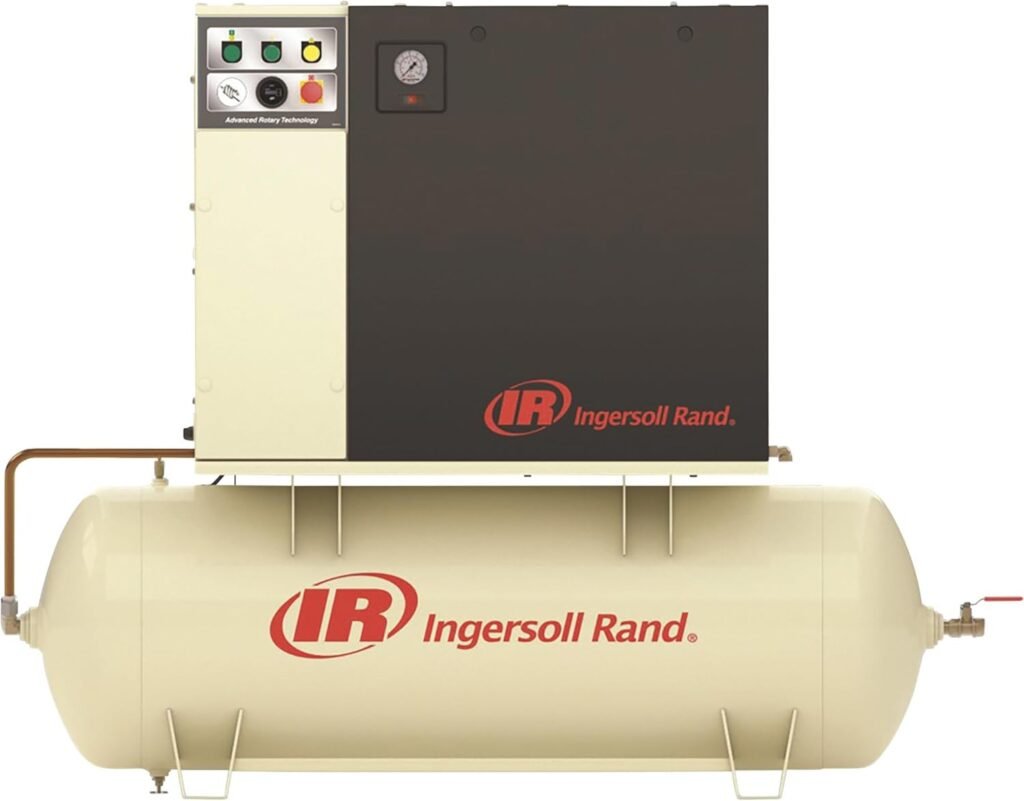
We want a clear snapshot of what this compressor offers and how it fits into our operation. The Ingersoll Rand Rotary Screw Air Compressor with Total Air System, 460 Volts, 3 Phase, 15 HP, 55 CFM, 120 Gallon, Model# UP6-15cTAS-125 is a packaged rotary screw system designed for continuous use in industrial and commercial settings. It combines a rotary screw airend, an ODP electric motor, and a 120-gallon receiver, with a Total Air System configuration intended to produce drier, cleaner compressed air.
Key Features
We should know the main selling points at a glance so we can decide if they match our requirements. This model ships with an ODP (Open Drip Proof) electric motor and an air-cooled aftercooler to reduce discharge air temperatures, which helps moisture removal in the downstream system. It includes a full voltage motor starter mounted and wired, auto start/stop control for simple operation, and a low-sound full sheet metal enclosure to reduce sound levels in the workplace.
Technical Specifications
We appreciate a clear list of technical specs to match against our electrical service and capacity needs. Below is a consolidated specification table to make comparison and planning easier.
| Specification | Detail |
|---|---|
| Product Name | Ingersoll Rand Rotary Screw Air Compressor with Total Air System, Model# UP6-15cTAS-125 |
| Motor Type | ODP electric motor |
| Power | 15 HP |
| Air Delivery | 55 CFM (cubic feet per minute) |
| Voltage | 460 Volts |
| Phase | 3 Phase |
| Receiver Tank | 120 Gallon |
| Starter | Full voltage motor starter (mounted and wired) |
| Control | Auto start/stop control |
| Aftercooler | Air-cooled aftercooler to reduce discharge air temperatures |
| Enclosure | Low sound, full sheet metal enclosure |
| Typical Use | Industrial/commercial continuous duty |
| Approx. Dimensions | (Refer to spec sheet for exact footprint) |
| Weight | (Refer to spec sheet for exact shipping weight) |
We find that the table helps us quickly assess compatibility with our facility’s electrical service and space constraints. For exact dimensions and weight, we should check the manufacturer’s spec sheet or ask our supplier.
Performance and Output
We want to understand how the compressor performs under real-world conditions and whether it can keep up with our production demands. Performance for a rotary screw compressor like this is measured by CFM output, pressure stability, and continuous duty capability. The 55 CFM rating at the specified pressure is suitable for small- to medium-sized shops, and the rotary screw design provides smooth, continuous air flow without the pulsation common in reciprocating compressors.
Airflow and Pressure Stability
We care about steady airflow for pneumatic tools and production lines since interruptions can slow work and cause tool malfunctions. Rotary screw compressors are excellent at maintaining pressure under varying load because the screw airend provides a steady, continuous flow. We should confirm the rated pressure at which the 55 CFM is measured; in many cases this rating is at 100 psi, but we must verify to match our tools’ pressure requirements.
Duty Cycle and Continuous Use
We prefer systems that can run for long shifts or continuously during high-production periods without overheating or suffering premature wear. Rotary screw compressors like this model are designed for continuous duty, providing reliable performance over extended periods. The integrated aftercooler helps control discharge temperature, which supports continuous operation by reducing moisture load and thermal stress.
Energy Efficiency
We need to balance performance with operating cost because electric consumption is a major long-term expense. While a 15 HP motor will draw substantial power, rotary screw compressors can be more efficient than similarly sized reciprocating compressors under continuous loads. The total system arrangement — including aftercooler and appropriate controls — helps optimize efficiency, but we should consider adding a VFD (variable frequency drive) if our demand varies widely to improve partial-load efficiency.

Build Quality and Design
We want a compressor that’s built to last and easy to live with in a busy environment. Ingersoll Rand has a long history in compressed air equipment, and the UP6-15cTAS-125 shows that with its full sheet metal enclosure and integrated system components. The low-sound enclosure reduces workplace noise, and the welded 120-gallon receiver provides storage to stabilize pressure between compressor cycles.
Enclosure and Sound Attenuation
We care about operator comfort and noise regulations when installing equipment indoors. The low sound/full sheet metal enclosure reduces sound levels compared to open-frame designs, making it easier to locate the compressor in or near occupied spaces. We should still measure decibel levels at our intended placement, but the enclosure is a meaningful benefit for many shops.
Cooling System and Aftercooler
We need an effective cooling approach to keep discharge temperatures under control and minimize moisture in the system. This model includes an air-cooled aftercooler to reduce discharge air temperatures, which improves condensate separation and lowers stress on downstream air treatment. Good cooling also contributes to extended component life and more reliable operation during hot ambient conditions.
Motor and Starter
We want a motor and starter combination that matches our electrical infrastructure and provides reliable starts. The listed ODP electric motor is a common and cost-effective motor type for industrial applications, but we must ensure our installation environment is suitable since ODP motors are not fully weatherproof. The inclusion of a full voltage motor starter mounted and wired simplifies startup and reduces the scope of field wiring.
Controls and Usability
We prefer simple, robust controls that operators can manage easily while providing the necessary protections for the compressor. The UP6-15cTAS-125’s auto start/stop control simplifies operation, allowing the compressor to respond to system pressure without manual intervention. The control package, combined with the mounted starter, reduces the need for additional external starters or complex control panels.
Auto Start/Stop Control
We value automated operation that prevents unexpected cycling and reduces operator workload. The auto start/stop control will start the compressor on demand and stop it when sufficient pressure is stored, which saves energy and minimizes wear from unnecessary cycling. We should verify what monitoring and alarm functions are provided and whether expansion or connectivity to building controls is possible.
Maintenance Access and Serviceability
We appreciate designs that reduce downtime and make routine maintenance straightforward. The full sheet metal enclosure should have access panels for routine tasks like filter changes and oil checks, and the Total Air System configuration is intended to centralize key components for service. We should check where service points are located and whether spare parts are readily available through local distributors.
Installation and Electrical Requirements
We must verify that the compressor will integrate with our facility’s electrical service and physical layout without costly upgrades. This model requires 460 volts and three-phase power, which is standard in many industrial settings but not universal in smaller shops or older facilities. We need to confirm our incoming service, conduit routing, and whether a dedicated circuit and appropriate breaker sizing are required for the 15 HP motor.
Voltage and Phase Considerations
We prefer to avoid major electrical upgrades, so matching voltage and phase is essential. The compressor is specified for 460 Volts, 3 Phase operation; we must ensure our facility has this supply or plan for a transformer or electrical upgrade. The full voltage starter is included and wired, which reduces field wiring but doesn’t remove the need for proper disconnects and breakers sized to local electrical codes.
Tank, Piping, and Footprint
We must plan space for the 120-gallon receiver and the compressor’s overall footprint, including service clearances. The large receiver helps reduce cycling and provides storage for short-term peaks in air demand, but it adds to the system’s footprint and weight. We should also plan a proper piping layout and consider condensate drainage, aftercooler airflow, and clearance for intake and service access.
Noise, Vibration, and Workplace Impact
We want to be considerate of employees and neighboring businesses by minimizing noise and vibration from compressed air equipment. The low sound/full sheet metal enclosure on this model helps reduce audible noise. We should still evaluate the installation site, as concrete pads and proximity to workstations will influence perceived noise and vibration levels.
Acoustic Performance in the Workplace
We like solutions that reduce hearing protection needs and make long shifts more comfortable. The enclosure lowers noise compared to open-frame compressors, but operators working near the machine will still need hearing protection depending on measured decibel levels. If noise is critical, consider additional acoustic treatments or placing the compressor in a mechanical room.
Vibration Isolation and Mounting
We recognize that mounting and isolation change how vibration transmits through the building. Proper mounting pads or vibration isolators will reduce structural noise and improve comfort in adjacent areas. We should follow the manufacturer’s recommendations for mounting and ensure the compressor sits on a stable, level surface to avoid premature wear.
Maintenance and Serviceability
We aim to minimize downtime with straightforward maintenance routines and accessible parts. Routine items such as air filters, oil and oil filters, belt inspection (if applicable), and drain lines for condensate must be easy to reach. The Total Air System design centralizes aftercooler and filtration components, which can simplify routine checks.
Routine Maintenance Tasks
We prefer clear maintenance intervals to plan manpower and supplies. For a rotary screw unit, we typically expect oil and oil filter changes, air filter changes, and checking belts/drive components if present, along with regular inspection of the aftercooler and condensate drains. Keeping up with these tasks preserves efficiency and extends component life.
Parts Availability and Support
We count on local support and readily available parts to prevent long downtimes from broken components. Ingersoll Rand has widespread service networks and parts distribution, which helps ensure we can obtain filters, seals, and other parts without excessive delay. We should verify warranty coverage and local dealer support for service agreements.
Safety and Compliance
We must maintain a safe workplace and comply with local regulations for equipment installation and operation. The ODP motor requires a clean, protected environment; if our site has dust, moisture, or corrosive atmospheres, we may need additional enclosures or a totally enclosed motor option. The compressor should be installed with proper guarding, pressure relief devices, and condensate handling to meet environmental and safety codes.
Environmental and Regulatory Considerations
We value compliance with local codes for emissions and wastewater disposal. The aftercooler and condensate separations will create a condensate stream that may contain oil; we must handle this condensate in accordance with environmental regulations, often requiring separators or proper disposal procedures. We should also ensure the installation follows electrical codes and safety standards for compressed air systems.
Pros and Cons
We want a practical summary that balances the machine’s strengths against potential drawbacks to make an informed purchase decision. Below we list notable advantages and limitations based on the unit’s design and typical real-world use.
Pros:
- We get a reliable rotary screw design for continuous duty and stable pressure delivery. This improves productivity and reduces tool wear from pressure pulsations.
- The packaged Total Air System simplifies installation with an integrated aftercooler and receiver. That reduces the number of separate components we must source and mount.
- The full voltage starter mounted and wired saves setup time and reduces field wiring complexity. This is a convenience for quicker commissioning.
- The low sound, full sheet metal enclosure helps us manage workplace noise and improves operator comfort. This can reduce the need for a separate mechanical room in some setups.
- The ODP motor is a common, serviceable choice and can be economical to replace or repair when needed.
- The 120-gallon tank provides ample storage for short peaks and helps extend compressor run times for efficiency.
Cons:
- The ODP motor is not suitable for harsh or dusty environments without additional protection. If our environment isn’t clean and dry, we may have to specify a different motor type.
- The system is fixed-speed; if our demand fluctuates widely, adding a VFD would improve efficiency at partial loads but increase initial cost. We should evaluate our load profile before buying.
- The 460V, 3-phase requirement may necessitate electrical upgrades in smaller facilities that lack that service. That can add significant cost.
- Size and weight of the package require adequate floor space and handling equipment for installation. We must plan for crane or forklift access during placement.
- Depending on our condensate handling needs, we may need to add an oil-water separator or compliant disposal method. This is an operational consideration and a potential extra expense.
Comparison with Similar Models
We find it helpful to compare this model against nearby capacity compressors and alternative brands to ensure we get the best fit at our budget. Compared to smaller reciprocating compressors, the UP6-15cTAS-125 offers smoother continuous flow and longer life for heavy use. Against comparable rotary screw models from other manufacturers, the Total Air System packaging — integrated aftercooler, tank, and starter — provides a turnkey advantage that reduces integration time.
Rotary Screw vs. Reciprocating
We favor rotary screw designs when continuous duty and lower maintenance are priorities. Reciprocating compressors can be more economical for very infrequent or intermittent use, but they generally require more maintenance and exhibit more pulsation. For shops running long shifts or continuous processes, the rotary screw is usually the better choice.
Packaged Unit vs. Modular Components
We appreciate packaged units like this for faster commissioning and fewer compatibility headaches. Buying an integrated unit avoids mismatched components and reduces installation complexity. However, if we already have an existing compressed air infrastructure, modular components can sometimes be more flexible to integrate.
Who Should Buy This Compressor?
We recommend this model for medium-sized shops, light manufacturing lines, and facilities that require stable, continuous compressed air. If our operation runs multiple pneumatic tools or production lines concurrently and we need dependable, continuous airflow, this 15 HP rotary screw with a 120-gallon receiver will likely meet our needs.
When to Consider Alternatives
We should consider other options if our facility lacks 460V three-phase power, if our demand is minimal and sporadic, or if our environment is extremely dusty or corrosive. In those cases, a lower-voltage unit, a reciprocating compressor for intermittent use, or a model with a TEFC (Totally Enclosed Fan Cooled) motor might be a better fit.
Cost of Ownership
We want to look beyond the sticker price and assess operating and maintenance costs, because these will determine the compressor’s total cost of ownership over years of use. Running a 15 HP motor continuously consumes energy, and electricity cost will be a major line item. Regular maintenance — oil and filter changes, condensate handling, and periodic inspections — are ongoing costs but typically lower for a screw compressor than for an equivalent reciprocating model over a long service life.
Energy and Maintenance Budgeting
We prefer to estimate operating costs conservatively and include utilities, routine maintenance, and occasional repairs. Energy costs depend on usage profile and local electricity rates; if our demand is highly variable, the addition of a VFD can yield substantial savings over time. Maintenance intervals and parts costs are manageable for a well-supported brand like Ingersoll Rand, and local dealer service plans can streamline scheduling.
Frequently Asked Questions (FAQ)
We want answers to the questions we commonly hear from our team and from procurement to avoid surprises after purchase. Below are practical answers to frequent concerns.
Q: Is the compressor ready to run out of the crate? A: The UP6-15cTAS-125 arrives mostly assembled, with the starter mounted and wired, and key components integrated. We will still need final electrical hookups, mounting, and alignment by a licensed electrician and proper commissioning by qualified personnel.
Q: Can we use this compressor outdoors? A: The compressor’s ODP motor and sheet metal enclosure are not intended for direct exposure to rain or corrosive environments. If we plan outdoor placement, we should install a weatherproof shelter or choose a model with a motor and enclosure rated for outdoor use.
Q: What maintenance schedule should we follow? A: Routine maintenance normally includes checking oil levels and replacing oil and filters on manufacturer-recommended intervals, inspecting belts and drive components, cleaning or replacing air intake filters, and ensuring condensate drains are functioning. We should consult the operator manual for exact intervals based on hours of operation.
Q: How noisy is the compressor in operation? A: The full sheet metal enclosure reduces noise compared to open-frame compressors, but exact decibel levels depend on room acoustics and placement. We recommend measuring noise after installation to determine if additional acoustic measures are necessary.
Q: Do we need an oil separator or dryer after the compressor? A: The included air-cooled aftercooler reduces discharge temperatures and helps remove moisture, but depending on our air quality needs and downstream tool sensitivity, we may need additional filtration, separators, or an air dryer. For applications requiring very dry or oil-free air, install the appropriate post-compression treatment.
Installation Checklist
We want a practical plan to ensure a smooth installation and quick commissioning. Below is a checklist that covers the essentials to prepare our site.
- Verify 460V, 3-phase supply availability and sizing for a 15 HP motor.
- Plan for a stable, level concrete pad or vibration-isolating mounting surface.
- Confirm clearance for intake, exhaust, service access, and enclosure panels.
- Arrange for condensate drain routing and an oil-water separator if required by regulations.
- Prepare piping layout with proper fittings, isolation valves, and drain points.
- Coordinate with an authorized dealer or technician for commissioning and startup.
We find that following a thorough checklist reduces delays and helps us get the compressor operational quickly.
Long-Term Considerations
We want to plan for the full lifecycle of the compressor, including potential upgrades and eventual replacement. Keeping detailed records of maintenance, run hours, and service incidents helps us optimize replacement schedules and make informed decisions about retrofits like VFDs. We should also evaluate whether our air demand is likely to grow; if expansion is expected, we should consider systems that can scale or be paralleled.
Upgrades and Scalability
We might plan to add a VFD if our load profile shows extended periods at partial load, which would lower energy consumption and improve long-term operating cost. If our air demand grows substantially, multiple smaller compressors in a lead-lag arrangement or modular rotary units might be more flexible than a single larger machine.
Final Verdict
We want to summarize whether this compressor is a strong candidate for purchase based on features, build, and typical applications. The Ingersoll Rand Rotary Screw Air Compressor with Total Air System, 460 Volts, 3 Phase, 15 HP, 55 CFM, 120 Gallon, Model# UP6-15cTAS-125 is a well-rounded, packaged rotary screw solution for medium-duty industrial and commercial applications. With its integrated aftercooler, full voltage starter, and low-sound sheet metal enclosure, it offers convenient installation and comfortable operation for many shops and plants.
We believe this unit is especially appealing if we have 460V three-phase power, require continuous duty performance, and value the convenience of a packaged system. For operations with variable demand, harsh environments, or limited electrical service, we should consider modifications or alternative configurations to match those specific needs.

Disclosure: As an Amazon Associate, I earn from qualifying purchases.