Are we considering the Air Tools Ultra Quiet & Oil-Free 2 horsepower/35 gallon Steel Tank Air Compressor Processing air pump device (yellow,6000W/160L water transport) for our workshop or job site?
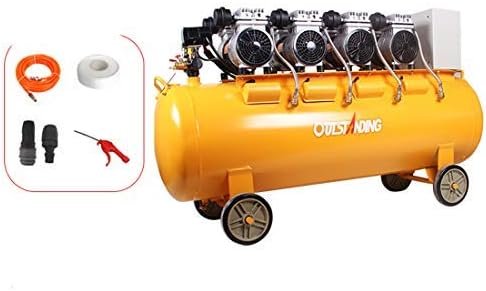

Product Overview
We find this compressor positioned as a heavy-duty, professional-grade air system that emphasizes quiet operation and oil-free maintenance. The manufacturer bundles several model variants under the same family name, giving us options for power and tank capacity depending on our needs.
What the product claims to offer
The unit promises ultra-quiet performance with an oil-free compressor head, aiming to reduce maintenance and contamination risk for air-driven tools and processes. We get multiple power configurations, sizable storage tanks, and fairly high flow rates suitable for continuous or intermittent industrial use.
Key Specifications
We want to summarize the specifications so we can compare models at a glance. The product listing includes several variants with differing power, exhaust volume, tank size, and physical dimensions.
| Model identifier | Motor Power (per head / total) | Output Power (total) | Rated Speed | Tank Capacity | Exhaust / Volume Flow | Working Pressure | Weight | Dimensions (cm) |
|---|---|---|---|---|---|---|---|---|
| 2 pole 1500W * 4 – 160L | 1500W × 4 | 6000W | 2800 R/min | 160 L | 260 L/min | 0.7 MPa | 134 KG | 136 × 48 × 74 |
| 4 × 1100 | 1100W × 4 | 4400W | N/A | 160 L | 400 L/min | 0.7 MPa | 129 KG | 134 × 47 × 81 |
| 4 × 800 | 800W × 4 | 3200W | N/A | 120 L | 240 L/min | 0.7 MPa | 112 KG | 112 × 41 × 79 |
| 4 × 550 | 550W × 4 | 2200W | N/A | 120 L | 160 L/min | 0.7 MPa | 108 KG | 112 × 41 × 79 |
| 4 × 1500 (alt listing) | 1500W × 4 | 6000W | N/A | 160 L | N/A | 0.7 MPa | 132 KG | 136 × 47 × 81 |
We included the most relevant metrics reported in the product details to make it easier for us to choose the variant that best fits our intended application. Some listings repeat or slightly vary in weight and dimensions, so we recommend confirming the exact variant specs with the seller before purchase.
Performance and Power
We expect the higher-power variants to deliver steady compressed air for demanding tasks like spray painting, sandblasting, or running multiple pneumatic tools simultaneously. The 6000W (4 × 1500W) versions provide the highest continuous output in this family and are engineered to keep up with high-demand workflows.
We should consider how much continuous flow we need (measured in liters per minute) and match that to the exhaust/volume flow figures. The 400 L/min figure on the 4×1100 variant, for instance, suggests strong intermittent or simultaneous tool usage capability, while the 160 L/min model suits lighter tasks.
Rated Speed and Motor Design
Where specified, the rated speed is 2800 R/min on the 2 pole 1500W×4 listing, which typically indicates a robust industrial motor profile. We can expect good balance between longevity and torque at that RPM for most compressor loads.
We should note that some variants don’t list a rated speed; in those cases, the motor’s design, load handling, and duty cycle become important things for us to verify with the manufacturer or vendor.
Noise and Quiet Operation
The product promotes an “ultra quiet” experience, which is a major advantage for indoor workshops or environments where noise reduction matters. Because the compressor uses oil-free heads, the noise profile can be lower than heavy, oil-lubricated reciprocating compressors that generate more mechanical sound and require accessory mufflers.
We should temper expectations: “ultra quiet” is relative and depends on the application and operating load. While the compressor is likely quieter than some industrial models, a 6000W machine with a large tank operating at 0.7 MPa will still produce audible noise during start-up and sustained operation; sound reduction measures (location, isolation pads, or acoustic enclosures) will further improve comfort.

Oil-Free Pump: Benefits and Considerations
We appreciate oil-free compressors because they remove the need for routine oil changes and minimize the risk of oil contamination in our compressed air. This makes the unit better suited for painting, lab work, food packaging, and other applications where clean air is essential.
We should remember that oil-free heads may run hotter and can behave differently under continuous heavy load compared to oil-lubricated designs. Lifespan can be excellent for intermittent use, but for 24/7 heavy industrial duty cycles, we should confirm duty ratings and maintenance intervals.
Tank Capacity and Storage
The product line offers tanks of 120 L and 160 L across variants, providing decent stored air for smoothing out demand spikes and reducing motor start cycles. The larger 160 L tanks suit operations where sudden air demand occurs (e.g., spray gun bursts), while 120 L models offer a good compromise for smaller shops.
We should pair tank capacity with our tools’ CFM (or L/min) demands and target runtime between motor starts. A larger tank reduces cycling frequency, which can extend motor life and reduce electrical startup strain.
How tank size affects performance
A bigger tank doesn’t increase the pressure but gives us a larger reservoir of compressed air, which helps maintain consistent pressure during short bursts of high use. This results in steadier tool performance and fewer motor starts.
We should be mindful that larger tanks also increase weight and footprint, which affects mobility and installation location.
Output, Flow Rates and Working Pressure
All variants list a working pressure of 0.7 MPa (approximately 7 bar or ~101.5 psi), which is suitable for most pneumatic tools and standard shop applications. The exhaust/volume flow ranges from 160 L/min to 400 L/min depending on the model, giving us a choice based on required flow for our tools.
We should calculate our total tool demand by adding the L/min (or CFM) requirements of the tools we plan to run simultaneously and then select a model that gives us a comfortable margin above that number for continuous use.
Matching flow to applications
For single-tool operations like framing nailers, the 160–240 L/min models often suffice. For spray booths, sandblasting, or running multiple tools, opting for the 3200W or 6000W variants with 240–400 L/min capacities will reduce pressure drop and preserve performance.
We recommend verifying whether the listed “exhaust volume” is free air delivery (FAD) at rated pressure; FAD is the most useful metric for matching compressors to tools.
Build Quality and Design
We find the construction is industrial in nature, with steel tanks and multiple motor heads arranged for higher output. The yellow finish and steel tank suggest durability and visibility in a workshop setting, and the weight figures (over 100 kg for most variants) indicate solid, stable construction.
We should inspect weld quality, paint finish, rubber isolation mounts, and valve accessibility when receiving the unit, as these factors affect longevity and vibration control. The physical footprint and weight means we should plan for forklift or multiple-person handling during installation.
Materials and corrosion resistance
Steel tanks are robust but can rust when exposed to moisture, so we will want to install a condensate drain strategy and consider the compressor’s storage environment to minimize internal corrosion. Regular draining and possibly inline moisture traps will help preserve tank life.
We should also look at accessible service points (drain valve, pressure switch, safety valves) to make routine maintenance straightforward.
Setup, Installation and First Use
We recommend positioning the compressor on a solid, level surface away from direct dust, moisture, and extreme temperatures to ensure reliable performance. Because these units are heavy, we will plan logistics for delivery and placement in advance.
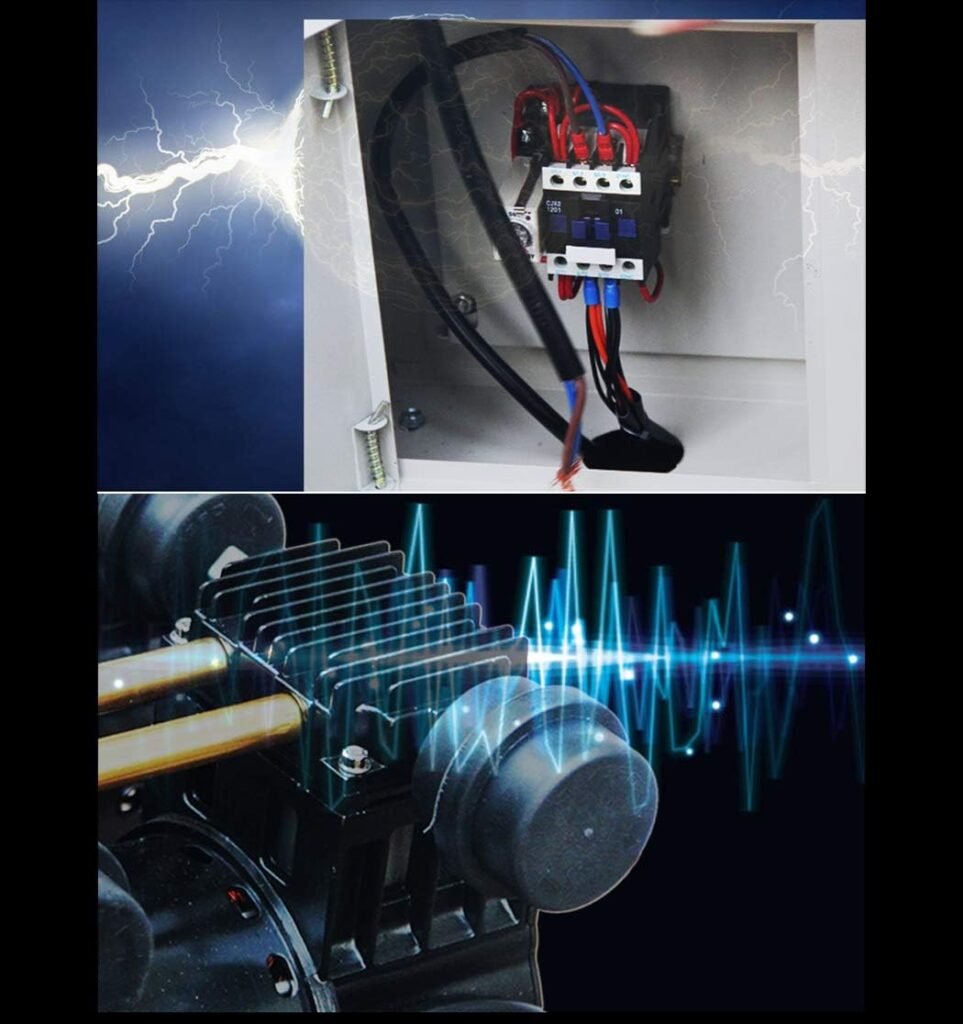
We will check the electrical requirements for each model: the product details list motor powers up to 6000W and various total power figures; we must verify whether the variant needs single-phase or three-phase supply and ensure correct breakers, starters, or VFDs as recommended by the vendor.
Initial checks and commissioning
On first power-up we will inspect for leaks, verify safety valve operation, and allow the compressor to run through a few pressure cycles while monitoring temperature and motor current. We’ll also set pressure cut-in/cut-out points in accordance with manufacturer guidance and ensure any filters and separators are installed correctly.
If the unit includes a recommended run-in period for new oil-free heads (some manufacturers have specific break-in procedures), we will follow that to optimize performance.
Maintenance and Longevity
One big advantage of oil-free compressors is simplified oil management, but that doesn’t mean maintenance-free. We still need to monitor intake filters, condensate drains, valves, belts (if belt-driven), and electrical connections.
We will create a schedule to inspect filters monthly under heavy use, drain tanks daily or weekly depending on humidity, and check safety valves and pressure switches regularly. Keeping the intake area clean extends motor and head life.
Replacing wear items and expected lifespan
Wear items on oil-free systems can include gaskets, valves, and intake filters. When parts wear out, replacement can be straightforward but may require ordering OEM parts. For intermittent industrial use, oil-free systems often provide several years of reliable service; for continuous 24/7 duty, we’ll confirm expected life and parts availability with the manufacturer.
Safety Features and Operational Tips
We appreciate that the compressor lists a working pressure and presumably includes standard safety valves, pressure switches, and drains. We must ensure the safety valve is functional and not disabled, and that pressure settings match our tool requirements.
We’ll avoid running the compressor beyond its rated working pressure and keep a routine verification of electrical protections such as thermal overloads and fuses. Proper ventilation is important for heat dissipation, especially for oil-free heads which can run hotter.
Practical operational tips
We’ll install a water separator and inline filter for downstream tool protection, and use pressure regulators for precise tool pressure. If we move the unit, we’ll fully drain the tank and secure fittings before transport to avoid damage.
Use Cases and Best Applications
This compressor family suits mid-sized shops, small to medium manufacturing lines, automotive painting booths, woodworking shops, and areas where clean, oil-free air is critical. The larger 160 L/6000W variants can support spray booths and multiple simultaneous tool operations, while the smaller models are better for single-tool or intermittent tasks.
We should match our choice to the tools and duty cycle: pneumatic sanders, grinders, and high-volume spray operations will benefit from higher flow variants; finish sprayers and small shops may choose mid-range models to balance cost and performance.
Ideal environments
We will place these units where noise, air cleanliness, and consistent pressure are necessary. Indoor workshops and production lines that require minimal airborne oil contamination are the most natural fits.
Pros and Cons
We want to be balanced in our assessment, highlighting both strengths and potential drawbacks so we can make an informed decision.
Pros:
- We get oil-free air, reducing contamination risks and maintenance related to oil changes.
- Multiple power and tank size variants let us choose according to our demands.
- Steel tank construction and industrial motor design promise sturdy performance and reliability.
- Ultra-quiet marketing suggests lower noise profiles compared with some industrial compressors.
- Reasonable working pressure (0.7 MPa) matches many common pneumatic tools.
Cons:
- The product documentation is a bit inconsistent on dimensions and weight between listings; we should confirm the variant specifics before purchase.
- Oil-free heads can have different lifespans under continuous heavy loads compared with oil-lubricated alternatives.
- The units are heavy and require careful logistics for installation and placement.
- Noise, while claimed to be low, can still be significant during sustained operation and may require additional acoustic measures.
- Some models lack complete rated speed or FAD details in the listing, which makes precise matching to tool demand harder without vendor clarification.
Comparison with Similar Compressors
We often compare oil-free vs oil-lubricated units and single-head vs multi-head configurations. Compared with oil-lubricated models of similar output, we prefer the oil-free for clean-air applications and lower day-to-day maintenance. For extreme continuous duty, certain oil-lubricated compressors might offer longer service intervals and different performance characteristics.
We also note that some competitors publish clear FAD at specific pressures and full electrical connection requirements; we recommend obtaining full FAD curves and electrical schematics from the seller to properly compare.
Why we might choose this model over others
If we prioritize clean air and reduced maintenance, and if our duty cycle is moderate, this family’s oil-free approach and the available 6000W/160L variant make it an attractive option. The modularity of model choices helps us balance budget and performance needs.
Buying Considerations
Before purchasing, we will confirm the exact model number, power supply requirements (single-phase vs three-phase), full FAD measurements at working pressure, warranty terms, and availability of spare parts. We should ask the seller about shipping weight and how the unit will be crated for transport.
We must also confirm whether controls, pressure regulators, and automatic drain or condensate management accessories are included or need to be purchased separately. If warranty registration or local service centers are important to us, verify those details ahead of time.
Cost of ownership
While oil-free compressors lower oil-related running costs, we should factor in the cost of consumables (intake filters, separators), potential replacement parts for wear areas, electricity consumption (higher motor ratings mean more power draw), and any necessary acoustic or vibration isolation measures.
Installation Space and Electrical Requirements
We’ll allocate adequate floor space for the unit’s footprint and clearance for heat dissipation and maintenance access. Several variants approach or exceed 130 cm in length and weigh over 100 kg, so mobility and placement should be planned.
For electrical needs, we’ll confirm the total rated motor power and whether the model requires single-phase or three-phase power. Higher-power models (3200W, 4400W, 6000W) often require industrial electrical supplies and proper starters to handle inrush currents.
Ventilation and environmental considerations
Placing the compressor in an area with good airflow reduces head temperature and improves reliability. Avoid dusty environments or use an intake filter and pre-filtration stage to avoid accelerated wear.
Final Verdict
We think the Air Tools Ultra Quiet & Oil-Free 2 horsepower/35 gallon Steel Tank Air Compressor Processing air pump device family presents a compelling option for users who need clean compressed air with minimal oil maintenance and multiple power-capacity choices. The wide range of variants allows us to match performance to our application, whether we need a compact 120 L solution or a beefy 160 L/6000W system for higher demand.
We recommend confirming detailed FAD figures, the exact electrical configuration, and variant-specific dimensions with the supplier. For clean-air applications and workshops prioritizing low maintenance, this family is a strong contender — just plan for installation logistics and verify support and parts availability in your region.
Frequently Asked Questions
Q: Which model should we choose for automotive spray painting? A: For consistent spraying and to avoid pressure drop, we’d recommend a higher-flow variant (3200W or above) with a 160 L tank. The 4×1100 (4400W) or 4×1500 (6000W) models with higher exhaust flows will give more stable performance during extended spray sessions.
Q: Is oil-free always better for our application? A: Oil-free is better where air cleanliness is critical (paint booths, food, lab work). For continuous heavy-duty industrial duty cycles, oil-lubricated compressors might have advantages in longevity and thermal performance, so we’d evaluate duty cycle and maintenance preferences.
Q: How noisy will the compressor be in practice? A: “Ultra quiet” implies a quieter profile than many industrial compressors, but absolute noise levels depend on the model, load, and placement. We should expect audible operation and plan isolation pads or a dedicated room to reduce perceived noise.
Q: How often should we drain the tank and change filters? A: In humid environments, daily or weekly draining is common; filters should be checked monthly under heavy use and replaced as needed. We’ll follow a maintenance schedule proportional to duty cycle and environmental conditions.
Q: Are replacement parts readily available? A: Availability varies by vendor and region. We recommend confirming spare part availability (valves, seals, filters) and warranty terms prior to purchase.
Q: Does the product include regulators and downstream filters? A: The listing does not clearly state included accessories; we will confirm with the seller whether pressure regulators, moisture separators, and service panels are included or need to be purchased separately.
We hope this review helps us decide which variant of the Air Tools Ultra Quiet & Oil-Free compressor best fits our workshop needs, and equips us to ask the right technical questions before completing a purchase.

Disclosure: As an Amazon Associate, I earn from qualifying purchases.