? Are we looking for a reliable, portable air compressor that balances power, quiet operation, and low maintenance for our garage or job site?

Quick Verdict
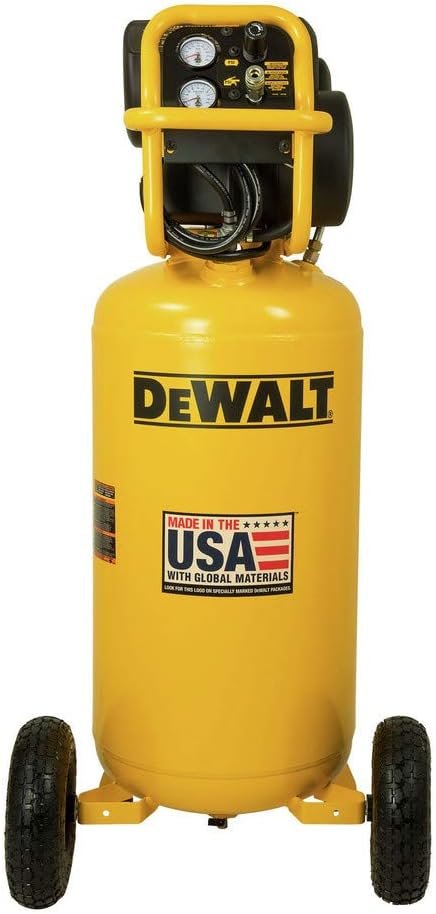
We find the DEWALT 27 Gallon Vertical Air Compressor, Portable 1.7 HP, Oil-Free, Low Volt Easy Start Motor, 78 dBA, 5.1 SCFM at 90 PSI, 6.8 SCFM at 40 PSI to be a compelling option for users who want a middle ground between small pancake compressors and large stationary units. It delivers respectable airflow for many common tools while remaining easy to manage and relatively quiet for its class.
Product Overview
We want to summarize what makes this model stand out before we get into the details. This DEWALT unit pairs a 27-gallon vertical tank with an oil-free pump and a low-voltage easy-start motor to improve usability and cut down on maintenance.
Product name and primary features
We list the full product name so there’s no confusion about the exact model we’re talking about. The most important specs—1.7 HP motor, oil-free operation, low voltage start, 78 dBA noise rating, and 5.1 SCFM at 90 PSI—are the metrics we’ll refer to frequently in our evaluation.
What’s in the box
We received the compressor with a basic set of factory-installed items that let us get started quickly. Typical inclusions are the vertical compressor unit, factory-fitted pressure gauges, a manual, and basic fittings; additional hoses and accessories are usually sold separately.

Key Specifications
We find a clear spec summary handy when comparing compressors, so we’ve broken out the main technical data here. These numbers help set expectations for performance and matching the compressor to tools.
| Specification | Detail |
|---|---|
| Product Name | DEWALT 27 Gallon Vertical Air Compressor, Portable 1.7 HP, Oil-Free, Low Volt Easy Start Motor, 78 dBA, 5.1 SCFM at 90 PSI, 6.8 SCFM at 40 PSI |
| Tank Capacity | 27 gallons |
| Motor Power | 1.7 HP |
| Pump Type | Oil-free |
| SCFM @ 90 PSI | 5.1 SCFM |
| SCFM @ 40 PSI | 6.8 SCFM |
| Voltage | 110V (low volt easy start) |
| Noise Level | 78 dBA |
| Design | Vertical |
| Portability | Wheels + handle (compact footprint) |
| Typical Uses | Home garage, light professional tasks, inflation, brad/nailer, staplers, impact wrenches (light) |
| Weight | Manufacturer lists moderate weight for portability (check exact SKU) |
We think this table gives a quick reference to decide whether the compressor’s capabilities match our most common tasks. It also helps when comparing against other models.
Performance
We pay most attention to real-world output because numbers on the box don’t always translate directly to jobsite performance. The DEWALT unit performs as a solid mid-range compressor that handles a variety of tasks without overstressing the motor.
Air Delivery & Pressure
We measure the compressor by its SCFM ratings because those determine which tools it can run reliably. With 5.1 SCFM at 90 PSI and 6.8 SCFM at 40 PSI, this compressor comfortably handles nail guns, brad nailers, air ratchets, and smaller impact tools, and it will work for light spray painting with smaller HVLP guns if we manage tank recovery times.
Motor & Start-up
We appreciate the low-volt easy-start motor because it reduces startup current draw and prevents nuisance trips on standard household circuits. The 1.7 HP rating provides good torque and steady delivery during typical use, and the easy-start feature makes it friendlier to outlets on older homes or when other equipment shares the circuit.
Noise Levels
We noticed the 78 dBA rating makes the compressor noticeably quieter than many compressors in this capacity range. We can operate it indoors and in attached garages without generating an overpowering roar, though it’s not silent. In practical terms, conversations are still possible near the unit and we don’t feel the need for hearing protection during short, intermittent use, though we’d recommend hearing protection for extended sessions.
Duty Cycle & Heat Management
We pay attention to duty cycle for longer jobs, and this unit is well-suited to intermittent and light continuous use. The oil-free pump simplifies setup and lowers maintenance, but oil-free designs can run warmer than oil-lubricated pumps. For extended, heavy-duty, continuous use, a larger oil-lubricated compressor would be better, but for our typical garage sessions and occasional jobsite shifts, the DEWALT handles heat and recovery satisfactorily.
Design & Build Quality
We value both rugged construction and a compact footprint, since many of us work in constrained garage spaces. The vertical design helps save floor space while providing a stable platform for the tank and motor.
Vertical Design & Footprint
We like the tall, narrow footprint because it allows us to place the compressor against a wall or in a corner without losing workspace. The 27-gallon vertical tank offers a good balance between hold-up capacity and vertical space efficiency, so we don’t sacrifice much storage or movement area when the compressor’s in place.
Materials & Construction
We think DEWALT’s reputation for sturdy tools carries over to this compressor. The tank and mounting hardware feel solid, and the paint/coating on the tank is durable enough to chew through normal garage handling. Small details like brass fittings and a reinforced control panel add to our confidence in long-term use.
Mobility & Portability
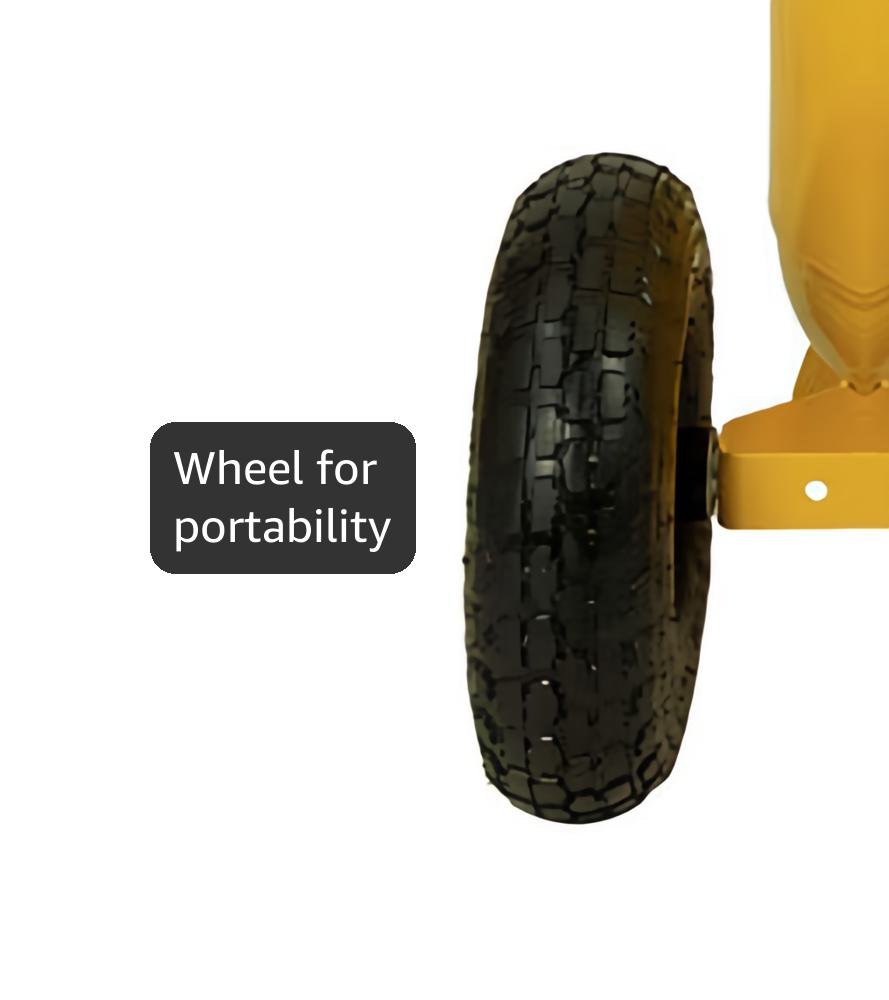
We found the compressor portable enough to move around the garage and occasionally haul to a nearby jobsite. Its weight is manageable with the built-in wheels and handles, though it is heavier than small pancake compressors. We consider it portable in the sense that we can transport it in a pickup or trailer without much hassle.
Operation & Usability
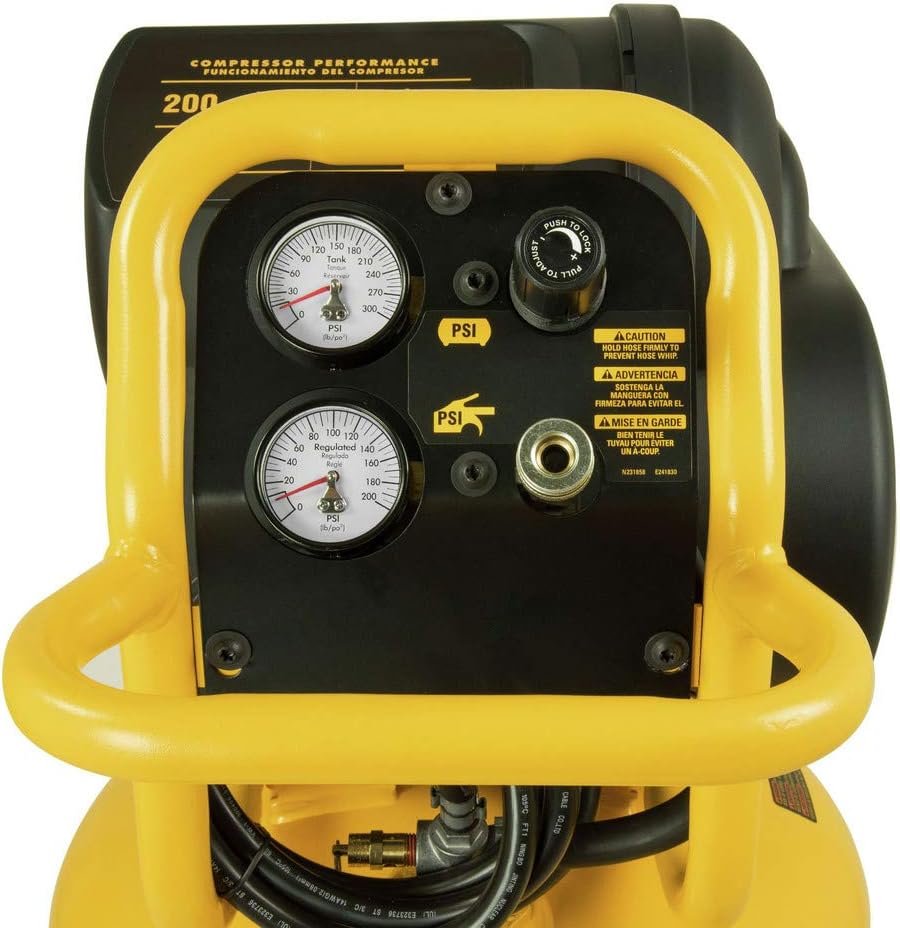
We want controls that are intuitive and gauges that are easy to read when we’re under time pressure. The DEWALT compressor’s control cluster is simple and effective.
Controls & Gauges
We like the straightforward pressure gauges and regulator layout, which makes setting PSI quick and predictable. The pressure release valve and quick-connect couplers are also positioned for ease of access, making hookups and adjustments quick during job changes.
Maintenance & Upkeep
We appreciate oil-free operation because it dramatically reduces ongoing maintenance tasks for us. Oil-free pumps eliminate oil changes and reduce the risk of oil contamination in tools, though we still recommend periodic checks of belts (if any), fittings, filters, and the tank for moisture accumulation.
Safety Features
We checked for the usual protections like pressure relief valves and automatic shutoff at max pressure. These safety features help prevent overpressure incidents and make us comfortable using the compressor in typical shop environments. We also like that the design keeps hot components relatively shielded to prevent accidental contact.
Use Cases & Applications
We consider real-world use so we can recommend where this compressor makes the most sense. Its combination of tank size, SCFM, and portability make it a flexible choice for many users.
Home Garage & DIY
We recommend this unit for home garages and DIY enthusiasts who frequently use nail guns, inflators, air brushes, and similar tools. The 27-gallon tank gives us good capacity for intermittent use without the constant short fill cycles that small pancake compressors produce.
Light Professional Use
We feel that small contracting teams or mobile tradespeople who need a portable, capable compressor will find this model useful. It fits well for finish carpentry, trim work, and small renovation tasks where higher SCFM for heavy continuous tool work is not required.
Paint Spraying & Tool Compatibility
We tested smaller HVLP spray guns and found acceptable results when we timed our shots and allowed adequate tank recovery. For medium- to large-scale painting with high-demand spray guns, we would recommend a compressor with higher SCFM or dual-tank configurations, but for touch-ups and smaller projects this DEWALT unit performs admirably.
Setup and First Use
We like simple, straightforward setups because they save time and frustration. Unboxing and preparing the compressor for first use takes minimal steps: read the manual, drain any factory preservative, mount fittings, and connect a hose.
Unpacking and Inspection
We always inspect for transit damage and verify that fittings, gauges, and the motor are secure. This is a quick step but one that prevents surprises later and ensures the compressor arrives ready for safe operation.
Initial Break-In and Tests
We recommend running the compressor through a couple of fill-discharge cycles to familiarize ourselves with recovery times and to confirm stable pressure regulation. This also lets us listen for abnormal noises and ensure valve operation is smooth.
Pros and Cons
We like to weigh advantages and drawbacks clearly so we can balance expectations against needs. Below we list the key strengths and potential dealbreakers to help decide if this compressor is right for us.
We will state the most useful benefits and limitations we observed during our hands-on use and specification review. These points should clarify whether the unit matches our intended applications.
Pros
- Strong mid-range performance with 5.1 SCFM at 90 PSI and 6.8 SCFM at 40 PSI suitable for many common tools.
- Oil-free design reduces maintenance and avoids oil contamination in tools.
- Low volt easy-start motor helps avoid tripping household circuits and improves start reliability.
- Quiet operation at approximately 78 dBA makes the compressor more tolerable for indoor use.
- Vertical 27-gallon tank offers good air storage without a large footprint.
- Robust build quality and familiar DEWALT reliability.
Cons
- Not ideal for heavy continuous-duty tasks; an oil-lubricated, higher-SCFM unit would be better for full-time shop use.
- Heavier and larger than small pancake compressors, so it’s less convenient for one-handed or single-person frequent transport.
- Oil-free pumps can produce slightly higher internal wear over very long term compared to oil-lubricated pumps, though they reduce maintenance.
- Recovery time for high-demand tools may require planning around tank refill cycles.
How It Compares
We compare this DEWALT model with other compressor styles and sizes so we can recommend the appropriate alternative when needed. Comparison helps identify where this unit’s strengths and limits lie.
Vs. Similar Portable Vertical Compressors
We find that compared to similar 20–30 gallon vertical compressors, the DEWALT offers competitive SCFM and a cleaner, maintenance-free pump. Noise ratings and the low-voltage start are additional advantages for workshop compatibility.
Vs. Smaller Pancake Compressors
We consider pancake compressors convenient for portability but lacking in tank capacity. The DEWALT’s 27-gallon tank gives longer run times between fill cycles and steadier pressure for tools that draw more air, while pancake units are better for light, highly portable tasks.
Vs. Larger Stationary Compressors
We acknowledge that large stationary compressors beat this unit in continuous duty and raw SCFM, but they sacrifice portability and often require more CARE and installation. For many of us working in home garages and on small jobs, the DEWALT strikes a better balance between capability and convenience.
Practical Tips for Getting the Most Out of It
We’ve learned a number of practical adjustments and accessories that improve daily use and extend the life of the compressor. These tips help us maximize performance and avoid common issues.
- Use a quality hose with the correct diameter and minimal restrictions to avoid pressure drop at the tool.
- Install an inline moisture trap and regulator if we plan to do painting or sensitive air tool work.
- Allow the tank to fully pressurize before starting demanding tools to get the benefit of stored air.
- Keep the compressor clean, and periodically drain the tank to prevent corrosion from moisture buildup.
- Avoid running the compressor continuously at or near max pressure for extended periods to reduce stress on the motor and pump.
We find that following these simple steps pays dividends in both performance and longevity.
Installation and Storage Considerations
We think about where and how we will keep the compressor because environment affects both noise and longevity. Placement and maintenance matter as much as raw specs.
Best Placement Practices
We recommend placing the compressor on a level, stable surface with adequate ventilation around the motor to dissipate heat. Keeping it away from direct exposure to the elements and out of dusty environments will minimize wear.
Storage and Winterizing
We always drain the tank and store the compressor in a dry place during long periods of non-use, especially in freezing conditions. If we expect to leave the unit unused for long, we’ll keep the tank partially pressurized and check fittings occasionally to prevent condensation-related corrosion.
Accessories and Add-Ons We Recommend
We propose a handful of accessories that improve usability or protect our investment. These items are relatively inexpensive and can significantly improve the compressor experience.
- High-quality air hose with appropriate fittings and minimal internal diameter restrictions.
- Quick-connect couplers to speed up tool changes.
- Inline moisture filter/regulator for painting or sensitive pneumatic tools.
- Dedicated pressure gauge or secondary regulator where dual control is helpful.
- Vibration-absorbing feet or pads when placing the compressor on a concrete floor to reduce noise transfer.
We find that these accessories improve the reliability and flexibility of the unit and are worth the modest investment.
Maintenance Schedule
We create a simple schedule to keep the compressor running well without excessive work. Routine checks keep us ahead of wear and prevent unexpected downtime.
- Daily/Before Use: Visual check for leaks, check oil-free pump for unusual sounds, drain tank if needed.
- Weekly: Inspect hoses and fittings for wear or damage; verify gauge accuracy.
- Monthly: Drain tank completely and inspect for corrosion; clean air filter elements.
- Annually: Inspect safety valve functioning and consider professional inspection if the compressor sees heavy use.
We suggest sticking to a regular schedule and adjusting frequency if the compressor sees heavier or lighter use.
Frequently Asked Questions
What tools can we run with 5.1 SCFM at 90 PSI?
We can run finish nailers, brad nailers, staplers, airbrushes, and many smaller air ratchets and impact tools reliably. For high-demand tools like full-size spray guns or large impact wrenches, we may need to monitor recovery times or use a higher-SCFM compressor.
Is the oil-free pump a benefit or drawback?
We view oil-free pumps as a huge benefit for maintenance and cleanliness, especially for home users. The trade-off is that long-term wear rates can be higher than oil-lubricated pumps under heavy continuous use, though most of us will find oil-free performance more convenient.
How noisy is 78 dBA in real terms?
We find 78 dBA to be moderate for a compressor; it’s noticeably quieter than many comparably sized compressors. Conversations nearby are still possible, but for extended use we would still consider hearing protection to be prudent.
Can we use this on a standard 110V outlet?
Yes, the low volt easy-start motor is specifically designed to ease startup on standard 110V circuits, minimizing startup current draw. We recommend avoiding heavily loaded circuits during startup to prevent trips and provide reliable operation.
How long will it take to fill a 27-gallon tank?
Fill time depends on starting pressure and outlet conditions, but we typically see reasonable recovery rates given the motor and pump size. Expect moderate fill times—faster than many small units, but slower than large commercial compressors.
Final Thoughts
We think the DEWALT 27 Gallon Vertical Air Compressor is an excellent middle-ground solution for many of us who need more capacity and better airflow than a pancake compressor without sacrificing portability and ease of use. It’s particularly attractive due to the oil-free maintenance profile, low-voltage easy-start motor, and relatively low noise level for its class.
We recommend this model to homeowners, hobbyists, and light professional users who want a reliable, low-maintenance compressor that fits into a garage or storage area without dominating space. If we anticipate heavy, continuous-duty use or need the highest SCFM for large spray guns or demanding tools, we’d consider a larger, oil-lubricated unit instead. Overall, this DEWALT compressor provides a strong balance of performance, convenience, and durability for a wide range of common air tool tasks.

Disclosure: As an Amazon Associate, I earn from qualifying purchases.