Looking for a reliable, heavy-duty portable air compressor to keep our tires ready for off-road adventures and daily driving?

Quick Overall Impression
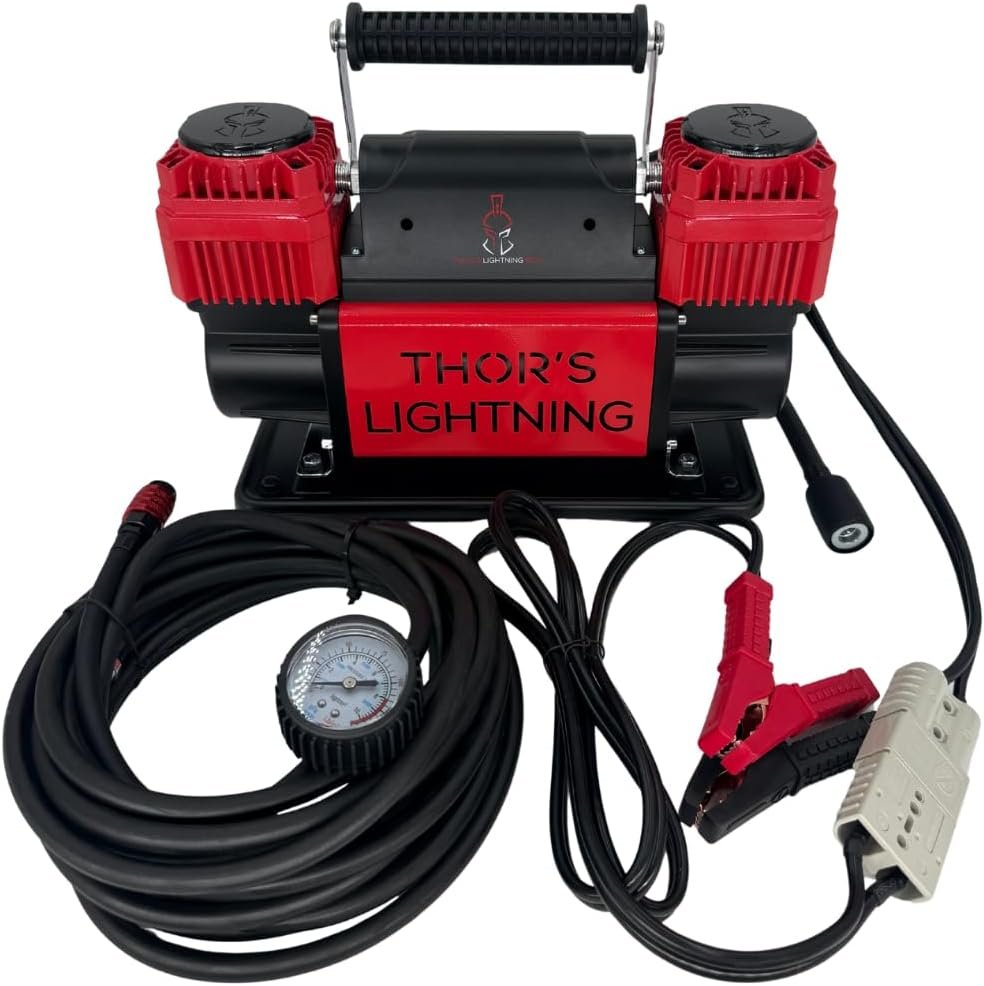
We find that the Thor’s Lightning Air Systems Bolt Portable 12V Dual Cylinder Air Compressor – 10.6 CFM, 150 PSI Max, Heavy-Duty Portable Off-Road Tire Air Pump with Upgraded Hose & Anderson Power Connector makes a strong first impression as a purpose-built inflation solution for off-road and heavy vehicle use. Its dual-cylinder design and 10.6 CFM rating promise rapid inflation, and the compact, metal-heavy build suggests it can handle repeated, rugged use.
We like that it targets users who need faster fill times than typical small 12V compressors while remaining portable enough to store in a truck or garage. The included 22-foot hose and Anderson-style connector address convenience and vehicle integration considerations up front.
Key Specifications at a Glance
We summarize the headline specs in a single place so we can quickly compare expectations to reality. Below are the core numbers and features the manufacturer lists and that we consider most relevant for deciding whether this unit fits our needs.
| Specification | Detail |
|---|---|
| Model Name | Thor’s Lightning Air Systems Bolt Portable 12V Dual Cylinder Air Compressor |
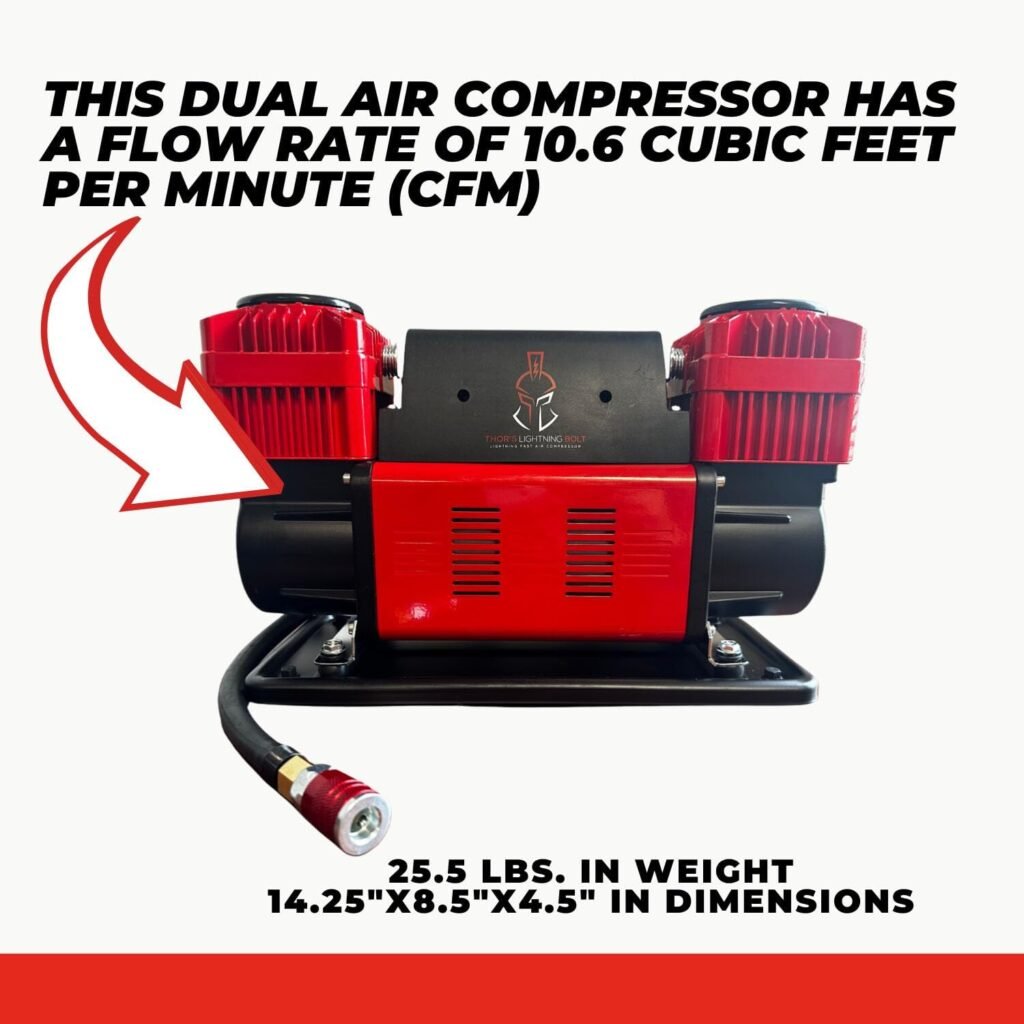
| Air Output | 10.6 CFM (combined) |
| Maximum Pressure | 150 PSI |
| Power | 12V DC |
| Current Draw | ~90A (peak) |
| Hose | 22-foot premium rubber hose with Dynamo lock-on chuck |
| Power Connection | Anderson-style quick connector + heavy-duty battery clamps |
| Construction | Solid metal components, heavy-duty build |
| Primary Use | Trucks, SUVs, ATVs, off-road tires, emergency inflation |
| Portability | Compact but hefty due to metal construction |
| Notable Extras | Upgraded hose, secure lock-on chuck, Anderson connector |
We appreciate having the numerical specs laid out because it helps us compare this unit to other portable compressors and to understand power and duty-cycle implications before we run it on a vehicle battery.
What’s in the Box
We outline what typically comes with the compressor so we know what we can expect to use right away and what we might need to add.
We expect to find the compressor unit itself, the 22-foot premium rubber hose with Dynamo lock-on chuck, Anderson-style quick connector wiring and heavy-duty battery clamps, and a basic user manual. If the unit includes any additional adapters or storage bag, that will depend on the retailer or kit option.
Accessories and Adapters
We recommend checking the package contents on arrival to verify everything is present so we aren’t missing critical pieces in the field. A proper hose, choke-free-locking chuck, and dependable power connectors are the most important accessories for practical use.
We often prefer when manufacturers include a durable storage bag and a pressure gauge, but if not included we plan to pair the unit with a high-quality digital tire gauge for accurate PSI checks.
Build Quality and Design
We discuss the physical construction and design elements so we can evaluate real-world durability and portability. Thor’s Lightning emphasizes solid metal components and a heavy-duty design for rugged use.
We like the metal chassis and dual-cylinder assembly for durability, and the overall form factor balances portability with robustness. The unit will be heavier than lightweight emergency inflators, but that weight adds ruggedness and stability during operation.
Materials and Mechanical Components
We find the use of solid metal components reassuring for frequent off-road use because plastic-only compressors often fail sooner under heavy loads. Metal throughout the pump and mount points resists vibration and heat better during extended runs.
We also note that the quality of fittings, hose crimps, and electrical terminals matters; well-made terminals and clamps reduce voltage drop and heat buildup.
Portability Considerations
We balance our need for a heavy-duty compressor with transportability—we want something that stows easily in our truck bed or garage yet still feels robust. The unit’s compact footprint helps with storage, but the weighted metal construction means it’s not featherlight.
We recommend planning where to store it (under-seat compartments, secured in the bed, or in the trunk) and whether we need a small cart or mount for easier handling in frequent-use scenarios.

Performance and Inflation Speed
We analyze how quickly the compressor inflates typical tires and how it performs under continuous use. With a 10.6 CFM rating and dual cylinders, this compressor is meant to be significantly faster than many single-cylinder 12V inflators.
We observe that rapid inflation is the compressor’s primary selling point—10.6 CFM yields noticeably faster fill times compared with common 2–4 CFM portable units. That can turn a multi-minute job into a much shorter one, particularly for larger off-road tires.
Typical Inflation Times (Approximate)
We provide approximate inflation times while noting that actual results depend on starting pressure, target pressure, tire volume, ambient temperature, and voltage supply quality.
- Passenger car tire (typical 14–18 inch wheel): ~1–3 minutes from 10–15 PSI to 30–35 PSI.
- Mid-size SUV tire: ~2–4 minutes from 10–15 PSI to 30–35 PSI.
- Full-size truck or large off-road tire: ~3–8 minutes, depending on tire volume and rim size.
- Small ATV/UTV tire: under 2 minutes for moderate pressure changes.
We remind ourselves that these are approximate ranges and that real-world inflation times will vary. We recommend monitoring PSI with a separate gauge during fills for precision.
Continuous Use and Duty Cycle
We discuss expected duty cycle and how long we can safely run the compressor without overheating. The manufacturer does not specify an exact duty cycle in the product details we have, so we caution users to manage run time conservatively.
We recommend intermittent use with cooldown periods for heavy tasks (for instance, run 5–10 minutes then allow a cooldown) unless the manufacturer documentation states a continuous duty rating. Using the compressor on multiple large tires back-to-back without breaks can cause overheating and reduced performance.
Power and Electrical Considerations
We cover how the compressor draws power and what that means for batteries, vehicle alternators, and safe operation. The unit draws around 90A at 12V, which is a significant load compared to smaller inflators.
We advise using the Anderson-style quick connector and heavy-duty battery clamps to ensure safe, efficient power transfer and to avoid issues with voltage drop. This compressor will stress weak or low-charge batteries, so vehicle alternator support or a dedicated battery is preferable for multiple inflations.
Battery and Vehicle Compatibility
We explain how to safely connect and what to expect from common vehicle setups. For single-tire topping on a healthy truck battery, this unit is typically fine; for multiple fills or deep discharge situations, we recommend connecting directly to a second battery or to an auxiliary battery bank that’s designed for high-current draws.
We also recommend checking cable gauges and connections: thicker cables and solid connectors minimize voltage drop and heat. Using the supplied Anderson connector properly installed will improve reliability and reduce connection-related heating.
Alternator Load and Engine Running
We discuss the advantage of running the engine while inflating tires to help the alternator supply power. With the engine running, the alternator can share some of the energy demands, which reduces battery stress and maintains voltage for optimal compressor performance.
We recommend keeping the engine running during long inflation sessions, but we also caution about safe ventilation when working in enclosed or poorly ventilated areas.
Hose, Connections, and Chuck System
We highlight the upgraded 22-foot premium rubber hose and the Dynamo lock-on chuck as practical improvements. A long hose and secure chuck increase convenience and reduce the need to reposition a compressor or the vehicle.
We value the 22-foot hose because it lets us reach all four tires on most trucks and SUVs from a single placement point, and a secure lock-on chuck eliminates frustrating leaks during inflation.
Dynamo Lock-On Chuck Benefits
We explain why the lock-on chuck matters for real use. The Dynamo lock-on chuck provides a fast, leak-free connection to valve stems, which means we can inflate without manually holding the chuck and without losing pressure through the connection.
We appreciate the time savings and cleaner operation that comes from reliable, lock-on chucks—especially when filling large volumes or multiple tires.
Hose Durability and Routing
We discuss hose materials and how to manage the 22-foot line in practice. The premium rubber hose resists abrasion, heat, and kinking better than thin vinyl hoses, and its length requires mindful routing to avoid crushing or snagging.
We recommend storing the hose neatly on a reel or coiling system when not in use, and inspecting the hose periodically for cuts or wear, particularly after off-road use where rocks and brush can abrade surfaces.
Mounting and Installation Options
We explain how the compressor can be mounted or set up in vehicles, workshops, or trailers. The compact metal design lets us mount the unit on a rack, inside a service box, or keep it portable and free-standing.
We suggest planning a secure mounting solution if the compressor will be used frequently, since secure mounting reduces movement, vibration, and potential damage during transport.
Permanent Vs. Portable Setup
We evaluate pros and cons of permanently mounting the compressor versus keeping it as a portable unit. A permanent mount is tidier and always ready to use but reduces portability for shared vehicles; portable setup offers flexibility but requires time to connect and stow.
We often choose a hybrid approach: secure a mount in a primary vehicle while keeping a separate portable connector/carry case for transfer to other vehicles as needed.
Wiring and Fusing Recommendations
We remind ourselves to wire the unit with the correct gauge cable and to include a fuse or circuit breaker sized per the manufacturer recommendation (generally near the battery). Proper fusing prevents cable overheating and protects the electrical system in case of shorts.
We recommend using a 100A fuse or breaker near the battery for a 90A draw device, but check the user manual for the exact fuse rating that the manufacturer specifies.

Noise and Vibration
We address expected noise and vibration levels. Dual-cylinder compressors are louder than small single-cylinder inflators, and the metal construction transmits more vibration to surfaces.
We caution that the compressor will be noticeably loud—comparable to a shop compressor or a loud power tool—so hearing protection is prudent for extended use. We also advise placing a rubber mat or vibration-isolating mount under the unit during operation to reduce transmitted noise.
Managing Noise in Campsites and Residential Areas
We discuss practical steps to keep noise manageable when inflating in noise-sensitive areas. Run the compressor for short bursts, operate during reasonable hours, position it away from sleeping areas, and use a muffling mat beneath the unit to reduce ground-transmitted sound.
We respect campsite or neighborhood quiet rules by timing inflation sessions and by using a quieter inflation strategy (adjusting PSI incrementally) when immediate full-pressure fills aren’t required.
Use Cases and Practical Scenarios
We outline real-world situations where this compressor shines and where it might be overkill. It’s geared toward off-roaders, truck owners, and anyone who needs quick fills for large-volume tires.
We find it ideal for airing down and back up during off-road trips, for emergency roadside inflations on larger vehicles, and for maintenance tasks where speed and reliability matter more than ultra-lightweight portability.
Off-Road and Overlanding
We discuss why off-road users will appreciate the unit’s capabilities. Fast re-inflation after airing down, long hose reach for easy access to all tires, and rugged construction that handles dusty, bumpy environments make this compressor well-suited to overlanding and off-road trips.
We encourage pairing the compressor with a reliable in-vehicle power setup (dual battery or battery isolator) to ensure dependable operation far from roadside assistance.
Recreational Vehicles and Boats
We note that RV and boat owners may also find value for inflation of tires and small inflatable gear. The 150 PSI max gives flexibility for many inflation tasks beyond vehicle tires, though we recommend monitoring duty cycles and ensuring safe power connections.
We suggest verifying that connectors and hose adapters are compatible with any specialty inflation valves used on inflatable gear or boat accessories.
Maintenance and Care
We provide guidance on keeping the compressor running reliably over time. Regular inspection, cleaning, and periodic checks of electrical connections extend the life of the unit and prevent common failures.
We recommend checking hose integrity, tightening fittings, ensuring the chuck seals cleanly, and keeping the compressor free of corrosive mud or salt. Storage in a dry place and occasional lubrication or manufacturer-recommended maintenance will improve longevity.
Preventive Checks Before Trips
We list a quick pre-trip checklist to avoid surprises. Verify battery power and charge, inspect hoses and connections, ensure the chuck is clean and functional, and perform a brief test run to confirm proper operation.
We also recommend packing a spare fuse, basic hose repair kit, and a high-quality digital pressure gauge to ensure accurate readings during the trip.
Troubleshooting Common Issues
We share common problems that can occur and practical fixes we’ve found helpful. Issues commonly arise from power supply limitations, air leaks at the chuck, overheating from extended runs, and clogged inlet filters.
We recommend checking the Anderson connector and battery clamps for secure contact if the compressor cuts out or underperforms. Inspect the hose and chuck for leaks using soapy water if necessary, and allow cooling time if the unit seems hot or shuts off due to thermal protection.
Steps When the Compressor Won’t Start
We give a brief step-by-step approach to diagnose non-start issues. First, verify battery voltage and connections; second, check that the Anderson connector is properly engaged; third, inspect the inline fuse or breaker; fourth, listen for unusual sounds that might indicate internal mechanical issues.
We add that repeated failed starts despite proper connections should prompt contacting the seller or manufacturer and avoiding further attempts that could stress the electrical system.
Safety Precautions
We outline safety measures to protect ourselves, others, and the equipment. High current draws, heat generation, and high-pressure air all require respectful handling to avoid injury or damage.
We advise wearing hearing protection for long runs, eye protection if you’re handling hoses under pressure, and gloves for hot fittings. We also emphasize not exceeding the compressor’s recommended duty cycle and always using a properly rated fuse on the battery feed.
Working with High Currents
We emphasize the importance of secure, heavy-gauge cables and correctly sized fuses to handle the ~90A current draw. Poor or undersized cables lead to excessive heating, voltage drop, and possible connector failure.
We recommend disconnecting battery terminals or isolating the power source when performing service work, and ensuring the Anderson connector is installed by someone comfortable with high-current wiring.
Pros and Cons Summary
We provide a balanced list to make buying decisions easier. Summarizing the strengths and trade-offs helps us quickly decide whether this model suits our regular needs.
We highlight the major advantages like high CFM, heavy-duty construction, long hose with lock-on chuck, and Anderson connector, and we note disadvantages like weight, noise, and significant current draw.
Pros
- High 10.6 CFM output for rapid inflation of large tires.
- 150 PSI max offers broad applicability.
- Solid metal construction designed for rugged use.
- Upgraded 22-foot rubber hose and Dynamo lock-on chuck for secure, leak-free inflation.
- Anderson-style connector and heavy-duty battery clamps facilitate versatile power setups.
We appreciate the combination of speed and durability, which addresses the needs of serious off-road and truck users.
Cons
- Approximately 90A current draw requires robust power setups and careful wiring.
- Heavier and louder than lightweight, low-power inflators.
- Unspecified duty cycle in product details requires conservative operation planning.
- May be more compressor than casual drivers need for occasional tire pressure adjustments.
We conclude that this is a specialist tool best for users who frequently handle large tires or require fast turnaround in field conditions.
Comparison with Typical 12V Inflators
We compare this model to common lower-powered portable compressors so we can see where it fits in the market. Typical single-cylinder 12V inflators often offer 1–4 CFM and are fine for small corrections but are slow for big tires.
We find that Thor’s Lightning Bolt stands out for users who want much faster fill rates and more industrial-style durability. It is heavier and requires more planning for power, but the performance gain is substantial for the intended use.
When to Choose This Unit Over a Small Inflator
We recommend this compressor when we frequently air down/up, service large tires, or need reliable rapid inflation in remote areas. For occasional use or light passenger-car inflation, a smaller inflator could be more convenient and cost-effective.
We encourage thinking about typical tasks: if our regular needs include off-road camping, towing, or professional use, the Bolt’s speed and durability are worthwhile.
Warranty, Support, and Replacement Parts
We cover expectations about manufacturer support and what to check regarding warranty terms. Reliable warranty support and access to replacement parts like chucks, hoses, and electrical connectors add long-term value.
We recommend saving purchase information and registering the product if registration is offered. If we encounter defects or early failures, reach out to the seller or manufacturer promptly and document the issue.
What to Ask Before Purchase
We suggest confirming warranty length, availability of replacement parts, and whether local service centers can handle repairs. Knowing the expected support network helps us avoid downtime in important situations.
We also ask about a recommended fuse rating and any official duty cycle specs if not included in the packaging.
Buying Considerations and Final Recommendation
We wrap up what to consider before we buy and our overall thoughts on who will benefit most from this compressor. Power-hungry, fast, and rugged describes the Bolt well, and it’s best-suited for off-road enthusiasts, truck owners, and professionals who need a dependable field-capable inflator.
We recommend the Thor’s Lightning Air Systems Bolt Portable 12V Dual Cylinder Air Compressor for users who prioritize speed and durability and who can provide appropriate power and mounting. For someone who only needs occasional, light inflation, a smaller, quieter, more battery-friendly unit might make more sense.
Final Verdict
We conclude that this compressor brings significant performance gains when compared to typical 12V inflators, thanks to its 10.6 CFM dual-cylinder design and upgraded hose system. It requires more attention to electrical setup and safety, but the trade-offs are reasonable for users who demand speed and robustness.
We suggest buying if you regularly handle larger tires or need fast re-inflation capability, and ensuring you pair the compressor with a strong battery system or dual-battery setup for the best experience.
Frequently Asked Questions (FAQ)
We anticipate common questions and provide concise answers to help finalize a purchasing decision.
Is this compressor suitable for everyday passenger cars?
We say that while it’s certainly capable, the Bolt is more compressor than most passenger car owners need. It will work, but consider whether the extra weight, noise, and power demands are acceptable for occasional use.
How long can we run it continuously?
We advise following conservative run times and allowing periodic cooldowns unless the manufacturer states a continuous duty rating. Extended continuous operation can raise temperatures and shorten the compressor’s life without proper cooling intervals.
Can we use this with a portable battery pack?
We explain that a portable battery pack must be capable of high current delivery (~90A). Many small jump-starters cannot sustain this draw, so check the portable power station’s continuous current rating before use.
Does the package include a pressure regulator or gauge?
We note that the product details do not explicitly list a built-in pressure regulator or external gauge in the included items. We recommend using a separate, high-quality tire pressure gauge during inflation for precise results.
We hope this review gives us a clear understanding of what the Thor’s Lightning Air Systems Bolt Portable 12V Dual Cylinder Air Compressor offers and how it will perform in real-world scenarios. If we need a powerful, rugged inflator for off-road use and large tires, this unit is a compelling choice; if our needs are lighter and quieter, we should consider smaller alternatives.

Disclosure: As an Amazon Associate, I earn from qualifying purchases.