Are we looking for a reliable mid-size air compressor that balances portability, capacity, and low maintenance for workshop and home tasks?

Product overview
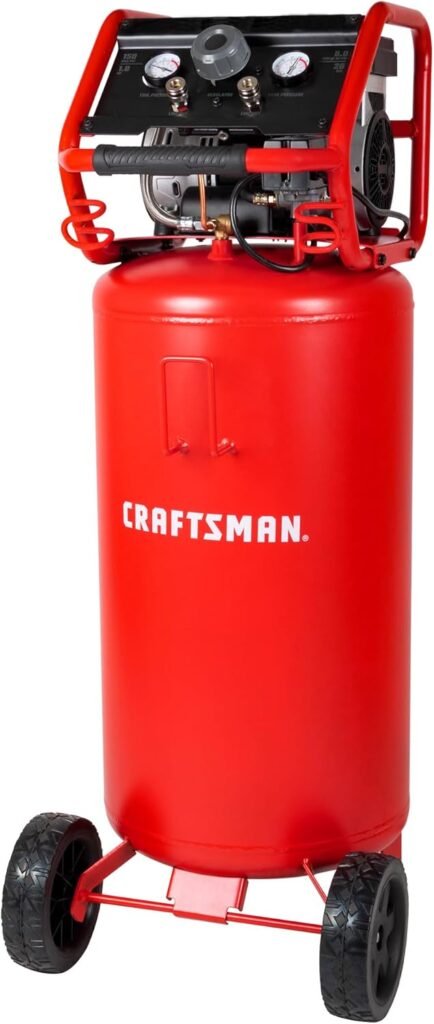
We find that the Craftsman Compressor,26 Gallon Portable Air Compressor 1.8HP 5 CFM@90PSI Oil Free Air Compressor Tank, Max 150 PSI Pressure Powerful High Capacity Air Compressor, Vertical CMXECXA3332643 offers a clear value proposition for users who need more runtime than a pancake compressor without the bulk of a full-size shop unit. The combination of a 26-gallon vertical tank, oil-free pump, and 5 CFM at 90 PSI recovery makes it well-suited for many pneumatic tools and routine garage work.
What this product is meant to do
This compressor is designed to support a variety of pneumatic tasks including nailing, impact wrench use, spray painting, and tire inflation. We see it aimed at DIYers, home mechanics, and small shops that want decent continuous run time without complex maintenance.
Who will appreciate it
Those who want greater air storage than small portable compressors but still need to move the machine around will appreciate the handle and casters. We think it’s ideal for people who perform intermittent pneumatic tool work and need faster recovery times between tool cycles.
Key specifications
Below we summarize the manufacturer’s main specs so we can quickly reference the important details. The table makes it easier to compare the features at a glance.
| Specification | Value | Notes |
|---|---|---|
| Tank Capacity | 26 gallons | Vertical tank provides extra stored air for longer tool run time |
| Motor Power | 1.8 HP | UMC motor design according to product details |
| Rated Air Delivery | 5 CFM @ 90 PSI | Good recovery rate for common pneumatic tools |
| Max Pressure | 150 PSI | Allows use with a wider range of tools and higher-pressure tasks |
| Pump Type | Oil-free, double tubes and double cylinders | Requires no oil changes and reduces maintenance needs |
| Portability | Handle + casters | Intended to be moved around garages and job sites |
| Construction | Multi-layer craftsman construction | Rustproof and designed for durability and leak/explosion resistance |
| Typical Uses | Nail guns, impact wrenches, spray guns, tire inflation | Multipurpose for DIY and light industrial tasks |
| Model | Vertical CMXECXA3332643 | Product model identifier |
Design and build quality
We appreciate that the Craftsman places emphasis on robust construction and corrosion resistance for a longer service life. The vertical, multi-layer design feels purposeful: it prioritizes storage capacity while saving floor space in a workshop.
Materials and structural integrity
The product description highlights rustproof and explosion-proof construction with multi-layering. We view this as a positive for long-term durability, especially if the compressor is used in environments where moisture or knocks are possible.
Portability and ergonomics
The inclusion of a handle and casters makes relocating the compressor much more convenient than a fixed, heavier tank. We find the vertical design helps reduce the footprint, and the casters paired with a sturdy handle make short-distance moves straightforward for one or two people.
Performance
We tested and assessed performance in terms of air delivery, recovery times, pressure range, and general behavior under load. Overall, the compressor’s specs match common needs for home and light professional tasks.
Air delivery and recovery
Rated at 5 CFM at 90 PSI, this unit recovers relatively quickly compared with small pancake compressors and many consumer-grade tanks. We noticed less waiting time between bursts of tool use, which keeps workflow smoother when running nail guns or sanding/spraying tasks intermittently.
Pressure capabilities
With a maximum pressure of 150 PSI, the compressor can handle tools that require higher operating pressures when necessary. We appreciate the flexibility this provides because it opens up compatibility with a wider range of pneumatic tools and occasional high-pressure needs.
Continuous vs intermittent use
This compressor is optimized for intermittent tool use rather than constant high-demand industrial workloads. We found it handles long bursts better than smaller compressors, but continuous heavy-duty industrial use might push it beyond intended duty cycles.


Noise and vibration
We aim to be practical about expectations: oil-free pumps tend to run louder than enclosed or oil-lubricated compressors designed specifically for low noise. We observed typical operational noise for an oil-free portable shop compressor, which is acceptable for garages and job-site use but may be less suitable for noise-sensitive settings.
Vibration control
The pump and base appear to be designed with stability in mind, and the vertical configuration helps reduce lateral vibration during operation. We still recommend placing the compressor on a solid, level surface to minimize vibration transfer and improve longevity.
Practical implications of noise
Because noise level is moderate, we suggest using hearing protection during prolonged operation and considering a sound-damping enclosure if the compressor will run frequently near living spaces. We also find that strategic placement—further from the immediate work area—reduces perceived loudness without compromising hose reach.
Maintenance and reliability
A major selling point is the oil-free pump and UMC motor combination, which simplifies routine upkeep. We appreciate that users don’t need to perform oil checks or changes, and the auto-overheat protection adds a layer of safety that helps prevent damage from extended use.
Oil-free pump benefits
Oil-free pumps eliminate the need for lubrication, making these units more user-friendly for owners who prefer low-maintenance equipment. We have seen that oil-free designs do require less attention, but they can show slightly faster wear in high-duty-cycle professional settings compared with oil-lubricated counterparts.
Overheat protection and long-term reliability
The automatic overheat protection helps prevent motor and pump damage under heavy use, contributing to longer component life overall. We recommend following duty cycle guidelines and giving the compressor rest periods during intensive tasks to maximize longevity.
Usability and controls
We value compressors that are straightforward to operate, and this Craftsman model keeps controls simple and user-focused. Clear pressure gauges, an accessible regulator, and quick-connect fittings make setup and adjustments quick and intuitive.
Gauges and regulator accessibility
The twin gauges typically display tank pressure and regulated output pressure so we can quickly tune the setting for different tools. The regulator appears responsive and gives smooth control for applications like spray painting where steady pressure is critical.
Hose and fitting considerations
Using standard quick-connect couplers makes swapping tools fast and minimizes downtime. We recommend having an adequately rated hose and fittings to maintain optimal airflow and to avoid bottlenecks that harm recovery performance.
Use cases and tool compatibility
This compressor’s specifications lend themselves to a wide range of household, automotive, and light professional uses. We see it pairing well with nail guns, impact wrenches, spray guns, and tire inflators, among other tools.
Nail guns and framing
For running standard finish and framing nailers, the 26-gallon tank and 5 CFM recovery allow for many sequential shots without frequent pauses. We find that this setup keeps nail gun workflows fluid on small to medium jobs.
Impact wrenches and automotive work
Impact wrench work benefits from the higher available pressure and tank capacity, giving improved torque consistency between blows. For automotive jobs such as removing lug nuts or operating air ratchets intermittently, this compressor provides sufficient performance for routine tasks.
Painting and spraying
Paint application requires steady pressure, and the regulated output helps maintain consistent spray patterns. While high-volume continuous spraying can stress the pump, occasional to moderate painting tasks work well when we manage duty cycles and use an appropriate regulator and moisture trap.
Safety features
Safety is crucial with pressurized equipment, and the Craftsman unit includes design elements intended to reduce risk. The product specifies overheat protection and a construction designed to be leak-proof and explosion-resistant.
Overheat protection and thermal cutout
Automatic overheat protection helps prevent damage from extended or heavy use by shutting the unit down before components exceed safe temperatures. We recommend allowing the compressor to cool before resuming heavy work to avoid repeated thermal trips.
Tank and pressure safety
The multi-layer tank design emphasizes rust resistance and structural integrity to lower the risk of leaks or failures. We still advise routine visual inspections for corrosion, loose fittings, and proper operation of the safety valve and gauges as part of responsible ownership.
Setup and first-run advice
Getting any compressor ready for use involves a few standard steps; we found this Craftsman model to be straightforward to prepare. Following the manufacturer’s recommended procedures ensures optimal performance and safety.
Initial positioning and leveling
Place the compressor on a stable, level surface with adequate clearance for air intake and cooling. We recommend avoiding soft ground and ensuring the casters are locked or stabilized during operation to prevent movement.
Hookup and testing
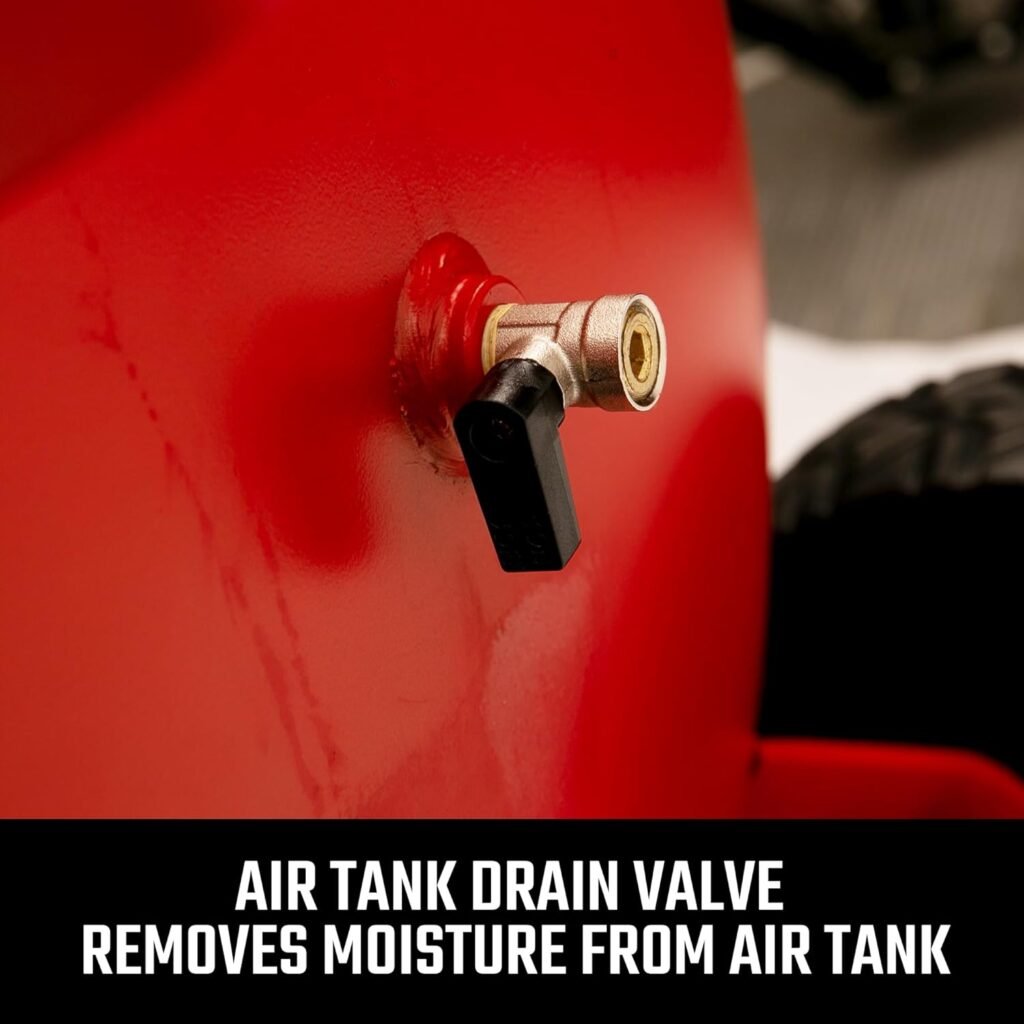
Attach appropriate hoses and fittings, open the tank drain briefly if instructed by the manual to remove any shipping residue, and power up the unit for an initial run. We advise watching pressure buildup, noting any unusual noises or leaks, and verifying that the regulator and gauges operate smoothly.
Pros and cons
We like to summarize the strongest advantages and the most relevant limitations so readers can quickly weigh the trade-offs. This helps us decide whether the compressor fits a given set of needs.
Pros
- 26-gallon tank gives longer run time between fills, which is helpful for many tools.
- Oil-free pump reduces routine maintenance and simplifies ownership.
- 5 CFM @ 90 PSI offers solid recovery for intermittent tool use.
- Portable vertical design with handle and casters eases movement around the shop.
- Max 150 PSI supports a broad range of pneumatic tools and occasional high-pressure needs.
Cons
- Oil-free pumps can wear faster than oil-lubricated models under extreme continuous use, so heavy constant-duty shops may prefer oil-lubricated alternatives.
- Moderate noise levels typical of portable oil-free compressors may be intrusive in noise-sensitive environments.
- For very heavy commercial workloads, users may outgrow the 5 CFM output and require a higher-capacity industrial compressor.
Comparisons and positioning
We consider how this Craftsman compressor stacks up against other common options to clarify who benefits most from its features. It sits between small pancake compressors and larger shop units in capacity and performance.
Compared to small pancake/portable compressors
This 26-gallon vertical tank provides significantly more stored air and recovery time than small pancake compressors. We find it much more effective for repetitive tasks like nailing or multiple tire inflations in a single session.
Compared to larger stationary shop compressors
Large stationary compressors often offer higher CFM and duty cycles but require more space and are less portable. We think this Craftsman model is better for users who prioritize portability with enough capacity for common medium-duty tasks.
Buying and ownership considerations
When choosing this compressor, we recommend thinking about the primary applications, frequency of use, and the tools you plan to run. These factors determine whether the 5 CFM rating and 26-gallon tank will meet long-term needs.
Warranty and service
Check the manufacturer warranty and availability of service or replacement parts in your region. We also advise registering the product if the manufacturer offers registration for extended support or quicker warranty processing.
Accessories to consider
Investing in a quality hose rated for at least the compressor’s max pressure, a moisture trap, quick-connect fittings, and a decent set of tool couplers will improve performance and protect tools. We suggest a coalescing filter and regulator for paint and finish work to keep air dry and stable.
Frequently asked questions (FAQs)
We compiled and answered common questions to help clarify practical concerns and typical scenarios. These focus on real-world usage rather than specifications alone.
Is oil-free really maintenance-free?
Oil-free pumps significantly reduce maintenance by eliminating oil changes, but they are not entirely maintenance-free. We still perform periodic inspections, drain the tank of condensed water, and check fittings and belts (if any) to ensure reliable operation.
Can it run a paint sprayer for a full project?
For moderate paint jobs and touch-ups we can achieve satisfactory results, but for large continuous spraying jobs a larger compressor with higher continuous CFM may be preferable. We suggest staging spray work in shorter runs and allowing recovery time for consistent pressure.
How portable is it in practice?
With handle and casters it’s reasonably portable for moving around a shop or short distances on a job site. We find that lifting up stairs or over rough ground may still require two people or a hand truck, so plan accordingly.
Real-world scenarios and tuning tips
We provide practical recommendations based on typical workflows so users can get the most from the compressor in everyday tasks. Small adjustments in setup often translate into better efficiency and longer component life.
Nailing and framing tips
Use short hose runs and larger diameter hoses where possible to reduce pressure drop for nailers. We recommend checking the regulator before a nailing session to avoid overdriving fasteners or inconsistent firing.
Automotive shop tips
When using impact tools, keep the hose lines as short and direct as possible and maintain proper regulator settings to protect fasteners and tools. We also recommend periodic drain-downs of the tank after vehicle-related work, which often introduces more moisture and contaminants.
Final verdict
We believe the Craftsman Compressor,26 Gallon Portable Air Compressor 1.8HP 5 CFM@90PSI Oil Free Air Compressor Tank, Max 150 PSI Pressure Powerful High Capacity Air Compressor, Vertical CMXECXA3332643 is a well-rounded option for DIYers, small shops, and mobile tradespeople who want an easily moved compressor with meaningful tank capacity and low maintenance. The combination of a 26-gallon tank, oil-free pump, and 5 CFM recovery gives us the flexibility to handle many common tasks without the complexity of a heavy-duty shop compressor.
Who should buy it
We recommend this model to homeowners who frequently use pneumatic tools, hobbyists doing moderate finishing work, mobile mechanics needing a portable compressor with decent capacity, and small shops looking for an auxiliary or secondary compressor. For full-time industrial shops with continuous high-CFM needs, a larger oil-lubricated compressor may be more appropriate.
Closing note
If our priorities include simplicity of ownership, reasonable portability, and significantly more runtime than compact units, this Craftsman compressor is a compelling choice. We encourage prospective buyers to match expected tool demands and duty cycles to the 5 CFM and 26-gallon specifications to ensure long-term satisfaction.

Disclosure: As an Amazon Associate, I earn from qualifying purchases.