Like a quiet car that still pulls hard uphill, today’s best portable air compressors prove power doesn’t have to roar. We look for brushless or efficient brushed motors, oil-free pumps, and noise-dampening designs that keep sound low without sacrificing performance. Expect 120–150 PSI, 1.2–1.6 CFM at typical pressures, and smart features like auto shutoff and clear gauges. From cordless inflators to 1–2 gallon tanks, here’s where calm meets capability—and where one pick stands out for everyday reliability.
Litheli Cordless Portable Air Compressor (20V, 150 PSI)

July 12, 2026 10:20 am
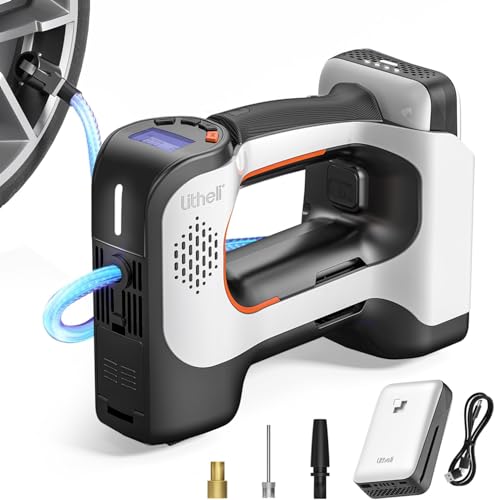
Looking for a truly portable, low-noise inflator you can stash in a glove box or bike bag? We like Litheli’s 20V Cordless Portable Air Compressor for quiet, quick top-offs and accurate auto-stop. It hits 150 PSI, moves 25 L/min, and shows PSI, BAR, KPA, or kg/cm² on a clear LCD. The LED worklight adds constant and SOS modes. At 1.79 kg, with a ProGrip handle and built-in accessory storage, it’s easy to carry and use. The 2.0 Ah U20 battery snaps in, powers all U20 tools, and includes safety protections. Accessories and adapters are bundled, plus a 5-year tool and 3-year battery warranty.
Best For: Drivers, cyclists, and DIYers who want a compact, low-noise, cordless inflator with accurate auto-stop for quick top-offs on tires, balls, and inflatables.
Pros:
- Cordless 20V design with 2.0 Ah U20 battery; compatible across Litheli U20 tools
- Accurate auto shut-off up to 150 PSI with clear multi-unit LCD and LED light (constant/SOS)
- Lightweight, compact build with ProGrip handle and built-in accessory storage; 5-year tool/3-year battery warranty
Cons:
- Requires cooldown after every 5 minutes of use, limiting continuous inflations
- 25 L/min airflow is fine for top-offs but slower for large-volume inflatables
- Battery dependence means keeping it charged; no traditional corded power option
AUXITO Portable Tire Inflator Air Compressor (150 PSI)

July 12, 2026 10:43 am
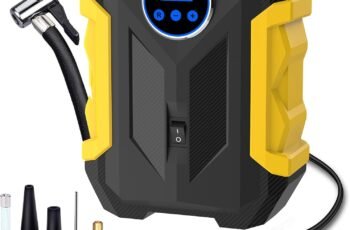
Need a fast, cordless inflator for roadside top-ups without the roar? The AUXITO Portable Tire Inflator delivers 150 PSI and 26 L/min airflow, taking a compact car tire from 30 to 35 PSI in about a minute. We love its auto-shutoff, ±1 PSI dual-screen accuracy, and sunlight-readable displays. Choose from 4+N modes (Car, Motorcycle, Bike, Ball, Custom), set your target, connect, and go.
It’s compact (about 2.7 x 2.3 x 6.6 in, 1.5 lb), battery-powered with two 12V lithium packs, and doubles as an emergency tool: LED flashlight (SOS/Flashing) and 5V/2A USB power. Includes multiple valves, Type-C cable, bag, and a 2-year warranty.
Best For: Drivers, cyclists, and on-the-go families who need a fast, cordless tire inflator with precise auto-shutoff and handy emergency features for roadside or home use.
Pros:
- Fast inflation: 150 PSI, 26 L/min; adds ~5 PSI to a compact car tire in about 1 minute
- Smart, accurate operation: 4+N preset modes with auto-shutoff and dual-screen, ±1 PSI accuracy readable in sunlight
- Portable and multifunctional: lightweight cordless design with LED flashlight (SOS/Flashing) and 5V/2A USB power
Cons:
- Not ideal for large truck/SUV tires or high-volume inflatables that require prolonged airflow
- Battery runtime limits multiple full inflations; may need recharging or spare battery for longer trips
- Max noise not specified; still produces typical compressor sound despite being less “roaring” than some units
Cordless Portable Electric Air Compressor

July 10, 2026 2:49 pm
Prefer to ditch the cord without sacrificing power? This Cordless Portable Electric Air Compressor delivers quiet, go-anywhere performance. Its 220W, low-speed 2000 RPM induction motor runs at just 65dB, so we can work without shouting. The 0.53-gallon tank and smooth, oil-free system provide a reliable air supply with minimal upkeep.
We love the big 15000mAh battery and fast charger, keeping downtime short. Despite the tank, it weighs only 8.14 lbs, making it easy to carry. It reaches 116 PSI in 9 seconds and capably drives staple guns, nailers, spray guns, airbrushes, and even light drills. Cold starts? Consistently reliable.
Best For: DIYers, contractors, and hobbyists who want a quiet, truly portable compressor with quick pressure build-up and low maintenance for on-the-go projects.
Pros:
- Cordless with large 15000mAh battery and fast charger for minimal downtime
- Ultra-quiet 65dB, low-speed 2000 RPM induction motor with reliable cold-weather starts
- Quick performance: reaches 116 PSI in 9 seconds; supports nailers, staplers, spray guns, and airbrushes
Cons:
- Small 0.53-gallon tank may not sustain long, high-demand air tools
- 220W motor limits heavy-duty continuous use
- At 8.14 lbs, still heavier than some compact inflators for ultra-light portability
California Air Tools Portable Air Compressor (CAT-1P1060S)

July 14, 2026 4:33 am
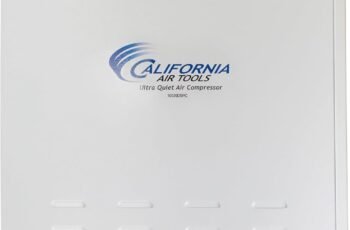
Quiet matters most when you’re working indoors, and the California Air Tools CAT-1P1060S nails it with a whisper-quiet 56 dB, oil-free operation and a compact 1-gallon steel tank. We like its 0.6 HP motor spinning at 1680 RPM for reduced wear, delivering 1.2 CFM at 90 psi (1.6 CFM at 40 psi) up to 120 psi. At 29 pounds with a small footprint, it’s easy to carry and store.
For tasks like brad and finish nailing, stapling, airbrushing, and inflating tires or sports gear, it’s a standout. Quick cycles—about 60 seconds to empty and ~15 seconds to refill—keep us moving. One-year warranty included.
Best For: DIYers and homeowners who need a quiet, portable compressor for indoor tasks like brad/finish nailing, stapling, airbrushing, and inflating tires or sports gear.
Pros:
- Ultra-quiet 56 dB operation ideal for indoor use
- Lightweight 29 lbs with compact 1-gallon steel tank for easy transport and storage
- Oil-free pump with >3000-hour life cycle and quick refill (~15 seconds to 120 psi)
Cons:
- Limited air capacity and 1.2 CFM at 90 psi not suited for high-demand tools
- Max 120 psi and 0.6 HP may require pauses on continuous tasks
- Short 1-year limited warranty compared to some competitors
California Air Tools Light & Quiet Portable Air Compressor (CAT-1P1060SP)

July 13, 2026 5:15 pm
Looking for whisper-level operation without giving up utility? The California Air Tools CAT-1P1060SP delivers 56 dB quiet, indoor-friendly performance in a compact 34 lb frame. Its 1-gallon steel tank and 120 PSI max suit brad and finish nailers, airbrushing, blow guns, and quick inflations. We like the oil-free single piston pump rated 3000+ hours, the 0.6 HP, 1680 RPM motor, and 1.2 CFM at 90 PSI (1.60 CFM at 40 PSI) for light-duty tasks.
Portability shines: balanced handle, small footprint, easy to lift and stow. It fills quickly, runs smoothly, and needs little maintenance. Includes a 1-year limited warranty.
Best For: DIYers, hobbyists, and homeowners who need an ultra-quiet, portable compressor for light-duty tasks like brad/finish nailing, airbrushing, and quick inflations in garages or indoor spaces.
Pros:
- Exceptionally quiet at 56 dB—great for indoor use and shared spaces
- Lightweight 34 lb, compact 1-gallon steel tank with easy carry handle
- Oil-free pump rated 3000+ hours; low maintenance with quick fill to 120 PSI
Cons:
- Limited air delivery (1.2 CFM @ 90 PSI) not suitable for high-demand tools
- Small 1-gallon tank requires more frequent cycling on longer tasks
- Spec inconsistencies reported (motor listed as 0.6 HP vs 1.2 HP in some materials)
Factors to Consider When Choosing Quiet Portable Air Compressors
As we choose a quiet portable compressor, let’s weigh noise level in dB alongside airflow/CFM for tool demands. We should match max PSI to our applications and decide whether a tank (and what size) or tankless setup fits our workflow. Finally, we’ll consider motor type and RPM, since they affect noise, efficiency, and durability.
Noise Level (Db)
How much noise will it really make in your space? We look at decibel (dB) ratings first, because lower dB means quieter operation. For indoor use, we aim for models around 56 dB or less. Some compressors hold a constant rating (say, 56 dB), while others fluctuate slightly with load, RPM, or duty cycle. Oil-free piston designs typically run steadier and quieter than oil-lubricated systems, which can transmit more mechanical noise.
Motor size and pump speed also matter. Chasing higher PSI often means faster cycling and more sound, unless the unit adds noise-dampening shrouds, isolated mounts, or optimized intake filters. Finally, we verify claims. Real-world noise can differ from spec sheets, so we cross-check user reviews and measure in typical rooms to confirm what you’ll actually hear.
Airflow and CFM
Quiet operation only matters if the compressor moves enough air for the job. Airflow is measured in CFM (cubic feet per minute) at a stated PSI, and it dictates how quickly we can inflate tires, sports gear, or run light air tools. Higher CFM at the pressure we actually use means faster fills and less total time hearing the motor.
Most compact, quiet units tune output to around 1.2–1.6 CFM at 40–90 PSI, balancing throughput with low noise. When we compare models, we look at CFM at our real operating pressure, not just a peak number at a lower PSI. For mixed tasks—tire top-offs plus balls or inflatables—we favor the higher CFM option to keep airflow steady as pressure climbs toward our target.
Max PSI Capacity
Why does max PSI matter? It’s the highest pressure a compressor can reach before auto‑shutoff or we stop it manually. Most quiet portable units target 120–150 PSI, which comfortably covers car tires, bikes, sports balls, and light automotive tasks. If we handle high‑pressure tires—like light trucks or performance tires—a higher max PSI helps us hit the target faster with less risk of stalling.
Still, PSI alone doesn’t guarantee real‑world performance. We should confirm the compressor can sustain that pressure with adequate CFM at the stated PSI, so airflow keeps up as pressure rises. If we rarely need more than 120 PSI, choosing a 120‑PSI max can mean quieter operation and a lighter build without giving up common inflation jobs or everyday versatility.
Tank Size/None
When we weigh tank size—or going tankless—we’re really choosing between runtime and portability. Tank capacity sets how long we can run tools or inflate before the pump needs to recharge. A 1-gallon tank handles quick brad nailing, bike tires, or spot cleaning; it empties fast and cycles often. Stepping up to 2–6 gallons extends runtime, smooths pressure delivery, and cuts annoying start-stop cycling.
Smaller tanks keep weight down and carry ease up, but they trigger more frequent restarts as pressure hits the cutoff sooner. For higher-demand work, pairing a larger tank with adequate CFM helps maintain steady airflow and minimize pressure dips. Many oil-free, portable units use compact tanks; they fill quicker but may sound busier and recover more often than larger, quieter setups.
Motor Type/Rpm
Bigger tanks tame cycling, but the motor still sets the tone for how a compressor sounds and feels. Motor type and RPM drive both noise and efficiency. Brushless designs cut electrical noise, deliver smoother speed control, and typically run quieter than brushed units. Among electric options, induction motors are proven quiet and durable at constant speed, while brushless DC shines when variable speed matters.
RPM is the other lever. Higher RPM can boost airflow, yet it usually adds whine and vibration unless the pump has lower displacement or good acoustic isolation. We favor lower RPM models that still hit the CFM you need; pair that with sound-dampening mounts and you’ll hear the difference. Also note speed control: PWM, constant speed, or soft-start affect steady-state noise during inflation.
Power Source Options
Curious which power source keeps things quiet without cramping portability? We’ve found it comes down to cordless versus corded. Cordless models rely on rechargeable packs—often 20V—with capacities like 2.0 Ah. They cut the cord for true mobility but demand we plan runtime, especially if we’re inflating multiple items. Many 12V or higher units deliver about 25–26 L/min and include auto-shutoff to prevent over-inflation, which helps keep operation simple and controlled.
Corded, plug-in compressors tap standard mains power for steady output and longer sessions without swaps. They typically offer higher duty cycles and more consistent performance. Some hybrids add a built-in battery plus USB or Type-C ports, letting us top up phones in a pinch. Our takeaway: match battery capacity or continuous power to your typical jobs.
Weight and Portability
Power choice sets the stage, but weight and portability decide how easily we put a quiet compressor to work. If we’re moving between rooms, cars, or jobsites, lighter is better. Handheld inflators around 1.5–2.0 kg (3.3–4.4 lb) shine for one-handed carry and quick top-offs, keeping fatigue low during frequent lifts.
Cordless designs boost mobility further, freeing us from outlets and making task-hopping simpler. Still, batteries add weight, so we should factor the pack when comparing totals. In tight spaces, compact footprints—often under 10 inches—store cleanly and navigate shelves or trunks without hassle.
For bigger, quieter units near 30–34 lbs, built-in handles and ergonomic grips matter. They don’t erase the mass, but they make push/pull handling and short carries manageable.
Maintenance Requirements
While quiet compressors spare our ears, they still demand smart upkeep to stay reliable. Oil-free pumps help by eliminating oil changes and reducing contamination risk, but we should check intake filters more often in dusty garages or job sites. Routine tasks matter: inspect hoses for cracks or abrasions, clean or replace filters, and verify valve cores and gauges for accurate readings.
Thermal safeguards also influence maintenance. Many units feature automatic shutoff and cooldown cycles; we should keep vents clear and avoid covering housings so these protections work properly and extend service life. For cordless models, we’ll monitor battery health—track charge cycles, avoid deep discharges, and replace weak packs early—to maintain pumping speed and consistent auto-stop accuracy. Simple habits prevent performance dips and costly repairs.
Conclusion
So where does that leave us? With quiet, portable power we can actually live with. From cordless inflators to 1–2 gallon tanks, we’ve seen oil-free pumps, smart gauges, and auto shutoffs that make inflation simple—and peaceful. If we value low noise, reliable CFM, and easy carry, these picks deliver. Choose the features that fit your jobs, your trunk, your ears. Measure twice, compare once, and inflate with confidence—calm, capable, and ready whenever the road calls.