Studies show that choosing the right reciprocating air compressor can improve operational efficiency by up to 30%, yet many users overlook critical specifications that match their specific needs. As we explore the technical nuances of compressor types, capacity calculations, and maintenance considerations, it becomes clear that making an informed decision requires careful analysis. Understanding these factors helps prevent costly mismatches and ensures reliable performance; however, the complexity involved means you’ll want to take into account all aspects before making a purchase.
Key Takeaways
- Determine your air demand in CFM and PSI to select the appropriate compressor size and capacity.
- Choose the compressor type (single-acting, double-acting, oil-lubricated) based on usage requirements and durability.
- Consider environmental factors like temperature, humidity, and dust to ensure proper filtration and cooling systems.
- Evaluate portability features such as wheels, handles, and size for easy transportation and installation.
- Prioritize maintenance accessibility, quality components, and filtration systems for reliable, long-term operation.
How Do Reciprocating Air Compressors Work and What Are Their Key Components?
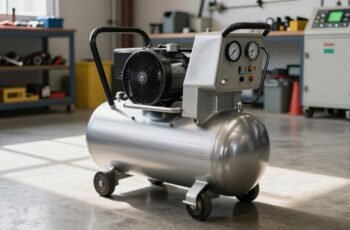
Reciprocating air compressors operate through a reciprocating piston mechanism that compresses air by moving it through a series of controlled stages. The core components include the piston, cylinder, crankshaft, valves, and connecting rod. The piston moves linearly within the cylinder, driven by the crankshaft’s rotation, which converts rotary motion into reciprocating motion. Intake valves open during the piston’s downward stroke, allowing ambient air to enter the compression chamber. During the upward stroke, the intake valves close, and the air is compressed as the piston continues upward, increasing pressure. The exhaust valves then open, releasing the compressed air into the storage tank. This cycle repeats rapidly, with each component working in unison to guarantee efficient compression and delivery of pressurized air.
What Factors Should You Consider When Choosing a Reciprocating Air Compressor?
When selecting a reciprocating air compressor, we must evaluate the required power and pressure levels to guarantee the unit can meet operational demands. Size and portability are also critical factors, especially if mobility or space constraints are present. Additionally, compatibility with the operating environment—such as temperature, humidity, and potential contaminants—must be carefully considered to optimize performance and longevity.
Power and Pressure Needs
Selecting the appropriate power and pressure specifications is essential to guaranteeing your compressor meets operational demands efficiently. Power determines the compressor’s ability to sustain continuous operation under load, with motors typically ranging from 1 to 10 HP depending on application scale. Pressure, measured in PSI, must align with the maximum requirements of your tools or processes; undershooting can cause performance issues, while overshooting may lead to unnecessary energy consumption and equipment stress. It’s critical to evaluate peak and average pressure needs to prevent system failures. Additionally, understanding duty cycle—how long the compressor runs versus rests—helps in selecting a model that maintains consistent output without overheating or premature wear. Precise calibration of power and pressure ensures ideal performance, energy efficiency, and longevity of the unit.
Compressor Size and Portability
Choosing the right size and guaranteeing portability of a reciprocating air compressor requires careful consideration of several operational and logistical factors. We must evaluate the compressor’s airflow capacity relative to workload, ensuring it can sustain continuous operation without excessive cycling or pressure drops. Additionally, physical dimensions and weight directly impact portability; compact units with lightweight frames are preferable in constrained or mobile environments. It’s essential to balance power requirements with ease of transport, especially if the compressor will be relocated frequently. Structural features like reinforced handles, wheels, or skid mounts enhance mobility, while size constraints influence storage options. Proper assessment of these factors ensures the compressor aligns with operational demands and logistical constraints, optimizing efficiency and user convenience.
Operating Environment Compatibility
Evaluating the operating environment is vital to guarantee a reciprocating air compressor functions reliably under specific conditions. Factors such as temperature, humidity, and potential contaminants directly influence compressor performance and longevity. For instance, high ambient temperatures can cause overheating, while moisture increases corrosion risk. To analyze these variables, consider the following:
| Factor | Considerations |
|---|---|
| Temperature | Confirm the compressor’s cooling system can handle the ambient heat. |
| Humidity | Use moisture separators or dryers in humid environments. |
| Contaminants | Select units with appropriate filtration for dusty or dirty conditions. |
Understanding these factors helps us select a compressor tailored to the environment, preventing breakdowns and extending service life.
How Do You Determine the Right Size and Capacity for Your Needs?
To determine the appropriate size and capacity for your reciprocating air compressor, it’s essential to analyze your specific operational requirements and workload demands. Start by calculating the total airflow demand in CFM (cubic feet per minute) based on your tools and applications, guaranteeing the compressor’s capacity exceeds the peak requirement by 20-25% to accommodate fluctuations. Consider the pressure requirements of your equipment, as compressor output must match or surpass the necessary PSI for peak performance. Evaluate duty cycle; continuous or frequent use demands higher capacity units. Additionally, factor in the compressor’s efficiency and future scalability to avoid undersizing or oversizing, which can lead to increased operational costs or insufficient performance. Precise assessment of these parameters ensures suitable compressor selection aligned with your operational needs.
What Are the Different Types of Reciprocating Air Compressors and Which Is Best for You?
Reciprocating air compressors come in several distinct types, each designed to meet specific operational needs and performance criteria. Understanding these variations allows us to select the most suitable model for particular applications. The main types include:
- Single-acting compressors: Simplest design, suitable for light-duty tasks with moderate pressure requirements.
- Double-acting compressors: More efficient, capable of higher output by compressing air on both sides of the piston.
- Oil-lubricated compressors: Use oil for lubrication, offering durability and smoother operation in continuous-duty scenarios.
Choosing the right type depends on factors like required pressure, duty cycle, and maintenance considerations. Analyzing these characteristics guarantees peak performance and longevity for your specific use case.
How Much Does a Reciprocating Air Compressor Cost, and What Are the Operating Expenses?
The cost of a reciprocating air compressor varies considerably based on factors such as size, capacity, and features, making it important to take into account both upfront investment and ongoing expenses. Typically, small models suitable for light industrial or hobbyist use can start around $500 to $1,500, while larger, high-capacity units can exceed $10,000. Operating expenses include energy consumption, maintenance, and repairs; energy costs are significant, as compressors can consume substantial power depending on their duty cycle and efficiency. Regular maintenance—such as oil changes, filter replacements, and inspections—adds to the total cost over time. Proper sizing and component quality influence long-term operational costs, with higher-quality units generally offering better energy efficiency and lower maintenance requirements, consequently reducing lifecycle expenses.
What Features and Accessories Can Improve Your Compressor’s Performance and Longevity?
Implementing high-quality air intake filters, proper lubrication systems, and durable compression components can ensure enhanced compressor efficiency and lifespan. These features reduce wear, prevent contaminants from entering critical parts, and guarantee consistent performance under load. By focusing on these key accessories, operators can optimize reliability and reduce long-term maintenance costs.
Quality Air Intake Filters
Have you considered how the quality of your air intake filters directly impacts your compressor’s efficiency and lifespan? High-quality filters reduce contaminants entering the compression chamber, preventing wear and damage over time. Features that enhance performance include multi-stage filtration, which captures particles at various sizes, and low-pressure drop designs that minimize energy loss. Accessories such as pre-filters or moisture separators can further improve filtration efficiency and protect internal components.
Key features to look for:
- Multi-layer filtration media for finer particle removal
- Low-resistance airflow designs to reduce energy consumption
- Moisture and oil separators to prevent internal corrosion and damage
Prioritizing these features guarantees peak operation and extended compressor longevity.
Proper Lubrication Systems
Ever wondered how proper lubrication directly influences your reciprocating air compressor’s performance and durability? Effective lubrication minimizes friction between moving parts, reducing wear and preventing overheating. High-quality oil or grease forms a protective film that absorbs shocks and dissipates heat, ensuring continuous, smooth operation. Advanced lubrication systems—such as splash lubrication, pressure lubrication, or centralized systems—offer precise control, reducing oil consumption and contamination risks. Incorporating features like oil filters, separators, and cooling mechanisms can further enhance performance by maintaining oil cleanliness and ideal viscosity. Properly designed lubrication systems extend component lifespan, decrease downtime, and improve energy efficiency. Regular monitoring of oil levels and quality is essential for peak functioning. In conclusion, investing in a robust lubrication setup is critical for maximizing compressor reliability and operational longevity.
Durable Compression Components
Durable compression components are essential in guaranteeing the long-term efficiency and reliability of reciprocating air compressors. High-quality materials and precise manufacturing reduce wear and minimize downtime. For ideal performance, focus on components like pistons, cylinders, and valves, which directly influence compression efficiency. Upgrading or maintaining these parts can considerably extend service life and improve output consistency. Key features and accessories to evaluate include:
- Heavy-duty piston rings and seals for enhanced durability and reduced leakage
- Corrosion-resistant cylinders to withstand harsh environments and extend lifespan
- Precision-machined valves for improved airflow and reduced pressure drops
Investing in these components guarantees the compressor operates at peak performance, reducing maintenance costs and preventing unexpected failures. Careful selection of durable parts is vital for maximizing compressor longevity and operational stability.
How Do You Maintain and Troubleshoot a Reciprocating Air Compressor Effectively?
Maintaining and troubleshooting a reciprocating air compressor requires a systematic approach to guarantee peak performance and longevity. Regular inspection of critical components, such as pistons, valves, and cylinders, helps identify wear or damage early. Consistent lubrication of moving parts minimizes friction and prevents overheating, while checking for air leaks ensures efficiency. Monitoring pressure gauges and temperature readings allows for early detection of operational anomalies. Troubleshooting involves isolating issues through systematic testing—such as verifying electrical connections, inspecting belts, and evaluating filters. Utilizing diagnostic tools, like moisture analyzers, helps sustain air quality. Adopting a preventive maintenance schedule based on manufacturer guidelines reduces downtime and extends compressor life. Precise documentation of maintenance activities streamlines troubleshooting and enhances overall operational reliability.
Frequently Asked Questions
What Safety Precautions Should I Follow When Operating a Reciprocating Air Compressor?
We guarantee safety by wearing protective gear, conducting regular maintenance, checking for leaks or damage, avoiding over-pressurization, and following manufacturer guidelines strictly. We also keep the area clear and operate within recommended pressure limits.
How Energy-Efficient Are Reciprocating Air Compressors Compared to Other Types?
We find reciprocating air compressors moderately energy-efficient, especially for small-scale or intermittent operations, but they often consume more power than rotary screw or centrifugal compressors, which excel in continuous, high-volume applications due to lower operational energy losses.
Can a Reciprocating Air Compressor Be Used for Continuous Operation?
Absolutely, reciprocating air compressors can run continuously, but we must consider their design limits. Proper maintenance, cooling, and load management are essential to prevent overheating and wear, ensuring reliable performance during extended operation.
What Are Common Signs Indicating My Compressor Needs Repairs?
We notice signs like unusual vibrations, excessive noise, oil leaks, decreased pressure, and overheating indicating our compressor needs repairs. Regular monitoring of these indicators helps prevent failures and guarantees efficient operation, saving time and maintenance costs.
Are There Specific Environmental Conditions That Affect Compressor Performance?
Environmental conditions like high humidity, extreme temperatures, and dusty atmospheres greatly impact compressor performance by causing corrosion, reducing efficiency, and increasing wear. We recommend controlling these factors and implementing proper maintenance to guarantee ideal operation and longevity.
Conclusion
In brief, choosing the appropriate reciprocating air compressor depends on understanding your operational requirements and matching them with specifications like PSI, CFM, and maintenance needs. Did you know that properly maintained compressors can last up to 40% longer, substantially reducing lifecycle costs? By carefully assessing features, costs, and troubleshooting strategies, we can enhance performance and guarantee dependable, cost-efficient operation tailored to our workload demands.