Understanding the electricity costs associated with air compressors requires a detailed analysis of various factors, including power consumption, operational hours, and system efficiency. We recognize that optimizing compressor performance involves technical considerations like motor efficiency, pressure settings, and maintenance practices. By examining these elements, we can identify cost-saving opportunities and prevent unnecessary energy expenditure. Exploring these factors further reveals how careful management impacts overall operational expenses and equipment longevity.
Key Takeaways
- Electricity costs depend on compressor power consumption (kWh), operational hours, and local electricity rates.
- Proper maintenance and efficient components reduce energy use and lower operational costs.
- Using energy-efficient compressors and adjusting settings to match load demands improve cost-effectiveness.
- Continuous monitoring of performance and usage patterns helps optimize energy consumption.
- Oversized or undersized compressors increase energy costs due to inefficient cycling or continuous running.
How Does an Air Compressor Use Electricity?
An air compressor consumes electricity primarily through its motor, which powers the compression process by converting electrical energy into mechanical energy. This conversion generates significant heat and friction, making air compressor lubrication essential to maintain efficiency and reduce wear. Proper lubrication minimizes internal component friction, preventing energy losses and ensuring smooth operation. Additionally, lubrication plays a crucial role in noise reduction, as well-lubricated parts operate more quietly by dampening vibrations and mechanical sounds. The motor’s electrical draw depends on load demand, with efficient lubrication and noise reduction measures helping to maximize energy consumption. By maintaining ideal lubrication and soundproofing, we can effectively control the compressor’s energy use, ensuring reliable performance while minimizing electricity costs.
Factors That Influence Air Compressor Energy Consumption
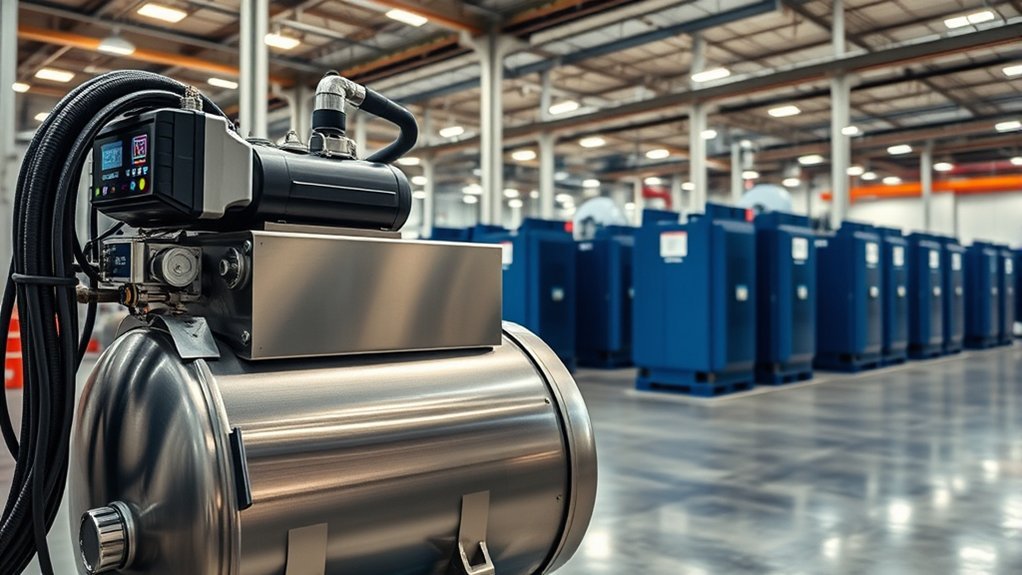
Several key factors directly influence the energy consumption of an air compressor, requiring careful consideration to optimize efficiency. Air quality impacts compressor operation, as contaminants can cause increased wear, inefficiencies, and higher energy use due to additional filtration or maintenance needs. Consistent, high-quality air reduces strain on the system, lowering energy demands. Noise levels also serve as an indirect indicator of operational efficiency; elevated noise often correlates with mechanical stress or misalignment, leading to higher energy consumption. Properly managing air quality through filtration and maintaining noise levels within specified ranges guarantees smoother operation, minimizes energy losses, and prolongs equipment lifespan. Addressing these factors systematically enhances overall efficiency, reducing electricity costs and ensuring reliable compressor performance.
How to Calculate Your Air Compressor’s Operating Costs
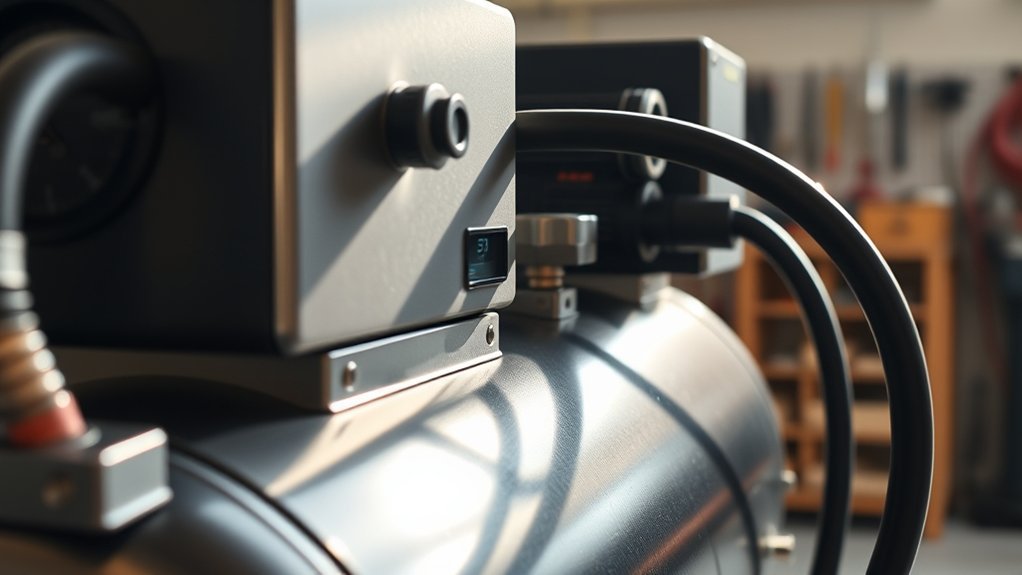
To accurately determine your air compressor’s operating costs, we first need to estimate its power usage based on operational parameters and specifications. Once we have this data, we can calculate energy costs by multiplying the power consumption by local electricity rates and runtime. This precise approach guarantees that your cost analysis accounts for both equipment efficiency and energy pricing fluctuations.
Estimating Power Usage
Estimating the power usage of an air compressor requires precise calculation of its energy consumption based on operational parameters. Key factors include airflow rate, pressure settings, and run time. We analyze compressor efficiency, which impacts both air quality and noise levels, influencing operational costs. Power consumption can be approximated with:
| Parameter | Description |
|---|---|
| Power (kW) | Energy used per hour |
| Operating Hours | Total daily runtime |
| Air Quality | Affected by compressor load |
| Noise Levels | Impacted by motor efficiency |
Calculating Energy Costs
Calculating the operating costs of an air compressor involves translating its energy consumption into monetary terms based on local electricity rates. To do this accurately, we measure the compressor’s power usage in kilowatt-hours (kWh) and multiply by the utility rate. When considering air quality, higher energy efficiency often correlates with cleaner operation, reducing contaminants and ensuring consistent output. Noise reduction features can also impact energy costs by optimizing motor performance and minimizing energy waste. Precise calculations require accounting for duty cycle, load conditions, and potential fluctuations in electricity rates. By integrating these factors, we develop an accurate cost profile, enabling better budgeting and optimization strategies that enhance both air quality and operational efficiency.
Tips for Reducing Energy Use in Air Compressor Systems
To reduce energy consumption in air compressor systems, we need to focus on optimizing compressor settings to match load demands precisely. Regular maintenance guarantees components operate efficiently and prevents energy-wasting issues, while upgrading to energy-efficient equipment can substantially lower overall power use. Implementing these strategies requires careful analysis of operational parameters to achieve maximum energy savings.
Optimize Compressor Settings
Optimizing compressor settings is a crucial step in minimizing energy consumption within air compressor systems. Precise control of pressure levels ensures the compressor operates only at necessary output, reducing unnecessary energy use. Adjusting pressure setpoints can considerably lower compressor load, directly decreasing energy costs. Additionally, managing compressor noise levels can indicate improper settings, such as excessive pressure or airflow restrictions, which may lead to inefficiencies. Proper lubrication techniques are essential; maintaining ideal lubrication reduces internal friction, preventing unnecessary power draw and protecting components from wear. By fine-tuning these parameters—pressure, noise, and lubrication—we prevent overworking the system, ensuring it runs efficiently. This targeted approach to compressor settings helps achieve energy savings while maintaining reliable, effective operation.
Regular Maintenance Checks
Regular maintenance checks serve as a foundational strategy for reducing energy consumption in air compressor systems. Adhering to precise lubrication schedules ensures that moving parts operate smoothly, minimizing friction and reducing the workload on the motor. Consistent lubrication prevents wear and overheating, which can cause efficiency losses. Additionally, regular filter inspections are critical; clogged or dirty filters increase system resistance, forcing the compressor to work harder and consume more energy. By systematically cleaning or replacing filters, we maintain ideal airflow and pressure levels. These proactive measures prevent unnecessary energy expenditure caused by mechanical inefficiencies. Overall, disciplined maintenance not only extends equipment lifespan but also directly correlates with lower operating costs through improved energy efficiency.
Use Energy-Efficient Equipment
Implementing energy-efficient equipment is a crucial step toward minimizing electricity consumption in air compressor systems. Upgrading to variable speed drives (VSDs) and high-efficiency motors can considerably reduce energy waste by adjusting motor speed to match demand precisely. Incorporating advanced controls, such as load/unload or pressure sensors, optimizes compressor operation during fluctuating load conditions. These equipment upgrades serve as essential energy saving tips, directly lowering power consumption and operational costs. Additionally, selecting compressors with better thermal and volumetric efficiencies ensures less energy loss during compression cycles. By investing in these high-efficiency components, we can improve system performance, extend equipment lifespan, and achieve substantial energy savings, making it a critical component of a comprehensive energy management strategy.
Choosing the Right Air Compressor for Cost Efficiency
Selecting the appropriate air compressor is essential for minimizing operational costs, as equipment efficiency directly impacts electricity consumption. When choosing, consider not only capacity and power ratings but also air compressor noise levels, which influence workplace environment and compliance standards. Noise reduction features can lower overall energy expenditure by enabling longer operational periods without additional soundproofing measures. Additionally, air quality management is imperative; compressors with integrated filtration or moisture control systems prevent contaminants that can cause system inefficiencies and increase energy use. Properly calibrated, high-quality components enhance compressor performance, reducing cycle times and energy waste. Evaluating these technical aspects ensures the selected compressor maintains peak efficiency, reducing electricity costs while supporting a safer, quieter, and cleaner working environment.
Monitoring and Maintaining to Save Energy
Monitoring and maintaining air compressors effectively is essential for optimizing energy efficiency and reducing operational costs. Implementing smart sensors allows real-time data collection on parameters like pressure, temperature, and vibration, enabling early detection of inefficiencies. Regular energy audits identify hidden energy losses, ensuring maintenance targets critical components such as valves, filters, and lubricants. Proper calibration of control systems minimizes unnecessary compressor cycling, reducing power consumption. Lubrication schedules must be strictly followed to prevent motor strain and heat buildup. Additionally, tracking compressor runtime helps optimize scheduling and avoid overuse. These strategies, combined with data from smart sensors, enable precise adjustments that improve overall system performance and energy savings, ensuring long-term operational efficiency and cost reduction without compromising productivity.
The Impact of Compressor Size and Usage Patterns on Electricity Bills
The size of an air compressor and its usage patterns directly influence energy consumption and, consequently, electricity bills. Larger compressors generally consume more power during operation, but their efficiency depends on matching capacity to demand; oversized units operate inefficiently with frequent cycling, increasing energy costs. Conversely, undersized compressors run continuously, leading to excessive wear and higher energy use. Usage patterns, including cycle frequency and load variability, substantially impact operational efficiency. Frequent start-stop cycles cause energy spikes, while sustained, steady operation optimizes power consumption. Properly evaluating demand and selecting an appropriately sized compressor minimizes unnecessary energy expenditure. Monitoring and adjusting usage patterns—such as avoiding short cycling and implementing load management—further reduces electricity costs, ensuring more efficient and cost-effective compressor operation.
Frequently Asked Questions
How Does Ambient Temperature Affect Air Compressor Energy Efficiency?
Ambient temperature directly impacts air compressor energy efficiency; higher temperatures reduce cooling effectiveness, increase compressor workload, and cause thermal stress, whereas lower temperatures improve heat dissipation, lowering energy consumption and extending equipment lifespan.
What Role Does Compressor Type Play in Electricity Costs?
Certainly, dear reader, compressor type dictates electricity costs through efficiency and design; piston compressors demand more energy, while rotary screw models excel in low noise levels and maintenance, ultimately shaping operational expenses and environmental impact.
Are Variable Speed Drives More Cost-Effective Than Fixed-Speed Units?
We find that variable speed drives are more cost-effective than fixed speed units for energy consumption, as they optimize motor speed according to demand, reducing unnecessary power usage, whereas fixed speed units operate at constant energy levels regardless of load variations.
How Do Leakages in the System Impact Overall Energy Consumption?
Leaks are like silent energy thieves, drastically increasing consumption. Regular leak detection and proactive maintenance scheduling help identify and repair leaks promptly, reducing unnecessary energy loss and optimizing overall system efficiency.
What Is the Typical Lifespan of an Energy-Efficient Air Compressor?
Typically, an energy-efficient air compressor lasts 10-15 years, provided maintenance schedules are rigorously followed and compressor sizing is accurately matched to demand, ensuring peak performance and minimizing premature wear or failure.
Conclusion
By understanding the factors that influence an air compressor’s energy consumption, we can optimize operation and reduce costs effectively. Regular maintenance, proper sizing, and advanced monitoring are vital strategies, but are we leveraging the latest technology to its fullest? Analyzing usage patterns and implementing energy-efficient solutions isn’t just about saving money—it’s about maximizing equipment lifespan and operational efficiency. Ultimately, a data-driven, proactive approach guarantees sustainable, cost-effective compressed air systems for the long term.