Have we been looking for an ultra-quiet, low-maintenance air compressor that actually fits into clinical, lab, or studio environments without dominating the entire space?
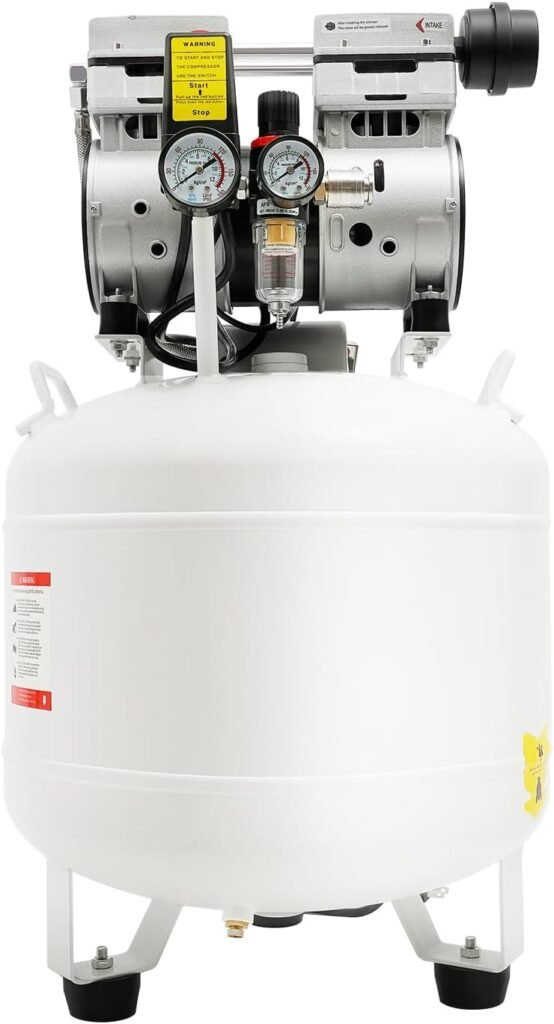

Overview of the Air Compressor 110V 750W, 40L Portable Ultra Silent Oil-Free Dental Air Compressor
This air compressor is designed for situations where stable, clean, and quiet air is a must. We are talking about medical equipment, dental applications, small experimental setups, and similar professional tasks where noise and oil contamination are not acceptable.
With a 750W all-copper motor, a 40L tank, and a maximum work pressure of 115 PSI, this unit brings together power, portability, and ultra-quiet performance. It is built with sturdy materials and designed to run oil-free, which simplifies maintenance and keeps the output air cleaner.
Key Specifications at a Glance
Before we get into the details, it helps to see the main specs laid out side by side. We can quickly compare them with our needs and see whether this model fits our environment and workload.
| Feature | Specification / Description |
|---|---|
| Product Name | Air Compressor 110V 750W, 40L Portable Ultra Silent Oil-Free Dental Air Compressor |
| Voltage | 110V |
| Power | 750W |
| Tank Capacity | 40 liters |
| Maximum Work Pressure | 115 PSI |
| Motor Type | All-copper motor |
| Lubrication | Oil-free (no engine oil required) |
| Noise Level | Ultra silent (very low operating noise) |
| Construction Materials | Copper, iron, aluminum, plastic |
| Dimensions | Approx. 41 * 65 cm |
| Applications | Dentistry, medical equipment, experiments, labs, light industrial |
| Mobility | Handles on both sides for carrying/moving |
| Safety/Protection Features | Solenoid valve, large cooling fan, oil-water separator |
This table helps us quickly grasp what kind of compressor we are dealing with: a compact, professional-grade, oil-free unit designed for sensitive environments.
Build Quality and Materials
Good build quality matters when we expect long service life and reliable day-to-day use. This unit is made from a combination of copper, iron, aluminum, and plastic, each chosen for a different functional reason.
Sturdy Construction for Long-Term Use
We want our compressor to feel solid, not flimsy. The use of iron and aluminum in the structural and mechanical parts provides the rigidity and durability needed to handle pressure and vibration over time.
The copper motor windings contribute to both durability and performance. Combined with a robust outer frame and tank, the unit feels like it is built for repeated use rather than occasional hobby work.
Material Choices and Their Benefits
The blend of metals and plastics is intentional. Metals handle pressure, heat, and mechanical stress, while plastic components help reduce weight and improve portability. This balance means we get a machine that is not excessively heavy yet tough enough for professional environments.
The tank and core pressure-bearing parts rely on metal strength, while the outer housings, handles, and covers can use plastic to keep things manageable in terms of weight and handling.
Motor Performance and Power (750W All-Copper Motor)
The motor is the heart of any compressor. Here we are dealing with an all-copper 750W motor, which positions this unit in a strong middle ground between small hobby compressors and large industrial systems.
Why the All-Copper Motor Matters
Copper windings provide better conductivity and heat management compared with cheaper alternatives like aluminum windings. That means the motor can maintain more consistent performance under load, with less risk of overheating.
In practical terms, this translates into:
- More stable pressure maintenance
- Reduced risk of sudden power drops
- Longer motor life with proper use
For clinic and lab environments, that kind of stability is invaluable because we do not want the compressor struggling during a procedure or an experiment.
Power Output and Practical Use Cases
At 750W, we get enough power to handle typical dental tools, certain types of medical devices, and lab equipment that rely on compressed air. It is not meant for heavy-duty industrial impact wrenches or large-scale manufacturing, but it fits nicely into:
- Dental units and chairs
- Air-driven small tools or instruments
- Pneumatic valves and actuators in experimental setups
- Light workshop tasks that need reliable, clean air
We can think of this as a professional support compressor for precision work, not a construction-site powerhouse.
40L Tank Capacity and 115 PSI Maximum Pressure
Tank size and pressure determine how often the motor runs and how stable the air delivery is under continuous use.
What a 40L Tank Means for Us
A 40-liter tank offers a good compromise: large enough to buffer pressure and reduce the frequency of motor cycles, but still small enough to keep the unit relatively compact and portable.
In everyday use, this means:
- Fewer start-stop cycles when tools draw air intermittently
- More consistent air flow for short to medium bursts
- Less noise over time compared with smaller tanks that cycle constantly
For dentistry and lab work, where tools often run intermittently, this tank size is practical and efficient.
115 PSI Maximum Work Pressure: Where It Fits
With a maximum work pressure of 115 PSI, the compressor comfortably meets the requirements of most dental tools, many medical devices, and general pneumatic applications that typically operate in the 60–100 PSI range.
We can run:
- Dental handpieces (air-driven)
- Air spray nozzles for cleaning or drying
- Small pneumatic actuators or laboratory devices
- Light air tools that fall within this pressure range
It provides headroom above typical working pressures, helping to ensure steady performance even as the tank empties.
Ultra Silent Operation
Noise level is where this compressor stands out compared with many standard workshop units. It is designed to operate ultra quietly, which is a key selling point for dental and medical environments.
Why Quiet Operation Is So Important
In clinics and labs, loud compressors can be a constant source of stress and distraction. Patients can become more anxious, and staff can feel fatigued over long days of noise.
An ultra silent compressor helps us:
- Maintain a calm patient environment in dental or medical offices
- Keep the lab or research space more comfortable for focus-intensive work
- Use the compressor closer to the point of use without needing a separate equipment room
This makes it more suitable for locations where noise restrictions or comfort expectations are higher.
Practical Noise Benefits Day-to-Day
With a quiet compressor, we can often run it during appointments, during teaching sessions, or in shared spaces without disturbing everyone nearby. We do not need to shout over the noise, and phone calls taken in the same space are more manageable.
The result is a smoother daily workflow where the compressor becomes part of the background instead of a constant, intrusive presence.
Oil-Free Operation and Maintenance
oil-free compressors are ideal when we care about clean air and low maintenance. This model is explicitly oil-free, meaning no engine oil lubrication is required.
No Engine Oil, Less Hassle
With oil-free operation, we do not have to deal with:
- Regular oil changes
- Monitoring oil levels
- Potential oil leaks in our workspace
This significantly reduces maintenance time and complexity. For busy practices and labs, that simplicity is a clear advantage.
Cleaner Air Output for Sensitive Applications
Oil in compressed air can cause contamination in dental lines, medical devices, lab experiments, and coatings or finishes. Because this compressor is oil-free, the compressed air is naturally cleaner, making it much more compatible with:
- Dental procedures where cleanliness is critical
- Medical equipment that must not be exposed to oil mist
- Experiments where air quality can affect results or sensors
When paired with an appropriate filtration system, we can get very high-quality, clean air for sensitive tasks.
Safety Features and Protective Design
Safety is built into the design through several features that protect both the machine and us as users.
Large-Diameter Cooling Fan for Heat Management
The compressor includes a large-diameter cooling fan to keep temperatures under control. Heat is one of the main enemies of compressor longevity and stability.
By providing timely heat dissipation, the fan:
- Reduces the risk of overheating damage
- Helps maintain stable performance during longer sessions
- Protects internal components from heat-related wear
This is particularly useful when we operate the compressor frequently in a busy environment.
Solenoid Valve for Motor Protection
The solenoid valve serves as a safeguard in case of sudden power failure or system irregularities. It can help relieve pressure and protect the motor from damage or burnout.
With this protective element, we get:
- Reduced risk of motor failure due to abrupt shutdowns
- More reliable operation even in areas with occasional power inconsistencies
That means less downtime and fewer repair or replacement headaches over the long term.
Oil-Water Separator for Purified Air
Compressed air naturally carries moisture, and in some systems, oil as well. This compressor integrates an oil-water separator to help purify the air before it reaches our equipment.
The separator:
- Helps remove moisture and traces of oil
- Protects downstream devices from water-induced corrosion
- Improves the reliability of valves, instruments, and dental tools
This feature is important if we are using air for medical, dental, or experimental setups where moisture can cause harm or interfere with results.


Portability and Handling
Moving equipment around our space should not feel like a major project. This compressor is designed with portability in mind.
Dual Handles for Easier Transport
Handles on both sides allow us to grip the unit securely and carry or reposition it as needed. The dual-handle design makes it easier for two people to share the load, which can be helpful if we want to move it between rooms or lab benches.
This small touch can make a big difference in daily workflows where we might need to rearrange equipment or reconfigure spaces.
Compact Footprint (41 * 65 cm)
With approximate dimensions of 41 by 65 cm, the compressor has a relatively compact footprint for a 40L tank. That means:
- Easier placement under counters, in corners, or near workstations
- Better fit in small clinics, offices, and labs with limited space
- Greater flexibility in layout planning
We can integrate it into our environment without giving up a large portion of floor space.
Use in Dental Clinics and Practices
Dentistry is one of the main target applications for this compressor. Its oil-free, ultra-quiet design meshes well with the needs of dental environments.
Supporting Dental Tools and Equipment
Dental chairs, air-driven handpieces, and other standard dental tools rely on stable compressed air. With 115 PSI maximum pressure and a 40L tank, this compressor can support:
- Air-driven handpieces (within appropriate flow requirements)
- Three-way syringes and air blowers
- Air-driven polishers or scalers (depending on specific tool specs)
The oil-free design means we can use it without worrying about oil contamination entering the dental system.
Enhancing Patient Comfort
In a dental practice, patient comfort is crucial. Loud, rattling compressors can increase anxiety, particularly for nervous or first-time patients.
The ultra silent operation helps us:
- Keep the treatment environment calmer
- Maintain a more professional, modern atmosphere
- Avoid startling patients during procedures
Patients may not even be aware that the compressor is running, which is ideal in healthcare settings.
Use for Medical Equipment and Experiments
Beyond dentistry, this compressor can support various medical and experimental applications that need clean, stable, and quiet compressed air.
Suitable for Sensitive Medical Setups
Medical equipment that uses compressed air often has strict requirements for cleanliness and reliability. The oil-free operation, oil-water separator, and stable 115 PSI capacity make this compressor suitable for:
- Pneumatic actuators in medical devices
- Respiratory or diagnostic instruments (where compatible and allowed by regulations)
- Support equipment for lab benches and clinical testing devices
We should always check the exact requirements of each medical device, but the general features of this compressor suit many air-powered medical setups.
Lab and Experimental Workflows
In labs and research environments, the compressor can serve as a dependable air source for:
- Pneumatic controls in experimental rigs
- Air jets, valves, and actuators in test setups
- Instrument cleaning and drying tasks
Because it runs quietly, it can coexist in spaces where concentration matters, without disrupting work or sensitive measurements.
Installation and Setup Considerations
While this compressor is quite user-friendly, we should consider a few points when integrating it into our environment.
Electrical Requirements (110V, 750W)
The compressor runs on 110V, which is standard in many regions. We need to ensure:
- A stable 110V power supply
- Adequate amperage for a 750W load
- A properly grounded outlet
We should avoid thin extension cords and overloaded power strips, as compressors draw substantial current when starting.
Placement for Best Performance
To get the most out of the compressor, we can:
- Place it on a flat, stable surface to minimize vibration
- Ensure there is enough space around the cooling fan for airflow
- Keep it away from excessive dust, moisture, or direct heat sources
Good placement improves cooling and reduces noise transmission through surfaces.
Daily Operation and User Experience
Using this compressor day in and day out should be straightforward. The focus is on simplicity, low maintenance, and predictability.
Start-Up and Routine Use
Operation generally involves:
- Ensuring the power connection and switches are set correctly
- Allowing the compressor to build to working pressure
- Connecting our dental, medical, or lab equipment via air lines
The compressor then cycles on and off as needed, maintaining pressure in the 40L tank within its designed control range.
Maintenance Routine with Oil-Free Design
Since the compressor is oil-free, maintenance mostly focuses on:
- Periodic draining of accumulated water from the tank
- Checking and cleaning the oil-water separator
- Ensuring fans and vents are clear of dust and debris
This light maintenance schedule makes the unit appealing for busy environments where staff do not have time for intensive upkeep.
Advantages of This Compressor
Summing up its core strengths helps us see why it stands out for specific professional uses.
Strengths That Stand Out
We get several key benefits wrapped into one package:
- Ultra quiet performance suitable for dental and medical spaces
- Oil-free operation for cleaner air and minimal maintenance
- All-copper 750W motor for stable, reliable performance
- 40L tank and 115 PSI max pressure for practical, everyday workloads
- Built-in oil-water separator to help purify air output
- Large cooling fan, helping protect the compressor from overheating
- Solenoid valve for motor safety in unexpected conditions
- Portable design with dual handles and a compact footprint
These characteristics make it a well-rounded solution where clean, quiet compressed air is essential.
Where It Excels Most
This compressor is especially strong in contexts where:
- Noise must be kept to an absolute minimum
- Oil contamination is unacceptable
- Space is somewhat limited but professional performance is required
In dental practices, medical clinics, and labs, those conditions are often present, so this model fits naturally into those workflows.
Limitations and Things to Keep in Mind
No product is perfect for all situations, and it helps us to be realistic about where this compressor may not be ideal.
Not for Heavy Industrial Applications
If we want to run large pneumatic tools, sandblasters, or high-demand industrial machinery, this unit may not be powerful enough. The 750W motor and 40L tank are better suited to:
- Precision instruments
- Small to medium airflow requirements
- Intermittent tool usage
For heavy-duty workshops, we would likely need a larger, more powerful compressor.
Power and Environmental Requirements
Because it is designed for 110V, we must ensure our environment supports that voltage. Also, while the compressor is designed to be durable, harsh industrial conditions with heavy dust, extreme temperatures, or continuous 24/7 operation may shorten its life.
Keeping it in a relatively clean, controlled indoor setting is best for longevity and reliability.
Who This Compressor Is Best For
Understanding the ideal users helps us decide whether this product fits our situations.
Dental and Medical Professionals
For dental and medical practices, this compressor offers:
- The quiet operation patients appreciate
- Clean air with reduced risk of oil contamination
- A professional-grade build suited to routine daily use
Dental clinics, small medical offices, and specialized treatment rooms are prime candidates.
Researchers, Lab Technicians, and Technical Users
For labs and technical setups, the compressor offers:
- Stable, reasonably high working pressure for a range of instruments
- Quiet operation that does not disturb concentration or sensitive instruments
- Compact size that fits nicely into crowded lab spaces
It is a solid match for light industrial or technical users who need clean, quiet compressed air.
Small Workshop or Studio Users
In small craft, hobby, or studio environments, we can also benefit from:
- Low noise, which is good if we share the space with others
- Oil-free air for painting, airbrushing, or fine finishing work
- A balance between power and manageability
It may be a good upgrade for us if we want to step beyond entry-level hobby compressors without going to a large industrial system.
Comparison with Typical Standard Compressors
To put this unit in perspective, it helps to compare it conceptually with typical noisy, oil-lubricated workshop compressors.
Noise, Maintenance, and Cleanliness
Compared to many traditional compressors, we see:
- Much lower noise during operation
- No need to manage engine oil
- Cleaner, more suitable air for medical and dental use
Where a standard compressor might be fine for a garage, this one is clearly targeted at environments where comfort, cleanliness, and professionalism are non-negotiable.
Size and Capacity Considerations
Standard workshop units might offer larger tanks or higher motor wattage, but they:
- Are often noisier
- May require more frequent and more complex maintenance
- Are less optimized for sensitive medical and dental applications
The 40L, 115 PSI design of this model aims at an ideal middle ground for specialized professional use, not general heavy-duty industry.
Long-Term Value and Reliability
When we invest in equipment like this, we are looking for long-term value, not just immediate performance.
Durability of Materials and Design
Using copper, iron, and aluminum gives this compressor a solid foundation. If we maintain it properly—draining moisture, keeping vents clear, and using it within its operating limits—we can expect:
- Consistent performance over many duty cycles
- Reduced risk of premature failure from overheating or contamination
- Dependable support for daily procedures and tasks
The cooling system and safety features are specifically aimed at extending operational lifespan.
Value for Professional Users
For professionals, value is measured in time saved and problems avoided. With this compressor, the value shows up in:
- Less downtime for maintenance
- Fewer concerns about noise complaints or patient discomfort
- Reduced risk of oil-induced failures in downstream equipment
The long-term benefit is a more predictable, lower-stress workflow around compressed air usage.
Practical Tips for Getting the Most Out of This Compressor
To make sure we truly benefit from its design, a few practical habits can be very helpful.
Manage Moisture and Air Quality
Even with an oil-water separator, we should:
- Regularly drain the tank to remove water that accumulates
- Check filters and separators, cleaning or replacing them when necessary
- Use additional filtration if our applications are extremely sensitive
This keeps the air lines and connected equipment in better condition.
Monitor Usage Patterns
If we find the compressor is running nearly non-stop, that might indicate:
- Our air demand is higher than ideal for this size unit
- Our tools or devices are consuming more air than expected
In that case, we may want to adjust workflow, stagger usage, or consider whether our needs call for a larger compressor.
Final Thoughts: Is This the Right Compressor for Us?
When we put all of its characteristics together, this air compressor 110V 750W, 40L portable ultra silent oil-free dental air compressor is clearly designed for professionals who need quiet, clean, and reliable compressed air in relatively compact spaces.
We get:
- Ultra-quiet operation suited to clinics, labs, and studios
- Oil-free, low-maintenance performance with cleaner air output
- A sturdy, durable build combining copper, iron, aluminum, and plastic
- Strong safety and protective features like a large cooling fan, solenoid valve, and oil-water separator
- A practical 40L tank and 115 PSI maximum pressure that meet many professional needs
If we run a dental clinic, medical office, lab, or small technical workspace and our priority is a quiet, oil-free compressor that can handle daily professional use without constant babysitting, this model aligns well with those needs. It may not replace heavy industrial compressors in a factory, but in its intended environments, it offers a balanced combination of performance, reliability, and comfort that can make our everyday work smoother and more efficient.

Disclosure: As an Amazon Associate, I earn from qualifying purchases.