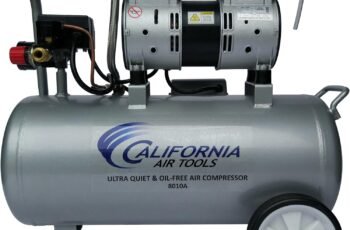
Have we ever wished our workspace could stay peaceful and quiet, even while running essential equipment like an air compressor?
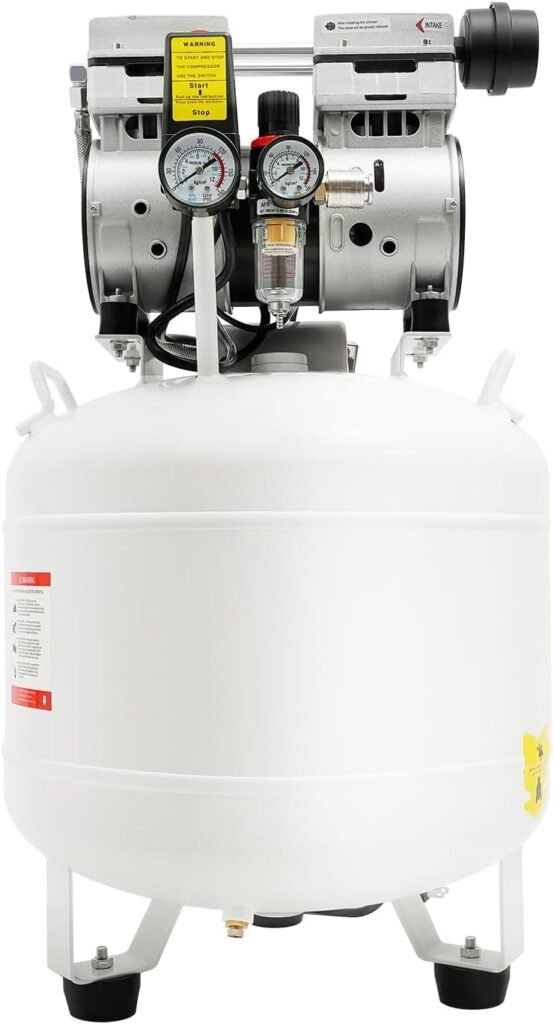

Understanding the 550W 40L Electric Air Compressor
When we first look at the 550W 40L Electric Air Compressor, 58dB Silent Oil-Free Air Pump 10 Gallon 8 PSI Air Storage Pump Dental Chair Device with Auto Drain Valve for Medical Equipment, Dentistry, it is clear that this machine is designed for environments where quiet operation and cleanliness matter. It aims to give us consistent compressed air without the mess, noise, and hassle of traditional oil-lubricated compressors.
This unit is especially suited to settings where people are close by and need calm surroundings—such as dental clinics, small workshops, studios, and home projects. It promises low noise, low maintenance, and versatile performance, all in one compact system.
Key Specifications at a Glance
Before we talk about real-world use, it helps to understand the core specs. They tell us what kind of tasks we can reasonably expect this compressor to handle and how it might fit into our working environment.
Here is a simplified breakdown of the main features and specs:
| Feature | Specification / Description |
|---|---|
| Power | 550W electric motor |
| Tank Capacity | 40L (approximately 10 gallons) |
| Noise Level | Around 58dB during operation |
| Design Type | Oil-free, silent air compressor |
| Maximum Air Storage Pressure | 8 PSI (for air storage use; may be regulated for applications) |
| Tank Structure | Triangular support with 3 foot pads |
| Drainage System | Auto drain valve |
| Cooling / Heat Dissipation | Large-caliber heat dissipation design |
| Intended Uses | Medical and dental equipment, home decoration, tire inflation, floor heating cleaning, spray guns, small air guns, nail guns |
| Maintenance Requirements | Low, thanks to oil-free design |
These specifications show us that this compressor is not designed for heavy industrial plants, but for lighter, more precise, and cleaner tasks. The combination of a 40L tank and silent operation makes it a good companion for everyday tasks where noise control matters.
Design and Build Quality
The design of this compressor feels practicality-focused rather than flashy. We care about how stable, safe, and easy it is to move, and this model puts noticeable emphasis on those aspects.
The triangular base with three foot pads is one of the most interesting design choices. It sounds simple, but in practice it translates into sturdy placement, less wobbling or vibration, and better confidence when we set it on different surfaces such as tile, concrete, or workshop flooring.
Triangular Structure and Three Foot Pads
The triangular structure supports stability in a very straightforward way. With three points of contact, the compressor does not rock the way some four-legged units can if the floor is slightly uneven.
We can place it in a corner, near a wall, or next to our chair, and we do not feel worried that movement or hose tension will tip it. The foot pads also add some vibration cushioning, which works together with the silent motor design to keep noise down.
Build Materials and Durability
While we do not have every internal detail, the overall construction appears tailored to frequent, repeated use. The 40L tank is designed to hold compressed air safely, and the oil-free pump reduces internal contamination and wear that comes from old or degraded oil.
In everyday use, the metal tank and solid fittings should hold up well if we follow normal safety habits—such as not exceeding the recommended pressure range and allowing time for cooling during heavy workloads.
Oil-Free Operation: Why It Matters
An oil-free compressor is more than just a convenience feature; it affects safety, cleanliness, and long-term costs. With this compressor, we do not have to worry about oil changes, oil level checks, or oil mist getting into our air lines.
In environments like dentistry, medical equipment operation, or painting, that is incredibly important. Contaminated air can affect patients, surfaces, equipment, and finish quality, so clean, dry air is a major advantage.
Reduced Maintenance and Lower Running Costs
Since there is no oil to replenish or replace, our ongoing maintenance list gets shorter. We do not need to purchase compressor oil, remember service intervals for oil changes, or deal with oily waste disposal.
Over time, that means lower operating costs and less downtime. We simply power the unit, use it, and occasionally check hoses, filters, and general condition, rather than performing regular fluid maintenance.
Cleaner Work Environment and Safer Applications
Oil-free design also means the air coming out is less likely to carry oil droplets. In dental or medical applications, we need this level of cleanliness for hygiene and safety. The same applies to:
- Airbrushing or spray painting: Oil contamination can ruin finish quality.
- Electronics or precision equipment: Oil residue can gather dust and cause performance issues.
- Indoor home use: Nobody wants a fine mist of oil in the living room or workshop.
With this compressor, we can feel more confident about using compressed air around sensitive devices or in spaces that must stay spotless.
Ultra-Quiet 58dB Performance
Noise is often the biggest drawback to owning a compressor. Many standard units can sound like a small engine running right next to us. This one, however, is rated around 58dB, which is comparable to a normal conversation or a quiet office.
That makes it a strong candidate for anyone who wants the benefits of compressed air without turning the environment into a noise zone.
Working Comfortably Without Disturbance
At around 58dB, we can comfortably hold a conversation while the compressor runs. We are less likely to reach for hearing protection or irritate people in adjacent rooms.
In dental settings, this quieter operation is important for patient comfort. Many patients get anxious just from loud mechanical noises, so a nearly whisper-quiet compressor can help create a more reassuring atmosphere.
Good for Shared and Residential Spaces
If we are using this compressor at home, in an apartment, or in a small office, the reduced sound level is a big plus. We are much less likely to disturb neighbors, coworkers, or family members.
This quieter operation gives us more flexibility to schedule tasks without worrying too much about noise restrictions or complaints.
Heat Dissipation and Cooling Performance
Efficient cooling directly affects how long we can run a compressor without overheating and how long it will last. The large-caliber heat dissipation design on this model is built to keep working temperatures under control.
We do not always see these internal details from the outside, but in practice, good cooling means more consistent performance and less risk of shutting down mid-task.
Large-Caliber Heat Dissipation
The heat dissipation system is described as having a large-caliber design, which implies wider or more effective airflow pathways that allow heat to escape faster.
With faster heat removal, the compressor:
- Is less prone to overheating.
- Can handle longer working periods.
- Maintains efficiency under frequent cycling.
Protection Against Overheating and Burnout
Overheating is one of the quickest ways to shorten a compressor’s lifespan. By improving heat dissipation, this unit reduces the strain on the motor and internal parts.
For us, that means better protection of our investment. We still need to use it within reasonable duty cycles, but overall, it should handle repeated use better than a poorly cooled alternative.
Auto Drain Valve and Moisture Management
Any compressed air system will collect moisture inside the tank over time. If we do not remove that moisture, we risk rust in the tank and water in our air lines. This compressor includes an auto drain valve, which is a big convenience upgrade.
Instead of manually opening a valve every time we finish a session, we can rely on the automatic system to manage much of this condensation for us.
Why Moisture Draining Is Important
Compressed air naturally draws water out of the air. That water collects in the tank and, if unchecked, causes:
- Tank corrosion and eventual leaks.
- Water spitting from our air tools or spray guns.
- Contamination of air lines in sensitive medical or dental setups.
An auto drain valve helps keep this under control. We still want to occasionally inspect it and ensure it is working, but it removes a tedious task from our daily routine.
Convenience and Reliability
With auto draining, our workflow gets smoother. We can focus more on using the air for work and less on remembering small maintenance steps.
In medical and dental environments, we often have tight schedules. A compressor that quietly manages basic tasks like tank draining is a real advantage for reliability and time-saving.
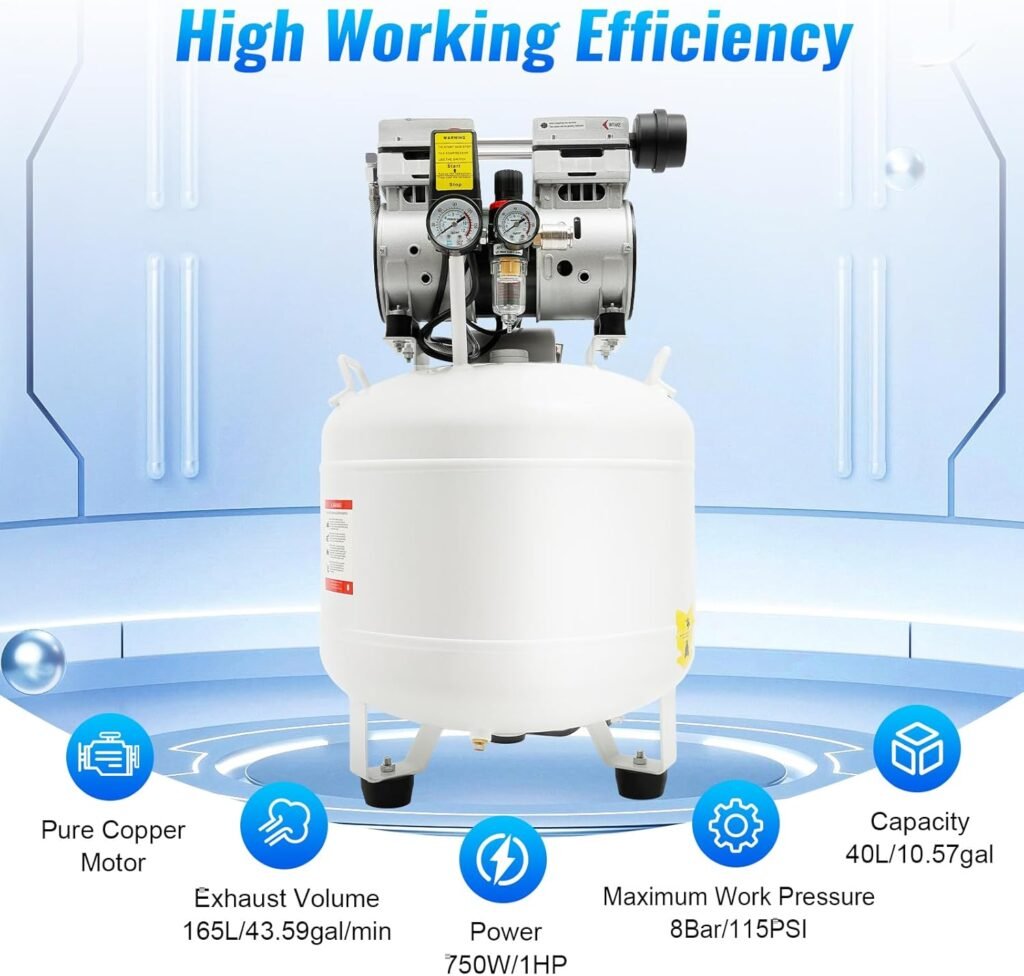

Storage Capacity: 40L / 10 Gallons
The 40L (10 gallon) tank capacity gives this compressor enough reserve to handle many typical small-to-medium tasks. It is not a tiny portable pump, but also not a massive industrial tank that needs a dedicated corner of a warehouse.
This middle ground is perfect for controlled environments and workshop spaces where we need available air on demand without constant cycling.
What a 40L Tank Means in Practice
A 40L tank allows the compressor to store a decent volume of air at the operating pressure. Once charged, we can use tools or equipment for a while before the motor needs to kick back in.
This results in:
- Fewer start-stop cycles during light tasks.
- More stable pressure for short bursts of higher-demand tools.
- Increased efficiency and comfort during routine use.
Balancing Portability and Capacity
The size of the tank also balances portability. It is not a tiny handheld device, but with the triangular structure and manageable volume, we can still move it around the room or between rooms when needed.
If we are running a small clinic or a home workshop, we can position it in a corner and leave it there, but we still have the option to reposition when our setup changes.
Power and Performance (550W Motor)
The 550W motor gives this compressor enough power to support a wide range of everyday air tasks without overkill. We are not powering huge industrial sandblasters, but we can comfortably operate dental chairs, small tools, inflators, and cleaning setups.
Understanding what 550W means helps us set realistic expectations and avoid overloading the machine.
Consistent Air for Light-to-Medium Tasks
In application, the 550W motor and 40L tank are best suited for:
- Dental chair operation.
- Light cleaning with an air gun.
- Spray painting with smaller spray guns (within duty cycle limits).
- Inflating car, bicycle, and motorcycle tires.
- Powering small nail guns or staplers for woodworking or home improvement.
For continuous, high-flow tools like heavy sanders or grinders, we would need a larger, more industrial compressor. For the tasks listed above, this unit hits a good performance sweet spot.
Efficient Power Use
A 550W motor also means reasonable power consumption. We are not drawing massive current, which makes this compressor more compatible with standard electrical setups in homes, clinics, and offices.
This balance helps us control electricity costs while still getting the functionality we need.
Uses in Dental and Medical Settings
One of the primary intended applications of this compressor is dental chair and medical equipment support. That alone tells us quite a bit about its noise level, cleanliness, and reliability.
Dental and medical environments demand quiet, non-contaminating, and dependable tools. This compressor aligns well with those needs.
Supporting Dental Chair Devices
Dental chairs often rely on compressed air for certain mechanical functions and for supplying air to instruments. The oil-free, silent nature of this compressor means:
- Patients are less stressed by loud background noise.
- Air supplied is cleaner and safer around open mouths and sensitive instruments.
- Staff can communicate clearly while the compressor is working.
We can place the compressor in an adjacent room or behind a partition, and it will not overwhelm the space with mechanical sound.
Use with Other Medical Equipment
Beyond dentistry, various medical devices and lab equipment sometimes require a reliable source of compressed air. Oil contamination in those systems can be particularly problematic.
With this compressor, we get a low-maintenance, clean-air solution suitable for:
- Small lab setups.
- Dental labs for tools requiring air.
- Clinics where quiet and cleanliness are essential.
As always, we should check equipment requirements to ensure pressure, flow, and air quality specs match, but the oil-free design is a strong foundation.
Uses in Home and Workshop Environments
Although it is marketed strongly for medical and dental uses, this compressor is also very appealing for home DIY fans, hobbyists, and small workshops. The low noise means we can actually use it without turning our space into a noisy machine room.
Home Decoration and DIY Projects
The description mentions home decoration, which covers a variety of projects where compressed air can be handy:
- Using a small spray gun for painting or varnishing.
- Operating a finish nailer for trim, molding, or paneling.
- Cleaning dust out of corners or tools using a small air gun.
Because this compressor is oil-free, it is more suitable for finishing work with paints and coatings where contamination would otherwise be a big concern.
Tire Inflation and Routine Maintenance
We can keep this unit in a garage or storage room and use it to:
- Inflate car, bicycle, or motorcycle tires.
- Top up sports balls and inflatable items.
- Maintain proper tire pressure with minimal effort.
The 40L tank gives us enough reserve air to handle multiple inflations in one session without constant cycling.
Floor Heating Cleaning and System Maintenance
The product description also mentions floor heating cleaning, which refers to blowing out debris or flushing systems that use air to assist cleaning or drying.
With controlled pressure and oil-free air, this compressor can be used to:
- Assist in cleaning heating pipes or ducts with careful procedures.
- Help remove dust, small debris, or moisture from constrained spaces.
We do want to ensure we follow system manufacturer guidelines for pressure to avoid damaging any piping or components.
Compatibility with Air Tools and Accessories
The compressor is intended to support a variety of smaller pneumatic tools. We should match our tools to the compressor’s capabilities, especially in terms of air consumption and duty cycle.
Spray Guns, Small Air Guns, and Nail Guns
According to its description, this compressor works with:
- Spray guns (for paint, coatings, or cleaning fluids).
- Small air guns (for blowing dust or debris).
- Steel nail guns (for light construction or woodworking).
For these tools, we want to check two main factors:
- Operating pressure: Ensure the compressor can reach the recommended PSI.
- Air consumption (CFM): Ensure the air gun’s consumption does not exceed what the compressor can reliably supply over time.
Within reasonable limits, the 550W motor and 40L tank should support intermittent use of such tools comfortably.
Short Burst vs. Continuous Use
For tools that operate in short bursts (like nail guns), the compressor does very well. The tank stores enough air to handle repeated shots without the motor running continuously.
For tools that need constant airflow (like some spray guns), we simply need to be aware of our duty cycle. We may need to allow the compressor to recover periodically if we notice it running continuously at its limit.
Ease of Use and Daily Experience
A good compressor should not constantly demand our attention. This model is built to be straightforward, from setup to daily operations.
Simple Operation and Setup
We connect the unit to power, attach our air hose and tools, adjust the pressure regulator where applicable, and get to work. With no oil levels to check or refill, initial setup and maintenance routines are simplified.
The auto drain valve and quiet motor mean there are fewer things to remember or worry about as we work, which gives us a smoother experience overall.
Moving and Positioning
The triangular base and moderate size of the tank make positioning fairly easy. While it is not pocket-sized, most people should be able to move it around within a room or between adjacent spaces.
We can place it close to our workstation if needed, because the noise level is low enough not to be disruptive. Alternatively, we can place it in a side area and run longer hoses to our tools.
Reliability and Longevity Considerations
Reliability often depends on both design and how we treat the machine. This compressor has several features that help support a long service life, as long as we respect its limitations.
Features That Support Longevity
Several design elements contribute to durability:
- Oil-free pump: Less risk of oil-related failures or contamination.
- Good heat dissipation: Reduces motor stress during heavy use.
- Auto drain valve: Helps prevent corrosion from standing water in the tank.
- Stable triangular base: Less vibration and physical stress.
Together, these features make the compressor less vulnerable to common failure points seen in older or low-quality models.
Good Use Habits for Longer Life
We can extend the compressor’s lifespan by following a few simple habits:
- Avoid running it continuously at maximum capacity for long periods.
- Check hoses and connections for leaks that force the compressor to work harder.
- Keep the unit in a clean, dry environment with good ventilation.
- Periodically ensure the auto drain valve is functioning correctly.
With this combination of design and good usage practices, we can expect solid long-term performance.
Who This Compressor Is Best For
Not every compressor suits every user. This model clearly targets specific needs, making it a great choice for some and less ideal for others.
Ideal Users and Environments
We see this compressor as particularly well-suited for:
- Dentists and dental clinics needing quiet, clean air.
- Medical and lab facilities requiring oil-free compressed air in quieter workspaces.
- Home users who want a silent compressor for DIY, inflation, and light tool use.
- Small workshops or studios where noise reduction and air cleanliness are important.
If our top priorities are low noise, minimal maintenance, and clean air, this compressor aligns very well with those values.
Users Who Might Need a Different Model
On the other hand, we might want a different type of compressor if we:
- Run large, continuous-use pneumatic tools (industrial sanders, grinders, etc.).
- Need very high pressures or large CFM output for heavy-duty tasks.
- Operate in environments where noise is not a problem and power is the main concern.
For those scenarios, heavier, louder, oil-lubricated compressors may still be the better fit.
Pros and Cons Summary
To help us decide whether this compressor aligns with our needs, it helps to summarize its strengths and limitations.
Main Advantages
- Oil-free design: No oil changes, cleaner air, reduced maintenance.
- Very quiet operation (around 58dB): Comfortable for clinics, homes, and offices.
- 40L (10 gallon) tank: Solid capacity for most light-to-medium tasks.
- Triangular, stable base with foot pads: Reduced vibration and tipping risk.
- Large-caliber heat dissipation: Better temperature control and motor protection.
- Auto drain valve: Easier moisture management, less tank corrosion risk.
- Multiple application range: Medical, dental, DIY, tire inflation, cleaning, light tools.
Possible Limitations
- Not designed for the highest-demand industrial air tools.
- We still need to be respectful of duty cycles for continuous-use tools.
- Physical size and weight, while manageable, are not ultra-portable in a handheld sense.
By keeping these points in mind, we can set realistic expectations and make an informed decision.
Practical Tips for Getting the Most Out of It
Once we choose this compressor, a few practical habits can help us maximize its benefits and keep it in top condition.
Setup and Placement Tips
- Place the compressor on a level, stable surface to take full advantage of the triangular base.
- Allow space around the unit for air circulation so the heat dissipation system can work effectively.
- Position it in a spot that balances hose reach with noise considerations (although its 58dB level already gives us flexibility).
Daily Use and Maintenance Suggestions
- Check quick-connects and hoses for leaks occasionally; leaks lower efficiency and increase wear.
- Listen for any unusual sounds that might indicate a problem, such as rattling or excessive vibration.
- Confirm that the auto drain system is working as intended, especially in humid environments.
These simple habits help ensure we enjoy quiet, dependable operation day after day.
Overall Impression and Final Thoughts
The 550W 40L Electric Air Compressor, 58dB Silent Oil-Free Air Pump 10 Gallon 8 PSI Air Storage Pump Dental Chair Device with Auto Drain Valve for Medical Equipment, Dentistry offers a compelling balance of silence, cleanliness, and practicality.
We see it as a thoughtfully designed tool for anyone who needs compressed air in environments where noise and contamination are serious concerns. From dental clinics and small medical facilities to home workshops and hobby spaces, it fills a valuable niche: enough power and capacity for real work, but without the constant roar and maintenance demands of traditional units.
If our priorities include:
- Maintaining a quiet workspace.
- Keeping air free of oil contamination.
- Reducing day-to-day maintenance tasks.
- Handling a wide range of light-to-medium air needs.
then this compressor is a very strong candidate. It gives us the benefits of compressed air while keeping our environment calm, clean, and efficient, which is exactly what many of us hope for when adding equipment to sensitive or shared spaces.

Disclosure: As an Amazon Associate, I earn from qualifying purchases.