Have we been searching for a portable air compressor that actually feels powerful enough for real work, but still manageable for everyday use?
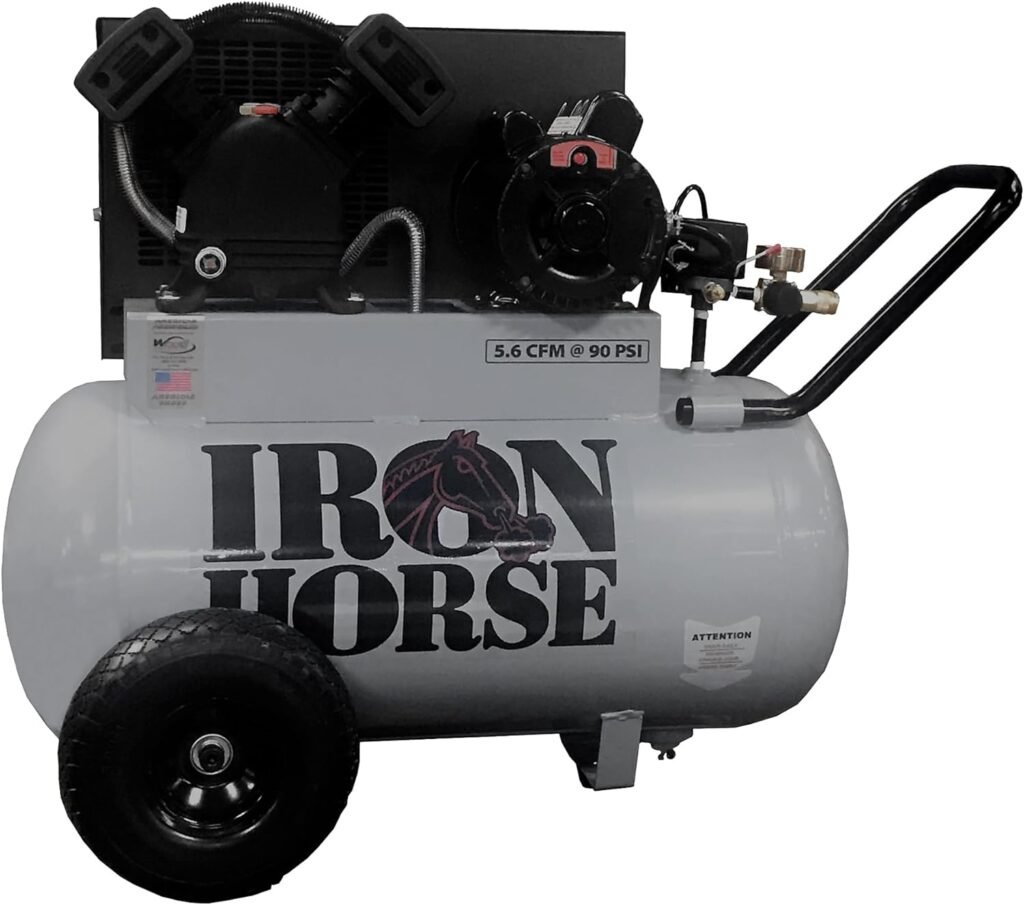

Overall Impression of the Iron Horse IHP5120H1-US Electric Air Compressor
This Iron Horse IHP5120H1-US Electric Air Compressor aims to bridge the gap between light DIY units and heavy, shop-only machines. We get a 20-gallon tank, a horizontal portable design, and a 5 HP max motor that delivers 5.6 CFM, which is quite respectable for a portable system.
From first impression, it feels like a compressor built for homeowners and contractors who want something tough and mobile without stepping into huge, stationary shop territory. It is clearly more serious than a cheap “pancake” compressor, yet still small enough to roll around a jobsite or garage.
Key Specifications at a Glance
Before we get into the real-world usability, it helps to see how the main specs line up. These numbers give us a sense of where this compressor fits in terms of power, capacity, and intended usage.
| Feature | Specification |
|---|---|
| Product Name | Iron Horse IHP5120H1-US Electric Air Compressor |
| Tank Capacity | 20 gallons (horizontal) |
| Power Source | Electric, 115V |
| Motor Power | 5 HP Max |
| Air Delivery (CFM) | 5.6 CFM |
| Maximum Pressure | 125 PSI Max |
| Typical Operating Pressure | 90 PSI |
| Pump Type | Single stage, cast iron pump |
| Configuration | V-style pump, individual cylinders |
| Mobility Features | Flat-free tires, handle, horizontal portable design |
| Included Components | Outlet valve, regulator, quick connectors |
| Intended Use | DIY projects, contractor tasks, workshop/garage |
Looking at the specs, we can see this unit is aimed at users who want an upgrade from basic consumer compressors but are not ready for large, stationary 60+ gallon shop units.
Design and Build Quality
General Construction and Materials
We immediately notice that this compressor feels solid rather than flimsy. The cast iron pump is the big highlight here, and it matters more than it might seem on paper. Cast iron pumps are known for greater durability and better heat management compared to cheaper aluminum-only designs.
We also appreciate that the entire build feels purposeful: the tank, wheels, handle, and pump layout all feel like they are meant to survive a real work environment. It is not a decorative piece of equipment; it looks and feels like a tool.
Horizontal 20-Gallon Tank
The 20-gallon horizontal tank strikes a nice balance between capacity and portability. It holds significantly more air than tiny 3–6 gallon units, which means fewer cycles of the motor kicking on and off and better support for continuous tasks like spraying or impact wrench work.
At the same time, the horizontal layout keeps the center of gravity low. That makes it less likely to tip when we roll it around, and it tends to be easier to slide under benches or along garage walls when we are done using it.
“V” Design Pump with Individual Cylinders
The pump’s “V” configuration with individual cylinders is designed for smoother operation and better cooling. By offsetting the cylinders in a V shape, the compressor can reduce vibration, and the individual cylinder layout allows for better airflow and heat dissipation.
In practice, this means we get less rattling and a cooler running compressor, both of which contribute to longer life and a more pleasant working environment. It also has a bit of a professional look, which we can appreciate.
Portability and Ease of Movement
Flat-Free Tires and Handle
We all know how frustrating a flat tire on a tool cart or compressor can be, especially when we are trying to move it across a rough driveway or a jobsite. The Iron Horse unit uses flat-free tires, meaning they will not go down on us mid-project. That detail alone adds convenience and reliability.
The built-in handle gives us a good grip when we are tilting and rolling the compressor. Combined with the horizontal tank and heavy-duty wheels, we can wheel it around like a sturdy cart. For moving between rooms, across a garage, or from a truck to a worksite, everything feels straightforward.
Moving Between Jobs and Storage
This compressor is clearly made with mobility in mind. We can roll it up a driveway, over small bumps, and onto a truck ramp without too much struggle, especially with two people for lifting if necessary. It is not feather-light, but for a 20-gallon unit with a cast iron pump, it lands in that realistic “workable weight” zone.
For storage, its horizontal shape and modest footprint make it easier to tuck against a wall or under a workbench. We can stand hoses and tools beside it and keep a reasonably tidy workspace, which always helps when we are juggling multiple projects.
Power and Performance
5 HP Max Motor and 115V Power
The Iron Horse IHP5120H1-US is powered by a 5 HP max motor running on standard 115V household current. That is a strong combination because it gives us substantial power without needing a 240V circuit, which many residential workshops do not have readily available.
The 5 HP max rating signals that this motor can handle demanding bursts of work and replenish the tank reasonably fast, especially considering the 20-gallon volume. For a portable electric compressor, this is a very capable setup.
5.6 CFM and 125 PSI Max
The 5.6 CFM performance and 125 PSI max pressure put this compressor firmly into the range where we can run a broad variety of air tools, especially those intended for general automotive or carpentry use.
Here is a quick sense of what that means for typical air tools:
- Nailers (finish, brad, framing): Well within its range, especially at 90 PSI.
- Staplers and small blow guns: Easily supported for extended periods.
- Impact wrenches (3/8″ or 1/2″): Usable for many tasks, though continuous heavy use will require the compressor to run more often.
- Air ratchets: Practical for intermittent work.
- Spray guns (HVLP / conventional): Suitable for smaller projects and intermittent use; for large, continuous spraying, we may want a bigger CFM rating.
- Tire inflation: More than enough for cars, trucks, and light equipment.
We should always match our tools’ CFM requirements to the compressor’s ratings, but for many home garages and light contractor jobs, 5.6 CFM at working pressure is a comfortable middle ground.
Noise and Vibration
Reduced Vibration Through “V” Design
One of the appealing design points of this compressor is the attention to vibration control. With the V-shaped pump and individual cylinders, vibration tends to be more balanced than on some straight-up-and-down or budget units.
In use, this translates into less walking or creeping across the floor and less rattling of adjacent surfaces. It is not silent, but it feels relatively composed and less harsh compared to some cheaper designs.
Noise Levels in Real Use
We should expect noise from any serious air compressor, and this one is no exception. However, the smoother pump design, cooler running, and overall build quality help keep the sound more controlled and tolerable.
In a garage or workshop, we would likely still want hearing protection if we are working near it for long stretches. For occasional bursts or if it sits in the corner while we work on the other side of the room, we may find the noise level manageable. It is fair to describe it as relatively quiet for its output category, but not “whisper quiet.”
Durability and Longevity
Cast Iron Pump Benefits
The cast iron pump is a real highlight and a core reason we might choose this model over cheaper consumer compressors. Cast iron is more resistant to wear, handles heat better, and tends to give us a longer service life under regular or even heavy use.
For those of us who plan to use the compressor frequently—weekend after weekend, or daily on job sites—this matters a lot. A cast iron pump is less likely to wear out prematurely, especially when paired with reasonable maintenance.
Cooler Operation and Component Life
By running cooler and smoother, this compressor helps extend the life of internal seals, valves, and lubricated parts. Hotter-running, less efficient units can wear faster and start to leak or lose performance over time.
The combination of the V-style layout, individual cylinders, and cast iron construction gives us more confidence that this machine is built for regular, real-world work rather than just occasional novelty use.
Features and Controls
Regulator, Outlet Valve, and Quick Connectors
The compressor includes a regulator and outlet valve with quick connectors. That means we can quickly attach and remove hoses and tools without hunting down extra fittings and adapters right out of the box.
The regulator is important because it lets us set the output pressure to what our tools actually need, often around 90 PSI for many tools, while the tank can remain at its maximum stored pressure. This helps maintain tool performance and extend their life by preventing overpressure.
Basic Control Layout
We can expect a standard layout: pressure gauge(s), regulator knob, outlet quick-connect, and power switch in accessible positions. While details vary slightly by unit, the overall setup is intuitive for anyone who has used an air compressor before. For newcomers, the learning curve is modest—turn it on, let it build pressure, set the regulator, and connect our tool.
The horizontal design usually places controls at an easy-to-reach height, so we do not have to crouch too low or reach too high to adjust settings.

Setup and Everyday Use
Electrical Requirements
The 115V electrical requirement means we can plug it into a typical household circuit, though we should pay attention to circuit amperage and avoid running heavy-draw tools on the same line. Using a dedicated circuit or a high-capacity outlet is ideal to prevent breaker trips.
We should avoid thin, long extension cords whenever possible. If we must use one, it needs to be heavy gauge to handle the current draw without voltage drop, which can affect motor startup and longevity.
First-Time Setup
Initial setup usually involves:
- Positioning the compressor on a stable, level surface.
- Ensuring all shipping plugs or caps are removed and any required oil levels (if oil-lubricated) are correct.
- Plugging into an appropriate outlet.
- Closing the drain valve and any outlet valves.
- Turning it on and allowing it to build up to full pressure, then checking for any leaks.
After that, we connect our hose, adjust the regulator to the desired working pressure, and begin using our tools. The process is straightforward, especially for those of us who have owned compressors before.
Maintenance and Care
Routine Checks
To keep the Iron Horse IHP5120H1-US operating at its best, we need to follow a consistent maintenance routine. Typical tasks include:
- Draining the tank: Moisture builds up inside any compressor tank, so we should open the drain valve periodically (often after each use or at least weekly) to release water and prevent corrosion.
- Checking connections: Make sure hoses, fittings, and quick-connects are snug, and watch for small leaks.
- Inspecting filters (if applicable): Dirty intake filters can reduce performance and strain the motor.
By staying on top of these small habits, we significantly extend the service life of the unit and maintain consistent performance.
Longevity with Proper Use
With its cast iron pump and smooth design, we can reasonably expect long life from this compressor if we treat it well. That means:
- Avoiding continuous overloading beyond its rated CFM/Psi capacity.
- Allowing breaks if we are doing extended, heavy-duty work.
- Keeping it in a reasonably clean, dry environment.
Over the years, seals or valves may need service—this is normal for compressors—but the fundamental structure is built for durability.
Ideal Users and Use Cases
For DIY Enthusiasts and Homeowners
For those of us who are serious about home projects, this compressor fits nicely into a robust home workshop. It can handle:
- Framing or finish nailers for remodeling and woodworking.
- Tire inflation, blow-off cleaning, and general shop tasks.
- Small painting and staining projects with the right spray equipment.
- Occasional automotive work with impact tools and ratchets.
Compared to small 6-gallon models, the 20-gallon tank and higher CFM rating give us a much smoother, more capable experience, especially for tasks that require steady airflow.
For Contractors and Light Commercial Use
Contractors, remodelers, and tradespeople who need a portable but capable compressor will see this as a strong option. It is not a massive shop compressor, but it is well-suited for:
- On-site carpentry (framing and finish nailers).
- Smaller roofing jobs.
- Punch lists, trim work, and repair jobs.
- General service work that requires portable compressed air.
The flat-free wheels and cast iron pump are particularly attractive for those of us moving from site to site and counting on our tools to be ready every day.
Pros and Cons
Advantages of the Iron Horse IHP5120H1-US
Let us group the main upsides so we can quickly see what makes this model appealing:
-
Strong Performance for Its Size
5.6 CFM with 125 PSI max and 5 HP max provides ample power for a wide range of tools and tasks. -
Durable Cast Iron Pump
Built for heavier use and longer lifespan, especially important for contractors or frequent DIY users. -
Portable 20-Gallon Horizontal Design
Enough air capacity for real work while still being rollable and reasonably easy to store. -
Flat-Free Tires and Handy Handle
Reduced frustration when moving across job sites, driveways, or shop floors; no more stopping for flat wheels. -
Smoother, Cooler Operation
V-style pump layout and individual cylinders reduce vibration and help the compressor run cooler. -
Standard 115V Power
No need for a 240V line; works in most garages and job environments with standard outlets.
Potential Drawbacks
No tool is perfect for everyone, and this compressor has a few potential limits or trade-offs we should note:
-
Not Ultra-Light
With a 20-gallon tank and cast iron pump, it is heavier than tiny portable units. It is mobile, but not something we casually lift one-handed up flights of stairs. -
Noise Still Present
Although smoother than some alternatives, it is still a fairly loud machine. Hearing protection is a smart idea for extended use nearby. -
Limited for Very High-CFM Tools
For continuous heavy sandblasting, large spray booths, or industrial-grade pneumatic demands, this unit will be undersized. It is more of a robust mid-range portable than a full-blown shop system.
How It Compares to Smaller Portable Compressors
When we compare this Iron Horse compressor to a typical 6-gallon pancake compressor, the differences are noticeable:
- Tank Size: 20 gallons vs. 6 gallons means longer tool run time before the motor kicks in and better support for moderate continuous usage.
- Power: A 5 HP max motor easily outclasses small units that often sit in the 1–2 HP range.
- Durability: The cast iron pump and heavier build scream “long-term tool,” unlike some disposable-feeling bargain compressors.
- Mobility: We lose some compactness, but gain better wheels and stability; instead of carrying, we roll it.
If we currently use a small pancake compressor and find it constantly cycling or struggling with air-hungry tools, this Iron Horse model feels like a substantial and welcome step up.
How It Compares to Large Stationary Compressors
On the other hand, compared to big 60–80 gallon upright shop compressors:
- Mobility: This Iron Horse wins easily. Stationary units are meant to stay put.
- Capacity and Continuous Use: Large stationary compressors often have higher CFM ratings and bigger tanks, designed for continuous shop operations. Here, the Iron Horse is more modest.
- Power Requirements: Many big shop models require 240V; this one runs on standard 115V, making it more flexible for home garages and small job sites.
If our work demands constant, heavy-duty air supply (full-time bodywork, industrial painting, continuous sandblasting), we might prefer a large stationary system. But if we need mobility more than all-day industrial output, this portable Iron Horse is the more practical choice.
Practical Scenarios Where This Compressor Shines
Weekend Renovation Projects
If we are tackling home renovations—building a deck, remodeling a room, installing trim—this compressor can run our framing nailers, finish nailers, and other pneumatic tools all weekend. The capacity and CFM reduce delays and frustrations that come from underpowered machines.
Automotive and Garage Work
For home mechanics and small shops, this unit provides:
- Tire inflation with ease.
- Power for impact wrenches and ratchets for intermittent use.
- Air for blow guns to clean parts and filters.
- Occasional use for spray painting small panels or parts.
It is not a full automotive body shop system, but it comfortably covers many enthusiast and light professional tasks.
On-Site Service and Trades
For electricians, plumbers, HVAC techs, and general contractors, the portability and reliability are big assets. We can roll the compressor from room to room or load it in and out of a service vehicle, relying on it for fastening tools, small cutting tools, and general pneumatic tasks.
User Experience and Everyday Satisfaction
Ease of Operation
The combination of a straightforward control cluster, quick connectors, and horizontal rolling design makes daily use simple. We connect it, power it on, adjust the regulator, and get to work. There is very little fiddling or awkwardness to worry about.
Feel of Quality
From the sturdiness of the wheels and frame to the cast iron pump and balanced layout, everything feels more “serious tool” than “disposable appliance.” Over time, this sense of quality can make a big difference in how satisfied we feel with our purchase.
We are less likely to outgrow this compressor quickly. Instead, it feels like a core part of a growing workshop or contractor toolkit.
Safety Considerations
Pressure and Tank Safety
As with any compressor, we must respect the stored energy in the tank. We should:
- Never exceed rated pressures.
- Avoid modifying safety valves or bypassing built-in protections.
- Periodically drain the tank to reduce moisture and internal rust risk.
Following basic safety precautions keeps us and our workspace safer and helps the tank last longer.
Electrical Safety
Using a properly rated outlet and avoiding undersized extension cords is important. If the circuit frequently trips, we should consult an electrician or reconfigure our power usage to give the compressor a dedicated or higher-capacity line.
Who Should Consider the Iron Horse IHP5120H1-US?
We can think about ideal buyers in a few categories:
-
Serious DIYers who are tired of small, underpowered compressors.
If we keep running into the limits of a 6-gallon or tiny portable unit, this model offers more muscle without going overboard. -
Contractors and tradespeople who need a tough, portable compressor.
Flat-free tires, cast iron pump, and a 20-gallon tank make it a reliable partner on job sites. -
Home garage enthusiasts and small shop owners.
For those of us working on cars, motorcycles, or woodworking projects, the mix of CFM, PSI, and portability is very appealing.
If we need massive industrial output, we will need a bigger system. But for many real-world tasks that mix mobility and power, this Iron Horse model hits a sweet spot.
Value for Money
Balancing Cost with Features
When we compare the Iron Horse IHP5120H1-US to cheaper, smaller compressors, the initial price might be higher, but the long-term value is stronger. We get:
- Better performance (CFM, PSI, horsepower).
- Stronger materials (cast iron pump).
- Greater capacity (20-gallon tank).
- More professional features (flat-free wheels, smoother operation).
Over the years, this kind of build reduces the risk of premature failure and replacement, making the investment worthwhile.
Long-Term Ownership Perspective
From a long-term perspective, a compressor like this can become a central, everyday tool in our workspace. Instead of viewing it as a disposable item, we treat it as a durable, maintainable part of our shop infrastructure.
That mindset often encourages us to tackle more projects—automotive repairs, home upgrades, woodworking, and more—knowing we have a reliable source of compressed air on demand.
Final Thoughts on the Iron Horse IHP5120H1-US Electric Air Compressor
The Iron Horse IHP5120H1-US Electric Air Compressor, with its 20-gallon horizontal tank, 5 HP max motor, 5.6 CFM performance, and 125 PSI max pressure, delivers a very usable combination of power, durability, and portability. The cast iron pump, V-style design, and flat-free tires add up to a machine that feels built for real work, not occasional novelty use.
For those of us who want more than a small, noisy pancake compressor but are not ready for an enormous stationary unit, this model fits right in the middle. It supports a wide range of tools, moves easily from one job to the next, and is designed to last with proper care.
If our projects include regular DIY work, light contracting, or serious garage tasks, and we want a compressor that can grow with our needs, the Iron Horse IHP5120H1-US stands out as a strong and practical choice.

Disclosure: As an Amazon Associate, I earn from qualifying purchases.