Have we ever wished we had a reliable air compressor that actually keeps up with our projects instead of slowing us down?
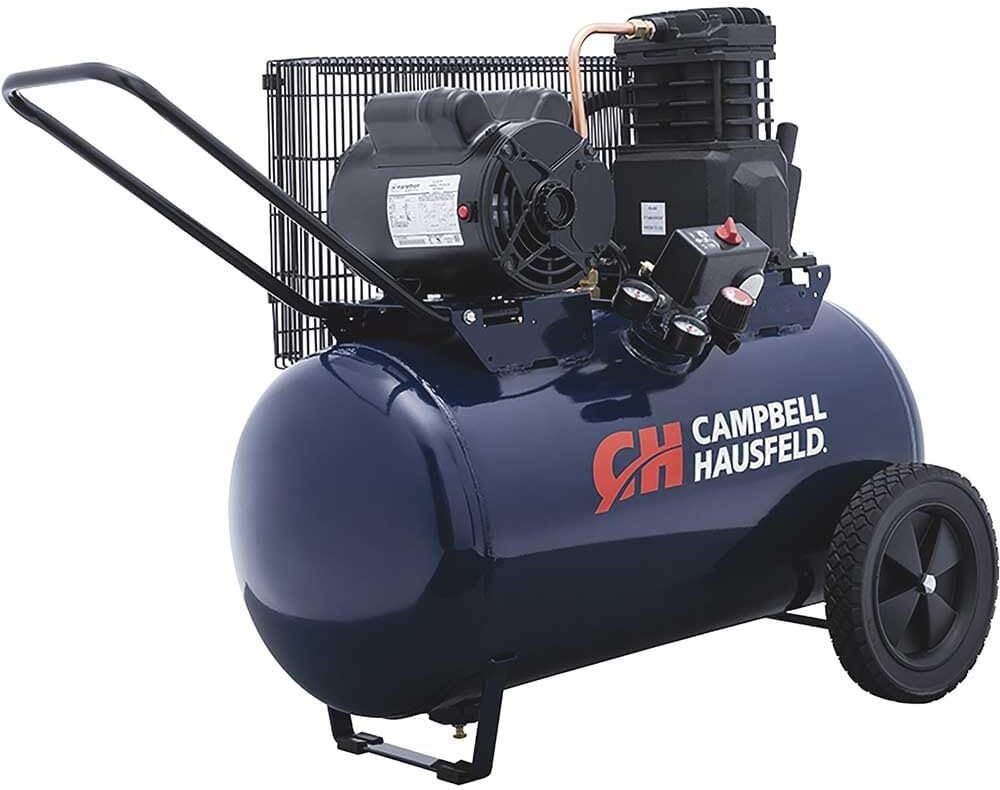

What Makes the Campbell Hausfeld 20 Gallon Compressor Stand Out?
When we first look at the Campbell Hausfeld 20 Gallon Horizontal Air Compressor (2 HP, dual voltage, 135 PSI, 5.5 CFM at 90 PSI), it feels like a unit built for serious home users and light professional work. It sits in that sweet spot between small, underpowered hobby compressors and huge shop machines that are hard to move and overkill for many tasks.
This model brings together portability, solid power, and long-term durability in a way that suits us if we are serious about home improvement, automotive work, or running multiple air tools with confidence.
Key Specifications at a Glance
Before we talk about how it feels to use this compressor in real projects, it helps to look at the numbers. They tell us what kind of tools and tasks we can realistically handle without frustration.
Core Specs and Performance Numbers
We are often trying to figure out if a compressor will actually handle our nailers, impact wrenches, and spray guns. The specs below give us a quick reference for the kind of air output and power we can expect.
| Feature | Specification |
|---|---|
| Tank Capacity | 20 gallons (horizontal configuration) |
| Motor Power | 2 HP electric motor |
| Voltage | Dual voltage 120V / 240V |
| Max Pressure | 135 PSI |
| Air Delivery | 5.5 CFM at 90 PSI |
| Pump Type | Oil-lubricated, twin cylinder, cast iron, single stage |
| Noise Level | 68 dB (relatively quiet operation) |
| Tank Construction | ASME code tank (durable and safety rated) |
| Estimated Pump Life | Up to 5,000 hours (based on B-10 bearing rating) |
| Portability | Horizontal, wheeled, portable design |
| Intended Use | Home improvement, serious DIY, light professional and contractor use |
| Origin | Made in the USA |
These numbers show that we are getting a serious compressor that can power a wide variety of air tools, not just a tiny inflator or hobby unit.
Design and Build Quality
The overall build of this compressor is geared toward durability and real shop use. We are not just getting a lightweight plastic shell; we are getting proper metal components that are made to handle years of use.
Heavy Duty Cast Iron Construction
The heart of the compressor is the cast iron, oil-lubricated, twin cylinder pump. Cast iron is heavier, but it is also tougher and better at handling heat and long run times.
We appreciate that this is not a “throwaway” pump. With an estimated life of up to 5,000 hours, we are clearly looking at a tool that is meant to be maintained and kept in service for many years.
ASME Code Tank for Safety and Durability
The 20 gallon tank is built to ASME code standards, which means it has been manufactured and tested to meet strict safety and durability guidelines.
We like knowing we do not need to worry about the tank integrity under pressure, as long as we use it correctly and keep up with basic safety and maintenance practices.
Horizontal, Portable Layout
The compressor is designed as a horizontal unit, with wheels and a handle for easier movement. This style is handy if we want to roll it around the garage or between different areas on a job site.
We find horizontal units more stable when moving over uneven surfaces, and the low profile can be helpful for storage under workbenches or against walls.
Power and Performance in Real Use
Specs are helpful, but what we really care about is how the compressor behaves when we hook up our air tools and start working.
5.5 CFM at 90 PSI: What That Means for Us
The compressor delivers 5.5 CFM at 90 PSI, which is the key measurement we need when comparing it to the air requirements of our tools.
We can comfortably run tools like impact wrenches, ratchets, nail guns, and certain paint guns, as long as the CFM requirements are in the same range or lower than what this unit can supply.
Max 135 PSI for Stronger Output and Storage
With a maximum pressure of 135 PSI, the compressor can fill its tank to a good pressure level and then cycle on and off while we work.
We like that this gives us some overhead for tools that want higher pressures, and it lets the compressor store more usable air in the 20 gallon tank before it needs to turn back on.
Dual Voltage Flexibility: 120V and 240V
One of the more versatile features is the dual voltage motor that can run on 120V or 240V. This flexibility matters a lot depending on where and how we plan to use the compressor.
Using It on Standard 120V Household Circuits
On 120V, we can plug it into a typical household outlet (assuming the circuit can handle the amperage). This is great for most garages, basements, or home shops where we may not have 240V wiring installed.
We might see slightly slower recovery times on 120V compared to 240V, but for many home users, the convenience of standard power is worth it.
Stepping Up to 240V for Better Performance
If we have access to 240V, we can reconfigure the compressor and run it on a more robust electrical circuit. This can help with smoother startups and more consistent performance under heavy use.
We appreciate having the option; we can start on 120V and later switch to 240V if we upgrade our shop electrical setup.

Noise Level and Comfort
Noise can be one of the biggest complaints with many compressors, but this unit is designed with quieter operation in mind.
Working at 68 dB: Quieter Than Many Compressors
The compressor operates at around 68 dB, which is considered low for this class of machine. While it is not silent, it is significantly quieter than many loud, rattling units we might have used in the past.
We find this more comfortable for longer sessions, especially if we are working in enclosed spaces or at home where others are nearby.
Indoor and Outdoor Use Without the Usual Racket
The lower noise level means this compressor is well suited for indoor and outdoor work. It is more neighbor-friendly, and we are less likely to feel the need to constantly wear heavy hearing protection for shorter tasks.
We still recommend hearing protection for extended use, but we appreciate not having a constant roar dominating our workspace.
Applications: What Can We Actually Do With It?
A compressor becomes valuable when it covers a broad range of tools and projects. This model is clearly aimed at serious DIY and contractor-level tasks.
Perfect for Serious Home Improvement Projects
For home improvement, this compressor can become a central tool in our setup. It comfortably runs:
- Framing nailers and finish nailers
- Roofing nail guns
- Staplers
- Impact wrenches and ratchets
- Chisels and small air hammers (intermittently)
We feel confident tackling renovations, building decks, framing walls, installing trim, or upgrading rooms with air-powered tools that save time and effort.
Automotive and Garage Tasks
In the garage, this compressor is particularly helpful for automotive work and equipment maintenance. We can:
- Remove lug nuts with impact wrenches
- Use ratchets for faster disassembly
- Run blow guns to clean parts and workbenches
- Inflate tires quickly and accurately
This is the kind of compressor that makes weekend mechanical work easier and more efficient, especially if we often work on cars, trucks, or equipment.
Light Professional and Contractor Use
Contractors and serious DIYers who do more frequent work can use this unit on job sites or in small shops. The 20 gallon tank and 5.5 CFM at 90 PSI give us enough capacity for multiple tasks in a typical workday.
We would not put it in the same category as huge industrial shop compressors, but for a contractor doing framing, roofing, or finishing work on residential jobs, it is very practical.
Ease of Use and Setup
Ease of use is important when we plan to use a compressor regularly. This model aims to make operation fairly straightforward.
Controls and Basic Operation
Typical setups on compressors in this class include:
- An on/off switch
- Pressure gauges (tank pressure and regulated output pressure)
- A pressure regulator knob
- Quick-connect fittings for air hoses
We can expect a familiar layout that lets us adjust the pressure for different tools and monitor the tank pressure while we work.
Portability Around Our Workspace
The horizontal tank, wheels, and handle design mean we can roll the compressor around our garage, driveway, or job site. This is especially useful for connecting air tools in different locations without constantly moving the tools and materials instead.
We like that we do not need a forklift or multiple people to move it; one person can typically handle repositioning it without too much effort.
Maintenance: Oil-Lubricated Reliability
This compressor uses an oil-lubricated pump, which is part of what gives it such a long service life. It does, however, mean that some basic maintenance is required.
Why Oil-Lubrication Matters
Oil-lubricated pumps tend to run cooler and last longer under regular use compared to many oil-free designs. The twin cylinder cast iron pump in this unit is clearly built with longevity in mind.
We are trading a little extra maintenance for a much longer life span, smoother operation, and more robust performance.
Routine Maintenance Tasks
To keep the compressor in safe, reliable condition, we should expect to:
- Check and change the pump oil periodically
- Drain the tank to remove moisture that builds up inside
- Inspect hoses and fittings for wear and leaks
- Monitor the air filter and clean or replace as needed
These tasks are not complex, and we can usually do them with basic tools and a small amount of time. In return, we get years of dependable service.
Longevity and Reliability
One of the standout features of this compressor is its estimated pump life of up to 5,000 hours. This rating signals serious engineering for long-term use.
5,000 Hour B-10 Bearing Rating
A B-10 bearing rating of 5,000 hours means that 90% of pumps are expected to reach at least 5,000 hours before bearing-related issues. For typical home and light professional use, that is a very long time.
We might use a compressor a few hours a week, more during busy project periods. At that pace, we are talking about many years of use before we come close to that mark.
Built for Repeated, Real-World Use
The combination of:
- Cast iron construction
- Oil lubrication
- Solid bearings
- ASME-rated tank
all point toward a tool that we can use through project after project without feeling like it is wearing out prematurely. We can think of it as a long-term investment in our workshop or job site toolkit.
Comfort and User Experience
Using a compressor should feel safe, stable, and manageable. The Campbell Hausfeld 20 gallon model is designed to offer that.
Vibration and Stability
Horizontal designs often have a low center of gravity, which helps keep the unit from tipping over when we move it or when it cycles on and off.
We can expect some vibration when the pump is running, but the overall construction and layout help keep it from moving around or feeling unstable.
Noise, Heat, and Workspace Friendliness
Because it runs relatively quietly at around 68 dB and is oil-lubricated, it should not scream or rattle as much as many cheaper units. There will be warmth from the pump and motor, as with any compressor, so giving it space for ventilation is still important.
We appreciate being able to have a normal conversation nearby or listen to music without completely drowning it out while the tank is refilling.
Safety Features and Considerations
Any pressurized tank tool demands good safety features, and this one is no exception.
ASME Code Tank and Pressure Components
The ASME code tank is a reassuring sign that the manufacturer has adhered to recognized safety standards. This means the tank and its welds have met or exceeded defined strength and pressure criteria.
We still need to use common sense: never bypass safety valves, never tamper with pressure switches, and always operate within the manufacturer’s guidelines.
Pressure Relief and Safe Operation
Like most modern compressors, this unit is equipped with:
- A pressure relief valve
- An automatic pressure switch to control motor cycles
- Clear gauges for monitoring pressure
By following recommended settings, not exceeding the duty cycle, and draining the tank regularly, we can keep both ourselves and the unit safe over time.
Pros and Cons of the Campbell Hausfeld 20 Gallon Compressor
To make a fair judgment, we should look at both sides: what this compressor does very well, and where it may not be ideal for everyone.
What We Really Like
There are several strengths that stand out clearly in this model:
- Serious power for its size: 5.5 CFM at 90 PSI and 135 PSI max is plenty for many air tools.
- Durable cast iron, oil-lubricated pump: Built to last with up to 5,000 hours of rated life.
- Relatively quiet at 68 dB: Friendlier for indoor use and shared spaces.
- Dual voltage 120/240V: Flexible for home garages or upgraded shops.
- ASME code tank made in the USA: Reliable construction and quality standards.
- 20 gallon capacity: Enough stored air for many medium and larger tasks.
For serious DIYers, home mechanics, and small contractors, this checks a lot of boxes.
Possible Trade-Offs and Limitations
We should also recognize where it might not be the perfect fit:
- Not ultra-light or tiny: The cast iron pump and 20 gallon tank mean more weight than compact units.
- Requires oil maintenance: We must be comfortable checking and changing oil and doing basic upkeep.
- Not a high-CFM industrial unit: Continuous heavy use with large sanders or high-demand tools may be beyond its ideal range.
- Needs adequate power circuits: On 120V, we should ensure proper amperage and avoid overloaded circuits.
If we accept these limitations and they fit our situation, the compressor still offers excellent value and capability.
Matching the Compressor to Our Tools
To decide if this compressor is right for us, we need to think about the specific air tools we run and how often we use them.
Common Tools It Handles Well
Based on its output, we can expect it to handle most of these with confidence:
- Impact wrenches (typically 3/8″ and 1/2″ sizes)
- Air ratchets
- Framing and finish nailers
- Roofing nailers
- Blow guns and tire inflators
- Smaller HVLP spray guns (checking each gun’s CFM requirements is important)
As long as we are not running multiple high-demand tools continuously, it should keep up for most jobs.
Tools That Might Push Its Limits
Some tools may be more demanding, especially when used for long periods:
- Large DA sanders or board sanders
- Continuous use of air grinders
- Very high CFM paint guns used in production settings
We can still use some of these tools, but the compressor might cycle more often, and we may need to pause occasionally to let it recover.
Using It in Different Environments
The compressor’s design makes it flexible for a variety of settings. We just need to match its use to our environment and expectations.
Home Garage or Workshop
For home use, this unit is in its element. It supports:
- Vehicle maintenance
- Woodworking with nailers and staplers
- Home improvement projects
- Hobby metalwork or fabrication
We can roll it around the garage, store it against a wall, and benefit from dual voltage flexibility as we upgrade our electrical setup over time.
Small Contractor or Job Site Use
For small contractors, this compressor serves well as a main or backup unit for:
- Framing jobs
- Roofing projects
- Remodeling work
Its horizontal design and wheels make it easy to move between rooms or areas on a job site, and its quieter operation makes customer environments more pleasant.
Indoor vs Outdoor Tasks
Because of the 68 dB noise level, running it indoors in a basement or workshop is much more comfortable than many louder models.
We can still wheel it outdoors for particularly dusty or messy jobs, but we are not forced to hide it away from our workspace just to tolerate the sound.
Operating Tips for Best Results
To squeeze the most life and performance out of this compressor, a few usage habits make a big difference.
Managing Duty Cycle and Run Time
Even a solid unit like this benefits from respecting a reasonable duty cycle. That means giving it breaks between long periods of continuous running, especially under heavy loads.
We should allow the compressor to cool if it has been running a lot, monitor the temperature of the pump and motor housing, and avoid pushing it well beyond its intended load for extended periods.
Checking Oil and Draining the Tank
Oil level checks and periodic oil changes keep the pump protected and running smoothly. Draining the tank at the end of the day or after long sessions is critical for removing moisture that can cause internal rust.
If we get in the habit of these quick checks, we extend the life of both the pump and the tank.
Value for Money
Value is about more than initial cost; it is about how many years of serious use we get from the purchase.
Long-Term Investment Over Cheap Alternatives
We could buy a smaller, cheaper compressor that is oil-free and lighter, but we would likely give up:
- Longevity
- Noise control
- Higher CFM output
- Heavy duty tank quality
By choosing a model like this, we are paying for a stronger pump, a safer tank, and more consistent performance over many years.
Who Gets the Best Value from This Model
The compressor is a particularly good fit for:
- Homeowners who regularly tackle projects
- DIY mechanics maintaining several vehicles
- Hobbyists with woodworking and renovation projects
- Small contractors doing residential construction or repair
If we only need a compressor once or twice a year for small inflations, this is more than we need. But if we are regularly using air tools, it can become one of the most useful machines in our workspace.
Comparing It to Smaller or Larger Compressors
To put this compressor into context, it helps to understand where it sits relative to other common options.
Compared to Small Portable Pancake Units
A typical small pancake compressor might have:
- 1–6 gallon tank
- Lower CFM output
- Often louder noise levels
We gain a lot with the Campbell Hausfeld 20 gallon unit:
- More stored air (20 gallons vs small tanks)
- Higher CFM output to run more demanding tools
- Quieter and more durable construction
For serious work, the 20 gallon size is a big step up from tiny portable units.
Compared to Large Stationary Shop Compressors
Large stationary compressors might offer:
- 60+ gallon tanks
- Much higher CFM
- Dedicated 240V power requirements
This 20 gallon unit does not reach that industrial level, but it does not require us to commit to a permanent, heavy, non-portable system either.
We think of it as a middle ground: more power and capacity than small hobby models, less bulk and complexity than big industrial shop units.
Our Overall Impression
Putting all the features, performance data, and real use considerations together, this Campbell Hausfeld 20 Gallon Horizontal Air Compressor presents itself as a strong, well-balanced choice for many users.
We like that it offers:
- Substantial power and air delivery at 5.5 CFM at 90 PSI
- A durable, oil-lubricated cast iron pump with long rated life
- Relatively quiet 68 dB operation
- Dual voltage flexibility for 120V or 240V setups
- A robust, ASME-rated 20 gallon tank
- Portability with a horizontal wheeled design
If we are serious about having a reliable compressor for home improvement, automotive tasks, woodworking, or small contractor work, this model gives us a legitimate, long-term solution rather than a short-lived gadget.
We see it as a practical blend of performance, durability, and comfort. As long as we are willing to perform basic maintenance and respect its limits, the Campbell Hausfeld 20 gallon unit can become one of the core tools in our workshop that we rely on for years.

Disclosure: As an Amazon Associate, I earn from qualifying purchases.


